Author Archives: author

Women-Led Climate Change Solution Satellites: A Key Contributor to Social and Economic Empowerment of Women in Uganda

DOI: 10.31038/AWHC.2024711

Abstract

Background: Climate change poses a significant threat to communities across the globe. Whereas low and middle income countries contribute the least to this problem, they are often most affected by the consequences. In addition, women are often disproportionately affected by climate change-related occurrences. To address these issues, Women Climate Centers International (WCCI) Uganda initiated a project to empower women through the promotion of climate change solution enterprises in Uganda. The purpose of this research was to establish the impact of this approach on women social and economic empowerment and quality of life.

Methods: The study employed a cross-sectional approach, collecting both quantitative and qualitative data among 96 women purposively selected for their involvement in WCCI climate-smart enterprises in Uganda. A digitized structured questionnaire was used to gather quantitative data while a structured Focus Group Discussion (FGD) guide were used to aid qualitative data collection. The quantitative data was analyzed statistically using Stata version 15 to provide descriptive and statistics while Atlas ti9 was used to thematically analyze the qualitative data after transcribing of audios recorded during the interviews.

Results: About 38% (36/96) of the women make briquettes, 51% (49/96) make soap and 95.8% (92/96) are generating income from the enterprises. More than half 59.4% (57/96) of the women are confident in running their businesses sustainably while 38.5% (37/96) had trained 4-5 community women each, with the knowledge obtained from the satellites. Over 62% (59/96) of women strongly agreed to an improved sense of belonging within their community, 94.8% (91/96) noticed an improvement in their community engagement and collaboration while 63.5% (61/96) strongly agreed to better treatment from family and neighborhood. Conversely, 22.9% (22/96) of the women had ever experienced intimate or gender-based violence in their life, half of these had experienced it in the previous six months, but only 18.2% (2/11) would attribute their recent experience to engaging in entrepreneurship under WCCI. Economically, 57.3% (55/96) of the women saw a significant increase in their income, and 56.3% (54/96) in their household income. About 76% (73/96) had acquired some personal or household assets using income from the enterprises, and 65% (62/96) had joined a women’s group, Savings and Credit Cooperative Organization (SACCO), or local governing bodies since their training with WCCI. Furthermore, 82.3% mentioned that there was a positive difference in the way their husbands treated them ever since they attained financial independence. Lastly, the majority of the women, 63.6% (61/96) strongly agreed, and 29.2% (28/96) agreed that their quality of life and well-being had improved since becoming part of the climate change solution satellites. The qualitative findings strongly corroborated the quantitative.

Conclusions: Overall, participation in these entrepreneurial initiatives has brought about tangible improvements in social cohesion, economic empowerment, and the perceived quality of life and well-being for a significant majority of women involved, demonstrating the positive impact of the WCCI climate change solution satellites on their lives and communities.

Keywords

Women-led, Climate change solution satellites, Entrepreneurship, Empowerment

Introduction and Background

Globally, women and girls from marginalized communities face intersecting challenges related to gender inequalities, economic empowerment, and the profound impacts of climate change [1-3]. Regarding climate change, the complex web of vulnerabilities that these women encounter is rooted in a global context where women are both disproportionately affected by the adverse consequences but underrepresented in efforts to address and mitigate these effects [4]. The African region has witnessed an increase in average temperatures, changes in rainfall patterns, and an increase in extreme weather events such as floods, droughts, and conflicts over natural resources, which exert a disproportionate toll on the developing world including Uganda [3,5,6]. These climate shocks have significant implications for agriculture, food security and livelihoods [1,7] and burdensome for women, as they play crucial roles in agricultural production, water collection, natural resource management, and household well-being [8].

While the concept of climate-smart enterprises is gaining traction in East Africa, women-led initiatives in this sector remain scarce [9]. Recognizing the critical need to address these interconnected challenges, Women Climate Centers International (WCCI) [10], embarked on a transformative initiative in Uganda. This initiative sought to empower women through comprehensive training encompassing climate-smart solutions, livelihood strategies, and economic and social empowerment. In the first project year, WCCI has engaged 100 women and girls organized in 10 women-led grassroots groups that belong to 3 different satellites (Gomba, Butambala and Mukono), seamlessly integrating women’s entrepreneurship with grassroots climate resilience initiatives. Through these groups, WCCI conducted extensive trainings, emphasizing climate-smart solutions, livelihoods, and economic and social empowerment, leadership, and management, and fundamental entrepreneurship skills. WCCI trained the women in making climate-smart products such as briquettes, liquid and bar soap, herbal vaseline, fireless stoves, water tanks/jars, and bio-sand filters. The women were also trained to engage in Vermiculture, Agroforestry farming, and Bio-intensive farming including double digging, moist gardens, sack gardens, mixed cropping and mushroom growing, apiary (and liquid manuring year-round food production. Furthermore, WCCI Uganda facilitated the establishment and registration of the 10 women-led enterprises, with full support throughout the registration process. This registration made these enterprises eligible for government funding via the community demand-driven development funds especially the Parish Development Model [11]. WCCI offered 4 full days of training in business development and planning to all 100 women to ensure that they have the needed skills to develop, plan, and run their businesses. WCCI also provided vital business support equipment tailored to each satellite’s needs, ensuring they could efficiently produce, sell, and thrive. Importantly, these innovative approaches are expected to extend WCCI’s impact beyond parishes, fostering sustainable social and economic empowerment and quality of life within communities.

This innovative approach aimed to foster community-driven strategies from a single learning and training center (satellite) for long-term climate adaptation, mitigation, and resilience, including carbon sequestration. Through targeted training programs, mentorship, access to finance, and networking opportunities, women can enhance their entrepreneurial capabilities, understand the principles of climate-smart practices, and develop innovative business models that are environmentally sustainable and socially inclusive. Ultimately, by fostering the establishment of women-led climate smart enterprises, Uganda can unlock the untapped potential of women, create sustainable livelihoods, and promote economic resilience and sustainable practices in the face of climate change. Central to this initiative is the aspiration to establish women-led climate-change solution enterprises, recognizing the critical role women can play in driving economic growth, creating employment opportunities, and advancing gender equality and social inclusion. By aligning with Uganda’s National Development Plan 3 [12], these enterprises aim to serve as catalytic models for sustainable community development.

As these enterprises continued on their transformative journey, it was essential to evaluate the holistic impact on the social and economic empowerment and quality of life of the women involved, as well as any unintended consequences such as gender-based violence. The research sought to illuminate the transformative potential of the one-stop climate change solution center model, exemplified by these satellite initiatives, to contribute insights to inform future initiatives, strengthening WCCI’s mission to empower women and communities in their pursuit of climate resilience, economic growth, and enhanced overall wellbeing.

The Study Methods

Study Design and Study Area

The study employed a cross-sectional approach, collecting both quantitative and qualitative data from the women. The study was conducted in the three intervention groups including Gomba, Butambala and Mukono. The three districts are located in the central region of Uganda. Gomba district is a rural district which was formed in 2010 by an Act of Parliament, breaking away from Mpigi District. It is bordered by Mubende District to the west and north, Mityana District to the northeast and Butambala District to the east. Kalungu district, Bukomansimbi district and Sembabule district lie to the south of Gomba district. The district lies approximately 97 kilometers (60 mi), by road, southwest of Kampala, the capital and largest city of Uganda. Gomba district receives lower precipitation than the neighbouring districts and livestock farming is a major economic activity, supplemented with subsistence agriculture [13]. Butambala district was too created by an act of parliament, and became operational on 1 July 2010, having been split off of Mpigi district. This district is bordered by Gomba district to the west and north-west, Mityana District to the north-east, Mpigi District to the east and south, and Kalungu District to the south-west. The district headquarters at Gombe are approximately 68 kilometers (42 mi), by road, south-west of Kampala. Subsistence agriculture and small-scale animal husbandry are the backbone of Butambala district’s economy [14]. Mukono district is one of the fastest growing areas in Uganda and is located along the Kampala-Jinja highway. The district is bordered by Kayunga district to the north, Jinja district to the east, Kalangala district to the south-west, Kira Town and Wakiso district to the west, and Luweero district to the north-west. The town of Mukono is about 21 kilometers (13 mi) by road, east of Kampala. The district has a favorable climate, abundant rainfall, rich flora and fauna, and proximity to urban areas [15].

Study Population

Data was collected from women actively engaged in climate change solution satellites supported by Women Climate Centers International (WCCI) Uganda.

Sample Size and Sampling

Of the 100 women currently supported by through the satellites, 96 were engaged in this study and 4 were unavailable at the time of data collection. All the 96 participants were selected purposively because of being beneficiaries of the program. Both quantitative and qualitative data were collected from the same participants.

Data Collection Criteria

A digitized Kobo collect toolbox questionnaire was used to conduct surveys with the participants to gather quantitative data on specific aspects of their experiences and observations related to the contribution of climate change solution satellites. The surveys included predefined questions covering areas such as economic empowerment, social cohesion and collaboration, climate change knowledge, and quality of life.

Qualitatively, a structured Focus Group Discussion (FGD) guide was used to elicit data to complement the surveys. A total of six FGDs were conducted, two per district and each FGD comprised 10 women. The FGDs were moderated by a male qualitative data collection expert who was assisted by a female note taker. These FGDs were conducted in Luganda, the local dialect, and focused on open-ended questions that encouraged participants to share their experiences and perceptions in more detail.

Quality Control and Assurance

Both qualitative and quantitative tools were translated to Luganda and the researchers ensured to only recruit research assistants who were conversant with Luganda, the local dialect. Research assistants with a good command of English were recruited to conduct interviews, however, the interviews were conducted in a language most comfortable to the respondent. Research assistants were trained on the research protocol and ethical issues surrounding the study. To ensure data accuracy and consistency, the digitized tool was designed with skips, hints, and prompts to ensure that the research assistants filled in the data the way they were supposed to. Furthermore, the research assistants were supervised during the actual data collection exercise. The supervisors ensured that the tool was checked and field edited, if necessary, to ensure completeness of data before data entry.

Data Management and Analysis

Quantitative Data: Quantitative data was field edited for consistency and accuracy daily. Data materials were secured under lock and key and were only accessed by the study team. The data was downloaded from the Kobo collect web-based server, accessible on the link; (https://eu.kobotoolbox.org/#/forms/aN7ejaQfnbe4dGyp53YySM/data/table) and loaded onto Microsoft Excel for further cleaning and visualization. The data was then imported to STATA version 15 for statistical analysis. Descriptive analysis was done to generate the mean and the standard deviation for continuous variables and proportions for categorical variables. Frequency tables as well as figures were used to present these results.

Qualitative Data: All qualitative interviews were digitally recorded with permission from respondents and transcribed verbatim. The transcripts were proofread before importing them into a qualitative data management software-Atlas.ti9. Data coding and analysis were conducted subsequently. An initial codebook using a sample of two transcripts was developed. The developed codebook was then applied to the entire atlas project with any emerging codes being added in the process. Thematic analysis was used and results were presented using themes with typical quotations from different interviews to summarize social cohesion and collaboration, economic empowerment, and quality of life and well-being.

Results

Socio-demographic Characteristics of the Study Respondents

A third 33.3% (32/96) of the women were aged between 26-30 years, 44.8% (43/96) were of the Anglican religion, 67.7% (65/96) were married and 75% (72/96) had attained the primary level of education. The majority 41.8% (40/96) were from Gomba district (Table 1).

Table 1: Socio-demographic characteristics of the women engaged in climate change solution satellite enterprises in Uganda.

Variable

Category Frequency (n=96)

Percentage (%)

Age 18-25

13

13.5

26-30

32

33.3

31-35

27

28.1

36+

24

25.0

Religion Anglican

43

44.8

Catholic

29

30.2

Pentecostal

17

17.7

Muslim

7

7.3

Marital status Never married

16

16.7

Married

65

67.7

Separated/divorced

15

15.6

Education level Primary level

72

75%

Secondary level

22

22.9

Tertiary level

2

2.1

District of residence

Gomba

40

41.8

Butambala

26

27.1

Mukono

30

31.3

Status of Women-led Climate Solution Satellite

Table 2 shows the status of the women-led climate change solution satellites in Uganda. All women involved in the study were part of a satellite. About 38% (36/96) were engaged in briquette making while 51% (49/96) were making soap. The majority of the respondents 70.8% (68/96) mentioned that their enterprises were registered with the district authorities while 95.8% (92/96) mentioned that their businesses were generating them income. About 18% (17/96) faced taxes and licensing as a main challenge, 13% (12/96) faced issues with the market for their products while 11.5% (11/96) found scaling and growth difficult. Additionally, on a scale of 1-10, the mean(SD) level of confidence to run the enterprise sustainably was 6.8(1.81), while 59.4% (57/96) of the women rated their confidence between 7-10. More than a third of the women, 38.5% (37/96) had trained up to 5 or more community women each, with the knowledge obtained from the satellites.

Table 2: Status of Women-led Climate Solution Satellites in Uganda

Variable

Categories

Frequency (n=96)

Percentage (%)

Climate change solution – products being made Briquettes

36

37.5

Water tanks/bio-sand filters

2

3.1

Fireless cook stoves

9

13.9

Agro-forestry farming

11

16.9

Bio-intensive farming

3

4.6

Soap making

49

51.0

Others

17

26.1

Enterprise registered with the district authorities? Yes

68

70.8

No

28

29.2

Is the business generating you any income yet Yes

92

95.8

No

4

4.2

Challenges faced in running the enterprise Taxes and licensing

17

17.7

Market for products

12

12.5

Scaling and growth

11

11.5

Risk management

9

13.9

Others

1

1.5

Rate your level of confidence in running the enterprise sustainably

Mean(SD)=6.80(1.81)

1-3

4

4.2

4-6

35

36.5

7-10

57

59.4

Number of women personally trained with the knowledge from the satellite 0-1

40

41.7

2-3

19

19.8

4-5

37

38.5

Qualitatively, six focus group discussions were held with the women. These brought forward insights across the three districts of Gomba, Butambala, and Mukono, highlighting the collaborative nature of product-making among small groups, both for personal gain and communal development. Participants emphasized mutual support, group training, and the positive impact of acquired skills, enabling them to engage in various income-generating activities, from making briquettes and soap to cultivating vegetables and trees. Notably, the cultivation of home vegetables emerged as a significant achievement, not only economically but also in enhancing household food security and familial support. Respondents were quoted saying;

“We are in groups; some are of 10 people others 15 but not more than that. In most cases we do our things together, as in as the big group for the district. We come together for trainings and even for making our products. We support each other in case one of us has a problem. Most of us make these products as a group but also as individuals and we sell them in our communities.” (Participant 1, FGD, Gomba district)

“They told us to assist 5 other women each and some of us have gone beyond that. We gather the women and teach them. Sometimes, you team up with a politician and they help to teach the people which encourages community development.” (Participant 3, FGD, Gomba district)

“Ever since we joined the trainings, we learned so much. We make briquettes, liquid soap, tablet, and bar soap, we also make Vaseline. We have done so many things which have helped us to generate income and save.” (Participant 1, FGD, Butambala)

“We also cultivate nursery beds; we donate and plant some of our trees in schools freely. We make charcoal, soap, and cooking stoves and sell them to people. We also cultivate leafy vegetables because almost all the ladies here have homegrown vegetables, which they sell to people.” (Participant 2, FGD, Gomba)

“The cultivation of home vegetables is so good because it’s amazing for visitors when they find your yard full of vegetables. Then our husbands used to purchase vegetables from the market when they found those that they liked like Nakatti, but now they find it at home.” (Participant 3, FGD, Gomba)

“I have found growing crops as the easiest for me. We were taught how to look after banana plants, and coffee plants, which helped us to cultivate even without fertilizers since we use the home trash as manure in our gardens to be able to pay our children’s school fees.” (Participant 8, FGD, Mukono)

Social Cohesion and Community Engagement among the Women

The majority of the women, 61.5% (59/96) strongly agreed that their participation in the women-led climate change solution satellites had improved their sense of belonging within their community, 94.8%% (91/96) noticed an improvement in their community engagement and collaboration since their involvement in the enterprise, while 63.5% (61/96) strongly agreed that their family treats them better ever since joining the satellites. A similar proportion further strongly agreed that people in their neighborhoods treat them better since joining the women-led climate change solution satellites (Table 3).

Table 3: Social cohesion and community engagement among the women engaged in climate change solution satellites.

Variable

Category

Frequency (n=96)

Percentage

(%)

Participation in the women-led climate change solution satellite improved my sense of belonging within my community. Strongly agree

59

61.5

Agree

34

35.4

Neutral

3

3.1

Noticed an improvement in community engagement and collaboration since involvement in the satellite activities?

Strongly agree

41

42.7

Agree

50 52.1

Neutral

5

5.2

My family treats me better since joining the women-led climate change solution satellite Strongly agree

61

63.5

Agree

29

30.2

Neutral

6

6.3

People in my neighborhood treat me better since joining the women-led climate change solution satellite

Strongly agree

61

63.5

Agree

32

33.3

Neutral

3

3.1

The narratives from the FGDs revealed profound shifts in social dynamics due to the collaborative efforts within WCCI projects. Participants emphasized the development of robust relationships transcending geographical boundaries. The once fragmented communities now exhibit solidarity, as evidenced by the warm welcome received in various households across different towns. Moreover, the newfound friendships extended beyond project members, fostering positive interactions with neighboring villages. This solidarity was born from a spirit of collaboration, where knowledge sharing and support became the norm. The collective efforts in constructing local stoves and utensil stands showcased a shared commitment to cleanliness and community welfare. The projects acted as catalysts for forming friendships, bridging gaps, and nurturing a sense of mutual admiration and respect, ultimately enhancing social cohesion and fostering a network of supportive relationships within these communities.

“We have developed very good relationships, I live in Kanyonyi town council, and I didn’t know any ladies from Kifampa, Mpenja or Kabulassobi, but as of now, once you arrive at the home of one of your project colleagues, even their children welcome you to the home which portrays a good working relationship. Additionally, on the villages where we train ladies, the relationships there are very good because back then ladies used to be very jealous of us, but right now they are not jealous anymore. They realize that once we learn something, we mobilize and teach them, which has improved our relationships with people so much, and even their husbands are very supportive of us because they see the good we are doing with their wives.” (Participant 5, FGD, Gomba”

This project has aided us so much as ladies, we mobilize ourselves and go to a colleague’s home and construct for them a local stove, and a utensil stand all in the fight for cleanliness. (Participant 7, FGD, Butambala)

 “The people in the places where we reside became our friends. They know when we are supposed to come for the project meetings and even remind us. Some ladies come to us and want to support us while others request to join our program. We are admired and we are held in high regard wherever we reside.” (Participant 1, FGD, Mukono)

“We have made friends we wouldn’know if it wasn’t for this project. We have made friends from various communities, so I am personally happy about this.” (Participant 8, FGD, Gomba)

Intimate Partner and Gender-Based Violence Experiences

Table 4 shows experiences related to an intimate partner or gender-based violence. Overall, 22.9% (22/96) of the women had ever experienced intimate/ gender-based violence in their life. Of these, half, 50% (11/22) had experienced it in the previous six months, but only 18.2% (2/11) would attribute their experience to engaging in entrepreneurship. The majority 74% (71/96) of the respondents agreed that they have seen an improvement in the way their husbands treat them since they joined the satellites.

Table 4: Intimate partner and Gender-Based violence experiences among the women engaged in climate change solution satellites in Uganda.

Variable

Category Frequency (n=96)

Percentage

(%)

Ever experienced any intimate partner or gender-based violence in your life Yes

22

22.9

No

74

77.1

Experienced any intimate partner or gender-based violence in the last 6 months. Yes

11

50.0

No

11

50.0

Would you attribute this violence to your engagement in entrepreneurship Yes

2

18.2

No

9

81.8

Noticed improvement in the way my partner treats me since I joined WCCI Strongly agree

11

11.5

Agree

71

74.0

Neutral

8

8.3

Strongly disagree

6

6.2

The narratives indicate a tangible positive impact on reducing intimate partner and gender-based conflicts through increased education, shared responsibilities, financial empowerment, and altered perceptions of women’s roles within their households and society. Participants noted a distinct transformation in family dynamics, citing fewer reported cases of marital conflicts and domestic violence since the inception of the programs. Increased education and engagement in income-generating activities emerged as pivotal factors redirecting attention away from potential conflict points. The shared responsibilities and shared understanding cultivated through the trainings contributed to more harmonious households, characterized by decreased tension and fewer disputes over childcare and financial obligations. Moreover, the financial independence and changed perceptions of women’s value within households led to a shift in power dynamics, generating respect and diminishing instances of disrespect and marital discord.

“I am the senior woman in my community and back then I was always called to settle cases of women fighting with their husbands all the time, but ever since we started mobilizing ladies to come for these project trainings, ladies now have what things to do. To be honest I have now spent 5 months without being called for such family fights, but before, I used to attend to cases for like 2 families each day. Right now, those cases are unheard of, even at the police station ladies are no longer reporting such cases, which is a good change that’s been brought by these projects.” (Participant 5, FGD, Gomba)

On the issue of family fights, ever since I started coming for these projects, I got enough education to now understand how to handle my family. Secondly, I have things that take up my time compared to the gossip I used to be involved in to try and find out what my husband has been up to. I now have things to occupy me because if I am not doing home chores, I am running my businesses which takes up most of my time and leaves me no time for fights. I now have a lot to do to avoid such fights at home.” (Participant 7, Mukono)

“… before we used to be fighting with the men to take care of the children and their fees. But now we came to terms with our husbands, and they too got some education about shared responsibilities and now there is less fighting in homes. Life has really changed so much.” (Participant 4, FGD, Butambala)

“To add on, even my own husband now sees high value in me and cannot easily mess around with other women. This is because he must first consider whether the person he is messing with can favorably compete with me, and these projects have weighed us up so much on the men’s weighing scale, for which I am so grateful.” (Participant 10, FGD, Mukono)

“Before, I was so disrespected at home because even when he asked me what I had to offer, I couldn’t even show a penny. But now those words cannot come out of him because he knows that I have personal money now. So, that alone brought my home at peace and now we can sit and agree on certain issues, and he calmed down the disrespect he had towards me. That helped me even in society in that whenever they see me, there’s respect because I changed so much and they ask themselves whether I stole the money from someone, they think I went to the Statehouse, but I don’t even know where it is, I just do my projects.” (Participant 2, FGD, Gomba)

Contribution of the Women-led Climate Change Solution Satellites on Individual and Household Income and Financial Stability

Table 5 shows the contribution of the climate change solution satellites to the economic empowerment of women in Uganda. More than half 57.3% (55/96) of the women mentioned that participating in the satellite activities significantly increased their income, 56.3% (54/96) saw some improvement in their household income and 76% (73/96) had acquired some personal or household assets using income from the enterprise. Electronics (42.7%), furniture (24%), and rented/bought land (21.9%) were the most mentioned assets that were acquired by the women. Over 76% (73/96) of the women plan to acquire assets in the future using income from the satellite enterprises.

Table 5: Contribution of the women-led climate change solution satellites on individual and household income and financial stability in Uganda.

Variable

Category Frequency (n=96)

Percentage

(%)

The participation in the climate change solution satellite affected individual income Increased significantly

55

57.3

Increased moderately

36

37.5

Remained unchanged

5

5.2

The enterprise had a noticeable impact on household income and financial stability

Considerable improvement

42

43.7

Some improvement

54

56.3

Acquired personal or household assets with income from the climate change solution satellite

Yes

73

76.0

No

23

24.0

If yes, which assets were acquired so far

Rented/bought land

21

21.9

Constructed a house, roofed/repaired a house

19

19.8

Car, truck, bicycle, motorcycle

3

3.1

Furniture

23

24.0

Electronics

41

42.7

Others

30

31.3

Plan to acquire any other assets in the coming 3 months

Yes

73

76.0

No

23

24.0

If yes, which assets

Electronics

13

13.5

Furniture

19

19.8

Land

31

32.3

Construct house

17

17.7

Car, truck, motorcycle

7

7.3

Others

27

28.1

Qualitatively, participants highlighted tangible improvements in their standards of living, evident through enhanced household conditions and increased financial stability. Engaging in skill-building activities such as liquid soap making and briquette production became collective family endeavors, involving both children and spouses, resulting in augmented household income. The acquired skills not only boosted individual businesses but also elevated their marketability, as exemplified by one participant’s improved catering services and the plan to acquire business transportation assets. Participants expressed a newfound self-control toward expenditure, demonstrating a shift from impulsive spending habits to thoughtful financial management. They acknowledged the significance of savings, with aspirations to invest in property or business expansions, showcasing a long-term commitment to financial growth and sustainability. These narratives collectively illustrate the tangible impact of climate change solution projects on individual and household incomes, fostering financial prudence.

“I see an improvement in the standards of living amongst all the women, especially those of us who manage our money well. Even our homes have improved in standard too.” (Participant 3, FGD, Butambala)

“Yes, it has helped us with the children, in that they have learnt some of these skills like liquid soap making, because they actively participate while we make it at home. We make briquettes and they also participate, as well as the husbands too, so more money comes in for all of us.” (Participant 4, FGD, Mukono)

 “As a catering person, I saved money from these projects and invested in my business and this made me exemplary and marketable because my services were improved. I bought tents and chairs which made me a very presentable service provider and my services were highly demanded. I desire to purchase a vehicle that can transport my business assets in the future and in God’s name I know that I will purchase it.” (Participant 1, FGD, Gomba)

“Back then as ladies we never used to mind how much we had versus what we spent. Hawkers used to come around our communities and we would buy from almost all of them, but that has changed now. You must assess whether you need that item being hawked and ask yourself how much you made in the past month, and what improvements you need to make in your business, before purchasing say a bed cover from a hawker. Ever since we were trained, ladies have now learnt the importance of money, they appreciate saving and they know their responsibilities. It’s hard to find a lady who doesn’t save now.” (Participant 7, FGD, Butambala)

“Personally, I save the money I get from my business and in my saving group, we split profits annually so, I’ll be getting my share on 12th December and I want to use those savings to purchase an acre of land because I want to rear my cow on the same land as I live. So, I am hopeful that in the coming year, I will achieve it.” (Participant 6, FGD, Gomba)

Meaningful Participation of the Women in Livelihood/Economic Decision-making

About 65% (62/96) of the women had joined a women’s group, Savings and Credit Cooperative Organization (SACCO), or local governing body since their training with WCCI and 46.8% (29/62) had a leadership position in that body. Of those with leadership positions, 37.9% (11/29) were at the level of chairperson/vice chairperson while the rest were at secretary, treasurer, mobilizer or councilor level. Additionally, 79.3% (23/29) of the women in leadership rated high, the impact of the WCCI training on their decision to join leadership. Desire for personal growth and development (79.3%), Recognition of my abilities and potential (69%), and Desire to create a positive change (55.2%) were the most mentioned reasons for taking up leadership positions. Furthermore, 47.9% (46/96) jointly made economic/livelihoods decisions with their husbands, 81.2% (78/96) had recently been involved in livelihood/economic decisions while 82.3% mentioned that there was a positive difference in the way their husbands treat them ever since they started making their own money and being empowered. Less than a quarter 22.9% (22/96) acknowledged that their husbands do not support their work with the enterprise (Table 6).

Table 6: Meaningful participation of the Women in livelihood/economic decision-making opportunities at community and household level in Uganda.

Variable

Category Frequency

(n=96)

Percentage

(%)

Joined a women group, SACCO or local governing body since the training with WCCI Yes

62

64.6

No

34

35.4

Hold a leadership position on that women group, SACCO or local governing body Yes

29

46.8

No

33

53.2

Leadership position held on the women group or local leadership body or committee Chairperson/vice chairperson

11

37.9
Secretary/treasurer/mobilizer/councilor 18

62.1

Rate the impact of the training on your decision to join leadership and ability to serve in that capacity High impact

23

79.3

Moderate impact

6

20.7

Reasons for deciding to take up this leadership position Desire for personal growth and development

23

79.3

Passion for climate change cause

14

48.3

Recognition of my abilities and potential

20

69.0

Desire to create positive change

16

55.2

Need for representation and gender equality

6

20.7

Previous experience

1

3.5

Previously engaged in any advocacy meetings supporting women economic empowerment in your community Yes

51

53.1

No

45

46.9

In your household, who primarily makes decisions regarding economic activities and livelihoods Husband/male household member(s)

12

12.5

Jointly made by and female household members

46

47.9

Respondent/female household members

35

36.5

Others

3

3.1

Recently been involved in any livelihood/economic decision Yes

78

81.2

No

18

18.8

If yes, specify the type of livelihood/economic decision-making activities you have been part of. Income generation and business planning

67

44.7

Investment decisions

43

28.7

Market research

4

2.7

Pricing and sales strategy

3

2.0

Financial management and budgeting

31

20.7

Others

2

1.3

Make my own decisions regarding spending income Yes

80

83.3

No

16

16.7

Keep and spend my income by myself Yes

81

84.4

No

15

15.6

If no, who keeps or spends your income My husband

13

86.7

Other person

2

13.3

Okay with this, does this happen because of a mutual understanding between you and your partner Yes

83

86.5

No

13

13.5

Come for trainings and meetings with the knowledge of husband Yes

81

84.4

No

15

15.6

If No, does he stop you from coming for training/meetings? Yes

81

84.4

No

15

15.6

Noticed a difference in the way husband treats you since starting making own money and being empowered No difference

17

17.7

Yes, positive difference

79

82.3

Husband doesn’t support my work with the enterprise Agree

22

22.9

Neutral

15

15.6

Disagree

17

17.7

Strongly disagree

42

43.8

In the realm of livelihood and economic decision-making, the narratives from FGD participants highlighted the impact of WCCI initiatives on women’s empowerment and assertiveness in various spheres. Participants mentioned a transformation in self-perception and assertiveness, indicating newfound confidence and self-esteem among participants. The program also cultivated the courage to engage actively in public forums, a stark contrast to previous shyness and avoidance of meetings. Furthermore, the narratives conveyed the evolution of participants into role models and trainers, and hence can be consulted on various aspects. Crucially, participants shared instances of enhanced agency in economic decision-making within their households. The shift from a scenario where men previously controlled household finances to a situation where women assertively communicate their plans while maintaining harmony in decision-making signifies a tangible shift in gender dynamics and increased agency for women in economic matters.

“WCCI has been helpful to some extent because it has created a working relationship with the government and they both know and respect each other. In my observation, WCCI has helped to make us strong women who believe in ourselves in that if you have decided to do something, you must believe it in your heart. We are on committees that are making decisions in our communities.” (Participant 3, FGD, Gomba)

“I have gained a lot of self-esteem, even when speaking in public I am more confident compared to before when I used to be shy and sometimes, I would even dodge the meetings but it’s not the case anymore and whenever I am phoned, I know that I have an important call to which I respond.” (Participant 2, FGD, Butambala)

“The other thing I’ve gained is that I have become an example for other ladies, and I am also a trainer to them of the skills I gained.” (Participant 5, FGD, Mukono)

“We used to have money back then, and the men would take it from us. But now, when he asks for it, I tell him that I have plans for my money and we still come to an agreement, without him thinking that I have refused to give him money, but I have other things to use it for.” (Participant 5, FGD, Gomba)

Overall Quality of Life and Well-being among the Women

When asked if their overall well-being and quality of life have improved since becoming part of the climate-smart enterprise, the majority of the women, 63.6% (61/96) strongly agreed, 29.2% (28/96) agreed and 5.2% (5/96) were neutral. None of the women disagreed (Figure 1).
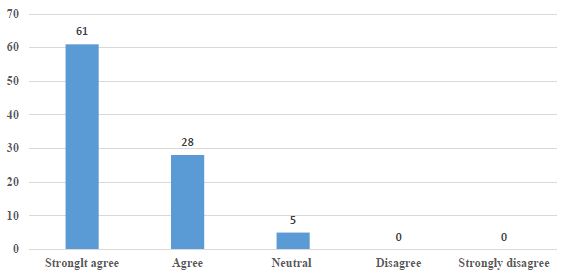
FIG 1

Figure 1: Perception on quality of life and overall wellbeing among the women

Through the diverse discussions, participants conveyed transformative personal and communal changes spurred by engagement in WCCI projects. These initiatives not only empowered women economically but also fostered improved family dynamics and social recognition. Participants highlighted a shift in household dynamics, with husbands now supportive and involved, and even prompting participation in the projects. Moreover, individual transformations were evident, reflected in enhanced self-esteem, improved appearance, and upgraded living standards. Participants celebrated tangible improvements in cleanliness, financial independence, diversified diets, and sustainable practices, demonstrating a profound shift in mindset towards environmental stewardship.

“… before, our husbands would get angry whenever we left home to come engage in such projects, but now they are steadily adjusting because we are very open about the dates when the projects will take place. So, the men have calmed down on realizing how much these projects have aided us. Even expenditures at home weighed down on men since we are now able to chip in on some of the home expenses. The husbands now even remind us of the dates when we are supposed to attend the projects. The improvement has been so evident in that even the children acknowledge that back then, they used to be chased from school due to lack of school fees, but now it’s no more.” (Participant 2, FGD, Gomba)

“I did not look like this before, the first thing I did with my money was to make sure I look good, and I am no longer looked down upon wherever I go. So, I see a big improvement from the ratchet I used to be to now looking better, it’s a very awesome change we should clap for ourselves.” Participant 6, FGD, Butambala

The other thing I had forgotten is that these trainings have improved cleanliness at home. A lady who is part of WCCI has a significantly decent home compared to those who are not in the project. We as ladies are very proud of these improvements. (Participant 1, FGD, Mukono)

“I used to just sit at home without much to do, but ever since WCCI came, it taught me so many things so right now I do my projects and have some personal money on me, and I have a job that I do, and doesn’t put me on pressure, I do it from my home without paying rent; customers come at my home without me having to hawk, schools too come and pick from my home. It has helped me a lot since I used to just sit at home back then. I am more satisfied with life now.” (Participant 5, FGD, Gomba)

“I used to eat cassava with tea and no sauce, but now life has changed. I can go and purchase beef, fish, and any sauce because the money is available. Even the dress code has changed.” (Participant 4, FGD, Buambala)

“I learned how to handle nature more than I used to before I could cut down trees but now, I look at trees like my own children and I cannot cut them down because it feels like I am cutting down my child like I’m ruining my child’s future.” (Participant 7, FGD, Mukono)

Discussion

The study aimed to assess the feasibility of Women-led climate change solution satellites on women’s social and economic empowerment and quality of life in the face of climate change in Uganda. The findings earlier shown are discussed per the objective below.

Collective Action in Women-led Climate Change Solution Satellites Influences Social Cohesion and Community Engagement

A noteworthy aspect of this project lies in its ‘train the trainer’ model, which has yielded substantial social impact while justifying the claim that empowering women through training can have far-reaching effects. Beyond individual skill acquisition, the project has employed a strategy where trained women become mentors, disseminating knowledge and skills within their communities. This ‘train the trainer’ approach has catalyzed a transformative shift among the women, not just as beneficiaries but as active agents of change within their communities.

The majority of participants reported significant improvements in their sense of belonging, increased community engagement, and notably better treatment from their families and neighbors. These outcomes are emblematic of a deeper societal transformation facilitated by these women-turned-trainers. By imparting their acquired knowledge and skills and actively engaging in communal projects, they have redefined their roles within their communities. Their involvement as both conveyors of expertise and active contributors to communal endeavors has elevated their status and influence, positioning them as key contributors to community progress.

Moreover, the collaborative nature of their work within the group-learning from each other, practicing in front of fellow satellite members-has fostered a supportive environment that nurtures confidence and competence. This newfound confidence not only improved their individual capacities but also equipped them to meaningfully contribute to larger communal initiatives. The ‘train the trainer’ model not only enhanced individual capabilities but also served as a catalyst for community development through knowledge dissemination and collaborative engagement.

Gender inequality, poverty, and other economic challenges are among the major causes of intimate and gender-based violence globally [16]. Given the high poverty levels of not only women but the general rural population in Uganda, it is understandable to unearth a 22% prevalence of intimate partner or gender-based violence among the respondents. The World Health Organization recommends seven strategies for prevention and reduction of violence against women, among which is the empowerment of women; Poverty reduction and creating an enabling environment [17], which were all targeted outcomes of this project. This evaluation indicated a 50% reduction in intimate partner and gender-based violence, with only 2 out of 11 individuals who had recent experiences attributing the violence to their engagement in entrepreneurship and the majority alluding to better treatment from their husbands. The trainings and empowerment given to women may have played a critical role in managing intimate and gender-based violence as has been deduced by earlier scholars [18,19].

The Economic Impact of Women-led Climate Change Solution Satellites on Individual and Household Income and Financial Stability

Significant proportions of the respondents mentioned an increase in their individual and household income, with some already purchasing property including gadgets, furniture, and land, using the newly found income. This result confirmed a partially achieved goal of the project; to positively impact women’s economic status and financial sustainability. The achievement can be explained by WCCI’s efforts in training the women on how to manage their finances including self-control towards expenditure, a saving culture and skilling in income-generating projects. WCCI engages the women in skill-building activities such as making soap, vaseline, and briquette among others that can be sold within the community to generate income and also supports them with the pre-requisite equipment for enhanced production. Skilling of women and trainings on financial literacy coupled with start-up support have been associated with economic empowerment in Uganda and other settings globally [20-22]. Through the “train the trainer model” which the women have wholesomely embraced and already practicing, this transformation can be transitioned to entire communities to contribute to the achievement of Sustainable Development Goal (SDG) 1; eradicating extreme poverty for all people everywhere by 2030 [23].

This evaluation also revealed the participation of women in decision-making ventures both in the community and in the households regarding livelihoods and economic development. Over 60% of the women joined women groups, SACCOs or local governing bodies and 47% of these were in leadership. These findings can be explained by the fact that WCCI emphasizes transformation in self-perception and assertiveness, which are key in interpersonal relationships and leadership [24,25] and can collaborate the newfound confidence and self-esteem among participants to join groups and even take up leadership positions. The program also cultivated the courage to engage actively in public forums, a stark contrast to previous shyness and avoidance of meetings, and women evolving into role models and trainers, who can be consulted on various aspects. The women are also gradually joining in decision-making at home, contributing ideas and funds for household development projects. The majority of the women mentioned keeping, planning for, and spending their money on things they find important unlike before when they used to spend randomly or simply give the money to their husbands to spend. This could be as a result of understanding the value of money, and the fact that these women have financial goals and have been taught to gradually grow their businesses and achieve more rather than being comfortable in their poverty.

The Overall Well-being and Quality of Life Improvements among Women Engaged in Climate Change Solution Satellites

Almost all the women in the study agreed that their overall well-being and quality of life has improved since becoming part of the climate-change solution satellites. The transformation can be attributed to the different gains from associating with WCCI. The nexus of economic empowerment heightened self-esteem, improved personal appearance, hygiene, financial autonomy, diverse dietary habits, enhanced family dynamics with increased support from husbands, improved treatment within families, and elevated social recognition collectively signify an elevated quality of life among the participants. According to the World Health Organization [26], the physical and psychological aspects of one’s life, their level of independence, social relationships, and the environment are key determinants of one’s quality of life and are the domains in the WHO quality of life assessment (WHOQOL) tool. These findings show that even though WCCI did not apply the standard 100-item WHO assessment tool, the women’s claim of improved quality of life and overall well-being is to a greater extent in accordance with the standard measurements as spelled out in the WHO’s quality of life user manual [26]. The findings therefore imply that WCCI’s model of women’s transformation through the climate change solution satellites is achieving their intended results, however, more standard assessments could be needed to further ascertain these findings.

Strengths and Limitations

The study encompassed a relatively large sample size (96 women), providing a diverse pool of participants engaged in different entrepreneurial activities related to climate change solutions. The study also collected data across various thematic areas, including social, economic, and personal aspects, offering a holistic view of the impacts of women’s engagement in entrepreneurship. The combination of quantitative and qualitative insights provides a comprehensive understanding of the women’s experiences and the findings indicated tangible outcomes such as increased income, asset acquisition, and improved social cohesion, highlighting the practical implications. On the other hand, there could be biases in self-reporting, especially regarding sensitive issues like experiences of violence or attributing them to entrepreneurship, which might lead to underreporting or misinterpretation. To address this, the women were made aware of the importance of giving accurate information and that their responses would be anonymous. The data collection process was also conducted by people who are not part of the trainers to try and make the participants comfortable to air out their issues. In addition, whereas the study highlights positive outcomes associated with entrepreneurship and WCCI training and support, establishing a direct causal link between participation and outcomes might be challenging due to external factors not accounted for in the study. The study however tried to focus on specific attributes provided to the participants through WCCI trainings and eliminated possible external factors.

Conclusions

Overall, participation in these entrepreneurial initiatives has brought about tangible improvements in social cohesion, economic empowerment, and the perceived quality of life and well-being for a significant majority of women involved, demonstrating the positive impact of the WCCI climate change solution satellites on their lives and communities. Through the train the train-the-trainer approach that has been embraced by the women and community, the program ought to be scaled up to enable more women to benefit, contributing to SDG 1.

Declarations

Data and Materials Availability

The data used in this study is available upon reasonable request from the corresponding author.

Ethics Approval and Consent to Participate

Informed consent was obtained from all participants for both the structured surveys and FGDs conducted, after ensuring that they understood the purpose of the research, their rights, and the confidentiality of their responses. The research was also approved by the Uganda Christian University Research and Ethics Committee-approval number UCUREC-2023-55. Measures were also taken to protect the anonymity and confidentiality of participants’ identities and responses.

Authors’ Contributions

All authors conceptualized the study. CHM, AT and GB participated in data collection, and drafted the first manuscript, CHM, GB, AT, RA, RWN, EM, and SD reviewed the first manuscript draft. All authors read and approved the final manuscript.

Funding

Support for this research was made possible through funding support of the Forum for Women and Development (FOKUS) in partnership with the sisters of Joseph and Climate Justice Resilience. The information provided does not necessarily reflect the views of the funders.

Conflict of Interest

Authors Comfort Hajra Mukasa, Godliver Businge, Rosemary Atieno, Rose Wamalwa Nyarotso, Elaine McCarty, Sarah Diefendorf are employed by Women Climate Centers International. The authors declare that the research was conducted in the absence of any commercial or financial relationships that could be construed as a potential conflict of interest.

References

  1. Women, Gender Equality and Climate Change. 2023 [cited 2023 28th May]; Available from: https://shorturl.at/flxFO
  2. Increasing women’s economic equality would reduce poverty for everyone. 2023 [cited 2023 6th June]; Available from: https://www.oxfam.org/en/why-majority-worlds-poor-are-women.
  3. Akinbami CAO, et al. (2019) Exploring potential climate-related entrepreneurship opportunities and challenges for rural Nigerian women. Journal of Global Entrepreneurship Research 9: 19.
  4. Cardella GM, BR Hernández-Sánchez, JC Sánchez-García (2020) Women entrepreneurship: A systematic review to outline the boundaries of scientific literature. Frontiers in Psychology 11: 1557. [crossref]
  5. Njuguna Nu, TA Théophile (2023) KEYS TO CLIMATE ACTION.
  6. Climate change exacerbates violence against women and girls. 2023 [cited 2023 7th June]; Available from: https://shorturl.at/oqwJY
  7. Tol RS (2018) The economic impacts of climate change. Review of Environmental Economics and Policy.
  8. Hernández Martínez A (2023) Climate change on rural women in East Africa: analysis of consequences and recommendations from a gendered approach.
  9. Nchanji EB, et al. (2022) Gender differences in climate-smart adaptation practices amongst bean-producing farmers in Malawi: The case of Linthipe Extension Planning Area. Frontiers in Sustainable Food Systems.
  10. WCCI-Uganda. WCCI-Uganda is responsible for community training and regional project management. 2023 [cited 2023 28/11]; Available from: https://www.climatecenters.org/wcci-uganda.
  11. Ministry of Local Government-The Parish Development Model. 2021 [cited 2023 28/11]; Available from: https://molg.go.ug/parish-development-model/.
  12. N A T I O N A L P L A N N I N G A U T H O R I T Y, THIRD NATIONAL DEVELOPMENT PLAN (NDPIII) 2020/21-2024/25. 2020, N A T I O N A L P L A N N I N G A U T H O R I T Y,: Kampala, Uganda.
  13. Gomba District Local Government. History. 2023 [cited 2023 27/11]; Available from: https://gomba.go.ug/district/history.
  14. Butambala District Local Government. History. 2023 [cited 2023 27/11]; Available from: https://butambala.go.ug/.
  15. Mukono District Local Government. History. 2023 [cited 2023 28/11]; Available from: https://mukono.go.ug/.
  16. Sanjel S (2013) Gender-based violence: a crucial challenge for public health. Kathmandu University medical journal 11: 179-184. [crossref]
  17. Violence against women. 2021 [cited 2023 22/Nov]; Available from: https://www.who.int/news-room/fact-sheets/detail/violence-against-women.
  18. Ellsberg M, et al. (2015) Prevention of violence against women and girls: what does the evidence say? The Lancet 385: 1555-1566.
  19. Kiani Z, et al. (2021) A systematic review: Empowerment interventions to reduce domestic violence? Aggression and violent behavior 58: 101585.
  20. Kiconco B (2023) The contribution of the presidential initiative for skilling a girl child on women’s economic empowerment in Kampala District, Uganda. 2023, Makerere University.
  21. Ghosh A (2023) Skilling Women in Non-Traditional Livelihoods: Pathways to Women’s Economic Empowerment-Policy Brief. Available at SSRN 4551736.
  22. Singh V (2018) Empowering Women through Skill Development: Interlinking Human, Financial and Social Capital. Productivity. 58.
  23. Sustainable Development Goals-No poverty. 2023 [cited 2023 11th/12]; Available from: https://www.un.org/sustainabledevelopment/poverty/.
  24. Ames D (2009) Pushing up to a point: Assertiveness and effectiveness in leadership and interpersonal dynamics. Research in organizational behavior 29: 111-133.
  25. April K, N Sikatali (2019) Personal and interpersonal assertiveness of female leaders in skilled technical roles. Effective Executive 22: 33-58.
  26. WHO, WHO quality of life user manual. 2012.
Remote Healthcare Experienced Under COVID-19 Infection

DOI: 10.31038/IJNM.2024514


The author primarily engages in health consultations, mainly during weekends and year-end holidays, at the “novel coronavirus infection consultation hotline” established by prefectures and other entities. This consultation service mainly handles general inquiries, including those from individuals undergoing home treatment who wish to seek medical attention, individuals who tested positive at hospitals or private PCR centers, and those who tested positive using over-the-counter antigen test kits, among others. The Ministry of Health, Labour and Welfare (2022) defines telemedicine as acts related to health promotion and medical care utilizing information and communication devices. In a broad sense, considering telemedicine, the efforts of the health consultation hotline can also be regarded as part of telemedicine. In this paper, while introducing the actual operation of the novel coronavirus infection consultation hotline, I would like to consider expectations and prospects for telemedicine.

The “novel coronavirus infection consultation hotline” and the ferocity of the 8th wave

The novel coronavirus infection consultation hotline established by prefectures and other entities operates 24 hours a day with nurses responding to inquiries. Consultation topics mainly revolve around COVID-19, including general medical inquiries from individuals undergoing home treatment or identified as close contacts, as well as inquiries regarding hotel accommodation requests, reporting of positive cases, definitions of close contacts, quarantine periods, and fever-related consultations. Nurses, who serve as operators, conduct interviews regarding symptoms, onset dates, presence and severity of fever and respiratory symptoms, SpO2 levels if available, urinary output, ability to drink water, and other symptoms such as headaches, fatigue, joint pain, nausea/vomiting, diarrhea, conjunctivitis, and taste/smell disorders. In the case of fever consultations, they often guide individuals to general fever clinics, but they also act as a bridge to connect individuals with health authorities when hotel accommodation is requested or administrative assistance is needed. During the peak of the 8th wave from December 2022 to early January 2023, concerns arose due to the overlap of the seasonal influenza epidemic with the resurgence of COVID-19 infections, leading to increased strain on fever clinics and potential obstacles for those in need of medical attention. Consequently, the government urged the population to respond according to the risk of progression to severe illness if symptoms such as sore throat or fever appeared. For those at low risk of severe illness, the government encouraged minimizing unnecessary visits to fever clinics and instead promoted the utilization of health follow-up centers such as the “novel coronavirus infection consultation hotline.” During the year-end and New Year holidays in the midst of the 8th wave, operators often handled nearly 100 consultations per day, reflecting the intense pressure on fever clinics. Looking back on consultations during this period, cases were observed where individuals with fever were unable to find hospitals for consultation or failed to connect via phone after being referred to fever clinics. Such situations led to psychological distress for individuals, and operators were sometimes subjected to verbal abuse and insults.

Reconsidering Communication

The nurses serving as operators are healthcare professionals, yet they haven’t undergone specialized training for this role. Instead, they rely on their knowledge and experience as nurses to assess the urgency of inquiries and suggest appropriate responses. Therefore, they aim to listen attentively to callers, acknowledging their worries and concerns, and provide tailored information. Their goal isn’t to correct misunderstandings but to empathetically support callers. As for the author, affiliated with the basic nursing education department at a university, they teach nursing fundamentals and daily living assistance. Communication is often the first thing nursing students learn. It involves message exchange between sender and receiver through a channel. Non-verbal elements like facial expressions and gestures are absent over the phone, posing challenges as operators can’t sense needs as in face-to-face interactions. Callers’ backgrounds vary widely, affecting the noise and circumstances heard during calls. Operators still perceive “expressions” conveyed by callers’ voices. For instance, “My one-year-old has a 39°C fever,” “Family members are getting infected, and I’ve had a fever and sore throat since yesterday,” “I’ve called doctors and hospitals all morning but can’t get through. Is there a hospital I can visit?” Operators empathize with callers’ urgent situations, striving to address their needs. During the 8th wave, limited available medical facilities necessitated tailored responses based on severity risk. For instance, confirming home test kits or fever medication availability, suggesting home monitoring if possible, and encouraging contact if further help is needed. However, some callers insisted on hospital visits, leading to challenging situations. Some strongly desired testing, despite being asymptomatic. Operators, empathizing with their anxiety, recommended free testing for residents or approved antigen test kits. Flexibility was key alongside standardized responses. Reading callers’ “expressions” was crucial. Some found relief expressing anxiety. This reaffirmed the importance of listening. Reconsidering communication made the significance of face-to-face interactions evident.

Expectations and Prospects for Telemedicine

So far, we’ve looked at an example of telemedicine based on the practices of the novel coronavirus infection consultation hotline. With the spread of the COVID-19 pandemic, the significance of telemedicine is increasingly being recognized, isn’t it? In nursing education, remote education utilizing Information and Communication Technology (ICT) is expanding due to the impact of COVID-19. While discussions on the merits and demerits of telemedicine and education are diverse, there seems to be a growing sense of expectation for the utilization of ICT from the perspective of infection control and the continuity of healthcare and education. On the other hand, research on the adverse effects of online habits using communication devices such as smartphones on the human body and the reality of communication is also progressing. Sakaki et al. (2022) point out the poor quality of online communication and demonstrate that online communication is completely ineffective in situations where interaction between hearts is necessary. They argue that the greatest advantage of online communication is the ability to communicate with people in distant locations, emphasizing that online communication is merely a “means” and a “bridge.” We sincerely hope that health follow-up centers such as the “novel coronavirus infection consultation hotline” introduced this time can continue to provide support to infected individuals and those around them. It’s not easy to make accurate judgments and provide empathetic support based solely on the “expressions” in voices in the absence of face-to-face communication. However, considering the characteristics of the virus and the perspective of infection control, the demand for information provision and health consultation services through methods other than face-to-face interactions is expected to continue to grow. It is essential to utilize online platforms according to the situation and context without losing sight of the essence of communication.

A Collaborative Approach between Programs: Improving Communication Access with Deaf People through Nursing Simulation

DOI: 10.31038/IJNM.2024513


According to the Institute of Medicine [1], the desired goal of patient-centered health care is for practitioners to be “respectful of and responsive to individual patient preferences, needs, and values” (Institute of Medicine, 2001, para. 1) [1]. Patient-centeredness relies on effective communication [2]. Dialogue is essential for health care settings, requiring the patient to receive important information from the medical professional, as well as the medical professional understanding and responding to important information that the patient conveys. Research has shown that better health care outcomes are achieved when patients have a positive relationship and interaction with their health care provider [3]. However, when patients identify with a culture and use a first language that is different from their health care provider, they may experience service and information barriers when seeking medical treatment, resulting in less adherence to treatment plans or avoidance of seeking medical care [4]. The exchange of medical information, even at routine office visits, can become perilous when the patient cannot fully participate in discussions regarding safe uses of medications, or complex, even risky, decision-making expectations (Hedding & Kaufman, 2012), A medical appointment with a deaf patient without appropriate communication accommodations can result in miscommunication, misinformation, misdiagnosis, and mistrust. Deaf people often experience inequities in health care which lead to poor health (Barnett et al., year) and lower health literacy (significant gaps in basic health knowledge) than their non-deaf counterparts [5]. Too often, medical appointments for deaf patients continue without the use of an interpreter, due in part to a lack of awareness by providers of the importance of communication accommodation or the lack of available interpreters (Ebert & Heckerling, 1995, as cited in [6]. This combination of potential lower health literacy, lack of interpreters, and health care providers who are unaware or unprepared to meet this population’s specific needs highlights the frustration of countless deaf people. The exchange of medical information, even at routine office visits, can become perilous when the patient cannot fully participate in discussions regarding safe uses of medications, or complex, even risky, decision-making expectations (Hedding & Kaufman, as cited in Swabey & Malcom, 2012) [6].

Faculty of two distinct programs at a large midwestern university created an opportunity to experience patient-centered service provision with deaf volunteers. Nursing faculty wanted their students to experience the dynamics of engaging patients who are deaf and use American Sign Language (ASL) as their primary language. Deaf people whose primary language is ASL, which is distinct from English with its own complex grammar and distinct syntax, vocabulary, and discourse style [7], require special communication access considerations. Simulation in health care education is designed to replicate real clinical situations in a safe environment. The International Nursing Association for Clinical Simulation and Learning (INACSL) states that the specific purpose of simulation is to “promote, improve, or validate a participant’s performance” [8]. Validating the importance of simulation, some nursing boards have approved up to 100% replacement of traditional clinical hours with simulation in specialty areas such as pediatric and obstetrical nursing [9,10]. Thus, simulation can be a bridge between classroom and clinical environments and as a venue in which to address communication access concerns for deaf patients.

The scenario lasted 20 minutes. During the first 10 minutes, nursing students performed a comprehensive physical exam. After approximately 10 minutes, students were encouraged to begin discharge teaching with interpreting students to facilitate communication with the deaf parent. After that, the 20-minute debriefing session began. Interpreting students reversed roles at this point. The debriefing was facilitated by an experienced nurse who gave each group of students a series of questions to discuss. In order to compare the perceived effectiveness of the simulation, a Mann-Whitney test statistic was calculated. Two questions were posed to participants that evaluated their self-perception of the effectiveness of the simulation. The first, “I am better able to communicate healthcare information to a deaf parent” was rated on a Likert-scale (1: completely disagree; 2: mostly disagree; 3: slightly disagree; 4: slightly agree; 5: mostly agree; 6: completely agree). Results indicated a statistically significant difference between groups of students (U=173.00, p=0.020), indicating that nursing students (Median=6) were more likely to agree with the question than interpreting students (Median=5). The second question, “Will this simulation affect the way you communicate with a deaf person or their family member?” was also rated on a Likert-scale (1: definitely not; 2: probably not; 3: possibly; 4: probably; 5: very probably; 6: definitely). However, the difference between Nursing (Median=5) and interpreting students (Median=5) was not statistically significant (U=83.50, p=0.195).

Results were statistically significant for both the first (D=0.270, p<0.001) and second (D=0.258, p<0.001) prompt, indicating that a randomly selected response from this sample is significantly more likely to be positive than negative on either prompt. Nursing students were more likely to provide the highest rating regarding ability to communicate healthcare information to deaf parents than interpreting students. This simulation experience allowed nursing and interpreting students to understand and appreciate the role of the other and to enact strategies to improve communication. Both groups of participants found the simulated experience to be beneficial and felt it gave them a safe environment in which to practice. Faculty initiating this partnership recognized many potential benefits to both programs in preparing their students to provide services to deaf people in a specialized setting. Nursing students were able to work with individuals who processed language in a different way than they were accustomed to. Interpreting students were able to relate medical information to deaf people in a realistic, dynamic, and unrehearsed setting. Both interpreting and nursing students’ responses were positive, stating the advantages of practicing vital nursing and communication skills with a deaf parent in a safe environment. Collaboration among interpreting and nursing students in simulation may enhance understanding and provide authentic practice opportunities of unique accommodations to achieve patient-centered health care.

References

  1. Institute of Medicine (2001) Committee on quality of health care in America. Crossing the quality chasm: A new health system for the 21st century. National Academies Press.
  2. Barnett S, McKee M, Smith SR, Pearson TA (2011) Deaf sign language users, health inequities, and public health: Opportunity for social justice. Preventing Chronic Disease 8. [crossref]
  3. Raymond CW (2014) Conveying information in the interpreter-mediated medical visit: The case of epistemic brokering. Patient Education and Counseling 97: 38-46. [crossref]
  4. Messias DK, McDowell L, Estrada RD (2009) Language interpreting as social justice work: Perspectives of formal and informal healthcare interpreters. Advances in Nursing Science 32: 128-143. [crossref]
  5. Pollard RQ, Barnett S (2009) Health-related vocabulary knowledge among deaf adults. Rehabilitation Psychology 54: 182-185. [crossref]
  6. Swabey LA, Malcolm M (2012) In our hands: Educating healthcare interpreters. (Gallaudet University Press).
  7. Valli C, Lucas C, Mulrooney K, Villanueva M (2011) Linguistics of American Sign Language: An introduction (5th ed.). (Gallaudet University Press).
  8. INACSL Standards Committee. (2016, December). INACSL Standards of Best Practice: SimulationSM Participant evaluation. Clinical Simulation in Nursing 12(S) (December, 2016): S26-9.
  9. Ohio Administrative Code, Chapter 4723-5 (2017). Nursing Education Programs. Ohio Board of Nursing.
  10. Iezzoni L, O’Day BL, Killeen M, Harker H (2004) Communicating about health care: Observations from persons who are deaf or hard of hearing. Annals of Internal Medicine 140: 356-362. [crossref]

Mental Impairment Negatively Impacts People’s Lives

DOI: 10.31038/IJNM.2024512


People have to interact with each other to sell or buy goods or services and exchange ideas when necessary, as no one can produce or own everything and know all. How a person interacts with others defines individual behaviour; it reflects the capacity to process essential data, make decisions, and cooperate with clients, collaborators, and partners. People’s collaborative work supposes respect, truthfulness, and adherence to social norms. Usually, in a family, there are sentimental interactions between its members. Whether sentimental or not, human relationships advance if reasonable actions follow. When love dominates relationships, some misjudges are easily tolerated, but displaying erroneous data or thinking inaccuracy is unacceptable for business partners. Out-of-ordinary behaviour can originate in genetics or medical disorders determined by external, internal factors affecting brain function, or it can be an expression of uneducated, impulsive reactions to various external stimuli, sometimes a combination of them.

Individual judgment may be altered more or less, transitory or permanent; consequently, their actions deviate from conventionality. Such thinking nonconformities disappoint collaborators and may lead to a relationship disruption sooner or later. The affected emotional life of the collaborators implied in such relationships, usually by repetition, can determine medical problems: depression, endocrine system abnormalities, arterial hypertension, type 2 diabetes, and so on. In addition, the collaborators’ altered emotional health determines sorrowful moments for their loved ones, extending suffering gradually in the large family or community. For this reason, abnormal thinking and acting must be promptly recognized and treated to avoid negative consequences for others and the production process.

To determine an individual’s mental health, healthcare providers should assess their abnormal behaviours along with their medical and social history, relationships, and professional accomplishments. In the community, we should support one another when needed. The business partners may terminate their relationship with a collaborator who displays impaired judgment and engages in deviant actions. On the other hand, medical teams will collaborate with the patient and their family to improve their health and maintain production continuity whenever possible. Job assignments will be made according to the individual’s mental abilities, if necessary. People with transient or permanent cognitive impairment are often unaware of their condition. Patients with mental impairment need to have an understanding of their disorder and work together with medical professionals on a therapy plan. Healthcare professionals must identify the cause of the mental disorder and develop appropriate treatments. Effective management of this condition involves collaboration with patients to follow the therapy plan, including their participation in decision-making and communication with loved ones for emotional support, both in the short and long term. Accessing informative online programs for knowledge improvement and communication with virtual assistants as necessary can help cultivate self-awareness, refine interaction with others, and ensure a better personal and social life, especially for those with mental impairments.

Improving one’s mental health is beneficial for both healthcare providers and end-users. It enhances the quality of life, patient experience, and family satisfaction for the end-users, positive comments following, and determining an increase in investment returns, business growth, and continuity, improves personal reputation, and leads to a successful professional and social life for healthcare professionals.

A Rural Native American Community Experiences Related to Emotional and Mental Health Well-Being during the COVID19 Pandemic

DOI: 10.31038/IJNM.2024511

Abstract

Purpose: This qualitative study was conducted as part of a larger nationwide study, the Aegis Project that investigated the impact of the COVID19 pandemic, infection and reinfection, and the potential long-term immunity to SARS-CoV-2 and will be reported in a future paper. The study is a collaborative effort among The University of Texas at Austin School of Nursing, Indiana University at Bloomington School of Public Health, and a rural-based Tribe located in the Midwest. The qualitative component of the study explored the experiences that impacted the emotional and mental health well-being during the COVID19 pandemic.

Methods: Data were collected using open-ended interview questions regarding participants’ experiences during the pandemic. Results were analyzed using the Consensual Qualitative Research (CQR) method which includes the process of categorizing data into specific themes by means of the research team’s discourse, external auditing, and agreement.

Results: Four themes emerged related to emotional and mental health well-being experiences that include: 1) loss of connectedness, 2) increase in stress, 3) increase in anxiety, and 4) learning to cope.

Conclusions: Understanding the lived experiences of Native Americans during the COVID19 pandemic is needed to help guide the development and testing of culturally based interventions to improve the emotional and mental health well-being of Native American communities during pandemics or other distressful incidences such as natural disasters.

Keywords

Native Americans, COVID19, Emotional and mental health wellbeing

Introduction

Native Americans have been disproportionately impacted by the COVID19 pandemic with 2.5 higher incidence rates and confirmed positive cases and almost four times higher mortality rates than non-Hispanic Whites [1,2]. Vulnerable populations, particularly Native American adults with chronic conditions and pre-existing health conditions such as heart disease, asthma, chronic obstructive pulmonary disease (COPD), cancer, and diabetes are more vulnerable and at increased risk for contracting the COVID19 virus (Haynes, Cooper, & Albert, 2020). Historically, Native American communities that have already suffered from years of historical trauma from previous pandemics are now being re-traumatized by the pandemic [3]. Additionally, racial inequities and historical trauma have contributed to the persistent disparities in health outcomes between Native Americans and white populations that have adversely affected tribal communities during the pandemic [4]. Emotional and mental health issues have negatively impacted the overall health and well-being of Native Americans during the pandemic [5]. Many health experts and researchers fear that many Native Americans are suffering from increased physiological and psychological distress including drug and alcohol relapse due to the social isolation from ongoing social distancing, lockdowns, and other aspects of the pandemic [6]. The higher COVID19 incidence and mortality rates among the elder Native American population are impacted by the limited access to available resources such as transportation, access to running water and other resources, and the ability to maintain a sense of connectedness [1,7].

This qualitative study was conducted as part of a larger nationwide study, the Aegis Project, investigating the impact of the pandemic, infection and reinfection, and the potential long-term immunity to SARS-CoV-2. The study is a collaborative effort among The University of Texas at Austin School of Nursing, Indiana University at Bloomington School of Public Health, and a rural midwestern Tribe. Due to the sensitive nature of the study, the Tribe requests to remain anonymous. This Tribe was the only Native American tribe participating in scientific efforts to explore these factors. The purpose of this qualitative study is to highlight the experiences related to the emotional and mental health well-being during the pandemic among the tribal community.

Methods

This study used a qualitative descriptive narrative approach eliciting responses to open-ended interview questions regarding the participant’s experiences during the pandemic. Convenience and snowballing sampling were used as the participant recruitment method.

Setting

The setting for the study was located within a rural midwestern Tribe with 16,000 members. The qualitative interviews were conducted in a private room at the tribal health center. Prior to the recruitment process, study approval was obtained by the University of Texas at Austin, Indiana University’s Institutional Review Board(s) (IRB) and the Tribe’s administrative leaders. After all approvals were received, a flyer explaining the purpose of the study was provided to community members. Signed informed consent, ages 18 years or above, willingness to participate in the study and the ability to read and speak English were required to participate in this study.

Results

All participants are tribal members who live within the participating tribe’s community. Table 1 displays the demographic data of the participants. Data analysis was conducted using the Consensual Qualitative Research (CQR) method which includes the process of categorizing data into specific themes by means of the research team’s discourse, external auditing, and agreement [8]. Four themes emerged related to emotional and mental health well-being experiences that include: 1) loss of connectedness, 2) increased stress, 3) increased anxiety, and 4) learning to cope (Figure 1 and Table 1).

FIG 1

Figure 1: Themes Related to Emotional and Mental Health Well-Being Experiences

Table 1: Demographics

Participants

N=61

Age 20-85 years

Average age=32.5 years

Gender Male=20

Female=41

Household Live with family=47

Live with non-family=4

Live alone=10

Annual Income less than $10,000=0

$10,000 to $24,999=5

$25,000 to $49,000=15

$50,000 to $74,999=25

$75,000 to $99,000=12

$150,000 to $199,999=3

over $200,000=1

Health Status Fair=6

Good=40

Very Good=12

Excellent=3

Education Level Some High school=4

High School Graduate=18

Some College/Technical=26

College Graduate=12

Theme 1: Loss of Connectedness

Several participants described loss of connectedness as a result of experiencing the loss of family and community members due to the pandemic. Participants used phrases such as “You can’t get those back after they are gone” when describing how the pandemic resulted in the loss of many Tribal Elders who are the cultural knowledge keepers. Participants often expressed remarks such as “it has been disheartening to hear of former co-workers, childhood friends, neighbors, and even relatives passing away as a result of COVID19”. Additionally, participants also discussed how the pandemic is “one of the most devastating things to affect our Tribal community “, and “how they never in their lifetime thought they would be living in the middle of a global pandemic… very devastating.” Experiences of being isolated due to quarantines and lockdowns also enhanced the feelings of not being connected. Participants remarked “we really missed not being able to have family or community gatherings … it was like someone took away our freedom to be together… I really missed being able to do things like eat together, talking, sharing stories, and laughing”.

Theme 2: Increased Stress

Many participants described increased stress during the pandemic with comments such as “it is very real and very scary.” “COVID is very contagious, and it is stressful.” Remarks related to feelings of stress also included “I can’t wait for it to be over, but I think it is going to be here for a while and it is beginning to become wearisome”, and “these are terrifying times”. Several participants discussed how they have personally witnessed the death of several family members in very short periods of time which they described as “this wears you down after so many deaths”. Many of the participants described “being exhausted” and “tired of the disruptions, social distancing and isolation it has caused with not being able to be in contact with family and friends and my grandchildren.” Other remarks included “this reminds of the stories about how our people experienced smallpox back”…“it makes me recall some of the times in boarding schools when a lot of children would get sick at the same time…those were horrible times”.

Theme 3: Increased Anxiety

Many participants described feelings of anxiety during the pandemic with expressions of being worried that a cure will not be discovered soon enough. Participants discussed how the pandemic “has made a lot of people nervous and some deal with it by acting like it’s not real so they don’t do things like wear masks when out in public and in large crowds”. Other expressions included “I get worried that everyone will not do their part which will keep the pandemic from going away”. Several participants described being worried about going out in public because of not knowing if people are being as cautious and careful as they were and used phrases such as

“It doesn’t matter how old or young, healthy or sick you are, it doesn’t discriminate”. Several participants discussed how reliable and accurate information about the pandemic was not available Many described the lack of appropriate information as disheartening. Several participants shared their desire for better information, particularly regarding the vaccine. Participants expressed “we need more reliable information in order to make an informed decision about getting the vaccine”. Participants frequently described the pandemic as a “very terrible time… it’s very upsetting how COVID has hurt a lot of families, friends, and acquaintances”, and “I worry that this will become the “new normal”. Also, there were feelings expressed regarding the uncertainty of not knowing how long the pandemic will last, along with the fear that it may stay around for a long time.

Theme 4: Learning to Cope

Several participants described ways they learned to cope. Participants referred to the pandemic’s “silver lining” which allowed them to be at home and take better care of themselves through working in their gardens and going for daily walks. Some participants discussed relying on their traditional cultural spirituality and others referred to growing deeper in their faith-based beliefs and practices. Participants remarked “learning to stay in balance in was key to everything”. A few participants described learning to use technology and social media to stay connected with their family and friends was very helpful in not feeling totally isolated.

Discussion

The purpose of this qualitative study was to highlight a rural-based midwestern tribe’s experiences during the COVID19 pandemic that impacted their emotional and mental health well-being. The pandemic has been characterized as a “double pandemic” for Native Americans due to the actual incidences of COVID19 infections and the impact on their emotional and mental health well-being [9]. As the pandemic ravaged the United States, it began to become evident that the emotional and mental health well-being were being impacted among Native Americans. The findings of this study elucidate how times of crisis can result in experiences that impact the emotional and mental health well-being of one Native American community. These findings are consistent with other studies that report the impact of the pandemic on the emotional and mental health well-being of Native Americans across the country [10,11]. Understanding the lived experiences of Native Americans during the pandemic is important in guiding the development and testing of culturally based interventions to improve the emotional and mental health well-being of Native American communities during crisis incidences. For example, strategies designed to maintain connectedness during crisis situations needs to be developed, implemented, and examined [7]. Native Americans faced the increase of risks for emotional and mental health distress as a result of the pandemic which may have magnified pre-existing emotional and mental health disparities and their effects. Previous traumatic events, such as forced relocation, genocide, or the abduction of youth to more than 350 boarding schools, caused lasting generational impacts on the mental and emotional well-being of Native Americans [12]. The pandemic caused re-traumatization among many Native American people. It is important for health care professionals to develop and tailor response efforts to the emotional and mental health needs that the pandemic has caused to Native Americans. Additionally, increased fear and mistrust of healthcare professionals outside of the tribal community may result because of generational past experiences of various forms of physical, mental, and social abuse along with cultural degradation. Respect for the culture can increase a health provider’s credibility among a Native American community. Health providers from outside of the tribal community are guests within tribal sovereign nations and should work with a tribal liaison, tribal community health leaders, and tribal spiritual leaders. Efforts should be made to reestablish traditional approaches, cultural practices, and protective factors that were in place prior to the pandemic. It is important to build trusting relationships and recognize the many strengths of the tribal community such as the coping mechanisms noted by the participants. The study was conducted among one rural midwestern Native American tribal community which can be considered a limitation. The study results demonstrate the need for future studies to explore the experiences of various Native American populations who are from various settings and locations during distressful situations such as pandemics and natural disasters.

Acknowledgements

This project is supported by philanthropic funding from the Jack Dorsey’s #Start Small Initiative and the Chase and Stephanie Coleman Foundation as well as from an anonymous foundation. We would also like to acknowledge the tribal leaders and the tribal community for their continued dedication and hospitality throughout this collaboration.

References

  1. Hatcher SM, Agnew-Brune C, Anderson M, Zambrano LD, Rose CE, Jim MA, McCollum. J (2020) COVID-19 among American Indian and Alaska Native Persons — 23 States, January 31-July 3, 2020. Morbidity and Mortality Weekly Report 69: 1166-1169. [crossref]
  2. McLemon M (2021, April 9) Report’s detail high COVIID-19 burden in Native Americans. Centre for Infectious Disease and Policy.
  3. Sandoui A (2020, November 27) The impact of historical trauma on American Indian health equity. Medical News Today.
  4. Curtis E, Jones R, Tipene-Leach D, Walker C, Loring B, Paine SJ, Reid P (2019) Why cultural safety rather than cultural competency is required to achieve health equity: A literature review and recommended definition. International Journal for Equity in Health 18.
  5. Fingerman KL, Ng YT, Zhang S, Britt K, Colera G, et al. (2021) Living alone during COVID-19: Social contact and emotional well-being among older adults. The Journals of Gerontology. Series B, Psychological Sciences and Social Sciences 76: e116-e121. [crossref]
  6. Urbatsch D, Robledo J (2020, June, 19) Native American groups address mental and behavioural health as COVID-19 wears on. Cronkite News, PBS.
  7. Haynes N, Cooper LA, Albert MA (2020, July 20) At the heart of the matter: Unmasking and addressing the toll of COVID-19 on diverse populations. Circulation 142: 105-107. [crossref]
  8. Hill CE, Knox S, Thompson BJ, Nutt Williams E, Hess SA, et al. (2005) Consensual qualitative research: An update. Journal of Counseling Psychology 52: 196-205.
  9. Holt-Lunstad J (2020, June 22) The double pandemic of social isolation and COVID-19: cross-sector must address both. Health Affairs Blog.
  10. Lang K (2022) Pandemic impact on mental health: A global overview. Medical News Today.
  11. Radfar A, Ferreira MM, Sosa JP, Filip I (2021) Emergent Crisis of COVID-19 Pandemic: Mental Health Challenges and Opportunities. Frontiers in Psychiatry 12. [crossref]
  12. Tsianina Lomawaima K, McKinley B, Brayboy J, McCarty T (2018) Editors’ Introduction to the Special Issue: Native American Boarding School Stories. Journal of American Indian Education 57: 1-10.

Young Italians’ Speeches on the War in Ukraine and Perspectives of Peacebuilding

DOI: 10.31038/PSYJ.2024612

Abstract

In this contribution we propose a critical reflection on young Italians’ discourses on the war in Ukraine and the possibilities of peace in the future. The study is part of the research proposal launched by Alistair Ross concerning the investigation about young people’s socio-political understanding and values. Through the method of deliberative discussion, several focus groups were conducted with secondary school students from central and northern Italy. The conversations were collected in autumn 2022. Deliberative discussion was used as a pedagogical practice [1-3] to promote critical reflection among young people on the issue. Without giving predetermined opinions, however, we assumed that this topic was particularly present in discourse among young people. The high exposure to communications from the media, social networks, and the opportunity to follow social debates in school and family could be considered two important premises for understanding what young people think about the specific center of interest. In general, the introduction of the debate follows the problems affecting our societies today and reveals a differentiated centrality of the arguments on war and peace in Ukraine. Young people are experiencing the war in a very involved way by linking it to other countries in the world that are in conflict, they are not absent but fully participating. The causes of war are defined and possible guidelines for peace are outlined. The two geographical areas show interesting characterisations linked to the higher presence in the North of young people from families with a migratory past and Ukrainians newly arrived from war zones. The gender variable affects the analysis of the situation. Overall, the deliberative discussion shows the strong sense of reality in the young people with accentuated polarities between hope and pessimism.

Keywords

War and peace; Deliberative discussion; Secondary school; Education; Italy 2022

Introduction

The war in Ukraine raised many questions about how adolescents were processing the experience of the conflict and possible responses of restoring peace. The thinking that has matured about the war comes from direct and indirect knowledge of what is being experienced in Ukraine. The young people who have come to Italy have had direct experience of the war and talk about it with concrete examples, trying to examine their own emotions and make interpretations about the continuation of the conflict.

Young people from direct experience are fully involved in the fate of their country. A specific case concerns young people with families from a migratory background mainly from Romania. These young people participate in the conflict with their own considerations constructed considering their own migration background and the experience of being part of the invasion. Some recent surveys on young people’s interest in the war say that young Italian adolescents inform themselves and try to understand what is going on.

They read up on national news and also on major social issues. They are attracted to international news that affects them most closely. They are interested in the war in Ukraine and international political balances because of the effects on their lives of study and work. Young Italians have an indirect experience of the war, and their discourses reflect the situation experienced through information circulating on smartphones, social, and the Internet. Highly followed are Instagram and Facebook. Scarce is the use of newspapers and television [4].

The Harms of Conflict on Adolescents

Several studies document the psychological and mental damage in the personality development of adolescents at a crucial stage of their growth.

During war, adolescents are exposed to atrocities, organized violence, disintegration of social networks, and resettlement during crucial phases of their physical, emotional, social, and cognitive development. These experiences could cause serious risks to their physical and psychological well-being and development [5].

Maftei A, Dănilă O and Măirean C [6] emphasize the role of the media in producing the perception of threat in the Russian-Ukrainian conflict. The feeling of threat particularly affects adolescents who are poorly protected from even false messages. European Parliament reports record the damage to education.

At the same time, education has been disrupted for more than 5.7 million children in Ukraine, as schools shut down at the start of the war. National online education platforms have been built to help children to follow their schooling programmes, yet the situation remains difficult. Security concerns accompanied by a lack of access to electricity and internet make access to education services a challenge. Some schools have reopened by means of distance-learning programmes. In addition, Ukraine’s neighbouring countries and EU Member States are supporting the integration of Ukrainian children into their national education systems [7,8].

There are teenagers who experience the war from within and teenagers who witness the war. For both categories, the war event creates a sense of uncertainty and there is a growing distrust in governments and in the political capacities to face the problem. It follows that two ways of intervening to support young people emerge: the treatment of trauma and the search for credible solutions that go in the direction of actions of humanitarian solidarity.

Research Methodology

The exploratory research of a qualitative nature that we present in preliminary form is still in progress. The final results will be fully available with input from other countries that have joined the initiative launched and coordinated by Alistair Ross. This initial consideration does not compromise the course of subsequent processing of the results collected in the deliberative discussions. The survey concerns the recording of speeches by young Italians and non-Italians present in Italy on the topic of war and possible peace solutions.

Through deliberative discussion as a pedagogical practice we sought to understand the thoughts of a sample of 18 students of secondary school gathered in three focus groups with six students each in October 2022. Two focus groups were conducted in a secondary school in central Italy from a small town with a population of 11,899 (2021), and the third focus group was conducted in a secondary school in northern Italy in a mountain town with a population of 12,319 (2017).

In both cases, the social location of the local population is predominantly working and middle class. There are five students in the three focus groups with family migration experience from Albania, Romania, and Ukraine. The conversation took place in one hour for each group consisting of ten males and eight females between 15 and 19 years of age. Students are referred to by pseudonym while keeping the gender of the original name.

Sample of Schools

Descriptive data of the sample of schools are disclosed by the schools’ websites and the Ministry of Education, National Assessment System. Social Reporting 2019/2022. The Central Italy School Institute is a Catholic private school, is committed to building an educational community of supportive people with very strong ties. The Institute has been operating for 150 years it is a non-profit Social Cooperative Society, accommodates around 300 pupils from various parts of the Castelli area of Rome, mostly middle-class families. The boys and girls who enroll at the Institute have experiences of school dropouts and learning difficulties, and the school offers a specific service to encourage study and school careers.

The territorial scope School Institute sampled in Northern Italy is that of the Mountain Community Valtellina of Morbegno (496 square kilometers). It also includes the school population of the districts in the province of Sondrio, Chiavenna, Lecco and Como. The socio-economic context is the alpine valley where a rapid transformation has taken place from a largely agricultural-mountain economy (still 41 percent in 1951) to a mixed economy, based on a significant industrial consistency, challenged by the current crisis, with a large presence of artisan companies and a growing development of the tertiary sector.

The cultural reality, slower to undergo transformation, still suffers from the past social structure, typical of an Alpine agricultural economy, and the partial geographical and political isolation of the area. The following are being improved: communication routes, the spread of transportation, access to media, university study. Integration with the Lombard, national and European sociocultural reality is being sought. The limited availability of economic resources persists, the uncertainty of being able to use them permanently and the distance from institutional and university centers prevent medium-to long-term planning on innovation and staff training. In the school population are indicated youth distress, addictions, situations of socioeconomic, cultural disadvantage, increased entry of pupils with migration experience.

Descriptive Aspects

The conversations were held in a way that started from the survey from the major interests of young people on national and international social reality. COVID-19 remains a strong topic of discussion from the perspective of the consequences generated by isolation with difficulties in resuming the daily rhythm. The topic of the war in Ukraine immediately emerges as a source of concern, fear, uncertainty and sometimes as an argument not to talk about for political reasons.

As directed by the research team, the conversation could develop on the interest the students showed in the war, their assessment of the events, consideration of possible upcoming actions both at war sites and elsewhere, emotional involvement, and a sense of participation in the ongoing debate. We encouraged the expression of different positions and invited them to try to put themselves in the shoes of those who are experiencing the conflict firsthand.

We can collect the first reconnaissance on the recordings into five thematic areas:

I-the general view of the war;

II-the consequences of the war;

III-the causes of the war;

IV-the conditions for peace;

V-the personalization of war.

In the first two subject areas we collect ideas on the meaning of war in human affairs and examine the implications on one’s present and future existence. In the third area we collect thoughts on the reasons for war, reasons near and far, experienced indirectly and directly. In the fourth area we extrapolate discourses on the possibilities for peace in political, social, cultural, and strategic terms. In the fifth area we find what emerged in front of the stimulus suggestion “if you were in that war what would you do?”. We talk about personalization as a cultural anthropological attitude of putting yourself in the shoes of others and trying to feel in a time and place different from that of one’s daily life.

The General View of the War and Controversial Positions

The students’ discussion rescales the war in Ukraine by relating it to conflicts that are in different places on Earth such as in Asia, Africa, and Europe. The difference is that it is not talked about with the same frequency and the fallout for Italy is different in proportion to military and political involvement. The phrase “wars have always been there” meets with general approval as if to mitigate the trauma of the conflict in Ukraine. However, according to Antonio, conflicts could have been predicted and avoided. In the world scenario now, conflicts can no longer be avoided because they are due to events that have occurred over time and even if there were agreements “they would just be pieces of paper, each nation does what it wants, what is most favorable economically, it is ugly to say, however, at this moment it is like that for every state” (Marino).

Agreements are not assigned trust because they are not respected, and Russia and NATO are mentioned as examples. A portion of the students agree that Russia is not to blame for the war “…Russia is not to blame for today’s war. Italy sells weapons now, but the war was already there for years.” (Leopoldo). Responsibility for the war is a controversial issue with respect to the two contenders.

Russia defies the other powers and takes advantage thinking that the other nations cannot do more regardless of the consequences…it is a wrong thing…the blame is not only on Russia but also on other States such as America that did not do certain things that Putin wanted, so it came to this time of war. (Franco)

Gianni sentences:

Mainly it is a kind of American invasion. Biden established military bases along the territory and thus triggered the reactions of Russia, which is now trying to regain Ukrainian land that has declared itself independent in a completely illegitimate way, not to mention what they are doing in the Donbas where they are massacring the urban population without anyone talking about it.

For several of the girls, one of the most unacceptable aspects of the conflict in Ukraine is the presence of the boys who are conscripted and at high risk of their lives due to inexperience and lack of preparation.

Martina observes

Kids our age are risking their lives every day when there should be people suited for that field, if I am in the military, it is because I am suited for what I am doing. I can’t put a weapon in a kid’s hand and expect him to try to save someone.

Judgment about war is made with a high sense of empathy, and thinking about boys their own age going into combat generates feelings of contrariness felt especially by girls. For boys, the position is clear about the legitimacy of defending one’s home. The nuclear call is felt as a real threat that subjects all States to the power of the most powerful weapons.

Probably this war of Putin’s could be a show of force in the sense that threats about nuclear and bombing could overthrow a nation in minutes with the weapons and technologies that the State possesses today; I think it’s a hasty war, done unreasonably, it’s more of a show of force and it makes people realize that today a State can start a war in a very short time without any particular reason. I don’t think making an alliance against Russia and getting in Russia’s crosshairs is the smartest move to make because it can be scary to go against a country with nuclear power. (Antonio)

The Consequences of War

Three clear positions emerge in this thematic area:

(a) the assessment of the negative material consequences of war;

(b) the global involvement in the consequences with a strong emphasis on the interdependence of all countries in the world;

(c) the empathetic assessment of war.

There is a unanimous opinion that war makes people live badly: taxes rise, there is no peace of mind, there is fear of it coming our way, and the risk is scary. The damage and disruptive effects are cited for increased pollution, the downfall of the economy, the aggravation of the environmental issue, and the fallout on incoming migration. Conversely, there is the strengthening of Russia’s economy as it seeks alliances with other countries.

There is a state of anguish for students who view war as wrong but inevitable. The war serves no purpose, young people anticipate paying the consequences, and some reflect “the elders say this war is not as bad as World War II” (Giovanni).

Lia talks about the need for compromise because

Nuclear possession indicates inequality. You can’t make an agreement because now the situation has degenerated, the whole world is involved a little bit…even other countries can’t influence this war however there are consequences, for example, on primary goods and so it’s not just about the war, this is a problem that ultimately affects everyone.

Of the same opinion is Filippo

War calls for war, there are people who direct entire populations even quite important not only politically but also economically, there are people in power who try to maneuver to bring everything to themselves, without thinking that there are millions of people at stake; unfortunately, power is something that brings war.

Franco states the consequences are all negative…buildings destroyed…the integration of the Ukrainian people…Russia also spent a lot of money, lost a lot of men, at the end of it all there will be a negative balance sheet. And also, for other countries the balance sheet will not be positive because in some way we will also lose out.

According to Alberto, it is a matter of choosing an appropriate technical strategy considering the many political, economic, social contradictions that show division rather than union and show how each country eventually closes in on itself despite the fact that the European Union tries to work for the integration of peoples.

I simply think there is a need to change the methodology, because yes we have put sanctions on Russia, but at the same time we have not stopped buying from Russia; in fact in the last six months we have given enough supply, enough money from the European Union to cover a whole year from the time the sanctions started; so yes we have given sanctions but at the same time also enough money to Russia, so it is counterproductive; and also the fact of relying on the United States, yes we are buying from the United States but at the same time however the United States is thinking about itself; there was a few months ago where Italy asked for help from France but France is thinking about itself, it refused cooperation so it is a difficult situation.

The lessons learned from the behavior of politicians lead the young people themselves to take positions of self-protective closure that save determined support for welcoming and humanitarian aid, while condemning the sending of arms.

Antonio states:

I think our concerns should be more about ourselves, our Italian State. You can’t think about waging war when there is a State that is completely at a loss. Alberto spoke earlier about workers: this is one of the many flaws in the Italian system that before we think about external factors that, for now, would not have affected us directly if we had not gone to sell weapons in Ukraine. Rather than thinking about external factors that do not directly affect us we should think about fixing our country. Always hoping that with the current government soon to be in office, we will try to fix the country Italy before thinking about Ukraine, always welcoming those in need and lending a hand, however certainly not to the war industry.

On the level of empathy Sara says.

I think that also on the cultural level there are many problems. In Ukraine many people have lost their loved ones, they have been forced to leave their country not by their own choice and so they are in a situation of pain.

The debate develops around the issue of big and small war with articulated positions. “For me war serves no purpose, I have seen that there are some wars that are ultimately necessary…by making a small war, like now, you avoid one that could involve so many countries” (Gianni).

Sara assesses the group’s opinion not distancing herself from it but looking with concern at the people victimized by war, she is caught in an existential rethinking that generates a contradiction between agreeing to rank wars and taking note of the consequences of war:

In my opinion it is right what my comrades said, however, there cannot be a war either small or big; even if they are few people, they are people who have always suffered, they are survivors, small children who have experienced trauma…, in my opinion it is not really right.

The Causes of War

The major causes of war indicated by the students are economic, military, political, ethnic, assertion of power and force, and media.

According to Alfredo

This emergency situation is due to both poor contracts between Nations for gas supply and the senseless use of the resources a country has; for example, Italy has resources in the Adriatic Sea that it could use precisely for its own or Italian use; instead it wants to make contracts with Russia, after those with the U.S. have expired; I think the Italian State is not in this great crisis with the objective reserves of gas, but just makes its citizens pay for it. Certainly, in every war there is always an economic interest; I think economics is one of the fundamental reasons for war. Those who start the war almost always seek economic advantage and also put all other countries in the world in trouble not only the attacking country. In this situation Russia is economically stronger than the attacking country, Ukraine. The other countries in Europe and America suffer economically from the war; in fact, gas and food prices rise, you cannot buy more of the same kind of products.

Alberto from Romania has a broad view of the causes of the war:

I think the causes of this war are more complex. Since before 2014 there have been tensions going back to medieval times, not only political but also ethnicity. We are talking about Russian imperialism, now we are talking more about propaganda, a part of the Russian population thought they had the right to take parts of what had been the Russian empire, or the Soviet bloc. The Soviet bloc was not a completely united entity, it was simply multiple countries cooperating Ukraine, Crimea. We experienced it too, to make a connection with Romania, with Moldova where there are clashes with Transnistria, they want to keep it as a puppet state. Fortunately, since the president is no longer pro-Russia, the union vote with Romania has gone up from 20 percent to more than 50 percent, so hopefully in the next few years we can take back our brothers; therefore, get back what was taken from us long ago.

Gianni says the causes of the war are military because “America tried to regain advantage with military bases and Russia reacted by attacking Ukraine” and also media because of the persuasive force of the mass media.

The Conditions for Peace

The conditions for peace appear rather impractical. “As long as the two sides are at odds, nothing can change” (Matilde). Compromise, negotiation is not currently possible. Everyone remains with their own ideas. Fear of nuclear power, inequality between the parties has led to the degeneration of relations. An agreement could be made with Russia. About the mediation of other countries, it is believed that Italy occupies a secondary position in the international framework.

The world powers with sanctions have to decide. In some cases, it is thought that peace depends on the will of people. According to Sara

Citizens should have an open revolt against the people with the most power, only if they have all this power, it’s because the citizens gave it to them; so as much as they can do, they can’t have a say, it would be kind of going against what they themselves decided.

Some help could come from psychological support, caring for social relationships. According to Concetta:

From the psychological point of view Ukrainians could be supported by people who could help to overcome the traumas that this war has left; for example, people who have seen their loved ones die in front of their eyes; therefore, help them through a psychologist to overcome certain situations, to move on and avoid remembering, stand by people.

Karen lives in Italy and has relatives in Ukraine and thinks it is necessary to give war aid and social aid to her country.

Alberto states:

A near peace I think is not a very feasible request also because given the current conditions I don’t think Ukraine will leave the land annexed by force by Russia, especially with the EU and NATO supplying it with armaments; at the same time Russia after taking this beating that they didn’t expect such support from NATO towards Ukraine, nor the fact that more troops were needed, I think will continue to conquer Ukraine in full, will continue this expansion. A few months ago, there were secretly sent videos where one of Russia’s generals was pointing out on a global map the smaller countries to be annexed, such as Moldova and Transnistria, in order to have more control over the Black Sea. I think it will become a war of attrition. If Russia wins it will be even worse economically than what happened after the fall of communism also from a social point of view compared to all the other countries. In case Ukraine wins, the outcome will be about the same, but with more dead civilians and a greater need for reconstruction; in any case it will not end well for either side.

The Personalization of War

The stimulus question for the conversation was “If you were in Ukraine what would you do?” The answers fell into three broad categories of those who would never leave the country; those who do not want to be further involved in the events of the war; and those who suspend judgment in the face of an experience too far removed from their everyday lives. Franco says, “In my opinion there is little to do or help the country and fight to defend all ideals or emigrate and find refuge in a country that can take me in.”

Opinions of drastic political change come from Gianni

If I were in such a situation and given the ability, I would start a popular uprising to remove Zelensky from power because he is the cause of the war, he keeps rejecting Russia’s peace proposals, he rejects treaties also because of his enslavement to ‘America; therefore, he is more of a problem for Ukraine than a sticking point.

Concetta argues the relevance of the war debate among young people to form their own ideas with the difficulty of discriminating between news that might be altered by the mass media

It is talked about a lot; in the news it is a very frequent topic. By talking about it we become aware of what is happening in the world, we can create our own idea. We are not there, everything is reported to us, we are not there so we don’t even know the truth, we may get news that is not true.

Overall, the student population is split on the choice to stay, especially by males, and to emigrate especially by females. Family protection conditions and perceptions of the continuation of war without peace solution also impact.

It was asked what they would do if they could have a billion at their disposal and the unanimous answer was to provide social facilities, hospitals, schools, roads, no funding they would give to wars and the powerful of the Earth. The word “genocide” emerges to describe the situation in Ukraine.

The future is uncertain and dense with fears, with a low level of hope, there is a need to run for cover to ensure the supplies that are lacking.

Conclusions

Young people express a sense of helplessness and concern for the future; the war challenges the values of justice and solidarity. Young people feel the negative repercussions on Italy with a split between those who feel the Ukrainians are a burden, those who speak of plausible reasons from Russia, and those who feel they cannot say anything.

On military spending, there are those who complain that Italy is only now noticing the war in Ukraine while it has been there for years. “Italy sells weapons now but the war was already there for years” (Concetta) and for Alfredo.

Italy found itself in a situation in which it had to sell arms to Ukraine and therefore have an economic incentive and I find it an injustice that they are only talking about it now, just as I find it an injustice that they do not talk about other conflicts. Probably Putin’s war could be a show of strength in the sense that the threats he makes on nuclear and bombing can overthrow a nation in minutes with the weapons and technologies that the state possesses today; I think it’s a hasty war, done in an unreasonable way, it’s more of a demonstration of strength and it makes us aware that today a State can start a war in a very short time without particular reasons.

Karen and Dina agree that their families in Ukraine are a constant cause of concern for them, which is why they are in favor of any kind of help.

The strong sense of relativization of war “war is everywhere” balances Italy’s sense of reality of impotence and the action of delegating the problem to the greats of the Earth. War awareness is high in all students. Young people from Eastern Europe experience the war as the age-old history of their family, while for other young people the international scenario has a decisive influence on the evolution of the conflict. In terms of European values, we note a low relevance of Europe as a custodian of a culture of peace and guarantor of human rights.

References

  1. Jerome L, Algarra B (2005) Debating Debating: A reflection on the place of debate within secondary schools. The Curriculum Journal 16: 493-508.
  2. Mycock, Tonge J (Eds.) (2012) The party politics of youth citizenship and democratic engagement. Parliamentary Affairs 65: 138-161.
  3. Ross A (2019) Finding Political Identities. Young People in a Changing Europe. London: Palgrave Macmillan.
  4. Tucci M (2023) Certo che ci informiamo! A modo nostro. Il Dossier. Come si informano gli adolescenti. Laboratorio Adolescenza Magazine 4: 16.
  5. Osokina O. et al. (2023) Impact of the Russian Invasion on Mental Health of Adolescents in Ukraine. Journal of the American Academy of Child & Adolescent Psychiatry 62: 335-343. [crossref]
  6. Maftei A, Dănilă O, Măirean C (2022) The war next-door—A pilot study on Romanian adolescents’ psychological reactions to potentially traumatic experiences generated by the Russian invasion of Ukraine. Frontiers in Psychology.
  7. Del Monte M, Mentzelopoulou MM (2022) Russia’s war on Ukraine The situation of children in and outside Ukraine. Research Service. Bruxelles: European Union.
  8. Mycock A, Tonge J (Eds.) (2014) Beyond the youth citizenship commission: young people and politics. London: Political Studies Association.

Rate-type Models of Fluid Flow in Porous Media

DOI: 10.31038/NAMS.2024711

Abstract

The paper develops a modelling for fluid and heat flows also in connection with diffusion processes in nanodevices. The approach involves rate equations that generalize those of Maxwell fluid and Maxwell-Cattaneo heat flux and is based on two basic principles of continuum physics: objectivity and thermodynamic consistency. From the technical side, the paper follows the view that a convenient procedure should be grounded on the theory of mixtures. Accordingly, within the classical theory of mixtures, the constitutive equations are established for stress tensor and heat flux in fluid-solid mixtures with relaxation properties. The results are then combined with models occurring in the literature about flow in porous media.

Keywords

Relaxation in nanosystems, Rate-type models, Porous media, Mixtures, Thermodynamic consistency, Objective derivative

Introduction

Among the features of nanodevices is the inefficient dissipation of heat, which can lead to material degradation. Consistently, the decrease of the thermal conductivity (see, e.g., [1-3]), which hinders heat exchange, calls for more involved materials models. Nanoscale systems with dimensions comparable to the mean-free path of particles (or phonons) nonlocal effects are required to be inserted in the model. Furthermore, in microdevices working at high frequencies also relaxation effects occur so that realistic models need to account for the time delay of relaxation processes. Diffusion processes are also of interest in nanodevices and this indicates that a proper modelling of fluid flow in porous media is required.

In essence, nonlocality and relaxation are modelled by means of spatial and time derivatives of suitable order in the equation of motion and the balance of energy. This paper develops a modelling for fluid and heat flows through an approach that is based on two principles: objectivity and thermodynamic consistency. Objectivity means that constitutive equations are form-invariant under the group of Euclidean transformations [4,5]. Thermodynamic consistency means that, granted the validity of the balance equations, the constitutive equations make the entropy production non-negative. For definiteness, from the technical side, this paper follows the view that a convenient approach should be grounded on the theory of mixtures. That is why we begin with the main points of the theory of mixtures. Next the constitutive equations are established for stress tensor and heat flux in fluid-solid mixtures with relaxation properties. The results are combined with models occurring in the literature about flow in porous media.

Notation and Balance Equations for Mixtures

The body under consideration is a mixture of n constituents occupying a time-dependent region of the three-dimensional space. The subscript α= 1, 2,…, n labels the fields pertaining to the α-th constituent and Σα is a shorthand for Σnα=1The compact notation is used; for any pair of vectors u, v the symbol u·v denotes the inner product,  u-vand likewise for tensors, a-b  The symbol ∇ denotes the gradient, ∇· the divergence, and ⊗ the dyadic product.

Denote by the subscript α= 1, 2, …, n the quantities pertaining to the α-th constituent. For any f laanda function  the dashed symbol f laanda 2 denotes the material derivative relative to the pertinent constituent, viz.


under viz.

The conservation of mass of single constituents results into the n continuity equations

1

The equations of motion are written in the form

2

where Tα is the (Cauchy) stress tensor, bα the body force, mα the interaction force, or growth, between constituents. The growths are subject to

sub to

No body couples are considered and then the balance of angular momentum results in

res in

Let  letbe the specific internal energy. The local version of the balance of energy eventually reads

3

where tx is the energy supply and

4 above

Lastly we look at the second law of thermodynamics which, also for mixtures, places restrictions on the admissible constitutive equations. For any α-th constituent let teeta x be the absolute temperature and n x  the specific entropy. The balance of entropy is derived by the general view that the entropy change equals the entropy transfer plus the entropy production. This is made formal by letting jα be the entropy flux, p teeta the entropy supply and pr the entropy production so that

4

The set of functions

set of

constitutes a thermodynamic process. The axiom, known as entropy principle or second law of thermodynamics, about the increase of entropy in a closed system is stated by saying 2 that the entropy production is non-negative for any thermodynamic process consistent with the balance equations. Formally, for mixtures the second law of thermodynamics requires that

5

for any thermodynamic process.

This statement is based on refs [6-8]. Following [9] and [5], §9.3, we let the entropy productions 5 rx  be given by constitutive equations, as is done for the entropy fluxes {jα} after [7].
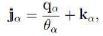

If the constitutive equations make the inequality non-valid then those constitutive equations are not admissible. That is why we can see the second law as the selection of physically admissible constitutive models.

For technical convenience we put

we put

kα being referred to as extra-entropy flux. Hence we can write eq. (4) as

4 down

Substitution of sub of from (3) results in

sub of down

Using the Helmholtz free energy free energy we have

free energy down

Hence the second law is expressed by the Clausius-Duhem (CD) inequality

6

We now investigate the thermodynamic requirements on the pertinent constitutive equations.

Solid-fluid mixtures

With the view of modelling porous media, we consider a binary mixture with a solid and a fluid; we denote by the subscripts f, s the quantities pertaining to the fluid and solid constituents. The fluid is viscous and compressible. To describe relaxation effects, both stress and heat flux are modelled through rate equations as is the case for the Maxwell (or Maxwell-Wiechert) fluid and the Maxwell-Cattaneo equation of the heat flux; account of nonlocality through higher-order derivative is developed in [10] via the Guyer-Krumhansl form.

Owing to objectivity, the rate has to be expressed through an objective time derivative. The simplest one is the corotational derivative namely

namely

for vectors a and tensors A while W is the pertinent spin tensor (Wf or Ws). Hence we assume

7,8

where Ks ∈ Sym is non-singular. If the rates vanish then eqs (7) and (8) reduce to the Navier-Stokes and Fourier laws; for formal simplicity the longitudinal viscosity coefficient is taken to be zero.

To frame these assumptions in a consistent thermodynamic setting we let

we let

and derive the constitutive equations for equ for of the fluid and the solid. We let θf = θs = θ while ∇ θf ≠ ∇ θs. Then we observe that

sigma 1

we put mf = − β(|u|)u, u = uf − us, and hence

sigma 2

With these assumptions the extra-entropy fluxes kf, ks turn out to be zero; to save writing we omit them. Hence the CD inequality takes the form

compute above

Compute com side and observe that the relations

com down

follow as a consequence of the linearity and arbitrariness of θ`f, θ`s trDf, (∇θf)`, (∇θs)`, `Df . Next we recall the identity `Es = FTsDsFs and notice that, by (7) and (8),

7, 8 down

and the like for qs. Thus we can write the remaining terms of the CD inequality as

and down

We first consider the dependence on Wf and Ws,

wf

The linearity on Wf,Ws and the arbitrariness of ts qf, qs imply that each term has to vanish; the vanishing of the second and third terms results in


9

Next since W ∈ Skw then for any tensors A,B we have A

hence hence  implies that

10

The linearity and arbitrariness of Df,Ds, Δθf, Δθs imply

11, 12

The CD inequality then reduces to

13

and hence each term has to be non-negative.

By using (11) and (12) we find

14

The symmetry conditions (9) and (10) hold identically while (13) holds if and only if

15

namely the expected relations for heat conductivities Ks, kf, shear viscosity μf, and interaction force coefficient β.

Dynamics of Viscous Fluids in Porous Media

The dynamics of the fluid is governed by the balance equations. With reference to the literature (e.g. [11] and refs therein), to simplify the notation we restrict attention to the fluid, omit the subscript f and use a superposed dot, ε˙, instead of a slash, ε’. The continuity equation and the equation of motion read

read down

where g is the acceleration gravity. The function βv generalizes Darcy’s model through the Forchheimer function β while, as usual, it is assumed vs = 0. According to (15) we have found that any β ≥ 0 is consistent with thermodynamics.

Things are more involved with the balance of energy, namely

name

By definition,

16

Hence the balance of energy involves hence side which requires that the rate equations (7), (8) are applied.

Conclusions

The thermodynamic analysis provides a complete scheme of dynamic equations for the flow of fluids in solids. Yet the general scheme so obtained is quite cumbersome thus justifying some approximations applied in the literature. Quite often β is taken to be constant but, foremost, the fluid is taken to incompressible, ∇ · v = 0, while while

The dependence of ε on t and q is not considered and (see, e.g., [12]) ε is assumed to depend only on the temperature θ.

According to eqs (14) and (16) the free energy ε is independent of t and q if

17

c1, c2 being positive parameters possibly dependent on pf . Though this looks a very specific model, eq. (17) is the necessary assumption that makes ε (θρ ) thermodynamically consistent if Tf and qf are subject to the rate equations (7) and (8).
Acknowledgments

The research leading to this work has been developed under the auspices of INDAM-GNFM.

References

  1. Hennessy MG, Myers TG (2020) Guyer-Krumhansl heat conduction in thermoreflectance experiments, in Multidisciplinary Mathematical Modelling. Applications of Mathematics to the Real World, F. Font and T.G. Myers eds, pp. 21-34, Springer Cham.
  2. Cahill DG et al (2014) Nanoscale thermal transport, II Appl Phys Rev 1: 011305.
  3. Dong Y (2015) Dynamical Analysis of Non-Fourier Heat Conduction and Its Application in Nanosystems, Springer, New York.
  4. Truesdell C (1984) Rational Thermodynamics, Springer, New York.
  5. Morro A, Giorgi C (2023) Mathematical Modelling of Continuum Physics, Birkh¨auser, Cham.
  6. Truesdell C (1969) Rational Thermodynamics: A Course Of Lectures On Selected Topics, McGraw-Hill, New York.
  7. M¨uller I (1968) A thermodynamic theory of mixtures of fluids. Arch Rational Mech Anal 28: 1-39.
  8. Bowen RM (1968) Thermochemistry of reacting materials. J Chem Phys 49: 1625-1637.
  9. Morro A (2022) Diffusion models of continuum physics. Nanotechnol Adv Mater Sci. 5: 1-6.
  10. Morro A (2023) On the Modelling of Heat Conduction in Crystals via Higher-grade Terms. Nanotechnol Adv Mater Sci 6 (3): 1-4.
  11. [11] Straughan B (2023) Thermal convection in a Brinkman-Darcy-Kelvin-Voigt fluid with a generalized Maxwell-Cattaneo law. Ann Univ Ferrara 69: 521-540.
  12. Payne LE, Song JC (1997) Continuous dependence on initial-time geometry and spatial geometry in generalized heat conduction. J Math Anal Appl 214: 173-190.

What are the ASPIRE Principles and Why Do They Matter for Post-Pandemic Education?

DOI: 10.31038/PSYJ.2024611


Although they were less likely to fall ill, the pandemic exacerbated difficulties for many young people across the world in terms of mental health, connection with others and widening gaps between the privileged and disadvantaged. Many governments were keen for students to ‘catch up’ on curriculum targets but others advocated for social and emotional issues to be addressed as a priority. Negative emotions inhibit cognitive pathways and learning is more accessible with higher levels of wellbeing. Referring to six principles of positive education, summarised by the acronym ASPIRE, this invited paper explored what happened to high school students worldwide in lockdown and what they need in education in a post-COVID world.

ASPIRE is an acronym for Agency, Safety, Positivity, Inclusion, Respect and Equity. These principles, when threaded through everything that happens in a school, can enhance both wellbeing and learning. They are based in the positive psychology literature [1-3] and also aligned with healthy child development.

Agency

This can be defined as having a voice and choice about what concerns you, the opposite of having actions and decisions made by others. Self-determination is now accepted as a pillar of wellbeing [4] and comprises autonomy, relatedness and competence. What happened in the pandemic was out of the control of young people and for some this had a negative impact on their wellbeing. Others however found a role in having a greater say in family life, such as supporting younger siblings. What is promising is that in many countries young people are taking a lead in post-COVID recovery with several initiatives highlighted in the article. Schools with a strong commitment to the pupil voice have reported positive outcomes, including more pro-social behaviour, stronger relationships and improved attainment and attendance [5].

Safety

Safety embraces physical, emotional and psychological safety. Although measures were taken to protect physical wellness for everyone in the pandemic, safety was compromised in many other ways with less access to avenues of support. This included increases in family violence, child abuse, on-line bullying and models of misogynistic behaviours. Going back to school was positive for some young people at risk but constant failure in an academic milieu undermines emotional safety and many students did not return to school after lockdown. When the pillars of ‘learning to be’ and ‘learning to live together’ are on offer in schools there is more opportunity for achievement. Social and emotional learning with an appropriately safe and solution-focused pedagogy also has the potential to address issues that undermine safety, such as bullying, addictions, social media use, toxic masculinity, and racism.

Positivity

Young people are increasingly unhappy across the world and since the pandemic are even more at risk of poor mental health [6]. It therefore makes sense to focus on helping young people feel better about themselves, other people and the world around them. Although important to acknowledge negative emotions there is also a wealth of interventions that promote optimism, hope, gratitude, resilience and coping skills. The quality of relationships, especially language makes the most difference. Strengths based conversations focus on what is going well and the qualities that students bring to learning and life.

Inclusion

Many young people experienced a sense of loneliness during the pandemic as they did not have their peer group around to help them explore and develop their sense of identity. Social media use increased and although that enabled positive connections for some it also had a negative impact in teenagers comparing themselves negatively to others and perhaps getting involved in closed groups who promoted conspiracy theories or right-wing ideology. Having a sense of belonging is critical to wellbeing and resilience but this needs to be inclusive of all, not exclusive. A sense of belonging at school means being accepted, being supported and making progress in learning. Prilleltensky [7] writes about ‘mattering‘ which he defines as being valued but also being able to contribute value. As students lost social confidence in the pandemic they need opportunities talk with their peers about things that concern them and regain friendship skills. In Circle Solutions, students are regularly mixed up out of their usual social groups to talk with those they don’t know. This has far reaching impacts for promoting class cohesion, supportive networks and resilience [8-10].

Respect

Respect is for individuals, their ideas, their rights and their culture. It is encapsulated in the Golden Rule-treating others as you would wish to be treated. In some contexts, respect was enhanced in the pandemic as the role of health and key-workers was acknowledged and parents trying to teach their own children at home developed a new respect for teachers. In schools respect is demonstrated in courteous communications, in acknowledging context, in not jumping to judgement and listening well. It means treating everyone with dignity, regardless of their background or position. It also means respecting diversity and the different needs and abilities that students have. When we have a ‘one-size’ fits all education system with homogenous expectations we may lose respect for those that do not ‘fit’. This is having negative repercussions across society and requires a rethinking of what education is for.

Equity

The pandemic exacerbated inequality across the world, not only for those in poverty, but also related to gender and geography. Access to on-line learning was restricted to those who could afford good technology, had space to use this and were living in areas with reliable internet. Girls often found themselves looking after others rather than maintaining their education. Equity is not the same as equality-it refers to fairness and flexibility-being able to offer students the resources and support that give them the same opportunities as others. That is clearly not happening in many countries. The barriers to equity include a lack of investment in state education, a competitive ethos and the inflexibility of the curriculum, focused predominantly on academic knowledge rather than the skills and understanding that facilitate a life lived well. Equity therefore needs to address issues of citizenship, ensuring that everyone is aware of issues of power and influence and what is needed to build a fairer, more cohesive society where everyone has the opportunity to thrive and be valued for what they contribute.

Conclusion

A report for UNESCO notes that the pandemic has not only revealed vulnerabilities across the world, but also human resourcefulness and potential. They ask that world leaders commit to strengthen education as a common good. In education, as in health, we are safe when everybody is safe; we flourish when everybody flourishes. The ASPIRE principles show how education might lead the way.

References

  1. Roffey S (2012) Positive Relationships: Evidence based practice across the worldSpringer.
  2. Roffey S (2020) Circle Solutions for Student Wellbeing. Relationships, resilience, responsibility. Sage.
  3. Kern P, Weymeher M (eds) (2021) The Palgrave Handbook of Positive Education. Palgrave
  4. Deci EL, Ryan RM (2017) Self-Determination Theory: Basic Psychological Needs in Motivation, Development and Wellness. The Guilford. Press: New York, NY, USA, 2017.
  5. Mentally Heathy Schools: Pupil Voice (2023).
  6. The World Happiness Report 2023.
  7. Prilleltensky I (2020) Mattering at the intersection of psychology, philosophy and politics. J. Community Psychol 65: 16-34.
  8. Dobia B, Parada R, Roffey S, Smith M (2019) Social and Emotional Learning: From Individual Skills to Group Cohesion. Educational and Child Psychology 36: 79-90.
  9. Martinsone B, Stokenberga I, Damberga I, Supe I, Simões C, et al. (2022) Adolescent social emotional skills, resilience and behavioral problems during the COVID-19 pandemic: A longitudinal study in three European countries. Psychiatry.1: 942692. [crossref]
  10. UNESCO (2023) International Commission on the Futures of Education.

Enhancing Orthodontic Strategies: Evaluating Miniplate Use in Skeletal Class III Malocclusions

DOI: 10.31038/JDMR.2023613

Abstract

Skeletal Class III malocclusions pose significant challenges in orthodontic treatment, often requiring a multidisciplinary approach for successful correction. Miniplates have emerged as a valuable adjunct in orthodontic therapy, offering enhanced skeletal anchorage and facilitating complex movements. This article aims to evaluate orthodontic habits and practices concerning the use of miniplates in addressing Skeletal Class III malocclusions, analyzing their efficacy, challenges, and current trends.

Introduction

The aim is to discuss the challenges associated with correcting Skeletal Class III malocclusions using traditional methods like facemasks and introduces the use of titanium miniplates by De Clerck as an alternative. The miniplate technique aims to mitigate skeletal effects while advancing the zygomaticomaxillary complex, thereby reducing undesirable impacts on facial aesthetics and dental compensationSkeletal Class III malocclusions are characterized by mandibular prognathism or maxillary retrognathism, leading to functional and esthetic concerns. The complexity of Skeletal Class III malocclusions, arising from maxillary deficiency or mandibular prognathism, influenced by genetic and environmental factors [1,2] occupates many clinicians. Traditional approaches, like the facemask, used at young age, primarily address sagittal disharmony in growing children but often lead to dentoalveolar compensations and potential skeletal effects, with significant relapse in preadolescents [3,4]. Traditional orthodontic approaches often face limitations in achieving optimal results, necessitating supplementary methods like miniplates for reinforcement. The utilization of miniplates as temporary anchorage devices has gained popularity, revolutionizing treatment strategies for Class III malocclusions [3].

Miniplates in Orthodontics

Miniplates, also known as temporary anchorage devices (TADs), are titanium implants placed into bone to provide absolute anchorage for orthodontic tooth movement. Their use in Class III correction involves strategic placement to counteract undesired skeletal growth patterns, aiding in achieving outcomes that are more predictable. De Clerck’s introduction of titanium miniplates for Class III correction represents a significant shift in treatment methodology [2,5,6]. The strategic placement of these miniplates in the maxilla and mandible, coupled with inter-arch elastics, allows for continuous application without extra-oral devices. This technique aims to advance the zygomaticomaxillary complex while minimizing adverse skeletal effects [7-10].

Advantages and Considerations of Miniplate Technique

The miniplate system offers advantages such as continuous wear without extra-oral devices and potential avoidance of undesirable skeletal and dental compensations [10]. However, the timing of mandibular plate placement is contingent upon the eruption of mandibular canines to mitigate anatomical risks [8]. Regular elastics changes and the possibility of incorporating composite bite-ramps to bypass anterior crossbites illustrate the adaptability of this technique to individual patient needs. Assessing factors that hinder the implementation of this technique could shed light on barriers to its widespread adoption and guide improvements in its application.

Evaluation of Orthodontic Habits and Practices

Clinical Efficacy

Numerous studies demonstrate the effectiveness of miniplates in Class III treatment, showcasing favorable outcomes in controlling skeletal discrepancies and facilitating complex orthodontic movements [10-12].

Challenges and Limitations

Despite their advantages, challenges exist, including potential risks of infection, implant failure, or interference with adjacent structures. Moreover, patient compliance and meticulous surgical technique are crucial for successful integration and stability.

Treatment Approaches

Diverse treatment protocols exist, ranging from unilateral to bilateral miniplate placements, depending on the severity and nature of the malocclusion. Combining miniplates with orthognathic surgery or utilizing them solely for orthodontic camouflage influences treatment approaches.

Current Trends and Innovations

Ongoing research aims to refine miniplate designs, improve insertion techniques, and explore novel materials to enhance biocompatibility and reduce potential complications.

The data presented in our recent survey (Friang et al.) sheds light on the preferences and practices of orthodontists regarding the management of Skeletal Class III malocclusions, notably focusing on the utilization of miniplates as a treatment modality. The findings encompass aspects such as practitioner experience, treatment modalities employed, obstacles encountered, treatment duration, satisfaction levels, observed effects, and potential relapses associated with miniplate usage.

Orthodontist Experience and Treatment Choices

The distribution of practitioners based on experience elucidates an interesting trend in treatment preference. Less experienced orthodontists (<5 years) exhibit a propensity towards prescribing miniplates, while those with more experience (>5 years) favor traditional methods like the facemask or orthosurgical treatments. This shift in treatment choices among practitioners with varying experience levels signifies an evolving trend in the orthodontic landscape.

Practitioner Preference and Prescription Patterns

The statistical analysis demonstrates a significant correlation between practitioner experience and the type of treatment prescribed. This includes a contrast in prescriptions between miniplates and facemasks, highlighting a divergence in approach based on experience (p=1.26 x 10⁻⁶). Moreover, practitioners with less experience seem to opt for miniplates more frequently, while those with greater experience tend to prefer facemask treatments or orthosurgical interventions (p=0.03, p=0.02 respectively, α=95%).

Obstacles and Patient-Related Factors

Obstacles hindering miniplate usage predominantly include high financial costs, perceived treatment burden, fear of pain, logistical challenges, and issues related to patient cooperation. These factors impede the widespread adoption of miniplates and warrant attention for enhancing patient acceptance and accessibility to advanced orthodontic modalities.

Treatment Duration, Satisfaction, and Observations

The active treatment duration primarily spans 6 to 18 months, with a majority of practitioners satisfied or very satisfied with the obtained results. Notably, a significant percentage (14%) expresses dissatisfaction. Most practitioners report observing skeletal effects post-miniplate usage, such as maxillary protrusion, mandibular clockwise rotation, and, to a lesser extent, mandibular setback. Additionally, observed dentoalveolar effects and relapse occurrences post-treatment are noteworthy considerations (Figures 1-10).

fig 1-10

Figure 1-10: Dentoalveolar effects and relapse occurrences post-treatment

Conclusion and Implications

The study provides valuable insights into the preferences, challenges, and outcomes associated with miniplate usage in managing Skeletal Class III malocclusions. The findings underscore the impact of practitioner experience on treatment choices and highlight the multifaceted challenges influencing the adoption and execution of advanced orthodontic techniques. Addressing these obstacles could enhance patient acceptance and overall treatment outcomes, ultimately contributing to improved patient care in orthodontic practice. Further research and strategies focused on overcoming these hurdles would be instrumental in refining and expanding the use of advanced orthodontic modalities like miniplates.

The utilization of miniplates in correcting Skeletal Class III malocclusions represents a paradigm shift in orthodontic therapy. Despite challenges, they offer valuable benefits in enhancing treatment outcomes. Continued advancements in technology and research promise further refinement and optimization of miniplate utilization, ensuring improved patient care and successful management of Class III malocclusions. Studying Orthodontists’ practices and understanding potential barriers could contribute to refining and expanding the use of this technique, potentially offering more efficient and patient-friendly treatment options for individuals with moderate Skeletal Class III malocclusions.

References

  1. Proffit WR, Fields Jr HW, Sarver DM (2018) Contemporary orthodontics. Elsevier Health Sciences; 2018.
  2. De Clerck H, Nguyen T, De Mot B, Wilson M (2011) A prospective study on the effects of the biscupid intrusion appliance in the treatment of anterior open bite. European Journal of Orthodontics 33: 298-305. [crossref]
  3. Ngan P, Moon W (2015) Evolution of Class III treatment in orthodontics. American Journal of Orthodontics and Dentofacial Orthopedics 148: 22-36.
  4. Sivieri A, Manni A, Bonetti GA, et al. (2020) Treatment of Class III malocclusion with skeletal anchorage: A review of the literature. Prog Orthod 21: 9. [crossref]
  5. Baccetti T, Franchi L, McNamara Jr JA (2002) An improved version of the cervical vertebral maturation (CVM) method for the assessment of mandibular growth. Angle Orthodontist 72: 316-323. [crossref]
  6. De Clerck H, Geerinckx V, Siciliano S (2002) The zygoma anchor. Journal of Clinical Orthodontics 36: 455-459.
  7. Wilmes B, Ludwig B (2011) Uprighting mesially impacted mandibular permanent second molars using orthodontic miniscrew anchorage. Journal of Clinical Orthodontics 45: 443-448. [crossref]
  8. Bae SM, Park HS, Kyung HM, Kwon OW, Sung JH (2022) Clinical application of micro-implant anchorage. Journal of Clinical Orthodontics 36: 298-302. [crossref]
  9. Park HS, Lee SK, Kwon TG (2007) Treatment of Class III malocclusion using a non-surgical approach with microscrew implants. Angle Orthod 77: 1119-1128.
  10. Cha JY, Kim HJ, Hwang CJ (2018) Skeletal anchorage for orthodontic correction of severe Class III malocclusion. Am J Orthod Dentofacial Orthop 153: 321-330.
  11. Ludwig B, Glasl B, Bowman SJ, Wilmes B, Kinzinger GS et al. (2011) Anatomical guidelines for miniscrew insertion: Palatal sites. J Clin Orthod 2011;45: 433-441. [crossref]
  12. Kircelli BH, Pektas ZO, Uckan S (2011) Orthopedic protraction with skeletal anchorage in a patient with maxillary hypoplasia and hypodontia. Am J Orthod Dentofacial Orthop 139: 699-712. [crossref]

Motivating Mammography: Combining AI and Mind Genomics to Discover What a Patient Needs to Hear

DOI: 10.31038/AWHC.2023645

Abstract

The study focused on the messages which might enhance women’s participation in mammogram screening. The study followed the Mind Genomics process of presenting respondents with different combinations of relevant messages, identifying the strong performing messages for each respondent, and clustering respondents on the basis of the patterns of elements which drive positive responses. The messages themselves were developed using AI, allowing the researcher ahead of the experiment to gain a broad education-type overview of the types of messages that could be used. Two mind-sets of respondents emerged, representing different patterns of messages which are deemed motivating. Mind-Set 1, “Motivated and Informed Women,” seeks improved breast health, values screenings, with the goal to minimize health risk, and maximize well-being. Mind-Set 2, “Concerns and Motivations,” focuses on the mammogram experience itself, the mammogram risks, comfort, and cost, demanding accurate diagnoses. It may be possible to increase mammogram screening by assigning a person to one of these mind-sets. The Mind-Set Assigner (previously called Personal Viewpoint Identifier (PVI)) comprises a set of six questions based upon the study, the patterns of answers to which assign a person to either Mind-Set1 or Mind-Set 2. The Mind-Set assigner offers the promise of a personalized approach to understanding what people need to hear to ensure better health.

Introduction

Despite its significant advantages in understanding human perception and decision-making, contemporary technology involving health messages is confronted at every turn by hosts of drawbacks and challenges. Among these, data privacy and security concerns loom large as the collection and storage of vast amounts of personal data raise questions about safeguarding sensitive information [1]. Moreover, the potential for bias and unfairness in machine learning algorithms remains an ongoing challenge, demanding continual efforts to ensure fairness and reduce [2]. A consequence of the efforts to maintain privacy in a data-intensive world is the focus on making sure that key information about a patient is safeguarded [3]. Those efforts move the focus from advancing by understanding the patient as a human being towards protecting the patient who could be the source of possibly compromising data.

The focus of this paper moves attention from understanding the body and behavior of the patient to the mind of the patient as a consumer of the health care experience. The objective of this paper is to showcase what can be achieved in just a few hours, even with limited prior knowledge of a subject. Our goal is to gain insights into how people perceive the ordinary world, make decisions, and, perhaps most crucially, understand the myriad ways in which everyday individuals view topics in their daily lives using the innovative approach of Mind Genomics. Instead of focusing on exceptional or unusual circumstances, Mind Genomics centers on the daily, commonplace world in which most people live.

For this exercise, we have chosen to examine the issue of mammography, a vital aspect of healthcare, as it pertains to women’s participation in breast cancer screening. The focus will be on the person as a receiver of heath messages, the person being likened to a consumer, the health messages being the motivational communications to get the consumer, the woman, to buy the product.

When healthcare providers screen patients for breast cancer, their primary objective is to encourage greater participation among women in screening mammograms. Increasing participation needs a multifaceted approach which goes beyond simply knowing what to say. Rather, it is critical to understand and interpret women’s responses and, in turn, effectively address their concerns. Communication plays a pivotal role in this process. Providers must effectively convey the importance of regular screenings and underscore the potential to save lives through early detection.

The literature about mammography is large, not surprisingly because of the pivotal role of mammography in detecting breast cancer. The existing literature recognizes the importance of the doctor-patient relationship, and the emotions involved in breast cancer. There is a significant literature on mammograms and mammography. Part of the focus is on the medical aspects of mammograms as a preventive for breast cancer, which belongs in the world of biological and medical science [4,5].

Unfortunately, the existing literature often falls short when it comes to delving into the communicating with patients, even though the literature does recognize the psychological and emotional effects on individuals undergoing mammography, with a predominant focus on clinical and technical facets [6], as well as keeping appointments [7-9]. Whereas some studies do touch upon the significance of communication and addressing patient concerns, there remains the important gap regarding the specific language, words, and customized communication strategies which truly resonate with individuals.

Closing this gap by understanding the unique needs, assessing the psychological impact, and recognizing the decision-making processes of patients is paramount. Such an approach can significantly enhance the effectiveness of breast cancer screening and improve the overall patient experience, ultimately leading to increased participation rates and earlier detection of cancer.

The important thing to keep in mind is that the approach presented here breaks new intellectual ground, lying between the world of the scientific establishment and the world of the practitioner. As will be shown below, the objective is to understand the way the person thinks, letting the patterns which emerge suggest directions for research. In scientific parlance, the traditional way, the hypothetico-deductive system [10] with its effort to create science step-by-step gives way to the more intellectually adventurous but less rigorous effort called ‘grounded theory’ [11]. In a sense the approach presented here will end up being a ‘user’s manual of the everyday mind.’

Mind Genomics Offers a New Perspective on Thinking

Surveys are popular, easy to use, and understand. However, polls have fundamental issues. One of the worst is susceptibility to respondent bias toward giving the “correct answer.” This bias is especially harmful when the topic is emotional, or when the respondent doesn’t know the answer. The desire to appear positive often leads to hesitation to respond negatively [12].

A second, subtle bias is lack of context. The respondent is instructed to rate or to rank relevance of distinct characteristics like price, nutrition, brand, etc. Respondents typically adapt their rating criteria to fit the thing being rated. Interspersing topic examples is better. Instead of asking how important ‘price’ is against ‘availability in store’, a more productive technique may be to present different combinations of features, and afterwards deconstruct the response to the combination into the contribution of the single components of the combinations.

Mind Genomics has been developed to address these biases. Mind Genomics combines experimental psychology (psychophysics), statistics (experimental design), and consumer research (focus on the world as is, rather than put the respondent through an artificial situation, unless that artificial situation is of direct scientific interest). The past history and future opportunities Mind Genomics have been described in previous papers [13-15].

Mind Genomics traces its history to three disciplines:

  1. Psychophysics – The oldest discipline of experimental psychology. Psychophysics examines how humans interpret external inputs. Traditional psychophysics connects the physical and psychological worlds. Traditional psychophysics focuses on ‘measuring’ the intensity of perception, such as beverage sweetness [16].
  2. Experimental design is a discipline in statistics which examines how independent factors combine to create a dependent variable. Mind Genomics adopts that concept but focuses on how thoughts interact. It might be called the ‘algebra of the mind.’
  3. Consumer research explores daily life. Mind Genomics explores everyday scenarios rather than developing contrived ones, in its effort to understand the way people think. Consumer research shows how individuals act in the real world as consumers and humans.

The Mind Genomics approach has evolved from paper and pencil evaluations of vignettes (combinations of ideas or messages, now called ‘elements’) to a DIY (do it yourself) system which allows rapid, inexpensive study creation using a template combined with artificial intelligence to help the researcher think through a topic, along with subsequent automated analysis of the data and reporting in a user-friendly set of tables.

In early versions of the Mind Genomics science, it was up to researchers to develop the raw materials, so-called ‘elements’ or messages. The elements often numbered in the dozens, and occasionally far more. The researcher categorized the elements into like-ideas, manually created the vignettes, viz., combinations of elements, checking that the elements were statistically independent of each other, and that mutually contradictory elements never appeared together. The process was tedious, frustrating, required a great deal of up-front preparation, took a long time, and ended being expensive when the time of the researcher was factored-in to the total cost.

Implementing the early Mind Genomics studies was also a challenge, and expensive. The studies were presented on a local computer, with respondents pre-recruited to participate. All respondents evaluated a randomized set of combinations or vignettes, selected from the original large set of vignettes. During the course of the supervised evaluation on the local computer, the respondent would end up evaluating 50-100 vignettes in 20-30 minutes. The results were pooled and analyzed by total panel and self-identified subgroups, with subgroups formed by a questionnaire about attitudes and practices on the problem. The Internet evolved the Mind Genomics approach to a structured, simple design (four categories or now four ‘questions’, four elements or answers per category), a basic experimental design with 24 statistically appropriate combinations. The underlying design ensured that the 16 elements are statistically independent and set up for immediate analysis. The data could be analyzed by OLS (ordinary least squares) regression at the level of a defined group or respondents, or even at the level of an individual respondent. Furthermore, Mind Genomics ensured that each respondent would evaluate 24 different vignettes, or combinations, a method halfway between the constricting requirements of a single design replicated for each respondent, and the combinations encountered in a cross-sectional study with the combinations of independent variables being uncontrolled. The benefit of the permuted design was that it was no longer necessary to know the answer before doing the study. The study would end up covering many of the possible combinations, using a systematized permutation system [17], reducing a lot of the need for prior knowledge.

A Worked Example – What Goes Through the Mind of a Female Patient When Thinking about Mammography?

The rest of this paper shows study design, implementation, and analysis of a study on communications about why a patient should consider mammography. The study goal was to generate a new topic and advance it via AI. AI becomes a ‘second set of eyes’ for question-and-answer-development at the time of set-up, and for discovery of themes at the time of analysis.

Mind Genomics starts with a query, a brief paragraph to explains the situation and the research objective. The statement is constructed to allow the embedded link to AI (Idea Coach), to generate the appropriate query to Chat GPT 3.5 (Liu et. al., 2023) [18]. For this study, the brief paragraph was: Explain to me exactly how I should talk to women so I can convince them to get their yearly mammogram? I want to talk to them as a doctor who is concerned about their health as their mother or their daughter. please make the question easy to understand, filled with emotion and no more than 12 words. Figure 1 shows a schematic of these first steps of the set-up process.

fig 1

Figure 1: Schematic process. Panel A shows the space for four questions. Panel B shows a schematic ‘general background prompt’ given to Idea Coach.

Generating Questions to Answer the General Background Prompt

The researcher requests Idea Coach (AI) to provide 15 questions based upon the general prompt (see Figure 1, Panel B). The researcher can vary the general background prompt given to Idea Coach or can re-run the same request several times. The results are provided immediately, as well as recorded in the Idea Book, along with a set of AI based ‘summarizations’ and expansions of the topic (Table 1). These questions may be ‘on target.’ If not, the researcher can tweak the paragraph to guide the AI, run Idea Coach again, and indeed several times, each time learning more about the topic through the questions provided.

Table 1: The first set of questions emerging from the Idea Coach in response to the paragraph written by the research, which generates the query. The text in in Table comes from the Idea Book provided to the researcher after the element creation has been completed, both for questions and for answers.

tab 1

A user-trend has emerged during the past several months since the Idea Coach was incorporated into Mind Genomics. ‘Newbies’, beginning researchers, find this process with the Idea Coach to be pleasant, entertaining, and anxiety-reducing. Their excitement about research increases. And, as a bonus, after some experiences with Idea Coach, even in one study, the new researcher begins to feel empowered to add in her or his own questions.

Idea Coach now analyzes returned questions instead of just coaching. Table 2 shows how Idea Coach (viz., AI) uses a cue about ‘themes’ to find commonalities in Table 1 queries. Again, the Idea Coach summarizes ‘themes’ for each researcher-generated question set. The researcher could use Idea Coach say 10x to get 10 theme analyses, one for each set of returned questions. One could analyze all themes for all aspects, but the bookkeeping to eliminate similar-but-not-identical issues would take time.

Table 2: Themes emerging from the set of questions returned in the first iteration of Idea Coach

tab 2

AI then finds ‘holes’ in themes, a major benefit. Table 3 presents the third analysis of the first set of questions, ‘what is missing.’

Table 3: Suggestion of ideas that may be missing from the set of questions returned by Idea Coach

tab 3

Finally, Tables 4-6 look at possible innovations in products and services.

Table 4: Suggestion of alternative viewpoints, viz., contrary ideas

tab 4

Table 5: Suggestion of the likely audience

tab 5

Table 6: Suggestion of innovations in products services, experiences, policies

tab 6

Creating Answers to Questions

The second step creates four answers to each question selected by the researcher. The researcher must come up with four answers to each question. The same process is followed, with Idea Coach providing sets of 15 answers to a question, and with the researcher selecting the four answers for each study. The final four sets of questions appear below. The substantive part of the question as returned by Idea Coach is shown in italics. The other part of the question, viz., the phrase ‘Elaborate in detail and in 15 words or less’ was added to the Idea Coach query to ensure simple to understand answers to the question.

  1. Question A: Elaborate in detail and in 15 words or less The importance of regular mammograms for women?”
  2. Question B: Elaborate in detail and in 15 words or less Any concerns or fears regarding mammograms?”
  3. Question C: Elaborate in detail and in 15 words or less Prioritize your health together. When can I expect you to schedule your mammogram?”
  4. Question D: Elaborate in detail and in 15 words or less The peace of mind that comes with early breast cancer detection?

Once again the process with Idea Coach ends up educating the researcher as the researcher continues to request the four answers for each question, with each request generating four answers. Many users consider this activity crucial. The shock of seeing 15 answers appear a few seconds after the question is asked is remarkable, and often quite motivating.

Each set of the 15 solutions undergoes the same set of AI analyses, similar in depth to the AI analyses above done for the questions, but with a few different queries. The first 15 answers to the first question appear in Table 7, which also shows the extensive AI summarization.

Table 7: The first set of answers to Question #1: Elaborate in detail and in 15 words or less the importance of regular mammograms for women

tab 7(1)

tab 7(2)

tab 7(3)

Table 8 shows the final set of questions and answers, edited by the researcher. In the actual study, the vignettes will comprise only answers (also called ‘elements’) in combinations comprising a minimum of two and a maximum of four answers, never more than one answer for a question. The questions never appear in the vignette, but rather are used only to guide the creation of the answers.

Table 8: The final set of questions and answers, after creation by Idea Coach and editing by the researcher

tab 8

The Self-profiling Classification

Mind Genomics allows the researcher to create a set of eight questions which allow the respondent to provide more about the topic from the respondent’s point of view. Table 9 shows the list of questions. Gender and age questions are asked as a matter of course in all Mind Genomics studies.

Table 9: Self profiling questions about the respondent

tab 9

In addition to the self-profiling classification questions, the respondent was instructed to complete an open-ended question about their own feelings and history regarding mammograms. The respondent completed this open-end question after having completed the Mind Genomics evaluation, and thus were ‘primed.’ Most respondents wrote detailed answers, an unusual occurrence in Mind Genomics studies of simpler, less emotionally tinged topics.

The Test Stimuli

Test stimuli combine answers to questions, with these answers henceforth called ‘elements’, and combinations called vignettes. The underlying experimental design prescribes the specific composition of each of the 24 vignettes. Each set of 24 vignettes can be analyzed in and of itself, to estimate the contribution of the elements to the response. The method of analysis is called OLS (ordinary least-squares) regression [19]. In the experimental design, each element occurs five times in 24 vignettes and absent from 19. Thus, each question contributes an element to 20 of the 24 vignettes and is absent from four of the 24 vignettes.

A key benefit of Mind Genomics is the ability to have each respondent evaluate virtually a totally unique set of vignettes, the aforementioned combinations of elements. The process to create the unique sets is called isomorphic permutation [17]. The benefit is that the researcher ends up testing many combinations, rather than testing a few combinations but many people. The happy consequence is that Mind Genomics empowers researchers to study a topic without having to have an idea of the answer ahead of time. The sheer scope of the combinations tested allow the research to ‘explore’ the unknown rather than having to ‘confirm’ one’s hypothesis.

We can contrast the Mind Genomics approach with the way typical research is conducted in the hypothetico-deductive system. Typical research studies aim to understand nature. Reducing the ‘noise’ around the ‘signal’ helps it emerge more clearly. Typically, this is done by decreasing superfluous variability, or ‘noise.’ In consumer research, dozens or hundreds of respondents evaluating the same vignettes is easy. Average variance, or standard error, diminishes with the square root of replicates. Four times the number of participants are needed to reduce variation around the mean by half. The above technique works when the researcher already ‘knows’ the right vignettes or elements, with the research ending up confirming hypotheses rather than discovering new realities. Mind Genomics focus on these new realities.

One reaction to the Mind Genomics experience is frustration, especially among professionals, far less so among non-professionals with no ‘ego’. Because there is no order or consistency, professionals and beginners alike think these pairings are random. The number of elements in a vignette varies, confusing those who try to outsmart the system. Many Mind Genomics research participants feel like they are guessing because they cannot see a pattern but ‘soldier on’, generally just doing what they have been instructed to do. These respondents participate in a state of relaxation and what might seem to be a lack of involvement, that seeming indifference actually being a good thing because it allows true feelings to emerge. The situation is even more frustrating to professionals, especially consumer researchers, who stop participating in the middle of the study because they become frustrated that they cannot ‘game the system.’

Respondent Orientation and Rating Scale

Every effort is made to lighten the mental ‘load’ of the respondent. The respondent need not read a long paragraph. All the respondent needs to know is that the topic is breast cancer. Everything else makes sense. The attitudes and judgments come from the respondent as she reads the vignette.

When presented with the vignettes, most respondents do not know what to do, since the vignettes are simply lists of phrases. The design of the vignette in that way is deliberate, making it easy for the respondent to ‘graze’ through the vignette and immediately give a rating. There is no effort made to fill the spaces between the elements with connective words, an effort which often backfires because the vignette goes from sparse, easy to scan, to dense, weighty, and simply obstructively boring.

Table 10 shows the very short orientation and the five scale values. The scale has two dimensions. The analysis uses newly created variables, each of which has only two values, ‘0’ to denote ‘no’ and ‘100’ to denote yes. That is, the responses 1-5 are transformed according to specific rules listed at the bottom half of Table 10. After creating these new binary variables, the Mind Genomics program adds a vanishingly small random number (<10-4) to ensure some minimal variability, a prophylactic step ensuring the variability necessary for subsequent creation of equations or ‘models’ using OLS (ordinary least-squares).

Table 10: The rating question, the two-dimensional scale, and the binary transformation

tab 1o

Creating the Database for Analysis

The previous stages established an analysis-ready database. The Mind Genomics program delivers test vignettes and gathers 5-point ratings and response time, the number of seconds elapsing between stimulus presentation and rating. After responding to the current vignette, the program automatically proceeds to the next one. Figure 2 shows a screen shot of the database returned automatically to the researcher in an Excel booklet after the Mind Genomics study has been completed and the result automatically analyzed. The first set of columns shows information about the respondent. The second set of columns shows information about the structure of the vignettes. The third set of columns shows the rating information and some of the transformed data. The last column shows the open-ended questions.

fig 2

Figure 2: Example of the first vignette evaluated by 10 respondents, with some of the transformations already created.

Creating ‘Models’ (equations) Which Relate the Presence/Absence of Elements to the Binary Ratings

A hallmark analysis of Mind Genomics reveals, though regression, the magnitude of ‘driving power’ of each element for the group of newly developed binary variables. OLS (ordinary least squares) regression is appropriate here, either for the data from each individual, or the data from a defined group. The term ‘appropriate’ is used because the 24 vignettes evaluated by each respondent were created through experimental design, enabling the subsequent regression analysis at the level of the individual respondent.

The OLS regression estimates the 16 parameters for this simple equation, doing so for all the newly created dependent variables (DV): DV = k1(A1) + k2(A2) … k16(D4)

The independent variables A1-D4 take on the value ‘1’ when the element appears in the vignette, and, in turn, take on the value ‘0’ when the element is absent from the vignette. This coding is called ‘dummy variable [20]. Nothing is known about the element except its presence or absence, hence the term ‘dummy’. The equation shows the best estimation of the 16 coefficients. The coefficients themselves are easy to understand. Let us consider the dependent variable ‘R54’, viz., ‘motivates.’ A coefficient of 10, for example, means that when the element is present in the vignette,10% of the vignettes will be rated ‘5’ or ‘4’. When the coefficient is 20, two times as many vignettes will be rated 5 or 4. Thus, if we were to come upon four elements, each generating a coefficient of 25, then 100% of the vignettes with those four elements would be rated 5 or 4. Statistical analysis suggest that coefficients around 15 are ‘significant’ at the 95% confidence level. Our focus is not so much on significant elements, but rather on the patterns which reveal themselves.

We can immediately identify patterns of respondent thinking from the patterns of the strong performing coefficients. In ordinary research these patterns would go undetected because the test stimuli have no ‘cognitive richness.’ Thus, the researcher would have to search deeply to find a story behind the pattern. The situation is easier in Mind Genomics because the text of each element has meaning so that the results become easier to interpret. A ‘story’ ends up emerging more readily.

Table 11 shows the pattern of coefficients for the binary variables developed in Table 10, and for response time. The form of the equation is always the same, as described above. No equation has an additive constant or ‘intercept’, simply because the intercept adds a complicating parameter which prevents the coefficients from being compared directly in terms of both magnitude and real meaning. The elements in Table 11 are sorted by the coefficient for R54 (motivates), the key dependent variable.

Table 11: Coefficients for the total panel, for response time (RT) and for five binary variables

tab 11

The strong performing elements are shaded.

  1. Response time (RT)-In most Mind Genomics studies the respondents rush through the study, with many elements almost skipped over, since they have RT coefficients of 0.2 to 0.5. Not so with mammography. It is worth noting that the respondent stopped to read and think about virtually all of the elements, since many elements have coefficients of 1.3 or higher for RT. These 101 respondents focused on the messages.
  2. Motivates me (R54). The convention for Mind Genomics studies is to shade coefficients of magnitude 21 or higher. Once again the results are startling. Nine of the 16 elements have coefficients of 21 or higher, a ‘first’ in Mind Genomics, and a signal that the topic is exceptionally important. Despite the strong performance of the elements, however, there is no apparent pattern in terms of what makes an element perform strongly.
  3. Emotional reaction (R52) also shows many strong performing elements, but again no clear patterns.
  4. The binary variable, R41 (no emotional reaction) shows one moderate performing element. The one which may not drive an emotional reaction is C2 (It’s time to prioritize your heath make that mammogram appointment). There is no clear story for binary variable R41.
  5. The binary variable R21 (does not motivate) show no elements which fail to motivate.
  6. The binary variable R3 (don’t know) shows no strong performing elements.

If we were to sum up the results, we would conclude that the elements hold the attention of the respondent, motivate quite strongly, drive an emotional reaction. We also should conclude that there is no clear pattern.

One of the benefits of Mind Genomics is the ability for AI to summarize the patterns among the strong performing elements, much as AI does when creating the Question Book at the set-up of the project. Table 12 shows the AI summarization based upon the results from the total panel.

Table 12: The summarization of performance of strong element(s) for the Total Panel by AI embedded in www.BimiLeap.com, the Mind Genomics platform.

tab 12(1)

tab 12(2)

The next level of analysis in the search for meaningful patterns focuses on the respondent’s age. Table 13 shows a richer pattern of results, focusing only on R54, Motivates. There are many coefficients which exceed the cut-off value of 21, and thus the pattern is still elusive. The 21 respondents age 65+ show the lowest values for the coefficients.

Table 13: Strong performing elements for Total Panel and four subgroups defied by the respondent’s age

tab 13

Recall that at the start of the Mind Genomics experiment, the respondent was asked to select answers to two questions, one asking about knowledge about breast cancer, and the other asking about how breast cancer would affect her life. Table 14 shows the remarkable effects of knowing about breast cancer and expectations about life with breast cancer. The patterns across groups become quite clear. For those who either do not know about breast cancer or who have not thought about it, the elements are moderate, but most do not reach the threshold of 21 to be shaded. One group in particular deserves a note. That group of respondents comprises those who when asked about their knowledge of breast cancer selected the answer: I know a lot because I have a relative who has it. They ended up saying that they are strongly motivated by all of the elements except the last set, about peace of mind from early detection. That pattern makes a great deal of sense and is not immediately intuitive. This group has gone beyond peace of mind into the personal angsts accompanying experience with breast cancer, whether breast cancer has struck oneself or a family member, or friend.

Table 14: Strong performing elements for Total Panel and two sets of subgroups, defined by knowledge of breast cancer, and by selected reactions to the prospect of coming down with breast cancer.

tab 14

Focusing Opportunities by Uncovering Mind-sets

Mind Genomics searches for intuitively obvious patterns of coefficients. Without dancing around the data, spinning theories, and creating stories, the researcher should be struck by ‘ocular trauma’—that is, the patterns should ‘hit one squarely between the eyes.’

The coefficients for the different subgroups identified through the self-profiling classification may be strongly positive, but there are no clear patterns. Tables 13 and 14 simply fail to reveal a pattern. One might strain to develop a credible explanation, but that goes against the worldview embodied in the phrase ‘ocular trauma’. Hypotheses and stories of what may be happening do not constitute science, but simply conjectures. We need a quantitative method which advances our thinking.

The answer to the issue of ‘ocular trauma’ and ‘self-evident patterns’ may emerge from a well-accepted class of statistical procedure known as ‘clustering’. Clustering methods sort items into mutually exclusive, exhaustive groups using mathematical criteria. The researcher specifies the number of groups, intragroup coherence, and intergroup distance, and calculation follows. The researcher names the groups (interpretability) after the exercise.

Numerous statistical methods have been developed to cluster objects. The approach currently used by Mind Genomics is known as k-means clustering [21]. The objects are our 101 female respondents, each of whom generates 16 coefficients for R54, ‘motivates’. The individual-level modeling is valid for these data because each respondent evaluated a unique set of 24 vignettes laid out by experimental design, and because the newly created binary variables, such as R54, were guaranteed to exhibit some minimal level of variable by the prophylactic addition of a vanishingly small random number.

K-means clustering calculates the “distance” between each pair of people (1-Pearson Correlation). The strength of the linear relation relationship between two comparable data points is shown by the Pearson Correlation. Two study respondents are separated by zero distance (1-1 = 0) when the Pearson Correlation is 1. Two study respondents are separated by the maximum distance (1–1 = 2) when the Pearson Correlation is-1, and the patterns of coefficients go in opposite directions.

Table 15 shows the coefficients for the two-cluster solution. These clusters are called ‘mind-sets’ in the language of Mind Genomics. They are more readily interpretable. Mind-Set 1 is clearly most strongly motivated by the appeal to taking control of one’s health. Mind-Set 2 is clearly more strongly motivated by information, by knowing the benefits and negatives of regular mammograms.

Table 15: Strong performing elements for Total Panel and the two emergent mind-sets (MS 1 and MS 2). The labels are assigned by the researcher.. All coefficients of 21 or higher are shown in shaded cells. The equations are estimated without an additive constant (viz., forced through the origin).

tab 15

Table 16A shows the full set of coefficients for Mind-Set 1, Take control of your health through mammograms. These are the set of newly created binary dependent variables. Table 16B shows the same full set of coefficients for Mind Set 2, Benefit and negatives of mammograms Tables 16A and 16B show shaded cells for Response Times of 1.6 seconds or longer, highlighting those elements which engage attention. For R54 (Motivates) the elements which motivate are also highlighted, with values of 21 or higher. Finally for other rating variables, the threshold level has been lowered to 16+. Elements with ‘0’ or negative coefficients are presented with a blank cell.

Table 16 A: Coefficients for key dependent variables for Mind-Set 1 – Take control of your health through mammograms

tab 16(A)

Table 16 B: Coefficients for key dependent variables for Mind-Set 2 – Benefits and negatives of mammograms

tab 16(B)

Measuring the Performance of the Research Results Using the IDT (Index of Divergent Thought)

One of the critiques levelled against Mind Genomics is that the simple-to-use templated form makes the research available to anyone, and that the automated analyses done routinely after the data has been collected allows anyone to do powerful research of the type called ‘conjoint analysis’ [22]. The criticism is valid. Indeed, following the approach laid out by Mind Genomics enables a school child to do a study, and most certainly a high school student [23]. With this simplicity of process, and with the widespread available of computation, even on the smart phone, how does the world of science evaluate the contribution of the research? If the world of daily issues can be investigated with profound tools by inexperienced researchers, then can we measures the strength of the research instead of relying on the reputation of the researcher?

The answer to the foregoing can be ‘yes’ if we create an objective system to measure the strength of the research. One way to do this is the IDT, Index of Divergent Thought. The IDT uses the coefficients, or more properly the squares of the coefficients, to assess the strength of the research. Table 17 shows the computational formula. The IDT is operationally defined. For the computation of the IDT the researcher first must create the two-mind-set solution and then the three-mind-set solution, respectively, no matter which mind-set solution ends up being accepted.

Table 17: The IDT (index of divergent thought) for the mammogram study, based upon the coefficients for R54 (motivates)

tab 17

Typically, novice researchers with no really strong ideas end up with IDT values around 50-60. Good research, the type with meaningful patterns, ends up with IDT values of 65-80. Really strong data, viz. studies with high coefficients, end up with IDT values of 80+, although in such cases experience suggests that all of the mind-sets respond strongly to the elements, and thus the segmentation may not be clear. These numbers for the IDT are not engraved in stone, but rather are preliminary numbers after six months of studies addressing a variety of topics with Mind Genomics. Whether the high IDT value comes from an interesting topic or comes from powerful research is not a question that can as yet be answered.

What We have Learned-AI Summarization Elements Which ‘Motivate’ Mind-Sets 1 and 2, Respectively

A key benefit of Mind Genomics is the ability to summarize the data using the criteria defined by the researcher. Just as we were able to ‘summarize’ the different questions and answers using Idea Coach, we are now able to summarize the findings for Mind-Sets 1 and 2, respectively Tables 18A and 18B show this summarization, based upon the dependent variable R54, motivates, and based upon the patterns and meaning generated by those elements with coefficients 21 or higher. Table 18A shows the AI summarization of the strong performing elements for Mind-Set 1. Table 18B shows the AI summarization of the strong performing elements for Mind-Set 2.

Table 18 A: AI summarization of strong performing elements for R54 (motivates) for Mind-Set 1

tab 18A(1)

tab 18A(2)

Table 18 B: AI summarization of strong performing elements for R54 (motivates) for Mind-Set 2

tab 18B(1)

tab 18B(2)

Finding Mind-sets in the Population

The Mind Genomics approach works with a relatively few number of respondents, but from those respondents uncovers mind-sets, and through the strong performing elements knows the tonality of the messages and even some of the text of the messages to which the mind-sets will respond. One cannot perform a Mind Genomics study on millions of women, however, to analyze their data, and then assign each woman to the appropriate mind-set for making appointments for a mammography. Such a capability would be wonderful, but not feasible.

To address the issue of assigning a new person to a mind-set, Moskowitz and colleagues developed the PVI, the personal viewpoint identifier. The PVI uses the data from the study, putting it into a simulator, and identifying the best set of elements and their weights in order to assign a new person to one of the two mind-sets.

The PVI system has been embedded in an easy-to-use computer program (www.PVI360.com), linked to the data from a Mind Genomics study.

Figure 3 Panel A shows the first part of the PVI, which gathers information from the respondent. It is here that one can create a registry of individuals, who give their permission to be contacted for further research.

Figure 3 Panel B shows the actual set of six questions, comprising six statements taken directly from the research study, but presented to the respondent as a set of questions with two answers.

Figure 3 Panel C shows the feedback to the researcher or to the respondent about mind-set membership given the responses.

Figure 3 Panel D shows the set-up screen that the researcher uses to transfer summary data from the Mind Genomics results to the input for the PVI. The task takes less than five minutes.

fig 3

Figure 3: Panel A shows the qualification and background questions for the PVI. Panel B shows the six question PVI and additional questions about mammography asked to the respondents. Panel C shows the feedback information provided immediately by email to either the medical professional or to the respondent, or to both. Panel D shows the first part of the set-up page, done in Excel.

The Mind-sets Differ in the Style of Their Open-ended Responses

Traditionally, the Mind Genomics studies (really experiments) have not been ‘productive’ when it comes to having the response write about the topic. Most respondents are not particularly interested in the topic. This study on mammograms, and perhaps others studies on personal health, may open up an opportunity to learn more from the person, or the patient since the study deals with a topic of interest.

The final analysis subjected the open-end response to AI summarization through an APP ‘QuillBot’ [24] and requested the program to summarize the information contained in the open-end answers. No other request was made. The AI program was given the answers in the form of an excel sheet, one sheet for Mind-Set 1 (Take control of your health), the other sheet for Mind-Set 2 (Benefits and negatives of mammograms). No other information was provided.

Table 19 shows the remarkable difference in the way AI summarized the two sets of open-ended answers. The AI generated summary for Mind-Set 1, take control of your health, appears to be a coherent paragraph. In contrast, the AI generated summary for Mind-Set 2, benefits and negatives of mammograms, appears to be a set of disconnected sentences, rather than a single or small set of paragraphs. This difference in the morphological characteristics of the open-end answers may hint at important ways the different mind-sets organize information and provide new opportunities for understanding the minds of patients.

Table 19: AI summarization of open-end answers for Mind-Set 1 (Take control of your health) and Mind-Set 2 (Benefits and negatives of mammograms).

tab 19

Discussion and Conclusions

This paper is based upon work originally done as a demonstration project to teach Mind Genomics. The powerful results were unexpected. Most studies using Mind Genomics end up with respondents who are only moderately interested in the topic. These studies usually deal with product features and with messaging about those features. More serious studies, such as those regarding society, law, ethics, and so forth, cannot be said to engage the respondent more deeply. The response times for these other studies are short. The coefficients for RT for these are studies are in the order of 0.3-0.7 seconds for most, suggesting little interest. Rather, it seems for the most part the respondents graze the messages, give a meaningful answer, but are not particularly involved in the Mind Genomics exercise.

The fact that topics of personal medical health produce this degree of interest suggest a rich opportunity to understand the patient at a level not before seen. One can imagine working with patients in a variety of situations, individuals who are motivated to learn about the topic, and learn about themselves at the same time. One could even imagine larger scale initiatives, where patients could participate for 5-10 studies on the different aspects of their condition, join a ‘club’ and keep contributing, with follow-up visits to their doctor, and follow-up studies. Their compensation might be some consideration given to them when they get their drugs and other materials from the pharmacy, a sort of ‘affinity group’ to forward knowledge.

As a final thought, it is worth thinking about the role of Mind Genomics as a way to understand the world. Research has been thought of as a highly disciplined, hypothesis-based procedure done by specialists, researchers, and scientists. Research as an everyday event is rarely discussed, but our intellectual curiosity makes us researchers, whether we realize it or not. Our world exploration includes watching, asking questions, acting on them, and moving on. People learn this way. The Mind Genomics “program” brings science and careful observation to the everyday. We discuss the everyday grind. Mind Genomics practitioners, like the pioneering scientists of the past, can study the globe in hours, discovering new themes. Artificial intelligence combined with natural curiosity is the next instrument for exploring, learning, and comprehending. The science is kept, but childlike love of simplicity, a guide or mentor, quickness, low cost, and most of all learning fun is introduced. Why not an adult serious researcher engaged in important problems where people’s thoughts are studied . If a nine-year-old can do the experiment and have fun, why not adults and more important, why not patients with medical conditions? The result might be a healthier world if one could discover how to have the patients comply, live a healthier lifestyle, and pass on their ideas to others through the systematization afforded by Mind Genomics.

References

  1. Enaizan O, Zaidan AA, Alwi NHM, Zaidan BB, Alsalem MA, et al. (2020) Electronic medical record systems: Decision support examination framework for individual, security & privacy concerns using multi-perspective analysis. Health and Technology 10: 795-822.
  2. Gianfrancesco MA, Tamang S, Yazdany J, Schmajuk G (2018) Potential biases in machine learning algorithms using electronic health record data. JAMA Internal Medicine 178: 1544-1547. [crossref]
  3. Li J, Shaw MJ (2012) Safeguarding the Privacy of Electronic Medical Records. In Cyber Crime: Concepts, Methodologies, Tools and Applications. IGI Global 891-901.
  4. Gøtzsche PC, Jørgensen KJ (2013) Screening for breast cancer with mammography. Cochrane Database of Systematic Reviews 2013.
  5. Kerlikowske K, Grady D, Rubin SM, Sandrock C, Ernster VL (1995) Efficacy of screening mammography: a meta-analysis. JAMA 273: 149-154. [crossref]
  6. Brett J, Bankhead C, Henderson B, Austoke J (2005) The psychological impact of mammographic screening. A systematic review. Psycho-Oncology 14: 917-938. [crossref]
  7. Bernstein J, Mutschler P, Bernstein E (2000) Keeping mammography referral appointments: motivation, health beliefs, and access barriers experienced by older minority women. Journal of Midwifery & Women’s Health 45: 308-313. [crossref]
  8. Holm CJ, Frank DI, Curtin J (1999) Health beliefs, health locus of control, and women’s mammography behavior. Cancer Nursing 22: 149-156. [crossref]
  9. Taplin SH, Barlow WE, Ludman E, MacLehos R, Meyer DM, et al. (2000) Testing reminder and motivational telephone calls to increase screening mammography: a randomized study. Journal of the National Cancer Institute 92: 233-242. [crossref]
  10. Lawson AE (2000) The generality of hypothetico-deductive reasoning: Making scientific thinking explicit. The American Biology Teacher 62: 482-495.
  11. Backman K, Kyngäs HA (1999) Challenges of the grounded theory approach to a novice researcher. Nursing & health sciences 1: 147-153. [crossref]
  12. Nederhof AJ (1985) Methods of coping with social desirability bias: A review. European Journal of Social Psychology 15: 263-280.
  13. Moskowitz HR (2012) ‘Mind Genomics’: The experimental, inductive science of the ordinary, and its application to aspects of food and feeding. Physiology & Behavior 107: 606-613. [crossref]
  14. Moskowitz HR, Gofman A, Beckley J, Ashman H (2006) Founding a new science: Mind Genomics. Journal of Sensory Studies 21: 266-307.
  15. Zemel R, Choudhuri SG, Gere A, Upreti H, Deitel Y, et al. (2019) Mind, Consumers, and Dairy: Applying Artificial Intelligence, Mind Genomics, and Predictive Viewpoint Typing. In Current Issues and Challenges in the Dairy Industry. Intech Open.
  16. Stevens SS (1975) Psychophysics: An Introduction to Its Perceptual, Neural and Social Prospects, New York, John Wiley.
  17. Gofman A, Moskowitz H (2010) Isomorphic permuted experimental designs and their application in conjoint analysis. Journal of Sensory Studies 25: 127-145.
  18. Liu Y, Han T, Ma S, Zhang J, Yang, Y, et al. (2023) Summary of ChatGPT-related research and perspective towards the future of large language models. Meta-Radiology 100017.
  19. Craven BD, Islam SM (2011) Ordinary least-squares regression. The SAGE Dictionary of Quantitative Management Research 224-228.
  20. Hardy MA (1993) Regression with Dummy Variables. Sage 93.
  21. Likas A, Vlassis N, Verbeek JJ (2003) The global k-means clustering algorithm. Pattern Recognition 36: 451-461.
  22. Marshall D, Bridges JF, Hauber B, Cameron R, Donnalley L, et al. (2010) Conjoint analysis applications in health—how are studies being designed and reported? An update on current practice in the published literature between 2005 and 2008. The Patient: Patient-Centered Outcomes Research 3: 249-256. [crossref]
  23. Kornstein B, Rappaport S, Moskowitz H (2023) Communication styles regarding child obesity: Investigation of a heath and communication issue by a high school student researcher, using Mind Genomics and artificial intelligence. Mind Genomics Studies in Psychology and Experience 3: 1-14.
  24. Fitria TN (2021) QuillBot as an online tool: Students’ alternative in paraphrasing and rewriting of English writing. Englisia: Journal of Language, Education, and Humanities 9: 183-196.