Monthly Archives: August 2026

Direct Mantle–Crust Interaction by Supercritical Fluids and Melts: Evidence from High-Pressure Mineral Inclusions

DOI: 10.31038/GEMS.2026863

Abstract

High-pressure and ultra-high-pressure mineral inclusions enclosed in comparatively low-pressure crustal rocks provide evidence for rapid material transfer between deep lithospheric or mantle-related domains and upper-crustal mineral-forming environments. This study summarizes observations from emerald-bearing rocks of the Habachtal/Austria, prismatine granulite from Waldheim/Saxony, topaz from the Greifenstein granite, cassiterite from Variscan tin deposits, and related occurrences. The documented phases include diamond, moissanite, coesite, stishovite, lonsdaleite, reidite, orthorhombic cassiterite, and other high-pressure minerals. Many occur as smooth spherical or subspherical crystals, locally with composite textures, indicating entrainment, mechanical abrasion, and possible chemical modification during transport. These features cannot be explained satisfactorily by conventional low-pressure hydrothermal models or by equilibrium mineral assemblages inferred for the host rocks. Instead, they are interpreted as evidence for transfer by supercritical fluids or melts in which H2O and aluminosilicate components are fully miscible. Such media combine high mobility with the capacity to carry dissolved elements and suspended mineral relics, allowing tiny high-pressure crystals to move rapidly through the crust and survive before complete inversion to low-pressure polymorphs. The Raman-confirmed presence of diamond spherules in emerald from Habachtal provides additional evidence that high-pressure mineral relics were transported into the emerald-forming environment by supercritical media. These supercritical systems also provide a mechanism for extreme, selective enrichment of elements. Water-rich melt inclusions, Lorendian element distributions, and high Sn and Be concentrations indicate non-equilibrium concentration during the transition from supercritical to undercritical conditions. Together, the evidence supports direct mantle–crust interaction mediated by supercritical fluids or melts and suggests that this process may be important, but previously underestimated, in the formation of granitic, pegmatitic, and ore-related systems..

Keywords

Coesite, Diamond, High-pressure mineral inclusions, Mantle–crust interaction, Metal enrichment, Moissanite, Supercritical fluids, Supercritical melts, Trans-crustal transport, Water-rich melt inclusions.

Introduction

High-pressure and ultra-high-pressure mineral inclusions hosted by rocks that otherwise record comparatively low-pressure crustal conditions pose a fundamental problem for conventional models of crustal mineral formation. Minerals such as diamond, moissanite, coesite, stishovite, reidite, lonsdaleite, and orthorhombic cassiterite require formation or stabilization at pressures far above those inferred for many host assemblages. Their survival in granitic, pegmatitic, metamorphic, and ore-related settings therefore requires a mechanism capable of rapidly transferring material from deep lithospheric or mantle-related domains into upper-crustal environments while limiting transformation to lower-pressure polymorphs. Recent observations from emerald-bearing rocks of the Habachtal, prismatine-bearing granulite from Waldheim in the Saxon Granulite Massif, topaz from the Greifenstein granite, and cassiterite from Variscan tin deposits point to such a process. These occurrences contain high-pressure mineral relics, water-rich melt inclusions, and trace-element distributions that are difficult to explain by equilibrium crystallization or conventional low-temperature hydrothermal redistribution alone. In several examples, the inclusions are smooth, spherical to subspherical, or composite, suggesting entrainment, mechanical abrasion, and possible chemical modification during ascent. This contribution evaluates the interpretation that supercritical fluids or melts served as the principal carrier. When H2O and aluminosilicate components become fully miscible, supercritical media can combine the mobility of fluids with the element-carrying capacity of melts. In this state, they can mobilize dissolved components and entrain mineral relics, enabling rapid trans-crustal transfer of high-pressure phases and selective enrichment of metals and volatile components. The paper builds on earlier work presented at the ACROFI IX meeting in Nanjing in 2022, where complete miscibility between silicate melts and hydrous fluids and the enrichment of selected elements in the supercritical state were discussed. Since then, additional observations have strengthened the case that this mode of transfer may represent a broader geological process. The following sections summarize key examples and examine their implications for direct mantle–crust interaction, rapid material movement, and the formation of granitic, pegmatitic, and ore-related systems.

Results

Emerald from the Habachtal

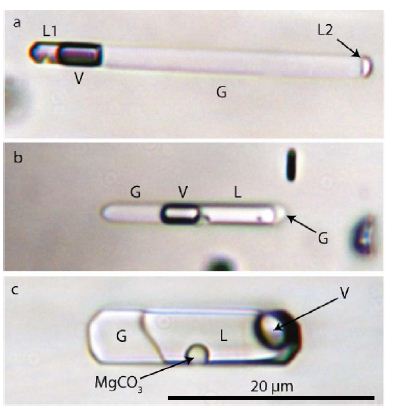
The Habachtal emerald deposit provides an important starting point for evaluating the role of deep-derived inputs in crustal mineral-forming systems [1,2]. Re-homogenization experiments on melt inclusions yielded temperatures of approximately 700°C at 5 kbar, substantially higher than many earlier estimates for emerald formation in this locality. As shown in Figure 1, a key observation is the presence of water-rich melt inclusions containing approximately 30 wt.% H2O. These inclusions were previously easy to overlook or misclassify as solid inclusions, but their abundance and composition indicate that they are central to understanding emerald formation at Habachtal. Similar secondary inclusion planes have also been observed in topaz from Schneckenstein [3], where they occur perpendicular to the c-axis. Following Taleb’s (2018) [4] emphasis on rare but highly significant observations, these inclusions can be regarded as diagnostic rather than incidental. Their occurrence challenges interpretations based solely on conventional fluid inclusions. In addition, Figure 2 shows a well-defined Lorentzian relationship between MgCO3 content and water concentration, suggesting non-equilibrium enrichment in a supercritical medium.


Figure 1: Melt inclusions in emerald from Habachtal/Austria. a) Melt inclusion in emerald composed of a large glass part (G), two liquid phases L1 and L2, and a small vapor phase (V). b) Melt inclusion in emerald with glass (G), liquid (L), and vapor (V). c) Melt inclusion in the same emerald crystal. G – glass, L – liquid phase, V -vapor phase, and a MgCO3 daughter crystal.

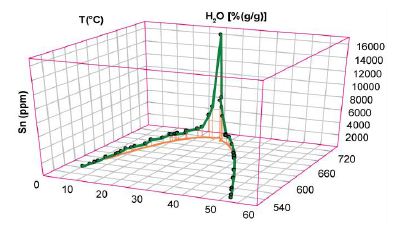
The relationship shown in Figure 2 can be interpreted as evidence for an ion-exchange process involving carbonate complexes, expressed schematically as BeCO3 → MgCO3. In this interpretation, Be was transported in a supercritical fluid as a carbonate species, whereas Mg was supplied by interaction with the surrounding rocks. A broader summary of supercritical fluids and melts in granites and pegmatites is given by Thomas et al. (2022) [5].


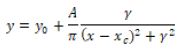
Figure 2: Lorentzian distribution of MgCO3 content versus water concentration in carbonate-bearing melt inclusions.

New Raman spectroscopic results, including the detection of diamond spherules in emerald and in melt inclusions, support the involvement of supercritical media in emerald formation (Table 1).

Table 1: Results of Raman measurements in the first-order diamond Raman region of emerald from Habachtal, Austria.

Diamond

FWHM G-band FWHM n
1331.5 ± 1.5 cm-1 62.0 ± 20.0 cm-1 1579.1 ± 6.4 cm-1 63.2 ± 12.4 cm-1

9

FWHM = full width at half maximum; n = number of measured crystals.

The broad first-order diamond band and associated G-band indicate very small, structurally imperfect diamond or diamond-like carbon (DLC) particles, consistent with rapid transport and partial modification in a supercritical medium. The principal result from Habachtal is that emerald crystallization began near 700°C and 5 kbar from a supercritical, water-rich silicate melt containing approximately 30 wt.% H2O. These conditions require a reassessment of the deposit’s formation model. These results contrast with previously accepted pressure-temperature estimates for the pre-Alpine event (<3 kbar and <450°C) and the Alpine event (4.5–6 kbar and 500–550°C [6-9]. Those estimates were derived mainly from mineral equilibria, whereas the present observations point to a supercritical input that may not have been in equilibrium with the host assemblage.

Spherical Crystals in the Prismatine Rock from Waldheim/ Saxony

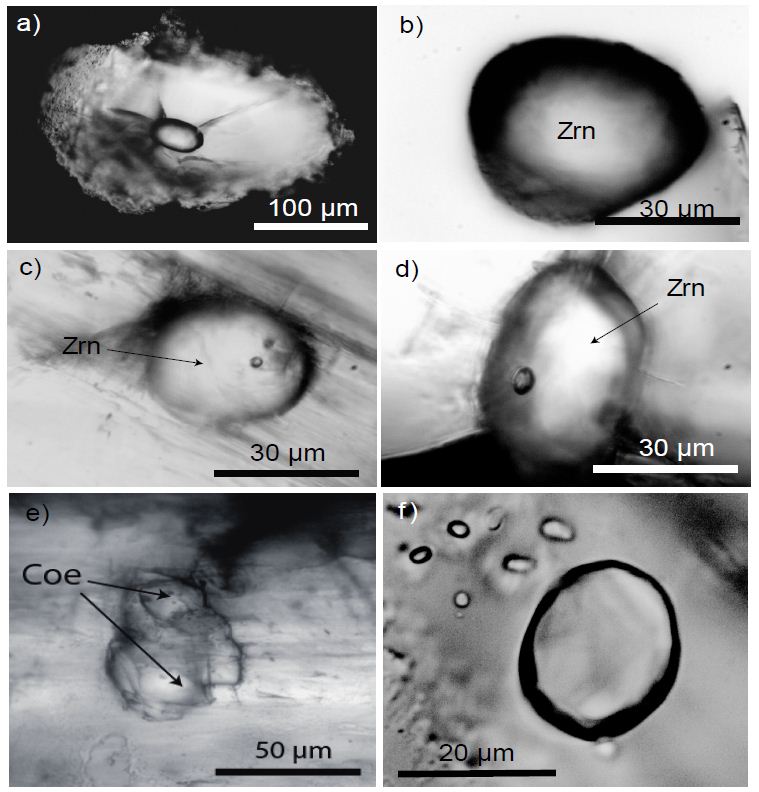
To test whether this process is restricted to Habachtal or reflects a broader phenomenon, prismatine-bearing granulite from Waldheim in the Saxon Granulite Massif was examined by polarization microscopy and micro-Raman spectroscopy. The Waldheim samples contain ultra-high-pressure mineral inclusions in rocks that otherwise record crustal metamorphic conditions. Water-rich stishovite and coesite occur in the prismatine-bearing granulite. According to Ono et al. (2017) [9], these phases indicate pressures of approximately 8–9 GPa at about 1000°C, corresponding to depths of roughly 240–300 km. These values are far higher than the maximum pressure of about 1.0 GPa estimated for prismatine crystallization by Rötzler et al. (2008) [10]. A characteristic feature of the Waldheim material is the abundance of spherical to subspherical mineral inclusions with smooth surfaces and diameters commonly between 10 and 50 µm. These inclusions are mostly monomineralic and include zircon, diamond, moissanite, coesite, and related phases. They occur mainly in prismatine but are also present in corundum, dravite, garnet, and sillimanite. In the prismatine rock, the zircon sphere frequency is approximately 180 per cm3. Kalkowsky (1907) [11] had already described such smooth zircon spheres as resembling oil drops, although no genetic interpretation was proposed at that time. Some inclusions are composite, with one rounded crystal enclosed within another; for example, anorthite spheres occur within a corundum matrix. These textures suggest mechanical abrasion and possible chemical corrosion during movement in a fast-moving supercritical fluid or melt. The occurrence of spheres within spheres further implies that the process was multi-stage. Figures 3–6 illustrate representative spherical and subspherical inclusions from the Saxon Granulite Massif. Their morphology and internal relationships provide direct textural evidence for transport and entrainment.

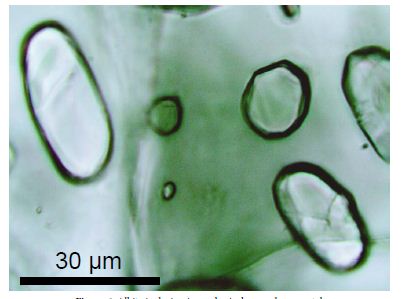
Figure 3: a) Reidite-zircon inclusion in quartz. b to d) zircon in prismatine. e) a conglomerate of coesite ellipsoids in prismatine. f) spherical anorthite crystals in an ellipsoid corundum crystal.

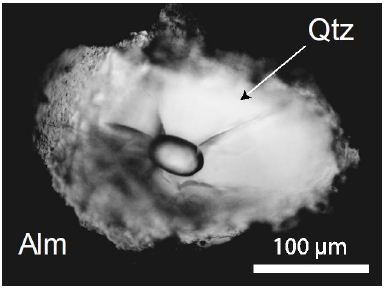
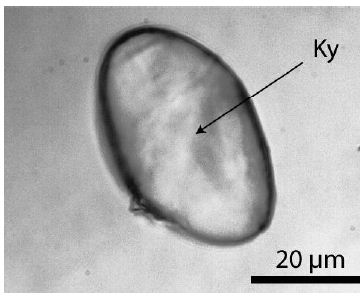
Figure 4 shows a zircon–reidite inclusion in the center of an elliptical high-quartz crystal. Radial fractures in the quartz host are consistent with volume expansion during the transformation of primary reidite to zircon. Figure 5 shows an elliptical kyanite inclusion in dravite.

Figure 4: Zircon-reidite crystal in the center of a high-quartz crystal.

The zircon–reidite transition requires minimum pressures of approximately 8–12 GPa at 1100–1900 K under supercritical conditions [12].

Figure 5: Elliptical kyanite inclusion in dravite. Near this inclusion is a spherical aggregate of nano-diamond, moissanite, and graphite, as well as a water-rich supercritical melt inclusion.

Figure 6 shows albite enclosed within a spherical corundum crystal, providing another example of a composite inclusion texture. These spherical crystals are mineralogically foreign to the Waldheim prismatine assemblage and are therefore interpreted as exotic inclusions introduced during rapid transport via supercritical media.

Figure 6: Albite inclusion in a spherical corundum crystal.

If supercritical transfer is a general geological process, comparable evidence should occur in other settings. Variscan mineralizations in the Erzgebirge commonly show features consistent with supercritical fluids or melts. That prompted a search for comparable rounded inclusions in granitic minerals, where similar textures were identified in topaz and plagioclase.

Spherical Crystals in Topaz from the Greifenstein Granite

Topaz from the Greifenstein granite contains numerous rounded to elliptical inclusions. Their smooth morphology suggests incorporation during the rapid crystallization of the host topaz. Such rapid growth may have helped preserve high-pressure minerals derived from greater depth (Figure 7).

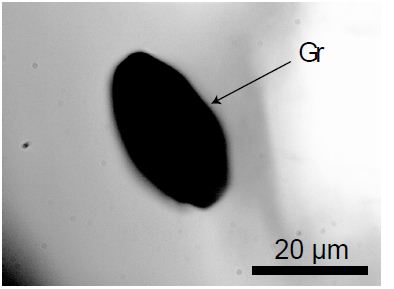
Figure 7: Disk-like elliptical graphite inclusion in topaz of the Greifenstein granite.

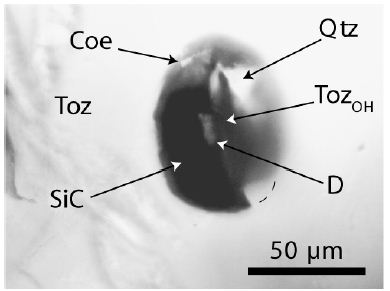
As in the Waldheim prismatine rock, the Greifenstein inclusions are out of equilibrium with the low-pressure host assemblage. Their occurrence in topaz therefore provides additional evidence for the introduction of high-pressure and high-temperature mineral relics from deeper domains (Figures 8-10).

Figure 8: Diamond in a moissanite (SiC)-rich spherical inclusion in topaz from the Greifenstein granite. This inclusion is about 30-55 µm below the surface of the 300 µm-thick sample. Toz – topaz host crystal, TozOH – OH-rich topaz, SiC – moissanite, D – diamond, Qtz – quartz (primary stishovite or coesite – see the asymmetric volume change), Coe – coesite.

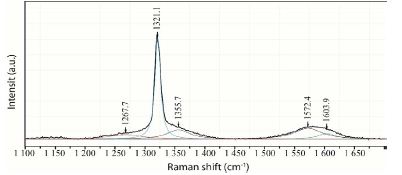
Figure 9: The diamonds in moissanite in topaz of the Greifenstein granite are mainly of the hexagonal diamond polytype. From 28 measurements, we obtained a value of 1325.4 ± 4.4 cm-1 for the diamond first-order line. The FWHM is 10.8 ± 4.1 cm-1. FWHM – Full Width at Half Maximum.

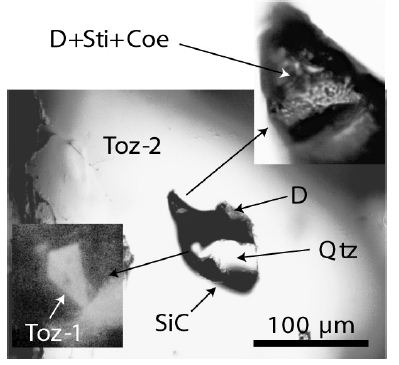
Figure 10: A complex moissanite (SiC) inclusion in topaz (Toz-2) from the Greifenstein. granite. D – diamond, Sti – stishovite, Coe – coesite, Qtz – quartz. Toz-1 is an earlier topaz inside the moissanite aggregate. The paragenesis clearly shows that no preparation step introduces the moissanite inclusion.

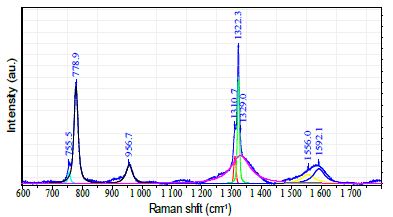
Note that the SiC powder used for sample preparation has a grain size of 10 µm and always shows sharp edges (Figure 11).

Figure 11: Raman spectrum of moissanite, with bands at 755.5, 778.9, and 956.7 cm-1, and a two-phase diamond–lonsdaleite particle, with bands at 1310.7 and 1322.3 cm-1. The lonsdaleite mode of hexagonal diamond can vary between 1320 and 1327 cm-1.

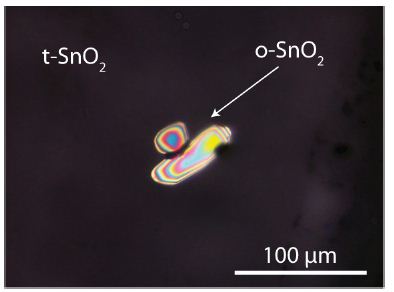
Additional evidence comes from ore minerals that contain relics of high-pressure, high-temperature conditions. A representative example is the occurrence of mostly rounded orthorhombic cassiterite inclusions in tetragonal cassiterite from Variscan tin deposits in the Erzgebirge and Slavkovský les [11,12]. Figure 12 illustrates orthorhombic cassiterite inclusions in tetragonal cassiterite.

Figure 12: Orthorhombic cassiterite (o-SnO2) in tetragonal cassiterite (t-SnO2) Sn-19 from the Sauberg mine near Ehrenfriedersdorf.

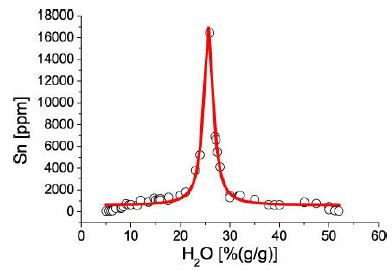
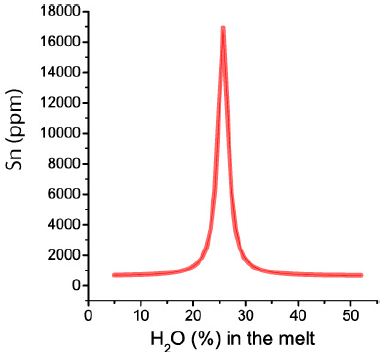
Orthorhombic cassiterite inclusions in tetragonal cassiterite are abundant in several samples. For example, the cassiterite sample Sn-58 from Ehrenfriedersdorf contains more than 120,000 orthorhombic cassiterite crystals per cm3, with a mean diameter of 13.2 µm. Larger grains also occur; in sample Sn-70, grains reach 320 µm in diameter. Many orthorhombic cassiterite crystals are of the CaCl2-type structure and correspond to pressures of approximately 18.9 GPa [14], and references therein. Also, the cotunnite-type (PbCl2-type), which forms at pressures >74 GPa and high temperatures, is not rare. Their abundance suggests that Sn was not derived solely from the surrounding granite, but was introduced at least in part by supercritical fluids or melts from greater depth. A simple mass-balance calculation [13] supports this conclusion, because the approximately 38 ppm Sn content of the surrounding granite is insufficient to generate such a large and rich tin deposit. Earlier genetic models explained Variscan tin mineralization mainly through redistribution of granite-derived Sn by low-temperature hydrothermal processes, supported by fluid-inclusion homogenization temperatures near 400°C. However, the discovery of melt inclusions in quartz containing up to 16,300 ppm Sn substantially changes this interpretation. As in the Habachtal emerald system, conventional fluid inclusions appear to record secondary or late-stage processes rather than the primary metal-transport event (Figure 13).

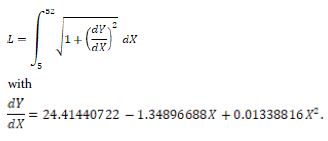
Figure 13: Ehrenfriedersdorf, Sauberg mine: Lorentzian distribution of tin versus water concentration of the corresponding solvus curve. The maximum is about 16,300 ppm Sn and corresponds to the maximum solubility of Sn at the transition from supercritical to undercritical conditions at about 750°C.

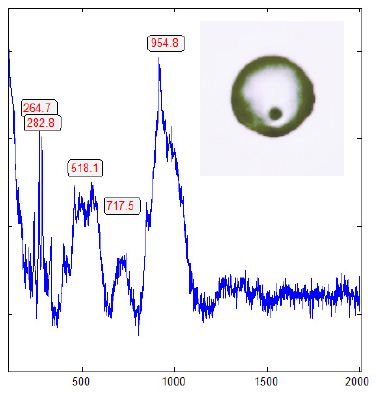
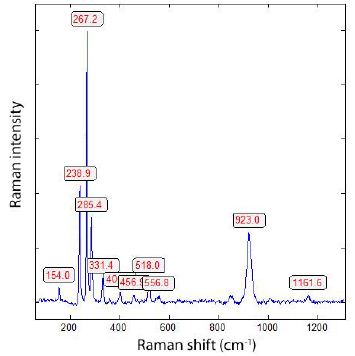
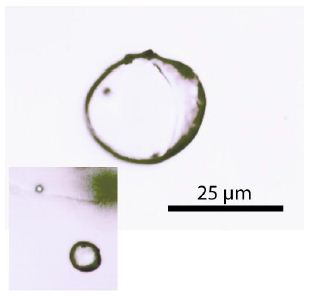
Similar Lorentzian distributions, expressed as element concentration versus melt inclusion water content, were observed for 20 elements [5]. We interpret these distributions as resulting from direct interaction between supercritical fluids and/or supercritical melts generated in mantle regions and the crust. A further example is provided by topaz from Schneckenstein [3]. This topaz contains numerous fluid inclusions on planes perpendicular to the c-axis, with homogenization temperatures of 407 ± 25°C. Although these inclusions may appear primary, the same topaz also contains remnants of high-temperature, high-pressure Ti-topaz, diamond-like carbon (DLC) spheres, and statistically distributed spherical, colorless boron inclusions. Boron is normally black or dark-coloured and opaque, but it can become transparent under high pressures of approximately 19–89 GPa as boron atoms rearrange into different crystal structures [16]. Figure 14 shows a Raman spectrum of a mixture of α- and β-boron, as well as a photomicrograph of such a transparent boron sphere.

The Raman bands around 265 and 283 cm-1 are due to the topaz matrix. Because of the large Al supply from the topaz matrix, α- and β-AlB12 components are possible [3,17].

Figure 14: Raman spectrum of a mixture of a- and b-rhombohedral boron in topaz from Schneckenstein. The inset shows a spherical boron crystal with a diameter of 9 µm at a depth of 10 µm. The dark inclusion, possibly diamond, shows that the boron is transparent.

Conclusion

The results show that minerals preserved in comparatively low-pressure crustal host rocks contain inclusions that require high-pressure to ultra-high-pressure conditions. These phases include diamond, boron, moissanite, coesite, stishovite, lonsdaleite, reidite, orthorhombic cassiterite, and related minerals. Their occurrence in emerald, prismatine granulite, topaz, and cassiterite is difficult to reconcile with conventional equilibrium crystallization or low-temperature hydrothermal models alone. In particular, the Raman-confirmed diamond spherules in emerald from Habachtal strengthen the interpretation that high-pressure mineral relics were introduced into the emerald-forming environment by supercritical media. A recurring feature of these occurrences is the presence of smooth, rounded, spherical, or subspherical inclusions, locally including composite textures such as spheres within spheres. These morphologies indicate mechanical abrasion, entrainment, and possible chemical modification during ascent. The high-pressure mineralogy and preservation of metastable phases require rapid transfer, fast enough to prevent complete inversion to lower-pressure polymorphs during emplacement. The most consistent explanation is movement by supercritical fluids or melts in which H2O and aluminosilicate components are fully miscible. Such media combine high mobility with the capacity to carry dissolved elements and suspended mineral relics. In this model, supercritical fluids or melts can entrain tiny high-pressure crystals at depth, move them rapidly through the crust, and introduce them into mineral-forming environments that otherwise record much lower pressures. The Habachtal emerald, Waldheim prismatine granulite, Greifenstein topaz, and Variscan cassiterite examples also show that this mechanism is linked to element enrichment. Water-rich melt inclusions, Lorentzian element distributions, and exceptionally high Sn concentrations indicate non-equilibrium metal and volatile concentrations during the transition between supercritical and undercritical conditions. That provides a mechanism for selectively enriching elements such as Be and Sn and helps explain the unusually productive granitic and ore-forming systems. Overall, the evidence supports direct mantle–crust interaction mediated by supercritical fluids or melts. This process may be more widespread than previously recognized and should be considered when high-pressure mineral relics, rounded inclusion textures, water-rich melt inclusions, and extreme trace-element enrichments occur together in crustal rocks and mineral deposits.

Acknowledgment

I thank Paul Davidson (Hobart, Tasmania), Adolf Rericha (Falkensee, Germany), and Ulrich Recknagel (Schrobenhausen) for their discussions, which helped us prepare the underlying ACROFI lecture in 2022 in Nanjing.

References

  1. Thomas R, Davidson P, Rericha A (2020) Emerald from the Habachtal: new Mineralogy and Petrology 114: 161-172.
  2. Thomas R, Davidson P, Rericha A, Veksler I (2021) Melt inclusions in emerald from the Habachtal/Austria after re-homogenization at 700°C and two kbar. Academica Letters 1-5.
  3. Thomas R (2026b) Preliminary Raman evidence for boron-rich Al-B-C phases in natural topaz from Schneckenstein/Vogtland, Germany. Geol Earth Mar Sci 8.
  4. Taleb NN (2018) Der schwarze Schwan – Die Macht höchst unwahrscheinlicher Pantheon. PG: 624.
  5. Thomas R, Davidson P, Rericha A, Voznyak DK (2022) Water-rich melt inclusions as “frozen “samples of the supercritical state in granites and pegmatites reveal extreme element enrichment resulting under non-equilibrium conditions. Mineralogical Journal (Ukraine) 44: 3-15.
  6. Franz G, Grundmann G, Ackermand D (1986) Rock forming beryl from a regional metamorphic terrain (Tauern window, Austria): Paragenesis and crystal chemistry. Tschermaks Miner Petrogr Mitt 35: 167-192.
  7. Grundmann G, Morteani G (1989) Emerald mineralization during regional metamorphism: the Habachtal (Austria) and Leydsdorp (Transvaal, South Africa) Econ Geol 84: 1835-1849.
  8. Luckscheiter B, Morteani G (1980) Microthermometrical and chemical studies of fluid inclusions in minerals from Alpine veins from the penninic rocks of the central and western Tauern window (Austria/ltaly). Lithos 13: 61-77.
  9. Ono S, Kikegawa T, Higi Y, Tange Y (2017) Precise determination of the phase boundary between coesite and stishovite in SiO2. Phys Earth Planet Int 264: 1-6.
  10. Rötzler J, Hagen B, Hoernes S (2008) Geothermometry of the ultrahigh-temperature Saxon granulites revised. Part I: New evidence from key mineral assemblage and reaction textures. Eur J Mineral 20: 1097-1115.
  11. Kalkowsky E (1907) Der Korundgranulit von Waldheim in Sachsen. Abh. Naturwissenschaftlichen Gesellschaft ISIS Dresden 47-65.
  12. Thomas R, Davidson P, Rericha A (2025) Zircon-reidite in prismatine granulite from Waldheim/Saxony. Chapter 11 in: Current Research Progress in Physical Science (ed. by Nagata) 156-162.
  13. Thomas R (2026a) Origin of Sn in the Variscan tin deposit Ehrenfriedersdorf. Geol Earth Mar Sci 8: 1-8.
  14. Thomas R (2024a) The CaCl2-to rutile phase transition in SnO2 from high to low pressure in nature. Geol Earth Mar Sci 6: 1-4.
  15. Thomas R (2024b) Rhomboedric cassiterite as inclusions in tetragonal cassiterite from Slavkovský les – North Bohemia (Czech Republic). Geol Earth Mar Sci 6: 1-6.
  16. Parakhonskiy G (2012) Synthesis and investigation of boron phases at high pressure and temperature. Dissertation, University of Bayreuth/Germany. Pg: 117.
  17. Werheit H, Filipov V, Kuhlmann U, Schwarz U, Aermbrüster M, Leithe-Jasper U, Tanaka T, Higashi I, Lundström T, Gurin VN, Korsukova MM (2010) Raman effect in icosahedral boron-rich solids. Sci Technol Adv Mater 11: 1-27.

From Engineering to Counseling: A Case Study of a Taiwanese Female Graduate Student’s Change of Major

DOI: 10.31038/PSYJ.2026814

Abstract

This case study examined the process through which a Taiwanese female master’s student (pseudonym: Alice) transitioned from Materials Science and Engineering (MSE) to a graduate program in counseling. Alice, a 26-year-old woman, studied in an MSE program for one and a half years before deciding to change her academic direction. Following approximately one year of preparation, she was successfully admitted to a counseling psychology graduate program. Data were collected through a single two-hour semi-structured, in-depth interview exploring her experiences of academic and career transition. The data were analyzed using qualitative thematic analysis. The findings revealed several major themes: lack of interest in learning and experimental research, perceptions of becoming a “tool person,” doubts regarding learning and research, the influence of developmental history on internal psychological states, critical turning points in leaving MSE and “resetting” career path, valuing the fit between academic major and personal characteristics, receiving support from significant others, and re-evaluating and career change decision. The overall transition process consisted of four stages: awareness, breakdown and redirection, exploration and weighing, and acceptance and reconstruction. Implications for counseling practice and directions for future research are discussed.

Keywords

Female graduate student, Engineering, Counseling, Change of major

Within Taiwan’s higher education system, the proportion of female students has steadily increased, with women comprising 49.48% of undergraduate students and 47.63% of graduate students. However, women remain underrepresented in engineering-related disciplines; female graduate students in engineering, manufacturing, and construction account for only 24.15% of the total enrollment (Ministry of Education [MOE], 2026) [1]. In recent years, changing majors has become increasingly common among Taiwanese students. In 2020, approximately one in ten first-year students at top universities applied to transfer to a different department [2]. Although a limited number of studies have examined undergraduate students’ experiences of changing majors [3-6], research focusing on graduate students remains scarce.

Scholars have observed that female students in science, technology, engineering, and mathematics (STEM) frequently experience the “leaky pipeline” phenomenon, in which women’s representation declines progressively from undergraduate education to graduate training and eventually to the workforce [6-8]. This case study examines the experience of Alice, a Taiwanese female student who majored in Materials Science and Engineering (MSE), a STEM discipline, at both the undergraduate and graduate levels before ultimately transitioning to a graduate program in counseling. This study explores her emotional experiences, cognitive processes, and behavioral responses during this transition, with particular attention to the influence of personal interests, values, support systems, developmental history, and sociocultural context.

Female Graduate Students in STEM

Women remain underrepresented across many STEM disciplines and often study in environments historically shaped by masculine norms and values. As a result, female students may be required to adapt to academic cultures that privilege traditionally masculine traits, while also experiencing what has been termed the “femininity penalty” [9]. Women pursuing STEM degrees and careers encounter multiple structural and interpersonal barriers, including restrictive institutional policies [10,11] limited access to research opportunities [12], insufficient diversity and representation [13], rigid curricular structures [14], and classroom-related challenges such as large class sizes [15]. In addition, campus and departmental climates may impede women’s academic development and sense of belonging [8].

The structure and demands of STEM education may further intensify gender disparities. Berwick (2019) [16] argued that the most significant barriers for women in STEM arise from environmental and social factors, including gender stereotypes, implicit bias, and the broader cultural climate of science and engineering departments. These conditions can continuously hinder women’s persistence and advancement in STEM fields.

Casad et al. (2020) [17], in a survey of 579 female STEM majors, found that higher gender stigma consciousness predicted greater gender-based rejection sensitivity. Rejection sensitivity, in turn, contributed to more negative perceptions of campus climate. Negative campus perceptions increased stereotype threat, which reduced students’ perceived control. Lower perceived control subsequently heightened psychological disengagement from STEM and diminished self-esteem. These findings highlight the cumulative psychological impact of gendered academic environments.

Compared with men, women are also more likely to prefer broader liberal arts-oriented educational experiences and may perceive tension between their educational goals and the rigid requirements of certain STEM programs [14,18] identified several factors that negatively influence women’s participation in STEM, including competitive and low-interaction teaching approaches, “chilly climates” in male-dominated settings, and societal expectations regarding women’s family and career roles. Competitive environments that lack support may undermine women’s confidence and motivation. When female students experience repeated frustration, reduced self-confidence, or insufficient support in classrooms or departments, they may become more likely to leave STEM or change majors [19]. Moreover, the psychosocial climate of classrooms significantly affects women’s comfort and sense of inclusion within learning environments [20].

Female STEM Students in Taiwan

In Taiwan, STEM disciplines constitute a substantial proportion of graduate education, with STEM students representing a large segment of the graduate student population [1]. Gender differences in academic major selection remain pronounced, with men disproportionately represented in STEM fields and women more commonly enrolled in humanities and social science disciplines [21]. Although increasing numbers of women have entered traditionally male-dominated STEM fields, these disciplines continue to be largely male dominated in Taiwan. Because men remain the numerical majority in STEM, academic environments in these fields often reflect masculine norms characterized by competition, hierarchy, and authority. Such environments may create additional challenges for female students as they navigate academic and professional development.

Liu (2001) [22] investigated the career transition processes of women holding undergraduate STEM degrees and identified several factors influencing their initial major selection, including personal interest, departmental reputation, examination performance, parental expectations, social influence, and significant life events. Among women who later transitioned from STEM to non-STEM careers, career changes were influenced by frustration with academic study or work, career satisfaction, social support, emerging opportunities, and personal characteristics. Liu further noted that women’s career development was often constrained by negative social expectations, which reduced self-efficacy. Gender role stereotypes, occupational gender stereotypes, and experiences of discrimination further reinforced internal career barriers. Compared with men, women also placed greater emphasis on marriage and family responsibilities, which often created additional tensions between work and life and negatively affected career development. Wang (1990) [23] examined factors associated with nontraditional career choices among 407 female university students and found that parental, sibling, and peer support played important roles in their career decisions. Similarly, Yang (2002) [24] explored the developmental contexts underlying career themes among female undergraduates in nontraditional technology-related programs. Participants identified several motivations for choosing nontraditional fields, including pursuing personal interests, improving their family’s financial well-being, and maintaining competitiveness with peers. These findings suggest that women’s career decision-making in Taiwan is shaped not only by individual preferences but also by broader familial and sociocultural influences.

Taken together, prior studies suggest that Taiwanese women in STEM navigate career development within a complex interplay of personal aspirations, family expectations, gender norms, and structural barriers. However, existing research has primarily focused on undergraduate students or career transitions after graduation. Little is known about how female graduate students experience changing majors while still enrolled in graduate education. The present study addresses this gap by examining the case of a female graduate student who transitioned from engineering to counseling.

Changing Fields in Higher Education

Research on major changes among students in Taiwanese higher education remains limited, despite the relative commonality of this phenomenon. In 2020, approximately one in ten first-year students at Taiwan’s top universities applied to transfer to a different department [2]. Within engineering colleges, many students sought to transfer into electrical engineering or computer science, whereas economics and law were among the most popular destinations within the social sciences [2].

Using graduation survey data from a university in northern Taiwan collected between 2012 and 2018, Lee (2021) [5] found that students with stronger economic motivations or interest-driven goals were more likely to successfully transfer. Pan (2017) [25] further argued that universities should adopt more flexible transfer standards, as students often seek major changes due to lack of interest in their original field, poor academic performance, or economic pressures. Excessively restrictive transfer policies may prevent students from pursuing fields aligned with their interests and may increase the risk of academic disengagement or withdrawal.

Internationally, changing majors is a common educational experience. More than one-third of students change their major at least once during their undergraduate studies [26-28]. Rather than viewing major change as a single event, scholars increasingly conceptualize it as a developmental process shaped by academic environments, departmental cultures, and students’ evolving self-understanding [26,29]. Learning environments, in particular, play a critical role in shaping students’ academic trajectories and outcomes [30]. Dissatisfaction with the learning context or discontent with aspects of one’s original major often serves as a major impetus for transfer.

Denice (2021) [31], using U.S. university data, found that students primarily changed majors to pursue fields better aligned with their interests and abilities. Major-change decisions were influenced by characteristics of the original major, academic performance, and the degree of social and academic integration within departments. In addition, gender, socioeconomic background, and prior academic preparation significantly predicted transfer behavior. Women, for example, were more likely to leave STEM fields, particularly when exposed to “chilly climates” characterized by gender discrimination and exclusion [32,33].

Qualitative studies similarly highlight the importance of psychological and contextual factors. de los Reyes (2021) [34] examined students who left STEM after their junior year and identified three major influences: poor academic and career fit, mental health concerns, and dissatisfaction with STEM learning environments. These factors contributed to students’ decisions to leave STEM and redirect their career trajectories. Likewise, Meyer et al. (2022) [35] identified academic achievement, the degree of fit or mismatch between personal career interests and major content, and parental or peer evaluations of the initial major choice as key predictors of major change. Their findings suggest that academic performance, person–major fit, and social expectations jointly shape transfer decisions. In particular, misalignment between career interests and major content strongly predicts cross-disciplinary transfers.

The prevalence of major changes may also reflect the ongoing development of students’ expectations, perceptions, and identities during higher education [36]. As students recognize discrepancies between their initial expectations and long-term career goals, they often experience confusion, uncertainty, and stress amid numerous academic and occupational possibilities [37]. Lower academic performance frequently signals a mismatch between students and their chosen major and is considered a strong predictor of transfer. Students with weaker academic performance are more likely to move into fields with substantially different curricular structures and learning demands [26].

Although changing majors may lead to more suitable academic and career pathways, the process also carries significant costs. Major changes may delay graduation, increase educational expenses, and elevate dropout risk due to additional coursework requirements. Such consequences include extended time to degree, reduced returns on prior educational investment, and greater risk of academic withdrawal [38]. At the same time, changing majors can yield positive outcomes by enabling students to correct unsuitable initial choices, improve academic performance, increase graduation likelihood, and achieve greater alignment between academic training and career goals [39].

Astorne-Figari and Speer (2019) [26] further demonstrated that lower academic performance often reflects academic mismatch and strongly predicts transfer decisions. They also found that students tend to select majors that “look like them,” meaning fields whose demographic characteristics resemble their own. For instance, women are more likely to transfer into majors with higher female representation and are significantly more likely than men to leave STEM fields. Women’s departure from STEM may not necessarily reflect a lack of interest in science or mathematics, but rather a response to cultural environments characterized by intense competition, male dominance, gender stereotyping, and diminished belonging.

Major change can therefore be understood as a significant educational transition involving identity reconstruction and adaptation. Silver (2024) [40], in interviews with 38 U.S. undergraduates who had changed majors, conceptualized this experience using Bridges’ (2004) transition framework, which includes three stages: endings, neutral zones, and new beginnings. During the endings stage, students reflected on their self-perceptions, including whether they possessed the abilities required by their original major, and recognized the limitations of their initial choices. In the neutral zone, students engaged in tentative exploration of alternative fields while navigating uncertainty, pressure, and insufficient support. Finally, during new beginnings, students adapted to their new majors, reconstructed their identities, and developed clearer career directions. This framework suggests that changing majors involves not only academic adjustment but also substantial psychological transformation.

Rationale of the Study

This study is grounded in Holland’s (1997) [41] typological theory and the five models of Social Cognitive Career Theory (SCCT). Together, these frameworks provide a useful foundation for understanding the psychological and contextual factors involved in academic and career transitions, particularly decisions to change majors.

Holland’s (1997) [41] typological theory proposes that individuals seek environments that best match their vocational interests, personalities, and values. In higher education, such environments include the curricular content, learning experiences, and interpersonal climate associated with a student’s academic major. Individuals continually attempt to achieve congruence between personal characteristics and environmental conditions. When students perceive a strong fit between their vocational interests and their major, this congruence increases motivation, engagement, and persistence. Conversely, when students perceive a mismatch between their interests and learning environment, they may become dissatisfied and consider changing majors [35]. Learning contexts therefore play a critical role in academic decision-making, as students often seek educational environments that foster a sense of belonging and align with their personal values and aspirations.

SCCT further explains how career interests, choices, persistence, and adaptation develop through dynamic interactions between personal and contextual factors. Lent and Brown (2019) [42] noted that SCCT originally consisted of three interrelated models and was later expanded to five.

The first model, interest development, explains how individuals develop interests in particular academic or career domains. Individuals who possess stronger self-efficacy beliefs and anticipate positive outcomes from engaging in a given activity are more likely to develop sustained interest in that domain.

The second model, choice-making, explains how individuals make educational and career decisions based on their interests, abilities, and environmental conditions. After interests are formed, individuals establish goals and take actions to pursue them. Career decisions are shaped not only by internal characteristics but also by contextual influences, including family support, economic resources, educational opportunities, and sociocultural expectations.

The third model, performance and persistence [43], focuses on performance outcomes and persistence in educational or vocational settings. Self-efficacy, outcome expectations, ability, and environmental supports jointly influence whether individuals can maintain engagement when facing academic or occupational challenges.

The fourth model, satisfaction and well-being [44], emphasizes individuals’ subjective experiences of satisfaction, psychological well-being, and adjustment in academic or work settings. When educational experiences align with personal interests, values, and goals, individuals tend to experience greater satisfaction and well­-being. In contrast, incongruence between personal needs and environmental demands may reduce satisfaction and negatively affect psychological functioning.

The fifth model, career self-management [45], focuses on how individuals regulate and manage career-related tasks across the lifespan, including career decision-making, job search, adaptation, and work–life balance. Self-efficacy, goal setting, outcome expectations, and environmental supports influence the effectiveness of career planning and adaptation.

Taken together, the five SCCT models provide a comprehensive framework for understanding students’ decisions to change majors. Students may lose interest in their original field or develop stronger self-efficacy and more positive outcome expectations in a new domain, leading to intentions to transfer. Major-change decisions are shaped by multiple factors, including personal abilities, values, family expectations, institutional structures, and available resources. Persistent academic difficulties, poor performance, or insufficient support in the original major may weaken commitment and prompt consideration of alternatives. Similarly, low satisfaction, psychological distress, or poor fit between learning experiences and personal needs may motivate students to seek more suitable environments. From this perspective, changing majors can be understood as an active process of career adjustment, identity reconstruction, and self-management.

Drawing on Holland’s theory and SCCT, the present study reveals how a Taiwanese female graduate student navigated the transition from engineering to counseling. These above theoretical frameworks provide a lens for understanding how person–environment fit, self-efficacy, outcome expectations, support systems, and psychological adjustment shaped her decision-making process and academic transition.

Method

This study adopts a qualitative case study approach, primarily because this method enables an in-depth exploration of individual cases to better understand social phenomena. It allows researchers to grasp the complexity of social realities and uncover the underlying causes behind them. Through detailed examination of specific cases, the study seeks to gain insight into participants’ subjective experiences and perspectives, as well as to analyze the diverse and intricate relationships between individuals and their social environments. The method of case study is suitable for revealing the contextual details and subjective experiences of Alice’s major switching from MSE to counseling program.

Participant

The participant (Alice) is a 26-year-old master’s student majoring in counseling psychology at a research-oriented university in Taiwan. She was enrolled in MSE bachelor’s program for four years, and then in MSE master’s program for one and a half year. She is one of the few female students in the programs of MSE. After she quitted from MSE master’s program, she spent one year for preparation and then switched her major to counseling master’s program. She is willingly shared her experiences regarding her journey of studying in MSE, and switching from MSE to counseling field.

Researcher

The author serves as a full-time faculty member and part-time counseling psychologist in higher education. She has provided guidance and counseling services to undergraduate and graduate students for many years. As an experienced counseling psychologist and educator, the researcher has supported students and clients in understanding issues related to major selection, person–major fit, and decisions regarding academic major changes.

Interviewer

A research assistant (RA) with a master’s degree in counseling conducted one interview. Prior to the study, the RA completed courses in interviewing skills, qualitative research, and research methodology. She received training and completed pilot studies to refine her interviewing skills. She built a trusting relationship with the participant, Alice, and maintained an open, nonjudgmental manner during the interviews.

Data Collection

Data collection was conducted through one in-depth interview, lasting 120 minutes. Also, the interviewer completed personal reflections to reveal her observations, thoughts and reactions during and after the interview. Alice was fully informed about the study’s purpose and procedures and provided informed consent before participating. The interview aimed to elicit detailed accounts of her experiences, with sample queries such as: “Please describe your experiences in the field of MSE.” “Please describe any significant or memorable perceptions and reactions you have encountered over your academic career in MSE at the higher education level.” “What motivated you to quit the MSE graduate program? “ “How did you go through the process of quitting the MSE program, searching for a new career direction, and finally enrolling in “counseling” master’s program? “ “If applicable, how would you advise prospective graduate students consider their major choice and career development?”

Data Analysis

The researcher serves as the analyst. The data comprised interview transcripts and the interviewer’s reflective notes. This care report utilized thematic analysis [46] to analyze the data related to experiences of a female graduate student switching from MSE to counseling master’s program. Thematic analysis proceeded through several steps. Audio recordings were transcribed verbatim. The researcher adopted an open and inquisitive stance, repeatedly reading transcripts and noting thoughts, feelings, and potential meanings or themes. Initial codes were generated based on both surface-level semantics and deeper meanings. Themes and subthemes were then extracted from the codes, organized into coherent descriptions, and conceptualized to capture underlying significance. The analyst reviewed and refined themes to ensure they accurately and comprehensively reflected the data, verifying internal consistency within themes and clear distinctions between themes. Each theme’s essence and content were clarified, and theme names were aligned with their meanings. Finally, the researcher provided detailed descriptions of the analysis and prepared the report.

To enhance validity and reliability, steps were arranged into a detailed protocol and database [47]. Transcripts were examined for accuracy during transcription, with careful comparison of data with codes and forming notations. Validation strategies proposed by Creswell and Miller (2000) [48] were employed, including extended engagement and continuous observation. Multiple sources and methods were integrated to clarify themes or perspectives. Rich, thick narratives were formulated to elaborate the participant and settings encountered in the interview. Member checking was adopted, inviting the participant to review rough drafts and offer feedback. A peer of the researchers served as an external auditor, scrutinizing the research process and evaluating the results.

Results

Lack of Interest in Learning and Experimental Research

Alice recalled that her daily life in the MSE graduate program revolved almost entirely around laboratory operations, instruments, reagents, data analysis, report writing, and reading journal articles. She described her experience in the MSE program as tedious, imbalanced, and emotionally exhausting, accompanied by little intrinsic motivation for experimental research. Reflecting on her lack of engagement, she stated, “I really had no interest in those experiments. They felt boring, and I was too lazy to read the journal papers.”

Repeated experimental failures further intensified her discouragement. Despite investing substantial time and effort, her experiments often failed to produce acceptable results, leaving her with little sense of achievement or progress. She described the repetitive nature of graduate research as especially draining: “During my first year of graduate school, the experiments basically kept failing… I kept repeating the same procedures and tasks without clear feedback… the frustration was really heavy.”

Over time, this persistent frustration extended beyond her academic work and affected her overall daily functioning. Her graduate life became characterized by low energy, emotional exhaustion, and a growing imbalance between academic demands and personal well­-being. She often felt stuck and unmotivated to read, attend classes, or conduct experiments. She also reported depressive feelings and a profound sense of depletion. As she explained: “The next day I had a lab meeting, but I really didn’t want to do anything. I just lay in bed, not wanting to get up… waking up in the morning, I really didn’t want to get out of bed… my whole life felt completely without energy.” Her narrative suggests that the loss of interest in learning and research was not merely academic disengagement but a broader psychological experience involving emotional fatigue, diminished motivation, and reduced vitality.

Perception of Becoming a “Tool Person”

As Alice became increasingly disengaged from her academic work, she also began reflecting on the values embedded within the MSE environment. She perceived the graduate training culture as highly performance-oriented, where productivity and measurable research output served as the primary indicators of value. Within this context, she felt that individuals were appreciated mainly for what they could produce rather than for who they were as human beings.

Alice described feeling as though she had become a “production machine,” valued only for her output. She used the phrase “tool person” to capture her sense of dehumanization within the MSE environment. In her view, the field prioritized results, publications, and efficiency while leaving little room for emotional expression, individuality, or human warmth. She explained: “In MSE, the standard of value is whether you produce enough output… I felt like a tool, not valued as a person… the whole training environment made me uncomfortable.” This perception of being reduced to a functional instrument deepened her dissatisfaction with the field. Rather than experiencing research as meaningful intellectual inquiry, she increasingly experienced it as a system of production governed by external standards of achievement.

Her discomfort was further reinforced by her repeated experimental setbacks. Because her experiments often produced flawed or inconsistent data, she became more aware of the tension between the idealized image of scientific rigor and the messy reality of research practice. This gap intensified her frustration and strengthened her perception that the academic environment valued productivity over personhood.

Doubts regarding Learning and Research

Beyond dissatisfaction with the MSE environment, Alice gradually developed deeper doubts regarding the nature of scientific learning and research itself. During graduate school, she began reflecting on what it meant to learn, conduct research, and pursue knowledge. In this process, she recognized a fundamental contrast between her earlier educational experiences and the epistemological demands of graduate research.

Her previous learning experiences in STEM had largely been structured around clear procedures and correct answers. Success was often defined by accuracy, mastery, and the ability to arrive at predetermined solutions. In contrast, MSE research required tolerance for ambiguity, exploration of the unknown, interpretation of uncertain data, and acceptance that outcomes were often provisional rather than absolute. This epistemological shift proved deeply unsettling for her.

Alice described the prolonged trial-and-error process of research as emotionally difficult. She struggled with the absence of immediate feedback and the unpredictability of outcomes, especially because she lacked intrinsic interest in the research itself. She reflected: “In the past, learning always had correct answers. My tolerance for uncertainty is really low. Having to explore unknown things without knowing if my effort will be rewarded… that was very frustrating, especially when it was something I wasn’t interested in.”

Her low tolerance for uncertainty, combined with limited intrinsic motivation, made sustained engagement in research increasingly difficult. As a result, she began questioning not only her willingness to remain in MSE but also her broader academic direction. This period marked an important turning point in her self-understanding, as she became increasingly aware of the growing gap between her personal values, interests, and the demands of scientific research.

Her experience reflects a deeper struggle involving the reconstruction of both her knowledge perspective and academic identity. Rather than merely questioning whether she could succeed in MSE, Alice was confronting a more fundamental question: whether the scientific domain itself aligned with who she was and how she wished to engage with learning and work.

Awareness of the Impact of Developmental History on Psychological States

As Alice’s distress in the MSE program intensified, she gradually began reflecting on the deeper psychological roots of her struggles. She recognized that her poor psychological state, lack of motivation, and persistent sense of being trapped were not solely caused by the immediate demands of graduate school, but were also closely connected to her developmental history. She described repeatedly “hitting walls” without finding a way forward or an outlet for relief.

Through reflection, Alice came to realize that her upbringing and educational experiences had profoundly shaped how she approached learning, achievement, and self-worth. She felt that Taiwan’s education system had trained her to pursue “only correct answers” and to continuously prove herself as a “good student.” This developmental context fostered a strong performance-based sense of self-esteem, accompanied by fear of failure, compulsive striving, and constant pressure to excel. She explained: “Throughout my schooling, I became very afraid of failure because I always had to find the correct answer… I pressured myself to perform well, and my self-worth became tied to being a good student with good grades.”

Alice recognized that this long-standing pattern shaped how she responded to the uncertainty and repeated failures of graduate research. Having internalized the belief that achievement and correctness determined her worth, she found it especially difficult to tolerate situations without clear answers or guaranteed success.

She also became aware that her entry into MSE reflected not only personal choice but broader social values. She had followed a mainstream educational pathway widely associated with success, stability, and prestige. However, her actual experience in the field was marked by repeated setbacks, anxiety, and emotional discomfort. Through this contrast, she realized that her developmental trajectory had provided little support for self-exploration or encouragement to identify environments aligned with her personal characteristics and needs. She reflected: “In this industry, people pursue high salaries and social status… it’s the mainstream. But I felt very uncomfortable. My feelings weren’t valued, and throughout my upbringing there were very few voices encouraging me to explore or find an environment that suited me.”

Alice further noted the influence of her family’s economic circumstances on her psychological state and career decision-making. Limited financial resources heightened her anxiety regarding future career choices and reduced her confidence in trusting her own decisions. She internalized a persistent sense of scarcity and uncertainty, which constrained her perceived freedom when making life choices. The broader social emphasis on STEM careers as financially secure further intensified this pressure.

Reflecting more deeply, Alice admitted that her motivation to study STEM had largely been driven by external expectations rather than genuine personal interest. Her academic persistence had long been sustained by obligation, pressure, and performance-based validation rather than intrinsic motivation. She explained: “My past learning in STEM was always about forcing myself forward… my self-worth was tied to grades and performance. Only then did I feel valuable.”

Upon entering graduate school, however, the psychological costs of this pattern became increasingly difficult to ignore. The intense uncertainty of experimental research, combined with repeated failure and low interest, gradually became a chronic emotional burden. For the first time, she began seriously confronting her unhappiness and questioning whether this path was sustainable. She recalled: “I really wasn’t happy. I was suffering… I started thinking, should my life continue like this?”

This period marked a significant shift in Alice’s self-awareness. She recognized that her past experiences had shaped her into what she described as a “high self-esteem but failure-intolerant” student—someone who could perform well under structured systems of achievement but struggled deeply in environments characterized by ambiguity and repeated setbacks. She ultimately concluded: “Studying MSE made me feel very uncomfortable. Forcing myself into the STEM field was really painful.” Her growing awareness of these developmental influences helped her understand that her distress was not simply a matter of inadequate ability, but reflected a deeper mismatch between her psychological needs, personal values, and academic environment.

Critical Turning Points in Leaving MSE and Resetting Career Path

As Alice’s emotional and psychological burden accumulated, she eventually reached what she described as a decisive turning point—an experience of abandonment, release, and resetting. One day, she realized that she could no longer force herself to continue. She no longer wanted to attend classes, enter the laboratory, or face lab meetings. In that moment of exhaustion and resistance, a simple but transformative thought suddenly emerged: “I don’t have to do this.” Recalling this moment, she said: “At that time… I didn’t want to prepare journal reports, I just wanted to escape from everything in the lab. Then I suddenly thought, hey, actually I don’t have to do it.”

This realization marked a critical psychological shift. For the first time, Alice allowed herself to consider the possibility that she did not have to remain bound to the life trajectory she had previously constructed. Rather than viewing the MSE pathway as inevitable, she began to see it as a choice that could be reconsidered.

Before this turning point, Alice had envisioned a fixed career plan: complete graduate school in MSE, work in the technology industry for several years, accumulate sufficient financial resources by age thirty, and only then pursue what she truly loved. However, this moment of clarity disrupted that rigid timeline. She realized that postponing her authentic interests was itself a choice—one she no longer wished to maintain. She reflected: “After graduating from MSE, I’ll work in the tech industry for a few years, earn enough money by thirty, and then do what I really love. But then I realized—actually, I can do it now. I can quit MSE, reset, and rethink my career path.” This cognitive shift enabled Alice to move from passive endurance toward active decision-making. Instead of waiting for a distant future to pursue a meaningful life, she began reclaiming agency in the present.

After discussing the possibility of taking a leave of absence with her peers and advisor, Alice spent two months reflecting before ultimately deciding to withdraw from the program. She described the decision as profoundly liberating, both emotionally and physically. She recalled: “After making that decision, I felt so happy. Walking out of the MSE building, I felt light and free, like the world was full of vitality… I no longer had to use those boring lab machines… it felt like finally letting myself go.” This turning point represented more than simply leaving a graduate program. It marked a process of psychological liberation from performance pressure, external expectations, and a long­standing identity built around achievement. By stepping away from MSE, Alice released herself from a life characterized by monotony, emotional depletion, and chronic struggle. The act of leaving became a symbolic reset—an opening for self-redefinition and the possibility of constructing a new career path more aligned with her interests, values, and psychological well-being.

Valuing the Fit between Academic Major and Personal Characteristics

Alice’s prolonged struggles in MSE led her to begin counseling sessions during her first year of graduate school, which helped her realize she was not suited to the field. Over time, she developed interest in counseling. She reflected: “I felt staying in the MSE environment was a waste of my talents, because I clearly sensed that my characteristics didn’t fit there.”

Through counseling sessions, she experienced the embodied and emotional aspects of counseling practice. She also participated in group counseling and psychodrama courses, discovering that experiential and interactive learning resonated deeply with her. She explained: “I really like classes that aren’t traditional lectures… in experiential, communicative courses I can feel myself, I have a sense of presence.” In group dynamics courses, she enjoyed writing reflections and insights: “That was interesting for me.”

Gradually, Alice found joy in observing emotional processes and exploring the motivations behind human behavior. She recognized a strong fit between her personal traits and the counseling profession, cherishing the sense of meaning and accomplishment it provided. In contrast, her MSE experience was marked by disinterest in note-taking, journal reading, assignments, and lab work, leaving her feeling like a “bad student.” She admitted: “In MSE courses, I felt like I wasn’t really learning… I wasn’t interested, I wasn’t serious, and it didn’t even feel like a big loss.” By comparison, counseling courses offered interpersonal interaction, emotional engagement, and self-understanding, which gave her a sense of growth and living fully in the present: “In counseling, I need to interact with people… I feel strong emotional tension, and I love it. In class, I feel alive in the moment.”

Receiving Support from Significant Others

Alice’s advisor recognized her lack of interest in MSE and her resistance to experimental research. When she tearfully expressed feeling like a “screw” or “tool,” he empathized: “This is probably the result of the industrial revolution… everyone becomes a small screw, alienated. Even if productivity is high, the human experience is very uncomfortable.” His understanding and encouragement provided comfort and support.

When Alice was still struggling with whether to quit and reset, her advisor urged her: “You’re smart—don’t waste your brain.” His support helped her reconsider her career direction, reinforcing her sense that staying in MSE was a waste of time and talent. He adopted an open mentoring style, affirming her courage to pursue a new path. Upon her decision to leave, he told her: “I admire your courage. At 24, you’re already brave enough to think about your best career development and pursue the life you want. That’s rare.” Alice regarded him as a respected figure in mainstream society, so his words carried weight and strengthened her resolve.

During counseling sessions, her counselor also affirmed her self-exploration, recognizing her determination and perseverance: “You’re very interested in exploring yourself. Using counseling resources during your student years for self-exploration is a great thing.” In group counseling and psychodrama courses, peers acknowledged her engagement and provided positive feedback. One peer remarked: “The fact that you can write these reflections shows you really feel something in these counseling courses.” The encouragement from her advisor, counselor, and peers became a crucial source of support, empowering Alice to abandon MSE, reset, and reimagine her career path. These affirmations played a pivotal role in her transition.

Re-evaluation and Career Change Decision

Alice initially chose MSE because she valued the security, salary, and social status associated with careers in the technology industry. Her original plan was to graduate, work in the tech sector to save money, and later pursue her true interests. However, repeated setbacks in graduate school prompted her to reconsider her career trajectory. She realized that personal interest and meaningful work were more important than financial security or social prestige. She reflected: “At first I thought I’d work in tech for a few years, save money, and at thirty finally do what I love. But then I realized—wait, I can actually do it now!”

During this re-evaluation, Alice became aware of her lack of confidence and anxiety about her family’s financial situation: “One of the sticking points was this deep anxiety… I felt a lack of confidence and trust in myself, which I think is related to my family background. Our financial situation wasn’t very good.” This made her hesitant to leave a field with strong job prospects and high salaries. Yet, after careful consideration, she recognized that forcing herself into a career she disliked would be exhausting and unfulfilling. She explained: “In the lab, I kept doing things I didn’t like. If I worked in tech, it would be the same tasks. For me, the most important thing isn’t job security or money.”

Ultimately, Alice abandoned her earlier plan of prioritizing financial stability and instead emphasized the fit between her career and personal characteristics. She stated: “I want to do something that makes me happy. So I gave up the money and chose what I really want to do—counseling. That gives my life meaning.” Although counseling may not provide the same salary or status as engineering, she valued its alignment with her interests and identity. She emphasized: “Counseling focuses on human feelings… it doesn’t force you to become a certain type of person. It’s not utilitarian. That’s what I like. Being in this field makes me more comfortable.”

The Process of Changing Majors

Awareness Stage

Alice followed mainstream social expectations by majoring in MSE in college and continuing into graduate school, planning to enter the tech industry afterward. Over time, she realized that MSE did not align with her interests. Repeated experimental failures drained her confidence and energy, leaving her exhausted and unmotivated. She described: “My life was in a serious state of imbalance. I felt stuck, like stagnant water, with no vitality at all.” She began reflecting on the utilitarian and “tool-oriented” nature of the MSE system, which emphasized productivity and outcomes over human subjectivity. She recognized that her pursuit of high grades and correct answers had trapped her in a cycle of fatigue and frustration. Her mindset shifted from “I should endure and overcome difficulties” to “Why should I keep suffering and draining myself? Should I continue at all?”

Breakdown and Redirection Stage

One day, Alice broke down crying in the laboratory, which became a turning point. She suddenly realized: “I don’t have to do this.” Years of accumulated frustration erupted, and she acknowledged her unhappiness: “I really wasn’t happy.” Her longing for freedom sparked an awakening, giving her the strength to let go. This moment of realization marked her first step toward abandoning MSE and reclaiming agency.

Exploration and Weighing Stage

After this awakening, Alice experienced relief and joy at the thought of leaving MSE. Yet she also struggled with anxiety about her family’s financial situation. She recognized that becoming an engineer could improve her family’s economic stability: “In this industry, people pursue high salaries and social status. It’s the mainstream.” Through counseling, she gradually shifted her focus from external expectations to internal values. Counselors affirmed her courage to explore herself and pursue her interests. She discovered genuine enthusiasm for counseling courses, which gave her energy and presence. She explained: “Tech jobs have higher social status. But I don’t value money that much, and my material desires aren’t high. Weighing both sides, I chose counseling because it fits my interests and values.”

Acceptance and Reconstruction Stage

Alice eventually learned to accept imperfection and uncertainty, adopting a holistic perspective on career development. She recognized that her family and society had long validated her through grades and academic prestige. Moving beyond the pursuit of mainstream “best choices,” she began affirming her own interests and needs, even while facing tension with societal expectations. She demonstrated resilience, insisting on her decision to change majors. She explained: “With resilience, I can withstand the mainstream tide… allowing new methods, trying new careers, and building confidence is also resilience.” Alice redefined her career as “doing what I care about and what makes me happy,” embodying both resilience and vitality.

Discussion

This study identified several important factors contributing to women’s departure from STEM fields in higher education. Previous studies have highlighted hostile or exclusionary departmental climates [50], frustration and loss of confidence in competitive STEM environments [19], and feelings of isolation or low belonging associated with “chilly climates” [51]. Although Alice did not explicitly report gender discrimination or overt exclusion, she perceived the MSE environment as highly performance-oriented, where academic productivity—such as grades, research output, and measurable achievement—served as the dominant indicator of personal value. This perception contributed to feelings of dehumanization, as if her worth were reduced to that of a functional tool rather than a whole person. Repeated failures in laboratory work gradually eroded Alice’s confidence and self-esteem, leading to reduced perceived control, diminished motivation, and psychological disengagement from the MSE graduate program. This finding supports prior research suggesting that academic climate and institutional culture significantly influence women’s persistence in STEM [16,17,26,29]. It also aligns with Casad et al. (2020) [17], who found that lower perceived control among female STEM students contributes to disengagement and reduced self-worth.

Alice’s narrative further suggests that academic struggles cannot be fully understood without considering developmental history. She described growing up in an environment strongly shaped by mainstream social values emphasizing achievement, performance, and external success. Although this upbringing fostered confidence in achievement-oriented settings, it also limited opportunities for self-exploration and reduced her tolerance for failure. Consequently, the repeated setbacks inherent in graduate-level experimental research became psychologically overwhelming. This finding supports previous research indicating that frustration, loss of confidence, and insufficient support often contribute to women’s decisions to leave STEM [19].

Social support emerged as a critical protective factor during Alice’s transition. Existing literature emphasizes the importance of support networks for sustaining women’s engagement in STEM and facilitating career transitions [52]. In Alice’s case, her advisor, counselor, and peers did not pressure her to remain in engineering; instead, they supported her exploration of whether MSE genuinely aligned with her interests and values. Their acceptance and encouragement allowed her to loosen attachment to her original career plan and consider alternative possibilities.

A particularly salient finding concerns the contrast between learning environments. Alice described MSE as emphasizing productivity, technical competence, and emotional detachment, whereas counseling offered experiential, relational, and reflective learning. Her strong preference for communicative and interpersonal learning supports Hartman and Hartman’s (2009) argument that collaborative and relational learning environments may better support many female students than highly competitive, low-interaction STEM contexts. Her transition therefore involved not only a change in discipline but also movement toward an educational culture more congruent with her relational orientation.

Alice’s experience of poor fit, low satisfaction, reduced motivation, and psychological distress closely aligns with findings from major-change research. de los Reyes (2021) [34] found that students often leave STEM because of poor academic or career fit, mental health concerns, and dissatisfaction with the learning environment. Likewise, Denice (2021) [31] argued that major-change decisions reflect students’ responses to major characteristics, academic performance, and social integration. Alice’s case further supports Astorne-Figari and Speer’s (2019) [26] view that low performance often signals academic mismatch and predicts cross-disciplinary transfer.

Her transition also reflects the STEM “leaky pipeline” phenomenon [6,7], in which women’s representation decreases at advanced educational and career stages. Importantly, Alice’s departure from STEM did not reflect rejection of science or inability to succeed academically. Rather, it reflected disengagement from an environment she experienced as misaligned with her values and identity. This distinction suggests that women’s attrition from STEM should not be understood solely in terms of competence deficits, but also in terms of person–environment incongruence.

Alice’s experience strongly supports Holland’s (1997) [41] theory of vocational choice, which emphasizes person–environment fit. Her disengagement from MSE reflected poor alignment between her interests and the demands of the field, whereas counseling provided stronger congruence with her values of human connection, subjectivity, and interpersonal engagement. This finding is consistent with Meyer et al. (2022) [35], who demonstrated that misalignment between career interests and major content predicts cross-disciplinary transfers.

Alice’s journey also illustrates all five models of SCCT. Her declining interest in MSE and growing engagement in counseling reflected the interest development model. Her decision to leave engineering and pursue counseling reflected the choice-making model, shaped by personal values, abilities, and contextual resources. Her struggles in research reflected the performance and persistence model, as repeated setbacks reduced persistence. Her emotional exhaustion and later psychological recovery illustrated the satisfaction and well-being model. Finally, her active exploration, reassessment, and career redirection reflected the career self-management model, highlighting the dynamic nature of lifelong career development.

Alice’s transition further resonates with Silver’s (2024) [40] application of Bridges’ (2004) [53] transition theory. Her awareness and breakdown/letting go stages parallel the endings phase, during which students recognize unmet needs or lack of fit in their original major. Her exploration and weighing stage corresponds to the neutral zone, characterized by uncertainty and experimentation. Finally, acceptance and reconstruction mirrors the new beginnings stage, in which students reconstruct identity and commit to a new direction. Thus, changing majors can be understood not merely as an academic decision but as a profound psychological and identity transition.

Implications and Limitations

This study highlights the importance of attending to graduate students’ emotional, academic, and career development, particularly when students experience misalignment between personal characteristics and academic environments. Counselors, faculty members, and student affairs professionals should remain attentive to signs of disengagement, loss of motivation, or psychological distress. Holland’s person–environment fit framework and SCCT may serve as useful tools for helping students assess fit, clarify interests and values, and explore alternative pathways.

Practitioners should also recognize the influence of broader sociocultural values on career decision-making. In contexts such as Taiwan, leaving prestigious or high-income fields such as engineering may generate substantial internal conflict and external pressure. Students may struggle with guilt, self-doubt, or fear of social disapproval when considering less conventional paths. Institutions may therefore benefit from providing more flexible transfer policies and transition support systems to facilitate movement into better-fitting disciplines.

This study focused on a single participant and therefore cannot be generalized to all female graduate students in STEM. Future studies should include participants from diverse backgrounds and institutional contexts to better understand variation in major-change experiences. Additional research is needed to examine how female graduate students navigate cross-disciplinary transitions, particularly the psychological and contextual mechanisms underlying movement from STEM into fields with greater female representation, such as counseling.

Conclusion

Alice’s transition from engineering to counseling illustrates how changing majors can represent far more than an academic adjustment. Her journey reflects a process of self-exploration, identity reconstruction, and redefinition of success. Rather than evaluating success solely through external standards such as prestige, salary, or social approval, Alice came to prioritize alignment between her career path and her personal interests, values, and relational needs. Her experience underscores the importance of person–environment fit, psychological well-being, and social support in shaping graduate students’ educational trajectories. Ultimately, this case highlights how changing majors can become a transformative developmental process through which individuals pursue greater authenticity, meaning, and fulfillment.

Disclosure Statement

The author declares no competing interests in relation to this study.

Use of AI Tools

The author used ChatGPT to assist with language editing and manuscript revision.

Author Note

Yii-nii Lin is a licensed counseling psychologist and professor in Taiwan. Her research focuses on counseling and psychosocial development, with particular emphasis on students in higher education. Correspondence concerning this article should be addressed to Yii-nii Lin, Department of Educational Psychology and Counseling, National Tsing Hua University, #101, Sec. 2 Kuang Fu Road, Hsinchu City, Taiwan.

References

  1. Ministry of Education (2026). College and university student population.
  2. Chun BC (2021). What majors should be studied in the future to ensure career prospects?. On-point Education 3: 39-41.
  3. Chen HS (2018) A study on the orientation of personal admission applications as a precursor factor to university department transfer Taiwan Journal of International Business Studies 12: 97-116.
  4. Jhu SJ (2023) The impact of the transfer system on academic performance of university students. [Master’s thesis, Soochow University]. Soochow University.
  5. Lee CY (2021). Factors affecting the success of major transfers: Experience at NTHU [Unpublished master’s thesis]. National Tsing Hua University.
  6. Yen SY (2010) CSW 2011 Promotion of women in education and International Gender Communications 2: 6-8.
  7. Goulden M, Mason MA, Frasch K (2011) Keeping women in the science Annals of the American Academy of Political and Social Science 638: 141-162.
  8. Hurlock AJ (2014) Patching the leaky STEM pipeline: Identifying institutional factors that influence a STEM qualified female undergraduate’s choice of institution [Master’s thesis, Chapman University]. Chapman University.
  9. Simon RM, Wagner A, Killion B (2017) Gender and choosing a STEM major in college: Femininity, masculinity, chilly climate, and occupational Journal of Research in Science Teaching 54: 299-323.
  10. Bancroft SF (2014) A critical exploration of science doctoral programs: Counterstories from underrepresented women of color [Doctoral dissertation, The University of Akron]. The University of Akron.
  11. Hopewell, , McNeely, C. L., Kuiler, E. W., & Hahm. J. (2009). University leaders and the public agenda: Talking about women and diversity in STEM fields. Review of Policy Research 26(5): 591-610.
  12. Hernandez PR, Schultz PW, Estrada M, Woodcock A, Chance RC (2013) Sustaining optimal motivation: A longitudinal analysis of interventions to broaden participation of underrepresented students in Journal of Educational Psychology 105: 89-107.
  13. Vazquez-Akim JA (2014) Crack in the pipeline: Why female underrepresented racial minority college students leave Dissertation Abstracts International 75-12(E), Section: A., 168.
  14. DiPrete TA, Buchmann C (2013) The rise of women: The growing gender gap in education and what it means for American New York: Russell Sage Foundation.
  15. Fischer S (2017) The downside of good peers: How classroom composition differentially affects men’s and women’s STEM persistence. Labour Economics 46: 211-216.
  16. Berwick, (2019). Keeping Girls in STEM: 3 Barriers, 3 Solutions.
  17. Casad, B., Franks, J. E., Garasky, C. E., Kittleman, M. M., Roesler, A, et al. (2020). Gender inequality in academia: Problems and solutions for women faculty in Journal of Neuroscience Research 99: 1-11.
  18. Hartman H, Hartman M (2009) Do gender differences in undergraduate engineering orientations persist when major is controlled?. International Journal of Gender, Science, and Technology 1: 61-82.
  19. Shedlosky-Shoemaker R, Fautch JM (2015) Who leaves, who stays? Psychological predictors of undergraduate chemistry students’ persistence. Journal of Chemical Education 92: 408-414.
  20. Corbett C, Hill C (2015) Solving the equation: The variables for women’s success in engineering and computing. Washington, DC: American Association of University Women.
  21. Chen CC (2002) The change of departmental, occupational gender segregation, and earnings difference in Journal of Education and Psychology, 23: 285-312.
  22. Liu SL (2001) Exploring career transformation processes among women university graduates of science and engineering majors [Unpublished master’s thesis]. National Pingtung University.
  23. Wang LY (1990) Factors related to selections of masculine occupations among women undergraduates majoring in science, engineering and medical colleges [Unpublished master’s thesis]. National Taiwan Normal University.
  24. Yang SH (2002) The narrative research of career decision-making process for female non-traditional undergraduate [Unpublished master’s thesis]. National Taiwan Normal University.
  25. Pan SC (2017) Appropriateness and possible approaches of student financial aid measures for disadvantaged college students. Taiwan Educational Review Monthly 6: 6-8.
  26. Astorne-Figari C, Speer JD (2019) Are changes of major changes? The role of grades, gender, and preferences in college major Economics of Education Review 70: 75-93.
  27. Liu V, Mishra S, Kopko EM (2021) Major decision: The impact of major switching on academic outcomes in community Research in Higher Education 62: 498-527.
  28. Zhang R, Hong W, Sun S (2025) Impact of major switching on academic performance: A structural equation modeling approach in higher SAGE Open 15.
  29. Arcidiacono P (2004) Ability sorting and the returns to college Journal of Econometrics 121: 342-375.
  30. Vermeulen, , & Schmidt, H. G. (2008). Learning environment, learning process, academic outcomes and career success of university graduates. Studies in Higher Education, 33(4): 431–451. https://doi.org/10.1080/03075070802211810
  31. Denice PA (2021) Choosing and changing course: Postsecondary students and the process of selecting a major field of study. Sociological Perspectives 64: 82-108.
  32. Ganley CM, Casey E, Cimpian JR, George AC, Makowski MB (2018) Gender equity in college majors: Looking beyond the STEM/non-STEM dichotomy for answers regarding female American Educational Research Journal 55: 453-487.
  33. Riegle-Crumb C, King B, Moore C (2016) Do they stay or do they go? The switching decisions of individuals who enter gender atypical college majors. Sex Roles 74: 436-449.
  34. de los Reyes RA (2021) College students’ decision making and experiences in changing their STEM major and their career choice [Doctoral dissertation, Walden University]. Walden University.
  35. Meyer J, Leuze K, Strauss S (2022) Individual achievement, person-major fit, or social expectations: Why do students switch majors in German higher education?. Research in Higher Education 63: 222-247.
  36. Stinebrickner R, Stinebrickner TR (2014) A major in science? Initial beliefs and final outcomes for college major and dropout. The Review of Economic Studies 81: 426-472.
  37. Rosenbaum JE, Deil-Amen R, Person AE (2007) After admission: From college access to college success. Russell Sage Foundation.
  38. Wolter SC, Diem A, Messer D (2014) Drop-outs from Swiss universities: An empirical analysis of data on all students between 1975 and 2008.
  39. Yue H, Fu X (2017) Rethinking graduation and time to degree: A fresh Research in Higher Education 58: 184-213.
  40. Silver BR (2024) Major transitions: How college students interpret the process of changing fields of Higher Education 87: 1027-1042.
  41. Holland JL (1997) Making vocational choices: A theory of vocational personalities and work environments (3rd ). Psychological Assessment Resources, Odessa.
  42. Lent RW, Brown SD (2019). Social cognitive career theory at 25: Empirical status of the interest, choice, and performance Journal of Vocational Behavior 115.
  43. Lent RW, Brown SD, Hackett G (1994) Toward a unifying social cognitive theory of career and academic interest, choice, and performance [Monograph]. Journal of Vocational Behavior 45: 79-122.
  44. Lent RW, Brown SD (2008) Social cognitive career theory and subjective well-being in the context of Journal of Career Assessment 16: 6-21.
  45. Lent RW, Brown SD (2013) Social cognitive model of career self-management: Toward a unifying view of adaptive career behavior across the life Journal of Counseling Psychology 60: 557-568.
  46. Joffe H (2012) Thematic In D. Harper & A. R. Thompson (Eds.), Qualitative research methods in mental health and psychotherapy: A guide for students and practitioners (Pg: 209-223). Wiley-Blackwell.
  47. Gibbs GR (2007) Analyzing qualitative data. In U. Flick (Ed.), The Sage qualitative research kit. London:Sage.
  48. Creswell JW, Miller D (2000) Determining validity in qualitative Theory into Practice 39: 124-130.
  49. Hill C, Corbett C, St. Rose A (2010) Why so few? Women in science, technology, engineering, and Washington, DC: American Association of University Women.
  50. Settles IH, Cortina LM, Malley J, Stewart AJ (2006) The climate for women in academic science: the good, the bad, and the Psychology of Women Quarterly 30: 47-58.
  51. Cheryan S, Plaut VC (2010) Explaining underrepresentation: A theory of precluded Sex Roles 63: 475-488.
  52. Maltese AV, Cooper CS (2017) STEM pathways: Do men and women differ in why they enter and exit?. AERA Open 3.
  53. Bridges W (2004) Transitions: Making sense of life’s changes (2nd ed.). Addison-Wesley.

Immune Mechanisms in Neurodegenerative Disease: Role of Self-reactive Autoantibodies

DOI: 10.31038/EDMJ.20261031

Introduction

Aging- and Inflammation-associated Neurovascular Disorders

Aging, inflammation and immune dysregulation are likely to play role(s) in high prevalence rate(s) of common neurodegenerative diseases such as Alzheimer’s dementia and Parkinson’s disease experienced by older persons [1]. Yet the underlying mechanisms for these associations are incompletely understood. The brain was previously thought to be an immune-privileged site. It is now known, however, that immune tolerance is only partial. Under certain pathophysiologic conditions the brain can harbor resident immune cells. For example, following traumatic brain injury macrophages contribute to neuroinflammation which is an important driver of later occurrence(s) of neurodegeneration.

Here we review prior evidence linking neurodegenerative disorders and subsets of multi-reactive IgG autoantibodies (AAB). A comparison of the chemical structure of two antigenic targets of neurovascular disorders AAB, namely heparan sulfate proteoglycan (HSPG) and the druggable G-protein coupled serotonin 2A receptor, reveals a possible shared anionic motif perhaps accounting for overlap in AAB specificities. Since both antigens are expressed on vascular cells and neurons, their targeting by plasma AAB from ‘neurovascular disorders’ patients appear to validate our underlying hypothesis that vascular injury and inflammation promote humoral immunity to receptors expressed in vasculature and the central nervous system.

Since both antigens are expressed (in part) on endothelial cells, the corresponding targeting IgG AAB are by definition anti-endothelial cell autoantibodies (AECA) which were previously reported to be heterogeneous and linked with autoimmune diseases. None of the AECA-linked disorders discussed here, i.e. adult type 2 diabetes mellitus, recurrent traumatic brain injury or neurodegenerative diseases, however, is a systemic autoimmune condition. Rather they each share a common underlying characteristic of persistent inflammation which may be sufficient to drive AAB production leading to associated pathophysiology.

Novel Autoantibody Risk Factor Associated with Age-related Neurodegeneration

IgG autoantibody formation is an important consequence of persistent inflammation. IgG autoantibodies are known to be long-lasting and can confer life-long protective immunity following repeated antigenic challenges (e.g. vaccines). In the case of immunity to self-antigens however, the pathophysiologic consequence may be severe and equally long-lasting. For example, in traumatic brain-injured adult patients, circulating agonist IgG autoantibodies (AAb) targeted the serotonin 2A receptor (5HT2AR) which has normal roles in mood regulation, spatial learning and perception [2]. Plasma TBI IgG AAb binding to a synthetic peptide identical to the 5HT2AR second extracellular loop was significantly associated with increased level of systemic inflammation (Figure 1A) [3]. Systemic inflammation was also directly proportionally-associated with raised plasma 5HT2AR-targeting AAB in older adult type 2 diabetes mellitus (T2DM) (Figure 1B) [4]and in acute severe Covid-19 infection Figure 1C) [5] consistent with a general role for inflammation in the appearance and level of plasma 5HT2AR-targeting AAB.

Figure 1: Significant positive correlation(s) between peripheral white blood cell count (WBC) and plasma IgG binding to serotonin 2 A receptor second extracellular loop peptide in A) adult TBI B) older adult type 2 diabetes mellitus C) Covid-19 infection. Reproduced from [4,5,6].

In two different adult TBI populations, increased baseline 5HT2AR-activating IgG was a significant predictor of the prospective (2 year- or 1 year-) rate, respectively, of accelerated cognitive decline [6,7] experienced by older or middle-aged, repeated TBI exposed patients. The AAB caused apoptosis in both endothelial cells and mouse neuroblastoma N2A cells by a mechanism involving Gq11/ phospholipase C/inositol triphosphate/Ca2+ and RhoA/Rho kinase signaling pathways’ activation [8]. Independent of TBI exposure, subsets of older adult obese type 2 DM patients harbored AAB which were significantly associated with the occurrence of Parkinson’s disease or dementia. For example, a 60 nanomolar concentration of IgG AAB from Parkinson’s disease (n=10) or dementia (n=2) patients caused significantly greater mean N2a neuroblastoma cell loss after 24 hours incubation compared to identical concentration of autoantibodies in the protein-A eluate of plasma in age-matched diabetic patients without neurodegenerative disorder (Figure 2A; control EL) [9]. Neuroblastoma cell loss induced by (60 nM) concentration of diabetic PD (n=5) or dementia (n=1) auto antibodies was completely prevented by co incubation with 200 nanomolar concentration of M100907, a highly selective 5-HT2A receptor antagonist (Figure 2B) evidence of involvement of the 5HT2A receptor [9] in Ig induced neurotoxicity.

Figure 2: Diabetes Parkinson’s disease (n=10) or dementia (n=2) auto antibodies (60 nM) caused significant N2a neuroblastoma cell loss after 24 hrs incubation compared to identical concentration of autoantibodies in the protein-A eluate of plasma in diabetic patients without neurodegenerative disorder (control EL). B) Neuroblastoma cell loss induced by (60 nM) concentration of diabetic PD (n=5) or dementia (n=1) auto antibodies was completely prevented by co incubation with 200 nM concentration of M100907, a highly selective 5- HT2A receptor antagonist. N2A cells were incubated for 24 hours at 37 degrees. Cell number was determined as described in Methods. Results are mean ± SEM. Reproduced from [9].

An additional important role for injury in the causation of neurovascular AAB was evidenced by the finding that repeated TBI exposures not only caused a significant elevation in the level and titer of IgG AAB, (vs single TBI) (Figure 3) [3], but also an antigenic shift to involve another catecholaminergic receptor, alpha 1 adrenergic, whose receptor activation region is structurally closely-related to the 5HT2AR [7]. These findings are consistent with antigen-driven, adaptive humoral immune processes to a receptor (5HT2A), which is known treatment target in refractory depression and Parkinson’s disease – two of the most common later neurodegenerative complications following TBI.

Figure 3: Multiple TBI exposure is associated with increased autoantibody titer and 5-HT2AR peptide binding potency compared to single uncomplicated TBI. * P< 0.01; Aab-autoantibody. IgG AAb from patients with multiple TBI, single uncomplicated TBI or two or more mild TBI was tested (at the indicated dilutions) for binding to the QN..8 second extracellular loop synthetic peptide in enzyme linked immunoassay. Background binding was 0.05 absorbance units (AU). Reproduced from [3].

Mechanism of ‘Self vs Non-self’ Immune Recognition

The recognition of ‘self vs non-self’ is critical to an organism’s ability to avoid systemic autoimmunity. The immune system normally differentiates self vs non-self-antigens through a developmental process of clonal deletion of B cell receptors (BCR) that exhibit high affinity binding to self-antigens. Recent studies in anti-DNA antibodies, however, demonstrate that a subset of self-reactive BCR clones can survive into adulthood through light chain-editing which reduces high affinity binding of heavy chain CDR3 to self-antigens [10]. These studies in lupus anti-DNA autoantibodies revealed that cationic arginine amino acid residues in the complementarity-determining-region CDR3 of the heavy chain mediate high affinity binding to anionic surface on certain autoantigens, e.g repeating phosphate groups in double-stranded dsDNA [10].

Mutation in the variable portion of light chains, specifically by introducing aspartic acid residues which ‘complement’ CDR3 heavy arginine residues (in anti-DNA antibodies) reduces the affinity of the heavy chain BCR for self-antigens [10]. A subset of ‘partially-edited’ BCR (in which the electrostatic interaction between heavy chain arginine and light chains aspartic acid) is not fully complemented, not only survive the process of clonal deletion but persist in adulthood as ‘self-reactive’ clones which bind glycosaminoglycans [10].

A Subset of Anti-DNA Antibodies are Anti-heparan Sulfate Antibodies

In older adult type 2 diabetes mellitus, we identified increased plasma anti-endothelial cell autoantibodies (AECA) in association with subsets of retinopathy, nephropathy, painful neuropathy [11] and later diabetic depression [12]. A shared target of the AECA was heparan sulfate proteoglycan (HSPG) [1]. HSPG is a known antigen in systemic autoimmune disorders such as systemic lupus erythematosus (SLE) [13] and it is elaborated from capillary basement membranes by the enzyme heparanase in poorly-controlled T2DM or under increased hemodynamic stress [14]. A subset of anti-DNA antibodies in lupus nephritis was reported to be anti-HSPG antibodies [15] indicative that some anti-HSPG antibodies are self-reactive, i.e. arise from self-reactive B cell clones.

Increased Expression of HSPG on Vascular Cells and Neurons

HSPG is highly expressed on both vascular surfaces and in neurons consistent with finding increased HSPG targeting-AAb in neurovascular disorders characterized by microvascular and/or neurologic dysfunction [4]. HSPG also functions as an obligatory co-factor for endothelial cell and neural survival-promoting growth factors such as fibroblast growth factor (FGF2) [16]. Fibroblast growth factor 2 is also important for the proliferation of hippocampal neural stem cells underlying therapeutic responses to anti-depressant treatment [17]. Through binding to the FGF2 co-receptor, anti-HSPG AAb can reduce FGF2 bioavailability potentially interfering with both neuronal and endothelial survival. Heparan sulfate proteoglycan is also a co-receptor for two key molecular regulators of amyloid beta production and clearance in the brain, namely beta (β)-secretase and lipoprotein receptor protein-1 (LRP-1). Since HSPG normally inhibits beta-secretase [18] and stimulates LRP-1 [19], anti-HSPG AAB would be predicted to increase Aβ production and reduce its brain clearance, actions which taken together might contribute to Alzheimer’s dementia progression.

Self-reactive BCR are ‘Multi-reactive’

An important property of self-reactive B cell clones is their inherent multi-reactivity, i.e. they can target more than one kind of self-antigen [10]. Based on the importance of aspartic acid (D) residues in edited light chains for mitigating high affinity heavy chain CDR3 antigen binding, we constructed structural models of heparin sulfate (Figure 4) for comparison to model of a recently identified autoantigen, the serotonin 2A receptor (Figure 5). The NMR structure of heparin sulfate shows a sulfur-sulfur distance of 6.6 Ångstroms (Figure 4). Adjacent aspartic acid (D) residues at positions 231and 232 in the epitope region of serotonin 2A receptor have carbonyl carbon-carbon distance of 6.6 Ångstroms (Figure 5). This makes it possible (if not plausible) that similar electrostatic interaction(s) may occur between heavy chain CDR3 arginine and the anionic region in either heparin sulfate or the two adjacent D residues in the receptor activating region of the serotonin 2A receptor.

Figure 4: Heparin sulfate NMR structure showing sulfur-sulfur distance of 6.6 Ångstroms is shown. Throughout the structure, adjacent sulfur-sulfur distances range from 3.5 Å to 6.6 Å. PDB: 1HPN N.m.r. and molecular-modelling studies of the solution conformation of heparin. Mulloy B, Forster MJ, Jones C, Davies DB, Biochem J (1993) 293 ( Pt 3) p.849-58.

Figure 5: Crystal structure of the human serotonin 2A receptor showing adjacent aspartic acid residues at positions 231and 232. Carbonyl carbon-carbon distance of 6.6 Ångstroms is shown. PDB: 7WC5, From, Structure-based discovery of nonhallucinogenic psychedelic analogs. Cao, D., Yu, J., Wang, H., Luo, Z., Liu, X., He, L., Qi, J., Fan, L., Tang, L., Chen, Z., Li, J., Cheng, J., Wang, S. (2022) Science 375: 403-411.

In a study of older adult TBI (N=35; mean age 65 years old), we tested the IgG fraction of plasma for binding to either a second extracellular loop serotonin 2A receptor peptide or highly-purified HSPG derived from rat pheochromocytoma (PC12) cells. In thirty-one of thirty-five adult TBI patients tested, autoantibody (1/40th dilution = 30 µg/mL) binding to the 5-HT2AR second extracellular loop region peptide was significantly correlated (P< 0.01; R =0.46) with binding to purified PC12-derived HSPG (Figure 6) [3]. These results suggest that TBI autoantibodies may target (in part) strongly anionic sites present on both the 5-HT2AR and neuronal HSPG as a result of injury-induced release of vascular and neural antigens.

Figure 6: Correlation between 5-HT2AR peptide and neuronal HSPG binding in the protein-A eluates from thirty-one of thirty-five older adult TBI patients. A one-fortieth dilution of the protein A eluate was incubated either with 5HT2AR second extracellular loop synthetic peptide or with HSPG purified from rat pheochromocytoma cell culture. Background binding was 0.05 absorbance units (AU) in both assays.

Reproduced from [3].

Agonist Anti-serotonin 2A Receptor AAb in Neurovascular Disorders

The functional effects of AECA in diabetic subsets having retinopathy, nephropathy or painful neuropathy were pleiotropic: the IgG caused endothelial cell apoptosis [20], potent neurite retraction in mouse neuroblastoma cells, and evoked large sustained global increases in intracellular Ca2+ in EC [20] and other cell types [20]. This led us to consider whether (in addition to HSPG) another antigenic target of the IgG may be a Gq11 subclass of G-protein coupled receptor (GPCR) positively coupled to phospholipase C/inositol triphosphate receptor/Ca2+ release signaling pathway. Long-lasting depolarization can be another manifestation of phospholipase C/inositol triphosphate receptor pathway activation in excitable cells. Prior to our discovery of 5HT2AR as a target of neurovascular AAB, we used the fluorescent voltage-sensitive membrane dye, diBac4, in a high-throughput N2A mouse neuroblastoma membrane depolarization assay to screen a library of plasma IgG autoantibodies from patients having a wide range of neurologic, vascular or neuropsychiatric disorders. We found unexpectedly highest level of IgG-induced depolarization in plasma from patients with painful neuropathy, major depressive disorder, or schizophrenia [21] (Figure 7). The 5HT2AR is a well-known treatment target in refractory depression and schizophrenia. This observation led us to test and later demonstrate that the highly selective 5HT2AR antagonist, M100907, dose-dependently completed prevented neurotoxicity in IgG AAB from neurodegenerative diseases including ten patients with Parkinson’s disease (PD) and two having dementia (Figure 2).

Figure 7: Significantly increased membrane depolarization (basal fluorescence) in IgG fraction of plasma from patients having diabetic depression, nephropathy, or other pathologies (schizophrenia, or painful neuropathy) compared to age-matched diabetes without any of these disorders. Diabetic depression (DM Depr), diabetic nephropathy (DM Neph) or other pathologies (Other Path) autoantibodies cause significantly increased mean depolarization in neuroblastoma (N2A) cells compared to control diabetic (DM) autoantibodies.

Reproduced from [21]

The second extracellular loop of the 5HT2A receptor is important in receptor activation. We configured an enzyme linked immunoassay using a synthetic peptide identical to the 2nd extracellular loop (as capture antigen) to screen plasma IgG from adult type 2 diabetes or adult TBI patients for significantly increased binding compared to control groups without a neurovascular disorder. Mean binding to the 5HT2AR second extracellular loop peptide was significantly increased in either TBI or T2DM patients having a neurodegenerative or neurovascular disorder [3,4] compared to control patients with uncomplicated TBI or T2DM (Figure 8). Of interest Parkinson’s disease had the highest prevalence of 5HT2AR-targeting AAB. Seventeen of twenty or 85% of Parkinson’s disease patients whose IgG was tested demonstrated significantly increased binding to the second extracellular loop serotonin 2A receptor antigen.

Figure 8: Enzyme linked immunosorbent assay using the 5HT2AR, second extracellular loop region synthetic peptide Q..N-18 as the solid-phase antigen. Results are arbitrary absorbance units (OD) in a one-fortieth dilution of the protein-A eluate fraction of plasma or serum from A) TBI patients with or without a neurovascular co-morbidity or B) uncomplicated type 2 diabetes (N=6), Parkinsons disease (PD) (N=17), cerebrovascular accident (CVA) (N=7), major depressive disorder (MDD) (N=12) or dementia (N=7). Reproduced from [3.4].

To further test for a specific association between PD and 5HT2AR-targeting AAB, we conducted an RNA seq study in which mouse neuroblastoma cells were briefly exposed to IgG from T2DM, and/or TBI (each subgroup was enriched in PD patients) vs normal patients without PD or targeting IgG AAb. We reported IGF from TBI, DM, and TBI + DM patient subgroups (compared to normals) caused significantly increased gene expression in cell death genes [22]. There was involvement of the mitochondrial dysfunction pathway and Parkinson’s disease pathways in TBI and DM autoantibody-induced gene expression changes in mouse neuroblastoma cells [22]. These data are consistent with prior studies implicating humoral immunity [23], and calcium-dependent proteolysis [24] in the pathogenesis of sporadic PD.

Summary

A summary diagram illustrating the humoral immune markers and mechanisms involved in type 2 diabetes mellitus-and TBI-associated neurodegeneration is shown in Figure 9.

Figure 9: Summary diagram of the diseases, mechanisms, intracellular signaling pathways and tissue effects of circulating self-reactive autoantibodies. Assisted by ChatGPT 5.5.

Competing Interest

The authors declare no competing interests that would affect the objectivity of the presented results.

References

  1. Erkkinen MG, Kim MO, Geschwind MD (2018) Clinical Neurology and Epidemiology of the Major Neurodegenerative Cold Spring Harb Perspect Biol. [crossref]
  2. Xu T, Pandey SC (2000) Cellular localization of serotonin (2A) (5HT (2A)) receptors in the rat Brain Res Bull. [crossref]
  3. Zimering MB, Pulikeyil AT, Myers CE, Pang KC (2020) Serotonin 2A Receptor Autoantibodies Increase in Adult Traumatic Brain Injury In Association with J Endocrinol Diabetes. [crossref]
  4. Zimering MB (2019) Autoantibodies in Type-2 Diabetes having Neurovascular Complications Bind to the Second Extracellular Loop of the 5-Hydroxytryptamine 2A Endocrinol Diabetes Metab J. [crossref]
  5. Zimering MB (2021) Severe COVID-19 Pneumonia is Associated with Increased Plasma Immunoglobulin G Agonist Autoantibodies Targeting the 5-Hydroxytryptamine 2A Endocrinol Diabetes Metab J. [crossref]
  6. Zimering MB, Grinberg M, Myers CE, Bahn G (2022) Plasma Serotonin 2A Receptor Autoantibodies Predict Rapid, Substantial Decline in Neurocognitive Performance in Older Adult Veterans with Endocrinol Diabetes Metab J. [crossref]
  7. Zimering MB (2023) Repeated Traumatic Brain Injury is Associated with Neurotoxic Plasma Autoantibodies Directed against the Serotonin 2A and Alpha 1 Adrenergic Endocrinol Diabetes Metab J. [crossref]
  8. Zimering MB (2017) Diabetes Autoantibodies Mediate Neural- and Endothelial Cell-Inhibitory Effects Via 5-Hydroxytryptamine-2 Receptor Coupled to Phospholipase C/Inositol Triphosphate/Ca2+ Pathway. J Endocrinol Diabetes. [crossref]
  9. Zimering MB. Circulating Neurotoxic 5-HT2A Receptor Agonist Autoantibodies in Adult Type 2 Diabetes with Parkinson’s J Endocrinol Diab 5(2): 1-11. DOI: 10.15226/2374-6890/
  10. Khan SN, Witsch EJ, Goodman NG, Panigrahi AK, Chen C, Jiang Y, Cline AM, Erikson J, Weigert M, Prak ET, Radic M (2008) Editing and escape from editing in anti-DNA B Proc Natl Acad Sci U S A. [crossref]
  11. Zimering MB, Alder J, Pan Z, Donnelly RJ (2011) Anti-endothelial and anti-neuronal effects from auto-antibodies in subsets of adult diabetes having a cluster of microvascular Diabetes Res Clin Pract. [crossref]
  12. Zimering MB, Behnke JA, Thakker-Varia S, Alder J (2015) Autoantibodies in human diabetic depression inhibit adult neural progenitor cells in vitro and induce depressive-like behavior in J Endocrinol Diab. [crossref]
  13. Kim HJ, Hong YH, Kim YJ, Kim HS, Park JW, Do JY, Kim KJ, Bae SW, Kim CW, Lee CK (2017) Anti-heparan sulfate antibody and functional loss of glomerular heparan sulfate proteoglycans in lupus nephritis. Lupus. [crossref]
  14. Vlodavsky I, Iozzo RV, Sanderson RD (2013) Heparanase: multiple functions in inflammation, diabetes and atherosclerosis. Matrix Biol. [crossref]
  15. Termaat RM, Brinkman K, van Gompel F, van den Heuvel LP, Veerkamp JH, Smeenk RJ, Berden JH (1990) Cross-reactivity of monoclonal anti-DNA antibodies with heparan sulfate is mediated via bound DNA/histone J Autoimmun. [crossref]
  16. Shi J, Fan C, Zhuang Y, Sun J, Hou X, Chen B, Xiao Z, Chen Y, Zhan Z, Zhao Y, Dai J (2019) Heparan sulfate proteoglycan promotes fibroblast growth factor-2 function for ischemic heart repair. Biomater Sci. [crossref]
  17. Woodbury ME, Ikezu T (2014) Fibroblast growth factor-2 signaling in neurogenesis and neurodegeneration. J Neuroimmune Pharmacol. [crossref]
  18. Ozsan McMillan I, Li JP, Wang L (2023) Heparan sulfate proteoglycan in Alzheimer’s disease: aberrant expression and functions in molecular pathways related to amyloid-β Am J Physiol Cell Physiol. [crossref]
  19. Kanekiyo T, Zhang J, Liu Q, Liu CC, Zhang L, Bu G (2011) Heparan sulphate proteoglycan and the low-density lipoprotein receptor-related protein 1 constitute major pathways for neuronal amyloid-beta J Neurosci. [crossref]
  20. Zimering MB, Pan Z (2009) Auto-antibodies in type 2 diabetes induce stress fiber formation and apoptosis in endothelial cells. J Clin Endo Metab. [crossref]
  21. Zimering MB, Mirkovic N, Pandya M, Zimering JH, Behnke JA, et (2016) Toxic Immunoglobulin Light Chain Autoantibodies are Associated with a Cluster of Severe Complications in Older Adult Type 2 Diabetes. J Endocrinol Diab. [crossref]
  22. Zimering MB, Delic V, Citron BA (2021) Gene Expression Changes in a Model Neuron Cell Line Exposed to Autoantibodies from Patients with Traumatic Brain Injury and/or Type 2 Mol Neurobiol. [crossref]
  23. Orr CF, Rowe DB, Mizuno Y, Mori H, Halliday GM (2005) A possible role for humoral immunity in the pathogenesis of Parkinson’s Brain. [crossref]
  24. Dufty BM, Warner LR, Hou ST, Jiang SX, Gomez-Isla T, Leenhouts KM, et al. (2007) Calpain-Cleavage of α-Synuclein: Connecting Proteolytic Processing to Disease-Linked Aggregation. Am J Pathol. [crossref]

Cefiderocol Alongside the Newer Β-Lactam/Β-Lactamase Inhibitor Combinations

DOI: 10.31038/IDT.2026712

Commentary

To date, over 12,000 beta lactamases have been identified among gram-negative bacteria [1]. Due to selective pressures, novel enzymes continue to evolve among clinical isolates while patients are living longer with increasingly complex comorbidities. Selecting the right empiric antibiotic in these vulnerable populations becomes more challenging and delays in effective therapy lead to worse clinical outcomes [2]. To make matters even more challenging, carbapenem resistant bacteria deploy not just beta lactamases with rare escape variants to best the latest agents on the market, but altered penicillin binding proteins (PBP), effiux pump overexpression, and porin channel alterations which modern rapid diagnostic tests are unable to capture without whole genome sequencing.

Cefiderocol represents one of the most innovative attempts to overcome the latter of these obstacles. Instead of focusing on passive diffusion through porin channels, cefiderocol unlocks an alternative pathway of cell entry by mimicking a bacterial siderophore, binding iron, and actively transporting itself across the iron transport system.

This “Trojan horse” strategy becomes a novel approach to bypassing porin channel mutations typically seen among various carbapenem resistant bacteria, including metallo-β-lactamase (MBL) producing organisms [3].

However, the findings from our case series demonstrate that this novelty may not be permanent. Particularly among NDM-5-producing Klebsiella pneumoniae, cefiderocol resistance emerged within the siderophore transport pathways, involving CirA. More concerning was the observation that cefiderocol resistance occurred in patients with and without prior cefiderocol exposure. We identified multiple independent CirA disruptions among ST147 isolates suggesting convergent evolution toward a common resistance phenotype rather than simple clonal spread alone. This raises concern that in NDM endemic regions, cefiderocol resistance may become prevalent before drug exposure [4].

The ongoing effort to develop novel therapies for carbapenem-resistant gram-negative infections has increasingly relied on combination approaches. The acquisition of Qpex Biopharma by Shionogi inc and ongoing development of cefiderocol combined with a novel beta lactamase inhibitor xeruborbactam represents a strategy familiar to Infectious Diseases clinicians [5]. The pairing of these two compounds preserves cefiderocol’s bactericidal activity and may provide a more potent solution to the resistance observed in our case series. However, relying solely on a β-lactamase inhibitor to stabilize a β-lactam has inherent limitations due to bacterial evolution and production of escape variant β-lactamases, as seen with both avibactam and taniborbactam [6].

The latest frontier among β-lactamase inhibitors, the 2nd generation diazabicyclooctanes (DBO), are designed to pair β-lactamase inhibition with direct antibacterial activity through PBP2 [8]. PBP2 is an especially attractive target in Gram-negative pathogens due to its essential role in cell wall integrity and is present in relatively low copies relative to other PBPs. As a result, even modest disruptions of PBP2 molecules can destabilize the cell wall leading the rod-shaped morphology of gram-negative bacteria to develop fragile, lysis-prone spheroplasts. Therefore, by destabilizing the cell wall, alternative mechanisms of resistance like effiux pumps and impermeable porin channels may become dismantled as well [9].

Second generation DBO’s like durlobactam have demonstrated this effect even with modest PBP2 binding affinity against Enterobacterales [10]. Indeed, durlobactam has demonstrated in vitro activity among 5 NDM-producing E. coli harboring PBP3 alterations with reduced susceptibility to IDSA’s preferred MBL treatment options ceftazidime-avibactam plus aztreonam and cefiderocol [11]. The second generation DBO’s have unlocked a new frontier in what is unraveling as a multi-pronged approach to the treatment of carbapenem resistant gram-negative infections.

Another second generation DBO, zidebactam, has been combined with cefepime and was recently FDA approved under the brand name Zaynich for complicated urinary tract infections [12]. Zaynich has also shown favorable outcomes in compassionate use cases as rescue therapy for carbapenem resistant therapies without alternative treatment options available [13,14]. Rather than functioning solely as a β-lactamase inhibitor, zidebactam has been described as a β-lactam enhancer with high binding affinity to PBP2, while cefepime, like other cephalosporins, targets PBP1 and PBP3. Together, this multi PBP strategy produces synergistic bactericidal activity against a broad spectrum of gram-negative pathogens, including MBL producing organisms. Early compassionate use data suggests that this approach may retain activity even when IDSA preferred treatment options fail.

Even with these latest novel advances, the field still lacks a true “empiric umbrella” antibiotic capable of reliably covering all carbapenem-resistant Gram-negative pathogens. The emergence of cefiderocol resistance with CirA disruptions among NDM-5-producing ST147 K. pneumoniae reinforces that no antibiotic is immune to bacterial adaptation. Clinicians continue to face difficult decisions when treating patients with prior MDR infections, prolonged healthcare exposures, chronic dialysis dependence, or recurrent antibiotic exposure. For these patients, access to rapid diagnostics, thoughtful stewardship, and familiarity with emerging treatment options will remain essential to getting the right antibiotic on board early.

Disclosures

E.K. has received honoraria for participation in speaker bureau and advisory board activities for Shionogi and is currently employed by Wockhardt USA as a Medical Science Liaison.

References

  1. Beta-Lactamase DataBase (BLDB). Structure and Function. Updated April 6, 2026. Accessed July 16, Available at: http://www.bldb.eu/
  2. Zasowski EJ, Bassetti M, Blasi F, et al. (2020) A systematic review of the effect of delayed appropriate antibiotic treatment on the outcomes of patients with severe bacterial Chest 158: 929-938.
  3. Heil EP, Tamma PD (2021) Cefiderocol: the Trojan horse has arrived but will Troy fall? Lancet Infect Dis 21: 153-155.
  4. Potter MH, Askar W, Gomez-Abundis GF, Carpenter K, Kobic E (2026) NDM-5 and siderophore receptor mutations drive high-level cefiderocol resistance in Klebsiella pneumoniae: a case Infection 54: 533-538.
  5. Shionogi & , Ltd. Shionogi Further Extends Infectious Disease Innovation Platform with Planned Acquisition of Qpex Biopharma, Inc. Published June 26, 2023. Accessed July 17, 2026.
  6. Compain F, Arthur M (2017) Impaired Inhibition by Avibactam and Resistance to the Ceftazidime-Avibactam Combination Due to the D179Y Substitution in the KPC-2 β-Lactamase. Antimicrobial Agents and Chemotherapy 61: e00451-17. [crossref]
  7. Lomovskaya O, Tsivkovski R, Totrov M, Dressel D, Castanheira M, et (2023) New boronate drugs and evolving NDM-mediated beta-lactam resistance. Antimicrob Agents Chemother 67: e00579-23.
  8. Morinaka A, Tsutsumi Y, Yamada M, et (2015) OP0595, a new diazabicyclooctane: mode of action as a serine β-lactamase inhibitor, antibiotic and β-lactam ‘enhancer’. J Antimicrob Chemother 70: 2779-2786.
  9. Ogura T, Bouloc P, Niki H, D’Ari R (1989) Penicillin-binding protein 2 is essential in Escherichia coli for long-term maintenance of cell shape and envelope integrity. J Bacteriol 171: 3025-3030.
  10. Durand-Réville TF, Miller AA, O’Donnell JP, et (2017) ETX2514 is a broad-spectrum β-lactamase inhibitor for the treatment of drug-resistant Gram-negative bacteria including Acinetobacter baumannii. ACS Infect Dis 3: 852-863.
  11. Aitken SL, Pierce VM, Pogue JM, Kline EG, Tverdek FP, et (2024) The growing threat of NDM-producing Escherichia coli with penicillin-binding protein 3 mutations in the United States: is there a potential role for durlobactam? Clin Infect Dis 79: 834-837. [crossref]
  12. Wockhardt Ltd. Wockhardt receives U.S. FDA approval for ZAYNICH™ (cefepime and zidebactam), a novel intravenous antibiotic for the treatment of adult patients with complicated urinary tract infection including pyelonephritis [Internet]. Mumbai and Short Hills (NJ): Wockhardt Ltd; 2026 May 30 [cited 2026 Jul 17]. Available from: https://www.wockhardt.com/wp-content/uploads/2026/05/wockhardt-zaynich-fda-approval-press-release.pdf.
  13. Tsai S, Nigo M, Kang D, Baptista RP, Tamma PD, et al. (2024) Cefepime-zidebactam therapy for extensively drug-resistant Pseudomonas aeruginosa and Klebsiella pneumoniae infection as a bridge to liver JAC Antimicrob Resist 6: dlae156.
  14. Tirlangi PK, Wanve BS, Dubbudu RR, Yadav BS, Kumar LS, et al. (2023) Successful use of cefepime-zidebactam (WCK 5222) as a salvage therapy for the treatment of disseminated extensively drug-resistant New Delhi metallo-β-lactamase-producing Pseudomonas aeruginosa infection in an adult patient with acute T-cell Antimicrob Agents Chemother 67: e00500-23.

Preliminary Raman Evidence for Boron-Rich Al–B–C Phases in Natural Topaz from Schneckenstein/Vogtland, Germany

DOI: 10.31038/GEMS.2026861

Abstract

Natural topaz crystals from the Schneckenstein deposit, Vogtland, Germany, were examined by optical microscopy and low-power Raman spectroscopy to characterize rare colorless spherical inclusions associated with previously reported diamond-bearing topaz. The inclusions, commonly up to about 25 µm in diameter and including smaller examples near 5 µm, occur within the topaz matrix and are therefore unlikely to represent surface contamination. Raman spectra obtained at low laser power show a characteristic band near 471 cm-1, together with additional bands that are broadly consistent with boron-rich phases or boron-bearing Al–B–C microdomains. Spectral similarities are noted with rhombohedral boron, AlB12-type compounds, and boron carbide components, but these assignments remain tentative because several possible phases have overlapping Raman features. Bands near 1331–1332 cm-1 and around 1450 cm-1 may indicate boron-doped diamond or related carbon-bearing phases, although alternative interpretations cannot yet be excluded. The unexpected optical transparency of the inclusions, possible pressure-related band shifts, and the use of Raman spectroscopy as the principal method make the phase identification preliminary. Overall, the observations provide preliminary Raman evidence for unusual boron-rich Al–B–C microphases in Schneckenstein topaz and may be compatible with high-pressure processes and transport by supercritical fluids or melts during Variscan mineralization. Confirmation by complementary structural and chemical methods remains essential

Keywords

Topaz, Schneckenstein, Vogtland, Raman spectroscopy, Boron-rich inclusions, Rhombohedral boron, AlB12, Boron carbide, Boron-doped diamond, High-pressure mineralization, Supercritical fluids.

Summary

In summary, the Schneckenstein topaz contains rare, water-clear spherical inclusions whose Raman spectra indicate a complex association of boron-rich phases, possible AlB12-type components, boron carbide, and boron-doped diamond. Their occurrence within unprepared natural topaz excludes preparation-related contamination and points to an unusually high-pressure mineral assemblage preserved in the topaz matrix. Although the phase assignments remain provisional, the observations strengthen the interpretation that supercritical fluids or melts played an important role in transporting mantle-derived or ultrahigh-pressure components into the Variscan crustal mineralization system.

Introduction

The Schneckenstein deposit in Vogtland, Germany, is a classical occurrence of natural topaz and has long attracted mineralogical interest because of the quality, transparency, and unusual inclusion inventory of its crystals [1,2]. Earlier work on Schneckenstein topaz included determinations of the fluorine content and studies of fluid inclusions, which revealed boric-acid-rich fluids and provided evidence for complex postmagmatic processes during Variscan mineralization [3]. Recent Raman spectroscopic investigations have expanded this picture by reporting micrometer-sized spherical diamond crystals in Schneckenstein topaz (see Table 1 ), together with additional high-pressure or high-temperature mineral relics [4]. Ti-rich topaz relics with the idealized composition Al2(TiO4)F2 were also described and interpreted as possible indicators of unusual formation conditions. These observations suggest that Schneckenstein topaz may preserve a more complex inclusion assemblage than previously recognized, although the pressure–temperature significance of individual phases remains to be tested carefully. During further microscopic screening of natural, unprepared topaz cleavages, rare water-clear spherical inclusions were observed that differ from diamond in their Raman spectra. The present contribution focuses on these inclusions. Using optical microscopy and low-power Raman spectroscopy, the study documents their occurrence, compares their spectra with reference data for boron-rich phases, and evaluates whether they may represent unusual boron-bearing Al–B–C microphases preserved in the topaz matrix.

Table 1: Results of the Raman measurement in the first-order range of diamond from Schneckenstein [4].

Diamond

FWHM G-band FWHM n

Topaz from Schneckenstein

1326.6 ± 4.2 cm-1

41.6 ± 25.4 cm-1 1597.3 ± 2.8 cm-1 61.2 ± 3.5 cm-1 14
1304.2 ± 1.9 cm-1 22.7 ± 1.7 cm-1 not present

7

FWHM – Full Width at Half Maximum. n – number of measured crystals.

Sample Material

The Schneckenstein topaz samples were collected during a visit to Schneckenstein in October 1960, together with Peter Haupt. In this study, only centimeter-sized natural crystal cleavages, generally perpendicular to the c-axis, were used (Figure 1). Descriptions of the Schneckenstein occurrence are given by Rösler et al. (1968) [1] and Lahl (2012) [2]. The general appearance of the free topaz crystals is shown in Figure 1.

Figure 1: Topaz crystals from Schneckenstein. The Petri dish has a lower diameter of 9 cm. Most specimens have crystal cleavages perpendicular to the c-axis.

A typical Raman spectrum of topaz from Schneckenstein is shown in Figure 2. According to Thomas (2026a [6], 2026b [4], the topaz from Schneckenstein contains 19.26 ± 0.74.% F; earlier measurements yielded 19.15 ± 0.14 % F (Thomas 1982) [3]. The notation % F means [% (g/g)], because wt.% is not a correct and allowed unit (IUPAC 1988), see Ebel et al. (2004) [5]. The Schneckenstein samples are ideal for optical measurements and the study of diamonds, as no preparation is required. Therefore, we can exclude contamination from diamond-bearing tools.

Figure 2: Typical Raman spectrum of topaz from Schneckenstein (532 nm laser, 0.9 mW on sample).

The topaz crystals are generally wine-yellow and water-clear. Only a few crystals contain visible black spots, mostly composed of rutile. The topaz is also rich in fluid inclusions, with homogenization temperatures of 407 ± 25°C (n = 54) and critical behavior [3]. The fluid inclusions are rich in boric acid and are arranged along planes perpendicular to the c-axis. Based on their overall character, they are interpreted as secondary inclusions.

Figure 2 shows a typical Raman spectrum of topaz from Schneckenstein, obtained with the 532 nm laser and a typical sample power of 0.9 mW.

A strong triplet characterizes the Raman spectrum of topaz at approximately 239, 267, and 285 cm-1, and by a medium-intensity band at 923 cm-1. This topaz triplet overlaps with the low-frequency Raman range studied for the inclusions.

Microscopy and Raman Spectroscopy: Methodology

Preliminary studies of the samples were performed with a Zeiss JENALAP pol equipped with a universal stage UT 124 and various compensators (Brace-Köhler and Ehringhaus). We performed all microscopic and Raman spectroscopic studies with a petrographic polarization microscope (BX 43) with a rotating stage coupled with the EnSpectr Raman spectrometer R532 (Enhanced Spectrometry, Inc., Mountain View, CA, USA) in reflection and transmission. We used Raman spectroscopy as the main tool for characterizing the inclusion crystals (diamond, DLC, graphite, carbon), as well as the newly identified boron-bearing phases. The Raman data presented here were acquired using an EnSpectr Raman microscope (RamMics R532). Measurements covered the spectral range from 0 to 4000 cm⁻¹ and were conducted with a single-mode 532 nm laser operating at a maximum output of 50 mW. Analytical settings included a 20 µm entrance aperture, a holographic grating of 1800 g mm⁻¹, and a spectral resolution of approximately 4 cm⁻¹ (generally for the whole range). For most analyses, a long-working-distance Olympus LMPlanFL 100× objective is used. Laser power at the sample surface was continuously adjustable down to 0.02 mW. Higher powers (up to 50 mW) were applied only for overview measurements. Generally, for all Raman measurements during this study, we used 0.9 mW of the 532nm laser on the sample over the whole range (0-4000 cm-1) to prevent local heating, which is particularly critical for boron solids. Raman band positions were calibrated before and after each measurement series using the Si band of a semiconductor-grade single-crystal silicon chip. Based on 20 repeated measurements, run-to-run reproducibility was ± 0.2 cm⁻¹ for silicon (520.2 ± 0.2 cm⁻¹) in the measuring range 100 to 1450 cm-1. As a second reference, we used a water-clear diamond crystal from Brazil. For the first order diamond line, we obtained (1330.1 ± 0.6) cm-1 with a FWHM = 5.1 ± 0.1 cm-1. FWHM stands for Full Width at Half Maximum.

Attention: High Risk of Thermal Phase Alteration

The green lasers possess high energy density and are highly absorbed by dark, ceramic phases like B4C and α-AlB12 or sp2-rich

DLC:

  • Laser-Induced Oxidation: If the laser power is set too high (typically above 5–10 mW at the sample surface), the localized focal spot can rapidly heat up in That converts the sample into B2O3or α-Al2O3 right under the beam.
  • Spectral evidence of burning: The sudden, irreversible emergence of sharp peaks at 378 and 418 cm-1(α-Al2O3) or the widening of the boron peaks mid-scan indicate that the laser power is too high.
  • Fix: Drop the laser power down to 1–2 mW and use longer acquisition times to collect a clean spectrum Therefore, we generally use a laser power of 0.9 mW on the sample.

For example, the fingerprint Raman line at 471.5 cm-1 (0.9 mW) shifts to 477.6 cm-1 at 30 mW and to 477.8 cm-1 at 50 mW; at 50 mW, the characteristic lines of α-Al2O3 at 377.4 and 419.5 cm-1 appear.

Results

Careful screening of the topaz crystals revealed, in addition to spherical diamond crystals, colorless spherical crystals that differ strongly from diamond by Raman spectroscopy. Figure 3 shows a typical crystal. Such large inclusions, about 25 µm in diameter, are rare; smaller ones are relatively widespread. The inset in Figure 3 shows a small inclusion (5 µm) not much wider than the large one, with the same Raman characteristics as the larger one.

Figure 3: Inclusion in topaz. The inclusion is covered by a thin topaz (Toz) layer (36 µm thick). The inserted figure on the left shows the same inclusion, and the smaller one (13 µm depth) on the top left is more typical.

The depth in the topaz matrix shows clearly that the spherical crystals are not surface contamination.

Figure 4 shows the Raman spectrum of an inclusion part not covered with a topaz layer (this inclusion lies directly on the surface.

Figure 4: Overall view of the Raman spectrum of the large inclusion, similar to the crystal-like Figure 3. The Raman band between 1300 and 1500 cm-1, according to Zaitsev (2001) [9], is observed in boron-doped diamond films around the inclusion.

The Raman spectrum has, in addition to the broad and intense band under 200 cm-1 (of unclear origin), an intense Raman peak at 471.5 cm-1, which may serve as a fingerprint of β-rhobohedral boron [7]. Raman spectra from the inclusion in natural topaz from Schneckenstein show bands compatible with boron-rich Al–B or Al–B–C structures. Although a direct assignment to α-AlB12 or γ-AlB12 is not yet possible, the spectra suggest the presence of unusual boron-bearing inclusions or microphases that warrant further structural and chemical investigation. Table 2 (first column) shows the measured results for 0.9 mW laser power on the sample, compared with the data presented by Werheit et al. (2010) [7]. In Table 2, the Raman band corresponding to boron-doped diamond, indicated by the strong band at 1452.8 ± 2.5 cm-1, is not shown. The diamond line is from 10 different inclusions at 1331.2 ± 0.6 cm-1, the FWHM = 26.3 ± 4.2 cm-1. The Raman spectrum of the spherical crystal 5 is shown in Figure 5. A strong Raman fingerprint band at 471.6 cm-1 also characterizes C-doped β-rhombohedral boron. The bands at 261, 848, and 925 cm-1 belong to the topaz matrix.

Table 2: Results of the Raman measurements on 10 different spherical crystals in topaz (this work) and comparison with data from Werheit et al. (2010) [7] and Jay et al (2023) [8] for B4.3C. Data in cm-1. Laser: 532 nm, 0.9 mW on sample.

Thomas

Werheit et al. (2010) [7] and Jay et al. (2023) [8]

First-order Raman lines

α-rh. boron β-rh. boron a-AlB12 π-AlB12 B4.3C
    282    

270

297.4 ± 9.6

  309 294 294  
         

321

351.0 ± 1.6

  357 357 346  
   

376


  391      
431.7 ± 1.1   414 416 414

417

  456      
471.1 ± 0.9   480 472 476

477, 488

493.1 ± 9.8

494   495 495  
  527   516 516

529, 536

570.3 ± 3.2

552 565 561 562  
  589 594   578

575

607.9 ± 2.9

    615 615  
    630 632

633


    656 652
  694 685   680

699

714.2 ± 3.8

713   711 709 719
762.1 ± 1.8 750

773


778

      768
  795     805

815


813

  844 841
854.0 ± 4.4 873 885 866

867


905  
925.0 ± 3.6 934   927

932


987

    994
1044.3 ± 2.5     1039 1035

1042

1075.3 ± 4.6

  1097 1058 1058 1071
  1094      

1096

1114.9 ± 9.7

1125   1125 1125 1131
 

1160


1187

       
  1201   1219

1223


1251.1 ± 2.6

1238 1217 1248

1252


Second-order Raman lines

1452.8 ± 2.5

1464


1719

1710


a-rh. boron – a-rhombohedral boron, b-rh. boron – b-rhombohedral boron, α-AlB12 and π-AlB12 – two different crystal modifications of aluminumdodecaboride (AlB12), and B4.3C – boron carbide.

Figure 5: Raman spectrum of spherical crystal 5. The bands around 261 cm-1 are due to the matrix topaz. The strong band at 471.6 cm-1 is the fingerprint line, possibly of the α-AlB12 molecule, and the band at 1100 cm-1 can be assigned to the β-rhombohedral boron. The Raman band at 67.8 cm-1 (about 52.5 cm-1 lower) may result from the E2g mode of hexagonal h-BN.

If we take a Raman spectrum over the range 0-200 cm-1, we observe a Raman band at 51.8 cm-1, which is well fit to the E2g interlayer mode of h-BN. The bands at 1331.8 and 1450 cm-1 are due to B-doped diamond [9]. Because the spherical crystals (inclusions) are completely transparent, it is not possible to achieve high sp2 content. Because we have found more than three such oval-to-spherical crystals in one remnant of Ti-topaz (Figure 2 in Thomas 2026b [4], we can assume that the β-rhombohedral boron is doped with Ti (see also Werheit et al. 2010) (Figures 6 and 7) [7].

Figure 6: Raman spectrum of a small (5µm) colorless inclusion in topaz, mainly composed of rhombohedral boron. The presence of a diamond (1331.2 cm-1) component is only outlined.

Figure 7: Part of the Raman spectrum (Figures 4 and 5), which, according to Zaitsev (2001) [7], is interpreted as boron-doped diamond.

Another interpretation is more probable (because no phase boundary in the inclusion can be seen): the bands at 1121, 1147, and 1249 cm-1 can be assigned to a-AlB12 (see also Table 2); the 1332.3 cm-1 band corresponds to diamond, and the 1301 cm-1 band may be attributed to cubic BC2N.

Interpretation

The interpretation is only provisional because, with Raman alone, a straightforward interpretation is difficult. A large complication is the water-clear transparency of the studied inclusions. Boron is a black semimetal. Under high pressure between 19 and 89 GPa, the B-atoms in different crystal structures can rearrange [10], which is associated with changes in the optical properties. Nearby, all aluminum borides are not transparent [11]. That is also the case for boron carbides [10]. According to the same author [10], for example, e-boron became colorless and fully optically transparent at 62 GPa. A further complication is that the Raman line positions of boron carbides shift under high pressure, not all of them reversibly. At high pressure (27–40 GPa), the crystal structure changes significantly, and the material becomes increasingly transparent. A further complication arises from the possibility of orthorhombic boron oxide [12], which shows a small number of Raman lines that coincide with those of our transparent spherical crystals. Because at room temperature complete transparent spheres with Raman lines of boron and AlB12 are present, we interpret the transparent spheres as a mixture of α- and β-rhombohedral boron with small amounts of B4.3C, which moved by supercritical fluids or melts from mantle depths into the crust. Due to the rapid transport, some high-pressure Raman signatures did not relax.

Discussion

The results are very difficult to discuss because of the straightforward classification. Interpreting the obtained Raman spectroscopic results is not straightforward. Although the spherical inclusions in topaz from Schneckenstein appear homogeneous and water-clear, this poses a significant problem for boron compounds listed in Table 2. All are at room temperature, black, metallic, or very deep red translucent. The origin of this discrepancy may be phase transitions at 27–40 GPa, associated with an increase in transparency [10]. After that, the author observed that e-boron became colorless and fully optically transparent at 62 GPa. All these observations, together with the diamond spheres, demonstrate that the topaz is not a single crustal formation. The participation of mantle components via supercritical fluids (SCF) or supercritical melts (SCM) is necessary. The study of the Schneckenstein topaz shows that during the Variscan period, SCF and/or SCM contributed to mineralization to a greater extent than expected. The author has, in the last four years, shown many examples that proof there influence on the ore deposits [13-20], and references in it. Furthermore, the Schneckenstein topaz is not the only host for such spherical boron minerals. Figure 8 shows a similar Raman spectrum from an inclusion in cassiterite (Sn-58, Magdalena vein, Sauberg mine, Ehrenfriedersdorf; Sn-70; Sn-81) – see Thomas, 1982. Other cassiterites with orthorhombic cassiterite spheres (CaCl2-and cotunnite-types) often contain such B-inclusions, for example, in cassiterite (Sn-70; Thomas, 2024) [21-26]. Also, the cassiterite from Zinnwald contains rhombohedral boron spheres beside diamond, graphite, orthorhombic cassiterites and coesite.

Figure 8: Raman spectrum of a spherical boron mineral mixture in cassiterite from Ehrenfriedersdorf (Sn-58).

Generally, such boron spheres in the Variscan topaz and cassiterites are not rare. By careful screening, such boron minerals cannot be overlooked and demonstrate that the interaction between mantle domains and crust via SCF and/or SCM is a common process that must be borne in mind in any genetic discussion of the Variscan tin and related deposits. These observations are consistent with the preservation of unusual boron-rich Al–B–C microphases in Schneckenstein topaz and may point to high-pressure processes and transport by supercritical fluids or melts during Variscan mineralization; however, confirmation by complementary structural and chemical methods remains essential.

Acknowledgment

I thank all my colleagues with whom I could discuss the problems of interaction between SCF and SCM from the mantle region into the crust.

References

  1. Rösler HJ, Baumann L, Jung W (1968) Postmagmatic mineral deposits of the northern edge of the Bohemian Massif (Erzgebirge-Harz). International Geological Congress XXIII Session, Guide to Excursion 22 AC © German Democratic Republic. ZGI Berlin. Pg: 57.
  2. Lahl, B (2012) Königliche Topase vom Schneckenstein: Edelstein aus dem Chemnitzer Verlag. Pg: 141.
  3. Thomas R (1982) Ergebnisse der thermobarometrischen Untersuchungen an Flüssigkeitseinschlüssen in Mineralen der postmagmatischen Zinn-wolfram-mineralisation des Freiberger Forschungshefte (FFH) C370: 5-85. + I-XVI.
  4. Thomas R (2026b) Diamond in pycnite-rock from Altenberg and in the topaz from the famous Schneckenstein Geol Earth Mar Sci 8: 1-7.
  5. Ebel HF, Bliefert C, Russey WE (2004) The Art of Scientific Writing. Wiley-VCH-Verlag GmbH, Weinheim (second Edition). Pg: 1-595.
  6. Thomas R (2026a) Raman spectroscopic determination of fluorine in topaz. Geol Earth Mar Sci 8: 1-8.
  7. Werheit H, Filipov V, Kuhlmann U, Schwarz U, Aermbrüster M, et (2010) Raman effect in icosahedral boron-rich solids. Sci Technol Adv Mater 11: 1-27.
  8. Jay A, Dupare OH, Sjakste J, Vast N (2023) Theoretical Raman spectrum of boron carbide B43C under pressure. Elsevier, Acta Materialia. HALId: hal-04294014: 1-11.
  9. Zaitsev AM (2001) Optical Properties of Diamond -A Data Berlin, Heidelberg, New York. Springer. Pg: 502.
  10. Parakhonskiy G (2012) Synthesis and investigation of boron phases at high pressure and Dissertation, University of Bayreuth/Germany. Pg: 117.
  11. Kohn JA (1960). Crystallography of the Aluminum In: Kohn JA, Nye WF, Gaulé GK (eds) Boron Synthesis, Structure, and Properties. Springer, Boston, MA.
  12. Cherednichenko KA, Godec YL, Kalinko A, Mezouar M, Solozhenko VL (2016) Orthorhombic boron oxide under pressure: in situ study by X-ray diffraction and Raman J Appl Phys 120: 1-24.
  13. Thomas R (2026) Diamond in pycnite-rock from Altenberg and in the topaz from the famous Schneckenstein Geol Earth Mar Sci 8: 1-7.
  14. Thomas R, Rericha A (2025) Strong isotope fractionation between 13C and 12C in the supercritical fluids related to the Variscan mineralizations in Erzgebirge, Slavkovsky Les (Kaiserwald), and Lusatian Mountains, Germany, and the Czech Republic and some remarks on the low-pressure formation of diamond. Geol Earth Mar Sci 5: 1-5.
  15. Thomas R, Davidson P, Rericha A, Recknagel U (2022a) Water-rich coesite in prismatine-granulite from Waldheim/Saxony. Veröffentlichungen Museum für Naturkunde Chemnitz 45: 67-80.
  16. Thomas R, Davidson P, Rericha A, Recknagel U (2022b) Discovery of stishovite in the prismatine-bearing granulite from Waldheim, Germany: A possible role of supercritical fluids of ultrahigh-pressure origin. Geoscience 12: 1-13.
  17. Thomas R, Davidson P, Rericha A, Recknagel U (2023a) Ultrahigh-pressure mineral inclusions in a crustal granite: Evidence for a novel transcrustal transport mechanism. Geoscience 94: 1-13.
  18. Thomas R, Recknagel U, Rericha A (2023b) A moissanite-diamond-graphite paragenesis in a small beryl-quartz vein related to the Varsican tin-mineralization of the Ehrenfriedersdorf deposit, Aspects in Mining & Mineral Science 11: 1310-1319.
  19. Thomas R (2023a) Growth of SiC whiskers in beryl by a natural supercritical VLS Aspects in Mining & Mineral Science 11: 1292-1297.
  20. Thomas R (2023b) Unusual cassiterite mineralization, related to the Variscan tin-mineralization of the Ehrenfriedersdorf deposit, Aspects in Mining & Mineral Sciences 11: 1233-1236.
  21. Thomas R (2024) The CaCl2 to rutile phase transition in SnO2 from high to low pressure in Geol Earth Mar Sci 6: 1-4.
  22. Hubble OHW, Kudryashov I, Solozhenko VL, Zinin PV, Sharma SK, Ming LC (2004) Raman studies of cubic BC2N, a new superhard phase. Journal of Raman Spectroscopy 35: 822-825.
  23. Thomas R (2024a) The CaCl2-to-rutile phase transition in SnO2 from high to low pressure in Geol Earth Mar Sci 6: 1-4.
  24. Thomas R (2024b) Rhomboedric cassiterite as inclusions in tetragonal cassiterite from Slavkovský les – North Bohemia (Czech Republic). Earth Mar Sci 6: 1-6.
  25. Thomas R (2025a) Extremely 13C-rich diamond in orthorhombic cassiterites in the Variscan Erzgebirge, Saxony/Germany. Earth Mar Sci 7: 1-5.
  26. Thomas R (2025b) Diamond, diamond whisker, graphite, carbon, and coesite in a quartz crystal from Zinnwald, E-Erzgebirge. Geol Earth Mar Sci 7: 1-6.

Effect of Double-Coil Repetitive Peripheral Magnetic Stimulation on Knee Osteoarthritis: A Pilot Randomized Controlled Trial

DOI: 10.31038/IJOT.2026911

Abstract

Background: Knee osteoarthritis (KOA) is a leading cause of disability in older adults, with impaired walking ability significantly affecting independence and quality of life. Maintaining mobility is therefore a key therapeutic goal, particularly in patients awaiting total knee arthroplasty or managed conservatively. However, responses to standard non-invasive rehabilitation are often heterogeneous, highlighting the need for adjunctive therapeutic strategies.

Methods: Forty patients with KOA were recruited and randomly assigned to either a control group receiving standard rehabilitation or an experimental group receiving standard rehabilitation supplemented with double-coil repetitive peripheral magnetic stimulation (rPMS). Pain intensity, functional mobility outcomes, and knee range of motion were evaluated.

Results: Significant between-group differences in favor of the experimental group were observed for pain intensity, Timed Up and Go (TUG), and stair climb test (SCT) (p < 0.05), with the largest effect seen in pain reduction. Improvements in other outcomes consistently favored the experimental group. Responder analysis showed higher rates of clinically meaningful improvement in the experimental group.

Conclusions: This pilot study suggests that double-coil rPMS may contribute to pain reduction and improved mobility in patients with knee osteoarthritis, particularly in short-duration functional performance. Future studies should confirm these findings in larger populations and further investigate the comparative effectiveness of double-coil and single-coil rPMS approaches.

Keywords

Repetitive peripheral magnetic stimulation, Knee osteoarthritis, Total knee arthroplasty

Introduction

Osteoarthritis (OA) is a leading cause of disability in older adults, and its prevalence is expected to increase further due to population aging and rising obesity rates. The knee is the most commonly affected joint, followed by the hand and hip [1]. In addition to age and body weight, other important risk factors for knee osteoarthritis (KOA) include a history of joint injury and high bone mineral density [2]. Interestingly, unlike hip OA, the prevalence of KOA in women is strongly associated with postmenopausal age, particularly between 50 and 75 years [2]. The condition is characterized by chronic pain, reduced joint function, and progressive limitations in activities of daily living [1,2].

Impaired walking ability is one of the most clinically relevant consequences of KOA and has been associated with reduced quality of life and functional capacity compared to healthy individuals [3]. Maintaining mobility is therefore a key therapeutic goal, particularly in patients awaiting total knee arthroplasty or those managed conservatively in earlier stages of the disease. In older adults especially, the ability to walk with reduced pain and sufficient functional capacity is essential for preserving autonomy and preventing further physical decline [4].

Exercise-based, non-invasive rehabilitation is recommended as a core component of KOA management and has been shown to improve pain and function [5]. However, responses to rehabilitation are often heterogeneous, with considerable variability in outcomes and overall effects typically ranging from small to moderate [6,7]. This variability may reflect the presence of distinct patient subgroups and insufficient targeting of interventions, suggesting that current approaches may not fully address the complexity of knee joint dysfunction [8]. Additionally, treatment adherence can be limited by pain and related factors such as fear of movement, which may reduce patients’ ability to fully engage in exercise programs and contribute to inconsistent treatment effects [9-11]. These limitations highlight the need for adjunctive therapeutic strategies that are less dependent on active patient participation.

Repetitive peripheral magnetic stimulation (rPMS) is an emerging neuromodulatory technique that has been widely used in the management of spasticity and functional impairment in neurological conditions. However, its application in musculoskeletal disorders, including KOA, remains insufficiently explored [12,13]. Recently, a novel double-coil configuration with an adjustable angle between coils has been introduced, allowing improved adaptation to the treatment area, particularly in large joints such as the knee [14]. Mathematical simulations suggest that this configuration may deliver 45–121% greater energy to deep ligament tissue layers (3–8 cm) and up to 20% greater total magnetic energy in knee cartilage compared to a single-coil setup [14,15]. Preliminary clinical studies have indicated a potential benefit of double-coil rPMS in both upper and lower limb conditions, including KOA, with reported improvements in pain, functional disability, range of motion, and mobility [16,17].

However, to date, no randomized controlled trial has evaluated the effectiveness of this novel double-coil rPMS approach in combination with standard rehabilitation in patients with KOA, particularly with respect to both pain and functional mobility outcomes. Therefore, the aim of this pilot randomized controlled trial was to evaluate the feasibility and preliminary effectiveness of combining double-coil rPMS therapy with standard rehabilitation compared to standard rehabilitation alone in patients with KOA, with a focus on pain intensity and functional mobility.

Materials and Methods

Study Design

This study was designed as a randomized controlled trial conducted at the Rehamil Clinic (Milovice, Czech Republic) between March 2025 and February 2026. The study was carried out in accordance with the Declaration of Helsinki. All participants were informed about the study procedures and provided written informed consent prior to inclusion.

Participants

Participants were recruited from patients undergoing conservative treatment for KOA at the Rehamil Clinic. Eligible individuals were those diagnosed with KOA of Kellgren–Lawrence (KL) grades II–IV. No upper age limit was applied. To ensure sufficient functional capacity, only patients with at least 90° of active knee flexion and the ability to ambulate independently without assistive devices were included. The presence of osteoarthritis in other joints was allowed provided it was clinically stable and did not limit participation. Participants were required to be at least one month after intra-articular knee injection and at least six months after knee arthroscopy. Throughout the study, they were instructed to maintain their usual level of physical activity and stable analgesic medication; any changes in medication were recorded.

Exclusion criteria included pregnancy and the presence of implanted metallic or electronic devices (e.g., pacemakers, neurostimulators, or defibrillators). Additional exclusions comprised a history of seizures, active malignancy, systemic infection, or skin lesions in the treatment area. Patients with severe cardiovascular, pulmonary, or renal conditions, febrile illness, or other neurological or musculoskeletal disorders affecting lower limb function were also excluded.

Participants were randomly assigned to the control or experimental group using a computer-generated randomization algorithm. Group allocation and treatment scheduling were managed by the therapist responsible for delivering rPMS therapy, who was aware of group assignment. Therapists providing standard rehabilitation were not informed about group allocation. Outcome assessors were not involved in the randomization process.

Intervention

All participants underwent a standardized rehabilitation program consisting of 12 physiotherapy sessions. Each session lasted approximately 60 minutes and included exercise therapy (muscle strengthening and stretching), manual therapy (joint mobilization), and transcutaneous electrical nerve stimulation (TENS).

In addition to standard rehabilitation, participants in the experimental group received rPMS using a double-coil system (BTL SIS DUO, BTL Industries, Ltd., Prague, Czech Republic). Each rPMS session had a total duration of approximately 30 minutes, including preparation and positioning, with the active stimulation phase lasting approximately 13 minutes. The rehabilitation protocol was otherwise identical in both groups.

rPMS was applied with the patient in a supine position. The applicator was positioned around the knee joint with the coils placed medially and laterally, forming an approximately 90° angle to ensure coverage of the target area. A predefined treatment protocol intended for chronic musculoskeletal pain was used. Stimulation was delivered using a combination of modulation patterns with frequencies ranging approximately between 5 and 50 Hz, aiming to achieve both analgesic and neuromuscular effects. The intervention consisted of sequential phases including gradual intensity adjustment, pain-modulating stimulation, and phases supporting local circulation, followed by a gradual reduction in intensity at the end of the session. Stimulation intensity was individually adjusted based on patient tolerance and modified as needed during treatment.

Outcome Measures

Outcome measures were assessed at baseline and at a follow-up visit scheduled within 3 to 7 days after completion of the intervention.

Pain intensity was evaluated using the visual analogue scale (VAS; 0–10), where lower values indicate less pain [18]. Functional performance was assessed using the 30-second chair stand test (30SCHR; number of repetitions), Timed Up and Go test (TUG; seconds), and the stair climb test (SCT; seconds), with higher values indicating better performance for 30SCHR and lower values indicating better performance for TUG and SCT [19-21]. Walking performance was evaluated using the 40-meter walk test (40MWT; seconds) and the 6-minute walk test (6MWT; meters). For the 40MWT, shorter time indicates better performance, while for the 6MWT, longer distance reflects better walking capacity [22,23]. Knee range of motion (ROM; degrees) was assessed using standard goniometric measurement, with higher values indicating greater joint mobility. All assessments were performed under standardized conditions by the same examiner.

Changes between baseline and post-treatment values were analyzed for all outcomes. In addition to absolute changes, percentage changes were calculated to describe the magnitude of improvement across participants.

In addition to statistical significance, clinical relevance was evaluated using responder analysis based on minimal clinically important difference (MCID) thresholds, derived from available literature for the KOA population. The following MCID thresholds were applied: VAS ≥ 2-point reduction; 30SCHR ≥ 3 repetitions increase; 40MWT ≥ 8 s reduction; 6MWT ≥ 72 m increase; TUG ≥ 1 s reduction; SCT ≥ 2 s reduction; ROM ≥ 5° increase [22,24-28].

Sample Size and Statistical Analysis

Due to the pilot nature of the study, no a priori sample size calculation was performed. The sample size was determined pragmatically based on the capacity of the clinical setting and was considered sufficient to provide preliminary estimates of treatment effects.

Data processing, visualization, and statistical analyses were performed using R software (version 4.5.2). The distribution of all variables was assessed using normality testing. Variables with a normal distribution are presented as mean ± standard deviation (SD), while non-normally distributed variables are reported as median and interquartile range (IQR).

Within-group comparisons were performed using paired t-tests for normally distributed data and the Wilcoxon signed-rank test for non-normally distributed data. Between-group differences were analyzed using analysis of covariance (ANCOVA), with post-treatment values as the dependent variable, group as the independent factor, and baseline values included as covariates. Adjusted mean differences between groups, 95% confidence intervals (CI), and corresponding p-values were calculated.

In addition to statistical significance, clinical relevance was assessed using responder analysis based on MCID thresholds. For each outcome, the proportion of responders was compared between groups, and odds ratios (OR) with 95% confidence intervals were calculated using Fisher’s exact test. All tests were two-sided, and a p-value < 0.05 was considered statistically significant.

Results

A total of 40 patients were enrolled and evenly allocated to the control and experimental groups. Two participants, one in each group, did not complete the full treatment protocol due to discontinuation during the intervention period and were not included in the final outcome analysis. Baseline characteristics of both groups are presented in Table 1. The intervention was well tolerated, and no adverse events or other reasons for treatment discontinuation were reported. The complete patient flow, including recruitment, allocation, and analysis, is shown in Figure 1.

Table 1: Baseline characteristics of participants.

Variables

Control group (n=20)

Experimental group (n=20)

Age

63.35 ± 7.08 60.3 ± 8.68
Female sex, n (%) 15 (75%)

14 (70%)

BMI

28.85 ± 4.72 27.49 ± 6.26
KL grade, mean ± SD 2.55 ± 0.54

2.52 ± 0.64

BMI: Body Mass Index; KL grade: Kellgren–Lawrence Grade; SD: Standard Deviation.

Figure 1: Flow diagram of participant recruitment, allocation and analysis.

Within-group analysis demonstrated significant improvements across all outcome measures in the experimental group. In contrast, in the control group, changes in VAS and 30SCHR did not reach statistical significance. The magnitude of improvement, including percentage changes, consistently favored the experimental group across all outcomes (Tables 2 and 3). The largest treatment effect was observed for pain intensity. Changes in pain intensity over the study period are illustrated in Figure 2. Although the experimental group presented with higher baseline VAS values, it achieved markedly lower post-treatment scores compared to the control group.

Table 2: Within-group changes in clinical outcomes of experimental group.

Experimental group (n=19)
Outcome Baseline Post-treatment Δ Δ%

p-value

VAS

4.53 ± 2.32 1.84 ± 1.38 -2.68 ± 1.83 -53% ± 28% <0.001
30SCHR 11.37 ± 3.04 14.37 ± 3.04 3.00 ± 2.45 31% ± 27%

<0.001

40MWT (s)

40.40 ± 10.54 33.09 ± 6.34 -7.31 ± 5.51 -16% ± 11% <0.001
TUG (s) 7.05 ± 2.34 5.09 ± 1.60 -1.96 ± 1.57 -26% ± 18%

<0.001

6MWT (m)

343.96 ± 94.61 426.77 ± 96.58 82.81 ± 51.60 27% ± 18% <0.001
SCT (s) 12.37 ± 5.55 8.91 ± 2.73 -3.47 ± 3.30 -24% ± 15%

<0.001

ROM (°)

125.00 (7.50) 130.00 (7.50) 5.00 (8.50) 4% (7%)

<0.001

Values are presented as mean ± standard deviation, except for ROM, which is reported as median (interquartile range). Δ represents the absolute change between baseline and post-treatment values, and Δ% represents the percentage change relative to baseline. Negative values indicate improvement for VAS, 40MWT, TUG, and SCT, while positive values indicate improvement for 30SCHR, 6MWT, and ROM. Within-group differences were assessed utilizing paired t-tests, with the exception of ROM, which was evaluated using the Wilcoxon signed-rank test. VAS: Visual Analogue Scale; 30SCHR: 30-Second Chair Stand Test; 40MWT: 40-Meter Walk Test; TUG: Timed Up and Go; 6MWT: 6-Minute Walk Test; SCT: Stair Climb Test; ROM: Range of Motion.

Table 3: Within-group changes in clinical outcomes of control group.

Control group (n=19)
Outcome Baseline Post-treatment Δ Δ%

p-value

VAS

3.05 ± 1.84 2.68 ± 2.08 -0.37 ± 2.24 14% ± 133% 0.483
30SCHR 13.63 ± 3.64 14.79 ± 3.81 1.16 ± 2.75 10% ± 19%

0.08

40MWT (s)

37.32 ± 9.19 33.20 ± 8.88 -4.12 ± 4.74 -10% ± 12% <0.001
TUG (s) 6.53 ± 2.02 5.62 ± 1.77 -0.90 ± 1.35 -13% ± 18%

0.009

6MWT (m)

386.66 ± 112.41 448.90 ± 101.66 62.25 ± 51.69 18% ± 16% <0.001
SCT (s) 10.23 ± 4.38 8.76 ± 3.59 -1.47 ± 1.46 -13% ± 11%

<0.001

ROM (°)

125.00 (10.00) 130.00 (5.00) 0.00 (5.00) 0% (4%)

0.006

Values are presented as mean ± standard deviation, except for ROM, which is reported as median (interquartile range). Δ represents the absolute change between baseline and post-treatment values, and Δ% represents the percentage change relative to baseline. Negative values indicate improvement for VAS, 40MWT, TUG, and SCT, while positive values indicate improvement for 30SCHR, 6MWT, and ROM. Within-group differences were assessed utilizing paired t-tests, with the exception of ROM, which was evaluated using the Wilcoxon signed-rank test. VAS: Visual Analogue Scale; 30SCHR: 30-Second Chair Stand Test; 40MWT: 40-Meter Walk Test; TUG: Timed Up and Go; 6MWT: 6-Minute Walk Test; SCT: Stair Climb Test; ROM: Range of : Motion.

Figure 2: Changes in pain intensity (VAS) over time in the control and experimental groups. Values represent mean ± 95% confidence interval at baseline and post-treatment.

These between-group differences were confirmed by ANCOVA, which demonstrated statistically significant effects in favor of the experimental group for VAS, TUG, and SCT (Table 4). The forest plot (Figure 3) further illustrates that adjusted between-group effects consistently favored the experimental group across all outcomes, although not all reached statistical significance. This pattern was supported by responder analysis, which showed higher MCID responder rates in the experimental group across all outcomes. Statistically significant differences were observed for VAS and 40MWT (Table 5). Individual changes in pain intensity are presented in Figure 4.

Table 4: Between-group comparison of outcomes (ANCOVA).

Outcome

Control mean Experimental mean Difference (95% CI)* p-value
VAS 2.96 1.56 1.40 (0.28 to 2.52)

0.016

30SCHR

14.0 15.2 -1.22 (-2.95 to 0.50) 0.159
40MWT (s) 34.2 32.1 2.17 (-0.51 to 4.86)

0.109

TUG (s)

5.77 4.94 0.83 (0.08 to 1.59) 0.032
6MWT (m) 431 445.0 -13.4 (-46.56 to 19.80)

0.418

SCT

9.37 8.29 1.08 (0.13 to 2.04) 0.028
ROM (°) 127.0 129.0 -2.41 (-5.85 to 1.04)

0.165

Adjusted means were estimated using analysis of covariance (ANCOVA) with baseline values included as a covariate. Differences are presented as control minus experimental group. Positive values indicate better outcomes in the experimental group for VAS, TUG, 40MWT, and SCT, whereas negative values indicate better outcomes for 30SCHR, 6MWT, and ROM. CI denotes 95% confidence interval. VAS: Visual Analogue Scale; 30SCHR: 30-Second Chair Stand Test; 40MWT: 40-Meter Walk Test; TUG: Timed Up and Go; 6MWT: 6-Minute Walk Test; SCT: Stair Climb Test; ROM: Range of Motion.

Figure 3: Adjusted between-group differences in clinical outcomes. Points represent adjusted mean differences estimated using ANCOVA, and horizontal lines indicate 95% confidence intervals. Positive values favor the experimental group. VAS: Visual Analogue Scale; 30SCHR: 30-Second Chair Stand Test; 40MWT: 40-Meter Walk Test; TUG: Timed Up and Go; 6MWT: 6-Minute Walk Test; SCT: Stair Climb Test ROM: Range of Motion.

Table 5: Proportion of patients achieving clinically meaningful improvement (MCID).

Outcome

Control, n (%) Experimental, n (%) Odds ratio (95% CI) p-value
VAS 4/19 (21.1%) 14/19 (73.7%) 9.72 (1.93 to 62.58)

0.003

30SCHR

6/19 (31.6%) 10/19 (52.6%) 2.35 (0.54 to 11.20) 0.325
40MWT 2/19 (10.5%) 10/19 (52.6%) 8.86 (1.44 to 100.00)

0.013

6MWT

7/19 (36.8%) 13/19 (68.4%) 3.58 (0.81 to 17.70) 0.103
TUG 9/19 (47.4%) 13/19 (68.4%) 2.35 (0.54 to 11.20)

0.325

SCT

6/19 (31.6%) 12/19 (63.2%) 3.58 (0.81 to 17.70) 0.103
ROM 9/19 (47.4%) 13/19 (68.4%) 2.35 (0.54 to 11.20)

0.325

Responders were defined as patients achieving a clinically meaningful improvement based on predefined minimal clinically important difference (MCID) thresholds. The following thresholds were used: VAS ≥ 2-point reduction; 30SCHR ≥ 3 repetitions increase; 40MWT ≥ 8 s reduction; 6MWT ≥ 72 m increase; TUG ≥ 1 s reduction; SCT ≥ 2 s reduction; ROM ≥ 5° increase. Odds ratios (OR) and 95% confidence intervals (CI) were calculated using Fisher’s exact test. VAS: Visual Analogue Scale; 30SCHR: 30-Second Chair Stand Test; 40MWT: 40-Meter Walk Test; TUG: Timed Up and Go; 6MWT: 6-Minute Walk Test; SCT: Stair Climb Test; ROM: Range of Motion.

Figure 4: Individual changes in pain intensity (VAS) in the control and experimental groups. Each point represents one patient plotted according to baseline and post-treatment values. The solid diagonal line indicates no change (y=x), while the dashed line represents the threshold for clinically meaningful improvement (≥2-point reduction in VAS). Points below the dashed line indicate patients achieving clinically meaningful pain reduction.

Discussion

This pilot randomized controlled trial demonstrated the added value of double-coil rPMS as an adjunct to standard rehabilitation in patients with KOA. The combined intervention resulted in the greatest effect in pain reduction compared to standard rehabilitation alone. Statistically significant between-group differences were also observed for functional outcomes, specifically the TUG and the SCT.

Overall, treatment outcomes consistently favored the experimental group across all measured parameters, both in terms of percentage improvement and MCID responder rates. Patients receiving the combined intervention appeared to benefit across multiple domains, with the most pronounced differences observed in pain intensity and functional mobility, particularly in TUG, SCT, and 40MWT. These findings suggest that the addition of rPMS may enhance pain modulation and improve short-duration functional performance, which are likely more sensitive to changes in neuromuscular activation and reduced pain-related inhibition during movement. This is consistent with previous evidence showing that neuromuscular stimulation preferentially improves muscle activation and short-term functional tests such as the TUG, while having less consistent effects on longer-duration performance measures such as the 6MWT [29-32].

Although the available evidence on rPMS in the treatment of KOA remains limited, the findings of the only existing study evaluating double-coil rPMS are consistent with the results of the present study. Bednar et al. reported comparable percentage improvements in pain and range of motion, reaching approximately 50% and 4%, respectively, which closely aligns with the outcomes observed in this trial [17]. A greater improvement in TUG was observed in the present study (26% vs. 16%), which may be explained by the addition of a standardized rehabilitation protocol, potentially enabling greater functional gains. In contrast, Bednar et al. investigated the effect of double-coil rPMS as a standalone intervention. Direct comparison of MCID outcomes is limited due to differences in threshold definitions. However, a similar trend toward higher responder rates, approaching 70%, was observed in both studies. To date, no other studies have evaluated this specific intervention in patients with KOA, limiting the possibility of broader comparison [17].

The limited number of randomized controlled trials investigating rPMS in patients with KOA may be partly explained by the technical limitations of conventional single-coil systems, which have been predominantly used to date. These systems primarily target superficial tissues, typically within a depth of approximately 3 cm, and may therefore be less effective for deeper joint structures such as the knee. The recently introduced double-coil design allows for partial overlap of the generated magnetic fields when appropriately positioned, potentially enabling higher stimulation intensities at greater depths (approximately 3–8 cm). To date, this concept has been supported mainly by experimental simulations and preliminary clinical studies. Direct clinical comparison between single-coil and double-coil approaches in patients with KOA remains lacking, and further research is needed to clarify the potential advantages of this technology.

Several limitations of this study should be acknowledged. First, the pilot design and relatively small sample size limit the generalizability of the findings and increase the risk of overestimating treatment effects. In addition, no a priori sample size calculation was performed, and the sample size was determined pragmatically based on the capacity of the clinical setting. Second, this was a single-center study, which may further limit the external validity of the results. The follow-up period was restricted to the immediate post-treatment assessment, and therefore no conclusions can be drawn regarding the long-term sustainability of the observed effects. Third, blinding was not fully implemented, as the therapist responsible for delivering rPMS was aware of group allocation. Although therapists providing standard rehabilitation were not informed, the potential for performance bias cannot be excluded.

Despite its pilot nature, this study provides preliminary evidence supporting the potential clinical value of double-coil rPMS in the treatment of KOA. Future research should confirm these findings in larger populations and investigate the comparative effectiveness of double-coil and single-coil rPMS approaches.

Conclusions

This pilot study suggests that double-coil rPMS may contribute to pain reduction and improved mobility in patients with knee osteoarthritis, particularly in short-duration functional performance. Supporting mobility in this population is essential for maintaining independence in daily activities and may help prevent further physical and psychological decline, especially during the period preceding total knee arthroplasty. Future studies should confirm these findings in larger populations and further investigate the comparative effectiveness of double-coil and single-coil rPMS approaches.

References

  1. Hunter DJ, Bierma-Zeinstra S (2019) Osteoarthritis Lancet.
  2. Duong V, Abdel Shaheed C, Ferreira ML, Narayan SW, Venkatesha V, Hunter DJ, Zhu J, Atukorala I, Kobayashi S, Goh SL, Briggs AM, Cross M, Espinosa-Morales R, Fu K, Guillemin F, Keefe F, Stefan Lohmander L, March L, Milne GJ, Mei Y, et al. (2025) Risk factors for the development of knee osteoarthritis across the lifespan: A systematic review and meta-analysis. Osteoarthritis and Cartilage. [crossref]
  3. Pavel RMS, Purza AL, Tit DM, Radu AF, Iovanovici DC, Vasileva D, Uivaraseanu B, Bungau G, Nistor-Cseppento CD (2025) Functional Burden and Quality of Life in Hip and Knee Osteoarthritis: A Cross-Sectional Study. Medicina. [crossref]
  4. Shafrin J, Sullivan J, Goldman DP, Gill TM (2017) The association between observed mobility and quality of life in the near elderly. PLoS One. [crossref]
  5. Sánchez J, Álvarez-Barbosa F, Rodríguez M, Ramos-Munell J (2025) Physical exercise to manage pain in patients with knee osteoarthritis: a systematic review. Archivos de Medicina del Deporte
  6. Quicke JG, Runhaar J, Windt D, Healey E, Foster NE, Holden M (2020) Moderators of the effects of exercise for hip and knee osteoarthritis: a systematic review of subgroup analyses from randomised controlled trials. Osteoarthritis and Cartilage. [crossref]
  7. Yazdi F, Salajegheh A, Yahyaabadi F, Salajegheh P (2025) The Impact of Strength/ Resistance Training on Related Outcomes of Patients with Knee Osteoarthritis: A Systematic Review and Meta-Analysis Study. Galen Medical Journal. [crossref]
  8. Holden MA, Hattle M, Runhaar J, Riley RD, Healey EL, Quicke J, van der Windt DA, Dziedzic K, van Middelkoop M, Burke D, Corp N, Legha A, Bierma-Zeinstra S, Foster NE, STEER OA Patient Advisory Group, OA Trial Bank Exercise Collaborative (2023) Moderators of the effect of therapeutic exercise for knee and hip osteoarthritis: a systematic review and individual participant data meta-analysis. The Lancet Rheumatology. [crossref]
  9. Jinks C, Moore A, Holden M, Foster N (2016) Identifying barriers and facilitators to exercise and physical activity in older adults with knee pain: Findings from the BEEP trial longitudinal qualitative study. Osteoarthritis and Cartilage
  10. Hinman R, Jones S, Nelligan R, Campbell P, Hall M, Foster N, Russell T, Bennell K (2023) Absence of Improvement With Exercise in Some Patients With Knee Osteoarthritis: A Qualitative Study of Responders and Arthritis Care & Research. [crossref]
  11. Bennell K, Nelligan R, Schwartz S, Kasza J, Kimp A, Crofts S, Hinman R (2020) Behavior Change Text Messages for Home Exercise Adherence in Knee Osteoarthritis: Randomized Trial. Journal of Medical Internet Research. [crossref]
  12. Sakai K, Yasufuku Y, Kamo T, Ota E, Momosaki R (2019) Repetitive peripheral magnetic stimulation for impairment and disability in people after stroke. The Cochrane Database of Systematic Reviews. [crossref]
  13. Fawaz SI, Izumi SI, Zaki AS, et (2023) Repetitive peripheral magnetic stimulation for improving upper limb function in post-stroke hemiparesis. Egypt Rheumatol Rehabil
  14. Vrbová B, Malá J, Barna M (2025) Comparison of single- and double-coil rPMS configurations in physiotherapy: Perception and field distribution in commonly treated J Orthop Sports Med
  15. Vrbová B, Malá J (2026) Single versus double-coil repetitive peripheral magnetic stimulation targeting knee cartilage and ligaments: A finite element analysis. J Clin Diagn Res
  16. Modica V, Sciarrone G, Barna M (2026) A Novel Double-Coil rPMS Approach for Treating Joint Disorders of the Upper and Lower Extremities: A Pilot Open Journal of Therapy and Rehabilitation. [crossref]
  17. Bednár R, Flašková M, Fejková N (2026) A Pilot Study Investigating Clinical and Functional Outcomes of Novel Double-Coil rPMS in Knee Osteoarthritis. Biomedicines. [crossref]
  18. Price DD, McGrath PA, Rafii A, Buckingham B (1983) The validation of visual analogue scales as ratio scale measures for chronic and experimental pain. Pain. [crossref]
  19. Jones CJ, Rikli RE, Beam WC (1999) A 30-s Chair-Stand Test as a Measure of Lower Body Strength in Community-Residing Older Adults. Research Quarterly for Exercise and Sport. [crossref]
  20. Podsiadlo D, Richardson S (1991) The Timed “Up & Go”: A Test of Basic Functional Mobility for Frail Elderly J Am Geriatr Soc. [crossref]
  21. Sharma S, Wilson R, Pryymachenko Y, Pathak A, Chua J, Gwynne-Jones D, Bennell KL, Metcalf B, Hinman RS, Hunt MA, Lim BW, Abbott JH (2023) Reliability, Validity, Responsiveness, and Minimum Important Change of the Stair Climb Test in Adults with Hip and Knee Arthritis Care Res. [crossref]
  22. Ramalho RB, Chaves TC, Terluin B, Selistre LFA (2025) Minimal Important Changes of Common Outcome Measures of Physical Function in Individuals With Knee Osteoarthritis: A Prospective Clinical Archives of Physical Medicine and Rehabilitation. [crossref]
  23. Wang TJ, Belza B, Thompson FE, Whitney JD, Bennett K (2007) Effects of Aquatic Exercise on Flexibility, Strength and Aerobic Fitness in Adults with Osteoarthritis of the Hip or J Adv Nurs. [crossref]
  24. Franceschini M, Boffa A, Pignotti E, Andriolo L, Zaffagnini S, Filardo G (2023) The Minimal Clinically Important Difference Changes Greatly Based on the Different Calculation The American Journal of Sports Medicine. [crossref]
  25. King L, Waugh E, Woodhouse L, Hawker G, Jones A (2020) What change in six-minute walk test indicates a clinically meaningful improvement in mobility to patients with knee osteoarthritis after total knee arthroplasty? Osteoarthritis and Cartilage. [crossref]
  26. Alghadir A, Anwer S, Brismée JM (2015) The reliability and minimal detectable change of Timed Up and Go test in individuals with grade 1-3 knee BMC Musculoskeletal Disorders. [crossref]
  27. Pajaniaye JB, Cheret EP, Langvad CH, Holm PM, Skou ST, Larsen JB, Mechkenburg I (2026) Knee osteoarthritis and minimal important change for the nine-step stair climb Danish Medical Journal. [crossref]
  28. Wright AA, Cook CE, Baxter GD, Dockerty JD, Abbott JH (2011) A comparison of methodological approaches to defining clinically important improvement of performance measures in hip osteoarthritis. J Orthop Sports Phys Ther. [crossref]
  29. Peng L, Wang K, Zeng Y, Wu Y, Si H, Shen B (2021) Effect of Neuromuscular Electrical Stimulation After Total Knee Arthroplasty: A Systematic Review and Meta-Analysis of Randomized Controlled Frontiers in Medicine. [crossref]
  30. Kourek C, Kanellopoulos M, Raidou V, Antonopoulos M, Karatzanos E, Patsaki I, Dimopoulos S (2024) Safety and effectiveness of neuromuscular electrical stimulation in cardiac surgery: A systematic review. World Journal of Cardiology. [crossref]
  31. Capin J, Bade M, Jennings J, Snyder-Mackler L, Stevens-Lapsley J (2022) Total Knee Arthroplasty Assessments Should Include Strength and Performance-Based Functional Tests to Complement Range-of-Motion and Patient-Reported Outcome Physical Therapy. [crossref]
  32. Nussbaum E, Houghton P, Anthony J, Rennie S, Shay B, Hoens A (2017) Neuromuscular Electrical Stimulation for Treatment of Muscle Impairment: Critical Review and Recommendations for Clinical Physiotherapy Canada. [crossref]

Diamond and Carbon Whiskers in Hydrothermal Quartz from Zinnwald, Germany: Evidence for Disequilibrium Fluid-controlled Growth

DOI: 10.31038/GEMS.2026853

Abstract

This study documents the presence of diamond, diamond-like carbon (DLC), graphite, and carbon whiskers in the outer growth zone of a smoky quard crystal from Zinnwald, eastern Erzgebirge, Germany. Optical microscopy and Raman spectroscopy show that these carbon phases occur as needle- and whisker-like crystals concentrated in the late stage of quard growth. Coesite associated with the assemblage indicates pressures of about 2 GPa, which are too low for the equilibrium graphite-to-diamond transformation. In addition, fluid inclusions containing CO2, CH4, and H2 point to a carbon-bearing C–O–H fluid system. The coexistence of multiple carbon phases, their unusual morphologies, and their restriction to the final growth zone are best explained by rapid disequilibrium precipitation from a supercritical fluid or melt, rather than by stable low-pressure diamond growth. The Zinnwald occurrence, therefore, supports fluid-controlled carbon deposition and may reflect mantle–crust interaction during Variscan mineralization.

Keywords

Diamonds, Carbon whiskers, Hydrothermal quartz, Raman spectroscopy, C-O-H fluids, Disequilibrium crystallization, Zinnwald

Introduction

This contribution examines diamond, diamond-like carbon (DLC), graphite, and carbon whiskers in the outer growth zone of a smoky quartz crystal from Zinnwald, eastern Erzgebirge, Germany. The central question is whether these carbon phases record equilibrium diamond growth or, instead, rapid disequilibrium precipitation from a carbon-bearing fluid or melt during late quartz crystallization. A concise description of the pre-Mesozoic geology of the Saxo-Thuringia zone can be taken from Linneman and Romer (2010) [1]. Previous work from Variscan mineralizations in the Erzgebirge and related regions has reported high-pressure mineral associations, including diamond, lonsdaleite, and orthorhombic cassiterite, and has been interpreted as evidence for mantle–crust interaction mediated by supercritical fluids or melts. So the found CaCl2-type and cotunnite-type cassiterite give pressures of 12 and 54 GPa, respectively [2-4]. Against that background, the Zinnwald quartz sample is important because it contains mixed carbon phases in a late-growth zone, together with coesite and C–O–H-bearing fluid inclusions (Table 1).

Table 1: Diamonds in orthorhombic cassiterite from the Sauberg mine near Ehrenfriedersdorf.

Sample

First-order Raman band FWHM n
Sn-58 1334.3 ± 4.1 cm⁻¹ 33.8 ± 4.8 cm⁻¹

6

Sn-70

1326.4 ± 4.8 cm⁻¹ 64.4 ± 15.2 cm⁻¹

11

FWHM – Full-Width at Half Maximum.

The Zinnwald occurrence is therefore significant because diamond, graphite, DLC, and carbon whiskers appear in the final growth zone of a hydrothermal quartz crystal, whereas the coesite-constrained pressure of about 2 GPa is too low for equilibrium graphite-to-diamond transformation. This mismatch motivates the interpretation developed here: the carbon phases most likely formed by disequilibrium, fluid-controlled precipitation rather than by stable low-pressure diamond growth.

Sample Material

The sample material is detailed described in Thomas (2025b) [5]. It is a 6 cm-long smoky quartz crystal from a pegmatitic vein. From this crystal, we prepared a 500 µm-thick, both-side-polished section for the microscopic and Raman spectroscopic studies (Figure 1).

Figure 1: Thick section of the used quartz sample (ZQ-2) from Zinnwald, E-Erzgebirge. Qtz-o is the older core of the a-quartz crystal. D-C-rich: region with many whisker-like crystals of diamond, carbon, graphite, and DLC. The quartz, apart from the older core, shows a pronounced mosaic structure.

Methods: Microscopy and Raman Spectroscopy

We performed all microscopic and Raman spectroscopic studies with a petrographic polarization microscope (BX 43) with a rotating stage coupled with the EnSpectr Raman spectrometer R532 (Enhanced Spectrometry, Inc., Mountain View, CA, USA) in reflection and transmission. We used Raman spectroscopy as the main tool for characterizing the carbon materials (diamond, DLC, graphite, and carbon). According to Zaitsev (2001) [6], the more correct term for DLC is “diamond-like materials.” The data presented here were acquired using an EnSpectr Raman microscope (RamMics R532). Measurements covered the spectral range from 0 to 4000 cm⁻¹ and were conducted with a single-mode 532 nm laser operating at a maximum output of 50 mW. Analytical settings included a 20 µm entrance aperture, a holographic grating of 1800 g mm⁻¹, and a spectral resolution of approximately 4 cm⁻¹ (generally for the whole range). For most analyses, a long-working-distance Olympus LMPlanFL 100× objective is used. Laser power at the sample surface was continuously adjustable down to 0.02 mW. Higher powers (up to 50 mW) were applied only for overview measurements. Generally, for measurements, we used 0.9 mW on the sample over the range 750-1450 cm⁻¹ to prevent local heating. Raman band positions were calibrated before and after each measurement series using the Si band of a semiconductor-grade single-crystal silicon chip. Based on 20 repeated measurements, run-to-run reproducibility was ± 0.2 cm⁻¹ for silicon (520.2 ± 0.2 cm⁻¹) in the measuring range 100 to 1450 cm⁻¹. As a second reference, we used a water-clear diamond crystal from Brazil. For the first order diamond line, we obtained (1330.1 ± 0.6) cm⁻¹ with a FWHM = 5.1 ± 0.1 cm⁻¹.

Results

The outer growth zone of the quartz crystal contains abundant needle- and whisker-like crystals of carbon, graphite, DLC, and diamond (Figures 2-6). These phases are concentrated in the final growth zone and are absent or rare toward the crystal interior, except for a single colorless diamond whisker reported near the center [5]. Coesite identified at the end of quartz growth indicates pressures of about 2 GPa, which are insufficient for equilibrium diamond formation from graphite. Most fluid inclusions are secondary and contain a vapor phase dominated by CO2. A smaller number of high-temperature inclusions also contain H2, identified from the 354 cm⁻¹ band, and CH4, identified from the 2917 cm⁻¹ band. Together, these inclusions indicate a carbon-bearing C–O–H fluid system associated with late quartz growth. Next, we show some examples of whisker-like diamond, DLC, graphite, and carbon. Such an appearance is exceptional. Also, the often observed bending is unusual.

Figure 2: Carbon needles in rand zone of the quartz crystal. Some needles are bent.

Figure 3: Graphite (Gr) needles in the same growth zone as Figure 2.

Figure 4: DLC-needles, often bent, in the outer growth zone of the quartz crystal. The most needles have a brownish shade.

Figure 5: Diamond whiskers (DW), often colorless to brownish, in the outer growth zone of the quartz.

Using the needle in Figure 6, we have performed Raman measurements in the first-order diamond range. The results are in Table 2. To compare the data, the measured values from Thomas (2025b) [5] are included. Conspicuously, the FWHM values for all carbon types shown here are relatively large. That can be traced back to higher portions of sp2 (one carbon atom forms three bonds in one plane, additionally one p-orbital for one π-bond remaining). Pure diamond material consists mainly of sp3 (four equivalent bonds in a tetrahedral arrangement). A high proportion of sp2 leads to an increase in the FWHM.

Figure 6: A brownish translucent diamond-carbon needle in the outer quartz growth zone.

Table 2: Raman measurements in the first-order diamond range.

Sample

First order D band (cm⁻¹) FWHM (cm⁻¹) G-band (cm⁻¹) FWHM (cm⁻¹) n
Needle Fig. 6 1330.1 ± 4.3 73.6 ± 12.0 1582.8 ± 4.8 67.7 ± 7.7

20

Thomas 2025b

1321.6 ± 3.8 51.6 ± 6.7 1552.9 ± 7.1 47.9 ± 4.3 12
Thomas 2025b 1321.6 ± 7.0 14.3 ± 0.8 1575.6 ± 6.5 51.7 ± 13.2

14

As already mentioned, the estimated pressure (2 GPa) from the presence of coesite is insufficient for the diamond formation at the equilibrium graphite-diamond. Figure 7 shows a typical high-temperature fluid inclusion.

Figure 7: Complex high-temperature fluid inclusion in the Zinnwald quartz consists of carbon dioxide (CO2), methane (CH4), and hydrogen (H2). The water-rich phase (H2O) consists of CO2 and higher hydrocarbons. Note the low contrast between the quartz host and the water-rich phase.

Interpretation

Disequilibrium Growth from C–O–H Fluids Rather than Direct Graphite-to-Diamond Conversion

The occurrence of diamond in the Zinnwald quartz is unlikely to reflect equilibrium crystallization along the graphite–diamond boundary. The coesite-bearing assemblage indicates pressures of about 2 GPa, which are too low for direct graphite-to-diamond conversion under equilibrium conditions. A more consistent explanation is precipitation from a carbon-rich supercritical C–O–H fluid or melt, in which redox state, carbon speciation, and rapid disequilibrium changes controlled carbon deposition. This interpretation is supported by four observations: mixed carbon phases, whisker-like morphologies, evidence for rapid growth, and fluid inclusions rich in C–O–H species.

  • fluid inclusions containing CH4, H2, and CO2,
  • needle- and whisker-like crystal morphologies,
  • the coexistence of diamond, DLC, graphite, and carbon,
  • and their concentration in the final growth zone of the quartz

Taken together, these features argue against stable low-pressure diamond growth. They are more consistent with a strongly disequilibrium fluid system in which carbon precipitated rapidly from a supercritical fluid or melt during late quartz growth. Transient local overpressure at microsites, or the transport of pre-existing, deeper-formed diamond by an ascending fluid, may also have contributed. Thus, the Zinnwald occurrence is best explained by fluid-controlled, disequilibrium carbon deposition rather than by simple equilibrium graphite-to-diamond transformation.

Discussion

The key result of this study is that the Zinnwald carbon assemblage is best explained by disequilibrium precipitation during late quartz growth, not by equilibrium graphite-to-diamond transformation. This conclusion follows from three linked observations: coesite constrains pressure to about 2 GPa, which is too low for equilibrium diamond formation; the carbon phases occur as mixed needle- and whisker-like morphologies concentrated in the final growth zone; and associated inclusions record a carbon-bearing C–O–H fluid containing CO2, CH4, and H2. Together, these features support rapid, heterogeneous carbon deposition from a supercritical fluid or melt in which redox fluctuations, carbon speciation, and kinetic effects control phase formation. Transient local overpressure or transport of deeper-formed diamond by an ascending fluid remain possible contributing mechanism, but they do not alter the main inference that fluid-controlled disequilibrium processes dominated carbon deposition in the Zinnwald quartz. This interpretation also fits the broader regional context. Nearby major tin deposits, including Ehrenfriedersdorf, Altenberg, Krupka, and Slavkovský les, as well as the Schneckenstein deposit, have yielded spherical diamonds [7-13], and related Variscan tin mineralizations also contain orthorhombic cassiterite [2,3] and diamond enclosed in topaz [14,15]. Taken together, these occurrences strengthen the view that some Variscan mineral assemblages record transcrustal carbon transport and mantle–crust interaction rather than simple closed-system crystallization.

Limitations

This interpretation should nevertheless be regarded as provisional because the present study is based on a limited sample set and primarily on optical observations and Raman spectroscopy. Although the coexistence of diamond, DLC, graphite, carbon whiskers, coesite, and C–O–H-bearing fluid inclusions is consistent with disequilibrium, fluid-controlled growth, the data do not yet fully exclude alternative explanations, such as the transport of deeper-formed diamond or a transient local overpressure during quartz growth. Additional work, including broader sampling, quantitative Raman mapping, microstructural analysis, and isotopic measurements, would be needed to test the generality of the Zinnwald occurrence and further constrain the origin of the carbon phases.

Acknowledgment

I thank Michael Leh in D-02699 Neschwitz, Germany for his longstanding interest and support of my home office work.

References

  1. Linnemann U, Romer RL (2010) Pre-Mesozoic Geology of Saxo-Thuringia. Schweizerbart Science Pg: 488.
  2. Thomas R (2024a) The CaCl2-to-rutile phase transition in SnO2 from high to low pressure in Geol Earth Mar Sci 6: 1-4.
  3. Thomas R (2024b) Rhomboedric cassiterite as inclusions in tetragonal cassiterite from Slavkovský les – North Bohemia (Czech Republic). Geol Earth Mar Sci 6: 1-6.
  4. Yehdego DT (2009) Pressure induced phase transformation of SnO2 an ab initio constant pressure Master of Science Thesis, University of Texas at el Paso. Pg: 54.
  5. Thomas R (2025b) Diamond, diamond whisker, graphite, carbon, and coesite in a quartz crystal from Zinnwald, E-Erzgebirge. Geol Earth Mar Sci 7: 1-6.
  6. Zaitsev AM (2001) Optical Properties of Diamond -A Data Berlin, Heidelberg, New York, Springer. Pg: 502.
  7. Thomas R, Davidson P, Rericha A, Recknagel U (2022a) Water-rich coesite in prismatine-granulite from Waldheim/Saxony. Veröffentlichungen Museum für Naturkunde Chemnitz 45: 67-80.
  8. Thomas R, Davidson P, Rericha A, Recknagel U (2022b) Discovery of stishovite in the prismatine-bearing granulite from Waldheim, Germany: A possible role of supercritical fluids of ultrahigh-pressure origin. Geoscience 12: 1-13.
  9. Thomas R (2023a) Growth of SiC whiskers in beryl by a natural supercritical VLS Aspects in Mining & Mineral Science 11: 1292-1297.
  10. Thomas R, Davidson P, Rericha A, Recknagel U (2023a) Ultrahigh-pressure mineral inclusions in a crustal granite: Evidence for a novel transcrustal transport mechanism. Geoscience 94: 1-13.
  11. Thomas R (2023b) Unusual cassiterite mineralization, related to the Variscan tin-mineralization of the Ehrenfriedersdorf deposit, Aspects in Mining & Mineral Sciences 11: 1233-1236.
  12. Thomas R, Recknagel U, Rericha A (2023b) A moissanite-diamond-graphite paragenesis in a small beryl-quartz vein related to the Varsican tin-mineralization of the Ehrenfriedersdorf deposit, Aspects in Mining & Mineral Science 11: 1310-1319.
  13. Thomas R, Rericha A (2025) Strong isotope fractionation between 13C and 12C in the supercritical fluids related to the Variscan mineralizations in Erzgebirge, Slavkovsky Les (Kaiserwald), and Lusatian Mountains, Germany, and the Czech Republic and some remarks on the low-pressure formation of diamond. Geol Earth Mar Sci 5: 1-5.
  14. Thomas R (2026) Diamond in pycnite-rock from Altenberg and in the topaz from the famous Schneckenstein Geol Earth Mar Sci 8: 1-7.
  15. Thomas R (2025a) Extremely 13C-rich diamond in orthorhombic cassiterites in the Variscan Erzgebirge, Saxony/Germany. Earth Mar Sci 7: 1-5.