Author Archives: author

Management Methods in Distributed Work Environments: Human vs Smart IT

DOI: 10.31038/PSYJ.2025751

Abstract

This study examines managerial preferences in the transition of work environments from a traditional hierarchical structure to decentralized autonomous forms as in decentralized autonomous organizations (DAO). In recent years, this transition has been shown to improve innovation, efficiency, and profitability, through empowering employees and encouraging market growth. These work environments function as complex adaptive systems (CAS), characterized by functional autonomy, resource and knowledge sharing, and organizational integration. A key social and managerial challenge in such environments is creating an organizational culture and management method that can synchronize the personal capabilities of autonomous workers with the overall systemic mission. This article reports about an empirical study that examines the preferences of workers in work environments with regards to management method that is appropriate for managing interactions, work processes, and decision-making in a decentralized work environment.

The research question of the study: What is the preferred method for managing in a decentralized work environment, and how does this affect employee behavior and organizational culture?

The dependent variable: synchronization of employee interactions in a distributed work environment characterized as CAS

Two main independent variables were studied:

  1. A human management method that fosters collaborative behavior and emphasizes an organizational culture of shared values and synchronization of
  2. A management method that leverages “smart” information The term “smart” implies powered by artificial intelligence [based on Blockchain), capable of performing automatic synchronization without human contact, while employing advance support of decision-making.

The data were collected through surveys and analyzed using statistical methods.

The key findings reveal a significant advantage of smart technologies (especially those based on smart contracts) over human management (even one that emphasizes a culture of shared values and synchronization of activities) for the effective management of interactions and work processes in distributed work environments. Workers in distributed environments with CAS characteristics tend to express a negative perception of human management methods, which emphasize personal needs even if they are for the common good. On the other hand, they demonstrate a clear preference for smart information systems and smart contracts capable of automatically synchronizing scheduled human activity. This indicates a desire for the work processes and organizational decision-making to occur automatically and decentralized without human influences that may emphasize personal needs. Regression models highlighted a significant negative relationship between human management that may emphasize personal benefit for the common good (as a management approach) and activity in a distributed work environment with CAS characteristics. In contrast, a management method based on the support of smart technology showed a strong positive relationship (B = 0.588) for workers in a distributed work environment. Another finding [although based on a relative minority of respondents] highlights this significant relationship among workers in operational roles (regression coefficient B = -0.733). Similarly, the predictive ability of the perception of smart technology among management employees for operating in a distributed work environment was also high (R² = 0.957). The study’s conclusions emphasize the preference for smart technology for synchronizing and managing work processes, decision-making, and information sharing, while seeing technology as essential for process management itself, and emphasizing a clear preference for stable and accurate automated management over human-centered approaches. In conclusion, this study strongly suggests that investing in distributed information technologies, such as blockchain and artificial intelligence, is essential for organizations that strive to improve innovation, efficiency, and profitability, and switch to a more autonomous and distributed work environment model, one that can promote innovation, efficiency, and future profit. These systems provide a transparent and impartial management framework that fosters collaboration and knowledge sharing while reducing human intervention—potentially accelerating work processes and reshaping certain managerial roles. This transition has a profound impact on organizational culture and necessitates attention to employees’ negative perceptions of certain human management approaches, even those intended for the common good, when planning the shift to smart technologies.

Keywords

Complex adaptive systems, Distributed work environments, Functional autonomy, Extensive resource, Knowledge sharing, Organizational integration. 

Background

Organizations today are undergoing a significant transformation, moving from traditional hierarchical structures to decentralized autonomous forms. This transition is not only expressed in structural configuration, but also in actual functional change while empowering employees. This change has the potential to improve innovation, efficiency and profitability. The effectiveness of these distributed work environments can be understood as complex adaptive systems (CAS), which enable a distributed environment and are naturally characterized by functional autonomy, extensive resource and knowledge sharing, and deep organizational integration. However, within these CAS environments, a key management challenge arises: the need to effectively synchronize the personal needs and benefits of autonomous workers with the requirements of the overall organizational systemic mission and goals. Indeed, the transition to a decentralized environment changes the motivation of employees to synchronize towards a single goal and the ability of managers to create a cultural environment suitable for managing autonomous workers. This study aims to address that challenge by investigating how interactions, workflows, and decision-making can be effectively managed in such distributed work environments.

To this end, the study specifically examines two key independent variables:

  1. A human management approach rooted in an organizational culture that emphasizes shared values and collaboration to foster collective
  2. A management approach that leverages “smart” information technologies, including automation capabilities, AI-driven decision support, and smart contracts using blockchain

The findings from this study are essential for understanding the effective management of these advanced organizational structures.

The Workplace as a Complex Adaptive System (CAS)

Research suggests that human organizations equipped with dynamic information coordination and monitoring systems can function as swarms, like those found in nature [1]. Studies indicate that collective intelligence using adaptive information systems develop effective interactions, collaborative knowledge-sharing, and decentralized decision-making, enhancing overall performance [2]. Further research reveals that when organizations operate according to CAS principles, traditional hierarchies dissolve, and employees exhibit increased autonomy. The availability of appropriate management and control tools fosters a flat organizational structure, where employees function more efficiently [3]. Employees working in CAS work environments report higher autonomy, environmental awareness, and access to necessary resources. They engage in continuous networking, share knowledge, and update information systems dynamically [4]. These employees demonstrate a stronger inclination toward technological innovation and are more likely to leverage digital platforms to optimize their work [5]. Further research suggests that project teams operating as CAS units achieve superior effectiveness in implementing work outcomes and adapting flexibly to client needs [6].

The Transition to Distributed Work Environments

Northfield Information Services and later Bloomberg conducted an in-depth analysis of 60 companies from the LAMP (Living Asset Management Performance) index, developed by Bragdon [7]. The index identifies companies structured to mimic natural adaptive behavior, emphasizing flexibility, shared values, and an organizational culture aligned with natural processes. Over 19 years, LAMP- indexed companies significantly outperformed leading financial benchmarks. These organizations were classified as DISTRIBUTED WORK ENVIRONMENTS (DWE) represent a novel organizational and business structure that optimizes time efficiency, task focus, resource utilization, and simultaneous engagement in multiple projects [8]. Within DWEs, “work circles” are defined, wherein employees collaborate on specific tasks as equal contributors. Each circle is delineated both by its members and by its interactions with other circles (Rikke, Janssen, & Kwee, 2019). DWE work circles have been found highly effective in achieving common goals, provided that the work environment includes synchronized information-sharing mechanisms, task-tracking systems, and data management tools [9]. These features facilitates the distribution of information among the DWE’s employees.

A DWE mirrors CAS characteristics, fostering a unified dynamic system. The ability of human collectives to function as CAS depends on a shared purpose and robust information management systems [10]. One of the important characteristics of the interaction between employees in a DWE such as CAS organization is that employees with functional autonomy establish the relationship between them on an ongoing basis, making personal use of the resources of the whole group, while integrating into the systemic/organizational process. As such, it can be assumed that the manager who drives this interaction towards effective execution of the work processes will also have the characteristic of an autonomous perception and personal benefit that integrates with the general benefit of the employees. This personal characteristic is called: human management method shared values and collaboration. [11]. Organizational activity in DWE such as CAS tends to be decentralized, autonomous, and task focused. The task leads employees to joint activity, but there is still a need for a factor that motivates, organizes, and integrates employees into activity based on “collective” behavior. A charismatic manager who motivates employees based on the personal benefit of each person [including himself] will likely be able to get employees to reduce their need for individualism [12]. In DWE such as CAS organizations, employees exercise significant discretion, act autonomously, and group for joint activity when a significant common goal is found. Therefore, a clear set of rules of conduct, organized control, regular updating, and synchronization between employees are required to bring about the free flow of information, a high level of connectivity, and data synchronization. There should be an ability to analyze data, information, and feedback within and outside the company. It seems that a combination of personal benefit and benefit for the common good is required for the manager whose mission is to synchronize employees in the CAS organization. Human management method shared values and collaboration has become a leading value.

The Value of Human Management Method Shared Values and Collaboration

The definition of human management method shared values and collaboration assumes that the activity of the individual employee has value not only for the employee himself or herself, but for the group as a whole and vice versa. That is, the employee’s action has a contribution to the group, but at the same time, the individual’s personal interest is realized. Management assumes that individuals will not perform an activity that is not beneficial also to themself, nor an activity that does not contribute to the whole. Therefore, an action of an individual will be measured by the result or contribution to the whole group, so that in order to create the contribution, the individual must first accurately define the personal needs, and at the same time must understand and accept the value of the contribution to the whole group, so that these needs are synchronized [13]. As a result, the motivation for an employee’s activity lies in those who are able to explain or demonstrate the convergence between the needs of the individual and the needs of the organization, and between the interest of the individual and the requirements of the organization. These are essentially the managers who advocate human management method shared values and collaboration. The variable we have chosen is based on human management method that shares values and collaboration. Studies have shown that in a work environment where there is a manager according to the concept of human management method shared values and collaboration, will inevitably lead to collective behavior based on the personal benefit of each employee and the organizational benefits.

In the context of DWE, where autonomous employees use collective resources and integrate into systemic processes, there is still a need for a factor that motivates, organizes, and integrates employees into “collective” behavior. The theoretical framework suggests that a manager capable of driving this interaction towards effective execution will likely possess the characteristic of an autonomous perception and personal benefit that integrates with the general benefit of the employees. It seems that a combination of personal benefit and benefit for the common good is required for the manager whose mission is to synchronize employees in the DWE organization. The theoretical approach suggests that managers who can explain or demonstrate the convergence between the needs and interests of the individual and the organization are essentially managers who advocate human management method shared values and collaboration. It is assumed that utilitarian managers capable of performing this combination will be able to constructively lead the distributed and autonomous activity in the DWE organization. According to this perspective, a manager’s decision or instruction is based on their personal benefit, but is perceived to inevitably lead to collective behavior based on each employee’s personal benefit and willingness to perform the activity. Therefore, it can be assumed that utilitarian managers who are able to perform this combination will be able to constructively lead the distributed and autonomous activity in the DWE organization.

Smart IT Technology in DWE

The importance of IT in today’s organizations continues to increase. Institutions’ ability to function is highly influenced by technology. Organizations that implement contemporary advanced information systems and technologies (e.g., AI tools) can achieve synchronization of information between employees according to needs, management of work processes and even the use of “smart contracts” to automatically manage complex interactions between employees, as found in blockchain systems [14]. Such technologies allow for the establishment of a permanent and procedural, synchronized and transparent interaction through the automatic execution of a series of smart contracts that bind each of the individual members of it [15]. The integration between employees is performed through ownership of a “block” and the creation of a chain of blocks, and the activity is conducted by activating those smart contracts according to a fixed or variable trigger. The trigger can be chosen according to organizational needs or requirements [16]. The blockchain system allows each employee’s personal interests to be preserved in parallel with the needs of the system [17] as required in an organization with CAS characteristics such as a DWE organization. All this without human managerial intervention that could disrupt the process due to personal needs of managers [18]. It has also been shown that updated information systems can help save time and reduce employee workload while controlling errors and fraud [19]. Other studies have found that information systems allow organizations to manage work processes in a more rational, more accurate and more synchronized way between employees, more than managers can do without information systems. For example: Synchronizing banking activities in order to provide excellent customer service requires constant updating and precise work with data, and therefore it has been found that the more a bank adopts sophisticated and comprehensive information systems, the more it will be able to increase employee performance, monitor the efficiency of organizational processes, and thus, increase the level of service to users and establish a competitive advantage [20].

Research Question

What is the preferred approach to effectively managing a distributed work environment?

Decentralization allows employees to operate mostly autonomously. The challenge is to synchronize personal needs with the demands of the overall task. So, is it necessary to continue with a human management method that will require supporting, synchronizing, and controlling the production activities of autonomous workers in a distributed organization based on collaborative and collective activity? Or is there a need for a completely different method that emphasizes intelligent, rational capabilities for synchronizing and sharing information and resources without much human control?

Variables

Dependent Variable: Work Environment Characterized as CAS

A distributed work environment where autonomously functioning employees tackle complex tasks.

Measurement method of the depended variable: A questionnaire containing four questions for each dimension [total of 3 dimensions as found in the factor analysis], each question contains five options according to a Likert scale. The questions are taken from the research findings of Hasgall (2015), Hasgall and Ahituv (2019).

Background Variables

Each background variable is examined by a nominal value scale that describes the status of the employee or the type of organization he or she works for a number of variables describing the work environment were examined, in order to understand whether it effects the correlation: Seniority, organizational field, position.

Independent Variable 1: A Human Management Method Emphasizes Shared Values and Collaboration

Measured by “Oxford” questionnaire [21]

Independent Variable 2: Smart IT Support

Examined by a questionnaire including 9 questions that explore the position of employees in a distributed work environment regarding the use of “smart” technologies as a basis for managing work processes [22].

Hypotheses

There are three main hypotheses derived from the analysis of the activities of employees in relation to organizational requirements in distributed work environments such as CAS organizations.

Hypothesis 1: Autonomous workers in a decentralized organization will express a negative perception towards a human management method that emphasizes shared values and collaboration to foster individual contribution for the collective good. Therefore, a positive correlation will not exist between this management method and the perception of a work environment as a Complex Adaptive System (CAS). In fact, a particularly strong negative correlation is expected between the emphasis on individual benefit for the collective good (as a management approach) and the perception of CAS in operational roles (Regression Coefficient B = -0.733).

Hypothesis 2: Autonomous workers in a decentralized organization will work towards achieving common goals and will demonstrate a critical dependence on integrated support systems based on smart information and communication technologies (such as AI and smart contracts utilizing blockchain technology). Therefore, there will be a strong positive correlation between support for smart information technologies and the dimensions of a CAS work environment (Regression Coefficient B = 0.588), with employees preferring to rely on these systems for managing interactions, work processes, decision- making, synchronization, and information sharing.

Hypothesis 3: Management methods – encompassing both the human method emphasizing shared values and collaboration, and the management method utilizing smart information technologies – significantly predict and explain the perception of the work environment as a CAS in decentralized organizations. These methods possess strong explanatory power in the variance of CAS perception, highlighting their critical role in shaping how employees perceive their work environment.

Methodology

This is a quantitative study, based on a survey in which 166 participants responded to all the parts of the questionnaire.

Sample and Sampling

Sample size: The responses of 16 out of 166 participants were methodologically inconsistent. So only 150 participants were taken into account.

Sampling method: Stratified sample; UN accordance with the following variables: type of organization [business, government, academic, education, trade], position of the employee [management, technology, operations].

150 responded to the questionnaire in parts. Table 1 demonstrates the distribution of participants according to personal and occupational characteristics; it appears that: 21% are employed in technological organizations, 54% in educational organizations, 8% in commercial organizations and 17% in government organizations. In addition, 46.6%% of the employees in Professional positions in the organization were tested, 25.3% managers at various levels and 28% operations personnel.

Table 1: Distribution of study participants (n=150) according to personal and occupational characteristics.

Employee’s Position

Organization Type

46.6%

Professional

21%

Technological

25.3%

Management

54%

Educational

28%

Operation

8%

Commercial
   

17%

Government

Research Tools

Questionnaire: “human management method shared values and collaboration values” (independent variable)

Measured by a questionnaire that inquires the extent to which an individual agrees with utilitarian ethical principles. The scale consists of 11 statements, each rated on a seven-point scale ranging from “strongly disagree” to “strongly agree” (Oxford Human management method shared values and collaboration Scale). The scale consists of 11 statements, each rated on a seven-point scale ranging from “strongly agree” to “strongly disagree.” A higher score on the Oxford Human management method shared values and collaboration Scale indicates a higher level of agreement with utilitarian ethical principles. The scale has been shown to have reliability and validity above 0.7 in various studies and has been used to investigate individual differences in decision-making and moral behavior.

Questionnaire: ‘Technological support’ (independent variable)

Tested by a questionnaire including nine questions on smart automated technological, which can support the activity of employees in a distributed organization

Questionnaire: ‘Work environment as CAS’ [dependent variable].

Tested by a questionnaire containing 16 questions. Each question has 5 answer options (from very high to very low). Based on research findings on complex systems: Hasgall (2015), Hasgall and Ahituv (2019):

Data Analysis

  1. Cronbach’s alpha significance of each of the questionnaires was performed
  2. Factor analysis for the dependent variable – work environment as
  3. Descriptive statistics for the findings were presented, including
  4. Inferential statistics: correlation between variables, correlation between dimensions – the relationship between work environment as CAS and human management method shared values and collaboration values. – the relationship between work environment as CAS and human management method shared values and collaboration values and technological support – the relationship between work environment as CAS and technological support
  5. Regression tests were performed to explain the variation in the dependent variable: work environment as CAS by the independent variables: human management method shared values and collaboration values and technological Later, a background variable “position of the employee” was found to be significant, and it also entered the explanatory variables.

Analysis of the Variables

This is a study of DWE such as CAS organizations, which are unique organizations even if they are based on the CAS structure. In order to test the suitability of the “work environment as CAS” sub- item for this study, a “confirmatory” factor analysis was conducted for the variable CFA (Confirmatory Factor Analysis) using the Varimax method, conducted on the working environment by a CAS questionnaire. The factor analysis demonstrates a theoretical structure of 12 items out of 16 questions included in the questionnaire; 4 items were omitted from the statistical processing as recommended by the statistical procedure (averaging the ratings for the relevant items in the questionnaire). The results show three clusters in the composition of the items as indicated in Table 2.

Table 2: Confirmatory factor analysis CFA for the research questionnaire on the topic of “work environment as CAS”

Component

Variable name

1

2

3


.837


Organizational integration (Sharing resources and knowledge)

.808


.774


.768


.854


Functional Autonomy


.820


.718


.771


Personal benefit


.737


.675

According to this factor analysis, the dependent variable was updated: Work environment characteristics as a CAS

From the factor analysis, the following dimensions were defined:

Component 1 = Organizational integration [Sharing resources and knowledge]

Component 2 = Functional autonomy [Organization-employee relationship]

Component 3 = Personal benefit

Analysis of the Research Hypotheses

The study examined three main hypotheses

  1. A positive correlation exists between all dimensions of a CAS working environment and individual human management method shared values and collaboration values.
  2. A positive correlation exists between all dimensions of a CAS working environment and the use of smart information technologies (algorithm, blockchain system, smart contract).
  3. The management method preferred by employees in the CAS working environment is explained by both human management method shared values and collaboration values, and the use of smart information technologies.

Correlations between the Research Variables and the Dimensions of Each Variable

The research variables, human management method shared values and collaboration and technological support were calculated.

First, the descriptive statistics of the variables were calculated (see Table 3). All the variables range from 1 to 5, indicating low (1) to high (5):

Table 3: Descriptive statistics of the variables.

M

SD M SD M SD M SD M

SD


3.5

0.5 3.6 0.0 3.2 0.2 3.5 0.6 3.6

0.3

Work environment as a CAS

3.4

0.7 3.7 0.4 3.0 0.4 3.3 0.8 3.7

0.3

Share resources and knowledge **

3.8

0.7 3.8 0.4 3.6 0.2 3.9 0.9 3.7

0.5

Functional Autonomy

2.9

0.7 2.6 0.4 3.5 0.3 2.8 0.8 3.1

0.4

Personal benefit **

2.7

0.5 2.8 0.6 2.8 0.3 2.6 0.6 3.0

0.4

Manager Human management method shared values and collaboration *

3.9

0.7 3.5 0.4 4.2 0.3 4.0 0.8 4.0

0.6

Technological support **

*p<0.05, **p<0.01

Pearson correlation between the independent variables:

The main hypothesis—that there is a relationship between shared values of the human management approach, cooperation, technological support, and the perception of the work environment as a Complex Adaptive System (CAS)—was tested using the Pearson correlation analysis, as shown in Table 4.

Table 4: Pearson correlation matrix between ‘human management method shared values and collaboration ‘ and ‘technological support’ and ‘Working environment as CAS’ and Cronbach’s alpha indices.


1 1.1 1.2 1.3 2 SD

Cronbach’s Alpha

1

‘Working environment as CAS’

        3.6

.5

1.1

organizational integration

.740**

      3.4

.7

1.2

Functional Autonomy

.776**

.279**     3.8

.7

1.3

Personal benefit

.285**

-0.063 .201**   2.9

.7

2

‘human management method shared values and collaboration ‘

-.162*

-.198* 0.061 0.065 2.7

.5

3

technological support

.263****

0.035 .198* .179* 0.004 3.9

.7

*p<0.05, **p<0.01

The findings presented in Table 4 indicate that there is no significant correlation between the shared values of the human management method and collaboration, and the dependent variable—’Work Environment as a Complex Adaptive System (CAS)’. This finding is not consistent with Hypothesis 1. These Findings indicate negative correlation between human management methods shared values and collaboration and the dependent variable – ‘Working environment as CAS’.

On the other hand, a significant positive correlation was found between technological support and ‘Working environment as CAS’ in general (r=0.263, p<0.01). Specifically, it was found in the dimensions: ‘Personal benefit ‘’ (r=0.179, p<0.05) and functional autonomy (r=.0.198, p<0.05). This finding could well imply that smart technology can enable autonomous workers in DWE such as CAS organizations to create a work process that synchronizes personal benefit, functional autonomy, and integration into the overall goal of the organization. In addition, positive correlations were found between technological support ‘ and dimensions: Functional Autonomy (r=0.198, p<0.05) and personal benefit (r=0.179, p<0.05).

Background Variables

Normal distribution tests of the quantitative variables were conducted using the Kolmogorov-Smirnov test. All variables demonstrated a non-normal (asymmetric) distribution. Therefore, the differences in the means between the categories of the variables were tested using parametric tests – the Kruskal-Wallis test.

Organization type – The findings demonstrate significant differences between the types of organizations in relation to the dimensions of the variable ‘sharing resources and knowledge’ and ‘personal benefit’. The averages of the organizational integration’s dimensions are highest among employees of government and technological organizations (M=3.7). In contrast, the averages of the ‘personal benefit’ dimension demonstrate an opposite trend, according to which the average is highest among employees of commerce (M=3.5, SD=0.3), and lowest among employees government organizations (M=2.6, SD=0.4). ‘Human management method shared values and collaboration ‘ values were found to be at the highest level on average and significantly among employees of technological organizations (M=3.0, SD=0.4) compared to employees of educational organizations (M=2.6, SD=0.6). Also, regarding ‘technological support’, significant differences in averages are demonstrated, with employees of technological, educational and commercial organizations demonstrating high averages (M~4.0) compared to employees of government organizations who demonstrated low technological support (M=3.5, SD=0.4). Employee position – as shown in Table 5.

Table 5: Differences in average scores for the variables according to employees’ position in the organization.

n=150

Professional n=70 Operation n=38 Management n=42

Position

M

SD M SD M SD M

SD


3.5

0.3 3.5 0.3 3.6 0.7 3.4

0.6

‘Working environment as CAS’

3.4

0.7 3.4 0.7 3.8 0.7 3.2

0.5

organizational integration

4.0

0.5 4.0 0.5 3.6 0.8 3.7

0.9

Functional Autonomy

2.7

0.7 2.7 0.7 2.8 0.8 3.0

0.5

Personal benefit

3.0

0.4 3.0 0.4 2.8 0.5 2.2

0.5

‘human management method shared values and collaboration ‘

4.1

0.6 4.1 0.6 3.9 0.9 3.8

0.7

technological support

*p<0.05, **p<0.01

The findings exhibited in Table 5 demonstrate significant differences in the scores of the ‘sharing of resources and knowledge’ dimension between positions, with the highest average being found among employees in operational positions (M=3.8, SD=0.7), compared to lower scores in management (M=3.2, SD=0.5) and professional (M=3.4, SD=0.7) positions. Significant differences were also found in the scores of the ‘functional autonomy’ dimension between the roles, with the highest average being found among employees in professional roles (M=4.0, SD=0.5) compared to lower scores in management (M=3.7, SD=0.9) and operations (M=3.6, SD=0.8) roles. Human management method shared values and collaboration values were found to be significantly higher among employees in the professional and operations field (M1=3.0, M2=2.8) compared to employees in management roles (M=2.2, SD=0.5). [23-28]

Regression Analysis

Regression analysis was performed to find factors that have an influence on the interaction between the variables.

Regression tests were performed between the variables of technological support and manager ‘human management method shared values and collaboration ‘ values and the ‘Working environment as CAS’ that characterizes DWE such as CAS organizations. After a variety of regression analyses, it was found that the employee’s position variable is significant. See Table 6.

Table 6: Regression to predict work environment as CAS as a function of the predictor’s ‘human management method shared values and collaboration ‘ and ‘technological support.

Role

  B R Square F

Sig.

Professional (Constant)

5.249

.177 7.2

<.050

Technology support

-.218

  ‘human management method shared values and collaboration ‘

-.281


Operation

(Constant)

3.378


.957


337.3

<.001

Technology support

.588

‘human management method shared values and collaboration’

-.733

Table 6 presents the results of two distinct regression models predicting the perception of the work environment as a CAS, based on ‘technological support’ and ‘human management method shared values and collaboration ‘. The table shows specifically for employees in Professional roles and those in Operation roles.

The analysis focusing on Operation roles yields particularly strong and noteworthy results.

The overall regression model for predicting CAS perception among Operation employees is highly statistically significant. The F-statistic for this model is 337.3, with a significance level of <.001.

Crucially, the model demonstrates exceptional explanatory power. The R Square value is 0.957, indicating that a remarkable 95.7% of the variance in CAS perception among Operation employees is explained by the combination of ‘technological support’ and ‘human management method shared values and collaboration ‘. This signifies a very strong predictive capability of these factors within this specific role group. This robustness likely stems from the fact that Operation employees’ activities are fundamentally dependent on technological support for synchronizing and managing work processes, decision- making, and information sharing, viewing technology as critical for process management itself. Furthermore, they exhibit a significant preference for automated technological management over human management, potentially due to the stability, accuracy, and synchronization automated systems provide, which are essential for their work. Therefore, for this group, a work environment characterized by effective technological support (facilitating CAS dimensions like sharing and integration) and a decreased reliance on human management method shared values and collaboration is exceptionally well predicted by these factors. Technological support has a strong and positive association with the perception of the work environment as a CAS. The regression coefficient (B) is 0.588. This suggests that Operation employees who perceive higher levels of technological support are significantly more likely to view their work environment as a Complex Adaptive System.

Human management method shared values and collaboration (as measured among the employees) has a strong and negative association with CAS perception. The coefficient (B) is -0.733. This indicates that Operation employees with a higher degree of utilitarian orientation tend to have a lower perception of their work environment as a CAS. These findings for Operation roles highlight a powerful relationship between both technological support and human management method shared values and collaboration and CAS perception, distinct from the results observed for Professional roles, particularly in the overall model’s predictive strength and the direction of the technological support effect. The influence observed in the Operation group are especially pronounced and robust. It is important to note that basic statistical tests were performed, such as testing the correlation between the predictor variables (“human management method shared values and collaboration” and “technological support”). This test found a very low correlation (0.004) between the two predictors, which rules out high multicollinearity as a possible explanation for the unusually high explanatory power (R² = 0.957) found in the regression model for operational roles.

Conclusions and Discussion

The findings of the study indicate that the key dimensions of a complex adaptive work environment [CAS] are functional autonomy, resource and knowledge sharing, and organizational integration. Those dimensions illustrate the difficulty of functioning in this environment where the personal benefit of an autonomous worker must synchronize with the overall mission of the organization. It also indicates that the appropriate way for employees in a distributed working environment with characteristics of complex adaptive systems, is to manage interactions, work processes, and decision-making processes. This is based on the use of smart technologies, smart contracts, and AI that enable employees to develop breakthrough innovation, manage systemic interactions, share information and resources, and carry out rational decision-making processes that are not violated by the utilitarian methods of human managers. The regression models revealed a particularly strong negative association between employee human management method shared values and collaboration, and CAS perception for employees in Operation roles (Regression Coefficient B = -0.733). This effect was more pronounced and robust compared to other roles like Professional roles. This negative relationship between human management method shared values and collaboration (as measured in employees) and CAS perception may be linked to the negative perception workers might have towards the human management method shared values and collaboration of managers. Employees in autonomous decentralized organizations (DWE such as CASs) express a preference to rely on intelligent information systems and smart contracts for organizational processes and synchronization rather than relying on a human manager, even a utilitarian one. This preference indicates a desire to eliminate the influence of a human manager and the manager’s need for “personal benefit that is for the common good”. Employees in DWE such as CAS organizations would prefer the optimization of work processes and organizational decision- making in an automated and decentralized manner. The negative relationship found between human management method shared values and collaboration and the ‘information/resource sharing’ dimension of CAS is also noted as potentially indicating a conflict between traditional leadership approaches (which might be perceived as utilitarian) and the collaborative nature of CAS environments.

Furthermore, a clear connection was found between the foundation of technological support and CAS behavior, especially in technological and government organizations. A clear connection was also found between technological support and organizational operational activity. Activity is responsible, among other things, for supporting, synchronizing, and operating work processes in the organization, decision-making processes, and sharing information and resources between employees. This finding can support the hypothesis that information technologies are not only important for sharing data and information between employees but are also critical for managing work processes. It can be said that, according to these findings, employees even prefer work process management based on technological support over independent organic management or hierarchical human management. Built-in technological support that will meet this requirement can include AI support, process management algorithm, and knowledge sharing between users, work process mirroring, scheduling, accuracy, and smart contracts that preserve rights. All of these are found in blockchain applications, which apparently can support the CAS required for the effectiveness of a decentralized organization. Therefore, the observed negative correlation and strong negative regression coefficient (especially for Operation roles) likely stem from the employees’ preference for automated technological systems that reduce the perceived need for human managers to perform the analysis of “personal benefit for the common good”, which is a characteristic associated with utilitarian management.

The significance of these findings is apparent when an organization wishes to be more innovative but maintain efficiency and profitability, it will need to move to work processes managed by smart information technologies, use blockchain systems that enable smart contracts between workers, and base them on AI. This approach will facilitate rapid, focused, and systematic sharing of required information and resources between autonomous workers. In addition, the negative perception of workers towards the human management method shared values and collaboration of managers must be considered. It might affect the nature of management and the transition to smart technologies. Employees in autonomous decentralized organizations (DWE such as CAS) prefer to rely on intelligent information systems through smart contracts that carry out organizational processes and synchronization between them, rather than relying on a human manager, even if the manager, like them, is characterized as utilitarian. According to this study, the employees’ preference is to eliminate the influence of a human manager, to eliminate the manager’s need for “personal benefit that is for the common good”, even if it characterizes their personal behavior. Employees in a DWE such as CAS organization would prefer the optimization of work processes and organizational decision-making in an automated and decentralized manner.

We have learned from previous studies that organizations with CAS characteristics, such as include employees who value operational autonomy while collaborating to achieve shared goals and employees who will prefer a flat, task-oriented management structure. These findings were part of the basic assumptions of this study, which led to the fact that in order to achieve a flat structure, synchronized autonomous activity, and optimal distribution of information and resources, these employees will prefer the automated decentralized control method using smart algorithms that are at the core of an advanced information system. This conclusion can be further strengthened by employing AI applications embedded in the work processes of the organization, which can establish a significant basis for automated management, control of the work processes, and decision-making of employees in DWE such as CAS organizations.

The high correlation between the use of a management method based on smart technology and the behavior of the operation employees is particularly noteworthy. It can indicate the motive for the employees’ preference for automated management by smart information and communication technologies found in blockchain systems and based on smart contracts. This preference indicates the vital need of those employees for updated and efficient operational processes that can contribute to the stabilization and synchronization of organizational activities. Efficient and supportive operational measures have become a very significant basis in promoting the effectiveness of the DWE such as CAS organization. Furthermore, the negative relationship between human management method shared values and collaboration and the “information/resource sharing” dimension indicates a potential conflict between traditional leadership and the collaborative nature of CAS environments.

These findings have significant implications for the future of many organizations. As organizations increasingly resemble DWE such as CASs, investing in decentralized information technologies and supporting AI adapted to autonomous work may be essential. Blockchain and AI-based systems can provide a transparent and impartial management framework, fostering collaboration and knowledge sharing while minimizing human intervention.

The study suggests that investment in distributed information technologies, such as blockchain and artificial intelligence, is essential for organizations that are in the process of moving toward a DWE such as CAS. The study suggests that smart technological systems can provide a transparent and unbiased management framework that encourages collaboration and knowledge.

Managers must prepare today for a coming soon world in which intelligent information systems based on blockchain that enable smart contracts between people, and AI that enables immediate and focused sharing of information and resources between autonomous workers in a distributed work environment and in complex conditions. This new capability may make management roles redundant, accelerate work processes, reflect institutional knowledge, streamline value chains, that lead to more professional interactions and enable the creation of disruptive innovation at a faster and more up-to-date pace.

Limitations and Potential Tracks for Further Research

The study is based on a specific sample of workers in one country, and therefore the findings should be tested elsewhere if it is desired to approach more generalization.

Further research is needed to examine the effects of different types of information technologies on working environments as CAS, and to explore the cultural and social influences on the adoption of these management practices. The study acknowledges that its findings are based on a specific sample of workers, limiting generalizability and suggesting future research in different geographical and cultural contexts.

It also explicitly notes the need for further research on different types of information technologies and cultural/social influences on the adoption of management practices.

The study can identify associations but cannot definitively establish cause-and-effect relationships between the variables. The reliance solely on employee self-reports for all variables introduces some potential for measurement biases, such as social desirability or subjective interpretation.

“Human management method shared values and collaboration” variable is measured by scale that does not necessarily refer to Management model while the overall sample size is 150, the most significant and robust findings relate specifically to the Operation subsample, comprising only 38 participants, This relatively small subsample size for the group with the strongest results, while statistically significant within the sample, can impact the confidence in generalizing these findings to a wider population of operation employees. However, the study can be expanded to other countries and to various sectors of organizations.

References

  1. Douchan Y, Wolf R, Kaminka GA (2019) Swarms can be In Proceedings of the 18th International Conference on Autonomous Agents and MultiAgent Systems 149-157.
  2. Rosenberg LB (2015) Human Swarms, a real-time method for collective intelligence. In ECAL 2015: the 13th European Conference on Artificial MIT Press 658-659.
  3. Akinnola P (2001) Improving Business Performance under a Complex Adaptive In Bonabeau, E., and Meyer, C. Swarm intelligence: A whole new way to think about business. Harvard Business Review 79: 106-115.
  4. Hasgall AE, Shoham S (2015) Effective use of digital applications promotes professional self-efficacy. Vine 45: 279-291.
  5. https://researchgate.net/publication/242276191_Modeling_Spatial_ Organization_with_Swarm_Intelligence_ProcessesHasgall A, Ahituv N (2017) “The Development of Knowledge Workers in an Organization characterized as Complex Adaptive Systems (CAS)” 14th International Conference on Intellectual Capital, Knowledge Management and Organizational Learning”, Hong Kong.
  6. Lahouti A, Abdelhamid TS (2022) Modelling Construction Production Environments as Complex Adaptive Systems. In Lean Construction 4.0. Routledge.
  7. Bragdon JH (2017) Companies that mimic life: Leaders of the emerging corporate Routledge.
  8. Hassan S, De Filippi P (2021) Decentralized autonomous Internet Policy Review 10(2): 1-10.
  9. Holland, Jh (2006) Studying complex adaptive Journal of Systems Science and Complexity 19: 1-8.
  10. Körner J, Thornton P, Klerkx L (2022) How to swarm? Organizing for sustainable and equitable food systems transformation in a time of crisis. Global Food Security 33:100629.
  11. Ghnemat R, Bertelle C, Duchamp GH (2010) Modeling Spatial Organization with Swarm Intelligence Processes. Journal of Bio-Inspired Computation 2: 374-382.
  12. Locher DA, Locher DA (2002) Collective behavior (p. 24) Upper Saddle River, NJ: Prentice Hall.
  13. Paulus PB, Kenworthy JB (2022) The crowd dynamics and collective stupidity of the January 6 riot: Theoretical analyses and prescriptions for a collectively wiser future. Group Dynamics: Theory, Research, and Practice.
  14. Jussila I, Goel S, Tuominen H (2012) Member commitment in co-operatives: The utilitarian Business and Management Research 1: 9-16.
  15. Anjariny AH (2016) Assessing Organizations Readiness toward Business Intelligence Systems: A Proposed Hypothesized Model. International Journal of Information Technology Convergence and Services (IJITCS)
  16. Pranata AR, Tehrani PM (2022) The legality of smart contracts in a decentralized autonomous organization. In Regulatory aspects of artificial intelligence on IGI Global.
  17. Liu L, Zhou S, Huang H, Zheng Z (2021) From technology to society: An overview of blockchain-based. IEEE Open Journal of the Computer Society 2: 204-215.
  18. Sedigheh M, Noor AMS, Craig S (2016) “Entrepreneurs adoption of information system innovation: The impact of individual perception and exogenous factors on entrepreneurs’ behavior”, Internet Research 26: 1181-120.
  19. Sharif MM, Ghodoosi F (2022) The ethics of blockchain in Journal of Business Ethics 1-17.
  20. Abbas J, Muzaffar A, Mahmood HK, Ramzan MA, Rizvi SSUH (2014) Impact of technology on performance of employees (a case study on Allied Bank Ltd, Pakistan) World Applied Sciences Journal 29: 271-276.
  21. Agboola AA (2003) Information technology, bank automation, and attitude of workers in Nigerian Journal of Social Sciences 7: 215-222.
  22. Kahane G, Everett JA, Earp BD, Caviola L, Faber NS, et al. (2018) Beyond sacrificial harm: A two-dimensional model of utilitarian psychology. Psychological Review 125:131.[crossref]
  23. Heslina H, Syahruni A (2021) The influence of information technology, human resources competency and employee engagement on the performance of Golden Ratio of Human Resource Management 1: 01-12.
  24. Appiah S (2017) Decentralized organizations as multi-agent systems-a complex systems Technical report.
  25. Bredeson, Dean (2011) Human management method shared values and collaboration Dentological Ethics. Applied Business Ethics: A Skills-Based Approach. Cengage Learning
  26. Chadfield SJ, Wei Y, Lieske SN (2022) Water sensitive communities: a systematic review with a complex adaptive systems perspective. Journal of Environmental Planning and Management 1-27.
  27. Dooley KJ (2022) Complex adaptive systems. In Handbook of Theories for Purchasing, Supply Chain and Management Research 335-344.
  28. Hasgall A, Ahituv N (2018) Implementing continuous adaptation to technology innovation in complex adaptive The Journal of High Technology Management Research 29: 35-45.
  29. Holland JH (2006) Studying complex adaptive systems, Journal of Systems Science and Complexity 19: 1-8.
Metabolic Rewiring and Cardiometabolic Burden in Primary Hypothyroidism: Translational Evidence from a South-Asian Cohort

DOI: 10.31038/EDMJ.20261011

Abstract

Background: Primary hypothyroidism, encompassing overt and subclinical forms, induces profound disturbances in systemic metabolism and increases the susceptibility to atherosclerotic cardiovascular disease (ASCVD). South-Asian populations are particularly vulnerable owing to a unique metabolic phenotype characterized by higher visceral adiposity and insulin resistance; however, data on this population remain scarce.

Objective: This study aimed to determine the prevalence and pattern of metabolic syndrome (MetS) and its components among adults with primary hypothyroidism in a tertiary care center in Bangladesh and to explore evidence of metabolic rewiring through cardiometabolic profiling.

Methods: In this cross-sectional study, 59 adults (≥18 years) with overt or subclinical hypothyroidism were enrolled from endocrine and allied medicine units at BIRDEM General Hospital, Dhaka. Anthropometric, biochemical, and thyroid parameters were assessed using standardized protocols. MetS was defined according to the International Diabetes Federation (IDF, 2005) criteria for South Asians. Data were analyzed descriptively and stratified according to hypothyroid subtype and treatment status.

Results: The cohort (mean age 52.2 ± 13.6 years; 76.3% female) exhibited a MetS prevalence of 76.3%. Central obesity (94.9%), low HDL-C level (86%), and elevated fasting glucose level (95%) were the most frequent abnormalities. Treated overt hypothyroid patients had significantly lower total cholesterol (161.9 ± 38.7 mg/dL vs. 200.8 ± 75.3 mg/dL), triglycerides (187.5 ± 89.2 mg/dL vs. 233.0 ± 126.9 mg/dL), and TSH (3.44 ± 2.19 µIU/mL vs. 47.05 ± 34.98 µIU/ mL) compared to untreated cases.

Conclusion: The remarkably high prevalence of MetS among adults with hypothyroidism in Bangladesh suggests a state of metabolic rewiring driven by thyroid hormone deficiency. Integrating metabolic screening with thyroid management may mitigate the long-term cardiometabolic risk in this high- burden population.

Keywords

Primary hypothyroidism, metabolic syndrome, South Asia, metabolic rewiring, dyslipidemia, insulin resistance, cardiometabolic risk

Introduction

Primary hypothyroidism, a common endocrine disorder, disrupts core metabolic processes, affecting lipid metabolism, glucose homeostasis, and cellular energy regulation [1,2]. Globally, overt hypothyroidism affects approximately 4-10% of adults, whereas subclinical hypothyroidism (SCH) affects up to 15%, with even higher rates reported in South Asia, regions marked by socioeconomic and nutritional transitions with resultant complex metabolic profiles [3,4]. Community-based studies highlight overt hypothyroidism prevalence between 5 and 7% and SCH prevalence up to 20% in South Asian adults [5,6].

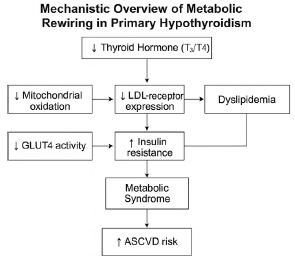
Thyroid hormones T4 (thyroxine) and T3 (triiodothyronine) regulate the basal metabolic rate by modulating mitochondrial oxidative phosphorylation and thermogenesis, lipid catabolism, and carbohydrate metabolism [1,2]. Deficiency impairs mitochondrial function, diminishes hepatic LDL receptor gene expression, and attenuates peripheral lipoprotein lipase activity, resulting in increased circulating LDL cholesterol, triglycerides, and total cholesterol [7,8]. Additionally, hypothyroidism disrupts glucose metabolism by hindering GLUT4 translocation in insulin-sensitive tissues, reducing endothelial nitric oxide production, and promoting insulin resistance, hypertension, and arterial stiffness [9,10].

Metabolic syndrome (MetS), a constellation of central obesity, dyslipidemia, hyperglycemia, and hypertension, increases the risk of coronary heart disease and shares pathophysiological features with hypothyroidism [11]. Studies have reported that 35–65% of hypothyroid patients meet the MetS criteria, but estimates vary regionally due to genetic background, ethnicity, diet, and lifestyle [12-14]. South Asians demonstrate unique metabolic traits, including heightened visceral fat accumulation and lower HDL-C, even at normal BMI, intensifying insulin resistance and cardiovascular risks.

Despite increasing awareness of thyroid-metabolic syndrome interplay, data from South Asian populations, where dual burdens of hypothyroidism and metabolic syndrome premortem significantly compound cardiovascular disease risk, remain scarce. This study aimed to elucidate the prevalence and patterns of MetS components in Bangladeshi patients with hypothyroidism and assess the cardiometabolic impact of levothyroxine replacement.

Materials and Methods

Study Design and Setting

This cross-sectional analytical study was conducted at the Department of Endocrinology and Allied Medicine, BIRDEM General Hospital, Dhaka, Bangladesh, between January 2018 and August 2019. This study investigated adults with biochemically confirmed primary hypothyroidism, both overt and subclinical, who attended routine outpatient and inpatient endocrine services. The protocol was reviewed and approved by the Institutional Review Board of the Bangladesh Diabetic Association (BADAS) under ethical approval number BADAS-ERC/2018/05-02. The study adhered to the Declaration of Helsinki (World Medical Association, 2013), and all participants provided written informed consent before enrolment.

Participants and Eligibility

Patients were recruited consecutively according to predefined inclusion and exclusion criteria.

Inclusion Criteria:

  1. Adults (≥18 years).
  2. Diagnosed with primary hypothyroidism, either overt (elevated TSH with low FT4) or subclinical (elevated TSH with normal FT4) [1].

Exclusion Criteria

Secondary hypothyroidism, pregnancy, chronic renal or hepatic disease, corticosteroid or oral contraceptive use, or other systemic illnesses likely to affect metabolic parameters [7]

Data Collection and Measurements

Demographic data (age and sex), anthropometry (height, weight, and waist circumference [WC]), and blood pressure (BP) were recorded using standardized protocols. BMI was calculated as weight (kg)/height² (m²) and classified by Asian-specific cut-offs: normal < 23.0, overweight 23.0–26.9, obese ≥ 27.0 kg/m² [14].

After overnight fasting (8–12 h), venous blood samples were drawn for the following:

  • Fasting plasma glucose (FPG)
  • Lipid profile (TC, TG, HDL-C, LDL-C)
  • Thyroid profile (TSH, FT4)
  • Aspartate aminotransferase (AST)

All analyses were performed at the BIRDEM Central Biochemistry Laboratory using automated analyzers with internal quality control.

Definition of Variables

Metabolic syndrome (MetS) was defined according to the International Diabetes Federation (IDF, 2005) criteria: central obesity (WC ≥ 90 cm men; ≥ 80 cm women) plus any two of the following: (1) TG ≥ 150 mg/dL, (2) HDL-C < 40 mg/dL men/< 50 mg/dL women, (3) BP ≥ 130/85 mmHg or treated hypertension, and (4) FPG ≥ 100 mg/ dL or known diabetes.

Thyroid status was classified as:

  • Overt hypothyroidism: elevated TSH with low
  • Subclinical hypothyroidism: elevated TSH with normal FT4 [8].

Statistical Analysis

Data were analyzed using SPSS v26.0 (IBM Corp., Armonk, NY, USA). Continuous variables were expressed as mean ± SD and compared using independent sample t-tests or one-way ANOVA. Categorical variables are expressed as frequencies (%) and compared using χ² tests. p < 0.05. Subgroup analyses compared overt versus subclinical hypothyroidism and treated versus untreated overt cases.

Ethical Considerations

The study protocol was approved by the Institutional Review Board of the Bangladesh Diabetic Association (BADAS) (Ref: BADAS-ERC/2018/05-02). All procedures conformed to the ethical standards of the Declaration of Helsinki (World Medical Association, 2013). Written informed consent was obtained from each participant, and anonymity was ensured during data analysis and reporting.

Result

Demographic and Clinical Characteristics

A total of 59 adults diagnosed with primary hypothyroidism were included; the mean age was 52.2 ± 13.6 years, with females representing 76.3% of the cohort. Among these, 34 patients (57.6%) had overt hypothyroidism, whereas 25 (42.4%) had subclinical hypothyroidism. Within the overt group, 28 (82.4%) patients were on levothyroxine therapy, whereas six (17.6%) were newly diagnosed and untreated at study entry. The mean BMI was 26.8 ± 4.1 kg/m², and central obesity was highly prevalent (93.2%), indicative of the typical visceral adiposity in this population.

Prevalence of Metabolic Syndrome and Its Components

Metabolic syndrome (MetS), as defined by the International Diabetes Federation criteria adapted for South Asians, was diagnosed in 45 of 59 patients, corresponding to a prevalence of 76.3%, underscoring the metabolic burden associated with thyroid hormone deficiency.

The breakdown by hypothyroid subtype showed that MetS was present in 62.2% of patients with overt hypothyroidism and 57.1% of individuals with subclinical hypothyroidism, suggesting that metabolic derangements manifest before overt hormonal insufficiency.

Key individual MetS components were markedly prevalent:

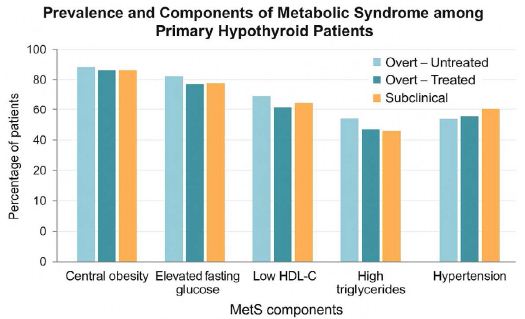
  • Central obesity was observed in 9% of patients.
  • Elevated fasting plasma glucose levels were measured in 95%.
  • Low HDL cholesterol affected 86% of
  • Hypertriglyceridemia was present in approximately 68–76%.
  • Hypertension, defined as a systolic/diastolic BP ≥ 130/85 mmHg or treatment, had an impact of approximately 85%.

The clustering of these components illustrates profound metabolic dysfunction associated with thyroid hormone deficiency (Figure 1).

Figure 1: Prevalence and Components of Metabolic Syndrome among Primary Hypothyroid Patients. A clustered bar chart displaying percent prevalence of MetS components across overt treated, overt untreated, and subclinical subgroups.

Impact of Levothyroxine Therapy on Biochemical Parameters

Subgroup analysis comparing treated versus untreated overt hypothyroid patients revealed significant metabolic improvements attributable to hormone replacement therapy.

  • Lipid Parameters: Treated patients showed significantly lower total cholesterol levels (161.9 ± 7 mg/dL) compared to untreated (200.8 ± 75.3 mg/dL) (p < 0.05). Triglycerides were also reduced in treated patients (187.5 ± 89.2 mg/dL versus 233.0 ± 126.9 mg/dL), although the difference was statistically significant (p ≈ 0.06).
  • Thyroid Function Tests: TSH levels were dramatically lower among treated patients (3.44 ± 19 µIU/mL) than among untreated cases (47.05 ± 34.98 µIU/mL, p < 0.001). Correspondingly, FT4 levels were considerably higher (14.57 ± 3.28 pmol/L versus 7.71 ± 1.41 pmol/L, p < 0.001), indicating effective thyroid hormone restoration.

Subclinical hypothyroid patients exhibited intermediate lipid and thyroid profiles, suggesting an early onset of metabolic disturbances preceding overt hypothyroidism (Figure 2).

Figure 2: The interconnected metabolic pathways affected by primary hypothyroidism. The deficiency of T₃/T₄ triggers a cascade of metabolic disturbances, from mitochondrial energy inefficiency to lipid retention and insulin signaling impairment. This metabolic rewiring underpins the high prevalence of MetS observed in this study and mechanistically links endocrine dysfunction to cardiometabolic disease progression. T₃/ T₄ – Triiodothyronine and Thyroxine; LDL receptor – Low-Density Lipoprotein Receptor; GLUT4 – Glucose Transporter Type 4; ASCVD – Atherosclerotic Cardiovascular Disease.

Age-Stratified Metabolic Trends

The prevalence of MetS increased significantly with advancing age across hypothyroid subtypes, peaking in those older than 60 years for overt hypothyroidism and between 51 and 60 years for subclinical hypothyroidism. Age-correlated metabolic factors included increased triglyceride and decreased HDL-C levels (p < 0.05). Importantly, levothyroxine treatment was associated with favorable metabolic trends in all age groups, highlighting the restorative potential of early hormone replacement therapy.

Discussion

Elevated Metabolic Syndrome Burden

This study found an exceptionally high (76%) prevalence of MetS among Bangladeshi adults with hypothyroidism, exceeding many reports and implying a major cardiometabolic risk accumulation. The high MetS rates in subclinical hypothyroidism suggest that metabolic injury begins early.

Thyroid-Driven Metabolic Rewiring

Thyroid hormone deficiency disrupts mitochondrial oxidative function and β-oxidation, resulting in hepatocellular triglyceride accumulation and potentially metabolically associated fatty liver disease (MAFLD) [2,7,15] Suppression of hepatic LDL receptor expression and lipoprotein lipase activity elevates cholesterol and triglyceride levels. Levothyroxine therapy reverses this metabolic bottleneck.

Insulin Resistance and Vascular Effects

Impaired GLUT4 translocation and suppressed hepatic insulin signaling contribute to insulin resistance, as confirmed by widespread fasting hyperglycemia (95%). Vascular stiffness and hypertension (~85%) are associated with decreased endothelial nitric oxide production [10]. Metabolomic biomarkers such as branched-chain amino acids and acyl-carnitines indicate mitochondrial dysfunction within this milieu [16].

South Asian Predisposition and Aging

The South Asian adiposity phenotype—excess visceral adipose and low HDL-C at lower BMI—exacerbates the metabolic risk multiplicatively with hypothyroidism. Aging furthers insulin resistance through thyroid decline and adipocyte senescence (Kumar et al., 2020).

Levothyroxine as Therapeutic Modifier

Hormone replacement improves thyroid function and partially corrects lipid and vascular function abnormalities, suggesting that early intervention may prevent progression to atherosclerotic cardiovascular disease and MAFLD [17].

Outlook: Precision Endocrine-Metabolic Care

The integration of multi-omics approaches, such as lipidomics, metabolomics, and transcriptomics, may pinpoint thyroid hormone– sensitive metabolic networks, allowing tailored hormone replacement therapy targeting metabolic phenotypes rather than TSH alone [18,19].

Conclusion

Primary hypothyroidism in South-Asian adults is tightly linked to widespread metabolic reprogramming, manifested by a high prevalence of metabolic syndrome and atherogenic dyslipidemia. Both the overt and subclinical forms exhibit early insulin resistance and lipid abnormalities, highlighting that metabolic injury begins before overt hormonal failure. Levothyroxine therapy ameliorated these disturbances, indicating that thyroid hormone replacement exerts dual endocrine-metabolic benefits.

From a translational standpoint, incorporating cardiometabolic screening into routine thyroid evaluation and exploring molecular biomarkers of metabolic rewiring may reduce the ASCVD burden in hypothyroid populations.

Limitations and Future Directions

The present study had several limitations. First, its cross- sectional design restricts its ability to infer causality between thyroid dysfunction and metabolic outcomes. Second, the sample size was modest and recruited from a single tertiary-care center, which may limit the generalizability to broader South-Asian populations. Third, due to resource constraints, insulin resistance markers (e.g., HOMA- IR) and inflammatory biomarkers were not measured, which could have provided a deeper mechanistic insight.

Future research should include longitudinal and interventional studies to clarify the temporal relationship between thyroid dysfunction and metabolic syndrome development. Integrating omics-based analyses such as metabolomics and lipidomics could further elucidate the molecular underpinnings of metabolic rewiring in hypothyroidism.

Acknowledgments

The authors gratefully acknowledge the support of the Department of Endocrinology, BIRDEM General Hospital, Dhaka, Bangladesh for providing laboratory and logistic assistance. Appreciation was also extended to all the participants for their voluntary contributions.

Author Contributions

Shirazum Munira (1): Conceptualization, data collection, and primary manuscript drafting.

Nafisa Abedin (1,2): Data interpretation, figure and table preparation, critical revision of the manuscript, and corresponding author responsibilities.

Farhad Ahmed (3), Md. Shayedat Ullah (3), Indira Roy (4), Rhyma Karim (4), Umme Sumyia (4), Khaled Hassan (5), Afroza Begum (5), and Md. Arifuzzaman (5): Provided technical support, contributed to data analysis, and assisted in manuscript revision.

Conflict of Interest Statement

The authors declare no conflicts of interest and confirm that the study was conducted independently, without financial or institutional bias.

References

  1. Brent GA and Davies TF (2011) Hypothyroidism and thyroiditis. In: De Groot LJ, et (Eds.), Williams Textbook of Endocrinology. Elsevier.
  2. Mullur R, Liu YY and Brent GA (2014) Thyroid hormone regulation of Physiol. Rev. [crossref]
  3. Canaris GJ, Manowitz NR, Mayor G and Ridgway EC (2000) The Colorado thyroid disease prevalence study. Intern. Med. [crossref]
  4. Vanderpump MPJ (2011) The epidemiology of thyroid Br. Med. Bull [crossref]
  5. Paul R, et (2006) Prevalence of hypothyroidism in a Bangladeshi community. Bangladesh J. Med. Biochem.
  6. Shantha GPS, et al. (2009) Prevalence of hypothyroidism in metabolic syndrome patients and its association with insulin resistance. Indian J. Endocrinol. Metab
  7. Duntas LH and Brenta G (2012) The effect of thyroid disorders on lipid Med. Clin. North Am. [crossref]
  8. Peppa M, Betsi G and Dimitriadis G (2011) Lipid abnormalities and cardiometabolic risk in Eur. J. Endocrinol.
  9. Singla R, Gupta Y, Khemani M and Aggarwal S (2010) Thyroid disorders and insulin resistance: An emerging Indian J. Endocrinol. Metab.
  10. Taddei S, et al. (2003) Impaired endothelium-dependent vasodilation in subclinical J. Clin. Endocrinol. Metab. [crossref]
  11. Alberti KGMM, Zimmet P and Shaw J (2006) The metabolic syndrome—a new worldwide definition. Lancet 366(9491). [crossref]
  12. Kota SK, Kota SK, Jammula S, Meher LK and Modi KD (2012) Prevalence of metabolic syndrome in hypothyroidism and effect of replacement J. Clin. Endocrinol. Metab.
  13. Koirala S, Sharma R and Singh S (2016) Metabolic syndrome in hypothyroid patients: A cross-sectional study from J. Clin. Diagn. Res.
  14. Misra A and Khurana L (2011) Obesity-related non-communicable diseases: South Asians Caucasians. Nutr. [crossref]
  15. Eslam M, Sanyal AJ and George J (2020) MAFLD: A consensus-driven proposed nomenclature for metabolic associated fatty liver Gastroenterology. [crossref]
  16. Kim HJ, Lee SY and Park TJ (2023) Serum metabolomic signatures in hypothyroidism reveal mitochondrial Front. Endocrinol.
  17. Pérez-Méndez O, Hernández A and Mora-Martínez S (2022) Integrating metabolic screening in thyroid Endocr. Metab. Res.
  18. Sun J, Li X and Zhou H (2023) Multi-omics profiling of thyroid hormone-regulated Front. Mol. Biosci.
  19. Zhao L, et (2021) Integrative lipidomics reveals thyroid hormone-driven metabolic remodeling. Nat. Metab.

A Study on Estimation of Fetal Weight in Term Pregnancy by Clinical Methods and Ultrasonography and Comparison with Actual Birth Weight

DOI: 10.31038/IGOJ.2025813

Abstract

Reliable fetal weight assessment is a crucial part of predicting delivery risks and planning suitable obstetric interventions. The chosen estimation method can impact clinical decisions, especially when access to advanced diagnostic tools is limited. This study compared the predictive accuracy of two clinical formulas, Johnson’s method and Dare’s formula, with ultrasonography in estimating fetal weight at term, using actual birth weight as the benchmark. In a prospective cohort of 200 women with term singleton cephalic pregnancies, fetal weight was estimated via Johnson’s method, Dare’s formula, and ultrasonography (Hadlock’s formula). Actual birth weights were recorded after delivery. For each method, mean differences, mean errors, standard deviations, and Pearson correlation coefficients were calculated against actual birth weight. Johnson’s method estimated an average fetal weight of 2914.08g compared to the actual mean of 3115.4g, with a mean error of 250.25g and a strong correlation (r = 0.7640), indicating underestimation. Dare’s Formula estimated a mean weight of 3147.01g versus an actual mean of 2898.1g, with a mean error of 298.15g and r = 0.745, indicating overestimation. Ultrasonography showed the highest accuracy, with an average estimated weight of 3015.5g against an actual mean of 2974.1g, a mean error of 202.5g, and a very strong correlation (r = 0.877). Ultrasonography was the most precise method for fetal weight estimation, displaying minimal bias and the strongest correlation with actual birth weight. Of the clinical methods, Johnson’s method performed better than Dare’s formula, making it a viable option when ultrasonography is unavailable, although its tendency to underestimate should be considered in clinical decision-making.

Keywords

Fetal weight estimation, Johnson’s method, Dare’s formula, Ultrasonography, Hadlock’s formula, Birth weight, Obstetric assessment, Term pregnancy

Introduction

Precise estimation of fetal biometry in late pregnancy is a cornerstone of modern obstetric practice, guiding critical decisions regarding the timing, mode, and place of delivery. The ability to reliably predict fetal weight enables clinicians to anticipate and prevent complications such as shoulder dystocia in macrosomic fetuses, identify and manage intrauterine growth restriction (IUGR), and reduce adverse maternal and neonatal outcomes. Over time, a number of clinical and sonographic methods have been developed for this purpose. Nonetheless, no distinct or singular methodology has attained widespread recognition as a gold standard [1-3]. Clinical methodologies for predicting fetal weights, including Johnson’s and Dare’s formulas, are predicated on straightforward anthropometric measurements, chiefly “symphysio-fundal height (SFH)” and “abdominal girth (AG)’’. R.W. Johnson was the first to write about the Johnson’s formula. He utilized the SFH and changed it for fetal station to come up with an estimated fetal weight. Dare’s formula, on the other hand, employs the product of SFH and AG to find the weight in grams [4-6]. These treatments are cheap, don’t need much equipment, and can be done at any level of healthcare, which makes them especially valuable in places with few resources [7,8]. But their accuracy might be affected by things including the mother’s weight, the amount of amniotic fluid, problems with the uterus, the location of the fetus, and the examiner’s experience [6,9]. Studies have reported a tendency for some formulas to systematically overestimate or underestimate fetal weight, which can affect clinical decision-making methodologies [9-11].

Ultrasonography (USG) has gained widespread acceptance due to its ability to incorporate multiple biometric parameters, including bi-parietal diameter, abdominal circumference, femur length, and head circumference into regression equations such as Hadlock’s formula [12-15]. It is generally perceived as a more objective and reproducible technique as compared to clinical palpation, with reported advantages in cases of abnormal fetal growth, altered maternal nutrition, and high body mass index [16,17]. However, ultrasonographic accuracy can still be influenced by operator skill, fetal position, placental location, and extreme fetal size [18]. Additionally, the lack of functional ultrasound equipment and trained personnel in many primary healthcare facilities, especially in developing countries, remains a significant barrier to its universal use [19,20]. Comparative studies between clinical methods and ultrasonography have produced mixed results. Some studies find ultrasonography to be superior, particularly at the extremes of birth weight [21,22], while others show comparable performance between the two methods, especially for fetuses within the normal birth weight range of 2500-4000g. Clinical palpation tends to be less accurate for estimating weights below 2500g, though ultrasonography may provide better accuracy in such cases [23]. Given these differences, evaluating the most appropriate method based on specific context is crucial for different healthcare environments.

Recognizing the clinical importance of precise fetal weight estimation and the variability in reported accuracies, the present study was undertaken to systematically evaluate and compare the performance of Johnson’s method, Dare’s formula, and ultrasonography in predicting actual birth weight in term pregnancies. By assessing name differences, estimation errors, and correlation coefficients, the study aimed to identify the method that most closely approximates actual birth weight, thereby providing a reliable basis for obstetric decision-making. Importantly, the comparison extends beyond determining statistical accuracy; it also considers the clinical applicability of each method within different healthcare contexts. In resource-rich settings, ultrasonography may be readily available and preferred; however, in many rural or rural resource environments, access to functional ultrasound equipment and trained personnel is often limited [23,24]. In such scenarios, cost-effective and easily implementable clinical formulas retain significant value provided their limitations are understood and accounted for. By directly comparing these three approaches in a uniform cohort under the same clinical conditions, this study seeks to generate evidence that can guide practitioners in selecting the most appropriate method for fetal weight estimation according to their resource availability and clinical setting. The findings are expected to contribute to more informed clinical judgment, better delivery planning, and ultimately improved maternal and neonatal outcomes [25,26].

Materials and Methods

The randomized clinical study was conducted at the District Hospital, Krishnanagar, Nadia, as an institution-based investigation. It was designed as a prospective cohort study involving pregnant women who met the specific inclusion criteria. All eligible participants were recruited from the hospital’s Obstetrics and Gynaecology Department, and the study was carried out within the institutional setting to ensure uniformity of procedures and consistency in data collection. The study was performed after clearance from the Board of Studies and the Ethical Committee in the Department of Obstetrics and Gynaecology, Nadia District Hospital.

Inclusion Criteria

  1. The study included pregnant women with a singleton pregnancy.
  2. The pregnancy should be of cephalic presentation.
  3. The pregnant woman should carry a live fetus.
  4. The participants were required to have a known last menstrual period (LMP) or a prior ultrasound scan confirming the expected date of delivery.
  5. Only those with a gestational age between 37 and 42 weeks at the time of assessment were eligible.

Exclusion Criteria

  1. Women were excluded from the study if they were carrying an anomalous fetus.
  2. Pregnant women with the presence of coexisting uterine or adnexal pathologies such as fibroids or ovarian cysts.
  3. Pregnant women who have been previously diagnosed with liquor abnormalities.

Sample Size Estimation

The required sample size for the study was determined using the formula for estimating a population mean within a specified precision at a 95% confidence interval:

where,

Zα/2 = 1.96 (standard normal variate at 95% confidence)

σ = 8 (assumed standard deviation)

E = 1.5 (allowed error).

Substituting these values gave:

n=109.3

Thus, a minimum of 110 participants was required. To enhance the reliability of the results and account for potential dropouts, the sample size was increased to 200 term singleton pregnancies meeting the inclusion criteria.

Study Procedure

After getting the go-ahead from the Institutional Ethical Committee, all patients were chosen based on the rules for who could and couldn’t be included. All patients underwent a detailed medical history, full physical examination, and appropriate standard and specific investigations. The study involved pregnant women who satisfied the inclusion and exclusion criteria at the Obstetrics and Gynecology Department of the District Hospital in Krishnanagar, Nadia. The study involved 200 women. A thorough history will be acquired, including the patient’s education, occupation, socio-economic position, menstrual history, obstetric history, previous medical and surgical history, and personal history. A thorough general physical exam will be done. All systems and vital signs will be checked. A general physical examination was performed, succeeded by an abdominal assessment in the supine posture. Patients were told to empty their bladders before the inspection. After correcting the uterus’s dextro-rotation, the height of the uterus is measured by feeling from the xiphisternum down. To measure the symphysio-fundal height (in cm), a flexible standard measuring tape is used to touch the skin while pointing it toward the patient. The upper boundary of the pubic symphysis is felt. Next, the abdominal circumference (in cm) is measured at the level of the umbilicus in the same way. Johnson’s and Dare’s formula is used to figure out the expected weight of the fetus. The patient will have an ultrasound test to check the baby’s weight because there wasn’t one last week. Fetal biometry was evaluated using many parameters, including body weight, biparietal diameter, head circumference, abdominal circumference, and femoral length..

Formulas Used for Calculations

Johnson’s Formula

FW = (SFH – y) x 155

where,

FW: Fetal weight (in g)

SFH: Symphysio Fundal Height (in cm)

y = 13 when the head is not engaged

y = 12 when the head is at the “0” station

y = 11 when the head is at the +1 station

The fundal height is reduced by 1 cm if the mother’s weight is >91 kg.

Dare’s Formula

EFW = SFH x AG

where,

EFW: Estimated Fetal Weight (in g)

SFH: Symphysio Fundal Height (in cm)

AG: Abdominal Girth (in cm)

Hadlock’s Formula

log10 BW = 0.3596 + (0.00061 x BPD x AC) + (0.042 x AC) + (0.174 x FL) + (0.0064 x HC) – (0.00386 x AC x FL)

where,

BW: Body weight (in g)

BPD: Bi-parietal diameter (in mm)

AC: Abdominal circumference (in cm)

FL: Femoral length (in mm)

HC: Head circumference (in cm)

Statistical Evaluation

The statistical analysis was conducted using SPSS version 25.0 after importing data into a Microsoft Excel spreadsheet. The quantitative data was expressed as the mean and standard deviation, whilst the qualitative data was represented as the frequency and proportion of each group. The Student’s t-test was employed to compare the mean values of the two groups, while the Chi-square test was used to evaluate the frequency differences between them. A p-value less than 0.05 is considered statistically significant.

Results and Discussion

The study evaluated the precision of fetal weight estimation utilizing Johnson’s approach against actual birth weights. The average actual birth weight was 3115.4g, while the average estimated fetal weight calculated using Johnson’s approach was 2914.08g. (Table 1 and Figure 1). The mean difference of 87.14g indicated a tendency of Johnson’s method to underestimate fetal weight. The mean estimation error was 250.25g, corresponding to approximately 84g/kg of actual weight. The standard deviation of the estimations was 421.15g, and the standard error of the mean was 41.15g. The Pearson product-moment correlation coefficient between actual and estimated weight was 0.764, denoting a strong positive correlation and suggesting that, despite its tendency to underestimate, Johnson’s method demonstrates a reasonable degree of accuracy in predicting fetal weight.

Table 1: Comparison of the mean actual birth weight with the mean estimated birth weight by Johnson’s method.

Sr. No.

Parameters

Estimations

1.

Mean actual birth weight 3115.4 g

2.

Mean estimated fetal weight 2914.08 g
3. Difference between the mean actual birth weight and the mean estimated fetal weight

87.14 g

4.

Mean error of estimation

250.25 g (∼84 g/kg)

5.

Standard deviation (SD)

421.15 g

6.

Standard error of the mean (SE)

41.15 g

7.

Person product-moment correlation coefficient

0.764

8. p-value

0.001

Figure 1: Comparison of the mean actual birth weight with the mean estimated birth weight by Johnson’s method.

The study assessed the accuracy of fetal weight estimation using Dare’s Formula in comparison with actual birth weights. The mean actual birth weight was 2898.1g, whereas the mean EFW obtained using Dare’s Formula was 3147.01g (Table 2 and Figure 2). The mean difference of 146.8g indicated a tendency for Dare’s Formula to overestimate fetal weight. The mean estimation error was 298.15g, corresponding to approximately 93g/kg of actual weight. The standard deviation of the estimations was 415.18g, and the standard error of the mean was 41.74g. The Pearson product-moment correlation coefficient between actual and estimated weight was 0.745, indicating a strong positive correlation. Despite its tendency to overestimate, Dare’s Formula demonstrated a reasonable degree of accuracy in predicting fetal weight.

Table 2: Comparison of the mean actual birth weight with the mean estimated birth weight by Dare’s formula.

Sr. No.

Parameters

Estimations

1. Mean actual birth weight 2898.1 g
2. Mean estimated fetal weight 3147.01 g
3. Difference between the mean actual birth weight and the mean estimated fetal weight 146.8 g
4 Mean error of estimation 298.15 g (~93 g/kg)
5. Standard deviation (SD) 415.18 g
6. Standard error of the mean (SE) 41.74 g
7. Person product-moment correlation coefficient 0.745
8. p-value 0.001

Figure 2: Comparison of the mean actual birth weight with the mean estimated birth weight by Dare’s formula.

The study evaluated the accuracy of fetal weight estimation using ultrasonography (USG) compared to actual birth weights. The mean actual birth weight was 2874.5g, while the mean EFW by USG was 2817.4g. The difference between these means was 12.95g, indicating that USG provided a very close estimation of fetal weight. The mean error of estimation was 46.95g/kg of actual weight (Table 3 and Figure 3). The standard deviation (SD) of the estimations was 475.75g, and the standard error of the mean (SE) was 47.57g. The Pearson product-moment correlation coefficient between actual and estimated weights was 0.911, suggesting a very strong positive correlation. These findings demonstrated that ultrasonography was highly accurate in predicting fetal weight, with minimal error and high correlation with actual birth weights.

The study compared the accuracy of fetal weight estimations by ultrasonography (USG), Johnson’s method, and Dare’s formula with actual birth weights (Table 4 and Figure 4). Within the ±50g range, 14% of cases were accurately estimated by USG, 7.5% by Johnson’s method, and 6% by Dare’s formula. In the ±100g range, USG accurately estimated 28% of cases, Johnson’s method 12%, and Dare’s formula 12.5%. For the ±150g range, USG had 34.5% accuracy, Johnson’s method 18%, and Dare’s formula 15%. In the ±200g range, USG accurately estimated 45% of cases, Johnson’s method 34.5%, and Dare’s formula 27.5%. Within the ±250g range, USG had 57% accuracy, Johnson’s method 49%, and Dare’s formula 43.5%. For the ±300g range, USG accurately estimated 79.5% of cases, Johnson’s method 57%, and Dare’s formula 50%. Within the ±500g range, USG had 100% accuracy, Johnson’s method 72.5%, and Dare’s formula 65%. For the ±1000g range, Johnson’s method accurately estimated 100% of cases, and Dare’s formula 82%, while USG did not have data for this range. For estimations beyond ±1000 grams, only Dare’s formula had data, accurately estimating 100% of cases. These findings highlighted that USG consistently provided the highest accuracy across most ranges, followed by Johnson’s method and Dare’s formula, with Dare’s formula showing the highest accuracy in the widest ranges beyond ±500g.

Table 3: Comparison of the mean actual birth weight with the mean estimated birth weight using USG.

Sr. No.

Parameters

Estimations

1. Mean actual birth weight 2874.5 g
2. Mean estimated fetal weight 2817.4 g
3. Difference between the mean actual birth weight and the mean estimated fetal weight 12.95 g
4 Mean error of estimation 46.95 g/kg
5. Standard deviation (SD) 475.75 g
6. Standard error of the mean (SE) 47.57 g
7. Person product-moment correlation coefficient 0.911
8. p-value 0.001

Figure 3: Comparison of the mean actual birth weight with the mean estimated birth weight by USG.

Table 4: Comparison of the clinical method with USG, Johnson’s, and Dare’s methods with actual birth weight.

Range

USG (%) Johnson’s Method (%) Dare’s Formula (%)
±50 g 14 7.5

6

±100 g

28 12 12.5
±150 g 34.5 18

15

±200 g

45 34.5 27.5
±250 g 57 49

43.5

±300 g

79.5 57 50
±500 g 100 72.5

65

±1000 g

100 82
>±1000 g

100

Figure 4: Comparison of clinical method and USG with actual birth weight.

The study compared the actual birth weights of babies to the fetal weight estimates made using Johnson’s method, Dare’s formula, and ultrasonography (USG). Johnson’s approach often gave a lower estimate of fetal weight. Lazer et al. (1986) discovered that Johnson’s approach often underestimates, particularly in larger fetuses, which affects preparation for delivery. Ouzounian et al. (1998) assert that mistakes in clinical estimating methodologies may result in unsatisfactory delivery decisions. The underestimations underscore the necessity for modifications or additional methodologies to improve accuracy in clinical environments. Because there is so much variation, a combination approach incorporating both clinical and ultrasound data is needed to get a more accurate estimate of the baby’s weight. Dare’s formula often gave too high of an estimate, which meant that it needed to be recalibrated or adjusted for certain situations to prevent making mistakes in the clinic. The USG gave the most precise estimates with very little inaccuracy and a strong link to actual birth weights. Boyd et al. (1983) commend the precision of ultrasonography in prenatal care. Berard et al. (1998) further support the dependability of ultrasonography in different maternal and fetal situations. The established accuracy reinforces ultrasonography as a fundamental component in prenatal diagnosis and delivery decision-making. Moreover, variability in accuracy, with ultrasonography generally being more reliable.When comparing clinical methods, where the ultrasonography (USG) consistently outperformed both Johnson’s method and Dare’s formula in terms of mean estimation error, correlation with actual birth weight, and minimization of bias. Ouzounian et al. (1998) discuss ultrasonography’s higher reliability over clinical methods in accurate weight estimation. Irion and Boulvain (2000) highlight the challenge of estimating weight in larger fetuses, with clinical methods often showing greater discrepancies. The systematic biases highlight the importance of method selection based on the clinical context. In settings where ultrasonography is unavailable, Johnson’s method may be preferred due to its similar mean bias while acknowledging its limitations. These insights underscore the superiority of ultrasound in fetal weight estimation and the need for its combination with clinical assessments, especially in cases of expected larger fetuses.

The results of this study underscore the trade-offs between clinical palpation-based formulas and ultrasonography. Ultrasonography offers the highest accuracy and should be preferred where accessible clinical methods retain relevance in resource-limited environments. Future research should focus on refining clinical estimation formulas, incorporating maternal and fetal parameters, to bridge the accuracy gap with ultrasonography. Additionally, combining clinical methods with portable low-cost ultrasound devices could enhance accuracy in peripheral healthcare settings.

Conclusion

This study evaluated the precision of fetal weight estimation employing three clinical techniques: Johnson’s method, Dare’s formula, and ultrasonography. The initial two techniques were evaluated using ultrasonography (Hadlock’s formula) in comparison to actual birth weight. The data indicated that although all three approaches had a statistically significant positive connection with actual birth weights, their performance differed in terms of accuracy, bias, and reliability. Ultrasonography emerged as the most accurate technique, with the least mean variation from actual birth weight, the lowest mean estimation error, and the highest correlation coefficient.. Because it can make estimates with little bias, it is the best way to estimate fetal weight in well-equipped healthcare systems, especially where accuracy is important for making decisions about obstetrics. Johnson’s technique tended to underestimate fetal weight, while Dare’s formula tended to overestimate it. Johnson’s technique had a slightly better association with actual birth weight than Dare’s formula. This suggests that it might be more accurate when an ultrasound isn’t available. Nonetheless, both clinical procedures demonstrated elevated estimating errors and increased variability compared to ultrasonography. These results show that even while ultrasound is currently the best way to estimate baby weight, clinical approaches are still useful in low-resource or rural areas where ultrasound is not easily available. In some cases, Johnson’s method might be better than Dare’s formula since it has a reduced mean bias, even though it tends to underestimate. However, professionals need to keep these limits in mind when looking at outcomes so that they don’t make mistakes during obstetric procedures. The selection of a method for estimating heat and weight should be determined by the resources at hand, the clinical situation, and the necessity for precision. Improving healthcare workers’ expertise in clinical estimating procedures and making portable, affordable ultrasound technology more available could work together to improve outcomes for mothers and babies, especially in places where resources are limited.

References

  1. Yomibo-Sofolahan TA, Ariba AJ, Abiodun O, Egunjobi AO, Ojo OS (2021) Reliability of a clinical method in estimating foetal weight and predicting route of delivery in term parturient monitored at a voluntary agency hospital in Southwest Nigeria. Afr J Prim Health Care Fam Med 13(1): e1-e6. [crossref]
  2. Dare FO, Ademowore AS, Ifaturoti OO, Nganwuchu A (1990) The value of symphysio-fundal height/abdominal girth measurements in predicting fetal weight. Int J Gynaecol Obstet; 31 (3): 243-8. [crossref]
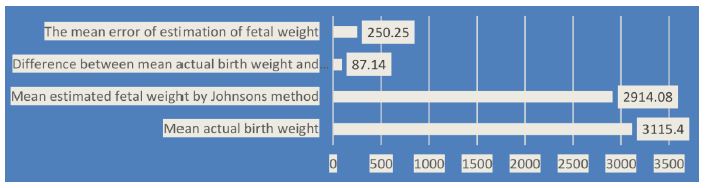
  3. Whitworth M, Bricker L, Mullan C (2015) Ultrasound for fetal assessment in early pregnancy. Cochrane Database Syst Rev 2015(7): CD007058. [crossref]
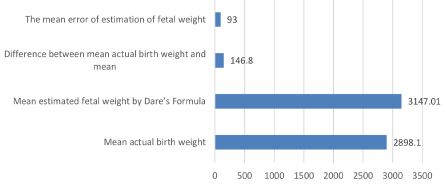
  4. Shittu AS, Kuti O, Orji EO, Makinde NO, Ogunniy SO, et al. (2007) Clinical versus sonographic estimation of foetal weight in southwest Nigeria. J Health Popul Nutr 25(1): 14-23. [crossref]
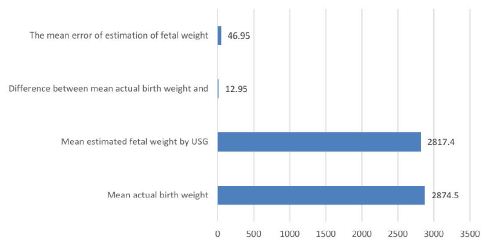
  5. Lanowski JS, Lanowski G, Schippert C, Drinkut K, Hillemanns P, et al. (2017) Ultrasound versus Clinical Examination to Estimate Fetal Weight at Term. Geburtshilfe Frauenheilkd; 77(3): 276-283. [crossref]
  6. Lanowski JS, Lanowski G, Schippert C, Drinkut K, Hillemanns P and Staboulidou I (2017) Ultrasound versus Clinical Examination to Estimate Fetal Weight at Term. Geburtshilfe Frauenheilkd 77(3): 276-283. [crossref]
  7. Ingale A, Khade SA and Shirodkar S (2019) Clinical versus ultrasonographic fetal weight estimation and its correlation with actual birth weight. Int J Contracept Obstet Gynecol; 8(2): 503-512.
  8. Roy AG, Kathaley MH (2018) Comparison of Estimation of fetal weight by clinical method, ultrasonography and its correlation with actual birth weight in term pregnancy. MVP Journal of Medical Sciences; Vol 5(1): 75-81.
  9. Shittu AS, Kuti O, Orji EO, Makinde NO, Ogunniy SO, et al. (2007) Clinical versus sonographic estimation of foetal weight in southwest Nigeria. J Health Popul Nutr 25(1): 14-23. [crossref]
  10. Torloni MR, Sass N, Sato JL, Renzi AC, Fukuyama M, et al. (2008) Clinical formulas, mother’s opinion and ultrasound in predicting birth weight. Sao Paulo Med J 126(3): 145-9. [crossref]
  11. Belete W, Gaym A (2008) Clinical estimation of fetal weight in low resource settings: comparison of Johnson’s formula and the palpation method. Ethiop Med J 46(1): 37-46. [crossref]
  12. Malik R, Thakur P, Agarwal G (2016) Comparison of three clinical and three ultrasonic equations in predicting fetal birth weight. International Journal of Reproduction, Contraception, Obstetrics and Gynecology; 5(1): 210-6.
  13. Bajaj P, Kadikar GK, Kannani M, Bhatt M, Shah S (2017) Estimation of foetal birth weight clinically and sonographically and its correlation with its actual birth weight: A prospective and comparative study. International Journal of Reproduction, Contraception, Obstetrics and Gynecology; 6(7): 3103-8.
  14. Weiner E, Mizrachi Y, Fainstein N, Elyashiv O, Mevorach-Zussman N, Bar J, et al. (2017) Comparison between three methods of fetal weight estimation during the active stage of labor performed by residents: A prospective cohort study. Fetal Diagnosis and Therapy; 42(2): 117-23. [crossref]
  15. Hiwale S, Misra H, Ulman S (2019) Fetal weight estimation by ultrasound: development of Indian population-based models. Ultrasonography; 38(1): 50-57.
  16. Johnson RW, Toshach CE. Estimation of fetal weight using longitudinal measurementation. American journal of obstet and gynaecol 1954: 68(3)891-6. [crossref]
  17. Sharma R, Singh S, Bhartyia V, Gupta J, Radhakrishnan G (2015) Product of Symphysio-Fundal Height and Abdominal Circumference: A Predictor of Estimated Fetal Weight at Birth. Int J Sci Stud; 3(9): 125-127.
  18. Hadlock FP, Deter RL, Harrist RB, Park SK(1982) Fetal biparietal diameter: rational choice of plane of section for sonographic measurement. AJR Am J Roentgenol; 138(5): 871-874. [crossref]
  19. Hadlock FP, Kent WR, Loyd JL (1982) An evaluation of two methods for measuring fetal head and body circumferences. J Ultrasound Med; 1(9): 359-60. [crossref]
  20. Goldstein RB, Filly RA, Simpson G (1987) Pitfalls in femur length measurements. J Ultrasound Med 1987; 6(4): 203-7. [crossref]
  21. Kathiriya D, Patil Y, Patange RP (2014) Comparative Study of Various Methods of Fetal Weight Estimation at Term Pregnancy. Inter J Recent Trends in Sci Tech; 9(3): 453-6.
  22. Sowjanya R, Lavanya S (2015) Comparative Study of Clinical Assessment of Fetal Weight Estimation Using Johnson’s Formula and Ultrasonographic Assessment Using Hadlock’s Formula At or Near Term. J Dent Med Sci; 14(4): 20-3.
  23. Dongol A, Bastakoti R, Pradhan N, Sharma N (2020) Clinical estimation of fetal weight with reference to Johnson’s formula: An alternative solution adjacent to sonographic estimation of fetal weight. Kathmandu University Medical Journal; 18(70): 111-116. [crossref]
  24. Lertrat W, Kitiyodom S (2021) Accuracy of intrapartum fetal weight estimation using dare’s formula and transabdominal ultrasonography in pregnant women with normal and high prepregnant BMI at Maharat Nakhon Ratchasima Hospital. Thai Journal of Obstetrics and Gynaecology 29: 313 21.
  25. Pavithra K, Priyadarshini K, Annapoorna Y (2022) Estimation of fetal weight by clinical method and its comparison with ultrasonography and its correlation with actual birth weight in term singleton pregnancy. Indian J Obstet Gynecol Res 9(3): 347-351.
  26. Gurung SD, Shrestha J, Gauchan E, Subedi A, Shrestha A, Thapa S (2022) Comparison of Actual Birth Weight with the Ultrasonographic and Clinical Estimation of Fetal Birth Weight: A Prospective Study. Nepalese Journal of Radiology 12(1): 8-12.

CGM or BGM for Gestational Diabetes: Recent Evidence from Landmark Studies

DOI: 10.31038/EDMJ.2025944


A recent meta-analysis found a variable prevalence of gestational diabetes (GDM) in the US and Canada, averaging 6.9%. This was largely attributed to screening strategies, suggesting the true number may be higher (1). Research in the UK found that more than half of GDM cases are not diagnosed with current screening (2). The International Diabetes Federation estimates that 19.7% of live births in 2024 (23 million) were complicated by hyperglycemia, with 79% due to GDM (3). Given the prevalence and clinical impact of GDM, effective tools and strategies to support clinician-led and self-management of hyperglycemia are critical. Achieving glycemic targets is central in GDM. Until recently, glycemic management in GDM has been primarily by blood glucose monitoring (BGM), which remains the standard of care (4). Meanwhile, continuous glucose monitoring (CGM) has transformed the lives of people living with type 1 and type 2 diabetes. At present, however, there is uncertainty regarding the value of CGM for people with GDM. This has inspired three landmark randomized controlled trials (RCTs; DipGluMo, GRACE and CORDELIA) that compare the benefits and clinical outcomes of monitoring with real- time CGM vs BGM. In this commentary, we will compare the designs and clinical evidence from these studies and put this emerging data in context. We will first focus on DipGluMo, whose similar design to the other RCTs illustrates key underlying principles. DipGluMo (CGM in the management of gestational diabetes in Switzerland; NCT05037526) was an open-label, single-site RCT that investigated the effect of CGM vs BGM on perinatal outcomes (5,6). The study recruited 302 people with an A1c value < 6·5% (48 mmol/mol) diagnosed with GDM between weeks 24 and 28 of gestation. Subjects were randomised to use either the Dexcom G6 (G6) CGM (with the Dexcom Clarity app) or BGM. CGM subjects received training on sensor placement, understanding glucose readings, and how to react to readings by modifying diet and physical activity. Their data was uploaded via the app to enable clinicians to adjust therapy at routine visits. The CGM glucose target range was set at 3·5–7·8 mmol/L (63 to 140 mg/dL), and appropriate low and high glucose alerts and alarms were enabled. The BGM subjects were “instructed” on use of the mylife Unio Ypsomed BGM, although there is no detail on what this instruction entailed. This BGM has Bluetooth to connect to the mylife app, but use of the app was not required and was used by some of the participants only occasionally (7) Subjects were instructed to check blood glucose (BG) 6 times per day (before and 1 hour after meals) and record readings in a paper logbook. BGM subjects also wore a blinded G6 sensor at three timepoints to allow comparison to CGM users. The BGM targets were fasting readings < 5·3 mmol/L (63 mg/dL), pre-prandial readings < 5.4 mmol/L (97 mg/dL) and 1-hr postprandial readings < 8·0 mmol/L (144 mg/dL). All subjects (BGM and CGM) had office visits approximately every 2 weeks throughout the remainder of their pregnancies. A total of 299 subjects completed DipGluMo, 156 subjects using CGM and 143 using BGM. Baseline A1c was 5.1% in the CGM group and 5.04% in the BGM group. Results showed the primary composite outcome of adverse pregnancy and neonatal outcomes did not differ between CGM and BGM (odds ratio 1·02 [95% CI 0·63–1·66]). The number of large for gestational age (LGA) neonates was identical (10%) in the CGM and BGM groups, with no difference in neonatal hypoglycemia (6%). Obesity and previous gestational diabetes were independently associated with higher rates of neonatal complications. Surprisingly, the time in range (TIR) measured between weeks 34 and 36 of gestation was significantly higher using BGM (96.9%) than CGM (92·2%), although 43% of BGM users declined to wear a blinded CGM. Irrespective of monitoring device, these TIR levels far exceed those in the general population of people with type 1 or type 2 diabetes, a testament to the high levels of adherence in people with GDM. The authors describe a survey-based preference for CGM but acknowledge that this should be interpreted with caution since 43% of BGM users declined blinded CGM. The authors concluded that GDM outcomes were not improved by CGM but did propose that CGM could be offered to simplify diabetes management. Let us now examine GRACE (Glycemic control and pregnancy outcomes with real-time CGM in GDM, NCT03981328), a multinational open-label RCT with the primary outcome being proportion of LGA infants born to women using CGM vs BGM. The full study protocol for GRACE is published (8). GRACE mirrors DipGluMo with similar inclusion criteria, glucose monitoring devices and clinical endpoints. GRACE enrolled 375 women diagnosed with GDM who in keeping with DipGluMo, were randomized to use a G6 CGM (with Clarity app) or BGM. The BGM used in GRACE was the Contour Next One (Ascensia Diabetes Care) but the protocol does not specify whether the Contour diabetes app was used; instead, the protocol stipulated that BGMs be downloaded in-clinic. Virtually identical CGM- and BGM-based glucose targets were used in both studies. The DipGluMo protocol stipulated that BGM subjects perform 6 glucose checks per day (before and 1hour after meals), while subjects whose readings remained at targets could decrease check frequency to 4 times daily, including a daily fasting check (7). In contrast, the GRACE protocol specified “BG monitoring as routinely used for patients with GDM, that is, at least 4 BG values daily including measurements in a fasting state as well as 1hour after starting each meal.” It is noteworthy that GRACE did not offer a compatible diabetes app to BGM-using subjects and the BGM diabetes app was not often used in DipGluMo, despite apps being commonplace and helpful tools. Both studies relied instead on meter downloads or paper logbooks, which are often incomplete, unreliable and not conducive for pattern recognition. In contrast, the CGM-using subjects in both studies were fully trained on using the sensor and the app with its insights and features, including pre-programmed target ranges and alerts and alarms. A full publication for GRACE is not available as we write this commentary, but headline results were published in an abstract and presented at the 2025 European Association for the Study of Diabetes (EASD) congress (9). Additionally, key results were presented in a Dexcom-sponsored EASD symposium. In contrast to DipGluMo, where the proportion of LGA infants was 10% in both study arms, GRACE found the number of LGA infants was lower in women using CGM compared to BGM (3·5% vs 10·3%) and that newborn weight percentiles were lower in those using CGM. However, as pointed out by Dr. Helen Murphy at EASD, the rate of LGA infants in the general population is 10%, equal to the 10.3% rate found in GRACE. Dr. Murphy goes on to point out that “we shouldn’t expect women with GDM to have smaller babies than they would if they didn’t have diabetes” (10). The CGM group in GRACE showed improved time in pregnancy range (65-140 mg/dl) between weeks 36 and 38 of gestation. DipGluMo observed that time in pregnancy range (63 to 140 mg/dL) was actually higher in BGM than CGM users, albeit this was measured 2 weeks earlier in gestation than in GRACE. Subjects in DipGluMo were prescribed only insulin if they needed glucose- lowering medications, with 48% of subjects starting on insulin during the study, higher in the CGM group (55%) than in the BGM group (45%). In contrast, GRACE found no difference in the numbers of subjects requiring glucose-lowering medications, although rapid-acting insulin was more often prescribed to women using CGM (41% vs 30%), perhaps as a consequence of greater visibility of their daily glucose excursions. A peer-reviewed article describing full results from the GRACE study is expected shortly, and may further explain why the primary, and some secondary, outcomes were different than those in DipGluMo.

This renewed focus on GDM continues with a study entitled “Continuous glucose monitoring for women with gestational diabetes: a randomized controlled trial,” CORDELIA (NCT06310356). CORDELIA is an ongoing, open-label, multicentre RCT in Belgium and Australia designed to assess the efficacy and cost-effectiveness of CGM vs BGM in women with GDM. In keeping with GRACE and DipGluMo, the study’s primary outcome will focus on a composite adverse pregnancy outcome, including preterm delivery, LGA, neonatal hypoglycemia, and stillbirth or neonatal death. Furthermore, the study will assess which CGM glycemic goals to aim for in GDM. CORDELIA will randomize 386 women to use either the Libre 3 CGM (Abbott Diabetes Care) or a Bluetooth connected BGM (OneTouch Ultra Plus Reflect) in combination with the OneTouch Reveal mobile diabetes app. BGM subjects will wear a blinded CGM (Freestyle Libre Pro IQ) at least twice during their pregnancy. BGM subjects will be instructed to perform at least 4 glucose checks per day (fasting and 1 or 2 hour(s) after meals). This approach of combining a modern BGM that includes many on-meter insight features (e.g., customizable colored target range indicator and BG pattern recognition) with its compatible app will enable clinicians and subjects to easily track glucose trends, visualize insights and share progress. Use of this advanced BGM and app ecosystem will yield a control group using modern BGM technology for comparison to CGM. The study is expected to report out in 2027. CORDELIA reminds us that BGM remains the predominant monitoring technology used globally and that most modern BGMs can connect to a diabetes app to enhance diabetes management. Neither GRACE nor DipGluMo assessed the combination of BGM and a diabetes management app, perhaps unfairly handicapping the BGM group, and CORDELIA data is not yet available. To bridge this gap, let’s review data from a real-world evidence (RWE) study that evaluated glycemic trends and achievement of guideline-recommended targets in women with GDM using the OneTouch Reveal diabetes app with connected OneTouch BGMs (11). In contrast to an RCT, an RWE approach enables a step-change in the scale and diversity of the study population. Using anonymized glucose and app analytics data from 26,382 women with GDM, we analysed their first 7-days using the BGM and app compared to the last 7-days prior to a 10-week timepoint. We found fasting readings in range (RIR, < 5.3 mmol/L; < 95 mg/dL) improved by +20.3 percentage points (%pts) and overall RIR (3.5 to 7.8 mmol/L; 63 to 140 mg/dL) improved by +8.3 %pts. As expected, people with GDM were highly motivated, averaging 17 sessions and 90 minutes per week on the app. In summary, the findings of two recent landmark RCTs do not align on whether perinatal outcomes are improved using CGM vs BGM. Both do, however, align on the fact that subjects preferred to use CGM for convenience and to negate fingersticks. In light of recent RWE data on BGM, it will be interesting to understand how BGM subjects in CORDELIA, using advanced BGM in combination with a diabetes app, perform in terms of perinatal outcomes to help clinicians make informed recommendations for people with GDM based on needs, personal circumstances, and cost-effectiveness.

References

  1. Eades CE, Burrows KA, Andreeva R, Stansfield DR, Evans JM (2024). Prevalence of gestational diabetes in the United States and Canada: a systematic review and meta- BMC Pregnancy Childbirth. [Crossref]
  2. Jones DL, Kusinski LC, Barker P, et al (2025). Enhanced glucose processing in gestational diabetes diagnosis: Effects on health equity and clinical Diabet Med. [Crossref]
  3. IDF Diabetes Atlas 11th Edition 2025 org.
  4. American Diabetes Association Professional Practice Committee; 15. Management of Diabetes in Pregnancy: Standards of Care in Diabetes—2025. Diabetes Care 2025 [Crossref]
  5. Amylidi-Mohr S, Zennaro G, Schneider S, Raio L, Mosimann B, Surbek D (2025). Continuous glucose monitoring in the management of gestational diabetes in Switzerland (DipGluMo): an open-label, single-centre, randomised, controlled trial. Lancet Diabetes Endocrinol. [Crossref]
  6. Supplement to: Amylidi-Mohr S, Zennaro G, Schneider S, Raio L, Mosimann B, Surbek D (2025). Continuous glucose monitoring in the management of gestational diabetes in Switzerland (DipGluMo): an open-label, single-centre, randomised, controlled Lancet Diabetes Endocrinol [Crossref]
  7. Personal email communication (DipGluMo) from Amylidi-Mohr, 5 June 2025.
  8. Huhn EA, Linder T, Eppel D, et al (2020). Effectiveness of real-time continuous glucose monitoring to improve glycaemic control and pregnancy outcome in patients with gestational diabetes mellitus: a study protocol for a randomised controlled BMJ Open. [Crossref]
  9. Linder T, Dressler-Steinbach I, Wegener S et al (2025). Glycaemic control and pregnancy outcomes with real-time continuous glucose monitoring in gestational diabetes (GRACE): an open-label, international, randomised controlled Diabetologia [Crossref]
  10. Kelly Close. Knowledge base. GRACE and DipGluMo show the huge power of CGMs role in GDM management. EASD 2025. Day 5 highlights from Sept 20, 2025.
  11. Grady M, Cameron H, Holt E (2024). Glycemic trends, app engagement and achievement of gestational diabetes guideline targets using a diabetes app and Bluetooth® connected blood glucose meters. Explor Endocr Metab Dis. [Crossref]

Aptamer-Fc Conjugate Complement-Mediated Lysis of Treponema Pallidum

DOI: 10.31038/IDT.2025623

Abstract

This work extends our recent aptamer-Fc conjugate syphilis opsonin report in this journal (doi.org/10.31038/IDT.2025613) that demonstrated DNA aptamers can be used to couple to the murine immune system and bring about the destruction of Treponema pallidum (causative agent of syphilis) by significantly enhancing macrophage phagocytosis. In the present report, the same anti-Treponema denticola DNA aptamer developed by Park et al. (2015) and designated Td-3 that was used for opsonization was verified to bind a ~ 95 kD surface marker on T. pallidum by aptamer-based Western blotting. The 3’ biotinylated Td-3 aptamer was then bound in a 4: 1 molar ratio to a streptavidin-murine Fc conjugate and in the presence of mouse serum the aptamer-biotin-streptavidin-Fc conjugate killed significant levels of T. pallidum (up to 59%) overnight as assessed by spectrofluorometric analysis using the Invitrogen BacLight™ Live/Dead assay. Thus, this report further expands the potential of aptamer-Fc conjugates as potential artificial “antibody” immunotherapeutics that induce complement-mediated lysis (CML) and may couple to the conjugate’s already documented opsonin effects in the battle against emerging antibiotic-resistant syphilis.

Keywords

Aptamer, Complement, Fc fragment, Lysis, Syphilis, Treponema pallidum

Introduction

The ancient sexually transmitted and congenital disease syphilis persists even today and is increasing in modern society with an estimated 8 million new cases per year in adults between 15 and 49 years of age [1-4]. Despite the continued good efficacy of single dose injectable benzathine penicillin for adults [2,5], benzathine penicillin supply shortages [5], the lack of a vaccine [6], and increasing antibiotic resistance [1], has enabled Treponema pallidum to continue killing about 220,000 people worldwide each year including infants and adults [4]. In particular, the CDC has reported a 79% increase in syphilis cases between 2018 and 2022 with Lieberman et al. [7] reporting that 99.2% of new syphilis cases in North America from 2017 to 2023 were resistant to azithromycin (the alternative antibiotic for patients with penicillin allergy). These numbers sound the alarm for alternative approaches to dealing with this potentially slow, insidious and painful killer pathogen.

The principle of rapid microbial evolution predicts that bacteria such as T. pallidum can and will eventually overcome any and all small molecule antibiotics. Thus, researchers have turned to alternative approaches involving passive immunity through mechanisms such as complement-mediated lysis (CML) and enhanced phagocytosis (opsonization) both of which are known to be at least somewhat effective against T. pallidum [8-15] to eventually treat emerging antibiotic-resistant syphilis. Unfortunately, development and production of humanized monoclonal antibodies for passive CML or opsonization therapy of syphilis or other bacterial diseases would be an expensive proposition. Thus, Bruno et al. previously explored the potentially much less expensive use of DNA aptamer-C1q and -Fc conjugates for CML [16,17] and opsonization [18] of pathogenic bacteria. Indeed, Bruno et al. recently reported in this journal (DOI: 10.31038/IDT.2025613) that an aptamer-biotin-streptavidin-Fc conjugate opsonin performed at least half as well as a commercial polyclonal anti-T. pallidum antibody for enhancement of phagocytosis against this pathogen. In addition, the late Nobel prize laureate for PCR, Dr. Kary Mullis, developed a similar, but less direct, concept with alpha-gal sugar (galactose-α-1,3-galactose) conjugation to antibacterial aptamers (known as “alphamers”) to attract the innate 1% circulating anti-alpha-gal antibodies in human serum [19] which later led to the founding and continued alphamer work of Centauri Therapeutics Ltd. in the UK.

This history and therapeutic needs have brought us to the present report of our efforts to utilize the same aptamer DNA sequence (designated Td-3) developed by Park et al. [20] against a related species T. denticola in an effort to produce aptamer-Fc conjugates capable of CML and opsonization of T. pallidum both in vitro and perhaps eventually in vivo. The following is a summary of our group’s latest work using Park et al.’s Td-3 aptamer from Table 1 to bind a roughly 95 kD surface marker on T. pallidum and when in conjunction with the Fc fragment of murine IgG to couple with the complement system in murine serum to kill up to 59% of T. pallidum overnight in vitro.

Table 1: T. denticola DNA Aptamer Sequences Published by Park et al. [20].

Note: Yellow highlighted regions are identical or nearly identical between the Td-3, -6 and -8 sequences.

Materials and Methods

Treponema pallidum and Bacterial Culture

T. pallidum was purchased from American Type Culture Collection (ATCC; Manassas, VA) as Treponema phagedenis (ex Brumpt) Smibert, Kazan 8 strain (ATCC No. 27087) in lyophilized form. The freeze- dried culture was rehydrated in a 10 ml Oral Treponema Enrichment Broth (OTEB) tube from Anaerobe Systems Inc. (Morgan Hill, CA; Cat. No. AS-603) at 37˚C in a slowly rotating closed incubator with a microaerophilic environment induced by Becton Dickinson Gas Pak™ pouches (Cat. No. 260680). T. pallidum cultures were capped and passaged weekly by 1: 10 dilution of the previous passage in OTEB.

T. denticola Aptamer and Western blotting

Table 1 lists the eight published Park et al. T. denticola aptamer DNA sequences which were purchased from Integrated DNA Technologies (IDT; Coralville, IA) and tested by spectrofluorometry for binding to live T. pallidum cells in our previous recent work (doi.org/10.31038/IDT.2025613) which showed that Td-3 was the consistent top performer that exhibited a high degree of homology with Td-6 and Td-8 (highlighted in Table 1). In the case of Western blotting and CML experiments, we utilized a 3’-biotin-poly A 20mer spacer-Td-3 aptamer DNA oligonucleotide to provide extra distance between the Fc tail of IgG and the T. pallidum bacterial surface. All aptamer sequences were rehydrated in sterile phosphate buffered saline (PBS) without calcium or magnesium and used in fluorescence spectroscopy, microscopy or other experiments as discussed later.

For aptamer-based Western blotting, fresh 3-5 day OTEB cultures of T. pallidum (~ 109 cells) were pelleted at 13,000 X g for 5 minutes and the OTEB culture medium was gently siphoned off. Cells were washed once by resuspension of the bacterial pellet in calcium and magnesium-free PBS (pH 7.2) at room temperature with a second centrifugation in PBS. The pellet was then resuspended in 1 ml of cold 1.5 M MgCl2 and the suspension was stored in a refrigerator overnight. The MgCl2 chaotrope disrupts hydrogen bonding with water and liberates proteins from and in the bacterial surface. Cellular debris was removed by one final pelleting for 5 min at 13,000 X g. Twenty µl of this cell extract was added to 6 µl of 4X LDS NuPAGE™ loading buffer containing beta-mercaptoethanol and samples were heated at 95˚C for 2 minutes. Samples were then loaded into 4-12% gradient Invitrogen Bolt™ Bis-Tris mini polyacrylamide gels and run in cold 1X Bolt™ MES SDS running buffer at 125V for ~ 60 min. Ten µl of Invitrogen PageRuler™ Plus (Cat. No. 26619) prestained molecular weight markers were loaded into the far left lane. After running the gel an identical sister gel was stained with Simply Blue™ rapid Coomassie blue stain followed by rinsing in 100 ml of deionized water and photography. Proteins from the other identical gel were transferred to a PVDF membrane using standard cold transfer buffer containing 20% methanol and transfer at 4 miliAmps overnight.

Chemiluminescent Western blots on the PVDF were developed by first blocking in 10 ml of SuperBlock® from Thermo Fisher for 1 hour at room temperature with gentle mixing. The PVDF membrane was cut into 3 identical segments and exposed to the three different 100 µM biotinylated Td aptamers separately for 1 hour with gentle mixing, followed by 5 rinses in 10 ml of PBS plus 0.1% Tween 20 (PBST) buffer for 5 min per wash. Membranes were then exposed to 10 ml of a 1: 10,000 dilution of Invitrogen streptavidin-alkaline phosphatase conjugate (2 mg/ml stock; Cat. No. 434322) for 1 hour at room temperature, followed by decanting and 5 more rinses in 10 ml of PBST wash buffer and development with Bio-Rad Laboratories Immunostar-AP® substrate (Cat. No. 1705018) and imaging of bands on X-ray film for 10-60 sec.

Streptavidin-Fc Conjugate Formation

In our previous related publication (doi.org/10.31038/ IDT.2025613) we described covalent conjugation of streptavidin (SAv) from Thermo Fisher (Invitrogen Cat. No. 434301) with a murine IgG Fc fragment (Rockland Immunochemicals, Cat. No. 010-0103) using the bifunctional linker BS3 (bis(sulfosuccinimidyl)suberate) from Thermo Scientific (Cat. No. A39266). Successful conjugation was verified by an electrophoretic polyacrylamide gel band shift assay in that recent publication and the same conjugate was used for CML experiments reported herein.

In Vitro CML Experiments and BacLight™ Live/Dead Spectrofluorometric Assay

It is not possible to grow colonies of T. pallidum on the surface of agar spread plates. Therefore, we could not use colony counting to assess T. pallidum viability. Instead we used the popular Invitrogen BacLight™ Live/Dead assay which is based on the cell-permeant green- fluorescing SYTO 9 and red-fluorescing propidium iodide nucleic acid dyes. When alone, SYTO 9 will label all live and dead cells regardless of cell wall and plasma membrane integrity. Propidium iodide (another nucleic acid dye) can only penetrate bacterial cells having damaged cell walls and membranes (i.e., dead cells) where it outcompetes SYTO 9 and leads to red fluorescing cells. The Live/Dead assay has been used broadly and validated on Treponema species previously [21].

For all CML experiments 50 µl of 3-5 day OTEB T. pallidum cultures was added to sterile microfuge tubes with or without 100 µl or 100 µg of the 3’-biotinylated Td-3 aptamer plus 500 µl of frozen and thawed mouse serum (Rockland Immunochemicals Inc., Cat. No. D1080-00-150, Lot No. 43805) and a variable amount of premixed 4: 1 molar ratio of 3’-biotinylated-poly A spacer-Td-3 aptamer plus streptavidin (SAV)-murine Fc BS3 covalent conjugate (~ 1 mg/ml in PBS) as described in our previous opsonin publication. For the variable amounts of the 4: 1 aptamer-biotin-SAv-Fc conjugate 1X (50 µl), 2X (100 µl) and 5X (250 µl) of conjugate were added to different microfuge tubes and calcium and magnesium-free sterile PBS was used to equalize all volumes to 1 ml across each tube. Tubes were mixed briefly, capped and incubated at 37˚C overnight in a microaerophilic environment created by a gas pack in a ziplock bag.

The next morning, tubes were centrifuged at 13,000 X g for 5 min and supernates were aspirated. The cell pellets were resuspended in 1 ml of room temperature PBS without calcium or magnesium. Equal amounts of 3.34 mM SYTO 9 and 20 mM propidium iodide from the Invitrogen Baclight™ Live/Dead kit were mixed together in DMSO. The 1 ml of bacterial cell suspension was added to 2 additional ml of PBS in plastic cuvettes along with 9 µl of the SYTO 9/propidium iodide mixed solution with gentle mixing and cuvettes were incubated at room temperature in the dark for 15 mins. Thereafter, individual cuvette fluorescence spectra were acquired using a Cary Varian Eclipse™ spectrofluorometer with 470 nm excitation 5 nm slits and 700 V photomultiplier tube (PMT) setting for emissions spanning 490 or 500 to 750 nm. The spectral results were validated by fluorescence microscopy using a Thermo Fisher/EVOS FLoid microscope at 400X magnification with two different filter cubes as shown in Figures 2B and 2C.

Results

Figure 1 validates Td-3 and Td-6 aptamer binding to surface molecules extracted from the surface of live T. pallidum cells in the vicinity of ~ 72 to 95 kD with the Td-3 aptamer appearing to bind a ~95 kD moiety (red box and arrow in Figure 1). Td-6 appears to possibly bind a surface molecule of lower molecular weight perhaps closer to 72 kD while the Td-2 aptamer does not appear to bind anything at all. These results correlate well with our recent opsonin- related publication in this journal.

Figure 1: Results of the aptamer Western blots for the Td-2, Td-3 and Td-6 aptamers from Table 1 when used to probe 1.5M MgCl2 T. pallidum live cell extracts demonstrating that Td-3 binds a ~95 kD surface marker, while Td-6 binds a surface molecule closer to 72 kD and Td-2 does not appear to bind. These results correlate with the spectrofluorometric binding results presented in our recent aptamer-Fc opsonin paper in this same journal (doi.org/10.31038/IDT.2025613).

Figure 2 verifies both macroscopically and microscopically that the BacLight™ Live/Dead fluorescence assay stains live T. pallidum 100% green and alcohol-killed T. pallidum 100% red. Unfortunately, due to the limited 400X magnifying power of the available microscope (i.e., 1,000X is needed to do a differential fluorescence count) and clumping of the bacteria seen in Figures 2B and 2C, individual bacterial cell counts were not possible using the available microscope.

Figure 2: Macro (panel A) and microscopic (400X in panels B and C) results showing the differential green SYTO 9 fluorescent staining of 100% live 3 day T. pallidum culture and red propidium iodide fluorescent staining of 100% dead alcohol-treated T. pallidum cells using the Invitrogen BacLight™ Live/Dead assay kit.

There is not much difference between groups A-C in the red (propidium iodide) region of the spectrum beyond 600 nm in any of the three spectrofluorometry trials (Figures 3-5), suggesting that we would not have seen much of a difference in the numbers of red- fluorescing cells by fluorescence microscopy in any event. However, as show in Figures 3-5, one can estimate cell death percentages by proportion of the fully live cell peaks for the A or B control treatment group spectral traces at 520 nm divided by the peak for the full test aptamer-biotin-SAv-Fc conjugate-treated groups and then subtracting the percent viable cells in the full test C group from 100% to obtain the percent dead cells (i.e., 100% – (100 x group C peak height at 520 nm/the taller of peak A or B height)). Using this formula, we obtained approximately 19.7%, 46% and 59% dead cells for the 1X, 2X and 5X 4: 1 aptamer-biotin to SAv-Fc conjugate concentration treatment groups respectively. The 5X amount (250 µl) of the conjugate is the practical volume limit for these in vitro experiments, thus the limit of killing for the aptamer-Fc conjugate approach is probably about 59% in the full test group C. Test group A was designed to assess the level of killing by mouse serum itself in the alternative pathway [8] while group B was designed to be a negative control to rule out killing of the bacteria by the aptamers themselves. Both groups A and B gave consistently high viabilities in all three conjugate dose trials while the full test group C demonstrated consistent concentration-dependent killing from 19.7% to 59% for the 1X to 5X conjugate doses in vitro.

Figure 3: Trial 1 CML spectrofluorometric results using the 1X aptamer-Fc conjugate dose to achieve ~19.7% killing of T. pallidum as assessed by the BacLight™ Lived/Dead assay. Groups A and B were alternate complement pathway and aptamer only negative controls respectively while group C was the full test group in which the greatest level of killing by the aptamer-Fc conjugate plus the other complement components in murine serum was hypothesized to occur by activating the classical complement pathway. The green trace validates that group C has the lowest viability especially in the green region of the spectrum (500 to 550 nm emissions).

Figure 4: Trial 2 CML spectrofluorometric results using the 2X aptamer-Fc conjugate dose to achieve ~46% killing of T. pallidum as assessed by the BacLight™ Lived/Dead assay. Groups A-C are the same treatment groups as described for Figure 3.

Figure 5: Trial 3 CML spectrofluorometric results using the 5X aptamer-Fc conjugate dose to achieve ~59% killing of T. pallidum as assessed by the BacLight™ Lived/Dead assay. Groups A-C are the same treatment groups as described for Figure 3. The 5X dose represents the practical volume limit for these CML experiments.

Discussion and Conclusions

The present report extends previous publications on aptamer-Fc or -C1q conjugate killing of Gram negative or complement-sensitive bacteria by CML [16,17] to include T. pallidum which is known to be sensitive to antibody-mediated CML [8]. We were hoping to kill nearly 100% of T. pallidum cells via aptamer-Fc-induced CML. However, 59% is a respectable level of killing once the volume limit is hit. And, this is a promising preliminary report especially when coupled to our previous Td-3 aptamer-Fc opsonin publication (doi.org/10.31038/ IDT.2025613) that suggests the remaining 41% of viable T. pallidum which might survive CML in vivo could be opsonized, phagocytized and killed by macrophages or other resident phagocytized in vivo using the same aptamer-Fc conjugate (a proverbial “one-two punch” combination).

In summary, the present work again suggests a new class of aptamer-3’-Fc conjugates to emulate monoclonal antibodies and perhaps lower the cost of future passive immunity CML (and opsonin) therapy. If even higher affinity T. pallidum aptamers can be developed, CML and opsonin-based T. pallidum killing and alternative (non- antibiotic) therapy of syphilis might be even more effective in the future. For use in vivo of course, attachment of the Fc to the 3’ end will be key to extending aptamer conjugate pharmacokinetics and serum half-life by slowing kidney clearance and inhibiting serum exonuclease degradation of the aptamer moiety of the Fc conjugate [22-24].

Acknowledgments

Funding was provided by US NIH (NIAID) SBIR Contract No. 75N93025C00010.

References

  1. Orbe-Orihuela YC, Sánchez-Alemán M, Hernández-Pliego A, Medina-García CV, Vergara-Ortega DN (2022) Syphilis as Re-Emerging Disease, Antibiotic Resistance, and Vulnerable Population: Global Systematic Review and Meta-Analysis 11: 1546. [crossref]
  2. Peeling RW, Mabey D, Kamb ML, Chen X-S, Radolf JD, et al. (2017) Syphilis. Nature Reviews Disease Primers 3: 17073. [crossref]
  3. Stamm LV (2016) Syphilis: Re-emergence of an old Microbial cell (Graz, Austria) 3: 363-370. [crossref]
  4. Ramchandani MS, Cannon CA, Marra CM (2023) Syphilis: A Modern Infectious disease clinics of North America 37: 195-222. [crossref]
  5. Seghers F, Taylor MM (2024) Securing the supply of benzathine penicillin: a global perspective on risks and mitigation strategies to prevent future Int Health 16: 279-282. [crossref]
  6. Avila-Nieto C, Pedreno-Lopez N, Mitja O, Clotet B, Blanco J, et (2023) Syphilis vaccine: challenges, controversies and opportunities. Frontiers in immunology 14: 1126170. [crossref]
  7. Lieberman NAP, Reid TB, Cannon CA, Nunley BE, Berzkalns A, et al. (2024) Near- Universal Resistance to Macrolides of Treponema pallidum in North N Engl J Med 390: 2127-2128. [crossref]
  8. Fitzgerald TJ (1987) Activation of the classical and alternative pathways of complement by Treponema pallidum subsp. pallidum and Treponema vincentii. Infect Immun 55: 2066-2073. [crossref]
  9. Yi DY, Xu QY, He Y, Zheng XQ, Yang TC, et al. (2024) Treponema pallidum protein Tp47 induced prostaglandin E2 to inhibit the phagocytosis in human J Eur Acad Dermatol Venereol 38: 1166-1178. [crossref]
  10. Chen H, Tong M-L, Liu L-L, Lin L-R, Yang T-C (2022) The whole process of macrophage–Treponema pallidum interactions: Opsonic phagocytosis, nonopsonic phagocytosis and active invasion. International Immunopharmacology 107: 108657. [crossref]
  11. Hawley K, Cruz A, Benjamin S, Vake C, Cervantes J, et al. (2017) IFNγ Enhances CD64-Potentiated Phagocytosis of Treponema pallidum Opsonized with Human Syphilitic Serum by Human Frontiers in immunology 8: 1227. [crossref]
  12. Marangoni A, Aldini R, Guardigli M, Sambri V, Giacani L, et (2003) Phagocytosis of Treponema pallidum and reactive oxygen species production by isolated rat Kupffer cells. Medical Microbiology and Immunology 192: 183-188. [crossref]
  13. Lukehart SA, Shaffer JM, Baker-Zander SA (1992) A subpopulation of Treponema pallidum is resistant to phagocytosis: possible mechanism of The Journal of infectious diseases 166: 1449-1453. [crossref]
  14. Alder JD, Friess L, Tengowski M, Schell RF (1990) Phagocytosis of opsonized Treponema pallidum subsp. pallidum proceeds slowly. Infect Immun 58: 1167-1173. [crossref]
  15. COCKAYNE A, PENN CW, BAILEY MJ (1986) Surface Properties of Treponema pallidum in Relation to Phagocytosis by Human Polymorphonuclear Leucocytes in vitro. Microbiology 132: 133-141. [crossref]
  16. Bruno JG, Carrillo MP, Phillips T (2008) In vitro antibacterial effects of antilipopolysaccharide DNA aptamer-C1qrs complexes. Folia microbiologica 53: 295-302. [crossref]
  17. Bruno JG (2013) A review of therapeutic aptamer conjugates with emphasis on new Pharmaceuticals 6: 340-357. [crossref]
  18. Bruno JG, Carrillo MP, Crowell R (2009) Preliminary development of DNA aptamer- Fc conjugate opsonins. Journal of biomedical materials research 90: 1152-1161. [crossref]
  19. Kristian SA, Hwang JH, Hall B, Leire E, Iacomini J, et (2015) Retargeting pre- existing human antibodies to a bacterial pathogen with an alpha-Gal conjugated aptamer. Journal of molecular medicine 93: 619-631. [crossref]
  20. Park JP, Shin HJ, Park SG, Oh HK, Choi CH, et (2015) Screening and development of DNA aptamers specific to several oral pathogens. Journal of microbiology and biotechnology 25: 393-398. [crossref]
  21. Rogers S, Honma K, Mang TS (2018) Confocal fluorescence imaging to evaluate the effect of antimicrobial photodynamic therapy depth on gingivalis and T. denticola biofilms. Photodiagnosis and photodynamic therapy 23: 18-24. [crossref]
  22. Dougan H, Lyster DM, Vo CV, Stafford A, Weitz JI, et (2000) Extending the lifetime of anticoagulant oligodeoxynucleotide aptamers in blood. Nuclear medicine and biology 27: 289-297. [crossref]
  23. Bruno JG, Crowell R (2008) Selective glutaraldehyde-mediated coupling of proteins to the 3’-adenine terminus of polymerase chain reaction products. Journal of biomolecular techniques: JBT 19: 177-183. [crossref]
  24. Keefe AD, Pai S, Ellington A (2010) Aptamers as Nat Rev Drug Discov 9: 537-550.

Learning Experiences of Nursing Students Participating in an Interaction Meeting with Patients with Rheumatoid Arthritis: A Qualitative Descriptive Study

DOI: 10.31038/IJNM.2025631

Abstract

Purpose: This study aimed to clarify what first-year nursing students learned through interactions with patients living with rheumatoid arthritis (RA) by exploring their understanding of patients’ actual living conditions and illness experiences.

Methods: An exchange meeting between RA patients and first-year nursing students was held at a university in the Kanto region of Japan. Eight students who voluntarily participated submitted free-text reflections immediately after the session. The data were analyzed qualitatively using a descriptive approach. Codes were generated from meaningful units, organized into subcategories, and abstracted into overarching categories through iterative comparison and consensus among multiple researchers.

Results: Three categories and seven subcategories were identified: 《Understanding Rheumatoid Arthritis》, 《Engaging with Patients as a Nurse》, and 《Recognizing and Supporting Social Challenges》. Students gained insights into invisible symptoms such as pain and fatigue, the fluctuating nature of RA, and life-course impacts. They also recognized the importance of individualized care that respects self-management, empathic communication, and awareness of social support systems (e.g., Help Marks and disaster-time assistance).

Conclusion: Engagement with RA patients provided multidimensional learning that extended beyond textbook knowledge, promoting the integration of knowledge and practice. Such patient-participatory education may cultivate empathy and social awareness among nursing students and contribute to person-centered care competencies.

Limitations: This study was conducted at a single institution with a small sample and relied on immediate post-session reflections.

Keywords

Rheumatoid arthritis; nursing education; patient-participatory education; qualitative descriptive study

Introduction

Rheumatoid arthritis (RA) is a representative chronic disease that causes symptoms such as persistent pain and fatigue, significantly impairing patients’ quality of life (QOL) [1,2]. Although advances in pharmacological therapies, including biologics, have improved the prognosis in recent years, patients continue to face substantial physical and psychosocial challenges in their daily lives. Therefore, it is important for healthcare professionals to foster an attitude that enables them to understand and support patients’ everyday lives, which has become a key educational issue in clinical practice. In nursing education as well, the importance of incorporating patients’ perspectives has been emphasized internationally. Traditional lecture- and practicum-centered approaches alone have been pointed out as insufficient for comprehensively understanding the complex experiences and psychosocial difficulties faced by individuals with chronic illnesses. Consequently, patient-participatory education—in which patients themselves are involved in the educational process—has drawn increasing attention. Such approaches are expected to provide students with learning opportunities that go beyond clinical knowledge, helping them deepen their understanding of humanity and empathy [3]. In particular, direct interactions with patients living with chronic diseases allow students to recognize the long-term impact of illness and difficulties in daily life, serving as an opportunity to consider multiple perspectives on supportive care.

The European Alliance of Associations for Rheumatology (EULAR) has issued comprehensive recommendations aimed at improving the quality of patient education, emphasizing the importance of systematically providing education and support to patients by healthcare professionals. Specifically, eight recommendations were proposed, including the structuring of educational programs, individualization, emphasizing interaction, and outcome evaluation. These recommendations define patient education not merely as the provision of information but as a bidirectional, continuous learning process [4]. Such international trends support the importance of actively incorporating patient participation in nursing education. However, in the field of nursing education in Japan, patient-participatory education has not yet been fully disseminated. Although clinical practicum and simulation-based learning have been widely implemented, systems that enable patients to participate actively in educational settings remain limited. In particular, opportunities to learn through direct interactions with individuals such as patients with RA, who experience long-term treatment and daily life with chronic illness, are still scarce. Educational initiatives that integrate the lived experiences and narratives of chronic illness patients into nursing curricula remain in the developmental stage.

From this perspective, incorporating an interaction program with patients with RA into nursing education can provide students with opportunities to understand not only the medical aspects of the disease but also the patients’ daily lives and psychosocial contexts. Previous studies have suggested that interactions between students and patients with chronic diseases may foster empathy and promote attitudinal change [3]. However, in Japan, such evidence remains limited. Moreover, few studies have qualitatively clarified the learning obtained by nursing students through interactions with patients focusing specifically on RA. Because RA is characterized by invisible symptoms such as fatigue, which are often difficult for others to understand [5]. educational opportunities to hear patients’ personal narratives may be particularly effective in grasping the lived realities of the disease. Based on these considerations, the present study aimed to qualitatively analyze the learning experiences of nursing students who participated in an interaction meeting with patients with RA and to clarify their characteristics. The findings of this study are expected to demonstrate the usefulness of patient participation in nursing education for chronic illness care and to suggest directions for future educational practice.

Purpose

The purpose of this study was to clarify what nursing students who participated in an interaction meeting learned through their interactions with patients with rheumatoid arthritis (RA) by exploring their understanding of the patients’ actual living conditions and experiences with the disease.

Methods

Participants and Data Collection

In March 2023, at the Faculty of Nursing of University A located in the Kanto region of Japan, an interaction meeting was held in which patients with rheumatoid arthritis (RA) and nursing students could converse freely. The study participants were eight first-year nursing students who received an explanation of the study purpose, provided informed consent, and took part in the meeting. The participants were six women and two men, aged 18–19 years, and had completed a ward-observation practicum. They had not yet had substantive clinical practicum experience and were in the basic phase of nursing education. Four individuals diagnosed with RA who belonged to a patient association and were living with the disease participated in the meeting and freely shared their experiences with the nursing students. Data collection was conducted immediately after the meeting. Students were asked to submit free-form written reflections and were instructed to describe the learning they gained through participation. The reflections were handwritten and collected in a collection box. After collection, all materials were anonymized, and any personally identifying information was removed.

Analysis

The students’ reflections were transcribed into text while preserving the original wording and were analyzed using a qualitative descriptive approach. The analytic procedures were informed by the methods of Miles et al. (2014) [6]. First, the descriptions were segmented into units of meaning, and descriptive codes were assigned to each unit. Next, similarities and relationships among codes were compared and organized into subcategories based on conceptual proximity. Furthermore, through procedures that gradually increased the level of abstraction, subcategories were integrated into categories, and major themes representing the students’ learning through the interaction were derived. The analysis proceeded iteratively, and, as necessary, label names were merged, split, or renamed to resolve duplication and ambiguity among codes.

Trustworthiness

To ensure trustworthiness, two researchers first performed initial coding and classification of results independently, after which two additional researchers verified the entire analysis. When interpretive discrepancies arose, consensus was reached through discussion, and the definitions of codes, subcategories, and categories were re-examined. In addition, advice was obtained as needed from one researcher experienced in qualitative research and possessing perspectives in chronic-phase nursing and nursing education. To ensure analytic accuracy, we returned to the data throughout the process and continually confirmed that the results were grounded in the original text.

Ethical Considerations

This study was approved by the Research Ethics Committee of Kawasaki City University of Nursing (approval no.: 22-J013). Participation in the study was entirely voluntary, and it was explained to all participants in writing and verbally beforehand that neither participation nor withdrawal would result in any disadvantages, including with respect to academic grades. The nursing students were asked to cooperate on the premise that the study was independent of coursework; written informed consent was obtained after clearly stating the study purpose and methods, the scope of data use, the anonymization policy, and the possibility of public dissemination (conference presentations and publications). The collected reflections were anonymized by removing descriptions that could identify individuals and were stored and analyzed as data without identifiers. Access to the data was limited to study personnel and the data were stored in a secure location. Care was taken to avoid psychological burden on participants, and they were informed in advance of their right to discontinue their responses.

Results

As a result of the qualitative descriptive analysis of the written reflections, three categories and seven subcategories of learning among the nursing students were extracted (Table 1). Below, categories are indicated with 《 》 and subcategories with 〈 〉, and the content of the students’ descriptions is presented. First, learning related to 《Understanding Rheumatoid Arthritis》 was identified. Under 〈Basic disease knowledge〉, students concretely understood basic features of the disease—for example, that rheumatoid arthritis is an autoimmune inflammatory disease and can develop even in younger individuals, and that symptoms include joint swelling and deformity as well as pain and fatigue. They also referred to the diversity of pharmacological treatments, noting that a wide range of medications is used, and mentioned the possibility of various comorbidities, indicating a comprehensive acquisition of textbook-based knowledge. Under 〈Individual differences〉, multiple students recognized that the symptoms and comorbidities differ among individuals and that suffering and pain are not easily recognizable from outward appearance. In particular, descriptions that RA may occur after childbirth or in youth served as an opportunity to revise the prior image of RA as mainly a disease of older adults.

Table 1: Themes of learning identified from nursing students’ interactions with patients with rheumatoid arthritis.


Understanding Rheumatoid Arthritis


Basic disease knowledge

Rheumatoid arthritis is an autoimmune inflammatory disease. (A, H)


The main symptoms include joint swelling, deformity, pain, and fatigue. (A)


RA was initially perceived as a disease mainly characterized by joint deformity and pain. (B)


The disease is not easily recognizable from outward appearance. (C)


A wide range of medications is used in its treatment. (D)


RA may cause various comorbidities. (B)


Individual differences

The symptoms and severity of RA vary widely among individuals. (B, C, D, F)


Symptoms may fluctuate depending on factors such as season, weather, and treatment. (D, E)


RA can develop even in younger individuals. (H)


Patients demonstrate individual differences in how they cope with the disease. (D)


Early-onset RA can affect pregnancy and the child-rearing period. (H)


Engaging with Patients as a Nurse


Understanding patients

In nursing care, understanding not only the disease but also the patient’s daily life is essential. (A)


Nurses’ encouragement and positive words can become a source of hope and strength for patients. (A, B, C, E)

Nursing aims to promote independence and maximize patients’ capabilities. (B)


Nurses strive to understand patients’ pain and difficulties and engage with empathy. (F, G)


Nurses seek to create an environment where patients can communicate without hesitation. (B)


Nurses maintain a continuous attitude of deepening accurate knowledge about the disease. (H)


Providing individualized nursing care

Information obtained from patients is applied to subsequent care planning. (A)


Nurses respect and support patients’ use of assistive devices and self-initiated adaptations. (B)


Nurses support patients in achieving what they wish to do, without being bound by conventional approaches. (B)


The need for assistance is determined according to each patient’s individual situation. (C)


Nurses work to clarify patients’ needs. (F, H)


Nurses stay close to patients’ symptoms and strive to adopt the patients’ perspective. (F)


Recognizing and Supporting Social Challenges


Difficulties and challenges in social life

Patients often experience difficulties in performing daily and social activities. (A, B, H)


Pain and daily life challenges are often invisible to others. (E, F)


Patients have to continue their activities while enduring pain. (D)


Coping strategies and adaptations in daily life

Patients make creative adaptations in daily life by using assistive devices. (A, B, C, H)


Home modifications and adjustments such as redesigned remote controls are implemented to improve daily functioning. (F)


Patients often need to prepare specialized shoes or orthotic devices. (B)


Social interactions and public understanding

Students recognized the lack of social understanding and persistent prejudice toward patients with RA. (E, G, H)


There is a need for greater public awareness and promotion of social understanding. (A, E)


Improvements in institutional supports—such as help marks, priority seating, and disaster-time assistance—are needed. (D)


Awareness and proactive communication by staff in public facilities and stores are important. (H)


Note: Letters in parentheses (A–H) indicate the student ID corresponding to the data source.

Next, 《Engaging with Patients as a Nurse》 was emphasized. With regard to 〈Understanding patients〉, drawing on accounts in which patients reported receiving hope from encouraging words during hospitalization, students learned the importance of verbal encouragement and psychosocial support. They also repeatedly referred to the importance of creating an environment in which patients can communicate without hesitation and of maintaining an empathic, supportive stance. In contrast, under 〈Providing individualized nursing care〉, students highlighted perspectives such as supporting patients in accomplishing what they wish to do without being bound by conventional approaches while respecting the use of assistive devices and self-initiated adaptations, and determining the need for assistance according to symptoms and living conditions. In addition, they expressed an intention to clarify patients’ needs and to provide care that stays close to patients’ symptoms and strives to adopt the patients’ perspective.

Finally, learning related to 《Recognizing and Supporting Social Challenges》 became evident. Under 〈Difficulties and challenges in social life〉, through statements such as finding it difficult to lift objects and experiencing severe pain that is not apparent from appearance, students came to understand the reality that everyday actions can pose major difficulties; they also noted the reality of having to continue activities while enduring pain. Regarding 〈Coping strategies and adaptations in daily life〉, the repeated discussion of the use of assistive devices and creative adaptations in daily life emphasized a stance of expanding what can be done through such adaptations; examples included home modifications and redesigned remote controls, as well as the need for specialized shoes or orthotic devices. Under 〈Social interactions and public understanding〉, while students noted the necessity of institutional supports such as help marks, priority seating, and disaster-time assistance, they also encountered accounts of hurtful remarks and of distress that is difficult for others to understand, leading them to strongly recognize the importance of promoting broader public understanding of the disease; they also pointed to the importance of awareness and proactive communication by staff in public facilities and stores. In sum, the students learned comprehensively not only about the disease itself but also about the nurse’s role and the need for social support, indicating that interactions with patients with RA have multifaceted educational significance.

Discussion

Key Findings of This Study

In this study, the learning of nursing students through interactions with patients with rheumatoid arthritis (RA) showed a tendency to expand stepwise—from textbook knowledge about the disease, to an understanding of lived experience, to the formation of an empathic stance, and further to a perspective on social support. This learning process is consistent with the experiential learning cycle model [7] and can be understood as an educational process in which students reconstruct their own knowledge and attitudes through experience. Students first understood that RA is an autoimmune disease and that symptoms such as joint swelling and deformity differ among individuals, thereby grasping the basic structure of the disease. Building on this, through patients’ narratives they learned lived realities not available from textbooks—pain and fatigue that are not discernible from outward appearance, difficulties in daily activities, and fluctuations in symptoms. These insights appear to have developed from understanding the disease itself to understanding patients as persons, including their life contexts. Furthermore, the students began to think concretely about how to support patients as nurses. In addition to the importance of encouragement, verbal approaches, and a stance of staying close, they learned the necessity of support tailored to each patient’s situation, such as the use of assistive devices and environmental adjustments. These learning outcomes provided an opportunity to move beyond a disease-centered perspective to consider comprehensive care that includes patients’ lives and their relationships with society. Such learning—which unfolds from understanding the disease to understanding patients’ lives, and further to a perspective on social support—promotes the integration of knowledge and practice in nursing education. For example, in educational practice using community health fairs, it has been reported that students broaden their perspectives through practice and learn about the actual living conditions of patients and community residents [8]. In addition, educational research that promotes experiential learning through simulation has shown that case-based experiences enhance students’ clinical judgment and empathy [9]; similarly, the patient interactions in this study can be said to have the effect of enhancing practical sensitivity. Therefore, the interaction meeting with patients with RA has educational significance not only for deepening students’ understanding of the disease but also for enabling them to understand patients as persons living with the condition and to expand their sense of their professional role as nurses. Furthermore, the process of reframing the need for social support from their own perspective fosters the ability to situate nursing practice within a social context and is considered to provide important implications for future chronic illness nursing education.

Significance as Patient-Participatory Education

In this study, the interaction with patients with rheumatoid arthritis (RA) is positioned as a form of patient-participatory education. This educational approach aims to provide students with opportunities to learn through patients’ experiences by having patients actively engage in the learning process. Recent systematic reviews have indicated that involving patients in education may promote students’ understanding of illness experiences, empathy, and the broadening of professional perspectives [10]. This observation is consistent with our findings that students came to understand pain and difficulties in daily life that are not apparent from outward appearance. Furthermore, Boshra et al. (2022) reviewed interventions that included patient-participatory education for students and reported that such education enhances students’ empathy and understanding [11]. In this study as well, the fact that students, through patients’ narratives, came to appreciate the importance of nurses’ involvement—such as encouragement and verbal approaches—suggests similar effects.

Moreover, in light of experiential learning theory, [7] patient-participatory education can be regarded as a framework that promotes the cycle of concrete experience, reflection, conceptualization, and practice. Students gain concrete experience through interactions with patients, then engage in reflection through subsequent reflective writing, abstract their learning, and connect it to future nursing practice. The structure of learning extracted in this study (understanding of the disease, understanding of patients’ lives, nursing support, and a perspective on social support) corresponds to this experiential learning cycle. In addition, patient-participatory education is meaningful in that, by positioning patients as equal partners in learning, it deepens students’ understanding and empathy as persons and contributes to promoting understanding across the society that supports healthcare. By moving one step beyond student-centered education and incorporating patients’ perspectives into learning content, education becomes more grounded in reality and contributes to fulfilling the social responsibility of preparing nursing professionals. Such an educational approach is not merely knowledge transmission but learning grounded in dialogue and co-creation, and is considered to contribute to qualitative improvements in nursing education.

Learning Specific to RA and Its Educational Implications

The learning of nursing students revealed in this study strongly reflected characteristics specific to rheumatoid arthritis (RA). Students developed a concrete understanding that RA is a disease with “invisible symptoms,” “fluctuating conditions,” and “lifelong impact.” Moreover, through observing how patients reconstructed their daily lives by using assistive devices and environmental adjustments, students learned the importance of self-management and recognized the need for social understanding and institutional support for difficulties that are not outwardly visible. These findings highlight unique learning challenges in RA education and provide insights applicable to chronic illness nursing education as a whole. First, what left a strong impression on students was the invisible nature of RA symptoms. In particular, they described how subjective burdens such as pain and fatigue cannot be judged from appearance and are difficult for others to understand. Previous studies have also identified fatigue as one of the most significant sources of distress for patients with RA, regarded alongside pain and functional impairment as a key outcome from the patient perspective. Furthermore, RA-related fatigue is reported to be multidimensional and closely related to pain, functional limitation, and psychological distress [12]. Because fatigue is associated with multiple dimensions—including physical, cognitive, emotional, sleep, and activity aspects [13]—it is essential that its multifaceted nature be addressed in educational contexts. The present findings confirmed that, through patients’ narratives, students were exposed to the lived reality of fatigue and came to view it not merely as a symptom but as a major difficulty in daily life. This supports the value of learning about pain and fatigue in RA not through lectures alone but via patients’ stories and lived experiences. Students also focused on the fluctuating and unpredictable nature of RA symptoms. They expressed surprise that the disease changes with the seasons and weather, with good days and bad days alternating. Understanding such characteristics provides a foundation for nurses to flexibly adapt their assistance to patients’ day-to-day conditions and to offer individualized support. Educationally, scenario-based learning that incorporates fluctuating symptoms can help students develop assessment and care-planning skills grounded in clinical reality.

In addition, students learned that RA can develop even in young individuals and affect critical life stages such as pregnancy and child-rearing. Rohini et al. (2024) reported that disease activity during pregnancy influences maternal and fetal outcomes among women with RA and that balancing treatment with medication poses challenges [14]. The students’ learning in this study aligns with these international findings, underscoring the importance of addressing life-stage-specific support in nursing education to cultivate diverse perspectives in nursing practice. Furthermore, students noted how patients actively reconstructed their lives through the creative use of assistive devices and environmental modifications. The European Alliance of Associations for Rheumatology (EULAR) recommendations on self-management in inflammatory arthritis identify the provision of comprehensive self-management support—including information sharing, problem-solving, goal setting, and peer support—as a key professional responsibility of healthcare providers [15]. The students’ descriptions of modified remote controls and customized household items exemplify such practical self-management, from which they learned the importance of nurses’ respect for and support of patients’ autonomy. These learnings illustrate an approach to nursing that upholds patients’ agency and self-efficacy.

Finally, students showed strong concern about the lack of social understanding. Their reflections included observations about help marks, priority seating, and disaster-time support systems, demonstrating their awareness of the need for social and institutional responsiveness. Zangi et al. (2015), in the EULAR recommendations for patient education, described education as both individualized continuous support and a learning process connected to the social environment [4]. The students’ awareness of the necessity for social support aligns with this perspective. Nursing education should likewise incorporate understanding of social resources and systems into the curriculum to foster the ability to support patients within the social structure. Taken together, the interaction meeting with RA patients functioned as an educational practice that fostered multifaceted insights in nursing students through learning specific to RA—such as invisible symptoms, symptom fluctuation, life-course impact, self-management, and social support. This learning nurtured the ability to view patients not only in terms of disease but as individuals living within daily and social contexts, representing an educationally significant contribution to the advancement of chronic illness nursing education.

Limitations

This study has several limitations. First, the participants were eight first-year nursing students from a single university located in the Kanto region of Japan; therefore, the findings cannot be generalized to all nursing students or educational settings. Nevertheless, the study has educational significance in that it clarified how students at an early stage of their studies learn through direct interactions with patients with rheumatoid arthritis (RA).

Second, the data were based on free-form written reflections collected immediately after the interaction meeting, which may have reflected subjective impressions or emotional reactions. Future research should combine interview surveys or follow-up evaluations to examine the process of deepening learning, including temporal changes.

Third, the patients with RA who participated in the meeting were members of a patient association and were accustomed to sharing their own illness experiences. Therefore, their comments may have differed from those of the general patient population. Future educational practice could be strengthened by including patients with a wider range of experience in expressing their illness narratives.

Finally, as this study was conducted in an educational context, the learning outcomes were derived from students’ self-reported descriptions. Hence, the findings do not directly demonstrate improvements in clinical competence or empathy in actual nursing practice. In the future, it will be necessary to formally integrate patient-participatory education into the nursing curriculum and to verify learning outcomes using objective evaluation methods.

Conclusion

This study qualitatively and descriptively analyzed reflective essays written by nursing students who participated in an exchange meeting with patients with rheumatoid arthritis (RA). Three categories and seven subcategories were identified as the students’ learning outcomes: 《Understanding Rheumatoid Arthritis》, 《Engaging with Patients as a Nurse》, and 《Recognizing and Supporting Social Challenges》. In addition to acquiring fundamental knowledge of the disease, students gained a concrete understanding of invisible symptoms such as pain and fatigue, the fluctuating nature of symptoms, and the difficulties and strategies in daily life. They also learned the importance of individualized nursing support, including encouragement, environmental adjustments, and the use of assistive devices. Furthermore, students recognized the necessity of considering social resources such as help marks and disaster support systems, thereby developing a perspective that views patients as people living within society. These findings suggest that patient-participatory education provides an effective learning opportunity that promotes the integration of knowledge and practice while enhancing empathy and practical judgment. Future efforts should focus on systematically incorporating such programs into nursing curricula and verifying learning outcomes using objective indicators to contribute to the improvement of chronic care nursing education.

Competing Interests

The authors declare that they have no competing interests.

Funding Information

This research received no specific grant from funding agencies in the public, commercial, or not-for-profit sectors.

Authorship

All authors meet the ICMJE criteria for authorship, contributed substantially to the work, approved the final version, and agree to be accountable for all aspects of the work.

References

  1. Martinec R, Pinjatela R, Balen D (2019) Quality of life in patients with rheumatoid arthritis – a preliminary study. Acta Clin Croat 58: 157-166. [crossref]
  2. Dar WR, Mir IA, Siddiq S, Nadeem M, Singh G (2022) The assessment of fatigue in rheumatoid arthritis patients and its impact on their quality of life. Clin Pract (Basel) 12: 591-598. [crossref]
  3. Plessas A, Paisi M, Ahmed N, Brookes Z, Burns L, et al. (2024) The impact of community engaged healthcare education on undergraduate students’ empathy and their views towards social accountability; a mixed methods systematic review. BMC Med Educ 24. [crossref]
  4. Zangi HA, Ndosi M, Adams J, Andersen L, Bode C, et al. (2015) EULAR recommendations for patient education for people with inflammatory arthritis. Ann Rheum Dis 74: 954-962. [crossref]
  5. Connolly D, Fitzpatrick C, O’Toole L, Doran M, O’Shea F (2015) Impact of Fatigue in Rheumatic Diseases in the Work Environment: A Qualitative Study. Int J Environ Res Public Health 12: 13807-13822. [crossref]
  6. Miles MB, Huberman AM, Saldaña J (2014) Qualitative Data Analysis: A Methods Sourcebook. 3rd ed. Thousand Oaks, CA: Sage Publications.
  7. Kolb DA (1984) Experiential Learning: Experience as the Source of Learning and Development. Englewood Cliffs, NJ: Prentice Hall.
  8. Rojo M, Wright S, Jin J, Feliciano E, Love M, et al. (2025) Community health fairs as experiential learning: a qualitative exploration of benefits and challenges. BMC Med Educ 25.
  9. Mishra R, Hemlata Trivedi D (2023) Simulation-based learning in nursing curriculum: Time to prepare quality nurses—A systematic review and meta-analysis. Heliyon 9. [crossref]
  10. Dijk SW, Duijzer EJ, Wienold M (2020) Role of active patient involvement in undergraduate medical education: A systematic review. BMJ Open 10. [crossref]
  11. Boshra M, Lee A, Kim I, Malek-Adamian E, Yau M, et al. (2022) When patients teach students empathy: a systematic review of interventions for promoting medical student empathy. Can Med Educ J 13: 46-56. [crossref]
  12. Nikolaus S, Bode C, Taal E, van de Laar MAFJ (2013) Fatigue and factors related to fatigue in rheumatoid arthritis: a systematic review. Arthritis Care Res (Hoboken) 65: 1128-1146. [crossref]
  13. Pope JE (2020) Management of fatigue in rheumatoid arthritis. RMD Open 6. [crossref]
  14. Rohini S, Sharma UR, Vinutha M, Shreelaxmi D, Vada S, et al. (2024) Rheumatoid arthritis-associated complications during pregnancy and its effect on offspring: comprehensive review. Inflammopharmacology 32: 1-17. [crossref]
  15. Nikiphorou E, Santos EJ, Marques A, Böhm P, Bijlsma JW, et al. (2021) EULAR recommendations for the implementation of self-management strategies in patients with inflammatory arthritis. Ann Rheum Dis 80: 1278-1285.

Impact of End-effector Device on Gait Restoration in Neurological Adult Patients

DOI: 10.31038/JNNC.2025813

Abstract

Background: Neurological conditions are among the leading causes of long-term disability, with gait and balance impairments affecting up to 60% of patients and significantly limiting their mobility. Conventional gait therapies often lack the intensity required to promote neuroplasticity, are physically demanding for the therapist, and often require the presence of more than one qualified professional. Robot-assisted gait training (RAGT) presents a viable alternative, addressing these limitations by enabling high-volume, consistent rehabilitation.

Objective: This study aims to evaluate the efficacy of a novel end-effector RAGT system in adult patients with gait impairments resulting from neurological disorders of various etiologies. The primary objective is to quantify gait improvements using key spatiotemporal parameters and to explore potential differences in rehabilitation outcomes across diagnostic subgroups.

Material and methods: Twenty-eight adult neurological patients with gait impairments were recruited from two rehabilitation centers and classified into three groups based on the etiology of their condition. Each patient underwent 12 sessions of end-effector-based RAGT. Gait improvements were evaluated by comparing step count, walked distance, and cadence between the first and final therapy sessions.

Results: Statistically significant improvements were observed across all gait parameters and diagnostic groups. The greatest relative gains were seen in patients with cerebrovascular disorders, while the smallest improvements were noted in those with spinal cord-related neuropathies. On average, step count increased by approximately 45%, walked distance by 59%, and cadence by 48%.

Conclusion: The end-effector-based RAGT system demonstrated a significant positive effect on gait improvement in adults with various neurological conditions, reflecting the heterogeneity typically encountered in routine physiotherapy practice. These findings suggest that this technology may serve as a viable alternative to conventional gait training offering the advantages of high-intensity repetitive therapy that can be delivered in a safe environment even in the early stages of neurological recovery.

Keywords

RAGT, end-effector, Gait training, Neurological disorders, Stroke, Cerebral palsy, Spinal cord injury

Introduction

Neurological disorders are a major cause of long-term disability, with up to 60% of patients experiencing mobility impairments due to gait and balance dysfunction. Loss of independent walking is one of the most serious consequences, driven by muscle weakness, limited joint mobility, and poor coordination, leading to asymmetry and instability [1-3].

The most common neurological etiologies associated with gait impairment include stroke, cerebral palsy (CP), spinal cord injury (SCI), multiple sclerosis (MS), and Parkinson’s disease [2,4]. Stroke remains the most prevalent, affecting over 100 million people globally, with more than 80% of survivors experiencing gait limitations [5,4]. CP, although congenital, presents persistent motor symptoms into adulthood, with 25–58% of adults reporting a progressive decline in mobility [5]. SCI affects approximately 15 million people worldwide [4]. The severity of gait impairment and the potential for recovery depend on the type and extent of the lesion. More than half of SCI cases are incomplete, where some level of walking recovery is possible, unlike in complete injuries, where the chance of regaining ambulation is minimal [6]. In MS and Parkinson’s disease, gait impairments typically develop gradually due to the progressive nature of these disorders [2].

Beyond motor dysfunction, gait impairment significantly affects patients’ psychosocial and physical health. It is associated with increased rates of depression, anxiety, reduced social participation, lower health-related quality of life and higher unemployment rates [7]. In conditions such as stroke and SCI, limited mobility also reduces physical activity, negatively affecting modifiable cardiovascular risk factors. Up to 60% of stroke survivors present with comorbidities like hypertension, coronary artery disease, diabetes, or obesity. Individuals with SCI are nearly three times more likely to develop cardiovascular disease compared to age-matched healthy controls [8]. Finally, gait disturbances are a major risk factor for falls across all these conditions, often leading to additional complications, hospitalizations, and further decline in independence [9].

Conventional gait therapies, such as overground training and body-weight-supported treadmill training (BWSTT), are widely used in neurorehabilitation; however, their application is limited by several factors [10-12]. These include an insufficient number of step repetitions to promote neuroplasticity, high physical demands on therapists, frequent involvement of multiple physiotherapists simultaneously, and an increased risk of patient falls, which can reduce both safety and therapeutic intensity [13-15]. For example, in the study by Duncan et al., which examined the effects of BWSTT in stroke patients, falls were the most commonly reported adverse event, occurring in over 40% of participants [13].

Robotic-assisted gait training (RAGT) has emerged as a promising intervention that overcomes key limitations of conventional gait therapies. By enabling high-intensity, repetitive, and task-specific training, RAGT promotes motor recovery through principles of neuroplasticity [16]. Two main types of RAGT systems exist: end-effector and exoskeleton-based devices. While exoskeletons provide joint-specific guidance and support, end-effector systems guide the movement of the distal segments (typically the feet), promoting a more physiological gait pattern and often allowing for greater step repetition, which may enhance training intensity and motor recovery [7,15]. Its efficacy has been demonstrated across various neurological conditions, including spinal cord injury, stroke, multiple sclerosis, and Parkinson’s disease [9,11,17-19], with some studies showing superior effectiveness compared to conventional therapies [9,17,18]. The majority of studies investigating RAGT systems primarily focus on specific neurological diagnoses. Research involving heterogeneous patient groups is notably limited. Within the context of end-effector RAGT, only a singular study addresses feasibility, with effectiveness being assessed as a secondary outcome [7].

This study aims to evaluate the efficacy of a novel end-effector RAGT system in adult patients with gait impairments resulting from neurological disorders of various etiologies. The primary objective is to quantify improvements in key spatiotemporal parameters including gait cadence, walking distance and step count, and to explore potential differences in rehabilitation outcomes across diagnostic subgroups.

Material and Methods

This multicenter prospective interventional study was conducted between February 2024 and April 2025 at two rehabilitation centers, one located in Austria and the other in the Czech Republic. A total of 30 neurological patients were enrolled and received end-effector RAGT therapy as part of their rehabilitation program.

Eligible participants were adults (aged 18 or older) with gait impairments resulting from neurological conditions, including both diseases and injuries, who were medically stable and capable of participating in active rehabilitation. All participants had sufficient cognitive and physical capacity to engage in robotic gait training and were selected for therapy by a healthcare professional.

Exclusion criteria included conditions contraindicating RAGT, such as major joint contractures, unhealed fractures, osteoporosis or osteopenia, severe cardiovascular disease, epilepsy, open wounds in the device contact area, acute infections, cognitive or psychological impairments preventing safe or effective participation in therapy, or any acute medical condition that could compromise therapy safety.

Before participation, all patients received detailed information about the therapy and its possible outcomes, and voluntarily signed an informed consent form. Anonymity was maintained by assigning each patient a unique identification number. The study adhered to the ethical principles of the 1975 Declaration of Helsinki and relevant guidelines (Council of Europe, 1997; WMA, 1997–2000).

Each participant completed 12 gait training sessions using the end-effector-based RAGT system (R-Gait, BTL Industries Ltd.). Sessions were administered at a minimum frequency of three times per week, with each session lasting 30 minutes. At the start of each session, a trained therapist carefully positioned the patient and securely fitted them into the harness and footplates, allowing unrestricted movement of the lower limbs and pelvis. Therapy parameters such as a gait cadence, step length, and weight support were personalized to the patient’s abilities and adjusted as needed during the session. A dynamic support system continuously adjusted body weight unloading in synchronization with the gait cycle to promote a natural walking pattern. The footplates simulated key walking phases, while integrated sensors monitored foot activity and weight support levels. The device automatically recorded therapy progress, including key walking parameters.

Gait parameters, specifically the number of steps, distance walked (in meters), and walking cadence (steps per minute), were evaluated. These parameters were recorded by a device during therapy sessions and automatically saved. Data from the first and last therapy sessions were compared. Subsequent data analysis was performed using a custom script in MATLAB (MatLab R2010b, MathWorks, Inc., Natick, MA, USA). The normality of the data was assessed using the Shapiro-Wilk test. As the data did not meet the assumption of normality, a Wilcoxon signed-rank test was performed to determine the statistical significance of differences between the initial and final therapy sessions.

Results

A total of 30 patients participated in the study, with a mean age of 46 ± 18.64 years. Two patients did not complete the full course of treatment due to health complications unrelated to the therapy being investigated. Overall, the therapy was well tolerated, and no serious adverse effects were observed, aside from common muscle fatigue. Patients were categorized into three groups based on the etiology of their neurological condition: cerebrovascular disorders, neurodevelopmental disorders, and spinal cord-related neuropathies. Detailed information about the patients is presented in Table 1.

Table 1: Participant demographics and the distribution of study indications.

Indication group

Total number Gender male/female

Age, mean (SD)

Cerebrovascular disorders

8

2/6

60.25 (17.9)

Neurodevelopmental disorder

10

4/6

32.2 (12.35)

Spinal cord-related neuropathies

10

6/4

49.1 (15.45)

Total

28

12/16

46.25 (18.64)

Across all evaluated parameters (steps walked, walking distance, and walking cadence) statistically significant improvements were observed in each diagnostic group (see Table 2). On average, patients demonstrated an increase of approximately 45% in the number of steps, 59% in walking distance, and 48% in walking cadence (all p< 0.001). The most pronounced relative improvements were recorded in the cerebrovascular disorder group, whereas the spinal cord–related neuropathy group exhibited the smallest, though still statistically significant, gains. These within-group distributions and changes are detailed in the box plots shown in Figures 1-3. Notably, walked distance showed the greatest average improvement across all groups. The percentage-improvement bar chart (Figure 4) further illustrates these relative changes, facilitating direct comparisons between diagnostic categories.

Table 2: Mean (±SD) values for walked steps, distance, and cadence measured during the first and last therapy sessions across diagnostic groups. Percentage differences represent relative change.

Parameter

Indication Before After Difference (%)

P-value

Walked steps Cerebrovascular disorders

1040.00 ± 301.85

1606.50 ± 454.63 54.47

0.014

Neurodevelopmental disorder

935.00 ± 328.39

1368.00 ± 379.68 46.31

0.004

Spinal cord-related neuropathies

1071.00 ± 425.36

1450.00 ± 468.10 35.39

0.009

Total

1015.33 ± 351.86

1474.83 ± 434.14 45.26

< 0.001

Walked distance (m) Cerebrovascular disorders

390.65 ± 158.66

664.50 ± 173.03 70.10

0.014

Neurodevelopmental disorder

349.50 ± 171.34

548.20 ± 260.46 56.85

0.004

Spinal cord-related neuropathies

561.00 ± 142.86

850.00 ± 170.90 51.52

0.009

Total

433.72 ± 157.62

687.66 ± 201.46 58.53

< 0.001

Cadence (steps/min) Cerebrovascular disorders

32.89 ± 7.51

52.27 ± 4.65 58.95

0.014

Neurodevelopmental disorder

32.13 ± 10.10

48.53 ± 11.98 51.04

0.004

Spinal cord-related neuropathies

38.13 ± 11.78

51.43 ± 10.37 34.88

0.009

Total

34.38 ± 9.79

50.74 ± 9.00 47.59

< 0.001

Figure 1: Distribution of steps walked during the first (Before) and last (After) therapy sessions across three diagnostic groups. Each boxplot shows the median, interquartile range, and any outliers.

Figure 2: Distribution of walked distance values (m) during the first (Before) and last (After) therapy sessions across three diagnostic groups. Each boxplot shows the median, interquartile range, and potential outliers.

Figure 3: Distribution of walking cadence values (steps/min) during the first (Before) and last (After) therapy sessions across three diagnostic groups. Each boxplot shows the median, interquartile range, and any outliers.

Figure 4: Percentage improvement in walked steps, walked distance, and walking cadence across diagnostic groups following the intervention, including the overall mean across all groups.

Discussion

This study aimed to assess the benefits of end-effector-based RAGT in adults with diverse neurological diagnoses by monitoring gait parameters, including step count, walking cadence, and distance covered. Furthermore, the study explores potential patterns and differences in rehabilitation potential across distinct neurological etiologies. To the best of the author’s knowledge, this is the first study primarily focusing on the impact of an end-effector-based RAGT system on gait parameters in such a heterogeneous patient population, as most previous research has been limited to single-diagnosis cohorts.

Following 12 RAGT sessions, a statistically significant improvement in gait parameters was observed across all diagnostic groups. The greatest relative gains were noted in patients with cerebrovascular disorders, followed by those with neurodevelopmental conditions. Although patients with spinal cord-related neuropathies demonstrated the lowest magnitude of improvement, their outcomes remained statistically significant. For comparison, a previous study by Hotz et al. also examined the effects of end-effector-based RAGT in patients with various neurological disorders, although gait outcomes were only reported as secondary endpoints. Clinically meaningful improvements (≥20%) in walking speed and distance were observed in a subset of participants. The limited overall effect may be due to the inclusion of conditions with low rehabilitation potential, such as motor neuron disease [7].

Interpreted within the context of individual diagnostic groups, indicate that despite fewer sessions and a relatively shorter therapy duration, our results fall within the range of improvements observed in previously published studies. RAGT outcomes in both stroke and spinal cord injury (SCI) cohorts exhibit significant variability, influenced by the recovery phase, specific therapy protocol, and the type of robotic system employed.

For stroke patients in the acute and subacute phases, typical 10MWT improvements range from 20% to 60%, with 6MWT distance gains often greater [40–85%), sometimes involving up to 36 sessions [18,21,22]. In the chronic phase, outcomes tend to be more limited. For instance, Aprile et al. reported a 21% increase in walking speed and a 25% improvement in distance [23]. Even smaller effects were observed by Kelly C.P. et al., with minimal changes in 10MWT and only a 7% gain in 6MWT using an exoskeleton-based RAGT device [24].

Similarly, in SCI, studies report a range of outcomes: Varoqui et al. noted a modest 14% increase in walking speed with no significant 6MWT improvement after 12 sessions [25], while Chang et al. observed a 23% gain in speed and a 34% increase in distance after 15 sessions [26]. Conversely, Wirz et al. demonstrated substantial improvements exceeding 50% in both parameters after 36 sessions [27]. Beyond the significant differences in the number of sessions, this variability in SCI outcomes may also be attributed to the extent and location of the injury [28].

Research on RAGT in adult cerebral palsy (CP) patients is limited, with most studies focusing on pediatric populations. The findings of this study, however, are consistent with studies utilizing the same RAGT device in pediatric patients [29]. A potential explanation for this alignment is the relatively low mean age [(32.2 ± 12.35 years) of the CP cohort, suggesting a population with greater neuroplastic potential and functional adaptability compared to older adults, which may have positively influenced their training response despite typical concerns about limited adaptability in adult CP populations.

In addition, studies have demonstrated that RAGT is more effective than conventional gait therapy, particularly in individuals with moderate to severe motor impairments [9,17,18,21,23]. Beyond the core principles of RAGT, such as high-intensity, repetitive, and precisely guided gait training that drives neuroplasticity, a key advantage is the possibility to start rehabilitation early, even in the acute phase after injury. This is especially important in cases like stroke, where the greatest potential for recovery occurs within the first three months [14,18]. End-effector devices in particular offer several advantages, including a more physiological gait pattern, increased freedom of movement, and a more demanding postural environment, as users are required to actively maintain balance. These characteristics may contribute to findings from some studies showing that end-effector systems lead to better performance in functional tests and higher rates of independent walking compared to, especially, stationary exoskeleton-based systems [7,15,18,22].

The experimental outcomes of the present study align with the theoretical recovery potential inherent to each condition targeted by RAGT. Post-stroke patients, particularly in the acute and subacute phases, demonstrate the greatest potential for gait restoration. This is primarily due to preserved spinal cord function and the brain’s robust capacity for neuroplastic reorganization, where new neural connections are formed and existing ones strengthened following injury. Furthermore, RAGT actively stimulates central pattern generators (CPGs) in the spinal cord, which control the basic rhythmic patterns of walking, and may also activate dormant but viable motor units, thereby facilitating improved motor output and functional recovery [30,31]. In contrast, patients with spinal cord–related neuropathies may exhibit a lower recovery potential. Damage to spinal pathways directly disrupts crucial brain–body communication and impairs CPG function. This, combined with the spinal cord’s inherently limited plasticity and the frequent presence of severe structural lesions, further constrains functional recovery. Consequently, improvements in this group tend to be smaller and slower [28,32,33].

This study has several limitations that should be considered. The lack of a control group prevents direct comparison with conventional therapy and limits conclusions about the specific effects of RAGT. The small sample size in each subgroup reduces statistical power, while the high heterogeneity of the participants complicates interpretation. Important clinical variables such as lesion extent, time since injury, and baseline functional status (e.g. FAC score) were not clearly defined or stratified, which may have introduced confounding factors. Moreover, the study would benefit from the inclusion of objective functional assessments or patient-reported outcome measures to better capture the impact of RAGT on daily functioning and quality of life.

Despite the mentioned limitations, particularly the small sample size and high heterogeneity within groups, the study demonstrated a positive effect of the novel end-effector based RAGT system on walking ability in patients with various neurological conditions, reflecting the complexity of real-world rehabilitation populations. Moreover, the results suggested a potential correlation between the type of neurological impairment and the capacity for gait recovery with RAGT.

Conclusion

The study demonstrated statistically significant improvements in gait parameters, specifically step count (an average increase of 45%), walking distance [(59%), and walking cadence (48%) in adults with various neurological conditions. The best results were observed in patients with cerebrovascular disorders, while the lowest improvements occurred in those with spinal cord-related neuropathies. These findings confirm the positive impact of the end-effector RAGT system across a wide spectrum of neurological diagnoses, reflecting the heterogeneity encountered in everyday clinical practice and indicating the potential of this technology as an effective alternative to conventional therapies, which often require significant personnel resources and may have limited efficacy.

References

  1. Gjesdal B, Jahnsen R, Morgan P, Opheim A, Mæland S (2020) Walking through life with cerebral palsy: Reflections on daily walking by adults with cerebral palsy. International Journal of Qualitative Studies on Health and Well-being. [crossref]
  2. Jankovic J. GAIT disorders. Neurologic Clinics. 2014.
  3. Wuehr M, Huppert A, Schenkel F, Decker J, Jahn K, Schniepp R. Independent domains of daily mobility in patients with neurological gait disorders. Journal of Neurology. 2020 [crossref]
  4. Institute for Health Metrics and Evaluation (IHME) Global Burden of Disease 2021: Findings from the GBD 2021 Study. Seattle (2024)
  5. Khalid NS, Malik NAN, Siddiqi NFA, Rathore NFA. Overview of gait rehabilitation in stroke. Journal of the Pakistan Medical Association. 2023 [crossref]
  6. Awai L, Bolliger M, Ferguson AR, Courtine G, Curt A. Influence of spinal cord integrity on GAIT control in human spinal cord injury. Neurorehabilitation and Neural Repair. 2015 [crossref]
  7. Hotz I, Mildner S, Stampfer-Kountchev M, et al. Robot-assisted gait training in patients with various neurological diseases: A mixed methods feasibility study. PLoS ONE. 2024. [crossref]
  8. Bonnevie T, Moily K, Barnes S, McConaghy M, Ilhan E. People with spinal cord injury or stroke are able to reach moderate-to-vigorous intensity while exercising on an end-effector robot assisted gait trainer: A pilot study. Journal of Rehabilitation and Assistive Technologies Engineering. 2025 [crossref]
  9. Bonanno M, De Pasquale P, Facciale AL, et al. May Patients with Chronic Stroke Benefit from Robotic Gait Training with an End-Effector? A Case-Control Study. Journal of Functional Morphology and Kinesiology. 2025 [crossref]
  10. Ada L, Dean CM, Morris ME, Simpson JM, Katrak P. Randomized trial of treadmill walking with body weight support to establish walking in subacute stroke. Stroke. 2010. [crossref]
  11. Capecci M, Pournajaf S, Galafate D, et al. Clinical effects of robot-assisted gait training and treadmill training for Parkinson’s disease. A randomized controlled trial. Annals of Physical and Rehabilitation Medicine. 2019 [crossref]
  12. Butt Y, Saghir M, Waseem I, Akmal S, Khan UA, Wdood A. Effects of Treadmill Training on Gross Motor Function, Spasticity and Gait Speed in Ambulatory Children with Spastic Cerebral Palsy. Journal of Riphah College of Rehabilitation Sciences. 2024
  13. Duncan PW, Sullivan KJ, Behrman AL, et al. Body-Weight–Supported Treadmill Rehabilitation after Stroke. New England Journal of Medicine. 2011 [crossref]
  14. Pichardo A, Malovec M. Enhancing post-stroke gait rehabilitation with robot-assisted therapy: a focus on step repetitions and neuroplasticity. Arch Clin Biomed Res. 2025.
  15. Choi S, Kim SW, Jeon HR, Lee JS, Kim DY, Lee JW. Feasibility of Robot-Assisted Gait Training with an End-Effector Type Device for Various Neurologic Disorders. Brain & Neurorehabilitation. 2019 [crossref]
  16. Park YH, Lee DH, Lee JH. A Comprehensive review: Robot-Assisted Treatments for GAIT Rehabilitation in Stroke patients. Medicina. 2024 [crossref]
  17. Yang FA, Chen SC, Chiu JF, et al. Body weight-supported gait training for patients with spinal cord injury: a network meta-analysis of randomised controlled trials. Scientific Reports. 2022 [crossref]
  18. Lee J, Kim DY, Lee SH, et al. End-effector lower limb robot-assisted gait training effects in subacute stroke patients: A randomized controlled pilot trial. Medicine. 2023 [crossref]
  19. Bonanno M, Maggio MG, Ciatto L, et al. Can Robotic Gait Training with End Effectors Improve Lower-Limb Functions in Patients Affected by Multiple Sclerosis? Results from a Retrospective Case–Control Study. Journal of Clinical Medicine. 2024 [crossref]
  20. Mehrholz J, Pohl M. Electromechanical-assisted gait training after stroke: A systematic review comparing end-effector and exoskeleton devices. Journal of Rehabilitation Medicine. 2012 [crossref]
  21. Aprile I, Iacovelli C, Goffredo M, et al. Efficacy of end-effector Robot-Assisted Gait Training in subacute stroke patients: Clinical and gait outcomes from a pilot bi-centre study. Neurorehabilitation. 2019 [crossref]
  22. Neves MVM, Furlan L, Fregni F, Battistella LR, Simis M. Robotic-Assisted GAIT Training (RAGT) in stroke Rehabilitation: a pilot study. Archives of Rehabilitation Research and Clinical Translation. 2023 [crossref]
  23. Aprile I, Iacovelli C, Padua L, et al. Efficacy of Robotic-Assisted Gait Training in chronic stroke patients: Preliminary results of an Italian bi-centre study. Neurorehabilitation. 2017. [crossref]
  24. Kelley CP, Childress J, Boake C, Noser EA. Over-ground and robotic-assisted locomotor training in adults with chronic stroke: a blinded randomized clinical trial. Disability and Rehabilitation Assistive Technology. 2012 [crossref]
  25. Varoqui D, Niu X, Mirbagheri MM. Ankle voluntary movement enhancement following robotic-assisted locomotor training in spinal cord injury. Journal of NeuroEngineering and Rehabilitation. 2014 [crossref]
  26. Chang SH, Afzal T, Berliner J, Francisco GE. Exoskeleton-assisted gait training to improve gait in individuals with spinal cord injury: a pilot randomized study. Pilot and Feasibility Studies. 2018 [crossref]
  27. Wirz M, Zemon DH, Rupp R, et al. Effectiveness of automated locomotor training in patients with chronic incomplete spinal cord injury: A multicenter trial. Archives of Physical Medicine and Rehabilitation. 2005 [crossref]
  28. Park JM, Kim YW, Lee SJ, Shin JC. Robot-Assisted GAIT training in Individuals with Spinal Cord Injury: A Systematic Review and Meta-Analysis of Randomized Controlled Trials. Annals of Rehabilitation Medicine. 2024 [crossref]
  29. Malovec M (2024) Impact of End-Effector Device on Gait Restoration in Children Suffering from Neurological Disorders. Archives of Clinical and Biomedical Research.
  30. Huang H, Su X, Zheng B, Cao M, Zhang Y, Chen J. Effect and optimal exercise prescription of robot-assisted gait training on lower extremity motor function in stroke patients: a network meta-analysis. Neurological Sciences. 2024. [crossref]
  31. Huang DF, Xu Y, Hou QH, et al. Neuroplasticity in post-stroke gait recovery and noninvasive brain stimulation. Neural Regeneration Research. 2015 [crossref]
  32. Bareyre FlorenceM, Loy K. Rehabilitation following spinal cord injury: how animal models can help our understanding of exercise-induced neuroplasticity. Neural Regeneration Research. 2018 [crossref]
  33. Harkema S, Dobkin B, Edgerton VR (2000) Pattern Generators in Locomotion: Implications for recovery of walking after spinal cord injury. Topics in Spinal Cord Injury Rehabilitation.

Diamond in Pegmatites and Related Rocks in theUpper Crust

DOI: 10.31038/GEMS.2025764

Abstract

We show that the general absence of the graphite G-band typically characterizes classic diamonds formed in Earth’s mantle. Diamonds, which are transported via supercritical fluids or melts from the mantle region into the crust, generally show the typical graphite G-band. The intensity of this band is clearly dependent on the laser energy used on the sample. That also applies to diamonds formed directly in crustal regions (e.g., in pegmatites) or for diamonds grown in grey cast iron.

Keywords

Diamonds, Raman spectroscopy, Differences in the Raman spectra, Origin of the G-band

Introduction

In a row of papers, the author, with his coauthors [1,2], has shown that diamonds or DLCs (diamond-like carbon) can be brought with supercritical fluids or melts (SCF or SCM) from mantle depths to the Earth’s crust, primarily as spherical crystals. Later, we have seen [3] that DLC can form directly at crustal regions, often as small crystals or whiskers in many different minerals (beryl, quartz, topaz, cassiterite, fluorite, zinnwaldite, and others). By the finding of diamonds in grey cast iron [4,5], formed at an apparent low pressure, we saw significant differences in the Raman spectrometric behavior of such diamonds, or better, DLCs. The main difference in behavior is seen in the FWHM (Full-Width at Half Maximum) and in the position of the first-order diamond line, which is about 1332.5 cm-1 for the undoped and undisturbed diamond lattice [6]. According to the same author, MWCVD diamond powder has a double peak at 1325 and 1330 cm-1 for a mixture of hexagonal and cubic phases, respectively. MWCVD refers to fine diamond particles, or diamond powder, that is created or used in conjunction with a Microwave Plasma Chemical Vapor Deposition (MWCVD) process. Large values for FWHM are typical for an increase in the defect density and for nanodiamonds [7]. However, most diamonds found in mineralization in the crust region are greater than 2 µm in diameter; therefore, alone, the origin of the FWHM increase by small nanodiamonds is not the origin. According to Prawer et al. (1998) [7], the Raman cross-section for sp2 clusters (C=C) carbon is significantly greater (by a factor of 50) than for sp3-bonded structures. That means graphite, as a simplification, is easy to excite.

Samples and Methods

Natural Samples and Diamonds are Used for Cutting, Grinding, and Polishing

To demonstrate that diamonds, which are used for cutting, grinding, polishing, and jewelry, do not show such energy-dependent behavior, some such diamonds are also used (see Thomas et al., 2023). Generally, we used for the study of natural samples (beryl, quartz, topaz, cassiterite, fluorite) free double-polished thick sections (300 – 500 µm thick). In the case of the mica zinnwaldite, we used simple cleavages of mica. The samples come from granites, pegmatites, and vein mineralizations from the Variscan Erzgebirge. Another sample is a quartz ship from the Froland pegmatites in Norway. With these diamonds (DLCs), we can show the influence of the laser power on the sample, which classic diamonds do not show.

Microscopy, Raman Spectroscopy

Besides a polarization microscope for transmission and reflection (JenaLab Pol), which is equipped with a universal stage and different microscope rotary compensators, sophisticated mineralogical studies are possible. We performed all routine microscopic and Raman spectroscopic studies with a petrographic polarization microscope (BX 43) with a rotating or XY stages coupled with the EnSpectr Raman spectrometer R532 (Enhanced Spectrometry, Inc., Mountain View, CA, USA) in reflection and transmission. The Raman spectra were recorded in the spectral range of 0–4000 cm-1 using an up to 50 mW single-mode 532 nm laser, an entrance aperture of 20 µm, a holographic grating of 1800 g/mm, and a spectral resolution of 4 cm-1. Detailed descriptions of the methods used are given by Thomas et al. (2025a and 2025b) [4,5]. From our studies [5], we found that the measuring spot at the sample using the high-quality 100x objective is ~ 1µm. From this, a high energy density results (converted: 4000 W/ cm2) at 30 mW. To prevent intense heating during the measurement and formation of sp2 carbon, we used 0.5 to 4 mW on the sample and, for fast routine measurements, 30 mW.

Experimental Section

To demonstrate the laser energy-dependent behaviours of some diamonds, we take the Raman spectra of the first-order diamond line at 30 and 4 mW, if a graphite band is visible. A row of natural and synthetic diamonds does not show any signs of a graphite band around 1580 cm-1 (Table 1).

More information is in Table 1 in Thomas et al. (2023a). All listed diamonds show no graphite band.

Table 1: Natural and synthetic diamonds without a graphite band (small selection), 30 mW on sample.

Origin

First-order diamond line (cm-1) FWHM(cm-1)

n

Natural diamonds
Brazil 2453/37

1332.2 ± 0.4

4.3 ± 0.4

20

Koffiefontein mine/South Africa

1328.0 ± 2.7

23.1 ± 9.3

15

Sierra Leone, Sewa River

1332.0 ± 0.4

5.4 ± 0.1

10

Udatshnaya, Sibiria

1329.7

10.4

1

Red Diamond, Sibiria

1332.6 ± 0.2

4.8

10

Red Diamond, Sibiria, black incl.

1332.2 ± 0.5

5.2 ± 0.4

10

W-Australia, Argyle Mine

1332.3 ± 0.5

5.8 ± 0.9

10

Synthetic diamonds
HDAC-diamond (Bassett, 2009) [8]

1331.6 ± 0.6

5.2 ± 0.2

10

ZIPE Potsdam (black), GDR

1333.1 ± 0.9

8.9 ± 1.9

10

Diamond cutting disks
Belgium

1332.8 ± 0.3

4.9 ± 0.1

10

Russia

1331.8 ± 0.3

4.6

10

Diamond Paste for metallography (Struers B)
 

1331.5 ± 0.6

5.5 ± 0.2

8

Results and Discussion

Generally, all diamonds found in the upper Earth crust formed there or brought with supercritical fluids or supercritical melts show, when using laser energy of 30 mW (see Table 1), a strong Raman band of graphite near 1580 cm-1. We have also seen in the case of the formation of diamonds, in grey cast iron (Thomas et al. 2025), at low bulk pressure, and, possibly, high temperatures, that they have a huge FWHM and exhibit metastable behaviour under the laser light (e.g., Figure 2 in Thomas et al. (2025b) [9]. It is very instructive to see this in the two Raman spectra from the Froland pegmatite quartz (Figure 1a and 1b) – here as a natural sample.

Figure 1a: Raman spectrum of DLC in pegmatite quartz from Froland/S-Norway taken at 30 mW.

Figure 1b: Raman spectrum of the same DLC in pegmatite quartz from Froland/S- Norway, here, however, taken at 4 mW.

From both figures, we see the influence of laser energy on the sample. The diamond is black and obviously contains carbon. Therefore, the graphite band does not vanish completely. In Table 2 are some results arranged that show a developed, mostly strong graphite G-band beside the diamond band.

Table 2: Diamonds transported via SCF/SCM into the upper Earth crust or formed there (a selection). [~30 mW]. For comparison, the results for the grey cast iron sample No. 2 are given.

Origin

D-line (cm-1) FWHM (cm-1) n G-line (cm-1) FWHM (cm-1) n

References

Bornholm, Pegmatitic quartz

1315.6 ± 0.2

65.0 ± 1.2 30 1564.8 ± 7.3 76.0 ± 6.02

10

Thomas (2024) [10]
Zinnwald Granite ZW 212

1328.5 ± 4.3

63.1 ± 18.0 19 1578.7 ± 7.2 57.5 ± 13.5

19

Thomas (2025)
Zinnwald, Pegmatitic quartz

1321.6 ± 7.0

1321.6 ± 3.8

14.3 ± 0.8

51.6 ± 6.7

14

12

1575.6 ± 6.5

1552.9 ± 7.1

51.7 ± 13.2

47.9 ± 4.3

14

12

Thomas (2025c) [11]
Zinnwald, Cassiterite

1313.9 ± 6.1

1332.7 ± 0.4

59.4 ± 19.1

4.3 ± 0.4

18

20

1521.5 ± 8.5

1581.5

70.0 ± 26.0

3.5

10

1

Thomas (2025a) [4]
Ehrenfriedersdorf, Beryl-vein

1328.6 ± 5.6

1322.8 ± 5.5

60.0

61.4 ± 18.9

14

10

1580.2

1571.8 ± 7.1

52.0

64.0 ± 14.4

10

10

Thomas et al. (2023b) [2]
E-Thuringia, Minette

1332.9 ± 10.2

1323.5 ± 2.4

71.6 ± 28.8

75.6 ± 10.9

10

15

1585.2 ± 6.2

1575.3 ± 5.8

68.0 ± 5.3

73.8 ± 9.9

10

15

Thomas and Recknagel (2024) [12]
Grey cast iron No. 2

1324.6 ± 11.8

1317.8 ± 10.0

66.9 ± 13.8

77.7 ± 15.8

12

12

1572.3 ± 9.5

1580.2 ± 7.1

42.0 ± 21.1

62.1 ± 22.7

12

12

Thomas et al. (2025a) [4]

Thomas has shown [9] that graphite is widespread in many minerals formed during the Variscan time in the Erzgebirge. In the past, that has been ignored up to now. Furthermore, Thomas et al. (2023a) [1] have shown that supercritical fluids (SCFs) and melts (SCMs) are very active in the Variscan time in the Erzgebirge and other places and have brought water, methane, hydrogen, and also different ore elements (e.g., B, Be, Cs, Sn) into the Earth’s crust. That is also valid for other times, such as the Precambrian (Bornholm, Norway, Ukraine). Opposite to gray cast iron, methane and hydrogen are not rare components in nature at high temperatures [13] and in supercritical fluids. So, the supercritical phases are rich in methane [2], which is also supercritical [14,15]. Such fluids can penetrate all minerals, their channels, or grain boundaries. If they meet, for example, carbon/graphite, they can then form moissanite (in beryl) and/or diamonds [2]. As an example, we show here a case of a diamond-like compound found in fluorite in zinnwaldite from Zinnwald. Figures 2a and 2b show the spectrum of those spherical lonsdaleite crystals [3] taken at different laser energies.

In Figure 2a, the Raman band of graphite at 1586 cm-1 is clear to see. Reducing the laser power to 4 mW on the sample allowed the graphite band to disappear totally (Figure 2b).

Figure 2a: Raman spectrum of lonsdaleite in fluorite in zinnwaldite from Zinnwald, taken at 30 mW on the sample [3].

Figure 2b: Raman spectrum of a diamond-like compound taken at 4 mW on the fluorite sample from Zinnwald. The FWHM is 51.8 cm-1. The “graphite band” is completely missing. Note that at about 30 mW on the sample, a strong graphite band at 1599 cm-1 becomes visible [3].

Initially, we have interpreted the black spherical and half-spherical crystals as lonsdaleite. The other lonsdaleite crystals from Sadisdorf/ Erzgebirge are more or less colorless and oblong [3]. The new Raman spectroscopic studies on the black crystals make it probable that they reflect a random substitution of B and N atoms in the diamond lattice [16] or contain amorphous diamond. Boron is present in the fluorite sample too [9]. Another reason for the black coloring is maybe the participation of more complex hydrocarbons like naphthalene [C10H8] [17] instead of methane in fluid inclusions. The cubic boron nitride (cBN) has its main band at 1304 cm-1. Also, boron-doped diamond is a possibility [18]. Those new results (mixing of diamond with cBN) change nothing in the interpretation of the formation of this diamond-like compound in the upper crust. According to Zinin et al. (2009) [19], there are different mixtures in the B-C-N triangle possible. During new Raman measurements, we also found spherical boron crystals in the immediate vicinity of the diamond or diamond- like carbon (DLC) in fluorite from Zinnwald with an extreme band in the low-frequency range [20] at 73.8 cm-1 (similar to the natural diamond from Brazil with 76.6 cm-1). Note, DLC is usually black and, in rare cases, colorless.

A more detailed description of the nature cases (without the new interpretations) is described in Thomas et al. (2025b) [9] and Thomas (2025a) [4] and references therein. Supercritical conditions for a substance (e.g., H2, H2O, CH4, CO2) occur when its temperature and pressure exceed its critical point, which leads to unique properties of fluids if they arrive at supercritical conditions (1000 to 2000°C – see Ni (2023) [21] and Ni et al., 2017) [22]. Above the critical point, substances possess the density of a liquid but the diffusivity and viscosity of a gas. This hybrid nature enables them to dissolve a broad range of compounds, and slight variations in pressure and temperature can often tune their solvation powers. That means that at temperatures over 550°C, the end of the magmatic and pegmatitic stage, all just called compounds are in the supercritical stage and are generally highly mixable, especially when the substances involved have similar molecular characteristics and are at the appropriate temperature and pressure conditions. However, not all combinations are fully miscible. That is an excellent possibility of a fractionated separation and extraction [14,23]. Supercritical fluids are superior to gases in their ability to dissolve materials like liquids or solids. Near the critical point, small changes in pressure or temperature result in significant changes in density, allowing many properties of a supercritical fluid to be “fine-tuned”. Fine-tuning is the key to strong element fractionation during the crossing of the supercritical to the critical and undercritical stages. Samples of the “fine-tuning” we find in melt inclusions in granites, pegmatites, and high-temperature mineralizations (e.g., cassiterite mineralization). Some elements take extreme values at the solvus crest of a pseudobinary silicate-melt-water system and are then mainly Lorentzian distributed [24].

Discussion

We have shown in a couple of papers [25-27] that the processes of the formation of diamonds or diamond-like carbon (DLC) in cast iron, and also different minerals of the Earth’s crust, have a certain similarity: formation apparent far away from the equilibrium conditions for diamond formation from graphite at about 5 GPa or more, and high temperatures. Supercritical fluids/melts may be the key medium for the formation of diamond and moissanite under non- equilibrium conditions. We call this process the supercritical-initiated CVD process, which may vary somewhat in nature or technique. That means the intentional growth of a defined diamond coating is disturbed by the very different targets. Through this process, the diamonds are also affected by the supercritical fluid (maybe also by hydrogen [28], which is responsible for the significant broadening of the first-order Raman band, indicated by a substantial increase in the FWHM (from about 4 to 50 cm-1 or more). That water-pure silicate melts do not influence the transport of diamond in zircon inclusions coming from the mantle region shows the small FWHM values for the diamonds found at the Saidenbach-reservoir (near Ehrenfriedersdorf/ E-Erzgebirge), Rötzler (GFZ Potsdam, oral communication) – see Table 3. Also, the graphite band which is generally at about 1580 cm-1, which is here completely absent (see Table 1).

Table 3: Characteristics of diamond from the Saidenbach-reservoir/Erzgebirge.

Diamond in Zrn

First order (cm-1) FWHM (cm-1)

n


1330.51 ± 0.55

5.81 ± 1.23

41

In addition, we show ways for effective fractionation and enrichment of different ore-forming elements in the Earth’s crust by the supercritical fluid state (e.g., Thomas et al. 2025b) [9]. For example, a lot of tin is transported with supercritical fluids as orthorhombic cassiterite.

Fazit: There are different ways to form diamonds: formation in the mantle depths (at high pressure and high temperatures), transport via supercritical fluids or supercritical melts into the Earth’s crust, and formation at relatively low bulk pressure and high temperatures by reaction of supercritical CH4– and H2-bearing fluids with graphite during melting of cast iron or in nature by reaction of supercritical methane and H2 with carbon. The possibility of the formation of diamond from metastable cementite (see Bhadeshia 2020) [29] should not be left out of sight. The formation of diamond and boron whiskers in high quartz from Zinnwald cannot be explained clearly. However, the primary presence of graphite is a prerequisite. Reaction of supercritical CH4 moving along channels to primary graphite is a possible way. More sophisticated studies are necessary. It is important to emphasize that it is possible to differentiate between diamonds grown at equilibrium conditions at high pressure and high temperature and diamonds transported by SCFs or SCMs from mantle deeps to crustal levels or formed directly at the last region or formed at the productiosn of grey cast iron.

Acknowledgment

The author thanks Gregor Brümmer (Alzheim/Germany) and Adolf Rericha (Falkensee, Germany) for the intensive discussion on the problems of diamond genesis.

References

  1. Thomas R, Davidson P, Rericha A, Recknagel U (2023a) Ultrahigh-pressure mineral inclusions in a crustal granite: Evidence for a novel transcrustal transport mechanism. Geosciences 13: 1-13.
  2. Thomas R, Recknagel U, Rericha A (2023b) A moissanite-diamond-graphite paragenesis in a small beryl-quartz vein related to the Variscan tin-mineralization of the Ehrenfriedersdorf deposit, Geoscience 13: 1-13.
  3. Thomas R, Trinkler M (2024) Monocrystalline lonsdaleite in REE-rich fluorite from Sadisdorf and Zinnwald/E-Erzgebirge, Germany. Geology, Earth and Marine Sciences 6: 1-5.
  4. Thomas R (2025a) Diamond, diamond whisker, graphite, carbon, and coesite in a quartz crystal from Zinnwald, E-Erzgebirge. Geology, Earth and Marine Sciences 7: 1-6.
  5. Brümmer G, Thomas R, Scheiblauer K, (2025a) The formation of tiny diamonds inside grey iron Castings SA. 26(3): 30.
  6. Zaitsev AM (2001) Optical Properties of Diamond. A Data Handbook. Springer. I-XI and 1-502 pages.
  7. Prawer S, Nugent KW, Jamieson DN (1998) The Raman spectrum of amorphous Diamond and Related Materials 7: 106-110.
  8. Bassett WA (2009) Diamond anvil cell, 50th High Pressure Research 29: 163- 186.
  9. Thomas R, Brümmer G, Scheiblauer K (2025b) Paradigm change of pegmatite formation -where does the water come from?. Geology, Earth and Marine Sciences 7: 1-7.
  10. Thomas R (2024) 13C-rich diamond in a pegmatite from Rønne, Bornholm Island: Proofs for the interaction between mantle and crust (2024). Geology, Earth and Marine Sciences 6: 1-3.
  11. Thomas R (2025c) Diamond, diamond whisker, graphite, carbon, and coesite in a quartz crystal from Zinnwald, E-Erzgebirge. Geology, Earth and Marine Sciences 7: 1-6.
  12. Thomas R, Recknagel U (2024) Lonsdaleite, diamond, and graphite in a lamprophyre: Minette from East-Thuringia/Germany. Geology, Earth and Marine Sciences 6: 1-4.
  13. Thomas R, Webster JD (2000) Strong tin enrichment in a pegmatite-forming Mineralium Deposita 35: 570-582.
  14. Proctor JE (2021) The Liquid and Supercritical Fluid State of CRC Press. Taylor Francis Group. 276 pages.
  15. Sengers J L (2002) How fluids Discoveries by the Shool of Van der Waals and Kamerlingh Onnes. Amsterdam. 302 pages.
  16. Hubble HW, Kudryashov I, Solozhenko VL, Zinin PV, Sharma SK, et (2004) Raman studies of cubic BC2N, a new superhard phase. Journal of Raman Spectroscopy 35: 822-825.
  17. Hurai V, Huraiova M, Slobodnik M, Thomas R (2015) Geofluids – Developments in Microthermometry, Spectroscopy, Thermodynamics, and Stable Isotopes. Elsevier. 489.
  18. Baker PA, Catledge SA, Harris SB, Ham KJ, Chen W, et al. (2018) Computational prediction and microwave plasma synthesis of superhard boron-carbon materials. Materials 11: 1-12.
  19. Zinin PV, Liu XR, Ming LC, Sharma SK, Liu Y, et (2009) Ultraviolet and visible Raman spectroscopies of the graphitic BCx phases. Diamond & Related Materials 18: 1123-1128.
  20. Beghi MG, Bottani CE (2004) Low-frequency Raman and Brillouin spectroscopy from graphite, diamond and diamond-like carbons, fullerenes and nanotubes. Trans. R. Soc. Lond. A 362: 2513-2535.
  21. Ni H (2023) Introduction to advances in the study of supercritical geofluids. Science China: Earth Science 66(10): 2391-2394.
  22. Ni H, Zhang L, Xiong X, Mao Z, Wang J (2017) Supercritical fluids at subduction zones: Evidence, formation conditions, and physicochemical Earth- Science Reviews 167: 62-71.
  23. Kortüm G, Buchholz-Meisenheimer (1952) Die Theorie der Destillation und Extraktion von Flüssikeiten. Springer. Pg:381.
  24. Thomas R, Rericha A (2024) Extreme element enrichment, according to the Lorentzian distribution at the transition of supercritical to critical and under-critical melt or Geology, Earth and Marine Sciences 6: 1-6.
  25. Brümmer G, Thomas R, Scheiblauer K (2025b) Wie wächst er nun?. Der Graphit im Gußeisen unter dem Raman-Spektroskop. In press.
  26. Thomas R, Brümmer G, Scheiblauer K (2025a) Unexpected carbon phases in grey cast iron – diamond, calcite, and methane. Geology, Earth and Marine Sciences 7: 1-6.
  27. Thomas R (2025b) Boron in some Variscan deposits in the German Geology, Earth and Marine Sciences.
  28. Rakha SA, Guojun Yu, Jianqing C (2012) Correlation between diamond grain size and hydrogen incorporation in nanocrystalline diamond Journal of Experimental Naniscience 7: 378-389.
  29. Bhadeshia HKDH (2020) International Material Reviews 65: 1-27.

Boron in Some Variscan Deposits in the German Erzgebirge

DOI: 10.31038/GEMS.2025762

Abstract

In this contribution, we show that boron can be found, beside in grey cast iron also in nature, transported via supercritical phases from mantle regions into the Earth’s crust of the Variscan Erzgebirge/Germany. This boron is, as rule, contaminated by different boron compounds like boron carbide, boron nitride and others. We show further evidence that in supercritical phases transported or at low pressure formed diamond show most a large FWHM (>50 cm-1), which is typically for this unusual diamond.

Keywords

Boron, Boron Whisker, Diamond, Raman Spectroscopy, Variscan Erzgebirge

Introduction

Boron is the fifth element of the periodic system and occurs in the Earth’s crust only in its compounds (e.g., the simplest compound, boric acid [H3BO3] or more complex minerals as tourmaline, etc. In granite rocks, the average concentration of B is 15 ppm [1]. Boron is generally dependent on the content of impurities, mostly black. Thin boron crystals are transparent and orange- to yellow colored [2]. Boron has a very high affinity to carbon [3] and has, therefore, a bright black color. During the study of dissolution residues of the gray cast iron (Thomas et al., 2025), we found, besides diamonds, also nearby colorless boron in spheres or plate-like crystals. Table 1 shows the measured Raman data.

Table 1: Measured important Raman lines of a-boron extracted from ductile cast iron [4,5] using the Raman line 532 nm, (the modes are according to Werheit et al., 2010 [3]).

α-Boron

[cm-1] Mode n

Werheit et al. (2010) [cm-1] [3]

First order

553.6

  3

552


575.2 ± 1.50

Eg 14

589


591

Eg 1 589
  771.5 Eg 1

778


795.4 ± 1.99

A1g 11 795
  938.6 A1g 1

934


1096.2 ± 5.35

  15

1094

Second order

1403.2

  5

1409


1583.6

  3 1582
  1708.1   3

1710

The Raman spectrum of boron from grey cast iron [4] is shown in Figure 1. E. Weintraub [7] first prepared pure elementary boron in 1909-1911 after a lot of misunderstanding by his predecessors [8,9]. According to Oganov (2010) [10], most of the discoveries related to pure boron were done in two “stages”: 1957–1965 and 2001–2009. Boron does not exist in the Earth’s high-oxygen environment. That is the state today. We will show that α- and β-Boron, together with boron oxides, carbides, and nitrides, can be found in Earth’s material, which has significant importance and is the first observation ever. The rare appearance in different samples documents the strong reducing conditions of the supercritical fluid or melt [11-13]. Figure 2 shows a schematic phase diagram of boron according to Organov (2010) [10], taken from Thomas et al. 2025b [5].

Figure 1: Raman spectrum of α-rhombohedral boron, contaminated by b-rhombohedral boron and boron carbide, shown by the strong and broad Raman band (A1g + Eg) at 1093.7 cm-1, typical for the b-rhombohedral boron [3] and the main peak of boron carbide around 1100 cm-1 [6].

Besides diamond and boron, there are a couple of minerals (stishovite, coesite, cristobalite-X-I, orthorhombic cassiterite) in more crustal-formed as spherical minerals that demonstrate an interaction between the Earth’s mantle and crust via supercritical fluid and/or melts. Because we find such minerals first and foremost in pegmatites and related mineralization, we will summarize here the data. Important are also the formation of boron and diamond whiskers in the crustal regions.

Figure 2: Schematic phase diagram of boron from Organov (2010) [10]. The γ-B28 and α-Ga types are special high-pressure phases, which are not crucial in our viewing and are not important here.a,b, and d stand for α-, β-, and δ-boron and L for liquid or molten boron.

Natural Occurrence of Boron in the Upper Crust of the Variscan Erzgebirge

Boron in nature has not been found up to now. Only a lot of boron- bearing minerals are well known (e.g., boric acid, tourmaline, and many others). The formation of boron requires strong reducing conditions. Therefore, the occurrence of boron as smooth spherical inclusions in some minerals (cassiterite, quartz, topaz, fluorite, zinnwaldite) of the Variscan Erzgebirge is a surprising finding. Such spherical crystals occur in different minerals in Ehrenfriedersdorf, Sadisdorf, and Zinnwald. Of course, the boron is mainly a mixture of boron, boron carbide, and other minor phases, making the identification very difficult. In Figure 3, such an ellipsoid-shaped boron crystal in cassiterite from Ehrenfriedersdorf (Sn-58 Magdalena vein, second gangway (Mining Academy Freiberg, No. 11814) is shown.

Figure 3: Spheroid of boron in cassiterite from Ehrenfriedersdorf (Sample: Sn-58). Well, to see their transparency.

The Raman spectrum is depicted in Figure 4. The main line at 478 cm-1 corresponds to A1g + Eg of β-rhombohedral boron; also, the bands at 630 (A1g) and 773 cm-1. The median strong band at 1106 cm-1 is, according to Werheit et al. (2010) [3], from β-rhombohedral boron with about 0.11 at% carbon. The 1082 cm-1 Raman band, according to Roma et al. (2022), is attributed to the boron carbide. The classification by the mixture of different β-phases according to Roma alone is not possible, especially since traces of boron carbides and β-Si3N4can be present [14].

Figure 4: Raman spectrum of the boron crystal shown in Figure 3 (Sn-58). The strong lines 478 and 1106 cm-1 are from the β-rhombohedral boron [3]. The last one contains about 1.1 at. -% C.

The measured Raman data are in Table 2 and are completed by some B compounds like BN, B4C, and β-Si3N4 phases, which are not shown. The last phases are typical for boron from Zinnwald, especially in the mica mineral zinnwaldite.

The Raman spectrum from cassiterite Sn-58 shows signs of δ-boron. However, the line at 632.7 cm-1 is the main line of cassiterite, and the interpretation of this as a fingerprint line of the δ-boron is therefore doubtful. Difficulty is also the determination of δ-boron in quartz by the strong quartz line at 464 cm-1. Spherical boron inclusions in cassiterite (Sn-81 from Ehrenfriedersdorf) show the typical δ-boron lines. According to Figure 2, the formation of δ-boron at about 30 GPa is quite possible and is typical for spherical inclusion in cassiterite brought by supercritical phases (Figure 5).

Table 2: Measured important Raman lines of a-, b-, and d-boron inclusion in cassiterite Sn-58 and Sn-81 using the Raman line 532 nm, (the modes are according to Werheit et al., 2010) as well as data for B-carbide and B-nitride from Roma et al., 2022, and Weringhaus, 1997, and Parakhonskoy, 2012.

α-Boron

[cm-1] Mode

Werheit et al. (2010) [cm-1] [3]

First order

352.3

A1g + Eg

357.0


391.2

  394.0
  576.2 Eg

575 (B4.3C)


591

Eg 589
  712.9 Eg

713


773.4

Eg 774
  795.4 ± 1.99 A1g

795


869.0

Eg 873
  1081.5 A1g

1094

Second order

1391.6


1409


1460.6

  1464
  1583.6  

1582


1708.1


1710

β-Boron  
 

406.4

  407
  477.5  

480


632.7

A1g 627
  773.4  

773


1106.7

A1g + Eg

1106 (0.1at.-% C)

β-Boron

Sn-81 E-Dorf, 6th level

Parakhonskoy (2012) [2]


360.2

  361.0
  489.6  

491.0


629.2

  631.0
  919.0  

918.0


1080.4


1078.0

Boron-carbide  

Roma et al. (2022)


319.2

  320.0
  478.0  

480.0

cBN  

Weringhaus (1997) [14]


941.3

  950.7
  1016.9  

1012.1


1045.4

  1045.6
  1045.4 TO (F2g)

1056.4


1125.7

  1123.1
  1337.6  

1338.1


1377.2

E2g

1366.2

Figure 5: Raman spectrum of a mixture of boron and B4C of a spherical crystal in zinnwaldite from Zinnwald/E-Erzgebirge.

Typical for boron carbides [B4C] are, according to Roma et al. (2022), the strong Raman bands at 319.2 and 478.0 cm-1. Besides the spherical shape, there are also black whisker-like crystals in α-quartz from Zinnwald present (Figure 6). If the crystals are thin enough, the needles are transparent with a yellow shade. Often, we observe beside boron diamonds also as whiskers. The largest diamond crystal, beside a large boron crystal, has a diameter of 20 µm. In the α-quartz crystal, there are zones with hundreds of diamond and boron whiskers.

Figure 6: A mesh of diamond (D), bright boron (B) whiskers and graphite (Gr) in pegmatite quartz from Zinnwald/E-Erzgebirge.

Figure 7 shows the spectrum of the boron needles as shown in Figure 6. There are also orthorhombic cross sections from boron present.

Figure 7: Raman spectrum of the boron needle in Figure 6. The bands at 694, 800, (1088), 1160, 2238 cm-1 are, according to Werheit et al. (2010) [3], typical for α-rhombohedral boron.

The α-quartz crystal from Zinnwald contains a lot of whisker or needle-like α-boron and diamond crystals (Figure 8), which include constant small amounts of β-boron. Particularly, the ends of those boron needles show a strong Raman band at 456 cm-1 (A1g + Eg) characteristically for β-rhombohedral boron [3]. In Table 2 are the measured Raman bands of natural α- and β-boron summarized. Because the small needles are in quartz, the Raman measurements in the low-frequency range are difficult due to the strong quartz bands in the low frequency range between 50 and 300 cm-1 and at 464 cm-1). The tetragonal metastable δ- and ε-boron was not found up to now. Those remarks on boron should be enough to show the strong reducing conditions during the interaction of supercritical fluids with the Variscan mineralization. If we use the pressure-temperature diagram for SiO2 polymorphs from Frondel (1962) [15] and use the results from Zinnwald quartz [16], the coexistence of α-quartz with coesite and boron results in a more or less exact temperature value of 1300°C and a pressure of nearly 3.4 GPa, corresponding to about the triple point of high-quartz, low-quartz, and coesite. The triple point of α-boron, β-boron, and γ-B28 boron is very near the called SiO2 triple point [14]. Such values are realistic for supercritical fluid if they meet the crustal granitic rocks. However, these values are too low according to the experimentally determined equilibrium curve for diamond- graphite [17]. Figure 8 is a typical Raman spectrum of a diamond whisker in quartz from Zinnwald.

Figure 8: Typical Raman spectrum of a diamond whisker beside boron (see Figure 6) in quartz from Zinnwald/E-Erzgebirge. The FWHM are for the diamond line 69.8 and for the graphite line 72.8 cm-1, respectively. FWHM – Full-Width at Half Maximum).

In a couple of works [4,5,16,18,19], we have shown many diamond crystals formed at low pressure (in grey cast iron or in nature) or transported into a high crusal level via supercritical fluids or melt. All such diamonds typically have a large FWHM. According to Ferrari and Robertson (2004) [20], the incredible versatility of carbon is explained by the strong dependence of its physical properties on the ratio of sp2 (graphite-like carbon) to sp3 (diamond-like carbon). They show this in their ternary phase diagram (Figure 1 in this). A mostly dark color characterizes the diamonds formed or deposited at low pressure (technical processes, nature). Also, the boron crystals are mostly very dark due to contamination. The boron whiskers in the Zinnwald quartz are typical bright black. In this contribution, we have restricted ourselves to examples from the Variscan mineralisations in the German Erzgebirge. However, we know that in a lot of other pegmatites and granites, boron and diamonds, and similar HP and HT minerals are present.

Discussion

We have found, as mineral inclusions of the Variscan Erzgebirge, a lot of high-pressure and high-temperature minerals like beryl- II, α-, β- and δ-boron, boron carbide, diamond, coesite, cristobalite X-I, graphite, silicon carbide, stishovite, as well as gas phases CH4, H2 and D2 at high density [21-23]. That means at least that the supercritical fluids and melts will feed a large amount of water into the crust coming from the mantle regions. The high velocity of the supercritical fluids also brings primarily smooth spherical crystals. The supercritical fluids/melt have a large amount of energy, which can, at the transition to the under critical stage, make the necessary room for pegmatites and vein mineralizations and also bring a large amount of ore-forming elements with it. That means at least a lot of observations in the past are of secondary meaning. At that place, the extreme element enrichment according to Lorentzian-like curves as proof of the meaning of supercritical fluids is foregone, because we have discussed this point enough [24]. Because elemental boron in an oxidized surrounding and high temperatures is not stable, it must form more stable compounds, like boric acid and many other B-bearing minerals. Another critical point is that a large part of boron comes directly from the mantle region and not from the Earth’s surface, as is often assumed.

Appendix: Microscopy and Raman Spectroscopy of Boron- rich Phases in Variscan Minerals of the Erzgebirge

Besides a polarization microscope for transmission and reflection (JenaLab Pol), we performed all microscopic and Raman spectroscopic studies with a petrographic polarization microscope (BX 43) with a rotating stage coupled with the EnSpectr Raman spectrometer R532 (Enhanced Spectrometry, Inc., Mountain View, CA, USA) in reflection and transmission. The Raman spectra were recorded in the spectral range of 0–4000 cm-1 using an up to 50 mW single-mode 532 nm laser, an entrance aperture of 20 µm, a holographic grating of 1800 g/mm, and a spectral resolution of 4 cm-1. Detailed descriptions of the methods used are given by Thomas et al. (2025a and 2025b) [4,5]. For the identification of mineral phase, we used Hurai et al. (2015) [25] and the RRUFF database by Lafuente et al. (2015) [26,27]. From our studies [5], we found that the measuring spot at the sample using the high-quality 100x objective is ~1µm. From this, a high energy density results. To prevent intense heating during the measurement and formation of sp2 carbon in diamond, we used 4 mW on the sample and, for fast routine measurements, 30 mW.

Acknowledgment

Thanks go to many colleagues who inspired this Raman work on high-pressure and temperature minerals in the Earth’s crust.

References

  1. Rösler HI, Lange H (1975) Geochemische Leipzig. Pg: 675.
  2. Parakhonskiy G (2012) Synthesis and investigation of boron phases at high pressure and Dissertation at the University of Bayreuth. Pg: 117.
  3. Werheit H, Filipov V, Kuhlmann U, Schwarz U, Armbrüster M, et al. (2010) Raman effect in icosahedral boron-rich Science and Technology of Advanced Materials. 11.
  4. Thomas R, Brümmer G, Scheiblauer K (2025a) Unexpected carbon phases in grey cast iron – diamond, calcite, and methane. Geology, Earth and Marine Sciences. 7: 1-6.
  5. Thomas R, Brümmer G, Scheibblauer K (2025b) Paradigm change of pegmatite formation – where does the water come from?. Geology, Earth and Marine Sciences. 7: 1-7.
  6. Roma G, Gilles K, Jay A, Vast N, Gutierrez G (2021) Understanding first order Raman spectra of boron carbides across the whole stochiometry range. Physical Review Materials. 5: 1-31.
  7. Weintraub E (1911). On the properties and preparation of the element boron. Ind. Eng. Chem. 3: 299-301.
  8. Meyer RJ (1926) Gmelins Handbuch der Anorganischen Chemie – Verlag CChemie, Leipzig-Berlin. Pg: 142.
  9. Pietsch EHE (1954) Gmelins Handbuch der Anorganischen Chemie – Bor. Pg: 253.
  10. Organov AR (2010) Boron under pressure: Phase diagram and novel high-pressure NATO Science for Peace and Security Series B: Physics and Biophysics – Boron rich solids. (Eds) By Orlovskaya N and Lugovy M. Springer. Pg: 207-225.
  11. Ni H (2023) Introduction to advances in the study of supercritical geofluids. Science China: Earth Science. 66: 2391-2394.
  12. Ni H, Zhang L, Xiong X, Mao Z, Wang J (2017) Supercritical fluids at subduction zones: Evidence, formation condition, and physicochemical Earth-Science Reviews. 167: 62-71.
  13. Sun Y, Liu X, Lu X (2021) Structures and transport properties of supercritical SiO2– H2O and NaAlSi3O8-H2O American Mineralogist. 108: 1871-1880.
  14. Werninghaus T (1997) MicroRaman spectroscopy investigations of hard Dissertation, TU Chemnitz-Zwickau. Pg: 163.
  15. Frondel C (1962) The System of Volume III, Silicate Minerals. John Wiley and Sons, INC. Pg: 334.
  16. Thomas R (2025) Diamond, diamond whisker, graphite, carbon, and coesite in a quartz crystal from Zinnwald, E-Erzgebirge. Geology, Earth and Marine Sciences. 7: 1-6.
  17. Day HW (2012) A revised diamond-graphite transition curve. Mineralogist. 97: 52-62.
  18. Thomas R (2023) Diamond in pegmatitic sillimanite from Reinbolt Hills/East Geology, Earth and Marine Sciences. 5: 1-3.
  19. Thomas R (2024) 13C-rich diamond in a pegmatite from Rønne, Bornholm Island: Proofs for the interaction between mantle and crust (2024). Geology, Earth and Marine Sciences. 6: 1-3.
  20. Ferrari AC, Robertson J (2004) Raman spectroscopy of amorphous, nanostructured, diamond-like carbon, and Phil. Trans. R. Soc. Lond. 362: 2477-2512.
  21. Thomas R, Webster JD (2000) Strong tin enrichment in a pegmatite-forming Mineralium Deposita. 3: 570-582.
  22. Thomas R, Davidson P, Rericha A, Voznyak DK (2022b) Water-rich melt inclusions as “frozen” samples of the supercritical state in granites and pegmatites reveal extreme element enrichment resulting under non-equilibrium Mineralogical journal (Ukraine). 44: 3-15.
  23. Thomas R, Davidson P, Rericha A, Recknagel U (2023) Ultrahigh-pressure mineral inclusions in a crustal granite: Evidence for a novel transcrustal transport mechanism. Geosciences. 13: 1-13.
  24. Thomas R, Rericha A (2024) Extreme element enrichment, according to the Lorentzian distribution at the transition of supercritical to critical and under-critical melt or Geology, Earth and Marine Sciences. 6: 1-6.
  25. Hurai V, Huraiova M, Slobodnik M, Thomas R (2015) Geofluids – Developments in Microtermometry, Spectroscopy, Thermodynamics, and Stable Isotopes. Elsevier. Pg:489.
  26. Lafuente B, Downs RT, Yang H, Stone N (2016) The power of database: The RRUFF In: Highlights in MineralogicalCrystallography, Armbruster T, Danisi RM (Eds) De Gruyter: Berlin, München, Boston. Pg: 1-30.
  27. Thomas R, Trinkler M (2024) Monocrystalline lonsdaleite in REE-rich fluorite from Sadisdorf and Zinnwald/E-Erzgebirge, Germany. Geology, Earth and Marine Sciences. 6: 1-5.

Heritage Littoral Landscapes in African Ancestry Coastal Communities of Bath Plantation Land, St.John, Barbados

DOI: 10.31038/GEMS.2025761

Abstract

African Ancestry communities in Barbados have established, through time and space, deep heritage ties to places along nearby littorals; that is, cultural zones along the shore referred to here and in previous publications as The Sea’s Edge. An analysis of these areas is based on ethnographic field interviews, participant observation, and surveys conducted during eleven field events over a 20-year time frame on the island of Barbados. The cultural attachments to the sea’s edge, spanning the terrestrial and marine, began during the period of enslavement and continue to be maintained and celebrated today as a viable part of cultural identity and heritage pride. This paper explores how these places became functionally integrated into a landscape and central to the culture of these coastal peoples. Individual places and natural resources continue to provide important ecological and cultural services, including hundreds of plants, dozens of shallow marine resources, and areas of historical and spiritual significance. This analysis documents the ongoing value of natural/cultural coastal heritage landscapes, an area known as the littoral zone adjacent to the Bath Plantation lands. It is an area utilized and celebrated, protected, and informally managed by the surrounding communities and is an example of the way places like this fit the littoral landscape model, recommending that local involvement is appropriate in cooperative management with the national government. This example is applicable to other similar coastal communities throughout the world and provides a framework to understand local connection to the littoral zone and both maritime and terrestrial natural and cultural resources.

Keywords

Heritage cultural landscapes, International Union for the Conservation of Nature Heritage Guidelines, Barbados West Indies, Enslaved African people, culture of marine littoral edges

Introduction

The Sea at its best is a place where I can walk in the water up to my knees and look down and see conch, fish and other foods for life. It should all be there for you – Lester Flowers, a Professor of Biology at the College of Bahamas [1].

Heritage landscapes encompass landscapes of scenic, cultural, and scientific value [2]. The International Union for Conservation of Nature (IUCN) [2,3] argues for the importance of world heritage landscapes in conservation to encourage holistic approaches to conservation. This analysis is based on research conducted in communities surrounding the Bath Plantation Lands (known as Bath), Barbados, and supports the integration of heritage landscapes by providing information about the social and cultural importance of the littoral zone. This paper provides national planners and international developers with the information needed to meaningfully involve local Barbadian communities in the decisions that impact the future of their homelands and culture. It also provides insight into the need for collaborative management practices that can be utilized in similar settings in coastal areas throughout the World. Barbadian law stipulates that the littoral is for the public (National Conservation Commission Act, Cap. 393), and belongs to all the people of the country; however, it does not recognize the rights associated with local African Ancestry (Afro-Caribbean) heritage cultural landscape that has formed over hundreds of years. As a result, current coastal development and use of natural resources has and potentially will threaten the community- based natural and human resources located at the sea’s edge [1,4-6]. Using the heritage littoral landscape model, a conceptual or analytical framework used to understand and manage coastal (littoral) zones that have both natural and cultural heritage significance, this paper explores those culturally connected to the sea’s edge and the rationale for their involvement in its management and interpretation. These data and analysis were the foundation for sustainability impact assessments [7] and Community-Based Human Rights Impact Assessments [8]. This analysis also documents the complexity of conducting ethnographic studies of heritage in littoral landscapes, which span both the marine and terrestrial locales and resources.

Background

African Ancestry History at the Sea’s Edge

The coastal lands of the Caribbean are special heritage places for the ancestors of the formerly enslaved peoples who were forcibly transplanted from ecosystems they understood in Africa to ones with new natural and social ecologies (Figure 1). While beyond the scope of this analysis, many of the people would arrive at Caribbean plantations that were established near coastal areas. The history of industrial agriculture of Caribbean plantations focused on monocrop production (in most areas this was sugarcane cultivation), processing, and shipment from local ports to markets elsewhere in Europe and the New World. There are hundreds of former coastal enslavement plantations throughout the Caribbean. Barbados alone had hundreds of industrial agricultural plantations (Figure 2). The island is on a flat coral limestone plateau, different from the topography of steep volcanic islands like St. Lucia and large mountainous locations such as Jamaica, Cuba and the Dominican Republic. Volcanic islands share the topographical characteristic of little to no underwater shelves, and they rise steeply to mountains that support hundreds of inches of rainfall per year. Given that the localized weather in the Caribbean is directly impacted by land elevation, flat islands experienced consistent levels of annual rainfall, scant surface water, and dependable weather conditions that made Barbados suitable for viable large-scale commercial sugarcane agriculture for approximately 400 years.

Figure 1: Barbados in the Lesser Antilles (Google Earth).

The ecological and cultural shifts from the old traditional societies of Africa to the new Caribbean societies posed a human adaptation challenge that was experienced by hundreds of thousands of African people. Subsequent successful ecological co-adaptations resulted in these people defining their own heritage places and events of cultural importance. Taken together these new heritage places became coherent and functionally integrated cultural landscapes. Given the location of many plantations near the sea to facilitate commercial shipment of products elsewhere, the enslaved and later freed African Ancestry peoples made a way of life that involved both land and sea. Their home often was centered on a heritage littoral landscape located at the sea’s edge [1]. The heritage littoral landscape which is the focus of this research is operationally defined as being composed of near shore marine and terrestrial places and environments. Each is defined in space, time, and function by the people who have socially constructed the landscape through use and experience. Together the land and sea habitats and their associated human interactions and adaptations constitute a heritage littoral landscape. The analysis argues that such integrated landscapes define the culturally appropriate ways (that is, frames of analysis) to understand the heritage of the coastal people and understand and apply the research findings to terrestrial and marine management as well as cultural interpretation [1,6,9-13].

The adaptations of people with African Ancestry varied by their cultural backgrounds and unique ecological contexts of where they landed and ultimately resided. As enslaved people they lived where and how others demanded; however, within these constraints, they expressed their agency and increasingly created their own cultural spaces and meanings. It is argued here that the littorals of their new coastal lands would become a primary place for the expression of their agency [1]. African Ancestry people would establish their places in areas that were largely not useful to the export-oriented colonial industrial plantations and in ecosystems that remained largely influenced by natural variables. Being close to plantations, these areas were most accessible to the people during the long period of their enslavement. The littoral, in other words, became for many people of African Ancestry “our place” at the sea’s edge and thus a foundation for heritage places and landscapes. Caribbean research documents how for many African Ancestry people, the sea’s edge has historically represented freedom and survival [14-18]. The sea’s edge has always provided marine and terrestrial resources for food, fertilizer and medicine, in addition to diverse items for trading and crafts (shells and corals). Also, the sea served as a mode of transportation. The water itself can be seen as something that simultaneously separates and connects people with other places. In these special locations, knowledge of the terrestrial resources has grown apace with knowledge of the marine resources and sea, thus allowing people to survive and thrive in environments with little external support. The “fruits” of the sea were combined with those of the land, such as in the building of boat ribs from native trees and the mixing of seaweed with land plants to make medicines. Because much of the traditional natural vegetation was removed for the planting of export crops like sugar and cotton, soon natural vegetation occurred only at the sea’s edge where sea spray salted the land thus precluding cash cropping.

Knowledge and appreciation of the sea appears to have been traditionally expressed through a respect that is grounded in experience, not only through collection but use of the resources. Fishermen have learned to “read the language” of the sea and the coastal marine environment in overt as well as subtle ways. Collective and individual experience has led to an understanding of the ways that marine life interacts and sustains itself and nearby land plants and animals. For example, fishermen have learned to gauge the wind and the tides, the seasonality of fish populations, and how to follow dolphins to find certain schools of fish. Likewise, farmers have learned that some marine life can be used as a medicine for skin rashes, that the hundreds of coastal plants have a special ecology that can be managed, and that seaweed can be dried for food and fertilizer. Today, people keep traditional knowledge of the sea’s edge alive through their occupations, social relations, and the cultural transmission of knowledge through instruction and participation with the local youth. Residents have built the sea into their lives through stories, songs, lessons and games. Many discuss the ways in which knowledge of the sea was kept alive in old fishermen’s songs, songs that were sung while undergoing trials at sea and later again over rum and ale in ports where knowledge of these events were shared by turning such occasions into social affairs. Through sailing stories, shipwreck stories, and even mythical stories about sea animals helping boaters in distress, the centrality of the sea is once more realized. Nationally today, in Barbados, attachments to the sea’s edge are evidenced in the expressive arts. People today do not live as they did in the past but choose to value the protection and interpretation of heritage places, natural resources, and storied places because these represent how they thrived during the best and harshest of times.

Cultural Landscapes and the Edge Effect

According to the International Union for Conservation of Nature [3]:

Cultural landscapes are seen as ‘cultural heritage’ in the framework of the World Heritage Convention, yet they have considerable overlap with one of the heartland issues of nature conservation, the global coverage of protected areas. Recent research reveals the overlaps and synergies between World Heritage cultural landscapes and IUCN’s global category system for recognizing protected areas, and some of the possible implications.

In the western world, the term ‘landscape’ has been used in many vernacular and academic ways. It has been used in painting, writing, and poetry since the late 19th and early 20th centuries, and it is a term used by natural and social science scholars to frame many shared analytical perspectives. This concept contrasts with the alternative notion of nature and landscape as a living integrated landscape in the Far East. The early German geographer Otto Schluter in 1908 defined two forms of landscapes: the Urlandschaft (original landscape) or landscape that existed before major human induced changes and the Kulturlandschaft (cultural landscape) a landscape created by human culture. Schlüter argued that the major task of geography was to trace the changes in these two landscapes. Carl Sauer wrote that cultural landscapes are made up of human forms and actions superimposed on physical landscapes [19]. He was probably the most influential in promoting and developing the idea of culture as a force in shaping the visible features of the Earth’s surface in delimited areas. Within his definition, the physical environment retains a central significance, as the medium with and through which human cultures act [20]. He maintained that objects which exist together in the landscape exist in interrelation. His classic definition of a ‘cultural landscape’ reads as follows: “The cultural landscape is fashioned from a natural landscape by a cultural group. Culture is the agent, the natural area is the medium, the cultural landscape is the result.”

Since Schlüter’s first formal use of the term, and Sauer’s effective promotion of the idea, the concept of cultural landscapes has been variously used, applied, debated, developed and refined within academia. By 1992, the World Heritage Committee elected to convene a meeting of landscape specialists to advise and assist redrafting the Committee’s Operational Guidelines to include ‘cultural landscapes’ as an option for heritage listing properties that were neither purely natural nor purely cultural in form (i.e., mixed heritage) [21]. This analysis is focused on defining and explaining African Ancestry places and landscapes in the Caribbean and thus adds to expanding definitions used in western academic circles of natural and cultural landscapes by detailing how these locations can also span marine and the terrestrial resources, freshwater and saltwater, and sea and the sand. The heritage objects, natural resources, and heritage places that were identified in our studies are more broadly framed as components of heritage littoral landscapes. When considered as a functionally integrated cultural phenomenon they can more clearly be preserved, managed, and interpreted in more holistic ways. Cultural landscapes in the littoral are special because they define a boundary between habitats. Ecologists have termed this the edge effect because where two different habitats meet, they form an edge of nature and thus increase biological diversity and complexity. McCay has discussed the diverse and productive nature of edges, proposing that the “edge effect” may be used as a metaphor for the bringing together of people, ideas and institutions [12]. In a data-based summary of the concept, Turner, Davidson-Hunt, and O’Flaherty [22] argue that, Like ecological edges, cultural knowledge systems can integrate, producing a richness of knowledge and practices that enhance the resilience of local societies. Cultural edges, rather than being border zones between discrete social entities, are zones of social interaction, cross-fertilization, and synergy wherein people not only exchange material goods but also learn from one another.

The edge effect defines the location and cause of new food webs and trophic levels. Expanding the ecology concept of edge to include human dimensions results in considerations of edges as stimulating cultural diversity, centering social activities, and serving as a foundation of heritage [23]. The littoral landscape is operationally defined, for this analysis, as a social, natural, and biological zone adjacent to the edge of the sea [1,6]. When stable communities use such areas for generations, they often become heritage cultural landscapes that are locally perceived as belonging to the people who have used and protected them for hundreds of years. The heritage littoral landscape extends onto the land through food webs that depend on both salt and freshwater habitats. It extends inland along small rivers and up estuaries into mangrove wetlands. It can be defined as far as amphibious animals crawl inland. The littoral contains shallow coral reefs, seagrass beds, exposed beach rock, sand dunes, and mud flats. Socially and culturally the littoral extends on land and in the sea through related activities, historic places, and the cultural patterns of contemporary communities.

Methods

A key aspect of this research is its focus on heritage cultural landscapes, particularly those developed during slavery and subsequently shaped over time by African Ancestry communities to be a presence in contemporary time. These landscapes are often inherently private, and local community ownership or attachment to these areas is typically unrecognized by national authorities. As such, community members are frequently excluded from discussions surrounding the management and future of these landscapes. This study underscores how long-term participant observation and iterative ethnographic fieldwork can foster mutual trust and rapport, ultimately enhancing the depth and richness of ethnographic data on heritage landscapes. This study examines the Bath littoral zone through both ethnographic and participatory research methods, incorporating a range of data sources to capture the social, cultural, and environmental dimensions of the region. While the littoral landscape is often considered as a distinct physical and cultural space, this research demonstrates its interconnectedness with other marine and terrestrial environments, including deeper oceanic areas and adjacent hill zones. The analysis is primarily based on a combination of formal surveys, ethnographic interviews, and participant observation with residents from all over the island, with the majority of the interactions focused specifically on the Bath Plantation area [24]. Ethnographic methods were employed in a comprehensive, triangulated approach to data collection and analysis [25]. This strategy combines multiple techniques, including structured interviews, semi-structured key informant interviews, informal interviews, group discussions, participant observation, and transect walks. Previous literature was also reviewed to contextualize findings and enhance the depth of analysis. The interviews spanned a diverse demographic, including individuals from 8 to 94 years of age, with men and women from various educational, geographic (rural and urban) and economic backgrounds. The research also involved extensive participant observation conducted over 12 field visits between 1996 and 2024, with site visits ranging from 7 days to 5 months in duration. These visits enabled immersion in daily life and direct engagement with local communities, especially those who utilized the Bath Littoral zone’s marine and terrestrial resources [1,24].

This research spanned over two decades, with an initial focus on traditional microeconomic systems of exchange and its role within the larger societal context of interaction within various types (familial, communal and occupational) of social networks. Many of these surveys and interviews during this time frame focused in rural areas examining the role of these saving and credit associations within the larger framework of household food security and financial well being, this lending insight into the interplay between formal and informal economics as well as natural resource use. These associations are called Rotating Savings and Credit Associations (ROSCAs), known locally as “meeting turn,” and throughout the Caribbean as “sousou,” “asu,” “box hand,” and “partner” [26]. This component of the research was conducted over five field sessions and included 500 ethnographic interviews, 120 of which were conducted in 1999 with individuals from the Bath Plantation area on the rural east coast of Barbados. The other 380 interviews were conducted between 1996 and 2024 with people throughout the island, including but not limited to individuals from the Bath Plantation area. Many of these interviews include discussions with fisheries officers, local NGOs, fishermen of all ages and from all sectors (commercial, recreational, for-hire, and subsistence), as well as restaurant owners, chefs and fish cleaners and vendors from the Fish Markets at Conset Bay, Oistins and Bridgetown. These interviews primarily explored informal economic systems in the context of fishing, coastal harvesting, and resource management. In addition, interviews also focused on the changing physical environment and development of eco-tourism related to the littoral and creation of the old railway walking trail (from Bath through Martins Bay to Bathsheba).

Participant observation formed the backbone of data collection, spanning 20 plus years of fieldwork and interaction with the residents and resources of the Bath littoral zone. During the field site visits, the lead author engaged in daily activities with the community, participating in fishing trips and documenting the local use of marine and terrestrial resources. This observational approach also allowed for the gathering of traditional ecological knowledge, particularly related to food webs, trophic levels, and lunar, tidal and seasonal changes in the littoral environment [1]. Local residents also shared their concerns about the protection and preservation of key cultural places within the Bath Littoral zone. During extended stays in Bath Beach, the lead author developed close relationships with local fishermen, engaging in participant observation and free-diving fishing expeditions. These experiences provided a detailed understanding of fishing techniques and species targeted in both inshore and offshore environments. When weather permitted the researcher spent five to six days per week freediving with local fishers, building rapport and learning about traditional ecological knowledge, especially regarding the seasonal availability of key marine species. These insights were supplemented by continued visits to the area, including 12 additional trips between 2000 and 2024, where the researcher continued to engage in fishing activities and document changes in the local environment, particularly the rising abundance of sargassum.

This study shifts the environmental focus from discrete geographical locations to socially constructed landscapes, emphasizing the need to understand human adaptations to natural systems and the persistence of sustainable heritage practices. This methodological shift recognizes the importance of adjusting traditional ethnographic techniques—both in terms of detail and temporal scope—when applied to landscape-scale research. This means examining multiple locations and resources associated with an area, not a specific building or landscape. It moves beyond a single time frame as well examines the relationship over generations. It specifically asks how these places and these resources played and play a part in the identity of a local population as well as served as a place for cultural transmission of cultural and environmental knowledge, especially in relation to food security and the creation of social stability through the strengthening of social networks. This study draws heavily on the insights of Fred Watson, a local fisherman born in Bath Beach 97 years ago, whose deep knowledge of the region’s fishing practices contributed greatly to the research. Known as “the Best Fisherman in all of Barbados,” Watson played a pivotal role in both the community and the broader fishing industry, serving as a mentor to younger generations of fishers and providing expert advice to government fishery managers. His personal experiences, documented in an oral history conducted over several years, serve as a foundational resource for understanding the cultural and ecological significance of the Bath Littoral zone.

The ethnographic approach used in this study is consistent with and builds upon previous research on rural Barbadian communities [26-29] and similar studies from nearby islands [30,31]. These studies document the co-adaptations of African-descended peoples and the landscapes where they live, highlighting the importance of cultural landscapes as dynamic, socially constructed spaces. Additionally, this research draws on the work of Cumberbatch and Hinds [32] on Flying Fish as an aspect of Barbadian bio-cultural heritage, further illustrating the interconnectedness of people, place, and resource management. In addition to the ethnographic data, we utilize photographic analysis of early 20th-century images to strengthen the argument for recognizing the Bath Littoral zone as a heritage site. These photographs provide visual evidence of the cultural connection between local Bath residents and the littoral landscape, further substantiating its significance as a heritage area and its continuing importance from the past to the present. Various findings from the Barbados study have been reported and published elsewhere and these will not be repeated here [1,33]. Instead, new heritage sea and land interactions are discussed in this analysis, thus expanding what is known of these littoral landscapes. Through this multi-method approach, the study contributes to a deeper understanding of the Bath Littoral zone as a dynamic and culturally significant heritage landscape.

Study Site

Littoral landscapes are difficult to study because of their bathymetric characteristics. The sea portions are largely under water often with some protruding rock formations, the littoral landscapes included in this study are shallow thus permitting fishing, lobster gathering, shellfish collecting, and the picking of seaweeds by hand. During enslavement the movements of enslaved people were restricted to prevent escape and or revolt, so they were not permitted to either make or use boats or rafts. Sea resource use was thus limited to shallow and calm waters. The Barbados coastal segment studied here is called for purposes of this analysis the Bath Littoral Landscape. It is located on the eastern edge of this 14-mile wide by 21-mile-long island (Figure 2). The landscape is 2.21 miles along the windward north shore extending from Congor Bay to past the Bath Beach House to Conset Bay (Figure 2). This landscape includes, (1) a beach used for all aspects of life including social gathering, tourism, sea baths (both recreational and healing activities), plant gathering (for subsistence and medicinal purposes), (2) a spring with spiritual dimensions as well as healing properties, (3) the Quamins river, (4) the old railway and historic train station, (5) the Bath plantation, a location that has existed from enslavement in the 1700s to modern times with many of the relatives of former unfree laborers, and (6) an underwater marine habitat used for cultural transmission of knowledge regarding resource use as well as gathering marine and terrestrial resources for both food and medicinal purposes, an activity that dates back to the earliest of the areas inhabitants (Amer-Indians) and people brought through forced migration (slaves and indentured laborers).

Figure 2: Island of Barbados, West Indies. The narrow coastal limestone shelf and coral reef are abutted by deep ocean (Google Earth images).

Topographically the Bath Heritage Landscape has hills to the south and a relatively quiet beach area, with a wide shallow sea shelf extending to a deep drop off to the north. The limestone shelf drop has a vertical ledge with a 40-foot drop, that is marked above by large limestone rocks that rise above the ocean even at high tide. The shelf can be walked at low tide with only light swimming needed over deep holes. Bath is on the windward north side of Barbados, so the Bath littoral experiences the persistent Northeast Trade Winds, which make for active ocean waves beyond the shallows and strong winds on the uplands (see Windy Ridge in Figure 3).

Figure 3: Bath Heritage Landscape (Google Earth).

The Bath Heritage Landscape by definition includes both land and water dimensions. Each has contributed to the development of local coastal African Ancestry communities, especially Bath. Key to the formation of this as a littoral landscape, rather than just a coastal landscape, is the special contribution of the local sea to the lives of local African Ancestry people. In this case, key was the presence of a shallow, flat, shelf that extends to an underwater drop off. The presence of an enslaved population and their space restrictions and limited access to natural resources made both land and the sea components special for the production of this landscape.

Historic and Contemporary Connections to the Bath Heritage Landscape

One of the most useful images for this analysis is the historic Bath littoral zone (Figure 5) curated by Jim Webster [34] who, building on the oral history of Richard Goddard, used it to illustrate an article regarding the earliest photographs of the people and coast of Bath [34]. The photos used in the article were taken by professional photographer Manuel Auguste Nunes Siza in 1896-1897. They are located at the “Anglo-Luzo Photographic Gallery” in Beckwith Place, Bridgetown [35]. The photos illustrate some cultural dimensions of the littoral, and for this analysis these largely remain important unvoiced images of the past. Some of the Siza photos are presented here along with additional ethnographic information acquired by Stoffie during his research and supported and built upon by a local elder Fred Watson (and others) who was born in Bath Beach in the early 20th century.

Figure 5: Part of the Bath Littoral Zone: From Beach to Great Rocks [34].

The Bath Plantation

The Bath plantation (Figure 4) was owned in 1791 by Edward Day. During this early time it had 212 enslaved people and 400 workers. The number of enslaved workers remained about the same until near the end of slavery in 1832 when there were 245 enslaved people. In 1913 there were a total of 627 workers on the plantation [36]. Given the location of the Bath plantation, near what is called the Scotland District, it is assumed that the workers were a combination of African Ancestry slaves mixed with individuals of Scots-Irish Ancestry. Scots- Irish workers were among the first unfree laborers in Barbados. Bath workers lived on and around Bath plantation lands during enslavement and continue in today’s districts such as Welch Town, Pothouse and Sergeant Street. At the end of slavery, about 1837, most plantations forced formerly enslaved workers to move their homes to small villages located along nearby roads. The tenantries were on public lands along these roads. This action removed the former enslaved people from both the plantation and the notion that the plantation was obligated to them for food, medicine, and housing as it had been during slavery. After slavery, Barbados government laws were passed to prevent African Ancestry people from owning small plots of land. Soon after their forced removal, the house pads in their former living areas on the plantation were plowed by the plantation owners, thus breaking long term relations (in some cases hundreds of years) with these home locations.

Figure 4: The Bath Plantation [34].

The Tenantry Freehold Purchase Act (1980-53-2022) was passed as a modification of the Barbados Constitution in an effort to legalize the land ownership of people who were forced to move from their homes at the end of slavery. After forced removal to a tenantry only the littoral continued to be a place considered to be their own.

Marine and Terrestrial Resources

Traditionally, Amer-Indians (beginning in 350AD) occupied and regularly used the marine and terrestrial resources of Barbados. In fact they continued to be a part of Barbadian life for some decades after the island became a part of the British Empire in 1627 [37]. Richard Ligon [38] who lived in Barbados from 1647 to 1650 provided a map of the Indian area located inland near Bath. He observed that: Indian women were primarily, if not solely, employed in household tasks. On the other hand, the men…were used for footmen and the killing of fish, which they are good at. With their own bows and arrows they will go out and in a day’s time kill as much fish as will serve a family of a dozen persons two or three days, if you can keep the fish so long.

This is an intriguing insight into the pristine condition of the littoral at that time. It is not clear how long Indian men were employed as fishers with their six-foot bows and long arrows, but it is unlikely that people of African Ancestry were permitted to make and use such weapons. The Native canoes used to travel to other islands were not available to enslaved people.

Crabs were fished at night using torches to provide both light for movement in the shallow waters and to illuminate the crabs and lobsters. Torches combined with nets were used to catch flying fish and McKinnen in 1802 recorded that local people were very successful at catching flying fish using this method. At night they spread their nets before a light and would disturb the water at a small distance. The fish would rise and eagerly fly toward the light and become intercepted by the nets. This pattern of using torches and nets to catch flying fish was observed again by another visitor in 1818 [33,37]. Use of torches to collect resources in the littoral is in keeping with the need for enslaved people to be out of sight at night when they are away from the plantation. The Siza photos (1896-1897) reveal much about life for average people and the environment of the littoral. Several scholars have written about the Siza photo of nine fishermen along Bath Beach as it visually represents issues of ethnicity, class, food security, social networks, and littoral use (Figure 6). Fred Watson was born and raised in the Bath Littoral Zone and his family members are among the nine fishermen. The following discussion weaves Mr. Watson’s life into the discussion of a cultural heritage area designation.

Figure 6: Nine Bath Fishermen in 1896 (Siza Photo 110). From left to right in back is George Watson, Aubrey King, then Joe Watson (holding fish net), Gerald Goddard (smoking clay pipe) and Thomas Henry Goddard, Joseph Josiah Goddardʼs brother. Sitting in the front row is Simeon Goddard, Ben Watson, Althard Watson and Robert Haynes [34].

These fishers, like many people in Bath, were of both African Ancestry and Scots-Irish descent. The visible handmade fishing equipment (wooden poles and woven cotton nets) were used on the shallow bank and the bags for holding fish were made from local vines. Current fishing methods in the Bath littoral zone are in ways similar to those used by the men pictured here. In fact, some of them have descendants who still today collect plants and fish in the same manner as in 1896. Key informant Fred Watson was born at Bath Beach not 100 yards from where this photo was taken. It was here he kept his little boat that he would row out to the drop offs to fish for his family. Like the fishermen in the photo, he also walked the littoral collecting both marine and terrestrial resources (throwing cast nets for fray and sprats much like the fishermen in the photo) as a means of subsistence, food and health security, and small-scale commercial production. From the collection of plants for “bush tea” and consumption of items such as sea grapes, to marine resources such as fish and crabs (both land and sea) this place was and has always been an important part of creating stability and security for the people of the area. Both younger and older men are present in this photograph which represents a common feature of the area, that its environmental features make it accessible and suitable for both shore-based and inshore fishing for people of all ages. The area is protected from strong currents and high wave activity because of the Great Rocks and structure of the littoral. It is still an area where fathers and uncles bring sons and nephews to learn how to handline and freedive to collect fish and other marine resources. It is also an area where youth and elders can collect octopus and whelks and walk their way out more than 200 yards at certain tide and moon phases. While these strategies continue to be a part of their efforts to provide food security as well as means of recreational activity, for many of the youth from the area, this is their environmental classroom and the elders their teachers. In addition, the coastal marine environment is productive which makes it a viable location for resource gathering both at night and day and many still use it as an area to collect food and medicinal resources. The marine area is exceptional for night diving for lobsters and sea eggs (Tripneustesventricosus) and not only locals but people from all over the island come in different seasons and moon phases to target specific species.

Bath Beach and its littoral zone was and is an important social, cultural and economic relevant component in the economics of both African Ancestry people and the descendants of the first Irish and Scottish indentured workers. There is little doubt that the resources did and still do today provide for people in the area and now reach out beyond community boundaries to those from other parts of the island. Those who moved away from their homes in Bath to foreign countries like England and Canada still sit and tell stories with pride and joy about their youth growing up in and around the Bath Plantation Area and about how it never is far from their thoughts or their hearts. These emotions are due in part to social relationships that were developed as youth, but also are a component of their personal, national, and ethnic identity. In a conversation with a gentleman who was headed back to England after his month-long holiday in Bath he stated with tears streaming down his face, “I will leave here tomorrow to return to England, but ya know I never leave here…my home.” The littoral is culturally important today because it retains many of its traditional uses, but it also has heritage value for the people who have lived here for hundreds of years. People continue to come to experience all it has to offer. From a fishing standpoint the coral and hard bottom shelf of the littoral provides a productive environment. It is common, based on this research, to observe that during both day and night bait fish (Clupeidae) and other species of jacks (Caranx hippos; Caranxignobilis; Caranxcrysos), parrotfish (Scaridae), grunts (Haemulidae) and lobsters (Panulirusargus) move in and out of the area on the tides, using segments of the inshore areas as a means of aggregation and protection from larger species. This accumulation of species, be they fish, black and white sea urchins (Diademaantillarumand Tripneustesventricosus; the white urchins are called sea eggs), and octopus (Octopus briareus; locally known as seacats) all entice larger predator species to come in during certain tides, moon phases and especially at night.

Stoffie’s community residence and subsequent fishing experiences in the area meant he was able to fish at all times of the day/night using a variety of targeting strategies (hook and line from shore and boat, both bottom fishing and trolling). He also did free diving in deeper water using hooks and spears. He observed a wide variety of desired species that could be targeted utilizing these multiple methods. Some extraordinary catches he observed included an 11-foot-long Tiger Shark (Carcharhinidae), Large Barracuda (Sphyraenidae), Giant Trevally (Caranxignobilis) and a 70-pound Cubera Snapper (Lutjanuscyanopterus). These are just a few of the larger predator species that enter this area to feed at night. In addition, at night there are lobsters found while walking across the flats or in tidal pools and it is common to find large parrotfish sleeping in the seagrass. The productivity of the area is special and has always been a key component of community life. Fishermen today confirm that the area from Conger Bay east to Conset Bay is a culturally special heritage area to them because of the way the marine portion of the littoral extends out to the Great Rocks. At this point there is the beginning of a drop off into the deep water of the open ocean (Figure 5). The 40-foot shear drop off shelf edge creates an opportunity for artisanal fishers to target certain species otherwise not accessible with simple net and pole. Because of this shelf, fishers have over the last 400 years developed a special relationship and traditional ecological knowledge of this portion of the marine littoral, which holds special heritage meanings as a place for the free use by the people who have been largely without property and a safe place where they can always turn for food, medicine, recreation, education, and solace.

Tourism

Tourism has always been an important feature of the area. Be it local tourism, people from the area spending time on the beach with family and friends fishing, playing cricket in the sand, having a picnic or a nightly sea bath; island tourism, the busing (or as it was in the past when the Barbados railway was in use and brought people from Bridgetown to and through Bath ending just north in Bathsheba) of individuals from all over the island to “lime” the day away in the soft Bath sand; or International tourism, people from all over the world who come and rent houses or stay in luxury resorts across the island and are transported either by personal vehicle or bused in as a part of a regular visit to the area. Resorts like Almond Beach Resort would on every Tuesday and Thursday bring busloads of tourists to spend a day picnicking and swimming in the quiet and safe water of the area. While the resort supplied drinks and food, many of the local youth would sell various items to the tourists, be it small bags of sea grapes, Bajan fruits like mangos, Bajan Apples, and Aki. Of course, a favorite among the often-sunburned tourists is the Aloe grown on the plantation lands above the littoral that is cut open and made into jelly to be used to cool their burning skin. It is also common to see that same aloe consumed by locals, eaten raw or crushed into a liquid aloe shake said to be good for digestion and general stomach health. Figure 7 shows a photo circa 1910 of the Train Station in Bath, which is still present today and marks the beginning of the East Coast Walking Trail between Bath and Bathsheba. You can see the large rum barrels in the background. These and other items were moved between the “country” and “town” on these railways, in addition to local and foreign tourists.

Figure 7: The Old Bath Beach Train Station [34].

Today the train station is maintained but not operational. It is now a part of a nature trail that travels north as the train once did but is now used for hiking and recently developed for bicycling utilized by locals and tourists alike. On the trail, guides share stories of the area in addition to talking about the use of the local natural resources and their uses in the past and present (Figure 8).

Figure 8: The former Barbados East Coast Railroad has since been made into a very popular walking trail. In the photo, tourists are following the Old Railroad walking trail [34].

The trail begins in Bath Beach at the train stop (a house that used to be the Bath Train Station) and follows a coastal route through Martin’s Bay to Bathsheba (Figure 8). There are guided tours for tourists and many local walking clubs select this path for their group hikes/outings. It crosses many important historical sites in addition to all of the littoral resources that created food security and social stability in the communities for centuries.

The River and the Spring

Drewel [39] states that, “Diverse African cultures have stressed the value and power of water not only as a source of sustenance but as the focus of spiritual expression”. The following is an examination of the Bath Plantation Spring system which includes both Pothouse and Bath Beach Springs (Figure 9) (connected above and below ground) and the historic and contemporary spiritual connection and role in the lives of African Ancestry people of the Bath Plantation.

Figure 9: Spring that Connects the Land and Sea in Bath, St. John Barbados.

The Quamins River, named by past Amer-Indian inhabitants, is likely to be the above and below ground connection of a Spring that runs from Pothouse to Bath Beach, pooling up in some locations with the creation of natural and man-made waterfalls, and then in places disappearing under the ground only to reappear further downhill towards the beach below. This “river” or spring has likely long had a significant role in the spiritual and everyday prerequisite of life for people of native American and African Ancestry backgrounds. The following examines both the spiritual and utility of the Spring and its water.

In Drewel’s examination of a water spirit known throughout Africa and the African diaspora (especially in the Caribbean) as Mami Wata, not only did the water have a spiritual meaning but so did the deities associated with it [39]. Drewel states that:

Sacred waters bathe the histories of African peoples, sometimes as tears of deep sorrow, sometimes as drops of soothing and cooling liquid sustaining life and hope. Water connects—world with otherworld, life with afterlife—for many African and African Atlantic peoples – Yoruba, Kong o, Fon, and others. And among Africans dispersed across vast oceans, those waters are emblematic of the ultimate journey back home to all those distant yet living ancestors.

Water divinities of Africa and the African Atlantic are regularly invoked to maintain, refresh, and strengthen the spirit needed to endure the hardships and challenges of lives scattered and shattered by the avarice, arrogance, and brutality of those who would enslave others for their own benefit.

It is a fairly simple line to draw from people of African Ancestry in and around the Bath Plantation to a spiritual connection with the Spring. The Spring today, as in the past, offers a cleansing and a “cooling down” calming component to participation (much in the way going to confession or church may provide for Christians and Catholics). Perhaps it was in this meditative state of tranquility that enslaved people were able to transcend themselves back home to loved, distant yet living, ancestors as suggested by Drewel [39]. From a historical context it is evident based on other examples throughout the diaspora to see why under strict persecution of the English/Anglican Church that this type of spirituality was hidden from those outside of the group, much in the way people of African Ancestry maintained and hid cultural and religious institutions and beliefs (African Gods/ Spirits and practices) even in the face of Christianity and Catholicism in the New World (e.g Santeria). These kinds of verbal interactions are not readily visible and accessible in daily discourse. In fact, like other aspects of daily life hidden from vertical society, Wilson [31] makes this point in his discussion of vertical versus horizontal society in the Caribbean and Stoffie [24] demonstrates this with his findings on Rotating Savings and Credit in the Caribbean/Barbados. The Spring is a part of the diaspora during slavery and maintains an important spiritual component in contemporary life.

There is historic and contemporary use as means of bathing or washing away physical and psychological ailments affecting individuals in everyday life. This is something that in the past may have been guarded but with certain individuals has been shared, as it was with Stoffie in 1997. After a day’s spearfishing and due to a number of cuts and abrasions from diving on and around the reef, it was suggested by local fishermen that they go for a “fresh.” Skin burning and agitated, Stoffie and the others walked to Pothouse Spring (part of the Bath Plantation and Bath Beach Spring) and went to bathe in the cooling and healing waters (Figure 10). After about 20 minutes of standing under the makeshift waterfall the cuts and abrasions had been cleaned, the burnt skin cooled, the body temperature reduced, and overall, well being restored. In this moment the mind and body had reached the place where the Spring had completely altered the physical and psychological in a short period of time.

Figure 10: Pothouse Spring: A place for gathering, healing and spirituality.

Currently there are examples of others being brought to the Spring as means of healing. People have heard of the Pothouse Spring, and it is not uncommon for them to come from other parts of the island as well as from the local communities to take part in a “fresh.” In fact, there is an account of a Bajan man from Bridgetown who, with the guidance of one of the local Bath residents, was taken to the Spring because of its healing properties. The two went together to the Spring and the local Bath resident mixed the Spring water with a collection of local plants. This was formulated into a mixture/tea with the “nutrients” of the Spring water and plants creating a medicinal tonic used to rejuvenate, remove the toxins and stimulate the body. In addition to the spiritual component of the Spring, it is likely that from a practical standpoint the access to water for survival, cooking, cleaning and washing reduced health risks among the people of the Bath Plantation area. The Bath Plantations Spring was historically one of the most important resources as a means of hydration and access to clean water for consumption and cooking, in addition to being a source to draw upon to carry home for irrigation of house gardens. Handler [40] suggests that during slavery, vulnerability to waterborne diseases was a significant problem. This was in large part a hierarchical class/power issue where the plantation had access to the best water and slaves were forced to drink from natural and man-made ponds/ watering holes, often infected with various forms of bacteria due to human and animal waste. In addition, these open water holes were the breeding ground for mosquitoes and the transmission of yellow, dengue and other types of severe fevers.

Hauser [41] suggests that there are three dimensions of water; (1) salt versus sweet, (2) clear versus pond, and (3) cool versus hot. To have access to a source that hits the mark in all three categories is something revered and protected. The Springs of the Bath Plantation area hit these three marks in that they are sweet (cold and fresh) and not brackish, they are clear and not clouded or muddied with pollution of “sickness”, and they are cool and not hot, providing an enjoyable and refreshing source of hydration. During pre and post slavery it is perceived that this would make those who had the knowledge and access to the Spring in a more advantageous position of mental and physical health and well-being compared to those on other plantations who are forced to struggle with hydration and health issues because of a lack of this type of water. This water is what would be classified by Sloave in 1707-1725 as “sweet.” In this account he states that Spring water is preferred to all others.

Discussion

The Bath Heritage Littoral Landscape was and is a place for people of all ages, economic backgrounds, ethnicities and religions. It is an important location for health reasons, such as sick children that come to sit in the tranquil waters for a sea bath, clearing their head and chest congestion. In addition, it is a place where older men and women collect specific plants to make their Bush Tea to fight fevers, in addition retaining a level of independence and food security through collection of marine resources for household consumption. It is a place of cultural transmission of ecological knowledge where elders instruct children on different types of fishing strategies and species to target, in addition to being able to share general cultural values of appropriate use and conservation of marine and terrestrial resources. It is a place where young men can fish as means of creating food security within their social networks in addition to offsetting the cost of food for family households; even being able to engage in the informal economy with their small-scale commercial production. It is a place of social gathering for big events as well as nightly conversations. It is a place that has and continues to be a special heritage environment where a person can gather what is needed for life and share time with family and community, something that has been part of the social fabric since slavery. It is a place of importance. This analysis is responsive to contemporary research that argues for the incorporation of traditional heritage communities in the future management of the ecological zones; areas they have used and conserved for hundreds of years [42]. The analysis builds on ethnographic and ethnological comparative studies some of which have been conducted by the author in Barbados, the Dominican Republic, and the U.S. Virgin Islands [24,43-46].

Other ethnographic studies suggest that the findings can be extrapolated elsewhere in the Caribbean [33,47]. When generalizing about heritage littoral landscapes, however, it is important to take into consideration that the coastal littorals vary ecologically, as do the people and their communities. A key human dimension of any coastal study is that the people involved have resided in a stable coastal community for long periods. African Ancestry people, for example, typically have heritage landscapes associated with their community which involve hundreds of years. A heritage littoral landscape emerges from generations of co-adaptations between the people and the sea. These co-adaptations are incorporated into the peoples’ cultural systems of belief and practice. Many coastal heritage landscapes have been radically modified in structure, function, and the human services they provide (Lopez-Angarita et al. 2016; Jennings et al. 2012). Changes have occurred due in part to the following (1) mangrove removal for industry, (2) coastal aquaculture like shrimp farming found throughout the Americas and Asia, (3) coastal farming like the U.S. Carolinian paddy rice farms, (4) tourism development especially all-inclusive resorts which own, modify, and reserve the beaches for tourists, and (5) recreational boating harbors which involve mangrove removal, dredging, and construction. The professional journal Coastal Zone Management contains numerous systematic studies of coastal littoral damage and contemporary efforts to restore it and sets the criteria time and space frame for restoration, including when it was sustainably used and managed by African Ancestry communities. Guidelines from the United Nations IUCN [48] argue for the restoration of these places including protection of heritage community relationships with the environment. A general principle of management and restoration provided was recommended by a team of scholars based on their research [48]. They maintain that ecological restoration is facilitated by documenting and recognizing in policy the resident people, their societies, and their traditional role in conserving natural systems [49]. Increasingly involving traditional people in coastal management has proved a viable conservation strategy [43,44,50]. While working together local communities and management agencies can both find common conservation goals [51], but heritage littoral conservation requires a holistic identification of the marine and terrestrial environments. Both land and sea are functionally and culturally interrelated, so to persist they must be conserved as a holistic littoral landscape.

Author Contributions

Conceptualization, B.S.; methodology, B.S.; formal analysis, B.S.; investigation, B.S.; resources, B.S.; data curation, B.S.; writing— original draft preparation, B.S. and A.D.S.; writing—review and editing, B.S. and A.D.S.; supervision, B.S.; project administration, B.S.; funding acquisition, B.S. All authors have read and agreed to the published version of the manuscript.

Funding

This research was funded by WennerGren (1996), in addition to small travel grants from the University of South Florida Graduate School and School for Latin American and Caribbean Studies (1999). The research conducted after 2000 was all self-funded.

Data Availability Statement

Not applicable.

Acknowledgment

We would like to acknowledge the contributions of those that assisted in the creation of this article. Dr. Amanda Stoltz was instrumental in her efforts to guide this process and ignite new energy towards the creation and completion of this effort. Dr. Kathleen Van Vlack and Dr. Richard Stoffie were both instrumental by lending their expertise on fisheries in the Caribbean, Caribbean History and issues related to cultural heritage in places throughout the world. In Barbados we would like to thank the people of the Bath Plantation Area, who have always been more than friends and willing to share their lives and knowledge with us about a wide variety of topics. While Fred Watson will never read this, I wish somehow to let him know how instrumental he was in all of this effort, from my dissertation to the authorship of this article. It was Fred who taught me about the Bath Littoral and all its uses. I would not be who I am today without having been fortunate enough to have known him and shared time together. Finally, to Dr. Trevor Purcell, who passed away in 2007. You are the reason I returned to Barbados in 1996 and re-awoke in me my Caribbean connection.

Conflicts of Interest

The authors declare no conflict of interest. The funders had no role in the design of the study; in the collection, analyses, or interpretation of data; in the writing of the manuscript, or in the decision to publish the results.

References

  1. Stoffie B, Stoffie R (2007) At the Sea’s Edge: Elders and Children in the Littorals of Barbados and the Human Ecology 35: 547-558.
  2. Zube EH, Pitt DG (1981) Cross-Cultural Perceptions of Scenic and Heritage Landscape Planning 8: 69-87.
  3. Cultural landscapes and protected areas: Unfolding the linkages and synergies. International Union for the Conservation of Nature. Cultural landscapes and protected areas: Unfolding the linkages and synergies. International Union for the Conservation of Nature.
  4. Bomhauer-Beins L, de Guttry C, Ratter BMW (2019) When Culture Materializes: Societal Dynamics in Resilience of Social-Ecological Systems in the Case of Conch Management on Abaco, The Bahamas. Sustainability 11.
  5. Jennings DE, Di Battista JD, Stump KL, Hussey NE, Franks BR, et al. (2012) Assessment of the Aquatic Biodiversity of a Threatened Coastal Lagoon at Bimini, Journal of Coastal Conservation 16: 405-428.
  6. McCay B (v) The Littoral and the Liminal: Challenges to the Management of the Coastal and Marine MAST 7: 7-25.
  7. Bond A, Morrison-Saunders A, Howitt R (2013) Sustainability Assessment: Pluralism, Practice and Routledge London.
  8. Getting It Right: Community-Based Human Rights Impact Assessment Tool. 2022.
  9. Antrop M (2005) Why Landscapes of the Past Are Important for the Landscape and Urban Planning 70: 21-34.
  10. Contested Landscapes: Movement, Exile and (2001) Bender B, Winer M (Eds). Routledge London.
  11. Fairclough G, Harrison R, Jameson J, Schofield J (2007) The Heritage Routledge London.
  12. McCay Presidential Address Part II: Edges, Fields, and Regions. The Common Property Resource Digest 54: 6-8.
  13. Westerdahl C (1992) The Maritime Cultural Landscape. International Journal of Nautical Archaeology, 21: 5-14.
  14. Bilby K (2005) True-Born Maroons; University Press of Florida: Gainesville.
  15. Geggus DP, Fiering N (2009) The World of the Haitian Revolution; Indiana University Press: Bloomington IN.
  16. Price R (1996) Maroon Societies: Rebel Slave Communities in the America; Johns Hopkins University: Baltimore MD.
  17. Thompson A (2006) Flight to Freedom: African Runaways And Maroons in the West Indies University Press: Bridgetown, Barbados.
  18. Walker C (2020) Jamaica Ladies: Female Slaveholders and the Creation of Britain’s Atlantic Empire ; University of North Carolina Press: Chapel Hill.
  19. Denevan W, Mathewson K (2009) Carl Sauer On Culture and Landscape. Louisiana University Press: Baton Rouse.
  20. Sauer C (1925) The Morphology of Landscape. University of California Publications in Geography 22; University of California: Berkley, CA, USA. Pg: 19-53.
  21. Fowler PJ (2003) World Heritage Cultural Landscapes; UNESCO World Heritage Centre: Paris, Pg: 1992-2000.
  22. Turner N, Davidson-Hunt I, O’Flaherty M (2003) Living on the Edge: Ecological and Cultural Edges as Sources of Diversity for Social-Ecological Resilience. Human Ecology 31: 439-461.
  23. Clift Greatecology, Living on the Edge. Greatecology, Living on the Edge.
  24. Stoffie Brent (2001) We Don’t Put All of Our Eggs in One Basket: An Examination of Meeting Turn, A Rotating Savings and Credit Association in PhD Dissertation, University of South Florida, Tampa FL.
  25. Bernard HR (2005) Research Methods in Anthropology: Qualitative and Quantitative Approaches (4th Ed); Altamira Press: Walnut Creek, CA, USA.
  26. Gmelch G, Gmelch S (2005) The Parish Behind God’s Back: The Changing Culture of Rural Barbados; Waveland Press: Long Grove, IL.
  27. Beckles H (1989) Natural Rebels: A Social History of Enslaved Women in Barbados ; Rutgers University Press: New Brunswick NJ.
  28. Beckles H. A History of Barbados from Amerindian Settlements to Nation-State. England ; Cambridge University Press: London.
  29. Reilly M, Norris A (2019) Collaborative Archaeology in ‘Redleg’ In Pre- Colonial and Post-Contact Archaeology in Barbados. Waal M, Finneran N, Reilly M, Armstrong D, Farmer K (Eds) Sidestone Press: Leiden, Netherlands. Pg: 337-352.
  30. Olwig KF (1993) Global Culture, Island Identity: Community and Change in the Afro-Caribbean Community of Routledge: London.
  31. Wilson P (1973) Crab Antics: A Caribbean Study of the Conflict Between Reputation and Respectability ; Waveland Press: Long Grove, IL.
  32. Cumberbatch J, Hinds C (2013) Barbadian Bio-Cultural Heritage: An Analysis of the Flying International Journal of Intangible Heritage 8: 118-134.
  33. Stoffie B, Stoffie R, Van Vlack K (2020) Sustainable Use of the Littoral by Traditional People of Barbados and Sustainability 12: 1-26.
  34. Burton Bajan Things.
  35. Siza MAN (2021) 1896-1897. Photos Archived in the Anglo-Luzo Photographic Gallery.
  36. Centre for the Study of the Legacies of British The Bath, Barbados, St. John.
  37. Handler JS (1970) Aspects of Amerindian Ethnography in 17th Century Barbados. Caribbean Studies 9: 50-72.
  38. Ligon R (1657) A True and Exact History of the Island of Barbados, 5th Smith DC (Ed) Wilfrid Laurier University: London.
  39. Drewal HJ, Mami Wata (2008) Arts for Water Spirits in Africa and Its African Arts 41: 60-83.
  40. Handler JS (1969) English Rustics in Black Skin: A Study of Modern Family Forms in a Pre-Industrialized Society. Sidney M. Greenfield. American Anthropologist 71: 335-337.
  41. Hauser MW (2017) A Political Ecology of Water and Enslavement: Water Ways in Eighteenth-Century Caribbean Plantations. Current Anthropology 58: 227-256.
  42. Brosius J, Tsing A, Zerner C (2005) Introduction: Raising Questions about Communities and Conservation. In Communities and Conservation: Histories and Politics of Community Based Natural Resource Management. Brosius J, Tsing A, Zerner C (Eds) Altamira Press: New Pg: 1-34.
  43. Stoffie B (1993) Indigenous Marine Conservation: A Case Study from the Dominican East Carolina University, Greenville, NC.
  44. Stoffie R, Halmo D, Wagner T, Luczkovich J (1994) Reefs from Space: Satellite Imagery, Marine Ecology, and Ethnography in the Dominican Republic. Human Ecology 22: 355-378.
  45. Stoffie B, Waters S, Abbott-Jamieson S, Kelley S, Grasso D, et (2009) Can an Island Be a Fishing Community: An Examination of St. Croix and Its Fisherie; U.S. Department of Commerce, National Oceanic and Atmospheric Administration National Marine Fisheries Service Southeast: Miami.
  46. Stoffie B, Grace C, Snodgrass D (2011) The Socio-Economic Importance of Fishing in Thomas, USVI: An Examination of Fishing Community Designation; Technical Memorandum NMFS-SEFSC-623; NOAA: Miami.
  47. Purcell T, Onjoro E (2003) Indigenous Knowledge, Power and Parity Models of Knowledge Integration. In Participating in Development. Bicker A, Pottier J, Sillitoe P (Eds). Routledge London. Pg: 27.
  48. World Commission on Protected Areas 2021-2025. World Commission on Protected Areas 2021-2025.
  49. Löfqvist S, Kleinschroth F, Bey A, de Bremond A, DeFries R, et (2023) How Social Considerations Improve the Equity and Effectiveness of Ecosystem Restoration. BioScience 73: 134-148.
  50. Doehring K, Cole C, Young RG, Longnecker N (2023) Collective Storytelling as a River Restoration Tool: The Role of Catchment Communities in Inspiring Environmental Change. Frontiers in Communication 7.
  51. Agrawal A, Gibson C (2001) The Role of Communities in Natural Resource Conservation. In Communities and the Environment: Ethnicity, Gender, and the State in Community-based Conservation; Agrawal A, Gibson C (Eds) Rutgers University Press: New Brunswick, NJ.