Author Archives: author

Distribution of quantum Ligand based prediction of a virion-attached pharmacophore cross-reacting asymmetric cloning synthetic Fisher information machines on EQHHRRTDN/GAAIGLAWIPYFGPAA peptide mimetic ligand modeling potential therapeutic properties against conserved conserved EBO16 over-expressed regions Ebola virus

Abstract

An unknown quantum state cannot be copied and broadcast freely due to the no-cloning theorem. Approximate cloning schemes have been proposed to achieve the optimal cloning characterized by the maximal fidelity between the original and its copies. Here, from the perspective of quantum Fisher information (QFI), we investigate the distribution of QFI in asymmetric cloning machines which produce two nonidentical copies. As one might expect, improving the QFI of one copy results in decreasing the QFI of the other copy. It is perhaps also unsurprising that asymmetric phase-covariant cloning outperforms universal cloning in distributing QFI since a priori information of the input state has been utilized. However, interesting results appear when we compare the distributabilities of fidelity (which quantifies the full information of quantum states), and QFI (which only captures the information of relevant parameters) in asymmetric cloning machines. Unlike the results of fidelity, where the distributability of symmetric cloning is always optimal for any d-dimensional cloning, we find that any asymmetric cloning outperforms symmetric cloning on the distribution of QFI for d ≤ 18, whereas some but not all asymmetric cloning strategies could be worse than symmetric ones when d > 18. In silico Drug discovery and development of novel multi-target molecules is an interdisciplinary, expensive and time-consuming procedure. Computer aided drug discovery advancements during the past decades have improved the way of pharmaceutical research design of novel bioactive huper-structured drug-gable molecules. Computer aided drug design helps in reducing the cost and time for drug discovery process which otherwise takes many years. Virtual screening and docking studies helped to obtain ligand molecules that can inhibit the important Proteins involved in the pathogenesis of Ebola virus. It is noticed that the chemical compounds might be the promising candidates drug-like small targeted compounds for further pre-clinical and clinical investigation, and that the NP and the octapeptides ATLQAIAS and ATLQAENV, as well as AVLQSGFR, might be pre-clinically translated and antisense converted to effective direct inhibitors against the Ebola Virus Fusion Conserved Proteoma. Meanwhile, we in silico generated conserved octapeptides mimotopic pharmaco-ligands based on the “distorted key energy binding fitness scoring” theory to in-silico anti-sense peptides by in-silico translate them and transform them into a scaffold energy hopping structure in order to design potent selective super-agonsist anti-peptide poly-mimic new superstructure which is explicitly elucidated. We also combined all existing methods for computational huper-structured drug design methodologies to induce catalysis of Ebola Virus EBOV NP and EBO16 peptides by inducing energetically targeted favorable hydrogen bonds, van der Waals, and electrostatic interactions to a high-energy reaction conserved motif-based transition state(s) and/or intermediate(s) of Ebola virus. In this present Research Scientific Project , for first time we developed a computational method for designing motif-like conserved residues and ligand binding virus proteins with two properties characteristic of naturally occurring binding sites in addition to specific energetically favorable interactions with our newly designed Distribution of quantum Ligand based predictions of a virion-attached pharmacophore cross-reacting asymmetric cloning synthetic Fisher information machines on EQHHRRTDN/GAAIGLAWIPYFGPAA peptide mimetic ligand modeling potential therapeutic properties against conserved conserved EBO16 over-expressed regions Ebola virus.

Keywords

Distribution of quantum Fisher information; asymmetric cloning machines; Ligand based prediction; virion-attached pharmacophore; cross-reacting; synthetic EQHHRRTDN/GAAIGLAWIPYFGPAA; peptide mimetic; therapeutic properties; Ebola virus; conserved EBO16; over-expressed regions.

Molecular dynamics in silico drug discovery simulations from structure function relationships to a small-molecule PUMA targeted ACPP (ACPP-RGD) peptide mimotopic hyper-Inhibitory ligand pocket binding as a potent pharmacoregulator comprising potential mitigation activities of the radiation-Induced cell death

Abstract

Molecular dynamics (MD) simulation is an emerging in silico technique with potential applications in diverse areas of pharmacology. Over the past three decades MD has evolved as an area of importance for understanding the atomic basis of complex phenomena such as molecular recognition, protein folding, and the transport of ions and small molecules across membranes. The application of MD simulations in isolation and in conjunction with experimental approaches have provided an increased understanding of protein structure-function relationships and demonstrated promise in drug discovery. AT-101, a small molecule inhibitor of anti-apoptotic Bcl-2 family members, activates the SAPK/JNK pathway and enhances radiation-induced apoptosis. C-Met inhibitor MK-8003 radiosensitizes c-Met-expressing non-small-cell lung cancer cells with radiation-induced c-Met-expression. Nutlin-3 radiosensitizes hypoxic prostate cancer cells independent of p53. C-Met Inhibitor MK-8003 Radiosensitizes c-Met-Expressing Non-Small Cell Lung Cancer Cells with Radiation-Induced c-Met-Expression. In this study we for the first time designed small-molecule PUMA derived peptide mimetic inhibitors for mitigating a potential radiation-induced cell death. These chemical recored scaffolds are consisting of linked small pharmaco-fragments and DNA-induced nucleic acid mimicking molecules that may interact with the DNA double-strand breaks (called Dbait) and would possible in the future act as a disorganizing damage signaling and DNA repair druggable compound. We in silico analyzed the fitness scoring results and the pharmaco-docking free energy binding effects of our synthetic mimotopic Dbait lignads in conserved DNA mutant regions responsible for the tumor growth and performed preliminary ligand structure based QSAR studies of their mechanism(s) of action. Here, in Biogenea we finally in silico multi-molecularly targeted conserved Radiosensitization regions of Human Cancer binding domains by Modulating Inhibitor of apoptosis purpose for the potentiating of a future enhanced DNA repair activity which is often associated with tumor resistance to radiotherapy. Although many radiosensitizers have been developed, their clinical benefit is hampered by a failure to improve the therapeutic ratio due to a lack of tumor specific delivery over normal tissue. We propose to utilize drug conjugated activatable cell penetrating peptides (ACPP) as tumor selective delivery vehicles for the in silico of a fragment ligand based novel multitargeted potent radiosensitizers. Cyclic RGD pretargeted ACPP (ACPP-RGD) are selectively cleaved and activated in the tumor microenvironment through tumor associated matrix metalloproteinase activity and RGD binding integrins utilising Molecular dynamics in silico drug discovery simulations from structure function relationships to a small-molecule PUMA targeted ACPP (ACPP-RGD) peptide mimotopic hyper-Inhibitory ligand pocket binding as a potent pharmacoregulator comprising potential mitigation activities of the radiation-Induced cell death.

Keywords

Molecular dynamics simulations: structure function relationships; ligand pocket binding; in silico; drug discovery; small-molecule; PUMA targeted; ACPP (ACPP-RGD) peptide; mimotopic; hyper-Inhibitory; potent pharmacoregulator; potential activities; mitigation; radiation-Induced cell death; Molecular dynamics simulations, Cytochrome P450, Drug-drug interactions, Genetic polymorphism, Drug design, Allosteric binding sites, Cryptic binding sites

Non-Markovianity In Silico generation of a hinders Quantum Darwinism sophisticated descriptor for the in silico identification and free energy evaluation of hybrid KPQRKTKRNT peptidomimetic leads and for the potential simultaneous inhibition of helicase and HCV Structural NS3/4A protease regions

Abstract

We investigate Quantum Darwinism and the emergence of a classical world from the quantum one in connection with the spectral properties of the environment. We use a microscopic model of quantum environment in which, by changing a simple system parameter, we can modify the information back flow from environment into the system, and therefore its non-Markovian character. Quantum Darwinism is a fascinating theory that explains the emergence of a classical objective reality in terms of proliferation of information about certain states of a quantum system into the environment1,2. We live in a quantum Universe, the behaviour of all microscopic constituents being described by the laws of quantum physics. There is overwhelming evidence that this incredibly successful theory applies at all scales. Why then the macroscopic objects populating our everyday reality are only found in a much smaller subset of states, consistent with classical laws? We show that the presence of memory effects hinders the emergence of classical objective reality, linking these two apparently unrelated concepts via a unique dynamical feature related to decoherence factors.: HCV infection has been declared as a principal health problem in more than 200 million individuals throughout the world. It is a positive-stranded RNA virus and classified as a hepacivirus of the flaviviridae family. Unlike other viral infections Hepatitis C Virus even with its high replication rate can stick within a human host for decades without any irritation or liver damage. Estimated 10 million people are believed to be infected by HCV alone in Pakistan. Eventually the infection causes severe complications in 60 to 70% of patients such as cirrhosis, fibrosis, liver failure and hepatocellular carcinoma. Prior to the development of HCV protease inhibitors combination therapy, patients with HCV infection were treated with pegylated interferon-α and ribavirin. The adverse side effects associated with this type of treatment such as anemia, flu-like symptoms, depression, gastrointestinal symptoms, fatigue and cutaneous reactions may lead to the discontinuation of treatment in certain number of patients. The growth in scientific knowledge of HCV life cycle and its replication leads to the development of inhibitors of HCV proteases. A polyprotein precursor encoded by HCV RNA genome containing structural proteins capsid (C), membrane (prM), envelope (E) and nonstructural (NS) proteins (NS1, NS2a, NS2b, NS3, NS4a, NS4b, NS5). NS3 protease when activated by NS4A causes the cleavage of polyprotein producing the non-structural proteins 4A, 4B, 5A, 5B and is thus very supportive in the replication of virus. That is why NS3/4A protease is a significant emerging target for the treatment of HCV infection. NS3 associates to the ER membrane only in the presence of NS4A. Main actively conserved protein target families can be distinguished by a simple look at physicochemical properties (molecular weight, log P, polar surface area, H-bond donor and acceptor counts) of their cognate ligands (Morphy, 2006). One can thus easily imagine that more sophisticated descriptors can be used to predict a global target profile for any given compound, provided that targets to be predicted are sufficiently well described by existing ligands. In this study we resulted finally in a Non-Markovianity In Silico generation of a hinders Quantum Darwinism sophisticated descriptor for the in silico identification and free energy evaluation of hybrid KPQRKTKRNT peptidomimetic leads and for the potential simultaneous inhibition of helicase and HCV Structural NS3/4A protease regions.

Keywords

Non-Markovianity hinders Quantum DarwinismIn Silico generation of a sophisticated descriptor for the in silico identification and free energy evaluation of hybrid KPQRKTKRNT peptidomimetic leads for a potential, simultaneous inhibition of helicase and HCV´sStructural NS3/4A protease regions.

A shannon entropy Quantum Navigation and Ranking in Complex Networks descriptors (SHED) for the in silico prediction of an annotated suitable lead chemo-recored compound as a potent computer predicted inhibitor comprising potential hyper-mimicking activities to 5 conserved anti-plasmodium peptides

Abstract

Complex networks are formal frameworks capturing the interdependencies between the elements of large systems and databases. This formalism allows to use network navigation methods to rank the importance that each constituent has on the global organization of the system. A key example is Pagerank navigation which is at the core of the most used search engine of the World Wide Web. Inspired in this classical algorithm, we define a quantum navigation method providing a unique ranking of the elements of a network. We analyze the convergence of quantum navigation to the stationary rank of networks and show that quantumness decreases the number of navigation steps before convergence. In addition, we show that quantum navigation allows to solve degeneracies found in classical ranks. By implementing the quantum algorithm in real networks, we confirm these improvements and show that quantum coherence unveils new hierarchical features about the global organization of complex systems. The search for information in the World Wide Web (WWW) through search engines has turned into a daily habit and an essential tool to fulfill most of our work duties. An ideal search engine looks for the information the user is querying amongst billions of webpages in real time, and produces a ranking of the results sorted according the user expectations. Although not being among the first search engines available, the Google search engine was the first to achieve these goals efficiently, establishing one of the milestones of the digital era. Its main novelty was to classify and rank webpages based on the interrelations created between them through the hyperlinks1, rather than using only their intrinsic features (such as the page content). Google’s ranking algorithm, known as Pagerank2 (PR), is rooted in a diffusion process that mimics the user’s navigation through webpages as the motion of a random walker following a shannon entropy Quantum Navigation and Ranking hyperlink pathways. in Complex Networks descriptors (SHED) for the in silico prediction of an annotated suitable lead chemo-recored compound as a potent computer predicted inhibitor comprising potential hyper-mimicking activities to 5 conserved anti-plasmodium peptides.

Keywords

Quantum Navigation; Ranking in Complex Networks; shannon entropy descriptor; (SHED) for the in silico prediction; annotated suitable; lead chemo-recored compound; potent computer predicted inhibitor; hyper-mimicking activities; 5 conserved; anti-plasmodium peptides.

Collapsing a Perfect Superposition to a Chosen Quantum State without Measurements on in silico rational computer-aided design to Antimicrobial Peptide-mimetic Psoriasin (S100A7) and Koebnerisin (S100A15) high binding free energy pharmacophoric hyper-scaffolds as a novel synthetic pharmaco-ligand with potential inhibitory activities for the Suppression of the Extracellular Matrix Production and Proliferation of Human Fibroblasts

Abstract

A quantum analog of the computational complexity theory has been developed [7]–[8], with the introduction of complexity classes of easy and hard problems, the notion of difficulty being now with respect to the number of required operations on a quantum, instead of classical, computer. A new formulation of monotonically convergent algorithms which allows to optimize both the control duration and the field influence has been presented [9]. They apply this algorithm to the control of spin systems in Nuclear Magnetic Resonance and show how to implement CNOT gates in systems of two and four coupled spins. Also, a new formulation of quantum algorithm which allows to distribute amplitudes over two copies of small quantum subsystems has been proposed [10], where a standard algorithm designs a new method of a fixed number of copies and applied to the control of multi-qubit system. Keloids result from aberrations in the normal wound healing cascade and can lead to pruritus, contractures and pain. The underlying mechanisms of excessive scarring are not yet understood, and most therapeutic strategies remain unsatisfactory. Psoriasin (S100A7) and koebnerisin (S100A15) are released by keratinocytes during physiological wound healing. Psoriasin (S100A7) and koebnerisin (S100A15) are released by keratinocytes during physiological wound healing. S100 production is markedly decreased in keloid scar tissue. The disturbed epidermal S100 expression might contribute to keloid formation; thus, it has been previously studied their effect on dermal fibroblasts and extracellular matrix (ECM) production. Here, in Biogenea Pharmaceuticals Ltd we discovered for the first time the GENEA-AntiPsorerisin-10715. An in silico rational computer-aided designed of Antimicrobial Peptides Psoriasin (S100A7) and Koebnerisin (S100A15) mimetic pharmacophore for the Suppression of the Extracellular Matrix Production and Proliferation of Human Fibroblasts by Predicting interacting residues using long-distance information for the Collapsing a Perfect Superposition to a Chosen Quantum State without Measurements on in silico rational computer-aided design to Antimicrobial Peptide-mimetic Psoriasin (S100A7) and Koebnerisin (S100A15) high binding free energy pharmacophoric hyper-scaffolds as a novel synthetic pharmaco-ligand with potential inhibitory activities for the Suppression of the Extracellular Matrix Production and Proliferation of Human Fibroblasts in novel decoding hidden Markov models.

Keywords

Collapsing a Perfect Superposition; Chosen Quantum State; Measurement; rational computer-aided designed; Antimicrobial Peptide-mimetic; Psoriasin (S100A7); Koebnerisin; (S100A15); high binding free energy; pharmacophoric; hyper-scaffolds; novel synthetic pharmaco-ligand; potential inhibitory activities; Suppression of the Extracellular Matrix; Production; Proliferation of Human Fibroblasts.

A predicted (Propeptide-Fc)/MGF peptide mimicking interactive chemo-polypharmacophoric agent comprising Feynman’s clock new variational principles, and parallel-in-time quantum dynamics of high free binding energy properties towards Wnt7a/Fzd7 signalling Akt/mTOR anabolic growth IGF-I/PI3K/Akt -I/MAPK/ERK pathways

Abstract

We introduce a discrete-time variational principle inspired by the quantum clock originally proposed by Feynman and use it to write down quantum evolution as a ground-state eigenvalue problem. The construction allows one to apply ground-state quantum many-body theory to quantum dynamics, extending the reach of many highly developed tools from this fertile research area. Moreover, this formalism naturally leads to an algorithm to parallelize quantum simulation over time. We draw an explicit connection between previously known time-dependent variational principles and the time-embedded variational principle presented. Sample calculations are presented, applying the idea to a hydrogen molecule and the spin degrees of freedom of a model inorganic compound, demonstrating the parallel speedup of our method as well as its flexibility in applying ground-state methodologies. Finally, we take advantage of the unique perspective of this variational principle to examine the error of basis approximations in quantum dynamics. The insulin-like growth factor-I (IGF-I) is a key regulator of skeletal muscle growth in vertebrates, promoting mitogenic and anabolic effects through the activation of the MAPK/ERK and the PI3K/Akt signaling pathways. Also, these results show that there is a time-dependent regulation of IGF-I plasma levels and its signaling pathways in muscle. The insulin-like growth factor-I (IGF-I) is a key regulatory hormone that controls growth in vertebrates. Particularly, skeletal muscle growth is strongly stimulated by this hormone. IGFI stimulates both proliferation and differentiation of myoblasts, as well as promoting myotube hypertrophy in vitro and in vivo. The mitogenic and anabolic effects of IGF-I on muscle cells are mediated through specific binding with the IGF-I receptor (IGF-IR). This ligand-receptor interaction promotes the activation of two major intracellular signaling pathways, the mitogen-activated protein kinases (MAPKs), specifically the extracellular signal-regulated kinase (ERK), and the phosphatidylinositol 3 kinase (PI3K)/Akt. The MAPK (RAF/MEK/ERK) is a key signaling pathway in skeletal muscle, where its activation is absolutely indispensable for muscle cell proliferation. Biologically active polypeptides derived from the E domain that forms the C-terminus of the insulin-like growth factor I (IGF-I) splice variant known as mechano growth factor which have been demonstrated neuroprotective and cardioprotective properties, as well as the ability to increase the strength of normal and dystrophic skeletal muscle. Ligands selected from phage-displayed random peptide libraries tend to be directed to biologically relevant sites on the surface of the target protein. Protein-peptide interactions form the basis of many cellular processes. Consequently, peptides derived from library screenings often modulate the target protein’s activity in vitro and in vivo and can be used as lead compounds in drug design and as alternatives to antibodies for target validation in both genomics and drug discovery of predicted (Propeptide-Fc)/MGF peptide mimicking interactive chemo-polypharmacophoric agent comprising Feynman’s clock new variational principles, and parallel-in-time quantum dynamics of high free binding energy properties towards Wnt7a/Fzd7 signalling Akt/mTOR anabolic growth IGF-I/PI3K/Akt -I/MAPK/ERK pathways.

Keywords

Feynman’s clock, variational principle, parallel-in-time quantum dynamics; predicted chemo-polypharmacophoric; (Propeptide-Fc)/MGF peptide mimickin interactive of high free binding energ properties towards Wnt7a/Fzd signalling Akt/mTO anabolic growt IGF-I/PI3K/Akt -I/MAPK/ERK pathways.

An in silico chemoproteomic prediction-scan for the generation of a variational eigenvalue solver on a photonic quantum processor on tyrosinase 95-104FMGFNCGNCK antigenic patterns LFA-3/IgG of a fusion polypeptide IleAlaArgArgPheLeuOH (Kinetensin) mimetic pharmacophore on conserved Vitiligo post-trancripts domains

Abstract

Quantum computers promise to efficiently solve important problems that are intractable on a conventional computer. For quantum systems, where the physical dimension grows exponentially, finding the eigenvalues of certain operators is one such intractable problem and remains a fundamental challenge. The quantum phase estimation algorithm efficiently finds the eigenvalue of a given eigenvector but requires fully coherent evolution. Vitiligo is a skin disorder characterized by selective melanocyte destruction and concomitant appearance of depigmented macules that over time enlarge, coalesce, and form patches. It has been suggested that vitiligo is, at least in part, caused by autoimmune responses mediated by cytotoxic T cells against melanocytes, causing depigmentation Immune responses contribute to the pathogenesis of vitiligo and target melanoma sometimes associated with vitiligo-like depigmentation in some melanoma patients. It has been perviously reported that the tyrosinase autoantigen was immunorecognized with the same molecular pattern by sera from vitiligo and melanoma patients. Five autoantigen peptides was found to compose the immunodominant antityrosinase response: aa95-104FMGFNCGNCK; aa175-182 LFVWMHYY; aa176-190FVWMHYYVSMDALLG; aa222-236IQKLTGDENFTIPYW, and aa233-247IPYWDWRDAEKCDIC. Synergistic therapies for the treatment of vitiligo are provided. The major therapies for the treatment of vitiligo a pigmentary disorder characterized by patchy depigmentation of skin are Psoralens plus UV-A, steroids, basic fibroblast growth factor (bFGF) peptide location or surgical procedures. Psoralens plus UV-A is effective in about 50% of cases, steroids are limitedly effective only in fast spreading cases of vitiligo and often reoccurs on stoppage of treatment. Surgical treatment is the last resort for vitiligo therapy, when all other therapies failed. It is limitedly effective. Basic fibroblast growth factor peptide(s) location was developed as a new mode therapy for the treatment of vitiligo. Therefore, SEQ ID NO: 01 VPHIPPN, SEQ ID NO: 02 MPPTQVS, SEQ ID NO: 03 QMHPWPP, SEQ ID NO: 1 1 LPLTPLP, SEQ ID NO: 12 QLNVNHQARADQ, SEQ ID NO: 13 TSASTRPELHYP, SEQ ID NO: 14 TFLPHQMHPWPP peptides, modified peptides and antibody or antibody fragments inhibiting the activity of MIA and can be used for treating vitiligo by inducing re-pigmentation. Fragment-based lead discovery is a method used for finding lead compounds as part of the drug discovery process. In this science project we perfomed in silico chemoproteomic predictions for the generation of a variational eigenvalue solver on a photonic quantum processor on tyrosinase 95-104FMGFNCGNCK, aa95-104FMGFNCGNCK; aa175-182 LFVWMHYY; aa176-190FVWMHYYVSMDALLG; aa222-236IQKLTGDENFTIPYW, and aa233-247IPYWDWRDAEKCDIC antigenic patterns LFA-3/IgG of a fusion polypeptide IleAlaArgArgPheLeuOH (Kinetensin) mimetic pharmacophore on conserved Vitiligo post-trancripts domains.

Keywords

variational eigenvalue solver; photonic quantum processor; in silico; chemoproteomic prediction-scan; generation; tyrosinase aa95-104FMGFNCGNCK; antigenic pattern;LFA-3/IgG fusion polypeptide; IleAlaArgArgPheLeuOH; (Kinetensin) mimetic; pharmacophore; conserved Vitiligo post-trancripts domains.

In silico rationally designed of a Peptide-mimic pharmacologic low mass predicted chemorecored poly-druggable-structure for the possible potentiating of the efficient delivery of gene constructs through for the internalization successes in experimental therapy of muscular dystrophies

Abstract

Poor cellular delivery and low bioavailability of novel potent therapeutic molecules continue to remain the bottleneck of modern cancer and gene therapy. Cell-penetrating peptides have provided immense opportunities for the intracellular delivery of bioactive cargos and have led to the first exciting successes in experimental therapy of muscular dystrophies. The arsenal of tools for oligonucleotide delivery has dramatically expanded in the last decade enabling harnessing of cell-surface receptors for targeted delivery.A benchmark dataset, consisting of 3028 drugs assigned within nine categories, was constructed by collecting data from KEGG. These prediction rates are much higher than the 11.11% achieved by random guessResearch and Scientific Project. These promising results suggest that the proposed method can become a useful tool in identifying drug target groups. Here, in Biogenea Pharmaceuticals Ltd we discovered for the first time the GENEA-Delivernarex-3308. In silico rationally designed of a Peptide-mimic pharmacologic low mass predicted chemorecored poly-druggable-structure for the possible potentiating of the efficient delivery of gene constructs through for the internalization successes in experimental therapy of muscular dystrophies through a novel Prediction Methodology of drug target groups based on chemical-chemical similarities and chemical-chemical/protein connections.

Keywords

In silico rationally designed; Peptide-mimic; pharmacologic; low mass; predicted chemorecored; poly-druggable-structure; possible potentiating; efficient delivery; gene constructs; internalization successes; experimental therapy; muscular dystrophies.

Revealing Atomic-Level Computer designed Mechanisms of Protein Allostery with Molecular Dynamics Simulations on a Ligand-Based Virtual Screening approach through a Support Vector and Information Fusion Bayesian Machine of a Safe and immunogenic pharmacophoric activator mimicking MART-1 (26-35,27L), gp100 (209-217, 210M), and tyrosinase (368-376, 370D) with physicochemical PF-3512676 and GM-CSF adjuvant promising clinical properties in metastatic melanoma

Abstract

Molecular dynamics (MD) simulations have become a powerful and popular method for the study of protein allostery, the widespread phenomenon in which a stimulus at one site on a protein influences the properties of another site on the protein. By capturing the motions of a protein’s constituent atoms, simulations can enable the discovery of allosteric binding sites and the determination of the mechanistic basis for allostery. These results can provide a foundation for applications including rational drug design and protein engineering. Here, we provide an introduction to the investigation of protein allostery using molecular dynamics simulation. We emphasize the importance of designing simulations that include appropriate perturbations to the molecular system, such as the addition or removal of ligands or the application of mechanical force. We also demonstrate how the bidirectional nature of allostery—the fact that the two sites involved influence one another in a symmetrical manner—can facilitate such investigations. Through a series of case studies, we illustrate how these concepts have been used to reveal the structural basis for allostery in several proteins and protein complexes of biological and pharmaceutical interest.Revealing Atomic-Level Mechanisms of Protein Allostery with Molecular Dynamics SimulationsRevealing Atomic-Level Mechanisms of Protein Allostery with Molecular Dynamics Simulations Computer designed of a Safe and immunogenic pharmacophoric activator mimicking physicochemical properties of the MART-1 (26-35,27L), gp100 (209-217, 210M), and tyrosinase (368-376, 370D) inadjuvantwith PF-3512676 and GM-CSF with promising clinical outcome in metastatic melanoma using a new cluster of algorithms and a Ligand-Based Virtual Screening approach through a Support Vector and Information Fusion Bayesian Machine. The effectivenes of cancer vaccines in inducing CD8+Tcell responses remains a challenge, resulting in a need for testing more potent adjuvants. In previous clinical trials it has been determined the safetyand immunogenicity of vaccination against melanoma-related antigens employing MART-1,gp100, and tysosinase paptides combined with the TLR-9 agonist PF-3512676 and local GM-CSFin-oil emulsion.Using continuous monitoring of safety and a two-stage design for immunological efficacy, More than 20 immune-response evaluable patients were targetted. Vaccinations were given subcutaneously ondays 1 and 15 per cycle (1 cycle=28 days) for up to 13 cycles. Structure-based virtual screening of molecular compound libraries is a potentially powerful and inexpensive method for the discovery of novel lead compounds for drug development. That said, virtual screening is heavily dependent on detailed understanding of the tertiary or quaternary structure of the protein target of interest, including knowledge of the relevant binding pocket. Here, in Biogenea we have for the first time revealed Atomic-Level Computer designed Mechanisms of Protein Allostery with Molecular Dynamics Simulations on a Ligand-Based Virtual Screening approach through a Support Vector and Information Fusion Bayesian Machine of a Safe and immunogenic pharmacophoric activator mimicking MART-1 (26-35,27L), gp100 (209-217, 210M), and tyrosinase (368-376, 370D) with physicochemical PF-3512676 and GM-CSF adjuvant promising clinical properties in metastatic melanoma.

Keywords

Revealing Atomic-Level; Mechanisms of Protein; Allostery with Molecular Dynamics; Simulations Computer designed; Safe and immunogenic pharmacophoric activator; mimicking physicochemical properties; MART-1 (26-35,27L), gp100 (209-217, 210M), tyrosinase (368-376, 370D), PF-3512676; GM-CSF; metastatic melanoma; cluster of algorithms; Ligand-Based Virtual Screening approach; Support Vector; Information Fusion Bayesian Machine.

Continued Proficiency Monitoring Of Monoclonal Antibody Cocktail-Based Enzyme-Linked Immunosorbent Assay for Detection of Allergen Specific Immunoglobulin E in Dogs – 2016

DOI: 10.31038/IJVB.2017115

Abstract

The purpose of this study was to document the continued reproducibility of results yielded in different laboratories that perform a monoclonal antibody cocktail-based enzyme-linked immunosorbent assay (macELISA) for detection of allergen specific immunoglobulin IgE in companion animals. Replicate samples of 21 different sera pools were independently evaluated in a single blinded fashion by each of 10 different technicians functioning in 8 different laboratories. For evaluations completed by multiple operators, the average inter-operator variance was calculated to be 7.1% (range = 3.4-10.7%). The average intra-assay variance among reactive assay calibrators in all laboratories was 4.6% (range = 1.6-11.5%). The overall inter-assay inter-laboratory variance evident with reactive calibrators was consistent among laboratories and averaged 12.1% (range 11.2-13.4%). All laboratories yielded similar profiles and magnitudes of responses for replicate unknown samples; dose response profiles observed in each of the laboratories were indistinguishable. Correlation of optical density values observed for individual allergens between and among all laboratories was strong (r > 0.90, p < 0.001) and concordance of results across the entire spectrum of responses exceeded 95%. Collectively, the results demonstrate that the macELISA for measuring allergen specific canine IgE is robust and continues to yield reproducible and consistent results among different operators and between laboratories using the assay.

Keywords

IgE, ELISA, Proficiency, Atopy, Allergy, Immunotherapy

Introduction

The preferred method often selected for intervention in allergic diseases in companion animals encompasses allergen-specific immunotherapy [1-9]. Many clinicians rely on demonstration of IgE-mediated hypersensitivity by allergen-specific IgE serology as the basis for selection of allergens to include in the allergen specific therapeutic regimen [1-11]. One of the most well characterized in vitro assays for detection of allergen specific IgE in dogs for which the development and performance characteristics of the assay have been documented is a monoclonal antibody cocktail-based ELISA (macELISA) manufactured by Stallergenes Greer [11-13]. To ensure validity of the assay results, Stallergenes Greer maintains a proficiency monitoring program for laboratories that routinely run macELISA for evaluation of allergen-specific IgE in serum samples. The foundation for this program is based in the desire for inter-laboratory standardization and quality control measures that ensure the uniformity, consistency, and reproducibility of results among laboratories that perform the assay. This program is designed to evaluate the proficiency of laboratories and ensures that individual operators yield consistent and reproducible results; communication of these results to the veterinary community is an integral component of this program. The inaugural proficiency evaluations, initiated in 2009 and repeated in 2010, in six different laboratories documents that inter-laboratory standardization and quality control measures in the veterinary arena documents that reliability of results between and among laboratories is achievable [12]. Similarly, reproducibility of results among ten different laboratories was documented in the subsequent proficiency evaluations completed in 2013 [13]. The results presented herein summarize the comparative results observed in the affiliate laboratories using macELISA for the proficiency evaluations that were completed in 2016.

Materials and Methods

Eight independent Veterinary Reference Laboratories participated in the 2016 proficiency evaluation. Participating laboratories included three separate IDEXX laboratories located in Memphis, Tennessee, Ludwigsburg, Germany, and Markham, Ontario Canada. Other affiliated European laboratories that participated in this evaluation included Agrolabo (Scarmagno, Italy), ARTU Biologicals (Lelystad, The Netherlands), Univet Diagnostic Services (Barcelona, Spain), and Biovac (Beaucouzé, France). Stallergenes Greer Laboratories (Lenoir, NC) served as the prototype for evaluation of macELISA; the 2016 evaluations in this laboratory included results reported by three separate and independent operators. All serum samples, buffers, antigen-coated wells, calibrator solutions, and other assay components were aliquants of the respective lots of materials manufactured at Stallergenes Greer’s production facilities (Lenoir, North Carolina) and supplied as complete kits to the participating laboratories along with the exact instructions for completing the evaluations. Separate proficiency evaluations were completed in each laboratory from June 2016 through January 2017. Because the performance characteristics of macELISA in Stallergenes Greer’s laboratory have been well documented for use over an extended period, [11-13] all results observed in the other participating laboratories were compared directly with the results observed in Stallergenes Greer’s reference laboratory.

Calibrators

Grass pollen reactive calibrator solutions of predetermined reactivity in the macELISA were prepared as three-fold serial dilutions of a sera pool highly reactive to most pollen allergens. Replicates of each were evaluated in each assay run and served as a standard response curve for normalizing results observed with the various samples. All results were expressed as ELISA Absorbance Units (EAU) which are background-corrected observed responses expressed as milliabsorbance.

Buffers

The buffers used throughout have been previously described, [11-13] and included: a) well coating buffer: 0.05 M sodium carbonate bicarbonate buffer, pH 9.6; b) wash buffer: phosphate buffered saline (PBS), pH 7.4, containing 0.05% Tween 20, and 0.05% sodium azide; c) serum and reagent diluent buffer: PBS, pH 7.4, containing 1% fish gelatin, 0.05% Tween 20 and 0.05% sodium azide.

Allergen Panel

The allergen panel was a 24 allergen composite derived from the array of allergens that are included in the specific panels routinely evaluated in the various laboratories; the composite allergen panel consisted of 4 grasses, 6 weeds, 6 trees, 5 mites, and 3 fungi.

Preparation of Coated Wells

Micro well flat bottom strip assemblies (Immulon 4HBH, Thermo Electron Corporation, Waltham, MA) were used throughout and served as the solid phase for all ELISA evaluations. The twelve well strips were individually coated with the specified allergen extracts following a previously defined procedure [11-13]. Briefly, the individual extracts were diluted in bicarbonate buffer (pH 9.6) and 100 μL was added to each assigned well. Following overnight incubation at 4-8 oC, the wells were washed with PBS, blocked with 1% monoethanolamine (pH 7.5) then air dried and stored at 4-8 oC in Ziploc bags until used.

Serum Samples

Separate pollen and mite reactive serum pools or non-reactive sera pools were prepared from serum samples that had been previously evaluated for allergen specific IgE. The allergen specific reactivity of each sera pool ranged from nonreactive to multiple pollen or mite reactivity’s. These sera pools and admixtures of the pools were used to construct a specific group of samples that exhibited varying reactivity to the allergens included in the evaluation panel. Eighteen samples were included in the blinded evaluation conducted by each laboratory. In addition, two known pollen reactive control samples and one non-reactive control sample were also included; replicates of these identical samples were included as unknown blinded samples. Also included in the array of samples was a five tube three-fold serial dilution of a highly pollen reactive pool, diluted into non-reactive sera, which served to document the dose response evident within the assay.

A like, but different, set of sera samples that were included in the 2013 proficiency evaluation [13] were also evaluated in four of the participating laboratories using wells that had been coated in 2013 and appropriately stored at Stallergenes Greer. In addition to evaluating these samples using the current lot of anti-IgE-biotin, one technician in Stallergenes Greer reference laboratory also evaluated the same samples using an lot of anti-IgE biotin identical to the one used in the 2013 proficiency testing.

Sample Evaluations – macELISA

The specific IgE reactivity to the various allergens included in the proficiency panel evident in each of the serum pools was determined using the previously described direct bind macELISA protocol [11-13]. Briefly, 100 μL of appropriately diluted sample (1: 6) was added to duplicate wells that had previously been coated with the various specific panel defined allergens. Following an overnight incubation (14-18 hours) at 4-8 oC in a humidified chamber, the wells were washed (2 complete aspirate/wash cycles using PBS wash solution), then 100 μL of an appropriately diluted cocktail containing three biotinylated monoclonal anti-dog IgE second antibodies was added to each well. The wells were returned to the humidified chamber and incubation continued at room temperature (20-25 oC) for another 2 hours, and then they were washed (3 complete aspirate/wash cycles). Streptavidin-Alkaline Phosphatase Enzyme conjugate was added and incubation at room temperature continued for 1 hour. Following a final wash step (4 complete aspirate/wash cycles) 100 μL of p-nitrophenylphosphate substrate (pNPP, Moss Substrates, Pasadena, Maryland) was added to each well and incubation continued for precisely 1 hour. Substrate development was then stopped by adding 50 μL of 20 mM cysteine to each well. Specific IgE reactivity to the allergens was estimated by determining the absorbance of each well measured at 405 nM using an automated plate reader. All results were expressed as ELISA Absorbance Units (EAU) which are background corrected observed responses expressed as milli absorbance.

Statistics

A coefficient of variation was calculated as the ratio of standard deviation and means of the responses observed for the calibrator solutions within different runs in multiple laboratories. Pearson’s correlation statistic was used for inter-laboratory comparison among individual allergens.

Results

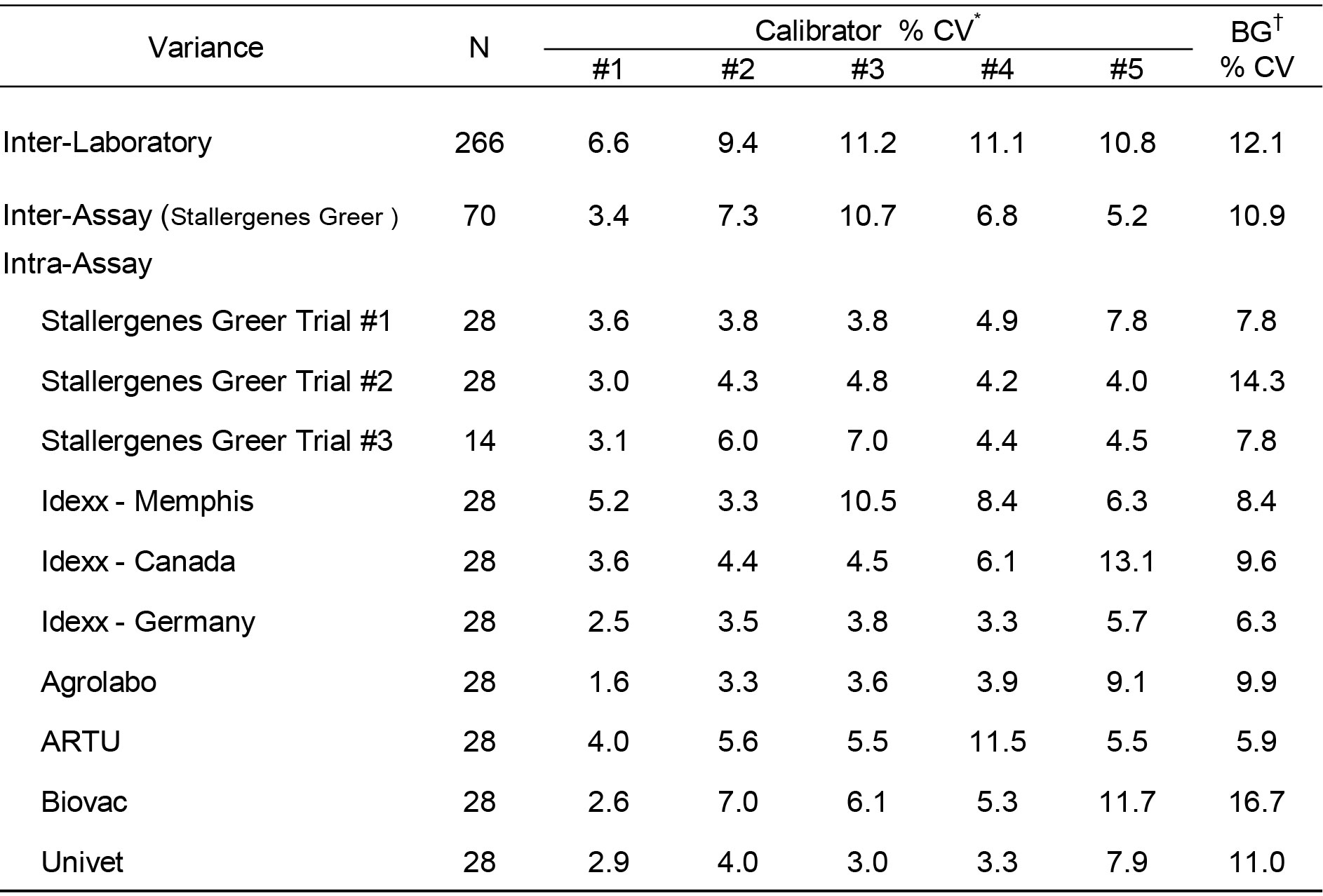
The assay variance (% CV) observed with the calibrator solutions in the different laboratories are presented in Table 1 and are representative of the assay reproducibility in the various laboratories. The average intra-assay % CV among positive calibrators (#1-4) was 4.6% (range = 1.6–11.5%); differences among laboratories or between assays and within assay runs were not detected. No substantial difference in results among various operators were revealed. The average inter-operator variance documented for Stallergenes Greer technicians was calculated to be 7.1% (range = 3.4-10.7%). The average inter-assay variance (% CV) observed in Stallergenes Greer’s laboratory with the positive calibrators from multiple runs over a one year period has been documented at 8.9% (range 7.1% -9.7%), and the inter-laboratory % CV among reactive calibrators also remained relatively constant (average 12.1%; range 11.2 – 13.4%).11-13 The results of the current evaluation are consistent with these published findings; the inter-assay variance among positive calibrators for all laboratories included in this evaluation was calculated to be 9.6 % (range = 6.6-11.2%). Similar to these previously published studies, the intra-assay variability was higher with negative calibrator #5 (average 7.1%; range 2.9 – 13.1%), and a similar increased intra-assay variability was evident with the background ODs (average 9.5%; range 5.9– 16.7%).

Table 1. Assay variance of macELISA calibrator solutions observed with different laboratory runs by multiple operators.
IJVB2017-105-KenLeeUSA_f1

* Calibrator #1 is prepared as a dilution of a sera pool which is highly reactive to grass pollen allergens; calibrator #5 is a dilution of a negative sera pool. Calibrators #2 – #4 are prepared as a serial 3-fold dilution of calibrator #1.

† Background responses observed with diluent in place of serum sample.

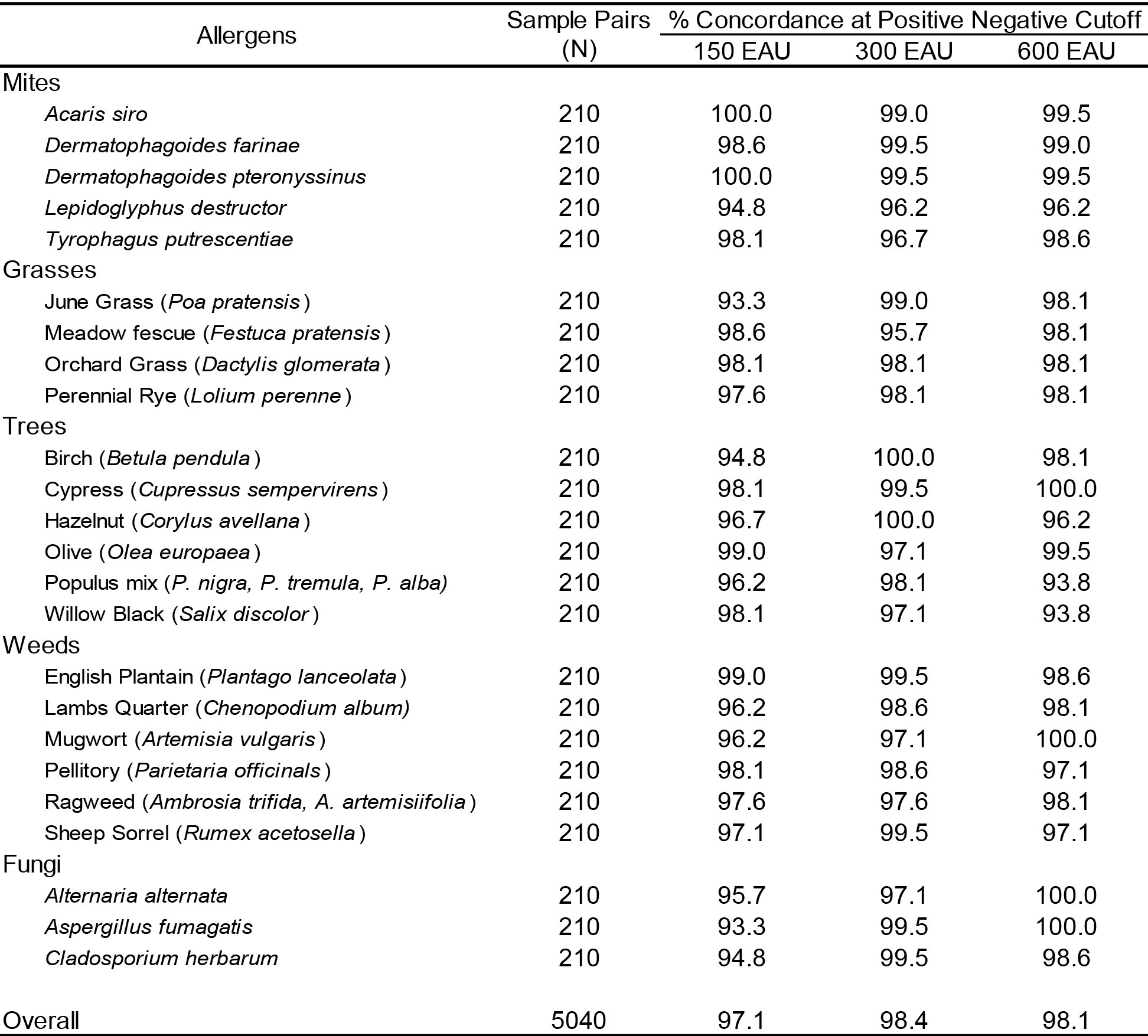
The concordance of positive and negative results observed within and among laboratories for the individual allergens contained within the proficiency panel is presented in Table 2. Using predefined cut-off points of 150 EAU, 300 EAU, and 600 EAU results were classified as positive or negative. The average inter-assay inter-laboratory concordance of results for the mite allergens at the 150 EAU cutoff was 97.1% (range 93.3% – 100%). Similar concordance of results was evident among all laboratories for the pollen allergens. The average concordance for grasses, trees, and weeds was demonstrated to be 96.9% (range 93.3 – 98.6), 97.1% (range 94.8% – 99.0%), 97.4% (range 96.2% – 99.0%), respectively. The overall average inter-assay inter-laboratory concordance of results for individual allergen evaluations, including fungi, using the 150 EAU cutoffs was 97.1% (range 93.6% – 100%).

Table 2. Interassay / Interlaboratory Concordance Results in relation to EAU Cutoff all samples evaluated.
IJVB2017-105-KenLeeUSA_f2

Increasing the positive-negative cutoff level to 300 EAU or 600 EAU only slightly increased the concordance of observed results. The overall average inter-assay inter-laboratory concordance of results at a cutoff of 300 EAU was 98.4% (range 96.2% – 100%) while the observed concordance at a cutoff of 600 EAU was 98.1% (range 93.8% – 100%).

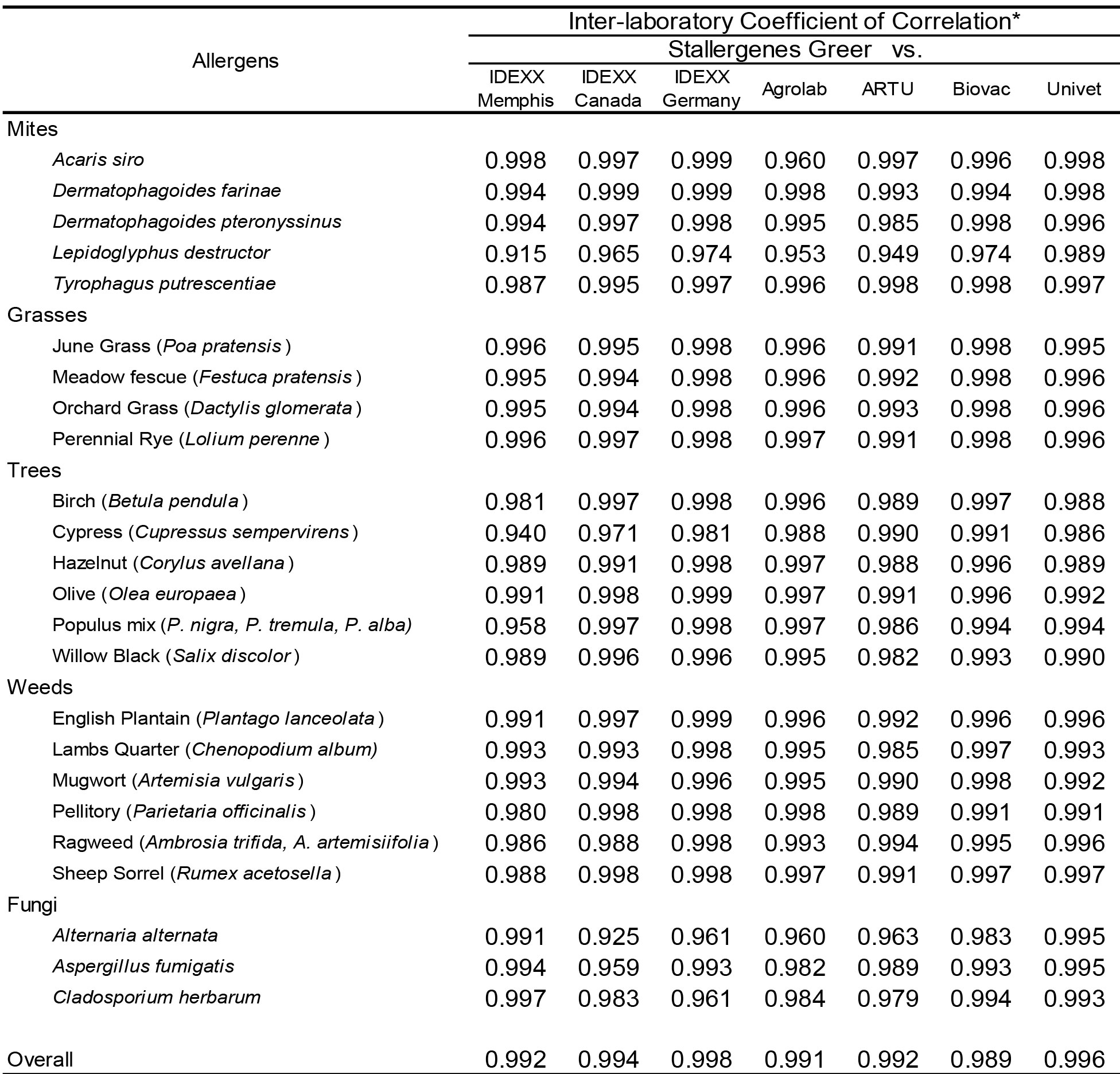
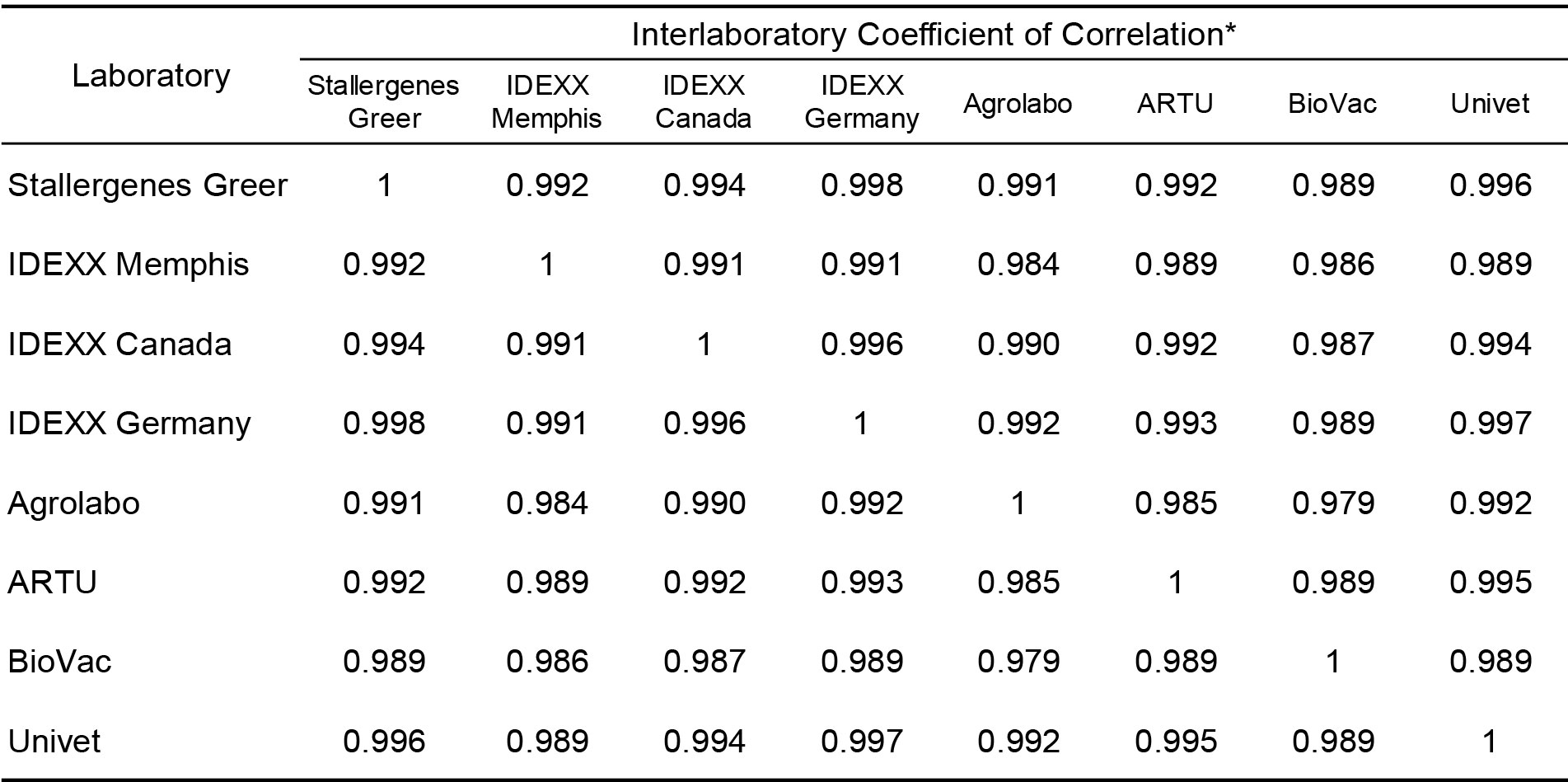
To evaluate the strength of association with the magnitude of EAU results observed for each allergen among the different laboratories a Pearson’s correlation coefficient was determined for each laboratory pair. The results presented in Table 3 demonstrate that very high inter-laboratory correlation (r > 0.80; p < 0.001) is evident between the results observed in Stallergenes Greer’s laboratory and those observed in seven affiliate laboratories for all mites and pollen allergens. Similarly, there was high inter-laboratory correlation (r > 0.90; p < 0.001) between and among the various IDEXX and European laboratories (Table 4) for all allergens tested.

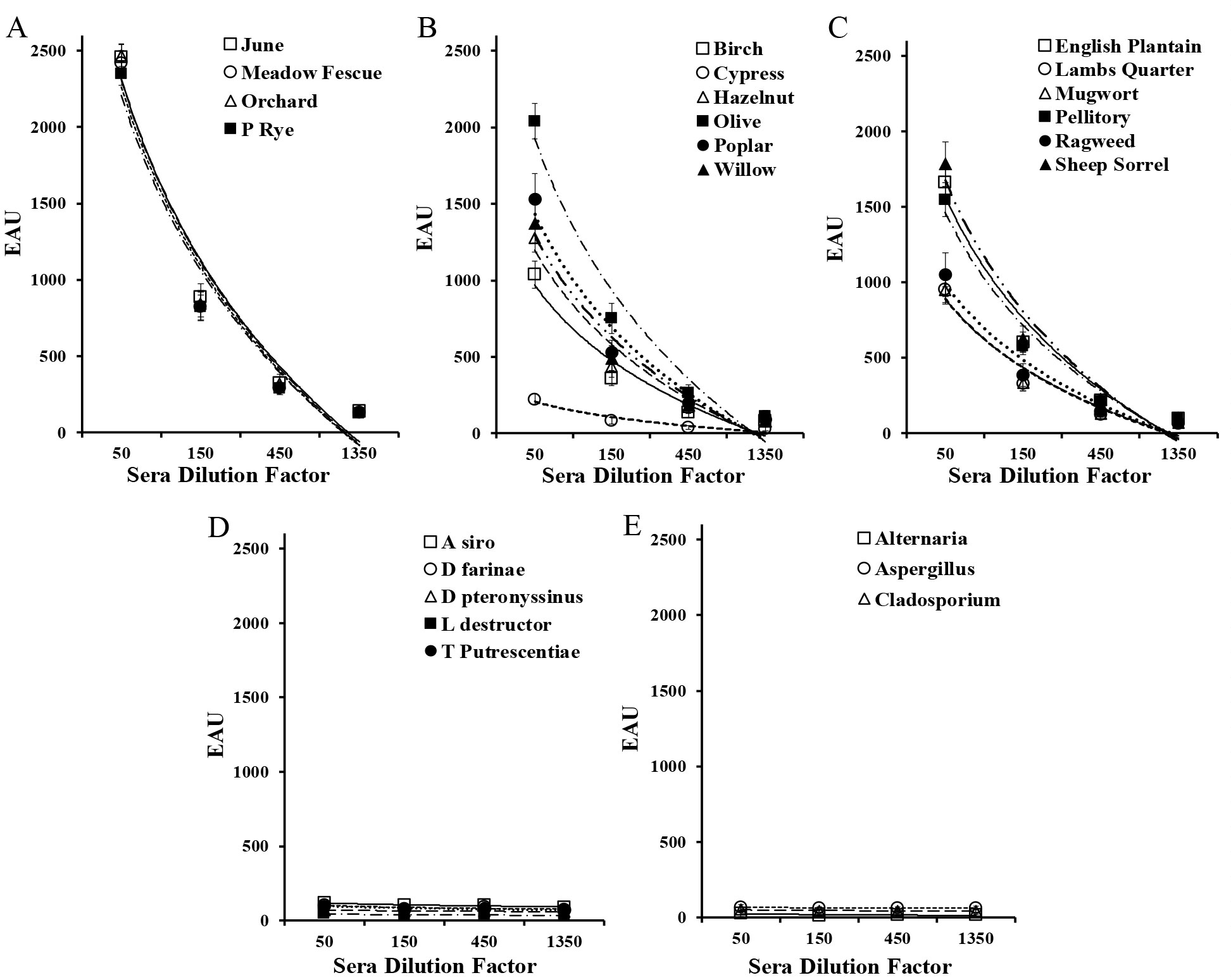
There is no compelling evidence that the level of allergen specific IgE correlates with severity of clinical disease [3-5]. However, an evaluation that purports to measure allergen specific IgE should have a reduction in signal that is directly proportional to the dilution factor of the test ligand [14]. For an evaluation of the dose response in this ELISA, a four tube three-fold serial dilution a reactive dog sera pool was prepared using a negative sera pool as diluent. Each of the dilutions was then evaluated by all of the participating laboratories as unknown independent samples. The sera pool was previously shown to be highly reactive to grass, weed, and tree pollen allergens, but it was not reactive to mites and fungi. Similar responses were yielded by all of the laboratories and the results observed within the various laboratories are encompassed by the acceptable variance limits [11-13] (± 20%) established for macELISA. Further, the magnitude of responses observed in each laboratory was reduced in direct proportion to dilution. Consequently, the dose responses for the individual allergens are presented as aggregate responses. The comparative dose response of macELISA results observed with differing dilutions is presented in Figure 1. The reaction profiles for grass allergens (A) appear to be parallel and quite similar in magnitude of response. Although the responses evident to differing tree (B) and weed (C) allergens are more variable in magnitude of response, the observed response in each laboratory was reduced in direct proportion to dilution. The positive response profiles evident with these allergens also appear to be parallel and, it becomes evident that the detectability of allergen specific IgE within this assay spans at least a 150-fold dilution range. Responses to mite (D) and fungal (E) allergens were lacking in the original sample. The responses of greatest magnitude with were evident with the grass pollen allergens, and these responses were reduced in direct proportion to dilution; the magnitude of responses ranged from near maximum to those that were indistinguishable from background responses. The response profiles for the grasses are not only parallel, but they also appear to be nearly identical. Whether or not these like responses result because of a similar level of co-sensitization or allergen epitope similarity combined with cross-reaction remains to be determined. Although the responses evident to tree and weed allergens are more variable in magnitude of response, the observed response in each laboratory was reduced in direct proportion to dilution. The positive response profiles evident with these allergens also appear to be consistent with responses that might be expected for ELISA, and, with appropriate dilution, the magnitude of response will reach extinction.

Table 3. Inter-laboratory correlation of macELISA results observed with individual allergens in Stallergenes Greer Laboratory and the results observed in the individual affiliate laboratories.
IJVB2017-105-KenLeeUSA_f3

* Pearson Correlation Coefficient (r); Good Correlation (r > 0.8, p < 0.001)
IJVB2017-105-KenLeeUSA_f4

Figure 1. Dose response evident in macELISA with a serum pool reactive grass pollens (A), tree pollens (B), weed pollens (C), and negative to mites (D) and fungi (E).

Table 4. Inter-laboratory correlation of macELISA results observed among individual affiliate laboratories.
IJVB2017-105-KenLeeUSA_f5

* Pearson Correlation Coefficient (r); Good Correlation (r > 0.8, p < 0.001)

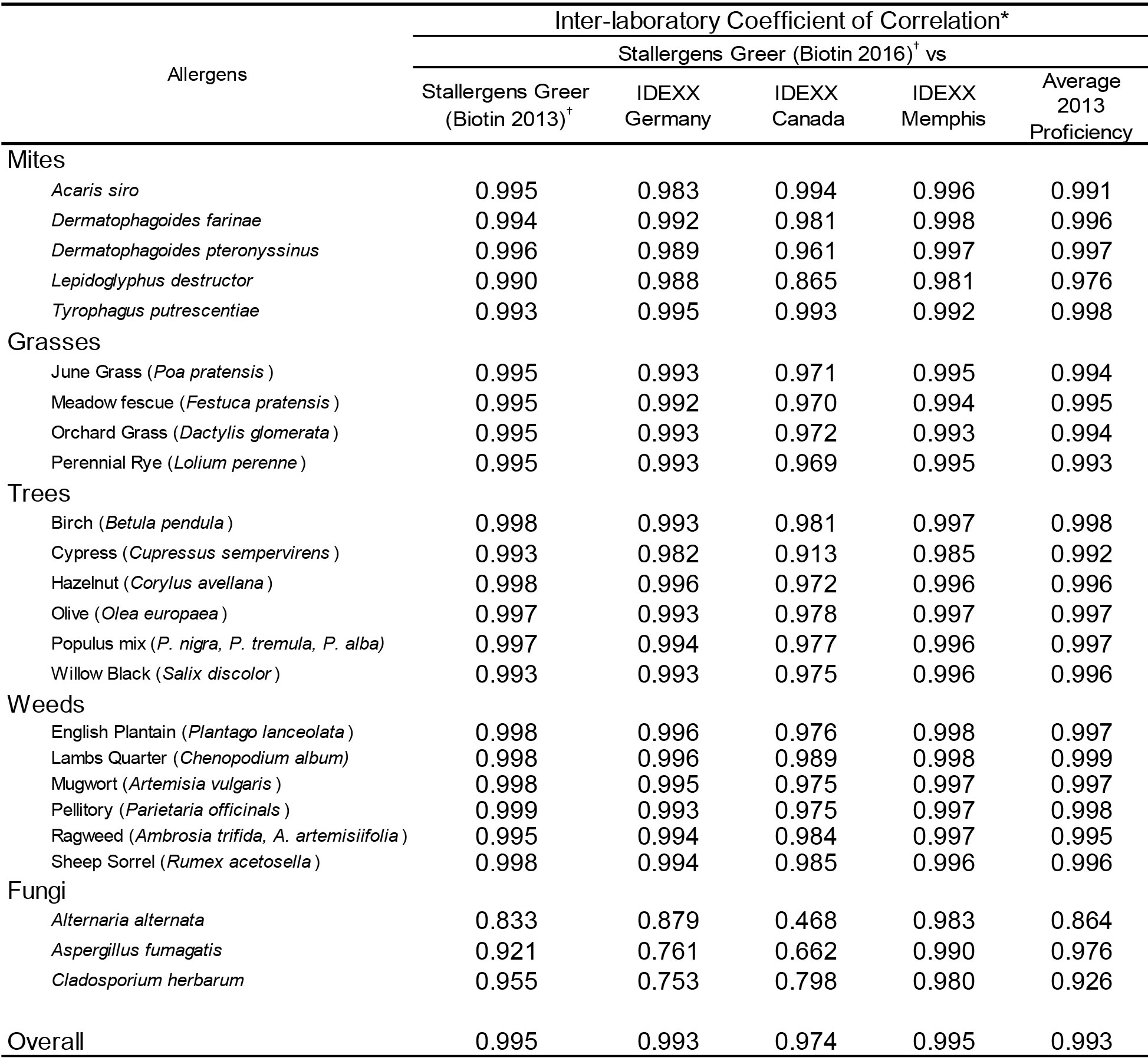
The final evaluations encompassed a reproducibility evaluation of sera samples in four selected laboratories that currently provide commercial services for detection of allergen specific IgE. The design of the evaluation was akin to the proficiency evaluation of laboratories completed in 2013 and included dog sera samples and coated wells that were from the same lots as those used in that proficiency evaluation [15]; other components used in the assay were derived from the most recent lot of reagents. It is noted that one Stallergenes Greer technician ran the samples not only with the current lot of anti-IgE-biotin, but with a lot of anti-IgE-biotin identical to that used in the original 2013 proficiency evaluations as well.

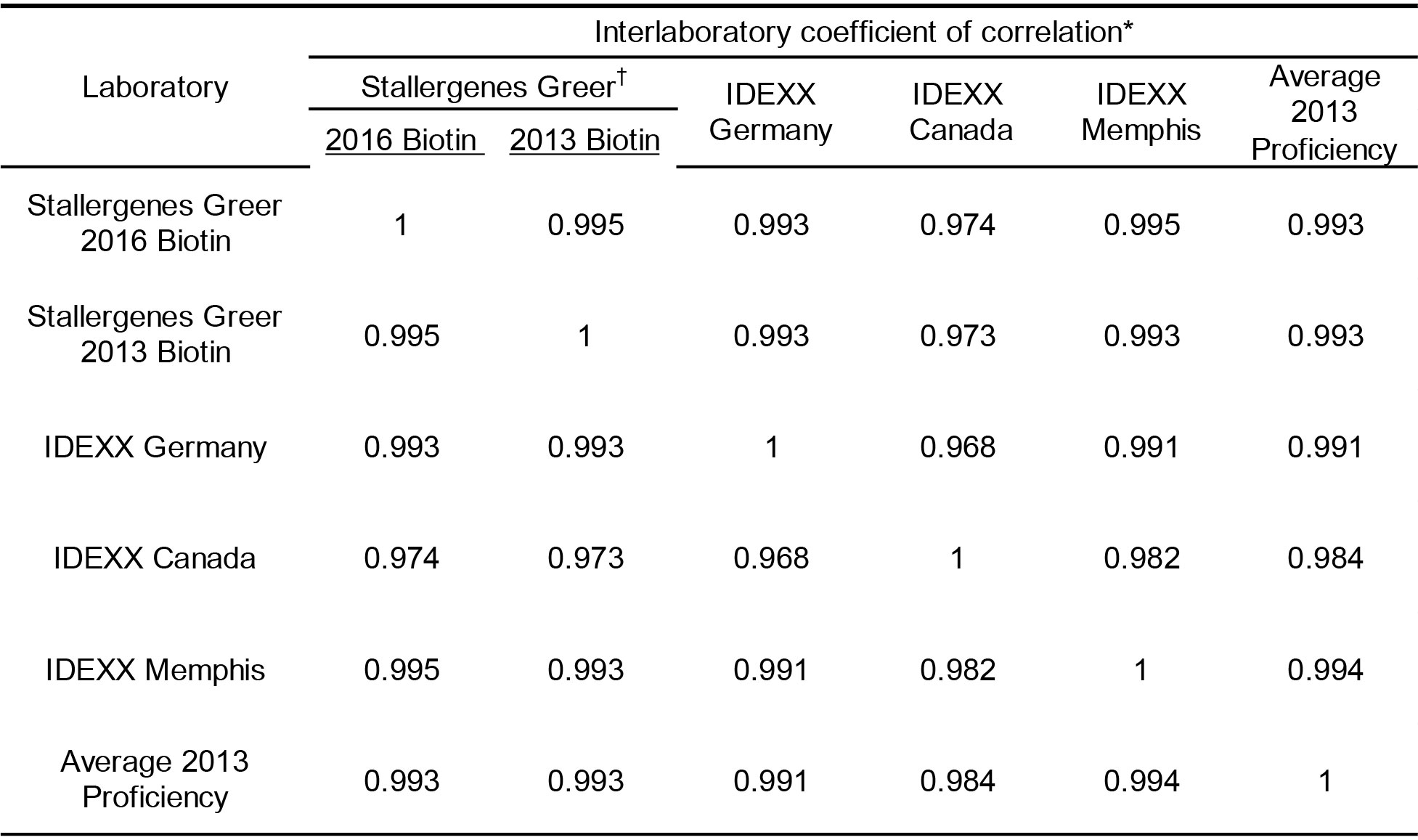
The results presented in Table 5 demonstrate that very high inter-laboratory correlation (r > 0.90; p < 0.001) is evident between the results observed in Stallergenes Greer’s laboratory and those observed in all IDEXX laboratories for all mites and pollen allergens. Similarly there was strong inter-laboratory correlation (r > 0.90; p < 0.001) between and among the various participating affiliate laboratories for all tested allergens (Table 6). However, the correlation (Pearson’s) of results observed with the fungal allergens within or between any of the testing laboratories was somewhat less profound. This difference in correlation of results is likely a consequence of the majority of results for the fungal allergens with this set of sera samples falling within the lower range of reactivity or within the negative range of the response curve (< 150 EAU). Because of the extensive variability known to exist in this range of reactions, the lack of extremely high correlation with the fungal allergens among laboratories is not surprising. Important to note is the observation that the all laboratories yielded results that are consistent with the results observed with the current use anti-IgE-biotin. Equally important, the results of the current evaluation yielded results in all laboratories that are indistinguishable from the overall results yielded in the proficiency evaluation of 10 different laboratories conducted in 2013 using the same sera samples and lot of allergen coated wells. These results not only demonstrate excellent reproducibility among laboratories, they also document/confirm long range stability of coated wells and anti-IgE-biotin reagent that have been shipped to various locations.

Table 5. Inter-laboratory correlation of macELISA results observed with individual allergens between Stallergenes Greer and the results observed in the individual affiliate laboratories.
IJVB2017-105-KenLeeUSA_f6

* Pearson Correlation Coefficient (r); Good Correlation (r > 0.9, p < 0.001)

† 2016 Biotin is current use lot of anti-IgE-biotin; 2013 Biotin is the same lot of anti-IgE-biotin that was used in the 2013 proficiency evaluation and stored at -20 °C.

Table 6. Inter-laboratory correlation of macELISA results observed among individual laboratories and between the 2016 proficiency evaluation and the proficiency evaluation completed in 2013.
IJVB2017-105-KenLeeUSA_f7

* Pearson Correlation Coefficient (r); Good Correlation (r > 0.9, p < 0.001)

† 2016 Biotin is current use lot of anti-IgE-biotin; 2013 Biotin is the same lot of anti-IgE-biotin that was used in the 2013 proficiency evaluation and stored at -20 °C.

Discussion

The results of the present study demonstrate that the variability between and among the affiliate laboratories and technicians are indistinguishable from the results evident within and between runs completed in the laboratory of Stallergenes Greer. Although Stallergenes Greer developed and manufactures the assay components used in all laboratories, the results presented herein demonstrate that all laboratories and technicians are equally proficient in providing consistent results for all allergens tested. The intra-assay variance observed with the positive calibrators evident among the various runs within each of the laboratories remains relatively low and indistinguishable among the various laboratories. Likewise, the inter-assay variance within each laboratory remained relatively constant and the results from all laboratories were demonstrably similar and the CV of the positive responses was relatively constant across the entire range of reactivity tested. Consequently, the observed inter-laboratory CV was well within the acceptable variance limits (± 20%) established for this assay [11]. The variability of background and negative sera responses, in contrast, was substantially greater but indistinguishable among laboratories. The increased variability with the negative responses emphasizes the need to establish an appropriate and robust cutoff for each assay. For the macELISA, a cutoff of 150 EAU establishes 99% confidence for positive responses and has been recently confirmed [3].

The correlation of results observed with the fungal allergens within or between any of the testing laboratories was also substantial. These observations are in direct contrast to the correlation of results observed with fungal allergens during previous proficiency evaluations [11-13]. It has been suggested that the lack of correlation among fungi during the previous evaluations was likely a consequence of the majority of results for the fungal allergens falling within the lower range of reactivity or within the negative range of the response curve (< 150 EAU). The results of the current proficiency evaluation are supportive of this suggestion. Several of the samples included in the current evaluation were reactive (albeit low level) to the fungi included in the allergen panel. Consequently, the correlation of results among laboratories for the fungal allergens was substantially increased.

Consistent with previously observed dose response curves evident in macELISA, it becomes apparent that a three-fold dilution of serum results in an approximate two-fold reduction in signals generated. Thus, the relative amount of allergen specific IgE that might be detected at the cutoff level (150 EAU) will need to be increased three-fold to yield a response of 300 EAU and nine-fold to yield a response of 600 EAU; to generate a maximal signal (4000 EAU) will require nearly a 150-fold increase in allergen specific IgE. This being the case, it is unlikely that a highly reactive serum sample will be detected as non-reactive at a 1: 5 dilution. The variance evident in the low level range of responses dictates that true borderline positive samples might be identified as false negative responses and this tendency might compound the likelihood of false negative responses. However, a serum sample at a 1: 5 dilution makes detection of false positive results seem rather remote.

Although proficiency testing has a well-established role as both a laboratory improvement and an educational tool, there remains no regulatory required or industry-wide voluntary quality assurance program for serum allergen-specific IgE testing in companion animals that independently monitors performance of all laboratories and assay formats. Until such external and independent quality assurance programs for testing of serum allergen-specific IgE is undertaken, each manufacturer of such assays must accept the responsibility for continued evaluation of laboratories that routinely use their assays and reporting those results to the veterinary community. Information presented herein documents the continued commitment of Stallergenes Greer and its affiliate laboratories to this important endeavor.

Authors Contributions: Kenneth Lee contributed to the conception and design of the study; contributed to the acquisition, analysis, and interpretation of data; and drafted the manuscript. Karen Blankenship and Brennan McKinney manufactured all components used throughout the evaluation and contributed to acquisition of the data. Gerhard Kern, Elizabeth Roth, Janice Greenwood, Pilar Brazis, Laurent Drouet, Cecilia Tambone, and Dirk Teilenburg contributed to acquisition of the data. All authors gave final approval and agree to be accountable for all aspects of the work in ensuring that questions relating to the accuracy or integrity of any part of the work are appropriately investigated and resolved.

Declaration of conflicting interests: All authors from Stallergenes Greer are employees at Stallergenes Greer; other authors are employees of the affiliate laboratories.

Funding: Funding for this study was provided by Stallergenes Greer.

References

  1. DeBoer DJ, Hillier A (2001) The ACVD task force on canine atopic dermatitis (XV): fundamental concepts in clinical diagnosis. Vet Immunol Immunopathol 81: 271–76.
  2. DeBoer DJ, Hillier A (2001) The ACVD task force on canine atopic dermatitis (XVI): laboratory evaluation of dogs with atopic dermatitis with serum-based “allergy” tests. Vet Immunol Immunopathol 81: 277–87.
  3. Gorman NT, Halliwell, REW (1989) Atopic Diseases. In: Halliwell REW, Gorman NT. ed. Veterinary Clinical Immunology 232–52. WB Saunders, Philadelphia.
  4. Griffin CE, DeBoer DJ (2001) The ACVD task force on canine atopic dermatitis (XIV): clinical manifestation of canine atopic dermatitis. Vet Immunol Immunopathology 81: 255–69.
  5. Griffin CE, Hillier A (2001) The ACVD task force on canine atopic dermatitis (XXIV): allergen-specific immunotherapy. Vet Immunol Immunopathol 81: 363–383. [crossref] 
  6. Hillier A, DeBoer DJ (2001) The ACVD task force on canine atopic dermatitis (XVII): intradermal testing. Vet Immunol Immunopathol 81: 289–304. [crossref]
  7. Olivry T, Sousa CA (2001) The ACVD task force on canine atopic dermatitis (XIX): general principles of therapy. Vet Immunol Immunopathol 81: 311–316. [crossref]
  8. Reedy LM, Miller WH, Willemse T (1999) Introduction to Allergy. In: Allergic Skin Diseases of Dogs and Cats. 2nd edition 1-24. W.B. Saunders, London.
  9. Reedy LM, Miller WH, and Willemse T (1999) Urticaria, Angiodema, and Atopy. In: Allergic Skin Diseases of Dogs and Cats. 2nd edition 25-49.WB Saunders, London.
  10. Thom N, Favrot C, Failing K, et al. (2010) Intra- and interlaboratory variability of allergen-specific IgE levels in atopic dogs in three different laboratories using the Fc-?? receptor testing. Vet Immunol Immunopathol 133: 183–189.
  11. Lee KW, Blankenship KD, McCurry ZM, Esch RE, DeBoer DJ, et al. (2009) Performance characteristics of a monoclonal antibody cocktail-based ELISA for detection of allergen-specific IgE in dogs and comparison with a high affinity IgE receptor-based ELISA. Vet Dermatol 20: 157–164. [crossref]
  12. Lee KW, Blankenship KD, McCurry ZM, et al. (2012) Reproducibility of a Monoclonal Antibody Cocktail Based ELISA for Detection of Allergen Specific IgE in Dogs: Proficiency Monitoring of macELISA in Six US and European Laboratories. Vet Immunol Immunopathol 148: 267–275.
  13. Lee KW, Blankenship K, McKinney B, Kern G, Buch J, et al. (2015) Proficiency monitoring of monoclonal antibody cocktail–based enzyme-linked immunosorbent assay for detection of allergen-specific immunoglobulin E in dogs. Journal of Veterinary Diagnostic Investigation 27: 461–469.
  14. Tijssen P (1993) Processing of data and reporting of results of enzyme immunoassays. In: Burdon, RH, van Knippenberg PH, editors. Practice and Theory of Enzyme Immunoassays 385–421 Elsevier, Amsterdam.