Monthly Archives: October 2025

CGM or BGM for Gestational Diabetes: Recent Evidence from Landmark Studies

DOI: 10.31038/EDMJ.2025944


A recent meta-analysis found a variable prevalence of gestational diabetes (GDM) in the US and Canada, averaging 6.9%. This was largely attributed to screening strategies, suggesting the true number may be higher (1). Research in the UK found that more than half of GDM cases are not diagnosed with current screening (2). The International Diabetes Federation estimates that 19.7% of live births in 2024 (23 million) were complicated by hyperglycemia, with 79% due to GDM (3). Given the prevalence and clinical impact of GDM, effective tools and strategies to support clinician-led and self-management of hyperglycemia are critical. Achieving glycemic targets is central in GDM. Until recently, glycemic management in GDM has been primarily by blood glucose monitoring (BGM), which remains the standard of care (4). Meanwhile, continuous glucose monitoring (CGM) has transformed the lives of people living with type 1 and type 2 diabetes. At present, however, there is uncertainty regarding the value of CGM for people with GDM. This has inspired three landmark randomized controlled trials (RCTs; DipGluMo, GRACE and CORDELIA) that compare the benefits and clinical outcomes of monitoring with real- time CGM vs BGM. In this commentary, we will compare the designs and clinical evidence from these studies and put this emerging data in context. We will first focus on DipGluMo, whose similar design to the other RCTs illustrates key underlying principles. DipGluMo (CGM in the management of gestational diabetes in Switzerland; NCT05037526) was an open-label, single-site RCT that investigated the effect of CGM vs BGM on perinatal outcomes (5,6). The study recruited 302 people with an A1c value < 6·5% (48 mmol/mol) diagnosed with GDM between weeks 24 and 28 of gestation. Subjects were randomised to use either the Dexcom G6 (G6) CGM (with the Dexcom Clarity app) or BGM. CGM subjects received training on sensor placement, understanding glucose readings, and how to react to readings by modifying diet and physical activity. Their data was uploaded via the app to enable clinicians to adjust therapy at routine visits. The CGM glucose target range was set at 3·5–7·8 mmol/L (63 to 140 mg/dL), and appropriate low and high glucose alerts and alarms were enabled. The BGM subjects were “instructed” on use of the mylife Unio Ypsomed BGM, although there is no detail on what this instruction entailed. This BGM has Bluetooth to connect to the mylife app, but use of the app was not required and was used by some of the participants only occasionally (7) Subjects were instructed to check blood glucose (BG) 6 times per day (before and 1 hour after meals) and record readings in a paper logbook. BGM subjects also wore a blinded G6 sensor at three timepoints to allow comparison to CGM users. The BGM targets were fasting readings < 5·3 mmol/L (63 mg/dL), pre-prandial readings < 5.4 mmol/L (97 mg/dL) and 1-hr postprandial readings < 8·0 mmol/L (144 mg/dL). All subjects (BGM and CGM) had office visits approximately every 2 weeks throughout the remainder of their pregnancies. A total of 299 subjects completed DipGluMo, 156 subjects using CGM and 143 using BGM. Baseline A1c was 5.1% in the CGM group and 5.04% in the BGM group. Results showed the primary composite outcome of adverse pregnancy and neonatal outcomes did not differ between CGM and BGM (odds ratio 1·02 [95% CI 0·63–1·66]). The number of large for gestational age (LGA) neonates was identical (10%) in the CGM and BGM groups, with no difference in neonatal hypoglycemia (6%). Obesity and previous gestational diabetes were independently associated with higher rates of neonatal complications. Surprisingly, the time in range (TIR) measured between weeks 34 and 36 of gestation was significantly higher using BGM (96.9%) than CGM (92·2%), although 43% of BGM users declined to wear a blinded CGM. Irrespective of monitoring device, these TIR levels far exceed those in the general population of people with type 1 or type 2 diabetes, a testament to the high levels of adherence in people with GDM. The authors describe a survey-based preference for CGM but acknowledge that this should be interpreted with caution since 43% of BGM users declined blinded CGM. The authors concluded that GDM outcomes were not improved by CGM but did propose that CGM could be offered to simplify diabetes management. Let us now examine GRACE (Glycemic control and pregnancy outcomes with real-time CGM in GDM, NCT03981328), a multinational open-label RCT with the primary outcome being proportion of LGA infants born to women using CGM vs BGM. The full study protocol for GRACE is published (8). GRACE mirrors DipGluMo with similar inclusion criteria, glucose monitoring devices and clinical endpoints. GRACE enrolled 375 women diagnosed with GDM who in keeping with DipGluMo, were randomized to use a G6 CGM (with Clarity app) or BGM. The BGM used in GRACE was the Contour Next One (Ascensia Diabetes Care) but the protocol does not specify whether the Contour diabetes app was used; instead, the protocol stipulated that BGMs be downloaded in-clinic. Virtually identical CGM- and BGM-based glucose targets were used in both studies. The DipGluMo protocol stipulated that BGM subjects perform 6 glucose checks per day (before and 1hour after meals), while subjects whose readings remained at targets could decrease check frequency to 4 times daily, including a daily fasting check (7). In contrast, the GRACE protocol specified “BG monitoring as routinely used for patients with GDM, that is, at least 4 BG values daily including measurements in a fasting state as well as 1hour after starting each meal.” It is noteworthy that GRACE did not offer a compatible diabetes app to BGM-using subjects and the BGM diabetes app was not often used in DipGluMo, despite apps being commonplace and helpful tools. Both studies relied instead on meter downloads or paper logbooks, which are often incomplete, unreliable and not conducive for pattern recognition. In contrast, the CGM-using subjects in both studies were fully trained on using the sensor and the app with its insights and features, including pre-programmed target ranges and alerts and alarms. A full publication for GRACE is not available as we write this commentary, but headline results were published in an abstract and presented at the 2025 European Association for the Study of Diabetes (EASD) congress (9). Additionally, key results were presented in a Dexcom-sponsored EASD symposium. In contrast to DipGluMo, where the proportion of LGA infants was 10% in both study arms, GRACE found the number of LGA infants was lower in women using CGM compared to BGM (3·5% vs 10·3%) and that newborn weight percentiles were lower in those using CGM. However, as pointed out by Dr. Helen Murphy at EASD, the rate of LGA infants in the general population is 10%, equal to the 10.3% rate found in GRACE. Dr. Murphy goes on to point out that “we shouldn’t expect women with GDM to have smaller babies than they would if they didn’t have diabetes” (10). The CGM group in GRACE showed improved time in pregnancy range (65-140 mg/dl) between weeks 36 and 38 of gestation. DipGluMo observed that time in pregnancy range (63 to 140 mg/dL) was actually higher in BGM than CGM users, albeit this was measured 2 weeks earlier in gestation than in GRACE. Subjects in DipGluMo were prescribed only insulin if they needed glucose- lowering medications, with 48% of subjects starting on insulin during the study, higher in the CGM group (55%) than in the BGM group (45%). In contrast, GRACE found no difference in the numbers of subjects requiring glucose-lowering medications, although rapid-acting insulin was more often prescribed to women using CGM (41% vs 30%), perhaps as a consequence of greater visibility of their daily glucose excursions. A peer-reviewed article describing full results from the GRACE study is expected shortly, and may further explain why the primary, and some secondary, outcomes were different than those in DipGluMo.

This renewed focus on GDM continues with a study entitled “Continuous glucose monitoring for women with gestational diabetes: a randomized controlled trial,” CORDELIA (NCT06310356). CORDELIA is an ongoing, open-label, multicentre RCT in Belgium and Australia designed to assess the efficacy and cost-effectiveness of CGM vs BGM in women with GDM. In keeping with GRACE and DipGluMo, the study’s primary outcome will focus on a composite adverse pregnancy outcome, including preterm delivery, LGA, neonatal hypoglycemia, and stillbirth or neonatal death. Furthermore, the study will assess which CGM glycemic goals to aim for in GDM. CORDELIA will randomize 386 women to use either the Libre 3 CGM (Abbott Diabetes Care) or a Bluetooth connected BGM (OneTouch Ultra Plus Reflect) in combination with the OneTouch Reveal mobile diabetes app. BGM subjects will wear a blinded CGM (Freestyle Libre Pro IQ) at least twice during their pregnancy. BGM subjects will be instructed to perform at least 4 glucose checks per day (fasting and 1 or 2 hour(s) after meals). This approach of combining a modern BGM that includes many on-meter insight features (e.g., customizable colored target range indicator and BG pattern recognition) with its compatible app will enable clinicians and subjects to easily track glucose trends, visualize insights and share progress. Use of this advanced BGM and app ecosystem will yield a control group using modern BGM technology for comparison to CGM. The study is expected to report out in 2027. CORDELIA reminds us that BGM remains the predominant monitoring technology used globally and that most modern BGMs can connect to a diabetes app to enhance diabetes management. Neither GRACE nor DipGluMo assessed the combination of BGM and a diabetes management app, perhaps unfairly handicapping the BGM group, and CORDELIA data is not yet available. To bridge this gap, let’s review data from a real-world evidence (RWE) study that evaluated glycemic trends and achievement of guideline-recommended targets in women with GDM using the OneTouch Reveal diabetes app with connected OneTouch BGMs (11). In contrast to an RCT, an RWE approach enables a step-change in the scale and diversity of the study population. Using anonymized glucose and app analytics data from 26,382 women with GDM, we analysed their first 7-days using the BGM and app compared to the last 7-days prior to a 10-week timepoint. We found fasting readings in range (RIR, < 5.3 mmol/L; < 95 mg/dL) improved by +20.3 percentage points (%pts) and overall RIR (3.5 to 7.8 mmol/L; 63 to 140 mg/dL) improved by +8.3 %pts. As expected, people with GDM were highly motivated, averaging 17 sessions and 90 minutes per week on the app. In summary, the findings of two recent landmark RCTs do not align on whether perinatal outcomes are improved using CGM vs BGM. Both do, however, align on the fact that subjects preferred to use CGM for convenience and to negate fingersticks. In light of recent RWE data on BGM, it will be interesting to understand how BGM subjects in CORDELIA, using advanced BGM in combination with a diabetes app, perform in terms of perinatal outcomes to help clinicians make informed recommendations for people with GDM based on needs, personal circumstances, and cost-effectiveness.

References

  1. Eades CE, Burrows KA, Andreeva R, Stansfield DR, Evans JM (2024). Prevalence of gestational diabetes in the United States and Canada: a systematic review and meta- BMC Pregnancy Childbirth. [Crossref]
  2. Jones DL, Kusinski LC, Barker P, et al (2025). Enhanced glucose processing in gestational diabetes diagnosis: Effects on health equity and clinical Diabet Med. [Crossref]
  3. IDF Diabetes Atlas 11th Edition 2025 org.
  4. American Diabetes Association Professional Practice Committee; 15. Management of Diabetes in Pregnancy: Standards of Care in Diabetes—2025. Diabetes Care 2025 [Crossref]
  5. Amylidi-Mohr S, Zennaro G, Schneider S, Raio L, Mosimann B, Surbek D (2025). Continuous glucose monitoring in the management of gestational diabetes in Switzerland (DipGluMo): an open-label, single-centre, randomised, controlled trial. Lancet Diabetes Endocrinol. [Crossref]
  6. Supplement to: Amylidi-Mohr S, Zennaro G, Schneider S, Raio L, Mosimann B, Surbek D (2025). Continuous glucose monitoring in the management of gestational diabetes in Switzerland (DipGluMo): an open-label, single-centre, randomised, controlled Lancet Diabetes Endocrinol [Crossref]
  7. Personal email communication (DipGluMo) from Amylidi-Mohr, 5 June 2025.
  8. Huhn EA, Linder T, Eppel D, et al (2020). Effectiveness of real-time continuous glucose monitoring to improve glycaemic control and pregnancy outcome in patients with gestational diabetes mellitus: a study protocol for a randomised controlled BMJ Open. [Crossref]
  9. Linder T, Dressler-Steinbach I, Wegener S et al (2025). Glycaemic control and pregnancy outcomes with real-time continuous glucose monitoring in gestational diabetes (GRACE): an open-label, international, randomised controlled Diabetologia [Crossref]
  10. Kelly Close. Knowledge base. GRACE and DipGluMo show the huge power of CGMs role in GDM management. EASD 2025. Day 5 highlights from Sept 20, 2025.
  11. Grady M, Cameron H, Holt E (2024). Glycemic trends, app engagement and achievement of gestational diabetes guideline targets using a diabetes app and Bluetooth® connected blood glucose meters. Explor Endocr Metab Dis. [Crossref]

Aptamer-Fc Conjugate Complement-Mediated Lysis of Treponema Pallidum

DOI: 10.31038/IDT.2025623

Abstract

This work extends our recent aptamer-Fc conjugate syphilis opsonin report in this journal (doi.org/10.31038/IDT.2025613) that demonstrated DNA aptamers can be used to couple to the murine immune system and bring about the destruction of Treponema pallidum (causative agent of syphilis) by significantly enhancing macrophage phagocytosis. In the present report, the same anti-Treponema denticola DNA aptamer developed by Park et al. (2015) and designated Td-3 that was used for opsonization was verified to bind a ~ 95 kD surface marker on T. pallidum by aptamer-based Western blotting. The 3’ biotinylated Td-3 aptamer was then bound in a 4: 1 molar ratio to a streptavidin-murine Fc conjugate and in the presence of mouse serum the aptamer-biotin-streptavidin-Fc conjugate killed significant levels of T. pallidum (up to 59%) overnight as assessed by spectrofluorometric analysis using the Invitrogen BacLight™ Live/Dead assay. Thus, this report further expands the potential of aptamer-Fc conjugates as potential artificial “antibody” immunotherapeutics that induce complement-mediated lysis (CML) and may couple to the conjugate’s already documented opsonin effects in the battle against emerging antibiotic-resistant syphilis.

Keywords

Aptamer, Complement, Fc fragment, Lysis, Syphilis, Treponema pallidum

Introduction

The ancient sexually transmitted and congenital disease syphilis persists even today and is increasing in modern society with an estimated 8 million new cases per year in adults between 15 and 49 years of age [1-4]. Despite the continued good efficacy of single dose injectable benzathine penicillin for adults [2,5], benzathine penicillin supply shortages [5], the lack of a vaccine [6], and increasing antibiotic resistance [1], has enabled Treponema pallidum to continue killing about 220,000 people worldwide each year including infants and adults [4]. In particular, the CDC has reported a 79% increase in syphilis cases between 2018 and 2022 with Lieberman et al. [7] reporting that 99.2% of new syphilis cases in North America from 2017 to 2023 were resistant to azithromycin (the alternative antibiotic for patients with penicillin allergy). These numbers sound the alarm for alternative approaches to dealing with this potentially slow, insidious and painful killer pathogen.

The principle of rapid microbial evolution predicts that bacteria such as T. pallidum can and will eventually overcome any and all small molecule antibiotics. Thus, researchers have turned to alternative approaches involving passive immunity through mechanisms such as complement-mediated lysis (CML) and enhanced phagocytosis (opsonization) both of which are known to be at least somewhat effective against T. pallidum [8-15] to eventually treat emerging antibiotic-resistant syphilis. Unfortunately, development and production of humanized monoclonal antibodies for passive CML or opsonization therapy of syphilis or other bacterial diseases would be an expensive proposition. Thus, Bruno et al. previously explored the potentially much less expensive use of DNA aptamer-C1q and -Fc conjugates for CML [16,17] and opsonization [18] of pathogenic bacteria. Indeed, Bruno et al. recently reported in this journal (DOI: 10.31038/IDT.2025613) that an aptamer-biotin-streptavidin-Fc conjugate opsonin performed at least half as well as a commercial polyclonal anti-T. pallidum antibody for enhancement of phagocytosis against this pathogen. In addition, the late Nobel prize laureate for PCR, Dr. Kary Mullis, developed a similar, but less direct, concept with alpha-gal sugar (galactose-α-1,3-galactose) conjugation to antibacterial aptamers (known as “alphamers”) to attract the innate 1% circulating anti-alpha-gal antibodies in human serum [19] which later led to the founding and continued alphamer work of Centauri Therapeutics Ltd. in the UK.

This history and therapeutic needs have brought us to the present report of our efforts to utilize the same aptamer DNA sequence (designated Td-3) developed by Park et al. [20] against a related species T. denticola in an effort to produce aptamer-Fc conjugates capable of CML and opsonization of T. pallidum both in vitro and perhaps eventually in vivo. The following is a summary of our group’s latest work using Park et al.’s Td-3 aptamer from Table 1 to bind a roughly 95 kD surface marker on T. pallidum and when in conjunction with the Fc fragment of murine IgG to couple with the complement system in murine serum to kill up to 59% of T. pallidum overnight in vitro.

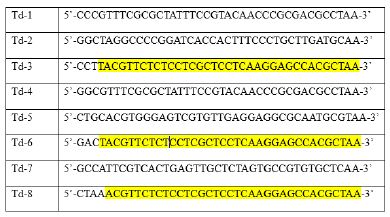
Table 1: T. denticola DNA Aptamer Sequences Published by Park et al. [20].

Note: Yellow highlighted regions are identical or nearly identical between the Td-3, -6 and -8 sequences.

Materials and Methods

Treponema pallidum and Bacterial Culture

T. pallidum was purchased from American Type Culture Collection (ATCC; Manassas, VA) as Treponema phagedenis (ex Brumpt) Smibert, Kazan 8 strain (ATCC No. 27087) in lyophilized form. The freeze- dried culture was rehydrated in a 10 ml Oral Treponema Enrichment Broth (OTEB) tube from Anaerobe Systems Inc. (Morgan Hill, CA; Cat. No. AS-603) at 37˚C in a slowly rotating closed incubator with a microaerophilic environment induced by Becton Dickinson Gas Pak™ pouches (Cat. No. 260680). T. pallidum cultures were capped and passaged weekly by 1: 10 dilution of the previous passage in OTEB.

T. denticola Aptamer and Western blotting

Table 1 lists the eight published Park et al. T. denticola aptamer DNA sequences which were purchased from Integrated DNA Technologies (IDT; Coralville, IA) and tested by spectrofluorometry for binding to live T. pallidum cells in our previous recent work (doi.org/10.31038/IDT.2025613) which showed that Td-3 was the consistent top performer that exhibited a high degree of homology with Td-6 and Td-8 (highlighted in Table 1). In the case of Western blotting and CML experiments, we utilized a 3’-biotin-poly A 20mer spacer-Td-3 aptamer DNA oligonucleotide to provide extra distance between the Fc tail of IgG and the T. pallidum bacterial surface. All aptamer sequences were rehydrated in sterile phosphate buffered saline (PBS) without calcium or magnesium and used in fluorescence spectroscopy, microscopy or other experiments as discussed later.

For aptamer-based Western blotting, fresh 3-5 day OTEB cultures of T. pallidum (~ 109 cells) were pelleted at 13,000 X g for 5 minutes and the OTEB culture medium was gently siphoned off. Cells were washed once by resuspension of the bacterial pellet in calcium and magnesium-free PBS (pH 7.2) at room temperature with a second centrifugation in PBS. The pellet was then resuspended in 1 ml of cold 1.5 M MgCl2 and the suspension was stored in a refrigerator overnight. The MgCl2 chaotrope disrupts hydrogen bonding with water and liberates proteins from and in the bacterial surface. Cellular debris was removed by one final pelleting for 5 min at 13,000 X g. Twenty µl of this cell extract was added to 6 µl of 4X LDS NuPAGE™ loading buffer containing beta-mercaptoethanol and samples were heated at 95˚C for 2 minutes. Samples were then loaded into 4-12% gradient Invitrogen Bolt™ Bis-Tris mini polyacrylamide gels and run in cold 1X Bolt™ MES SDS running buffer at 125V for ~ 60 min. Ten µl of Invitrogen PageRuler™ Plus (Cat. No. 26619) prestained molecular weight markers were loaded into the far left lane. After running the gel an identical sister gel was stained with Simply Blue™ rapid Coomassie blue stain followed by rinsing in 100 ml of deionized water and photography. Proteins from the other identical gel were transferred to a PVDF membrane using standard cold transfer buffer containing 20% methanol and transfer at 4 miliAmps overnight.

Chemiluminescent Western blots on the PVDF were developed by first blocking in 10 ml of SuperBlock® from Thermo Fisher for 1 hour at room temperature with gentle mixing. The PVDF membrane was cut into 3 identical segments and exposed to the three different 100 µM biotinylated Td aptamers separately for 1 hour with gentle mixing, followed by 5 rinses in 10 ml of PBS plus 0.1% Tween 20 (PBST) buffer for 5 min per wash. Membranes were then exposed to 10 ml of a 1: 10,000 dilution of Invitrogen streptavidin-alkaline phosphatase conjugate (2 mg/ml stock; Cat. No. 434322) for 1 hour at room temperature, followed by decanting and 5 more rinses in 10 ml of PBST wash buffer and development with Bio-Rad Laboratories Immunostar-AP® substrate (Cat. No. 1705018) and imaging of bands on X-ray film for 10-60 sec.

Streptavidin-Fc Conjugate Formation

In our previous related publication (doi.org/10.31038/ IDT.2025613) we described covalent conjugation of streptavidin (SAv) from Thermo Fisher (Invitrogen Cat. No. 434301) with a murine IgG Fc fragment (Rockland Immunochemicals, Cat. No. 010-0103) using the bifunctional linker BS3 (bis(sulfosuccinimidyl)suberate) from Thermo Scientific (Cat. No. A39266). Successful conjugation was verified by an electrophoretic polyacrylamide gel band shift assay in that recent publication and the same conjugate was used for CML experiments reported herein.

In Vitro CML Experiments and BacLight™ Live/Dead Spectrofluorometric Assay

It is not possible to grow colonies of T. pallidum on the surface of agar spread plates. Therefore, we could not use colony counting to assess T. pallidum viability. Instead we used the popular Invitrogen BacLight™ Live/Dead assay which is based on the cell-permeant green- fluorescing SYTO 9 and red-fluorescing propidium iodide nucleic acid dyes. When alone, SYTO 9 will label all live and dead cells regardless of cell wall and plasma membrane integrity. Propidium iodide (another nucleic acid dye) can only penetrate bacterial cells having damaged cell walls and membranes (i.e., dead cells) where it outcompetes SYTO 9 and leads to red fluorescing cells. The Live/Dead assay has been used broadly and validated on Treponema species previously [21].

For all CML experiments 50 µl of 3-5 day OTEB T. pallidum cultures was added to sterile microfuge tubes with or without 100 µl or 100 µg of the 3’-biotinylated Td-3 aptamer plus 500 µl of frozen and thawed mouse serum (Rockland Immunochemicals Inc., Cat. No. D1080-00-150, Lot No. 43805) and a variable amount of premixed 4: 1 molar ratio of 3’-biotinylated-poly A spacer-Td-3 aptamer plus streptavidin (SAV)-murine Fc BS3 covalent conjugate (~ 1 mg/ml in PBS) as described in our previous opsonin publication. For the variable amounts of the 4: 1 aptamer-biotin-SAv-Fc conjugate 1X (50 µl), 2X (100 µl) and 5X (250 µl) of conjugate were added to different microfuge tubes and calcium and magnesium-free sterile PBS was used to equalize all volumes to 1 ml across each tube. Tubes were mixed briefly, capped and incubated at 37˚C overnight in a microaerophilic environment created by a gas pack in a ziplock bag.

The next morning, tubes were centrifuged at 13,000 X g for 5 min and supernates were aspirated. The cell pellets were resuspended in 1 ml of room temperature PBS without calcium or magnesium. Equal amounts of 3.34 mM SYTO 9 and 20 mM propidium iodide from the Invitrogen Baclight™ Live/Dead kit were mixed together in DMSO. The 1 ml of bacterial cell suspension was added to 2 additional ml of PBS in plastic cuvettes along with 9 µl of the SYTO 9/propidium iodide mixed solution with gentle mixing and cuvettes were incubated at room temperature in the dark for 15 mins. Thereafter, individual cuvette fluorescence spectra were acquired using a Cary Varian Eclipse™ spectrofluorometer with 470 nm excitation 5 nm slits and 700 V photomultiplier tube (PMT) setting for emissions spanning 490 or 500 to 750 nm. The spectral results were validated by fluorescence microscopy using a Thermo Fisher/EVOS FLoid microscope at 400X magnification with two different filter cubes as shown in Figures 2B and 2C.

Results

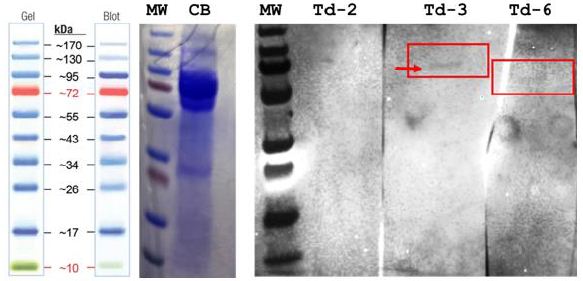
Figure 1 validates Td-3 and Td-6 aptamer binding to surface molecules extracted from the surface of live T. pallidum cells in the vicinity of ~ 72 to 95 kD with the Td-3 aptamer appearing to bind a ~95 kD moiety (red box and arrow in Figure 1). Td-6 appears to possibly bind a surface molecule of lower molecular weight perhaps closer to 72 kD while the Td-2 aptamer does not appear to bind anything at all. These results correlate well with our recent opsonin- related publication in this journal.

Figure 1: Results of the aptamer Western blots for the Td-2, Td-3 and Td-6 aptamers from Table 1 when used to probe 1.5M MgCl2 T. pallidum live cell extracts demonstrating that Td-3 binds a ~95 kD surface marker, while Td-6 binds a surface molecule closer to 72 kD and Td-2 does not appear to bind. These results correlate with the spectrofluorometric binding results presented in our recent aptamer-Fc opsonin paper in this same journal (doi.org/10.31038/IDT.2025613).

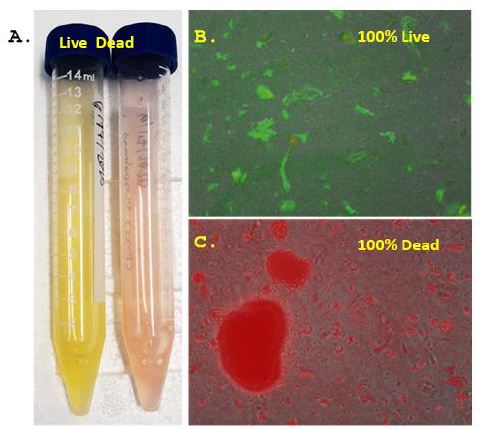
Figure 2 verifies both macroscopically and microscopically that the BacLight™ Live/Dead fluorescence assay stains live T. pallidum 100% green and alcohol-killed T. pallidum 100% red. Unfortunately, due to the limited 400X magnifying power of the available microscope (i.e., 1,000X is needed to do a differential fluorescence count) and clumping of the bacteria seen in Figures 2B and 2C, individual bacterial cell counts were not possible using the available microscope.

Figure 2: Macro (panel A) and microscopic (400X in panels B and C) results showing the differential green SYTO 9 fluorescent staining of 100% live 3 day T. pallidum culture and red propidium iodide fluorescent staining of 100% dead alcohol-treated T. pallidum cells using the Invitrogen BacLight™ Live/Dead assay kit.

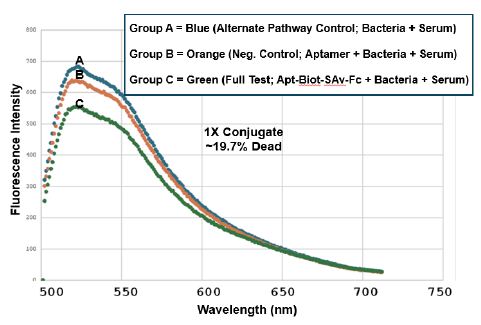
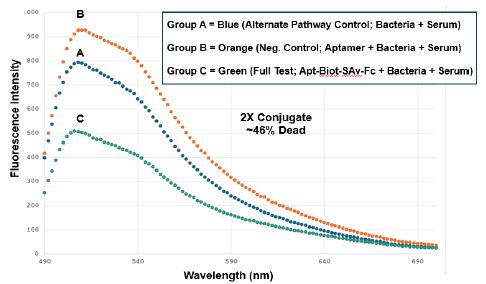
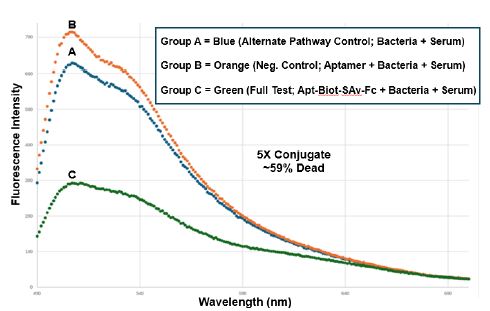
There is not much difference between groups A-C in the red (propidium iodide) region of the spectrum beyond 600 nm in any of the three spectrofluorometry trials (Figures 3-5), suggesting that we would not have seen much of a difference in the numbers of red- fluorescing cells by fluorescence microscopy in any event. However, as show in Figures 3-5, one can estimate cell death percentages by proportion of the fully live cell peaks for the A or B control treatment group spectral traces at 520 nm divided by the peak for the full test aptamer-biotin-SAv-Fc conjugate-treated groups and then subtracting the percent viable cells in the full test C group from 100% to obtain the percent dead cells (i.e., 100% – (100 x group C peak height at 520 nm/the taller of peak A or B height)). Using this formula, we obtained approximately 19.7%, 46% and 59% dead cells for the 1X, 2X and 5X 4: 1 aptamer-biotin to SAv-Fc conjugate concentration treatment groups respectively. The 5X amount (250 µl) of the conjugate is the practical volume limit for these in vitro experiments, thus the limit of killing for the aptamer-Fc conjugate approach is probably about 59% in the full test group C. Test group A was designed to assess the level of killing by mouse serum itself in the alternative pathway [8] while group B was designed to be a negative control to rule out killing of the bacteria by the aptamers themselves. Both groups A and B gave consistently high viabilities in all three conjugate dose trials while the full test group C demonstrated consistent concentration-dependent killing from 19.7% to 59% for the 1X to 5X conjugate doses in vitro.

Figure 3: Trial 1 CML spectrofluorometric results using the 1X aptamer-Fc conjugate dose to achieve ~19.7% killing of T. pallidum as assessed by the BacLight™ Lived/Dead assay. Groups A and B were alternate complement pathway and aptamer only negative controls respectively while group C was the full test group in which the greatest level of killing by the aptamer-Fc conjugate plus the other complement components in murine serum was hypothesized to occur by activating the classical complement pathway. The green trace validates that group C has the lowest viability especially in the green region of the spectrum (500 to 550 nm emissions).

Figure 4: Trial 2 CML spectrofluorometric results using the 2X aptamer-Fc conjugate dose to achieve ~46% killing of T. pallidum as assessed by the BacLight™ Lived/Dead assay. Groups A-C are the same treatment groups as described for Figure 3.

Figure 5: Trial 3 CML spectrofluorometric results using the 5X aptamer-Fc conjugate dose to achieve ~59% killing of T. pallidum as assessed by the BacLight™ Lived/Dead assay. Groups A-C are the same treatment groups as described for Figure 3. The 5X dose represents the practical volume limit for these CML experiments.

Discussion and Conclusions

The present report extends previous publications on aptamer-Fc or -C1q conjugate killing of Gram negative or complement-sensitive bacteria by CML [16,17] to include T. pallidum which is known to be sensitive to antibody-mediated CML [8]. We were hoping to kill nearly 100% of T. pallidum cells via aptamer-Fc-induced CML. However, 59% is a respectable level of killing once the volume limit is hit. And, this is a promising preliminary report especially when coupled to our previous Td-3 aptamer-Fc opsonin publication (doi.org/10.31038/ IDT.2025613) that suggests the remaining 41% of viable T. pallidum which might survive CML in vivo could be opsonized, phagocytized and killed by macrophages or other resident phagocytized in vivo using the same aptamer-Fc conjugate (a proverbial “one-two punch” combination).

In summary, the present work again suggests a new class of aptamer-3’-Fc conjugates to emulate monoclonal antibodies and perhaps lower the cost of future passive immunity CML (and opsonin) therapy. If even higher affinity T. pallidum aptamers can be developed, CML and opsonin-based T. pallidum killing and alternative (non- antibiotic) therapy of syphilis might be even more effective in the future. For use in vivo of course, attachment of the Fc to the 3’ end will be key to extending aptamer conjugate pharmacokinetics and serum half-life by slowing kidney clearance and inhibiting serum exonuclease degradation of the aptamer moiety of the Fc conjugate [22-24].

Acknowledgments

Funding was provided by US NIH (NIAID) SBIR Contract No. 75N93025C00010.

References

  1. Orbe-Orihuela YC, Sánchez-Alemán M, Hernández-Pliego A, Medina-García CV, Vergara-Ortega DN (2022) Syphilis as Re-Emerging Disease, Antibiotic Resistance, and Vulnerable Population: Global Systematic Review and Meta-Analysis 11: 1546. [crossref]
  2. Peeling RW, Mabey D, Kamb ML, Chen X-S, Radolf JD, et al. (2017) Syphilis. Nature Reviews Disease Primers 3: 17073. [crossref]
  3. Stamm LV (2016) Syphilis: Re-emergence of an old Microbial cell (Graz, Austria) 3: 363-370. [crossref]
  4. Ramchandani MS, Cannon CA, Marra CM (2023) Syphilis: A Modern Infectious disease clinics of North America 37: 195-222. [crossref]
  5. Seghers F, Taylor MM (2024) Securing the supply of benzathine penicillin: a global perspective on risks and mitigation strategies to prevent future Int Health 16: 279-282. [crossref]
  6. Avila-Nieto C, Pedreno-Lopez N, Mitja O, Clotet B, Blanco J, et (2023) Syphilis vaccine: challenges, controversies and opportunities. Frontiers in immunology 14: 1126170. [crossref]
  7. Lieberman NAP, Reid TB, Cannon CA, Nunley BE, Berzkalns A, et al. (2024) Near- Universal Resistance to Macrolides of Treponema pallidum in North N Engl J Med 390: 2127-2128. [crossref]
  8. Fitzgerald TJ (1987) Activation of the classical and alternative pathways of complement by Treponema pallidum subsp. pallidum and Treponema vincentii. Infect Immun 55: 2066-2073. [crossref]
  9. Yi DY, Xu QY, He Y, Zheng XQ, Yang TC, et al. (2024) Treponema pallidum protein Tp47 induced prostaglandin E2 to inhibit the phagocytosis in human J Eur Acad Dermatol Venereol 38: 1166-1178. [crossref]
  10. Chen H, Tong M-L, Liu L-L, Lin L-R, Yang T-C (2022) The whole process of macrophage–Treponema pallidum interactions: Opsonic phagocytosis, nonopsonic phagocytosis and active invasion. International Immunopharmacology 107: 108657. [crossref]
  11. Hawley K, Cruz A, Benjamin S, Vake C, Cervantes J, et al. (2017) IFNγ Enhances CD64-Potentiated Phagocytosis of Treponema pallidum Opsonized with Human Syphilitic Serum by Human Frontiers in immunology 8: 1227. [crossref]
  12. Marangoni A, Aldini R, Guardigli M, Sambri V, Giacani L, et (2003) Phagocytosis of Treponema pallidum and reactive oxygen species production by isolated rat Kupffer cells. Medical Microbiology and Immunology 192: 183-188. [crossref]
  13. Lukehart SA, Shaffer JM, Baker-Zander SA (1992) A subpopulation of Treponema pallidum is resistant to phagocytosis: possible mechanism of The Journal of infectious diseases 166: 1449-1453. [crossref]
  14. Alder JD, Friess L, Tengowski M, Schell RF (1990) Phagocytosis of opsonized Treponema pallidum subsp. pallidum proceeds slowly. Infect Immun 58: 1167-1173. [crossref]
  15. COCKAYNE A, PENN CW, BAILEY MJ (1986) Surface Properties of Treponema pallidum in Relation to Phagocytosis by Human Polymorphonuclear Leucocytes in vitro. Microbiology 132: 133-141. [crossref]
  16. Bruno JG, Carrillo MP, Phillips T (2008) In vitro antibacterial effects of antilipopolysaccharide DNA aptamer-C1qrs complexes. Folia microbiologica 53: 295-302. [crossref]
  17. Bruno JG (2013) A review of therapeutic aptamer conjugates with emphasis on new Pharmaceuticals 6: 340-357. [crossref]
  18. Bruno JG, Carrillo MP, Crowell R (2009) Preliminary development of DNA aptamer- Fc conjugate opsonins. Journal of biomedical materials research 90: 1152-1161. [crossref]
  19. Kristian SA, Hwang JH, Hall B, Leire E, Iacomini J, et (2015) Retargeting pre- existing human antibodies to a bacterial pathogen with an alpha-Gal conjugated aptamer. Journal of molecular medicine 93: 619-631. [crossref]
  20. Park JP, Shin HJ, Park SG, Oh HK, Choi CH, et (2015) Screening and development of DNA aptamers specific to several oral pathogens. Journal of microbiology and biotechnology 25: 393-398. [crossref]
  21. Rogers S, Honma K, Mang TS (2018) Confocal fluorescence imaging to evaluate the effect of antimicrobial photodynamic therapy depth on gingivalis and T. denticola biofilms. Photodiagnosis and photodynamic therapy 23: 18-24. [crossref]
  22. Dougan H, Lyster DM, Vo CV, Stafford A, Weitz JI, et (2000) Extending the lifetime of anticoagulant oligodeoxynucleotide aptamers in blood. Nuclear medicine and biology 27: 289-297. [crossref]
  23. Bruno JG, Crowell R (2008) Selective glutaraldehyde-mediated coupling of proteins to the 3’-adenine terminus of polymerase chain reaction products. Journal of biomolecular techniques: JBT 19: 177-183. [crossref]
  24. Keefe AD, Pai S, Ellington A (2010) Aptamers as Nat Rev Drug Discov 9: 537-550.

Learning Experiences of Nursing Students Participating in an Interaction Meeting with Patients with Rheumatoid Arthritis: A Qualitative Descriptive Study

DOI: 10.31038/IJNM.2025631

Abstract

Purpose: This study aimed to clarify what first-year nursing students learned through interactions with patients living with rheumatoid arthritis (RA) by exploring their understanding of patients’ actual living conditions and illness experiences.

Methods: An exchange meeting between RA patients and first-year nursing students was held at a university in the Kanto region of Japan. Eight students who voluntarily participated submitted free-text reflections immediately after the session. The data were analyzed qualitatively using a descriptive approach. Codes were generated from meaningful units, organized into subcategories, and abstracted into overarching categories through iterative comparison and consensus among multiple researchers.

Results: Three categories and seven subcategories were identified: 《Understanding Rheumatoid Arthritis》, 《Engaging with Patients as a Nurse》, and 《Recognizing and Supporting Social Challenges》. Students gained insights into invisible symptoms such as pain and fatigue, the fluctuating nature of RA, and life-course impacts. They also recognized the importance of individualized care that respects self-management, empathic communication, and awareness of social support systems (e.g., Help Marks and disaster-time assistance).

Conclusion: Engagement with RA patients provided multidimensional learning that extended beyond textbook knowledge, promoting the integration of knowledge and practice. Such patient-participatory education may cultivate empathy and social awareness among nursing students and contribute to person-centered care competencies.

Limitations: This study was conducted at a single institution with a small sample and relied on immediate post-session reflections.

Keywords

Rheumatoid arthritis; nursing education; patient-participatory education; qualitative descriptive study

Introduction

Rheumatoid arthritis (RA) is a representative chronic disease that causes symptoms such as persistent pain and fatigue, significantly impairing patients’ quality of life (QOL) [1,2]. Although advances in pharmacological therapies, including biologics, have improved the prognosis in recent years, patients continue to face substantial physical and psychosocial challenges in their daily lives. Therefore, it is important for healthcare professionals to foster an attitude that enables them to understand and support patients’ everyday lives, which has become a key educational issue in clinical practice. In nursing education as well, the importance of incorporating patients’ perspectives has been emphasized internationally. Traditional lecture- and practicum-centered approaches alone have been pointed out as insufficient for comprehensively understanding the complex experiences and psychosocial difficulties faced by individuals with chronic illnesses. Consequently, patient-participatory education—in which patients themselves are involved in the educational process—has drawn increasing attention. Such approaches are expected to provide students with learning opportunities that go beyond clinical knowledge, helping them deepen their understanding of humanity and empathy [3]. In particular, direct interactions with patients living with chronic diseases allow students to recognize the long-term impact of illness and difficulties in daily life, serving as an opportunity to consider multiple perspectives on supportive care.

The European Alliance of Associations for Rheumatology (EULAR) has issued comprehensive recommendations aimed at improving the quality of patient education, emphasizing the importance of systematically providing education and support to patients by healthcare professionals. Specifically, eight recommendations were proposed, including the structuring of educational programs, individualization, emphasizing interaction, and outcome evaluation. These recommendations define patient education not merely as the provision of information but as a bidirectional, continuous learning process [4]. Such international trends support the importance of actively incorporating patient participation in nursing education. However, in the field of nursing education in Japan, patient-participatory education has not yet been fully disseminated. Although clinical practicum and simulation-based learning have been widely implemented, systems that enable patients to participate actively in educational settings remain limited. In particular, opportunities to learn through direct interactions with individuals such as patients with RA, who experience long-term treatment and daily life with chronic illness, are still scarce. Educational initiatives that integrate the lived experiences and narratives of chronic illness patients into nursing curricula remain in the developmental stage.

From this perspective, incorporating an interaction program with patients with RA into nursing education can provide students with opportunities to understand not only the medical aspects of the disease but also the patients’ daily lives and psychosocial contexts. Previous studies have suggested that interactions between students and patients with chronic diseases may foster empathy and promote attitudinal change [3]. However, in Japan, such evidence remains limited. Moreover, few studies have qualitatively clarified the learning obtained by nursing students through interactions with patients focusing specifically on RA. Because RA is characterized by invisible symptoms such as fatigue, which are often difficult for others to understand [5]. educational opportunities to hear patients’ personal narratives may be particularly effective in grasping the lived realities of the disease. Based on these considerations, the present study aimed to qualitatively analyze the learning experiences of nursing students who participated in an interaction meeting with patients with RA and to clarify their characteristics. The findings of this study are expected to demonstrate the usefulness of patient participation in nursing education for chronic illness care and to suggest directions for future educational practice.

Purpose

The purpose of this study was to clarify what nursing students who participated in an interaction meeting learned through their interactions with patients with rheumatoid arthritis (RA) by exploring their understanding of the patients’ actual living conditions and experiences with the disease.

Methods

Participants and Data Collection

In March 2023, at the Faculty of Nursing of University A located in the Kanto region of Japan, an interaction meeting was held in which patients with rheumatoid arthritis (RA) and nursing students could converse freely. The study participants were eight first-year nursing students who received an explanation of the study purpose, provided informed consent, and took part in the meeting. The participants were six women and two men, aged 18–19 years, and had completed a ward-observation practicum. They had not yet had substantive clinical practicum experience and were in the basic phase of nursing education. Four individuals diagnosed with RA who belonged to a patient association and were living with the disease participated in the meeting and freely shared their experiences with the nursing students. Data collection was conducted immediately after the meeting. Students were asked to submit free-form written reflections and were instructed to describe the learning they gained through participation. The reflections were handwritten and collected in a collection box. After collection, all materials were anonymized, and any personally identifying information was removed.

Analysis

The students’ reflections were transcribed into text while preserving the original wording and were analyzed using a qualitative descriptive approach. The analytic procedures were informed by the methods of Miles et al. (2014) [6]. First, the descriptions were segmented into units of meaning, and descriptive codes were assigned to each unit. Next, similarities and relationships among codes were compared and organized into subcategories based on conceptual proximity. Furthermore, through procedures that gradually increased the level of abstraction, subcategories were integrated into categories, and major themes representing the students’ learning through the interaction were derived. The analysis proceeded iteratively, and, as necessary, label names were merged, split, or renamed to resolve duplication and ambiguity among codes.

Trustworthiness

To ensure trustworthiness, two researchers first performed initial coding and classification of results independently, after which two additional researchers verified the entire analysis. When interpretive discrepancies arose, consensus was reached through discussion, and the definitions of codes, subcategories, and categories were re-examined. In addition, advice was obtained as needed from one researcher experienced in qualitative research and possessing perspectives in chronic-phase nursing and nursing education. To ensure analytic accuracy, we returned to the data throughout the process and continually confirmed that the results were grounded in the original text.

Ethical Considerations

This study was approved by the Research Ethics Committee of Kawasaki City University of Nursing (approval no.: 22-J013). Participation in the study was entirely voluntary, and it was explained to all participants in writing and verbally beforehand that neither participation nor withdrawal would result in any disadvantages, including with respect to academic grades. The nursing students were asked to cooperate on the premise that the study was independent of coursework; written informed consent was obtained after clearly stating the study purpose and methods, the scope of data use, the anonymization policy, and the possibility of public dissemination (conference presentations and publications). The collected reflections were anonymized by removing descriptions that could identify individuals and were stored and analyzed as data without identifiers. Access to the data was limited to study personnel and the data were stored in a secure location. Care was taken to avoid psychological burden on participants, and they were informed in advance of their right to discontinue their responses.

Results

As a result of the qualitative descriptive analysis of the written reflections, three categories and seven subcategories of learning among the nursing students were extracted (Table 1). Below, categories are indicated with 《 》 and subcategories with 〈 〉, and the content of the students’ descriptions is presented. First, learning related to 《Understanding Rheumatoid Arthritis》 was identified. Under 〈Basic disease knowledge〉, students concretely understood basic features of the disease—for example, that rheumatoid arthritis is an autoimmune inflammatory disease and can develop even in younger individuals, and that symptoms include joint swelling and deformity as well as pain and fatigue. They also referred to the diversity of pharmacological treatments, noting that a wide range of medications is used, and mentioned the possibility of various comorbidities, indicating a comprehensive acquisition of textbook-based knowledge. Under 〈Individual differences〉, multiple students recognized that the symptoms and comorbidities differ among individuals and that suffering and pain are not easily recognizable from outward appearance. In particular, descriptions that RA may occur after childbirth or in youth served as an opportunity to revise the prior image of RA as mainly a disease of older adults.

Table 1: Themes of learning identified from nursing students’ interactions with patients with rheumatoid arthritis.


Understanding Rheumatoid Arthritis


Basic disease knowledge

Rheumatoid arthritis is an autoimmune inflammatory disease. (A, H)


The main symptoms include joint swelling, deformity, pain, and fatigue. (A)


RA was initially perceived as a disease mainly characterized by joint deformity and pain. (B)


The disease is not easily recognizable from outward appearance. (C)


A wide range of medications is used in its treatment. (D)


RA may cause various comorbidities. (B)


Individual differences

The symptoms and severity of RA vary widely among individuals. (B, C, D, F)


Symptoms may fluctuate depending on factors such as season, weather, and treatment. (D, E)


RA can develop even in younger individuals. (H)


Patients demonstrate individual differences in how they cope with the disease. (D)


Early-onset RA can affect pregnancy and the child-rearing period. (H)


Engaging with Patients as a Nurse


Understanding patients

In nursing care, understanding not only the disease but also the patient’s daily life is essential. (A)


Nurses’ encouragement and positive words can become a source of hope and strength for patients. (A, B, C, E)

Nursing aims to promote independence and maximize patients’ capabilities. (B)


Nurses strive to understand patients’ pain and difficulties and engage with empathy. (F, G)


Nurses seek to create an environment where patients can communicate without hesitation. (B)


Nurses maintain a continuous attitude of deepening accurate knowledge about the disease. (H)


Providing individualized nursing care

Information obtained from patients is applied to subsequent care planning. (A)


Nurses respect and support patients’ use of assistive devices and self-initiated adaptations. (B)


Nurses support patients in achieving what they wish to do, without being bound by conventional approaches. (B)


The need for assistance is determined according to each patient’s individual situation. (C)


Nurses work to clarify patients’ needs. (F, H)


Nurses stay close to patients’ symptoms and strive to adopt the patients’ perspective. (F)


Recognizing and Supporting Social Challenges


Difficulties and challenges in social life

Patients often experience difficulties in performing daily and social activities. (A, B, H)


Pain and daily life challenges are often invisible to others. (E, F)


Patients have to continue their activities while enduring pain. (D)


Coping strategies and adaptations in daily life

Patients make creative adaptations in daily life by using assistive devices. (A, B, C, H)


Home modifications and adjustments such as redesigned remote controls are implemented to improve daily functioning. (F)


Patients often need to prepare specialized shoes or orthotic devices. (B)


Social interactions and public understanding

Students recognized the lack of social understanding and persistent prejudice toward patients with RA. (E, G, H)


There is a need for greater public awareness and promotion of social understanding. (A, E)


Improvements in institutional supports—such as help marks, priority seating, and disaster-time assistance—are needed. (D)


Awareness and proactive communication by staff in public facilities and stores are important. (H)


Note: Letters in parentheses (A–H) indicate the student ID corresponding to the data source.

Next, 《Engaging with Patients as a Nurse》 was emphasized. With regard to 〈Understanding patients〉, drawing on accounts in which patients reported receiving hope from encouraging words during hospitalization, students learned the importance of verbal encouragement and psychosocial support. They also repeatedly referred to the importance of creating an environment in which patients can communicate without hesitation and of maintaining an empathic, supportive stance. In contrast, under 〈Providing individualized nursing care〉, students highlighted perspectives such as supporting patients in accomplishing what they wish to do without being bound by conventional approaches while respecting the use of assistive devices and self-initiated adaptations, and determining the need for assistance according to symptoms and living conditions. In addition, they expressed an intention to clarify patients’ needs and to provide care that stays close to patients’ symptoms and strives to adopt the patients’ perspective.

Finally, learning related to 《Recognizing and Supporting Social Challenges》 became evident. Under 〈Difficulties and challenges in social life〉, through statements such as finding it difficult to lift objects and experiencing severe pain that is not apparent from appearance, students came to understand the reality that everyday actions can pose major difficulties; they also noted the reality of having to continue activities while enduring pain. Regarding 〈Coping strategies and adaptations in daily life〉, the repeated discussion of the use of assistive devices and creative adaptations in daily life emphasized a stance of expanding what can be done through such adaptations; examples included home modifications and redesigned remote controls, as well as the need for specialized shoes or orthotic devices. Under 〈Social interactions and public understanding〉, while students noted the necessity of institutional supports such as help marks, priority seating, and disaster-time assistance, they also encountered accounts of hurtful remarks and of distress that is difficult for others to understand, leading them to strongly recognize the importance of promoting broader public understanding of the disease; they also pointed to the importance of awareness and proactive communication by staff in public facilities and stores. In sum, the students learned comprehensively not only about the disease itself but also about the nurse’s role and the need for social support, indicating that interactions with patients with RA have multifaceted educational significance.

Discussion

Key Findings of This Study

In this study, the learning of nursing students through interactions with patients with rheumatoid arthritis (RA) showed a tendency to expand stepwise—from textbook knowledge about the disease, to an understanding of lived experience, to the formation of an empathic stance, and further to a perspective on social support. This learning process is consistent with the experiential learning cycle model [7] and can be understood as an educational process in which students reconstruct their own knowledge and attitudes through experience. Students first understood that RA is an autoimmune disease and that symptoms such as joint swelling and deformity differ among individuals, thereby grasping the basic structure of the disease. Building on this, through patients’ narratives they learned lived realities not available from textbooks—pain and fatigue that are not discernible from outward appearance, difficulties in daily activities, and fluctuations in symptoms. These insights appear to have developed from understanding the disease itself to understanding patients as persons, including their life contexts. Furthermore, the students began to think concretely about how to support patients as nurses. In addition to the importance of encouragement, verbal approaches, and a stance of staying close, they learned the necessity of support tailored to each patient’s situation, such as the use of assistive devices and environmental adjustments. These learning outcomes provided an opportunity to move beyond a disease-centered perspective to consider comprehensive care that includes patients’ lives and their relationships with society. Such learning—which unfolds from understanding the disease to understanding patients’ lives, and further to a perspective on social support—promotes the integration of knowledge and practice in nursing education. For example, in educational practice using community health fairs, it has been reported that students broaden their perspectives through practice and learn about the actual living conditions of patients and community residents [8]. In addition, educational research that promotes experiential learning through simulation has shown that case-based experiences enhance students’ clinical judgment and empathy [9]; similarly, the patient interactions in this study can be said to have the effect of enhancing practical sensitivity. Therefore, the interaction meeting with patients with RA has educational significance not only for deepening students’ understanding of the disease but also for enabling them to understand patients as persons living with the condition and to expand their sense of their professional role as nurses. Furthermore, the process of reframing the need for social support from their own perspective fosters the ability to situate nursing practice within a social context and is considered to provide important implications for future chronic illness nursing education.

Significance as Patient-Participatory Education

In this study, the interaction with patients with rheumatoid arthritis (RA) is positioned as a form of patient-participatory education. This educational approach aims to provide students with opportunities to learn through patients’ experiences by having patients actively engage in the learning process. Recent systematic reviews have indicated that involving patients in education may promote students’ understanding of illness experiences, empathy, and the broadening of professional perspectives [10]. This observation is consistent with our findings that students came to understand pain and difficulties in daily life that are not apparent from outward appearance. Furthermore, Boshra et al. (2022) reviewed interventions that included patient-participatory education for students and reported that such education enhances students’ empathy and understanding [11]. In this study as well, the fact that students, through patients’ narratives, came to appreciate the importance of nurses’ involvement—such as encouragement and verbal approaches—suggests similar effects.

Moreover, in light of experiential learning theory, [7] patient-participatory education can be regarded as a framework that promotes the cycle of concrete experience, reflection, conceptualization, and practice. Students gain concrete experience through interactions with patients, then engage in reflection through subsequent reflective writing, abstract their learning, and connect it to future nursing practice. The structure of learning extracted in this study (understanding of the disease, understanding of patients’ lives, nursing support, and a perspective on social support) corresponds to this experiential learning cycle. In addition, patient-participatory education is meaningful in that, by positioning patients as equal partners in learning, it deepens students’ understanding and empathy as persons and contributes to promoting understanding across the society that supports healthcare. By moving one step beyond student-centered education and incorporating patients’ perspectives into learning content, education becomes more grounded in reality and contributes to fulfilling the social responsibility of preparing nursing professionals. Such an educational approach is not merely knowledge transmission but learning grounded in dialogue and co-creation, and is considered to contribute to qualitative improvements in nursing education.

Learning Specific to RA and Its Educational Implications

The learning of nursing students revealed in this study strongly reflected characteristics specific to rheumatoid arthritis (RA). Students developed a concrete understanding that RA is a disease with “invisible symptoms,” “fluctuating conditions,” and “lifelong impact.” Moreover, through observing how patients reconstructed their daily lives by using assistive devices and environmental adjustments, students learned the importance of self-management and recognized the need for social understanding and institutional support for difficulties that are not outwardly visible. These findings highlight unique learning challenges in RA education and provide insights applicable to chronic illness nursing education as a whole. First, what left a strong impression on students was the invisible nature of RA symptoms. In particular, they described how subjective burdens such as pain and fatigue cannot be judged from appearance and are difficult for others to understand. Previous studies have also identified fatigue as one of the most significant sources of distress for patients with RA, regarded alongside pain and functional impairment as a key outcome from the patient perspective. Furthermore, RA-related fatigue is reported to be multidimensional and closely related to pain, functional limitation, and psychological distress [12]. Because fatigue is associated with multiple dimensions—including physical, cognitive, emotional, sleep, and activity aspects [13]—it is essential that its multifaceted nature be addressed in educational contexts. The present findings confirmed that, through patients’ narratives, students were exposed to the lived reality of fatigue and came to view it not merely as a symptom but as a major difficulty in daily life. This supports the value of learning about pain and fatigue in RA not through lectures alone but via patients’ stories and lived experiences. Students also focused on the fluctuating and unpredictable nature of RA symptoms. They expressed surprise that the disease changes with the seasons and weather, with good days and bad days alternating. Understanding such characteristics provides a foundation for nurses to flexibly adapt their assistance to patients’ day-to-day conditions and to offer individualized support. Educationally, scenario-based learning that incorporates fluctuating symptoms can help students develop assessment and care-planning skills grounded in clinical reality.

In addition, students learned that RA can develop even in young individuals and affect critical life stages such as pregnancy and child-rearing. Rohini et al. (2024) reported that disease activity during pregnancy influences maternal and fetal outcomes among women with RA and that balancing treatment with medication poses challenges [14]. The students’ learning in this study aligns with these international findings, underscoring the importance of addressing life-stage-specific support in nursing education to cultivate diverse perspectives in nursing practice. Furthermore, students noted how patients actively reconstructed their lives through the creative use of assistive devices and environmental modifications. The European Alliance of Associations for Rheumatology (EULAR) recommendations on self-management in inflammatory arthritis identify the provision of comprehensive self-management support—including information sharing, problem-solving, goal setting, and peer support—as a key professional responsibility of healthcare providers [15]. The students’ descriptions of modified remote controls and customized household items exemplify such practical self-management, from which they learned the importance of nurses’ respect for and support of patients’ autonomy. These learnings illustrate an approach to nursing that upholds patients’ agency and self-efficacy.

Finally, students showed strong concern about the lack of social understanding. Their reflections included observations about help marks, priority seating, and disaster-time support systems, demonstrating their awareness of the need for social and institutional responsiveness. Zangi et al. (2015), in the EULAR recommendations for patient education, described education as both individualized continuous support and a learning process connected to the social environment [4]. The students’ awareness of the necessity for social support aligns with this perspective. Nursing education should likewise incorporate understanding of social resources and systems into the curriculum to foster the ability to support patients within the social structure. Taken together, the interaction meeting with RA patients functioned as an educational practice that fostered multifaceted insights in nursing students through learning specific to RA—such as invisible symptoms, symptom fluctuation, life-course impact, self-management, and social support. This learning nurtured the ability to view patients not only in terms of disease but as individuals living within daily and social contexts, representing an educationally significant contribution to the advancement of chronic illness nursing education.

Limitations

This study has several limitations. First, the participants were eight first-year nursing students from a single university located in the Kanto region of Japan; therefore, the findings cannot be generalized to all nursing students or educational settings. Nevertheless, the study has educational significance in that it clarified how students at an early stage of their studies learn through direct interactions with patients with rheumatoid arthritis (RA).

Second, the data were based on free-form written reflections collected immediately after the interaction meeting, which may have reflected subjective impressions or emotional reactions. Future research should combine interview surveys or follow-up evaluations to examine the process of deepening learning, including temporal changes.

Third, the patients with RA who participated in the meeting were members of a patient association and were accustomed to sharing their own illness experiences. Therefore, their comments may have differed from those of the general patient population. Future educational practice could be strengthened by including patients with a wider range of experience in expressing their illness narratives.

Finally, as this study was conducted in an educational context, the learning outcomes were derived from students’ self-reported descriptions. Hence, the findings do not directly demonstrate improvements in clinical competence or empathy in actual nursing practice. In the future, it will be necessary to formally integrate patient-participatory education into the nursing curriculum and to verify learning outcomes using objective evaluation methods.

Conclusion

This study qualitatively and descriptively analyzed reflective essays written by nursing students who participated in an exchange meeting with patients with rheumatoid arthritis (RA). Three categories and seven subcategories were identified as the students’ learning outcomes: 《Understanding Rheumatoid Arthritis》, 《Engaging with Patients as a Nurse》, and 《Recognizing and Supporting Social Challenges》. In addition to acquiring fundamental knowledge of the disease, students gained a concrete understanding of invisible symptoms such as pain and fatigue, the fluctuating nature of symptoms, and the difficulties and strategies in daily life. They also learned the importance of individualized nursing support, including encouragement, environmental adjustments, and the use of assistive devices. Furthermore, students recognized the necessity of considering social resources such as help marks and disaster support systems, thereby developing a perspective that views patients as people living within society. These findings suggest that patient-participatory education provides an effective learning opportunity that promotes the integration of knowledge and practice while enhancing empathy and practical judgment. Future efforts should focus on systematically incorporating such programs into nursing curricula and verifying learning outcomes using objective indicators to contribute to the improvement of chronic care nursing education.

Competing Interests

The authors declare that they have no competing interests.

Funding Information

This research received no specific grant from funding agencies in the public, commercial, or not-for-profit sectors.

Authorship

All authors meet the ICMJE criteria for authorship, contributed substantially to the work, approved the final version, and agree to be accountable for all aspects of the work.

References

  1. Martinec R, Pinjatela R, Balen D (2019) Quality of life in patients with rheumatoid arthritis – a preliminary study. Acta Clin Croat 58: 157-166. [crossref]
  2. Dar WR, Mir IA, Siddiq S, Nadeem M, Singh G (2022) The assessment of fatigue in rheumatoid arthritis patients and its impact on their quality of life. Clin Pract (Basel) 12: 591-598. [crossref]
  3. Plessas A, Paisi M, Ahmed N, Brookes Z, Burns L, et al. (2024) The impact of community engaged healthcare education on undergraduate students’ empathy and their views towards social accountability; a mixed methods systematic review. BMC Med Educ 24. [crossref]
  4. Zangi HA, Ndosi M, Adams J, Andersen L, Bode C, et al. (2015) EULAR recommendations for patient education for people with inflammatory arthritis. Ann Rheum Dis 74: 954-962. [crossref]
  5. Connolly D, Fitzpatrick C, O’Toole L, Doran M, O’Shea F (2015) Impact of Fatigue in Rheumatic Diseases in the Work Environment: A Qualitative Study. Int J Environ Res Public Health 12: 13807-13822. [crossref]
  6. Miles MB, Huberman AM, Saldaña J (2014) Qualitative Data Analysis: A Methods Sourcebook. 3rd ed. Thousand Oaks, CA: Sage Publications.
  7. Kolb DA (1984) Experiential Learning: Experience as the Source of Learning and Development. Englewood Cliffs, NJ: Prentice Hall.
  8. Rojo M, Wright S, Jin J, Feliciano E, Love M, et al. (2025) Community health fairs as experiential learning: a qualitative exploration of benefits and challenges. BMC Med Educ 25.
  9. Mishra R, Hemlata Trivedi D (2023) Simulation-based learning in nursing curriculum: Time to prepare quality nurses—A systematic review and meta-analysis. Heliyon 9. [crossref]
  10. Dijk SW, Duijzer EJ, Wienold M (2020) Role of active patient involvement in undergraduate medical education: A systematic review. BMJ Open 10. [crossref]
  11. Boshra M, Lee A, Kim I, Malek-Adamian E, Yau M, et al. (2022) When patients teach students empathy: a systematic review of interventions for promoting medical student empathy. Can Med Educ J 13: 46-56. [crossref]
  12. Nikolaus S, Bode C, Taal E, van de Laar MAFJ (2013) Fatigue and factors related to fatigue in rheumatoid arthritis: a systematic review. Arthritis Care Res (Hoboken) 65: 1128-1146. [crossref]
  13. Pope JE (2020) Management of fatigue in rheumatoid arthritis. RMD Open 6. [crossref]
  14. Rohini S, Sharma UR, Vinutha M, Shreelaxmi D, Vada S, et al. (2024) Rheumatoid arthritis-associated complications during pregnancy and its effect on offspring: comprehensive review. Inflammopharmacology 32: 1-17. [crossref]
  15. Nikiphorou E, Santos EJ, Marques A, Böhm P, Bijlsma JW, et al. (2021) EULAR recommendations for the implementation of self-management strategies in patients with inflammatory arthritis. Ann Rheum Dis 80: 1278-1285.

Impact of End-effector Device on Gait Restoration in Neurological Adult Patients

DOI: 10.31038/JNNC.2025813

Abstract

Background: Neurological conditions are among the leading causes of long-term disability, with gait and balance impairments affecting up to 60% of patients and significantly limiting their mobility. Conventional gait therapies often lack the intensity required to promote neuroplasticity, are physically demanding for the therapist, and often require the presence of more than one qualified professional. Robot-assisted gait training (RAGT) presents a viable alternative, addressing these limitations by enabling high-volume, consistent rehabilitation.

Objective: This study aims to evaluate the efficacy of a novel end-effector RAGT system in adult patients with gait impairments resulting from neurological disorders of various etiologies. The primary objective is to quantify gait improvements using key spatiotemporal parameters and to explore potential differences in rehabilitation outcomes across diagnostic subgroups.

Material and methods: Twenty-eight adult neurological patients with gait impairments were recruited from two rehabilitation centers and classified into three groups based on the etiology of their condition. Each patient underwent 12 sessions of end-effector-based RAGT. Gait improvements were evaluated by comparing step count, walked distance, and cadence between the first and final therapy sessions.

Results: Statistically significant improvements were observed across all gait parameters and diagnostic groups. The greatest relative gains were seen in patients with cerebrovascular disorders, while the smallest improvements were noted in those with spinal cord-related neuropathies. On average, step count increased by approximately 45%, walked distance by 59%, and cadence by 48%.

Conclusion: The end-effector-based RAGT system demonstrated a significant positive effect on gait improvement in adults with various neurological conditions, reflecting the heterogeneity typically encountered in routine physiotherapy practice. These findings suggest that this technology may serve as a viable alternative to conventional gait training offering the advantages of high-intensity repetitive therapy that can be delivered in a safe environment even in the early stages of neurological recovery.

Keywords

RAGT, end-effector, Gait training, Neurological disorders, Stroke, Cerebral palsy, Spinal cord injury

Introduction

Neurological disorders are a major cause of long-term disability, with up to 60% of patients experiencing mobility impairments due to gait and balance dysfunction. Loss of independent walking is one of the most serious consequences, driven by muscle weakness, limited joint mobility, and poor coordination, leading to asymmetry and instability [1-3].

The most common neurological etiologies associated with gait impairment include stroke, cerebral palsy (CP), spinal cord injury (SCI), multiple sclerosis (MS), and Parkinson’s disease [2,4]. Stroke remains the most prevalent, affecting over 100 million people globally, with more than 80% of survivors experiencing gait limitations [5,4]. CP, although congenital, presents persistent motor symptoms into adulthood, with 25–58% of adults reporting a progressive decline in mobility [5]. SCI affects approximately 15 million people worldwide [4]. The severity of gait impairment and the potential for recovery depend on the type and extent of the lesion. More than half of SCI cases are incomplete, where some level of walking recovery is possible, unlike in complete injuries, where the chance of regaining ambulation is minimal [6]. In MS and Parkinson’s disease, gait impairments typically develop gradually due to the progressive nature of these disorders [2].

Beyond motor dysfunction, gait impairment significantly affects patients’ psychosocial and physical health. It is associated with increased rates of depression, anxiety, reduced social participation, lower health-related quality of life and higher unemployment rates [7]. In conditions such as stroke and SCI, limited mobility also reduces physical activity, negatively affecting modifiable cardiovascular risk factors. Up to 60% of stroke survivors present with comorbidities like hypertension, coronary artery disease, diabetes, or obesity. Individuals with SCI are nearly three times more likely to develop cardiovascular disease compared to age-matched healthy controls [8]. Finally, gait disturbances are a major risk factor for falls across all these conditions, often leading to additional complications, hospitalizations, and further decline in independence [9].

Conventional gait therapies, such as overground training and body-weight-supported treadmill training (BWSTT), are widely used in neurorehabilitation; however, their application is limited by several factors [10-12]. These include an insufficient number of step repetitions to promote neuroplasticity, high physical demands on therapists, frequent involvement of multiple physiotherapists simultaneously, and an increased risk of patient falls, which can reduce both safety and therapeutic intensity [13-15]. For example, in the study by Duncan et al., which examined the effects of BWSTT in stroke patients, falls were the most commonly reported adverse event, occurring in over 40% of participants [13].

Robotic-assisted gait training (RAGT) has emerged as a promising intervention that overcomes key limitations of conventional gait therapies. By enabling high-intensity, repetitive, and task-specific training, RAGT promotes motor recovery through principles of neuroplasticity [16]. Two main types of RAGT systems exist: end-effector and exoskeleton-based devices. While exoskeletons provide joint-specific guidance and support, end-effector systems guide the movement of the distal segments (typically the feet), promoting a more physiological gait pattern and often allowing for greater step repetition, which may enhance training intensity and motor recovery [7,15]. Its efficacy has been demonstrated across various neurological conditions, including spinal cord injury, stroke, multiple sclerosis, and Parkinson’s disease [9,11,17-19], with some studies showing superior effectiveness compared to conventional therapies [9,17,18]. The majority of studies investigating RAGT systems primarily focus on specific neurological diagnoses. Research involving heterogeneous patient groups is notably limited. Within the context of end-effector RAGT, only a singular study addresses feasibility, with effectiveness being assessed as a secondary outcome [7].

This study aims to evaluate the efficacy of a novel end-effector RAGT system in adult patients with gait impairments resulting from neurological disorders of various etiologies. The primary objective is to quantify improvements in key spatiotemporal parameters including gait cadence, walking distance and step count, and to explore potential differences in rehabilitation outcomes across diagnostic subgroups.

Material and Methods

This multicenter prospective interventional study was conducted between February 2024 and April 2025 at two rehabilitation centers, one located in Austria and the other in the Czech Republic. A total of 30 neurological patients were enrolled and received end-effector RAGT therapy as part of their rehabilitation program.

Eligible participants were adults (aged 18 or older) with gait impairments resulting from neurological conditions, including both diseases and injuries, who were medically stable and capable of participating in active rehabilitation. All participants had sufficient cognitive and physical capacity to engage in robotic gait training and were selected for therapy by a healthcare professional.

Exclusion criteria included conditions contraindicating RAGT, such as major joint contractures, unhealed fractures, osteoporosis or osteopenia, severe cardiovascular disease, epilepsy, open wounds in the device contact area, acute infections, cognitive or psychological impairments preventing safe or effective participation in therapy, or any acute medical condition that could compromise therapy safety.

Before participation, all patients received detailed information about the therapy and its possible outcomes, and voluntarily signed an informed consent form. Anonymity was maintained by assigning each patient a unique identification number. The study adhered to the ethical principles of the 1975 Declaration of Helsinki and relevant guidelines (Council of Europe, 1997; WMA, 1997–2000).

Each participant completed 12 gait training sessions using the end-effector-based RAGT system (R-Gait, BTL Industries Ltd.). Sessions were administered at a minimum frequency of three times per week, with each session lasting 30 minutes. At the start of each session, a trained therapist carefully positioned the patient and securely fitted them into the harness and footplates, allowing unrestricted movement of the lower limbs and pelvis. Therapy parameters such as a gait cadence, step length, and weight support were personalized to the patient’s abilities and adjusted as needed during the session. A dynamic support system continuously adjusted body weight unloading in synchronization with the gait cycle to promote a natural walking pattern. The footplates simulated key walking phases, while integrated sensors monitored foot activity and weight support levels. The device automatically recorded therapy progress, including key walking parameters.

Gait parameters, specifically the number of steps, distance walked (in meters), and walking cadence (steps per minute), were evaluated. These parameters were recorded by a device during therapy sessions and automatically saved. Data from the first and last therapy sessions were compared. Subsequent data analysis was performed using a custom script in MATLAB (MatLab R2010b, MathWorks, Inc., Natick, MA, USA). The normality of the data was assessed using the Shapiro-Wilk test. As the data did not meet the assumption of normality, a Wilcoxon signed-rank test was performed to determine the statistical significance of differences between the initial and final therapy sessions.

Results

A total of 30 patients participated in the study, with a mean age of 46 ± 18.64 years. Two patients did not complete the full course of treatment due to health complications unrelated to the therapy being investigated. Overall, the therapy was well tolerated, and no serious adverse effects were observed, aside from common muscle fatigue. Patients were categorized into three groups based on the etiology of their neurological condition: cerebrovascular disorders, neurodevelopmental disorders, and spinal cord-related neuropathies. Detailed information about the patients is presented in Table 1.

Table 1: Participant demographics and the distribution of study indications.

Indication group

Total number Gender male/female

Age, mean (SD)

Cerebrovascular disorders

8

2/6

60.25 (17.9)

Neurodevelopmental disorder

10

4/6

32.2 (12.35)

Spinal cord-related neuropathies

10

6/4

49.1 (15.45)

Total

28

12/16

46.25 (18.64)

Across all evaluated parameters (steps walked, walking distance, and walking cadence) statistically significant improvements were observed in each diagnostic group (see Table 2). On average, patients demonstrated an increase of approximately 45% in the number of steps, 59% in walking distance, and 48% in walking cadence (all p< 0.001). The most pronounced relative improvements were recorded in the cerebrovascular disorder group, whereas the spinal cord–related neuropathy group exhibited the smallest, though still statistically significant, gains. These within-group distributions and changes are detailed in the box plots shown in Figures 1-3. Notably, walked distance showed the greatest average improvement across all groups. The percentage-improvement bar chart (Figure 4) further illustrates these relative changes, facilitating direct comparisons between diagnostic categories.

Table 2: Mean (±SD) values for walked steps, distance, and cadence measured during the first and last therapy sessions across diagnostic groups. Percentage differences represent relative change.

Parameter

Indication Before After Difference (%)

P-value

Walked steps Cerebrovascular disorders

1040.00 ± 301.85

1606.50 ± 454.63 54.47

0.014

Neurodevelopmental disorder

935.00 ± 328.39

1368.00 ± 379.68 46.31

0.004

Spinal cord-related neuropathies

1071.00 ± 425.36

1450.00 ± 468.10 35.39

0.009

Total

1015.33 ± 351.86

1474.83 ± 434.14 45.26

< 0.001

Walked distance (m) Cerebrovascular disorders

390.65 ± 158.66

664.50 ± 173.03 70.10

0.014

Neurodevelopmental disorder

349.50 ± 171.34

548.20 ± 260.46 56.85

0.004

Spinal cord-related neuropathies

561.00 ± 142.86

850.00 ± 170.90 51.52

0.009

Total

433.72 ± 157.62

687.66 ± 201.46 58.53

< 0.001

Cadence (steps/min) Cerebrovascular disorders

32.89 ± 7.51

52.27 ± 4.65 58.95

0.014

Neurodevelopmental disorder

32.13 ± 10.10

48.53 ± 11.98 51.04

0.004

Spinal cord-related neuropathies

38.13 ± 11.78

51.43 ± 10.37 34.88

0.009

Total

34.38 ± 9.79

50.74 ± 9.00 47.59

< 0.001

Figure 1: Distribution of steps walked during the first (Before) and last (After) therapy sessions across three diagnostic groups. Each boxplot shows the median, interquartile range, and any outliers.
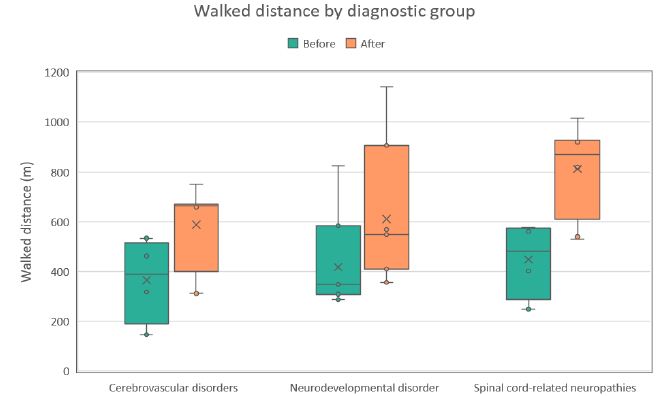
Figure 2: Distribution of walked distance values (m) during the first (Before) and last (After) therapy sessions across three diagnostic groups. Each boxplot shows the median, interquartile range, and potential outliers.
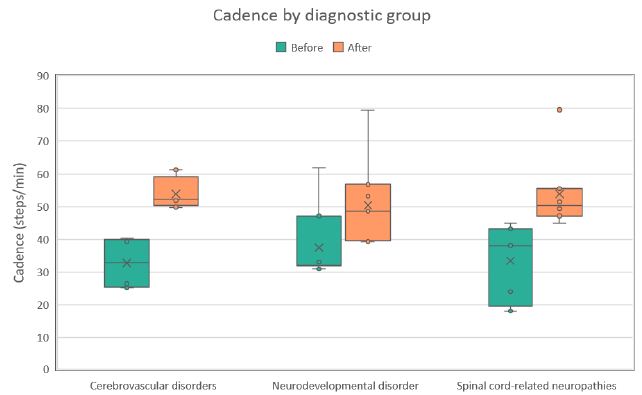
Figure 3: Distribution of walking cadence values (steps/min) during the first (Before) and last (After) therapy sessions across three diagnostic groups. Each boxplot shows the median, interquartile range, and any outliers.
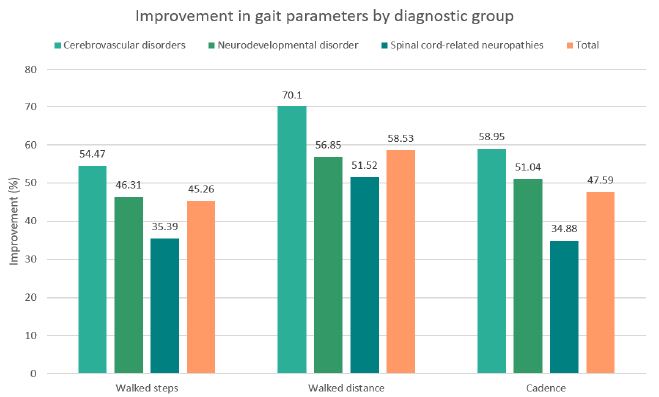
Figure 4: Percentage improvement in walked steps, walked distance, and walking cadence across diagnostic groups following the intervention, including the overall mean across all groups.

Discussion

This study aimed to assess the benefits of end-effector-based RAGT in adults with diverse neurological diagnoses by monitoring gait parameters, including step count, walking cadence, and distance covered. Furthermore, the study explores potential patterns and differences in rehabilitation potential across distinct neurological etiologies. To the best of the author’s knowledge, this is the first study primarily focusing on the impact of an end-effector-based RAGT system on gait parameters in such a heterogeneous patient population, as most previous research has been limited to single-diagnosis cohorts.

Following 12 RAGT sessions, a statistically significant improvement in gait parameters was observed across all diagnostic groups. The greatest relative gains were noted in patients with cerebrovascular disorders, followed by those with neurodevelopmental conditions. Although patients with spinal cord-related neuropathies demonstrated the lowest magnitude of improvement, their outcomes remained statistically significant. For comparison, a previous study by Hotz et al. also examined the effects of end-effector-based RAGT in patients with various neurological disorders, although gait outcomes were only reported as secondary endpoints. Clinically meaningful improvements (≥20%) in walking speed and distance were observed in a subset of participants. The limited overall effect may be due to the inclusion of conditions with low rehabilitation potential, such as motor neuron disease [7].

Interpreted within the context of individual diagnostic groups, indicate that despite fewer sessions and a relatively shorter therapy duration, our results fall within the range of improvements observed in previously published studies. RAGT outcomes in both stroke and spinal cord injury (SCI) cohorts exhibit significant variability, influenced by the recovery phase, specific therapy protocol, and the type of robotic system employed.

For stroke patients in the acute and subacute phases, typical 10MWT improvements range from 20% to 60%, with 6MWT distance gains often greater [40–85%), sometimes involving up to 36 sessions [18,21,22]. In the chronic phase, outcomes tend to be more limited. For instance, Aprile et al. reported a 21% increase in walking speed and a 25% improvement in distance [23]. Even smaller effects were observed by Kelly C.P. et al., with minimal changes in 10MWT and only a 7% gain in 6MWT using an exoskeleton-based RAGT device [24].

Similarly, in SCI, studies report a range of outcomes: Varoqui et al. noted a modest 14% increase in walking speed with no significant 6MWT improvement after 12 sessions [25], while Chang et al. observed a 23% gain in speed and a 34% increase in distance after 15 sessions [26]. Conversely, Wirz et al. demonstrated substantial improvements exceeding 50% in both parameters after 36 sessions [27]. Beyond the significant differences in the number of sessions, this variability in SCI outcomes may also be attributed to the extent and location of the injury [28].

Research on RAGT in adult cerebral palsy (CP) patients is limited, with most studies focusing on pediatric populations. The findings of this study, however, are consistent with studies utilizing the same RAGT device in pediatric patients [29]. A potential explanation for this alignment is the relatively low mean age [(32.2 ± 12.35 years) of the CP cohort, suggesting a population with greater neuroplastic potential and functional adaptability compared to older adults, which may have positively influenced their training response despite typical concerns about limited adaptability in adult CP populations.

In addition, studies have demonstrated that RAGT is more effective than conventional gait therapy, particularly in individuals with moderate to severe motor impairments [9,17,18,21,23]. Beyond the core principles of RAGT, such as high-intensity, repetitive, and precisely guided gait training that drives neuroplasticity, a key advantage is the possibility to start rehabilitation early, even in the acute phase after injury. This is especially important in cases like stroke, where the greatest potential for recovery occurs within the first three months [14,18]. End-effector devices in particular offer several advantages, including a more physiological gait pattern, increased freedom of movement, and a more demanding postural environment, as users are required to actively maintain balance. These characteristics may contribute to findings from some studies showing that end-effector systems lead to better performance in functional tests and higher rates of independent walking compared to, especially, stationary exoskeleton-based systems [7,15,18,22].

The experimental outcomes of the present study align with the theoretical recovery potential inherent to each condition targeted by RAGT. Post-stroke patients, particularly in the acute and subacute phases, demonstrate the greatest potential for gait restoration. This is primarily due to preserved spinal cord function and the brain’s robust capacity for neuroplastic reorganization, where new neural connections are formed and existing ones strengthened following injury. Furthermore, RAGT actively stimulates central pattern generators (CPGs) in the spinal cord, which control the basic rhythmic patterns of walking, and may also activate dormant but viable motor units, thereby facilitating improved motor output and functional recovery [30,31]. In contrast, patients with spinal cord–related neuropathies may exhibit a lower recovery potential. Damage to spinal pathways directly disrupts crucial brain–body communication and impairs CPG function. This, combined with the spinal cord’s inherently limited plasticity and the frequent presence of severe structural lesions, further constrains functional recovery. Consequently, improvements in this group tend to be smaller and slower [28,32,33].

This study has several limitations that should be considered. The lack of a control group prevents direct comparison with conventional therapy and limits conclusions about the specific effects of RAGT. The small sample size in each subgroup reduces statistical power, while the high heterogeneity of the participants complicates interpretation. Important clinical variables such as lesion extent, time since injury, and baseline functional status (e.g. FAC score) were not clearly defined or stratified, which may have introduced confounding factors. Moreover, the study would benefit from the inclusion of objective functional assessments or patient-reported outcome measures to better capture the impact of RAGT on daily functioning and quality of life.

Despite the mentioned limitations, particularly the small sample size and high heterogeneity within groups, the study demonstrated a positive effect of the novel end-effector based RAGT system on walking ability in patients with various neurological conditions, reflecting the complexity of real-world rehabilitation populations. Moreover, the results suggested a potential correlation between the type of neurological impairment and the capacity for gait recovery with RAGT.

Conclusion

The study demonstrated statistically significant improvements in gait parameters, specifically step count (an average increase of 45%), walking distance [(59%), and walking cadence (48%) in adults with various neurological conditions. The best results were observed in patients with cerebrovascular disorders, while the lowest improvements occurred in those with spinal cord-related neuropathies. These findings confirm the positive impact of the end-effector RAGT system across a wide spectrum of neurological diagnoses, reflecting the heterogeneity encountered in everyday clinical practice and indicating the potential of this technology as an effective alternative to conventional therapies, which often require significant personnel resources and may have limited efficacy.

References

  1. Gjesdal B, Jahnsen R, Morgan P, Opheim A, Mæland S (2020) Walking through life with cerebral palsy: Reflections on daily walking by adults with cerebral palsy. International Journal of Qualitative Studies on Health and Well-being. [crossref]
  2. Jankovic J. GAIT disorders. Neurologic Clinics. 2014.
  3. Wuehr M, Huppert A, Schenkel F, Decker J, Jahn K, Schniepp R. Independent domains of daily mobility in patients with neurological gait disorders. Journal of Neurology. 2020 [crossref]
  4. Institute for Health Metrics and Evaluation (IHME) Global Burden of Disease 2021: Findings from the GBD 2021 Study. Seattle (2024)
  5. Khalid NS, Malik NAN, Siddiqi NFA, Rathore NFA. Overview of gait rehabilitation in stroke. Journal of the Pakistan Medical Association. 2023 [crossref]
  6. Awai L, Bolliger M, Ferguson AR, Courtine G, Curt A. Influence of spinal cord integrity on GAIT control in human spinal cord injury. Neurorehabilitation and Neural Repair. 2015 [crossref]
  7. Hotz I, Mildner S, Stampfer-Kountchev M, et al. Robot-assisted gait training in patients with various neurological diseases: A mixed methods feasibility study. PLoS ONE. 2024. [crossref]
  8. Bonnevie T, Moily K, Barnes S, McConaghy M, Ilhan E. People with spinal cord injury or stroke are able to reach moderate-to-vigorous intensity while exercising on an end-effector robot assisted gait trainer: A pilot study. Journal of Rehabilitation and Assistive Technologies Engineering. 2025 [crossref]
  9. Bonanno M, De Pasquale P, Facciale AL, et al. May Patients with Chronic Stroke Benefit from Robotic Gait Training with an End-Effector? A Case-Control Study. Journal of Functional Morphology and Kinesiology. 2025 [crossref]
  10. Ada L, Dean CM, Morris ME, Simpson JM, Katrak P. Randomized trial of treadmill walking with body weight support to establish walking in subacute stroke. Stroke. 2010. [crossref]
  11. Capecci M, Pournajaf S, Galafate D, et al. Clinical effects of robot-assisted gait training and treadmill training for Parkinson’s disease. A randomized controlled trial. Annals of Physical and Rehabilitation Medicine. 2019 [crossref]
  12. Butt Y, Saghir M, Waseem I, Akmal S, Khan UA, Wdood A. Effects of Treadmill Training on Gross Motor Function, Spasticity and Gait Speed in Ambulatory Children with Spastic Cerebral Palsy. Journal of Riphah College of Rehabilitation Sciences. 2024
  13. Duncan PW, Sullivan KJ, Behrman AL, et al. Body-Weight–Supported Treadmill Rehabilitation after Stroke. New England Journal of Medicine. 2011 [crossref]
  14. Pichardo A, Malovec M. Enhancing post-stroke gait rehabilitation with robot-assisted therapy: a focus on step repetitions and neuroplasticity. Arch Clin Biomed Res. 2025.
  15. Choi S, Kim SW, Jeon HR, Lee JS, Kim DY, Lee JW. Feasibility of Robot-Assisted Gait Training with an End-Effector Type Device for Various Neurologic Disorders. Brain & Neurorehabilitation. 2019 [crossref]
  16. Park YH, Lee DH, Lee JH. A Comprehensive review: Robot-Assisted Treatments for GAIT Rehabilitation in Stroke patients. Medicina. 2024 [crossref]
  17. Yang FA, Chen SC, Chiu JF, et al. Body weight-supported gait training for patients with spinal cord injury: a network meta-analysis of randomised controlled trials. Scientific Reports. 2022 [crossref]
  18. Lee J, Kim DY, Lee SH, et al. End-effector lower limb robot-assisted gait training effects in subacute stroke patients: A randomized controlled pilot trial. Medicine. 2023 [crossref]
  19. Bonanno M, Maggio MG, Ciatto L, et al. Can Robotic Gait Training with End Effectors Improve Lower-Limb Functions in Patients Affected by Multiple Sclerosis? Results from a Retrospective Case–Control Study. Journal of Clinical Medicine. 2024 [crossref]
  20. Mehrholz J, Pohl M. Electromechanical-assisted gait training after stroke: A systematic review comparing end-effector and exoskeleton devices. Journal of Rehabilitation Medicine. 2012 [crossref]
  21. Aprile I, Iacovelli C, Goffredo M, et al. Efficacy of end-effector Robot-Assisted Gait Training in subacute stroke patients: Clinical and gait outcomes from a pilot bi-centre study. Neurorehabilitation. 2019 [crossref]
  22. Neves MVM, Furlan L, Fregni F, Battistella LR, Simis M. Robotic-Assisted GAIT Training (RAGT) in stroke Rehabilitation: a pilot study. Archives of Rehabilitation Research and Clinical Translation. 2023 [crossref]
  23. Aprile I, Iacovelli C, Padua L, et al. Efficacy of Robotic-Assisted Gait Training in chronic stroke patients: Preliminary results of an Italian bi-centre study. Neurorehabilitation. 2017. [crossref]
  24. Kelley CP, Childress J, Boake C, Noser EA. Over-ground and robotic-assisted locomotor training in adults with chronic stroke: a blinded randomized clinical trial. Disability and Rehabilitation Assistive Technology. 2012 [crossref]
  25. Varoqui D, Niu X, Mirbagheri MM. Ankle voluntary movement enhancement following robotic-assisted locomotor training in spinal cord injury. Journal of NeuroEngineering and Rehabilitation. 2014 [crossref]
  26. Chang SH, Afzal T, Berliner J, Francisco GE. Exoskeleton-assisted gait training to improve gait in individuals with spinal cord injury: a pilot randomized study. Pilot and Feasibility Studies. 2018 [crossref]
  27. Wirz M, Zemon DH, Rupp R, et al. Effectiveness of automated locomotor training in patients with chronic incomplete spinal cord injury: A multicenter trial. Archives of Physical Medicine and Rehabilitation. 2005 [crossref]
  28. Park JM, Kim YW, Lee SJ, Shin JC. Robot-Assisted GAIT training in Individuals with Spinal Cord Injury: A Systematic Review and Meta-Analysis of Randomized Controlled Trials. Annals of Rehabilitation Medicine. 2024 [crossref]
  29. Malovec M (2024) Impact of End-Effector Device on Gait Restoration in Children Suffering from Neurological Disorders. Archives of Clinical and Biomedical Research.
  30. Huang H, Su X, Zheng B, Cao M, Zhang Y, Chen J. Effect and optimal exercise prescription of robot-assisted gait training on lower extremity motor function in stroke patients: a network meta-analysis. Neurological Sciences. 2024. [crossref]
  31. Huang DF, Xu Y, Hou QH, et al. Neuroplasticity in post-stroke gait recovery and noninvasive brain stimulation. Neural Regeneration Research. 2015 [crossref]
  32. Bareyre FlorenceM, Loy K. Rehabilitation following spinal cord injury: how animal models can help our understanding of exercise-induced neuroplasticity. Neural Regeneration Research. 2018 [crossref]
  33. Harkema S, Dobkin B, Edgerton VR (2000) Pattern Generators in Locomotion: Implications for recovery of walking after spinal cord injury. Topics in Spinal Cord Injury Rehabilitation.