Monthly Archives: August 2025

On the Structure of Continental Boundaries

DOI: 10.31038/GEMS.2025744

Abstract

We show the loss of land ice mass is determined not by global warming but by seismic activity and thus neither supports nor rebuts global warming theories.

Keywords

Loss of land ice mass

Recent article claims that land ice loss has been reversed and so might be global warming. Figures 1, 3 show that the distribution of land ice loss in Greenland and Antarctica mimics the distribution of coastal seismic activity, strongly suggesting that the primary factor aecting land ice loss is not temperature but the coastal seismic activity. As Figure ?? shows, the Arctic sinkholes of the past 30 years appeared almost antipodal to the centers of Antarctic ice loss. Specially, the largest loss of ice mass in Antarctica occurs in and close to Amundsen Sea sector, almost antipodal to Taymyr, Kara Sea, and Novaya Zemlya.

Figure 1: Map A shows GRACE and GRACE-FO observations of Greenland land ice mass change in 2002 2023, according to NASA. MapB shows magnitude ⩾4.0 earth quakes in 60.3°N-84°N, 70°W-10°W in 1997/1/1 2025/6/1. Map A is shown in the projection employed by NASA, while map B is shown in the projection employed by USGS. For the ease of comparison, each map shows the towns of Savissivik, Aasiatt, Nanortalik, Kulusuk, mount Gunnbjorn, points 77°N, 24°W, 82°N, 64°W, 79°N, 66°W, all marked with asterisks, as well as Scorse by Sound. Coastal earthquakes are marked with different colors, while quakes removed from the coast are shown in gray. The regions of large ice loss around Savissivik and Aasiatt and the region between the two towns with somewhat lesser ice loss correspond to earthquakes marked purple. The region of large ice loss around Nanotalik corresponds to earthquakes marked green. The region of large ice loss around Kulusuk, Gannbjorn corresponds to earthquakes marked blue. The region of medium ice loss between points 77°N, 24°W, 82°N, 64°W corresponds to earthquakes marked orange. The region between Scorse by Sound and 77°N, 24°W shows no ice loss, nor does it show any earthquakes. The region between points 82°N, 64°W and 79°N, 66°W shows only small ice loss, and only one earthquake. Map C is a copy of map be showing two largest landslides; the 2017/6/17 landslide was just next to two purple quakes, while the 2023/9/16 one was close to the two quakes marked brown.

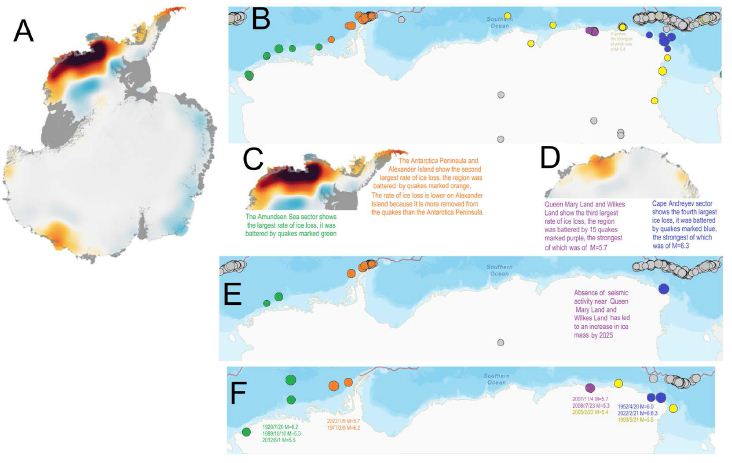
Figure 2: MapA shows GRACE and GRACE-FO observations of land ice mass change in Antarctica, according to NASA. Map B shows magnitude⩾4.0 earth-quakes south of 62°S in 1997/1/12025/6/1. Map A is presented in the projection selected by NASA, while map B is presented in the projection selected by USGS. Images C and D are parts of map A placed under the corresponding portions of map B. The largest rate of ice loss is on the Amundsen Sea sector. The second largest rate of ice loss is on the Antarctica Peninsula and Alexander Island 71°S, 70°W, The third largest rate of ice loss in Antarctica is in Queen Mary Land and Wilkes Land. The fourth largest rate of ice loss in Antarctica is CapeAndreyev.MapEshowsmagnitude⩾4.0 earthquakes south of 62°S in 2015/1/12025/6/1. It shows no earthquakes in Queen Mary Land and Wilkes Land, the region has experienced most ice gain in 2021-2023. Map F shows all magnitude ⩾5.3 earthquakes in 19002024 south of 64°S; it reveals that the centers of coastal seismic activity practically coincide with the centers of ice loss.

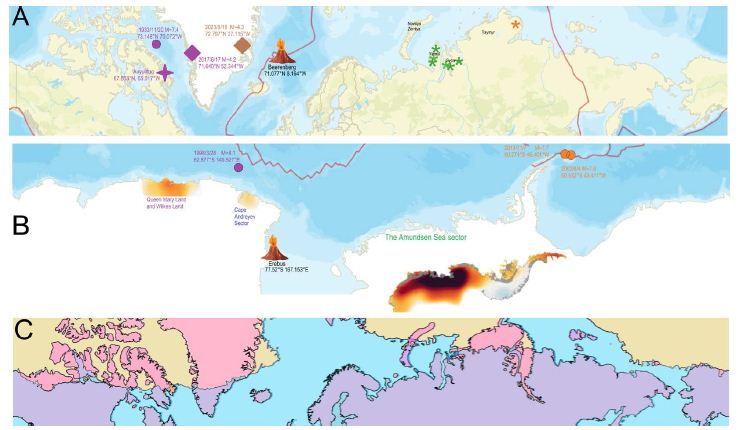
Figure 3: Map A shows the 2017/6/17 landslide in Nuugaat-siaq, 71.535°N 53.2125°Wand the 2023/9/16 landslide in Dickson Fjord, 72.833°N, 26.95°W from Figure 1-C, marked by diamonds; recently-formed sinkholes in the Gyda, Yamal peninsulas, as well as one in Taymyr peninsula at ≈75.5°N, 108°E, marked by asterisks ⋆; an unusual melting in Auyuittuq NationalPark 67.883°N, 65.017°W in the summer of 2008, marked by a four-point star; the northernmost volcano Beerenberg; and the most powerful earthquake north of 64°N. Map B shows the southernmost volcano Erebus; three most powerful earthquakes south of 60°S; and the regions of ice loss from Figure 3.Map C shows the antipode of Antarctica contour superimposed on the contours of the Arctic.

The two volcanoes are almost antipodal to each other, as are the 1933/11/20 and 1998/3/28 earthquakes. The Amundsen Sea sector of ice loss is almost antipodal to the recently-formed sinkholes Gyda and Yamal peninsulas; as well as the Novaya Zemlya and Severnaya Zemlya archipelagos, which, according to the University of Edinburgh, experienced the largest loss of ice in the Russian Arctic in 20102018. Antarctica Peninsula and Alexander Island 71S, 70W, which showed the second largest rate of ice loss, are almost antipodal to the recently-formed sinkhole in Taymyr. Queen Mary Land and Wilkes Land, which showed the third largest rate of ice loss, is almost antipodal to the 2017/6/17 landslide and Auyuittuq National Park. The fourth largest rate of ice loss in Antarctica is almost antipodal to the 2023/9/16 landslide and the giant oods around 71.08N,26.83W in the Scores by Sound70.5N,25W (Figure 4).

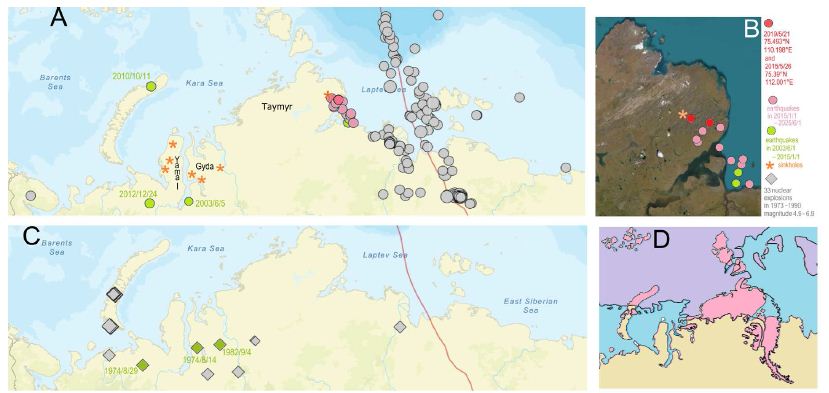
Figure 4: Map A shows magnitude ⩾3.9 earthquakes in 66°N−80°N, 34°E−180°Ein 2003/6/12025/6/1 along with sink-holes discovered after2015/5/1. Map B zooms in on the Taymyr peninsula. Map C shows all nuclear explosions in the region in 1973-1990, there have been no nuclear explosions in the region since. Map C is just a part of Figure3-C. The sink holes in Yamal are within the triangle formed by the 3 earthquakes around it, but the sinkhole in Gyda are not.

However, the sinkholes in Gyda are just north of nuclear explosions shown. The Taymyr sinkhole, it seems to be a harbinger of the earthquakes to hit Taymyr shortly. Prior to 2003/6/1, only two quakes of that magnitude are known to have hit Taymyr, one on 1986/5/19, the other one on 1990/6/9 (Figure 5).

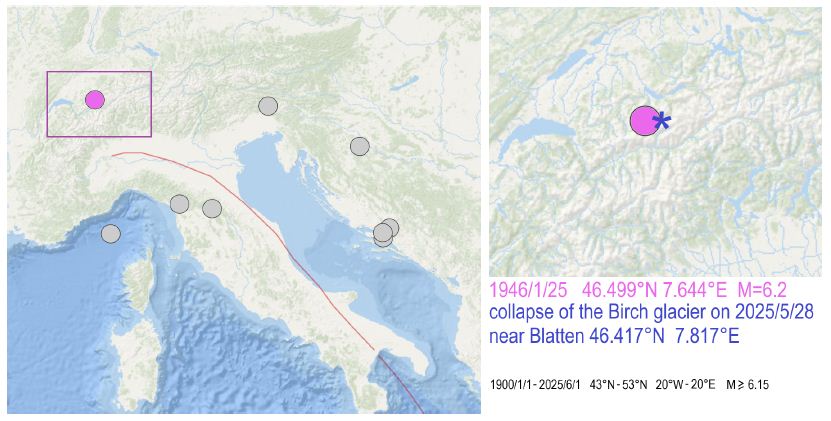
Figure 5: On 2025/5/28, a huge portion of a glacier in the Swiss Alps had broken from the mountainside and crashed onto the village of Blatten at 46.417°N, 7.817°E, shown by an asterisk, approximately 16 km from the epicenter of the 1946/1/25 magnitude 6.2 quake at 46.499°N, 7.644°E, shown by a disk. Although the earthquake struck in 1946, smaller quakes in the region have not stopped until now; e.g. 2016/10/24 46.421°N 7.576°E magnitude 4.4, 2024/6/4 47.085°N 8.796°E magnitude 4.2, etc., not to mention numerous magnitude ⩽4.0 quakes.

WL-QML, almost antipodal to Ban Island and Greenland, not too far from the earthquakes in Figure ??-A. The Taymyr-Kara Sea-Novaya Zemlya region has been also marked by recently formed sinkholes. Figure 3 suggests that the much-larger-than-average loss of ice mass and the appearance of sinkholes are due to subglacial/subperma frost thermal activity most likely caused by seismicity. Figures ??, 1 con rm that the regions of ice loss mimic seismic activity in Antarctica as well as Greenland; the events in Greenland and Ba n Island marked in Figure 3A occurred near the regions of increased seismicity in Figure 1. NASA does not provide any information about ice mass loss along the arctic boundary of Russia, however, Figure 4 suggests that the recently-formed sinkholes are also related to seismic activity. That ice loss, in one form or another, may be caused by quakes, contemporaneous or precedent, is supported by Figure 5 and the 1958/7/10 UTC time (1958/7/9 local time) massive landslide caused by a magnitude 7.8 quake.

Seroprevalence of Brucellosis Among Small Ruminants Around the World: A Systematic Review and Meta-analysis Protocol

DOI: 10.31038/IJVB.2025922

Abstract

Background: Brucellosis remains a significant zoonotic disease affecting livestock globally, especially small ruminants (goats and sheep). The global burden of brucellosis in these animals is underestimated in many regions.

Objective: To estimate the global pooled seroprevalence of brucellosis in small ruminants through a systematic review and meta-analysis.

Methods: Following PRISMA-P guidelines, we will search databases such as PubMed, Scopus, Web of Science, and regional databases from 2000 to 2025. We will include cross-sectional studies reporting seroprevalence in goats or sheep. Random-effects meta-analysis will be used to compute pooled prevalence estimates. Risk of bias will be assessed using a validated critical appraisal tool.

Expected Outcome: This study will provide updated global estimates of brucellosis prevalence in small ruminants and identify geographical and methodological heterogeneity.

Introduction

Brucellosis is a bacterial disease mostly of animals caused by gram negative, facultative intracellular coccobacilli belonging to the genus Brucella [1,2]. Though both animals and man are susceptible to the various species of Brucella, B. melitensis has been reported to be the most pathogenic of all the species to man [3]. The disease affects several species of domestic, wild and marine animals [4]. It is mostly characterized by inflammation of the genital organs and foetal membranes. Abortion, sterility, formation of localized lesions in joints and the lymphatic system are also important features of the disease [5,6].

Brucellosis is recognized as one of the neglected tropical zoonotic diseases with a global public health significance [7]. Although the disease been controlled/eradicated in many industrialized nations, it remains prevalent in parts of Asia [8], South America [9] and Africa [10-12]. Small ruminant production plays an important role in the economic improvement of “poor farmers” and contributes to poverty alleviation [13].

Numerous individual seroprevalence studies have been conducted across diverse geographic settings; however, no recent comprehensive synthesis of global data exists for small ruminants. A systematic review and meta-analysis are essential to evaluate the true burden of the disease, inform policy, and prioritize surveillance and control interventions globally.

Objectives

General Objective

To estimate the pooled global seroprevalence of brucellosis in small ruminants (sheep and goats) from published studies.

Specific Objectives

  1. To assess the seroprevalence distribution by region, diagnostic method, species (sheep vs goats), and time period.
  2. To identify risk factors reported in included studies.
  3. To Identify geographic regions with higher prevalence.
  4. To Explore methodological differences affecting prevalence estimates (test used, sample size, study setting).
  5. To identify gaps in research and propose recommendations for control strategies.

Research Questions and Eligibility Criteria

Research Question (PICO Framework)

  1. Population: Small ruminants (sheep and goats)
  2. Intervention/Exposure: Natural exposure to Brucella spp.
  3. Comparison: Not applicable
  4. Outcome: Seroprevalence of brucellosis

Eligibility Criteria

Inclusion Criteria

  1. Observational studies (cross-sectional, cohort) reporting seroprevalence of brucellosis in sheep/goats.
  2. Peer-reviewed articles published in English or French between 2000 and 2025.
  3. Diagnostic methods: Rose Bengal Test, ELISA, Complement Fixation Test, etc.
  4. Studies reporting seroprevalence of brucellosis in small ruminants.
  5. Cross-sectional or cohort study designs

Exclusion Criteria

  1. Experimental studies, reviews, conference abstracts without full text.
  2. Studies without clearly stated sample size or prevalence.
  3. Studies on animals other than small ruminants or on humans
  4. Case reports, reviews, or editorials.
  5. Studies without seroprevalence data.
  6. Duplicate datasets.

Methods

Protocol and Registration

This protocol follows the PRISMA-P guidelines and will be registered in PROSPERO (International Prospective Register of Systematic Reviews).

Information sources and Search Strategy

Data will be retrieved from electronics and strong Databases: PubMed, Scopus, Web of Science, CAB Abstracts, AJOL, Science Direct, and Google Scholar.

These keywords will be used for searching: “Brucellosis”, “seroprevalence”, “goats”, “sheep”, “small ruminants”, “systematic review”, “meta-analysis”.

MeSH terms and Boolean operators:

(“brucellosis” OR “Brucella melitensis”) AND

(“seroprevalence” OR “prevalence”) AND (“small ruminants” OR “sheep” OR “goats”) AND

(“world” OR “global” OR “Africa” OR “Asia” OR “Europe” OR “America”)

Grey literature from FAO, OIE, WHO reports will be considered. Search strategies will be adapted for each database.

Data Management and Selection Process

All citations will be imported into Mendeley/Zotero.

  1. Two reviewers will independently screen titles and abstracts. Full texts of eligible studies will be assessed. Duplicate records will be removed. Discrepancies will be resolved by a third reviewer.
  2. Selection process illustrated using a PRISMA flow diagram.

Data Extraction

A standardized data collection form will be used to extract:

Author(s), year, country; Animal species (sheep/goat); Sample size; Number of positives; Diagnostic method; Study design; Reported risk factors; Seroprevalence (%) or prevalence (%); Study setting (farm/abattoir/market).

Quality Assessment (Risk of Bias)

Quality will be assessed using a modified Joanna Briggs Institute (JBI) checklist for prevalence studies:

  1. Sampling method, Sample size, Diagnostic test validity, Clear inclusion/exclusion criteria, Confounding factors addressed
  2. A score >70% will be considered high quality. Each study will be evaluated by two reviewers independently.

Data Synthesis and Meta-Analysis

  1. Meta-analysis will be conducted using R (meta and metafor packages).
  2. Pooled seroprevalence calculated using a random-effects model (DerSimonian and Laird method).
  3. Subgroup analyses by continent, species, diagnostic method, countries, and by year intervals (2000–2010, 2011–2020, 2021–2024)
  4. Heterogeneity assessed using I² statistic and Cochran’s Q test.
  5. Publication bias assessed via funnel plot and Egger’s test.

Ethical Considerations and Dissemination

As this study is based on published data, no ethical approval is required. Results will be published in a peer-reviewed journal and presented at relevant international conferences and shared with global health and livestock development agencies.

Timeline

Activity

Duration

Protocol registration (PROSPERO)

2 weeks

Literature search

3 weeks

Screening and selection

2 weeks

Data extraction and quality appraisal

3 weeks

Data analysis and interpretation

3 weeks

Manuscript writing and submission

3 weeks

Limitations

  1. Potential publication bias.
  2. Language restriction to English and French.
  3. Variability in diagnostic methods and study quality.

Expected Outcomes

  1. A pooled global estimate of brucellosis seroprevalence in small ruminants.
  2. Regional and species-specific insights to inform One Health interventions (identification of high-risk regions)
  3. Identification of research gaps for future studies.
  4. Evidence-based insights for Brucella control programs

References

  1. Young EJ (2000) Brucella species. In: Doughlas and Bennett’s Principles and Practice of Infectious Diseases. Mandell GL, Bennett JE, Dolin R (eds) Elsevier Churchill Livingstone, Philadelphia, USA.
  2. Alton GG, Forsyth JRL (2004) Brucella, General Concepts. Medical Microbiology, Fourth edition
  3. OIE (2009) Bovine Brucellosis: Terrestrial Manual. Office International des Epizooties.
  4. Agada CA, Ogugua AJ, Anzaku EJ (2018) Occurrence of brucellosis in small ruminants slaughtered at Lafia Central Abattoir, Nassarawa State, Nigeria. Sokoto J Vet Sci [crossref]
  5. Franco MP, Mulder M, Gilman RH, Smits HL (2007) Human brucellosis. Lancet Infect Dis [crossref]
  6. CDC (2005) Brucellosis. Centers for Disease Control and Prevention.
  7. OIE (2018) Bovine Brucellosis. In: Terrestrial Manual, Chapter 2.4.3. Office International des Epizooties
  8. Sofian M, Aghakhani A, Velayati AA, Banifazl M, Eslamifar A, Ramezani A (2008) Risk factors for human brucellosis in Iran: a case-control study. Int J Infect Dis [crossref]
  9. Dias RA, Gonçalves VSP, Figueiredo VCF (2009) Epidemiological situation of bovine brucellosis in the State of São Paulo, Brazil. Arq Bras Med Vet Zootec
  10. Bronsvoort BM, Koterwas B, Land F, Handel IG, Tucker J, Morgan KL, Tanya VN, Abdoel TH, Smits HL (2009) Comparison of a flow assay for brucellosis antibodies with the reference cELISA test in West African Bos indicus. PLoS One [crossref]
  11. Ogugua AJ, Akinseye OV, Ayoola MC, Stack J, Cadmus SIB (2015) Risk factors associated with brucellosis among slaughtered cattle: Epidemiological insight from two metropolitan abattoirs in Southwestern Nigeria. Asian Pac J Trop Dis [crossref]
  12. Mubanga M, Mfune RL, Kothowa J, Mohamud AS, Chanda C, Mcgiven J, Bumbangi FN, Hang’ombe BM, Godfroid J, Simuunza M, Muma JB (2021) Brucella seroprevalence and associated risk factors in occupationally exposed humans in selected districts of Southern Province, Zambia. Front Public Health [crossref]
  13. Yakubu A, Salako AE, Imumorin IG (2011) Comparative multivariate analysis of biometric traits of West African dwarf and red Sokoto goats. Trop Anim Health Prod [crossref]

Toponym Disputes in Indigenous North America

DOI: 10.31038/GEMS.2025751


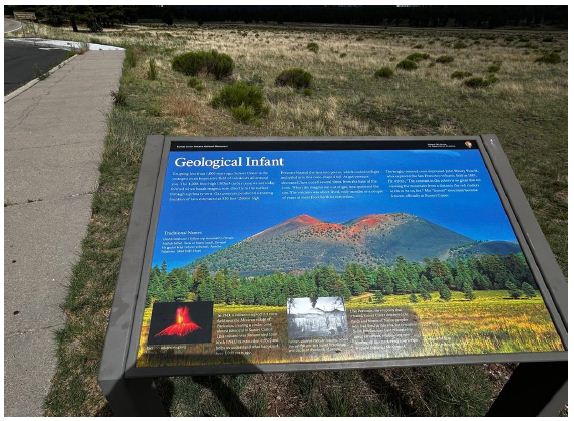
Toponyms is a general scholarly study of place names as they have been established and disputed over time by different cultural groups and nation states. Culturally based place names can reference small geosites, long ceremonial landscapes based on established trails, and massive geoscapes that are functionally integrated by geology, climate, and human use. Many of these geosites have been celebrated by nations in recent times as national parks and world heritage sites. Multivocality is a term used by the USA federal government to reflect multiple names for places by cultural groups. Sunset Crater in Arizona after ethnographic studies [1] involving multiple Native groups who are now recognizes in a trail sign containing authentic traditional toponyms reflecting ancient connections with this volcano (Figure 1). Surrounding the park are volcanic lands (Figure 2). The park continues to be referred to by its colonial name Sunset Crater and the surrounding lands are called the Flagstaff Volcanic Landscape.

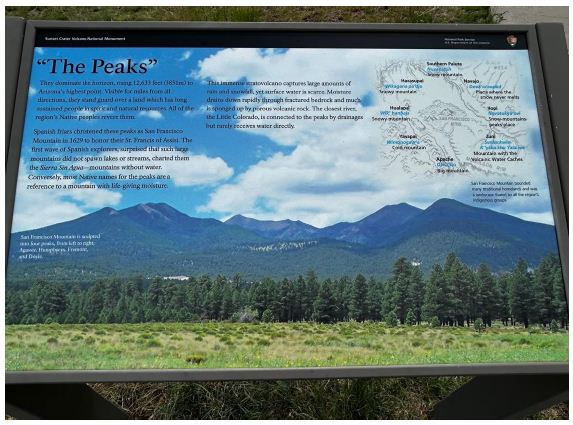
A geosite is best understood in terms of its surrounding topography (geoscape). A new trail sigh provides a map of eight Native toponyms (Figure 2). Only one mountain toponym is allocated to each tribe or pueblo although all peaks in this area have their own Native names and stories. Note the Native toponyms map is imbedded in a larger colonial toponym interpretation where the peaks are named after one Spanish and three English colonial explorers, and the area is called by the Spanish colonial name, the San Franciso Mountains. Figure 2B illustrates the complexity of modern toponym renaming and the resulting multivocality.

Figure 1: The multivocality of cultural place names on a trail sign at Sunset Crater National Monument in Arizona (soured Van Vlack 2025) [2].

As they increasingly become more formally defined and celebrated, debates over place names and their meanings have increased, which, now have been more specifically defined by Toponymic Guidelines of the United Nation which have been negotiated by a series of formal committees (United Nations Group of Experts on Geographical Names2018) [3]. The content of Toponymic Guidelines has been developed since 1979 and includes information about official, national and minority languages, names authorities, source material for toponyms, glossaries, abbreviations used on official maps, differentiating text from toponyms on national maps, and administrative regions. At the Ninth Conference (United Nations 2007) [4], it was acknowledged that the format should not be too restrictive; also considered important were having guidelines in more than one language and cooperating with neighboring countries. A toponymic landscape involves the functional interconnections of geosites and geotrails to form a geoscape. The naming of new places during colonial expansion is well documented. For example, in Australia, studies analyze the effects of British settler colonialism on the toponymic landscape of lands traditionally cared for by Indigenous Australian peoples [5]. So, in the Australian research and analysis as of contemporary national efforts to rectify these past colonial changes. Detailed toponymic research has focused on lands where Germans were the first settler colonialists to alienate land in portions of southern Australia, thus dispossessing the Nunga as traditional owners. The encroaching German settlers created a toponymic landscape that reflected their culture and history and the geological characterizes of the new lands where they settled. The German toponymic landscape of settled places was derived from religious sources, from a person’s name, and from the name of their home communities in German.

Figure 2: A Park Trail Sign Identify Nearby Native Toponyms of Volcanic Mountains (Source Van Vlack 2025) [2].

The Cases

This brief, case-based review essay reflects findings from five of our ethnographic studies that have involved Native Americans. Each case illustrated contemporary Toponyms issues involving Native people and Colonial Settlers in North America and disputes over the names of places. Each of these case studies represent but a small segment of a much broader international issue that was largely crated by worldwide human events in the Pre-colonial, Colonial, Post-colonial, and Neocolonial periods which have occurred over the past 500 years. All these cases of Toponym disputes have occurred or are occurring between the Native and Colonial peoples. The cases involve Geosites, Geotrails, and Geoscapes. Findings from all cases are available publicly.

Geosite- Mato Tepe or Devils Tower, Wyoming

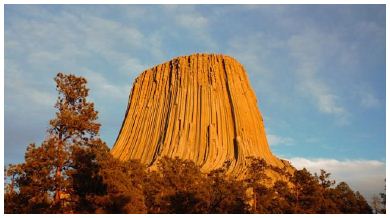
Mateo Tepe (Figure 3) is a Native name for a shared sacred geosite composed earth and fire materials. Debate of toponyms is whether it should be the stairs to Heaven as the 23 Native tribes maintain or the steps to Hell as the Devils Tower implies (Stoffie et al 2024). This place name debate immediately when it was mapped by exploring expedition of the USA colonial state and continues to today. Mateo Tepe has been placed on the list of the most important geosites in the World and was nominated as both a geology place and a cultural place [6]. Using both Toponyms, this geosite was awarded a position on the official lists of significant International Commission on Geoheritage Sites.

Figure 3: Mateo Tepe Stairs to Heaven or Steps to Hell?

Devils Tower was declared as the first National Monument because of its geological value, but it is now recognized for its value for Native Americans.

Geotrail – Old Spanish Trail: Native Communities, USA Southwest

The Old Spanish Trail (OST) has been designated as a National Historic Trail by the NSP. An ethnographic study [7] involving Native tribes who traditionally lived along the trail study was funded and thus were impacted by the thousands of animals and people who traveled in large caravans along it from New Mexico to California. All participating tribes disputed the US applied name for the trail which they maintained was a series of traditional Native trails linked for the caravans. The Taos Pueblo was so incensed by the name that they refused to participate in the study even though the events along the OST were key in their history.

Geoscape – Bears Ears, Utah

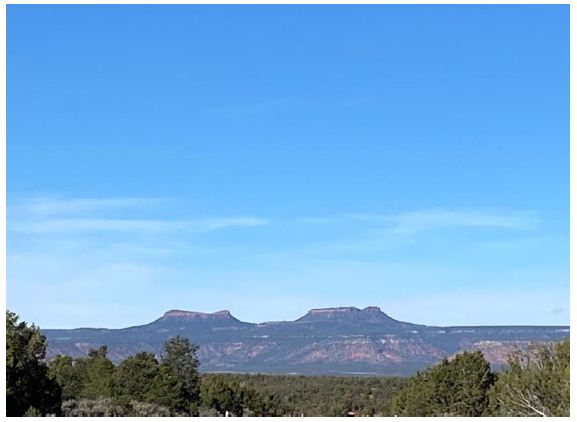
Presently 32 tribes have expressed cultural connections to Bears Ears (Figure 4) as a geosite and its surrounding geoscape. Each tribe has a name for this place in their own language and their own stories about why it is important. The Hopi refer to it as Hoon’Naqvut, the Navajo call it Shash Jaa,’ the Utes named it Kwiyagatu Nukavachi, and for Zuni it is Ansh An Lashokdiwe. During an ethnographic study that involved nine culturally affiliated tribes, tribal representatives shared their deep time but different kinds of cultural attachments to this geosite and geoscape [2].

Figure 4: Bears Ears is a culturally significant geoscape in southeast Utah.

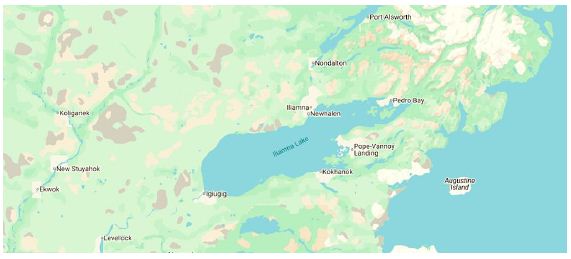
Geoscape – Iliamna Lake (Nanvarpak, Nila Vena) Native and Local Place Names Alaska)

This is an extended ethnographic and linguistic study of a Native toponyms associated with large lake (Figure 5) (a geosite) and the numerous geosites that constitute its massive integrated surrounding geoscape [8-10]. The research illustrates how difficult it is to both explain and share toponymic information across linguistic and cultural differences. The researcher devoted years to accomplishing this goal which had epistemological, cultural protocols, and privacy challenges.

Figure 5: Iliamna Lake, Biggest Lake in Alaska.

Geoscape – El Malpais National Monument, New Mexico

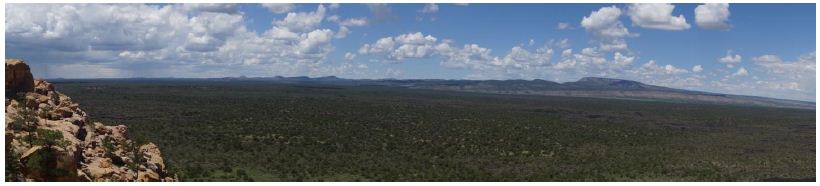
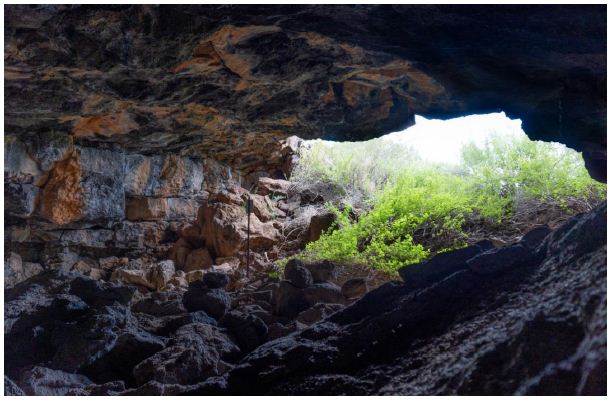
El Malpais National Monument is an ancient area consisting of two unique geoscapes– lava flows occurring on top of each other forming layers of volcanic fields (Figure 6) and underground lava tunnels (Figure 7). It occurs at the foot of a massive sacred mountain with the colonial name Mount Taylor. The mountain and lava field are active ceremonial areas and considered living due to the rebirth of the Earth.

Figure 6: Volcanic Fields of El Malpais National Monument.

Today the lava flows are managed as a park by the US NPS using the area’s original colonial toponym. El Malpais is a Spanish term for a bad place or bad lands but the many tribes and pueblos who participated in the NPS funded ethnographic study of this lava flow park define it using their own linguistic terms and traditional uses patterns that its cultural importance and spiritual value [11].

Figure 7: One of Many Lava Tunnels in the Monument.

Toponyms Discussion

Many geosite toponym disputes are between Native people whose lands are involved in encroachment of members of the conquering colonial society. Native people today, however, often experience conflict with each other regarding appropriate place terms. This is a situation debate that derives from the western views of property and ownership of places. A finding from our ethnographic studies is that places are culturally layered with different meaning specific to the peoples who have interrelated with each other and the geosite for long periods. For Native people of the Southwest US this is now documented to be about 40,000 years. Deep time and multicultural connections make for complex understandings of places, as our studies have shown. This complexity becomes a key issue when Native people participate as tribal representatives at land management meetings where their desire to apply or preference traditional toponyms face resistant from supporters of colonial toponym meanings.

References

  1. Stoffie, Richard, and Kathleen Van Vlack (2022) Talking with a Volcano: Native American Perspectives on the Eruption of Sunset Crater, Arizona. Land 11.
  2. Van Vlack Kathleen, H Lim, J Yaquinto, J Gazing Wolf, B Eguino-Uribe, et (2025) Monticello BLM Ethnographic Partnership: An Ethnographic Overview and Assessment of the Cedar Mesa and Bears Ears Region. Heritage Lands Collective: Cortez, CO.
  3. United Nations Group of Experts on Geographic Names (2018) Toponymic Guidelines for Map and Other Editors for International Use.
  4. United Nations (2007) Ninth United Nations Conference on the Standardization of Geographical New York. United Nations.
  5. Spennemann DHR (2025) A Disappearing Cultural Landscape: The Heritage of German-Style Land Use and Pug-And-Pine Architecture in Land. 14.
  6. Stoffie R, K Van Vlack V, Semeniuk, M Brocx (2025) Devils Tower, Mateo The Second 100 IUGS Geological Heritage Site. The Second 100 IUGS Geological Heritage Site.
  7. Stoffie R, K Van Vlack R, Toupal S, O’Meara, R Arnold (2008) American Indians and the Old Spanish Tucson, AZ: Bureau of Applied Research in Anthropology, University of Arizona.
  8. Kugo Y (2020) Artic Data: Iliamna Lake (Nanvarpak, Nila Vena) Native and Local Place Names (2016-2019).
  9. Kugo Y (2021) Documenting Yup’ik Place Names with Yoko Kugo. Artic Data Center Blog.
  10. Kugo Y( ed) (2024) Nanvarpagmiut Qanemciit-llu/ Iliamna Lake People and Their Stories: Place Names and Sense of Fairbanks, AK: Alaska Native Language Center, University of Alaska.
  11. Larsson Simon (2025) The Connectedness of People and Geological Features in the El Malpais Lava Flows of New Mexico, USA. Land 14.

Use of Preoperative Low Dose Etomidate Infusion in Severe Ectopic ACTH-Dependent Cushing Syndrome Due to Thymic Carcinoid: A Case Report

DOI: 10.31038/EDMJ.2025941

Abstract

A 51-year-old man with hypertension and diabetes presented with proximal muscle weakness and severe hypokalemia. Hormonal evaluation confirmed ACTH-dependent Cushing’s syndrome, with extremely elevated cortisol levels (>1100 ng/ml), consistent with a severe form of the condition. Imaging and biopsy identified an ectopic ACTH-secreting thymic neuroendocrine tumor (atypical carcinoid) with chromogranin A positivity. Initial medical therapy with fluconazole failed to reduce cortisol levels. To mitigate perioperative risk from hypercortisolemia, a low-dose overnight etomidate infusion was initiated, successfully lowering cortisol levels below 300 ng/dl. Surgical excision of the tumor was then performed. Histology confirmed atypical carcinoid with a Ki-67 index of 7.5%, and evidence of capsular and vascular invasion. Postoperatively, cortisol and ACTH levels dropped significantly, and the patient was started on physiological hydrocortisone replacement. He experienced no complications from cortisol excess and is currently being monitored for disease re-staging. The case underscores etomidate’s value in preoperative cortisol control in severe ectopic Cushing’s syndrome.

Keywords

Ectopic Cushing’s syndrome, Atypical thymic carcinoid, Etomidate, Severe Cushing’s syndrome

Background

Ectopic Cushing’s syndrome is a rare condition that contributes to 10-20% of Adrenocorticotropic Hormone (ACTH)-dependent Cushing’s syndrome cases. Severe Cushing’s syndrome, which is defined when serum cortisol levels are above 1100 ng/ml, is rare in ectopic Cushing’s syndrome and carries higher perioperative and postoperative morbidity and mortality. Distinguishing ectopic Cushing’s syndrome from other causes of Cushing’s syndrome is imperative, as removing the tumor can cure the condition. Normalizing cortisol levels prior to surgical removal is crucial to reduce peri- and postoperative morbidity and mortality.

We present a case of severe ACTH-dependent Cushing’s syndrome due to an ectopic ACTH-secreting atypical thymic carcinoid tumor, which we successfully treated with etomidate pre-operatively, leading to good postoperative outcomes. In environments where intensive care facilities are scarce, high-dependency units (HDUs) may offer a safe and effective alternative for administering low-dose etomidate infusion to manage hypercortisolemia. In this particular case, serum cortisol levels were successfully reduced to approximately 300 nmol/L without inducing cardio-respiratory compromise.

Pre-operative etomidate prior to definitive surgical treatment of thymic carcinoid tumors helps to minimize complications.

Introduction

Hypercortisolism and the range of symptoms associated with it are collectively referred to as Cushing’s syndrome. Exogenous Cushing’s syndrome is the most common type, while endogenous Cushing’s syndrome occurs secondary to excess cortisol, which may be due to ACTH-dependent and ACTH-independent mechanisms. ACTH-dependent causes account for 70–80% of cases, while 20–30% of cases are ACTH-independent. ACTH-dependent Cushing’s syndrome can occur due to pituitary tumors or tumors at ectopic sites, and ACTH-independent Cushing’s syndrome is usually caused by adrenal lesions [1,2].

Ectopic Cushing’s syndrome is a rare condition contributing 5-20% of all Cushing’s syndrome cases and 10-20% of all ACTH-dependent Cushing’s syndrome cases. The commonest sites for ectopic ACTH secretion are the lung, mediastinum, gastro-entero-pancreatic neuroendocrine tumors, or pheochromocytomas, respectively [3].

Severe Cushing’s syndrome is defined by random serum cortisol levels more than 40 μg/dL (1100 nmol/L) at any time or a 24-hour urinary free cortisol more than fourfold the upper limit of normal and/or severe hypokalemia (<3.0 mmol/L). Severe hypercortisolism is associated with a higher risk of infection, septicemia, thromboembolism, and postoperative morbidity compared to mild and moderate Cushing’s syndrome. Thus, reducing hypercortisolism at the time of intervention may benefit these patients. Depending on the lesion site, we can categorize the available treatment options into medical, surgical, and radiotherapy-related treatments. It’s pivotal to differentiate ectopic Cushing’s syndrome from other causes because identification of the ectopic site and surgical removal may completely cure the disease [4].

We present a case report on a 51-year-old Sri Lankan male who was diagnosed with severe ACTH-dependent Cushing’s syndrome secondary to ectopic ACTH-secreting atypical thymic carcinoid tumor. He was successfully treated using low-dose etomidate with minimal postoperative complications. This case report highlights the benefits of preoperative low-dose etomidate treatment, leading to a successful postoperative outcome in managing severe hypercortisolism. Also, in environments where intensive care facilities are scarce, high-dependency units (HDUs) may offer a safe and effective alternative for administering low-dose etomidate infusion to manage hypercortisolemia. In this particular case, serum cortisol levels were successfully reduced to approximately 300 nmol/L without inducing cardio-respiratory compromise.

Case Presentation

A 51-year-old male who is a known patient with well-controlled diabetes mellitus and hypertension presented with the complaint of episodic diarrhea over a 2-week duration and difficulty in standing from a squatting position, suggesting proximal muscle weakness. He also had sinister lower back pain that was persistent throughout the day with the same intensity, with no recent history of trauma. He noted facial flushing and mild facial puffiness along with exertional shortness of breath and excessive tiredness with routine tasks.

He had severe constitutional symptoms, including weight loss of nearly 10 kg over the last 2 months with loss of appetite. The patient denied any recent onset of pigmentation, palpitations, episodic flushing, or wheezing episodes in the recent past. The patient complained of visual and auditory hallucinations with depressive symptoms, episodically over the last two months. There were no visual disturbances, history of dyspeptic symptoms, renal stone disease, or any family history of similar disease to suggest multiple endocrine neoplasia (MEN) syndrome.

On examination, the patient had a BMI of 19.53 kg/m² with an initial blood pressure of 180/100 mmHg. He had flushing involving the face and upper chest with thin skin and subtle nail hyperpigmentation. Overt clinical signs of Cushing’s syndrome, including buffalo hump, purple abdominal striae, or hirsutism, were not seen. The patient exhibited proximal muscle weakness with a power of 3/5 in both the upper and lower limbs, in contrast to distal muscle power, which was 4/5. His mental status examination revealed visual and auditory hallucinations with a moderate degree of depression. Throughout the hospital stay, it was noted that he had poor blood pressure control with evidence of resistant hypertension and poor glycemic control (Table 1).

Table 1: Investigations

White cell count 14.98 × 10⁹
Hemoglobin 11.7 g/dL
Platelet count 238 × 103
Serum sodium 141 mmol/L (136-145)
Serum potassium 2.1 mmol/L (3.5-5.1)
Erythrocyte sedimentation rate 45 mm/1st hour
Aspartate transferase 58 U/L (11-34)
Alanine transaminase 145 U/L (<45)
Total Bilirubin 1.9 mg/dl
Direct Bilirubin 1.0 mg/dl
Alkaline phosphatase 350 mu/L
Gamma-glutamyl transferase 284 mu/L
Albumin 2.1 g/dL
Globulin 2.7 g/dL
9am cortisol (initial) 1220 nmol/l (118.6-618)
9am cortisol (Post fluconazole for 1 week) 1100 nmol/L
Overnight dexamethasone suppression test (ODST) 880.33 nmol/L (≤50)
Low dose dexamethasone suppression test (LDDST) 260.3 nmol/L (≤50)
Cortisol day curve 9am 674.95 nmol/L
11am 1038.61 nmol/L
3pm 760.38 nmol/L
5pm 797.55 nmol/L
Adrenocorticotrophic Hormone (ACTH) level 172 pg/ml (4.7-48.8)—— 81 pg/ml (Post operatively)
Albumin corrected Calcium 8.9 mg/dL (8.6 to 10.3 mg/dL)
Serum Prolactin 203.24 mIU/L (73-412)
Abdominal ultrasound (USS) Normal USS abdomen with no evidence of organomegaly or adrenal lesions.
Contrast-Enhanced Computed Tomography (CECT) chest- abdomen- pelvis Lobulated soft tissue density lesion in the anterior mediastinum measuring 3.3 cm × 4.8 cm × 5 cm.

Lesion shows avid contrast enhancement with internal non-enhancing areas.

No calcifications.

It compresses the left subclavian vein posteriorly, and in-between fat planes are obliterated.

Fat planes between the lesion and SVC are also obliterated.

Enlarged lymph nodes are seen in the right lower paratracheal and upper paratracheal regions.


USS guided FNAC of the mediastinal lesion Cellular smears reveal epithelial clusters and single cells with acinar arrangement and sheets.

Nuclei are prominent with fine speckled chromatin with a few enlarged nuclei and eosinophilic cytoplasm.

No admixed lymphocytes or keratin pearls.

Ki67 30%

Suggestive of neuroendocrine carcinoma of the thymus.

Serum Chromogranin A <39 ng/L (Normal- < than 39 ng/l)
Serum 5- HIAA levels 2.1 mg/24 hrs (2-9)
Histology of the thymic gland biopsy specimen (Figure 4) Atypical Carcinoid tumor with lympho-vascular invasion and infiltration of inferior margins and capsule invasion.

All mediastinal and pre-tracheal nodes were positive for tumor invasion. (PT1a pN2 IV B)

Post operative 9am cortisol 358 nmol/L
Post operative ACTH 81 pg/ml
DOTATE-PET imaging Not done due to unavailability
Post-operative short synacthen test Basal 121.50 nmol/L

30 min 233.50 nmol/L

60 min 315.60

After confirming ectopic ACTH-dependent severe Cushing’s syndrome with elevated serum cortisol levels above 1100 ng/dl and non-suppressed ODST and LDDST, we started the patient on oral fluconazole 150 mg twice daily as a steroid synthesis inhibitor. Given the presence of severe hypokalemia, ectopic ACTH syndrome was suspected. As a result, we proceeded directly with a CECT of the chest, abdomen, and pelvis to search for an ectopic tumor, which revealed a thymic lesion in the anterior mediastinum. Severe hypokalemia with serum potassium levels of 2.1 mg/dl was treated with oral and intravenous supplementation of potassium. Even though there was no liver metastasis, the presence of facial flushing and the history of diarrhea prompted us to exclude the possibility of carcinoid syndrome in this patient. USS guided FNAC of the mediastinal lesion confirmed the tumor as a neuroendocrine carcinoid tumor of the thymus, without evidence of carcinoid syndrome, as indicated by non-measurable levels of 5-HIAA and serum Chromogranin A.

Treatment

Thus, the cardiothoracic surgical team’s opinion was taken to embark on surgery. Given the risk of mobilization of the carcinoid tumor to prevent carcinoid crisis, the patient was started on subcutaneous octreotide 50 mg every 6 hours two weeks prior to surgery.

Protocol for Low Dose Etomidate

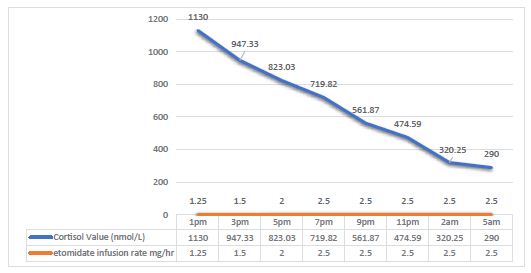
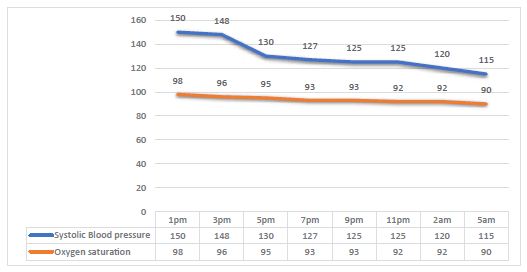
The patient was started on a low-dose etomidate infusion of 0.05 mg/kg/hr on the day before surgery in an intensive care setup to closely monitor respiratory compromise and hemodynamic instability (Figures 1 and 2).

Figure 1: Serum cortisol levels following low dose etomidate infusion.

Patient’s serum cortisol levels were measured 2 hourly, aiming at a target cortisol level of <300 ng/dl. The etomidate infusion rate was slowly titrated to obtain a cortisol drop of around 100 nmol/l/hr.

Once cortisol levels reached <300 nmol/L, low-dose etomidate infusion was stopped. Within 16 hours of low-dose etomidate infusion, the expected range of cortisol was achieved (Figures 1 and 2).

Figure 2: Blood pressure and oxygen saturation alteration with time.

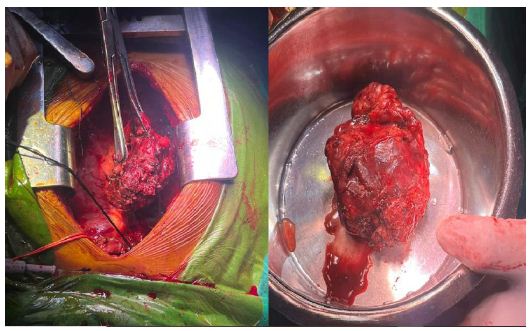
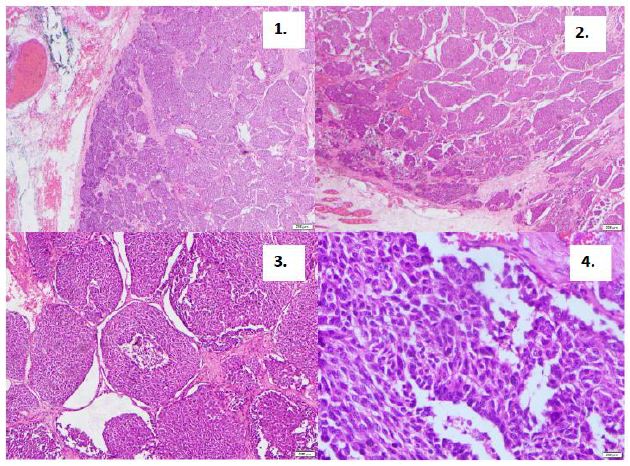
The patient was operated on through median sternotomy, and an anterior mediastinal mass was removed. The tumor was measured 5 cm x 6 cm x 3 cm and weighed 140 g (Figure 3). Histology of the anterior mediastinal mass was suggestive of atypical carcinoid tumor of the thymic gland with lymphovascular invasion and infiltration of inferior margins and capsule invasion (Figure 4).

Figure 3: Macroscopic appearance of the tumor during surgery.

Outcome and Follow Up

The patient had postoperative symptomatic and biochemical improvement (Table 1). The post-operative cortisol level was 78 nmol/L and ACTH level was 81pg/ml showing partial cure of disease. Despite the partial cure patient did not develop any complications of cortisol excess during the post-operative period including infections or venous thromboembolism. Patient was started on physiological doses of hydrocortisone until the recovery of hypothalamo-pituitary -adrenal axis. (HPA axis). He is awaiting re-imaging for re-staging of the thymic tumor in 6 months with assessment for HPA axis recovery (Figure 3 and 4).

Figure 4: Thymic gland histology : hematoxylin and eosin (x400 magnification).

Discussion

Ectopic ACTH-secreting tumors account for 5 to 10% of cases of ACTH-dependent Cushing’s syndrome, which is commonly caused by thymic, bronchial, gastrointestinal, and pancreatic neuroendocrine tumors. Ectopic ACTH-secreting tumors can be challenging to identify, with up to 19% of cases lacking clear tumor localization. Hypokalemia is an important clue pointing toward ectopic ACTH-secreting tumors. It occurs in 80% of ectopic ACTH-secreting tumors, which is due to the mineralocorticoid action of excess steroids and the decreased 11-hydroxysteroid dehydrogenase type 2 [7].

Carcinoid tumors, which were renamed by the World Health Organization as neuroendocrine tumors in 2000, are derived from enterochromaffin cells. These tumors release biologically active amines and peptides, including serotonin, histamine, and prostaglandins. Carcinoid syndrome is a group of symptoms brought on by the release of biologically active substances. It happens in about 10% of neuroendocrine tumors. Most of these clinical features are due to serotonin, which is an end product of tryptophan metabolism. But the thymic neuroendocrine tumor, which was observed in our patient, is a foregut tumor that lacks the enzyme aromatic L-amino acid decarboxylase, which metabolizes 5-hydroxytryptophan to serotonin [27]. Therefore, they theoretically do not produce serotonin or cause carcinoid syndrome, which was true in view of our patient.

Neuroendocrine tumors of the thymus are rare, accounting for approximately 0.4% of all neuroendocrine tumors [20]. 80% of these tumors are malignant [21]. These tumors are larger in size (median 7.9 cm) compared to thymic carcinoma and are usually present before the advanced stage [22]. According to the 2015 tumor classification by the World Health Organization, NETTs were included in the thymic cancer group. These were classified into well-differentiated neuroendocrine carcinomas (typical and atypical carcinoids) and poorly differentiated ones (small-cell and large-cell neuroendocrine carcinomas) [23]. Atypical carcinoid, which was the diagnosis in our patient, accounts for about 40–50% of NETTs, and middle-aged adults (48–55 years) were commonly affected [24].

Approximately 50% of NETTs were associated with endocrinopathies, including Cushing’s syndrome (ectopic ACTH production) and acromegaly (growth hormone releasing hormone hypersecretion). Multiple endocrine neoplasia-1 was seen in approximately 20% of NETTs [25].

Surgical resection of the tumor removes the source of ectopic ACTH secretion, which is the treatment of choice for ectopic ACTH-secreting tumors. In NETTs, the resectability rate ranged from 28% to 100% in a published single-center case series, but this may depend on the surgical experience in that center [26]. Hypercortisolemia can increase peri- and postoperative complications and mortality in these patients. So, it is important to normalize cortisol levels as early as possible and preoperatively to minimize the adverse effects associated with hypercortisolism, such as increased risk of infection, thromboembolism, etc., which are the main factors that contribute to Cushing’s syndrome mortality [12].

There are several medical options that can be used to control Cushing’s syndrome, including ketoconazole, mitotane, metyrapone, etomidate, and the newer medication osilodrostat. Etomidate, an induction anesthetic, in its lower doses reduced serum cortisol levels by inhibiting 11β-hydroxylase action. 11β-hydroxylase catalyzes cortisol conversion from deoxycortisol, whereas at its higher concentrations, it inhibits the conversion of cholesterol to pregnenolone [13].

The mean rate of drop of cortisol in literature is 104.3 nmol/L/hr; that is when etomidate is used as a first-line medication to reduce hypercortisolism. It has been observed to have a lesser mean percentage of drop when it becomes the second or third line treatment modality, 62% and 41%, respectively [14]. Our patient had a mean rate of drop of cortisol of ~134.3 nmol/L/hr, where we used etomidate as second-line therapy. Also, according to literature, when etomidate was used as the first-line medication, the time to reach the expected baseline was around 15 hours, and if cortisol is used as a second-line or third-line, it has been observed to take more time to achieve its effect. (80 hours and 48 hours, respectively) [14]. In our patient, even though we used etomidate as a second-line medication, we were able to achieve the expected baseline value within 16 hours of initiating the infusion.

It has been shown that during the treatment for hypercortisolemia with etomidate, ACTH-independent Cushing’s syndrome had a higher incidence of adrenal insufficiency than ACTH-dependent Cushing’s syndrome. The mechanism responsible would be the increased production of cortisol under the influence of ACTH. Therefore, ACTH-dependent Cushing’s syndrome might need higher doses of etomidate in the management [15]. Our patient needed the dose to achieve the expected cortisol level, which was 0.05 mg/kg/hr. This might infer higher benefit and safety of etomidate in cases of ACTH-dependent Cushing’s syndrome, rather than in ACTH-independent cases.

The use of etomidate for acute management of severe hypercortisolemia was first described in 2012, and the current protocol for continuous infusion of low-dose etomidate for Cushing’s syndrome was validated in 2019 by Carroll et al. [16]. They describe giving a 5 mg bolus dose followed by an infusion of etomidate with a dose of 0.02 mg/kg/hr and up titration aiming for a maximum dose of 0.3 mg/kg/hr with 6-hourly up-titration of the etomidate dose if necessary. This method was proven to be minimally associated with cardio-respiratory compromise. In our patient we did not give the bolus dose, rather continued the low dose continuous infusion of etomidate with up-titration until the expected rate of decline was achieved.

Studies have experimented on the use of etomidate in ICU setups vs. ward setups [17,18]. Agnieszka et al. had carried out very low dose infusions of 0.1-0.2 mg/kg/hr with a bolus dose of 2.5 mg at the outset for prolonged periods of time without any hemodynamic compromise, thus suggesting the safety of etomidate infusion, whereas in Constantinescu et al., the study did not reveal any difference in the outcomes when etomidate was used in the ICU setup vs. the inward setup. For our patient, we were able to arrange an ICU bed for close monitoring of parameters. In our patient, we used a 0.05 mg/kg/hr infusion safely without any fluctuations in hemodynamic status. However, in a resource-poor setup, for the acute management of severe hypercortisolemia, unavailability of an intensive care unit should not be a limiting factor, given the extensive availability of the drug due to its use for anesthetic purposes and its cost-effectiveness.

It is also possible to use the “block and replace” strategy with intravenous hydrocortisone to reach a serum cortisol goal of 500–800 nmol/L, but only for a short time [19]. But in our patient, we did not adhere to the block-and-replace strategy and only used etomidate at 0.05 mg/kg per hour. We maintained serum cortisol around 300 nmol/L. We did not observe any cardiorespiratory complications or drastic electrolyte alterations in our patient. Due to the difficulty in allocating an ICU bed upon our observation, we propose to start etomidate in the ward in the high dependency unit under careful monitoring. Etomidate, its complications, and cost analysis are areas that need future research.

Learning Points

  • Ectopic ACTH-secreting atypical thymic carcinoid tumors are a rare cause of severe Cushing’s Syndrome.
  • Administering an initial dose of 0.05 mg/kg/hour of the anesthetic agent etomidate in an HDU setting, even without Intensive care facilities to lower serum cortisol levels is safe while maintaining the serum cortisol around 300nmol/L without leading to any cardio-respiratory compromise.
  • Pre-operative etomidate prior to definitive surgical treatment of thymic carcinoid tumors helps to minimize complications.

Funding

None

Competing Interests

Authors declare that they have no competing interests.

Contribution

Dr. W.M.D.A.S. Wanninayake, Dr. H.S.Senanayake, Dr. U.C.Hettiarachchi, Dr. Manilka Sumanathilake were involved in managing the patient. Dr.W.M.D.A.S. Wanninayake and Dr. Tilan Aponso did the literature review and writing of the initial manuscript was done by Dr.W.M.D.A.S. Wanninayake. Dr. Manilka Sumanathilake finalized the manuscript and gave expert opinion. All the authors read and approved the final manuscript.

Acknowledgements

None

Ethical Declaration

Not applicable

Consent for Publication

Informed written consent for publication of details was taken from the patient. Consent form can be made available to the editor on request.

Availability of Data and Materials

The data is available from the corresponding author on reasonable request.

References

  1. Lacroix A, Feelders RA, Stratakis CA, Nieman LK (2015). Cushing’s syndrome. Lancet. [crossref]
  2. Hirsch D, Tsvetov G, Manisterski Y, et al. (2017). Incidence of Cushing’s syndrome in patients with significant hypercortisoluria. Eur J Endocrinol. [crossref]
  3. Hayes AR, Grossman AB (2022). Distinguishing Cushing’s disease from the ectopic ACTH syndrome: Needles in a haystack or hiding in plain sight? J Neuroendocrinol. [crossref]
  4. Alexandraki KI, Grossman AB (2016). Therapeutic Strategies for the Treatment of Severe Cushing’s Syndrome. Drugs. [crossref]
  5. Maragliano R, Vanoli A, Albarello L, et al. (2015). ACTH-secreting pancreatic neoplasms associated with Cushing syndrome: clinicopathologic study of 11 cases and review of the literature. Am J Surg Pathol. [crossref]
  6. Davi’ MV, Cosaro E, Piacentini S, et al. (2017). Prognostic factors in ectopic Cushing’s syndrome due to neuroendocrine tumors: a multicenter study. Eur J Endocrinol. [crossref]
  7. Ilias I, Torpy DJ, Pacak K, Mullen N, Wesley RA, Nieman LK (2005). Cushing’s Syndrome Due to Ectopic Corticotropin Secretion: Twenty Years’ Experience at the National Institutes of Health. J Clin Endocrinol Metab. [crossref]
  8. Engels EA (2010). Epidemiology of thymoma and associated malignancies. J Thorac Oncol. [crossref]
  9. Chaer R, Massad MG, Evans A, et al. (2002). Primary neuroendocrine tumors of the thymus. Ann Thorac Surg. [crossref]
  10. Gaur P, Leary C, Yao JC (2010). Thymic Neuroendocrine Tumors: A SEER Database Analysis of 160 Patients. Ann Surg. [crossref]
  11. Meinardi JR, Wolffenbuttel BH, Dullaart RP (2007). Cyclic Cushing’s syndrome: a clinical challenge. Eur J Endocrinol. [crossref]
  12. Gaur P, Leary C, Yao JC (2010). Thymic neuroendocrine tumors: a SEER database analysis of 160 patients. Ann Surg. [crossref]
  13. Pence A, McGrath M, Lee SL, Raines DE (2022). Pharmacological management of severe Cushing’s syndrome: the role of etomidate. Ther Adv Endocrinol Metab. [crossref]
  14. Muthukuda D, Jayawickreme KP, Liyanarachchi K, Pathmanadan S, Sumanatilleke M, Kurupiah D, Cooray S, Antonypillai C, Weerakkody M, Somasundaram N, Subasinghe C (2024). Etomidate in the Treatment of Severe Cushing Syndrome: The Sri Lankan Experience. Sri Lanka J Diabetes Endocrinol Metab.
  15. Preda VA, Sen J, Karavitaki N, Grossman AB (2012). Etomidate in the management of hypercortisolaemia in Cushing’s syndrome: a review. Eur J Endocrinol.
  16. Carroll TB, Peppard WJ, Herrmann DJ, et al. (2018). Continuous Etomidate Infusion for the Management of Severe Cushing Syndrome: Validation of a Standard Protocol. J Endocr Soc. [crossref]
  17. Łebek-Szatańska A, Nowak KM, Papierska L (2020). Etomidate infusion for severe Cushing’s syndrome outside intensive care unit. Eur J Endocrinol. [crossref]
  18. Constantinescu SM, Driessens N, Lefebvre A, Furnica RM, Corvilain B, Maiter D (2020). Etomidate infusion at low doses is an effective and safe treatment for severe Cushing’s syndrome outside intensive care. Eur J Endocrinol. [crossref]
  19. Preda VA, Sen J, Karavitaki N, Grossman AB (2012). Etomidate in the management of hypercortisolaemia in Cushing’s syndrome: A review. Eur J Endocrinol. [crossref]
  20. Yao JC, Hassan M, Phan A, et al. (2008). One hundred years after “carcinoid”: epidemiology of and prognostic factors for neuroendocrine tumors in 35,825 cases in the United States. J Clin Oncol. [crossref]
  21. Klemm KM, Moran CA (1999). Primary neuroendocrine carcinomas of the thymus. Semin Diagn Pathol. [crossref]
  22. Filosso PL, Yao X, Ruffini E, et al. (2016). Comparison of outcomes between neuroendocrine thymic tumours and other subtypes of thymic carcinomas: a joint analysis of the European Society of Thoracic Surgeons and the International Thymic Malignancy Interest Group. Eur J Cardiothorac Surg. [crossref]
  23. Travis WD, Brambilla E, Burke AP, et al. (2015). WHO classification of tumours of the lung, pleura, thymus and heart, Fourth edition. International Agency for Research on Cancer.
  24. Ströbel P, Zettl A, Shilo K, et al. (2014). Tumor genetics and survival of thymic neuroendocrine neoplasms: a multi-institutional clinicopathologic study. Genes Chromosomes Cancer. [crossref]
  25. Phan AT, Oberg K, Choi J, et al. (2010). NANETS consensus guideline for the diagnosis and management of neuroendocrine tumors: well-differentiated neuroendocrine tumors of the thorax (includes lung and thymus). Pancreas. [crossref]
  26. Cardillo G, Treggiari S, Paul MA (2010). Primary neuroendocrine tumors of the thymus: a clinico-pathologic and prognostic study in 19 patients. Eur J Cardiothorac Surg.
  27. Pinchot SN, Holen K, Sippel RS, Chen H (2008). Carcinoid tumors. Oncologist. [crossref]

Unexpected Carbon Phases in Grey Cast Iron–Diamond, Calcite, and Methane

DOI: 10.31038/GEMS.2025743

Abstract

During the study of graphite in grey cast iron, we found unexpectedly small diamond crystals similar to those shown by Gong et al. (2024). Using Raman spectroscopy, we have characterized the graphite nodules as well as the diamond crystals, which can obtain dimensions up to 25 x 9 µm. We have also found diamond films. Our finding shows that diamond can grow at high temperatures and low pressure (> 10 kPa), possibly by an unknown catalyst. This study is a bridge between the diamond synthesized at about 5-6 GPa and 900-1400°C and the diamond formed at about 700°C and 0.1 GPa in the Earth’s crust.

Keywords

Diamond, Graphite, Cast iron, Raman spectroscopy, Forbidden Raman lines in graphite

Introduction

The first author has found diamond and related minerals, like SiC (moissanite), and complex boron carbides as small (10-20 µm), very smooth spheres in minerals of crustal origin and has interpreted these as little presents brought into the crust by supercritical fluids or melts from the Earth’s mantle. Such testimonies to the past are not uncommon in the German and Czech Variscan Erzgebirge and also in the Lusatian Mountains. Further examination of the rock bearing such evidence brought an enormous surprise: the formation of such minerals on the spot, means in crustal regions. Such unambiguous proofs include whiskers of diamond, moissanite, and boron carbides in quartz, topaz, cristobalite, and others [1,2]. Also unnoticed were small diamond crystals in synthetic fluorite produced at room pressure and high temperature using the Stockbarger method [1].

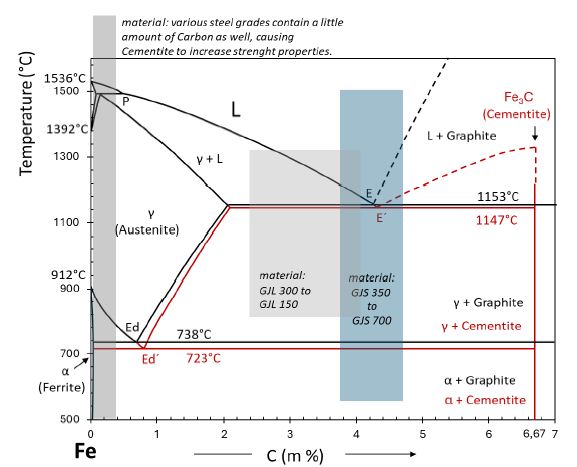
Carbon liquifies iron and makes it much easier to cast than steel (Figure 1). After solidification, carbon ends up in castings either as graphite (grey cast iron) or as iron carbide (chilled cast iron). If graphite appears, solidification takes place according to the stable Fe-C binary phase system; if iron carbide appears, solidification happens according to the metastable Fe-Fe3C system. Usually, cast iron contains both carbon phases; thus, foundrymen are used to thermodynamic metastable phases, and the enormous range of material properties which cast iron could offer is caused by the knowledge of foundrymen how to modify the solidification of their castings to get the right shape and balance of stable and metastable carbon phases. Ductile Iron (GJS) is available with tensile strength starting from 350 N/mm² in conjunction with elongations up to 25 % – free of Fe3C – to „as cast“ 700 N/mm² tensile strength and a limited elongation at that level containing a lot of Fe3C formed at about 723°C. Grey Cast Iron is available with tensile strength between 150 and 300 N/mm², has nearly no elongation, and includes, in most cases, Fe3C formed at about 723°C. Besides Carbon, Silicon is always present as an alloying element at a level of typically 2 %. This range of properties could be modified and enlarged by additional alloying elements as well as specific heat treatments and makes cast iron applicable for such different products as pillars for forging, rolls for paper production, pipes for freshwater supply, callipers and brake discs for vehicles up to little keys with a weight range from some 100 metric tons down to some few grams.

Figure 1: Draft of the combined stable and metastable iron-carbon binary phase system [3].

Although grey cast iron is a relatively well-known material used industrially for much more than 200 years, the question of how carbon precipitates and carbon phases grow in detail is still under investigation. Thus, collecting more information about the crystallinity of carbon in grey cast iron by using Raman spectroscopy was the key target of the research (report will be published soon). During this study, we found for ourselves surprising nanodiamonds and diamonds. Here we will briefly describe our observations.

Sample Material

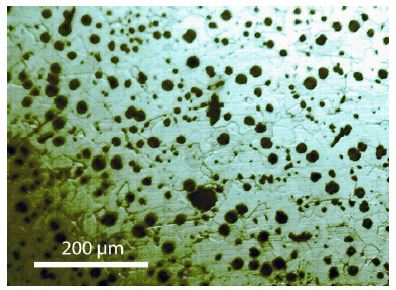
Several samples of various kinds of cast iron are studied. But just in one of them, all these unexpected carbonaceous phases have been detected rather close together. Figure 2 shows the microstructure of this specific ductile iron, which is quite typical for a rapid solidified thin-walled casting in conjunction with a bismuth-cerium inoculation. Both rapid cooling and the bismuth-cerium inoculation increase the number of nodules and cause a sound casting free of Fe3C where a high elongation above 20 % in conjunction with a tensile strength of roughly 420 N/mm² could be expected.

Figure 2: Micrograph of the sample referring to phases shown in Figure 1. It is an etched GJS 400. Foundrymen would consider all black particles as nodules of graphite. The white area between them is ferrite, and the grey lines within ferrite are the borders between eutectic cells. Thus, all material within a grey line belongs to one austenite crystal, which became ferrite below the eutectoid transformation point.

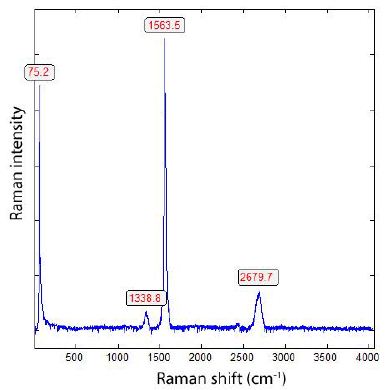
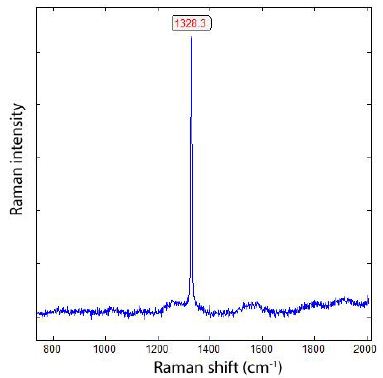
This casting and thus the sample have been produced while using a standard FeSiMg below 10 % magnesium, containing a reasonable amount of Ca, but no rare earths (REE). The treatment was done using the sandwich method. High-purity pig iron, low-Mn steel scrap, and electrode graphite were used as raw materials. The melting has been performed in an induction furnace. As a preconditioner, a FeSiBa- alloy with approx. 2 % Ba and less than 50 % Si has been added together with FeSiMg. After Mg-treatment, approximately 0,15 % of a FeSiBiCe-inoculant (containing besides 74 % of silicon roughly 1 % Bi, 1 % Ca, and 2 % Ce) is added in stream, and finally a mould inoculation with approx. 0,1 % of a FeSiAl4 optimizes successfully the microstructure. The final composition of the melt was 3.55 % C, 2.72 % Si, 0.05 % Cu, 0.003 % Sn, 0.20 % Mn, 0.15% Ni, 0.035 % Mg, 0.010 % S, 0.0017 % Ce, 0.0013 % Bi, 0.001 % Ca. The main target was to identify the crystallinity of the graphite phase, and Figure 3 shows one Raman spectrum of the centre of one of such nodules. For our studies, we used a rectangular parallelepiped, about 14 x 14 x 9 mm. The large area is diamond-polished. To distinguish between the diamonds used for this polishing procedure, we show a Raman spectrum of such diamonds in Figure 4, which has been detected in samples as well [4].

Figure 3: Raman spectrum of a graphite nodule of the sample (see Figure 2). The meaning of the band at 75.2 cm-1 is unclear, and its general appearance must be a task for the future.

Figure 4: Raman spectrum of diamond used for sample polishing. Typical is the strong intensity and very small FWHM (about 4 cm-1; see further below). The graphite band (G-band) is absent.

Microscopy and Raman Spectroscopy

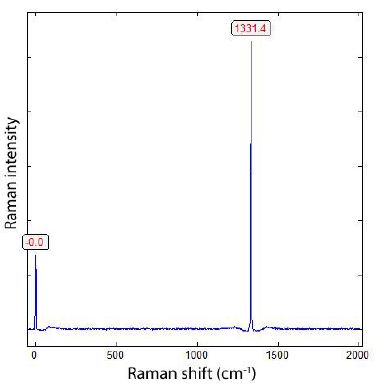
Besides a polarization microscope for transmission and reflection (JenaLab Pol), we performed all microscopic and Raman spectroscopic studies with a petrographic polarization microscope (BX 43) with a rotating stage coupled with the EnSpectr Raman spectrometer R532 (Enhanced Spectrometry, Inc., Mountain View, CA, USA) in reflection and transmission. The Raman spectra were recorded in the spectral range of 0–4000 cm-1 using an up-to-50 mW single-mode 532 nm laser, an entrance aperture of 20 µm, a holographic grating of 1800 g/mm, and a spectral resolution of 4 cm-1. Generally, we used an objective lens with a magnification of 100x: the Olympus long-distance LMPLFLN100x objective (Olympus, Tokyo, Japan). The laser power on the sample is adjustable down to 0.02 mW. The Raman band positions were calibrated before and after each series of measurements using the Si band of a semiconductor-grade silicon single-crystal. The run-to-run repeatability of the line position (based on 20 measurements each) is ± 0.3 cm-1 for Si (520.4 ± 0.3 cm-1) and 0.4 cm−1 for diamond (1332.7 cm-1 ± 0.4 cm-1 over the range of 80–2000 cm-1). The FWHM = 4.26 ± 0.42 cm-1. FWHM is the Full-Width at Half Maximum. We also used a water-clear natural diamond crystal (Mining Academy Freiberg: 2453/37 from Brazil) as a diamond reference (for more information, see Thomas et al., 2023) [5]. The zero-point position for the Raman spectroscopic measurements is checked before each measurement campaign. For the identification of mineral phase, we used Hurai et al. (2015) [6], the RRUFF database by Lafuente et al. (2015) [7], and Liu et al. (2024) [8]. Figure 5 shows the Raman spectrum of the diamond reference and the zero point of the used Raman spectrometer.

Figure 5: Raman spectrum of the reference diamond No. 2453/37 from the Mining Academy Freiberg. From 20 measurements, the mean is (1332.7 ± 0.4) cm-1 and the FWHM is 4.26 ± 0.42 cm-1.

Results

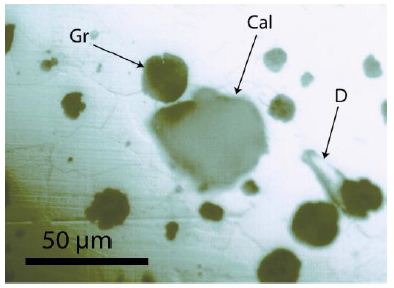
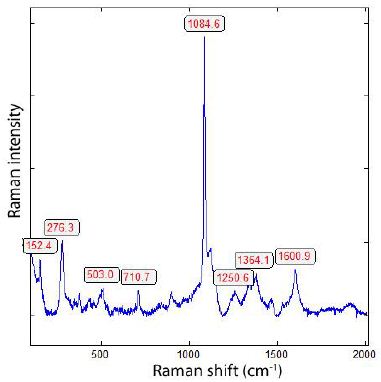
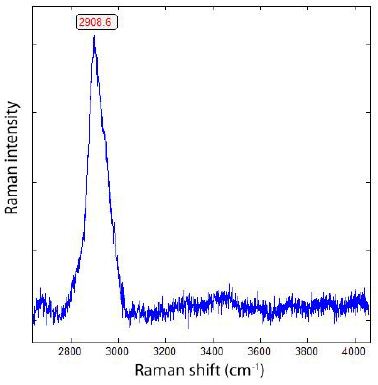
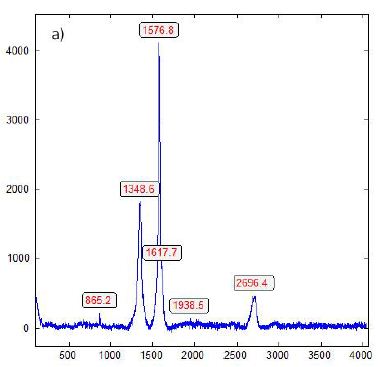
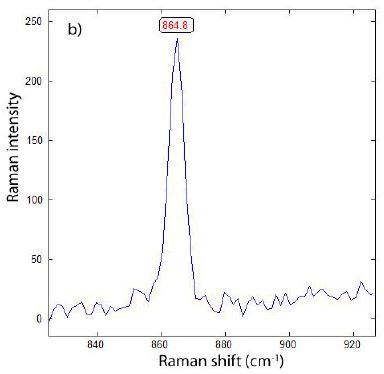
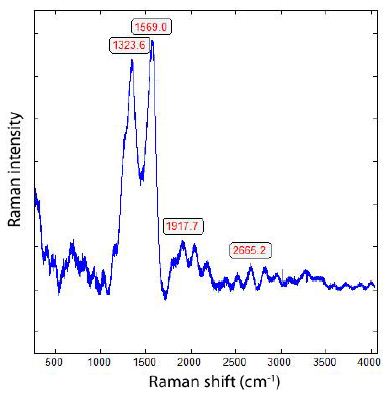
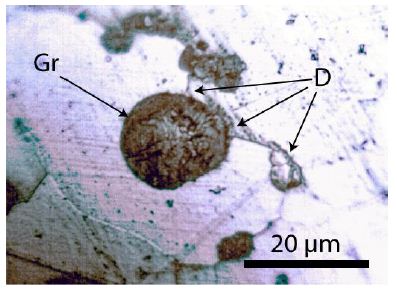
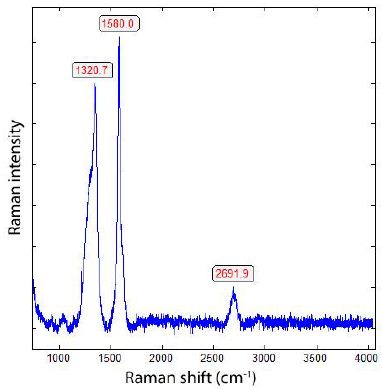
During the study of graphite nodules in ductile iron, we also found inclusions of calcite, and besides them, a small diamond crystal (26 x 9 µm). Others are even smaller and spherical. Figure 6 shows details of such as calcite and diamond-bearing area (Figures 6, 7a and 7b). Also important is the very strong Raman band of methane (CH4). Figure 7b shows the Raman spectrum of methane dissolved in the calcite of Figure 6. Other calcite crystals show the Raman band of saturated hexane (C6H14) (2931.8 cm-1) – see Hurai et al. (2015) [6]. The Raman spectrum of diamond (D) in Figure 6 is shown in Figure 9. Characteristically, there are the double peaks of diamond and graphite. Figure 8a shows the Raman spectrum of a graphite nodule. Typical is the presence of the forbidden Raman band at 866 cm-1 (Figure 8b). According to Estandia et al. (2014), the irreducible representation of the graphite modes is ΓGr = 2A2u + 2B2g + 2E1u + 2E2g. There are two infrared (IR) modes: E1u at 1587 cm-1 and A2u at 870 cm-1, and two Raman modes: E2g at 1580 cm-1 and E2g at 42 cm-1. For the Madagascar graphite, the E2u lies between 65.6 and 75.8 cm-1. The often observed Raman line at 1350 cm-1 (D-mode) stands for disordered graphite. The A2u mode at about 870 cm-1 is an infrared (IR) band and is Raman forbidden. In our case, this forbidden band is present at about 865 cm-1 and may be the result of intercalated sulfur, which changes the symmetry of graphite [10,11]. However, the concentration of sulfur is with 0.01% so low that this interpretation is very doubtful. A better candidate would be Si or REEs. According to Gong et al. (2024) [12], Si is critical for the diamond growth at low pressure and high temperature (Figures 8b and 9). In the same sample, there are also larger diamond “aggregates” as can be seen in Figure 10. This aggregate is composed of two diamond grains and a diamond film in between. The Raman spectra of the studied sample are not uniform. There are also those without or only a tiny or weak graphite Raman band. Single diamond bands without graphite are scarce. The Raman spectrum in Figure 11 shows the ideal graphite G-band at 1580.0 cm-1. The carbon D-mode at 1350 cm-1 is characteristic of disordered graphite (see e.g., Enstandia et al. 2014) [9] and is here not present. The strong Raman band at 1320.7 cm-1 is representative of the first-order line of diamond. The shift of about 12 cm-1 (1320.7 cm-1) from the 1333 cm-1 standard position of diamond can be attributed, according to Zaitsev (2001) [13], to highly doped diamonds (e.g., aluminium). Another possibility is, according to the same author, stacking faults oriented in (111) planes of lonsdaleite (hexagonal diamond polytypes). A further explanation for these observations is that the Raman values of the diamond main line are low. However, there are two further possibilities: (i) isotope shift in the direction of higher 13C contents, and (ii) the position of the Raman line decreases strongly with the increase of the temperature [13], which means the temperature state is frozen during cooling. The first case (i) is not valid because 13C-rich carbon was not used. The Raman value of 1325 cm-1 for diamond speaks for freezing the diamond in the sample at about 730°C (see Figure 1 and Zaitsev 2001) (Figure 11 and Table 1) [13].

Figure 6: Surface of cast iron with calcite (Cal), diamond (D), and graphite (Gr). The calcite crystal is about 48 x 44 µm in size, and the graphite spheres are ≤ 20 µm in diameter. This diamond here is exceptionally huge. Most diamonds are more petite, similar to nanodiamonds. Calcite could be identified with the typical Raman lines at 152.4, 276.3, 710.7, and 1084.6 cm-1 (see Figure 7a). Figure 7b represents the typical Raman band of methane (CH4).

Figure 7a: Raman spectrum of calcite. Noteworthy are also the typical Raman bands of carbon at 1364 and 1600 cm-1. The color of calcite is black due to the distributed carbon particles. CaO could not be proved.

Figure 7b: Raman spectrum of methane (CH4) in calcite, shown in Figure 6. Hydrogen is always present in cast iron.

Figure 8a: Raman spectrum of a graphite nodule in ductile iron. The presence of the D-band in graphite (G-band) shows that the graphite is not defect-free. Note the very weak Raman band at 865 cm-1. The Raman band at about 75 cm-1 was cut off because they should lie at about 42 cm-1 (Estandia et al., 2014) – [9]. The significant difference is unclear.

Figure 8b: Raman-forbidden A2u mode of a graphite nodule in cast iron, sample 2 – counting time about 8 times the time used for the spectrum in Figure 8a.


Figure 9: Raman spectrum of the diamond in Figure 6. The intense 1569.0 cm-1 band is, according to Zaitsev (2001) – [13], a feature of the Raman spectra of low-quality diamond films.

Figure 10: Larger diamond aggregate and a film in the sample shown in Figure 2.

Figure 11: Raman spectrum of diamond with a very sharp graphite band. The origin of the band at 2692 cm-1 is the 2D band (second order) of graphite.

Table 1: Results of the Raman measurements on the main lines of 12 diamond-graphite crystals in cast iron (Sample 2) 12 different diamond crystals. The exact number is for 2a after etching.

Sample

Diamond

FWHM

Graphite

FWHM

2

1324.6 ± 11.8 cm-1

66.9 ± 13.8 cm-1

1572.3 ± 9.5 cm-1

42.0 ± 21.1 cm-1

2a

1317.8 ± 10.0 cm-1

77.7 ± 15.8 cm-1

1580.2 ± 7.1 cm-1

62.1 ± 22.7 cm-1

Remark to sample 2a: These diamond grains are on all sides of the sample parallelepiped exposed after strongly etching sample 2 with HCl (25%) for 24 hours and strong cleaning with distilled H2O to prevent measurement on diamonds used for preparation.

Interpretation

Thomas (2025a and b) [13,14] has shown that diamond can be brought via supercritical fluids or melts from the mantle into the crustal regions as small spherical crystals. The introduction of diamond in this way poses no problems. A larger problem is the growth of such minerals, such as diamond and moissanite (SiC) whiskers, in minerals formed at the crustal places (at about 700°C and 0.1 GPa). Traditionally, for the development of diamonds, we need temperatures of 900-1400°C and 5-6 GPa. Gong et al. (2024) [12] have now demonstrated that diamond can grow on a graphite crucible at one atmospheric pressure and 1175°C without any diamond seeds with a mixture of methane and hydrogen, and a mixture of Ga, Ni, Fe, and Si as metallic melt. The Fe/Si ratio within cast iron is similar to that reported by Gong et al. (2024) [12]. After these authors, Si played a critical role in the growth of diamond. We have now shown that diamonds can also grow in standard cast iron. The found macroscopic diamond crystals are up to 20 µm large. There are also many nanodiamonds present. A careful investigation is necessary to quantify the amount of diamond in the cast iron. There are also a lot of questions to solve: What is the critical component for the formation of diamond? Does calcite, together with hydrogen as a supplier of methane, have a key meaning (see Matjuschkin et al. (2020).

Practical Conclusions

Ductile cast iron is made from a melt, for which at least 10 key elements need to be considered, as well as some more, and all of them influence the precipitation of the crystalline phases. Metastable compounds, especially Fe3C, are known and used to modify the mechanical properties of cast iron. Oxides and sulphides are considered to play an essential role during graphite nucleation and avoid eutectic growth of Fe3C. Thus, a wide range of nanoparticles found within cast iron is standard and well documented over decades (e.g., Stefanescu 2020, Sommerfeld & Tonn 2008, Zykova et al. 2018) [15-17]. Cast iron solidifies at temperatures around 1140°C, and although graphite expansion causes some pressure within the casting during solidification as well as during further cooling phases, the sum of pressures measured outside at the casting surface, according to Nandori & Dul (1982) [18,19], is not impressive. Therefore, considering the formation conditions needed to generate such phases as diamond and calcite just out of their elements, it is surprising that they exist under the circumstances of cast iron production. On the other side, if their amount is marginal – and it seems so, as it took until now to detect them – they will not have any practical influence on cast iron production. Whether the “cast iron synthesis” of nanoparticles, as e.g., those three-dimensional carbon structures, might have any value for other applications is doubtful, but at least foundrymen might feel now that the value of their castings is higher than what they get traditionally paid for.

Acknowledgment

Thanks to DI Dieter Nemetz, managing owner of Johann Nemetz & Co. GmbH and chairman of PROGUSS Austria, for supporting this research as well as others with ongoing interest.

References

  1. Thomas R (2025a) The change from the supercritical fluid-melt system into the under-critical stage: The Zinnwald example. Geol Earth Mar Sci 7: 1-9.
  2. Thomas R, Trinkler M (2024) Monocrystalline lonsdaleite in REE-rich fluorite from Sadisdorf and Zinnwald/E-Erzgebirge, Germany. Geol Earth Mar Sci 6: 1-5.
  3. Bauer W (2013) Gusseisen mit Lamellengraphit, Leoben, ÖGI-Eigenverlag.I-V and 95 PG.
  4. Keller DS, Ague JJ (2022) Possibilities for misidentification of natural diamond and coesite in metamorphic Neues Jb. Mineral Abh 197: 253-261.
  5. Thomas R, Davidson P, Rericha A, Recknagel U (2023) Ultrahigh-pressure mineral inclusions in a crustal granite: Evidence for a novel transcrustal transport mechanism. Geosciences 13: 1-13.
  6. Hurai V, Huraiová M, Slobodník M, Thomas R (2015) Geofluids – Developments in Microthermometry, Spectroscopy, Thermodynamics, and Stable Isotopes. Elsevier.
  7. Lafuente B, Downs RT, Yang H, Stone N (2015) The power of database: the RRUFF project. In: Armbruster T, Danisi, R.M. (eds). Highlights in mineralogical W. De Gruyter, Berlin. Pg: 1-30.
  8. Liu Q, Miao H, Liu W, Bu L, Yao J, et (2024) Selective transformation of cementite: Graphitization or spheroidization. Materials Today. 18 pages, under review.
  9. Estandia B, Rodriguez L, Alvarez, JA, Ferreño D, Hernández D, et al. (2014) Raman spectroscopy of flake graphite as a tool to detect stress-strain states in cast Advanced Sustainable Foundry. 71st World Foundry Congress in Bilbao. 6 pages.
  10. Yang H-P, Wen H-H, Zhao Z-W, Li S-L (2001) Possible superconductivity at 37 K in graphite-sulphur Chin Phys Lett 18: 1648-1650.
  11. Thomas R, Rericha A, Pohl WL, Davidson P (2018) Genetic significance of the 867 cm-1 out-of-plane Raman mode in graphite associated with V-bearing green Mineralogy and Petrology 112: 613-645.
  12. Gong Y, Luo D, Choe M, Seong WK, Bakharev P, et (2024) Growth of diamond inliquid metal at 1 atm pressure. Nature 629: 348-354.
  13. Zaitsev AM (2001) Optical Properties of A Data Handbook. Springer, I-XI, and 1-502 pages.
  14. Thomas R (2025b) Strong Isotope Fractionation Between 13C and 12Cin the Supercritical Fluids Related to the Variscan Mineralizations in Erzgebirge, Slavkovský Les (Kaiserwald), and Lusatian Mountains, Germany, and the Czech Republic, and Some Remarks on the Low-Pressure Formation of Geol Earth Mar Sci 7: 1-6.
  15. Stefanescu DM, Alonso G, Suarez R (2020)Recent Developments in Understanding Nucleation and Crystallization of Spheroidal Graphite in Iron-Carbon-Silicon Metals 10 Bericht-Nr. 221.
  16. Sommerfeld A, Tonn B (2008) Nucleation of graphite in cast iron melts depending on manganese, sulphur, and oxygen. International Journal of Cast Metals Research 21: 23-26.
  17. Zykova A, Lychagin, D, Chumaevsky, A, Popova N, Kurzina (2018) Influence of Ultrafine Particles on Structure, Mechanical Properties, and Strengthening of Ductile Cast Iron. Metals.
  18. Nandori G, Dul J (1982) Beurteilung von Gußeisenschmelzen durch Messung der Makrovolumenänderungen und der Ausdehnungskräfte während der Erstarrung. Giesserei-Rundschau 29: 9-16.
  19. Matjuschkin V, Woodland Ab, Frost DJ, Yaxley M (2020) Reduced methanebearing fluids as a source for diamond. Scientific Peports. 10: 6961, 8 pages.

Review: Knowledge and Prevalence of Cervical Cancer Screening Among Women Receiving Prenatal Care in Accra, Ghana

DOI: 10.31038/IGOJ.2025812

Study Overview

This cross-sectional study examined cervical cancer screening (CCS) knowledge and prevalence among 393 women receiving prenatal care at three health facilities in the Okaikwei North Municipal Assembly, Greater Accra Region, Ghana. Utilizing a two-stage cluster sampling method, the research targeted women over 18 years attending Achimota Hospital (36.6%), Lapaz Community Hospital (32.1%), and NK-Salem Medical Centre (31.3%). The study addressed a critical gap in understanding CCS awareness among pregnant women, a high-risk population with frequent healthcare contact opportunities. The research employed a quantitative methodology with data collection through REDCap electronic surveys administered in English and Asante Twi. Knowledge of CCS was assessed using 12 questions scored from 0-12, with participants categorized into low (0-4), moderate (5-8), and high (9-12) knowledge levels using percentile-based classification. Analysis of covariance (ANCOVA) was used to compare CCS knowledge scores across facilities while controlling for demographic variables including age, marital status, education, employment, and income.

Key Findings

The study revealed alarmingly low levels of both CCS knowledge and screening prevalence. Only 19.8% of participants demonstrated high CCS knowledge, with the majority (98.5%) scoring below adequate levels. The overall mean CCS knowledge score was 3.0 ± 2.57 out of 12 possible points. While 75.6% had heard of CC and 68.4% were aware of CCS, substantial knowledge gaps existed when probed further, thus 46.5% did not understand what CCS entailed, 71.7% were unaware of screening intervals, 62.0% did not know the recommended screening age, and only 33.9% correctly identified Pap smear as the primary screening test. The prevalence of CCS was remarkably low at 7.4%, with 90% of participants never having been screened. This finding aligns with Ghana’s national CCS rates of 2-3% and reflects broader challenges in sub-Saharan Africa where over 85% of global cervical cancer cases occur. Participants correctly identified key risk factors including multiple sexual partners (23.3%), STI infections (18.0%), and early sexual onset (13.1%).

Significance and Inter-facility Variations

A significant finding was the substantial variation in CCS knowledge across health facilities. ANCOVA results revealed statistically significant differences (F (2,384)=75.03, p<0.001, ηp²=0.281), with facility type accounting for 28.1% of variance in knowledge scores beyond demographic factors. Pairwise comparisons showed that women at Achimota Hospital (M=4.33) and NK-Salem Medical Centre (M=4.74) had significantly higher knowledge scores compared to Lapaz Community Hospital (M=1.25). These differences raise facility-specific factors such as patient education programs, healthcare provider engagement, or access to health information materials may influence knowledge levels.

Among demographic covariates, income (ηp²=0.187) and marital status (ηp²=0.144) had the strongest influence on CCS knowledge, followed by age and education. This indicates that financial stability and spousal support may positively affect CCS awareness, while younger, less-educated, and lower-income women face greater knowledge barriers.

Limitations and Methodological Considerations

The study acknowledges several limitations that affect generalizability. The single-district focus in Greater Accra may not represent all Ghanaian women receiving prenatal care, particularly those in rural areas or different socioeconomic contexts. The two-stage cluster sampling method, while enhancing representativeness within the district, may introduce selection bias if certain clusters are more likely to be selected. Additionally, reliance on self-reported data introduces potential recall and social desirability biases.

The cross-sectional design prevents assessment of knowledge changes over time, and the focus on prenatal care attendees may not reflect the general population’s CCS knowledge. The study’s strength lies in its robust sample size (92.9% response rate), rigorous statistical analysis controlling for demographic confounders, and focus on a high-risk population with regular healthcare contact opportunities.

Implications and Future Directions

The findings reveal critical gaps in CCS knowledge and uptake that require urgent intervention. The significant inter-facility differences suggest that targeted, facility-specific interventions may be more effective than uniform approaches. The research recommends integrating structured cervical cancer education into routine prenatal care through health talks, standardized materials in local languages, and most importantly pre- and post-natal counseling sessions.

Practical interventions should include mobile screening clinics, community health worker outreach, and culturally appropriate educational materials. Catering for groups that are characterized by no formal education and unstable financial stability, the employment of existing social networks such as market associations, church groups, neighborhood committees could benefit from CCS education and mobile screenings. The study emphasizes leveraging social media and local dialects for awareness campaigns, as participants identified social media as their primary information source (31.0%). Future research should conduct multi-site studies across different geographical areas/regions to examine disparities among the geographical areas to understand the specific barriers that exist to screening uptake.

Conclusion

This study provides compelling evidence of the urgent need to strengthen cervical cancer prevention efforts in Ghana’s prenatal care settings. The combination of low CCS knowledge levels (19.8% high knowledge) and minimal screening prevalence (7.4%) among pregnant women represents a missed opportunity for early detection and prevention. The significant facility-based variations in CCS knowledge calls for targeted interventions considering the local contexts and demographic factors. Implementing these interventions could substantially improve outcomes. As prenatal care provides a structured platform for health education, integrating comprehensive CCS awareness programs could dramatically enhance early detection rates and reduce cervical cancer mortality in Ghana. The research contributes essential insights for developing evidence-based interventions that address both knowledge gaps and systemic barriers to screening access.

Continuous Glucose Monitoring in Hospitalized Patients: Is It Time to Embrace a Paradigm Shift?

DOI: 10.31038/EDMJ.2025934


The use of continuous glucose monitoring (CGM) has transformed outpatient diabetes care, yet its implementation in the inpatient setting remains limited [1,2]. In our recent systematic review and meta-analysis of six randomized controlled trials (RCTs) (n=979), we evaluated whether adding unblinded CGM (real-time or intermittently scanned) to point-of-care (POC) glucose testing, to assist with insulin adjustment, improves outcomes for non-critically ill, hospitalized adults with diabetes mellitus. We found that the addition of CGM significantly increased time in range (TIR, 70–180 mg/dL) by a mean difference (MD) of +7.24% (P <0.00001), supported by high-certainty evidence. It also reduced time below range (TBR) <70 mg/dL (MD: −1.23%, P=0.02; moderate certainty) and <54 mg/dL (MD: −0.95%, P<0.00001; high certainty). Time above range (TAR) >250 mg/dL decreased by −3.70% (P=0.003), and mean glucose levels declined by −10.93 mg/dL (P=0.0003), both with high-certainty evidence. In terms of safety outcomes, CGM use reduced hypoglycemic events <70 mg/dL (MD: −1.21 events per patient, P=0.001; low certainty) and <54 mg/dL (MD: −1.24 events per patient, P=0.03). Notably, nocturnal hypoglycemic events were also reduced for both <70 mg/dL (MD: −0.16 events per patient, P=0.002) and <54 mg/dL (MD: −0.11 events per patient, P=0.006), although the certainty of evidence was not formally graded for these specific outcomes [1-3].

We believe these findings mark an inflection point in hospital glucose management. While point-of-care (POC) glucose testing has long been the mainstay, CGM offers high frequency of data points, rate-of-change of glycemia over time, direction of blood glucose levels and potential for proactive hypo-and hyperglycemia prevention [4]. Although the six included RCTs in our review varied in population, diabetes types, insulin protocols, and device models (Dexcom G6 and Guardian Sensor 3), our sensitivity analyses demonstrated robust, consistent benefit across subgroups. Nevertheless, we recognize that further research is warranted to address remaining knowledge gaps and to further validate these findings across diverse clinical settings. The implementation of CGM in the general ward still faces several challenges. It requires integration of CGM with electronic medical records and training staff and providers on initiation of download and interpretation. Ideally software integration should include the use of artificial intelligence to pick up patterns of hypo and hyperglycemia and a new “glucose monitoring team,” like a telemetry unit should review those flags in real time and inform the treatment team to make clinical decisions. But even more basic integration can provide retrospective data that will assist providers in making insulin adjustments based on better quality of that than what is provided by POC glucose alone [5].

The 2025 Standards of Care in Diabetes from the American Diabetes Association (ADA) now endorse universal use of CGM for all patients with diabetes, regardless of insulin therapy, as well as the continued use of CGM during hospitalization in those already utilizing the technology [6]. Our findings reinforce this recommendation to continue CGM during hospitalization in patients admitted already using the technology but also as a primary tool that could be started in hospital to assist glycemic management in patients with hyperglycemia. With evidence mounting improved outcomes, fewer hypoglycemic events, and no apparent safety concerns, we believe CGM will eventually be implemented as standard practice for most non-ICU inpatients with hyperglycemia.

In conclusion, continuous glucose monitoring (CGM) represents a significant advancement in diabetes management in non-critically ill hospitalized patients. By enabling continuous insight into glycemic patterns, it facilitates optimized glycemic management, resulting in improved safety and clinical outcomes compared to the use of POC glucose testing alone. With supportive policies, appropriate infrastructure, and comprehensive training, CGM integration into routine inpatient care is warranted – particularly for patients at the highest risk of hypoglycemia. Advancing beyond intermittent glucose measurements to leverage continuous data represents a critical evolution in optimizing inpatient glycemic management.

References

  1. American Diabetes Association Professional Practice Committee (2025) Diabetes Technology: Standards of Care in Diabetes-2025. Diabetes Care. [crossref]
  2. Zelada H, Perez-Guzman MC, Chernavvsky DR, Galindo RJ (2023) Continuous glucose monitoring for inpatient diabetes management: an update on current evidence and practice. Endocr Connect. [crossref]
  3. Cavalcante Lima Chagas G, Teixeira L, Clemente MRC, et al. (2025) Use of continuous glucose monitoring and point-of-care glucose testing in hospitalized patients with diabetes mellitus in non-intensive care unit settings: A systematic review and meta- analysis of randomized controlled trials. Diabetes Res Clin Pract. [crossref]
  4. Agarwal S, Galindo RJ, Shah AV, Abreu M (2024) Diabetes Technology in People with Type 2 Diabetes: Novel Curr Diab Rep. [crossref]
  5. Tian T, Aaron RE, Yeung AM, et al. (2023) Use of Continuous Glucose Monitors in the Hospital: The Diabetes Technology Society Hospital Meeting Report J Diabetes Sci Technol. [crossref]
  6. American Diabetes Association Professional Practice Committee (2025) Diabetes Care in the Hospital: Standards of Care in Diabetes-2025. Diabetes Care. [crossref]

Safety, Tolerability, Pharmacokinetics, and Pharmacodynamics of the Novel Long-Acting FGF21 Analog Zalfermin: A Multiple Ascending Dose Study in Healthy Participants with Overweight/Obesity

DOI: 10.31038/EDMJ.2025933

Abstract

Introduction: This phase I multiple ascending dose study investigated the safety, pharmacokinetic, and pharmacodynamic properties of zalfermin in healthy participants.

Methods: Male participants aged 22–55 years and female participants aged 22–45 years with a body mass index between 27.0–39.9 kg/m2 were randomized 3:1 to receive either once-weekly subcutaneous zalfermin in multiple ascending doses of 3 mg, 9 mg, 27 mg, 60 mg, and 120 mg, or placebo for 12 weeks. Blood samples were obtained for endpoint assessments. The primary endpoint was the total number of treatment-emergent adverse events (TEAEs) from treatment administration to end of follow-up.

Results: Overall, 57 participants were enrolled. A total of 237 TEAEs were reported in 87.7% of participants; these were all mild to moderate in severity. TEAEs were mainly gastrointestinal-related and most prevalent in the 120 mg group; thus, treatment at this dose level was terminated prematurely. Dose proportionality was established for the maximum concentration of zalfermin in serum at steady state, and the geometric mean for the time to maximum concentration of zalfermin in serum at steady state ranged from 29–38 hours. The plasma half-life of zalfermin was approximately 120 hours and significant improvements in plasma lipid profiles were observed. The maximum tolerated (multiple ascending) dose of zalfermin was 60 mg and was compatible with once-weekly dosing.

Conclusions: The pharmacodynamic profile of zalfermin, particularly the observed improvement in lipids, is promising for the treatment of a range of cardiometabolic diseases including metabolic dysfunction-associated steatohepatitis. Further clinical development and investigations into zalfermin are warranted.

Keywords

Pharmacokinetics, Pharmacodynamics, Phase I, Safety, Tolerance

Introduction

Metabolic dysfunction-associated steatohepatitis (MASH) is a progressive form of metabolic dysfunction-associated steatotic liver disease (MASLD) [1], characterized by abnormal accumulation of fat in the liver (steatosis), inflammation, hepatocellular ballooning, and fibrosis [2,3]. The prevalence of both MASLD and MASH is increasing worldwide [4-6]. Approved pharmacotherapies that effectively treat MASLD and MASH alongside other cardiometabolic-related comorbidities are limited [7]; thus, there is a high unmet need for new therapies.

Fibroblast growth factor 21 (FGF21) was discovered as a metabolic regulator in 2005 [8]. Based on preclinical trials investigating obesity- related metabolic conditions, activation of the FGF21 receptor complex has been associated with several beneficial effects. These include sustained weight loss, reduced blood glucose and triglyceride (TG) levels, improvements in insulin sensitivity and hepatic steatosis [9], reduced low-density lipoprotein cholesterol (LDL-C) levels, and increased high-density lipoprotein cholesterol (HDL-C) levels [10-12]. This has led to the pursuit of FGF21 as a potential pharmacotherapy for the treatment of MASH and other metabolic-related conditions [13,14]. Zalfermin is a long-acting, proteolytically stabilized FGF21 analog, which has been preclinically shown to induce pharmacologically mediated weight loss accompanied by an improved serum lipid profile [15].

In a first-in-human, single ascending dose (SAD) study investigating the safety, pharmacokinetics (PK), and pharmacodynamics (PD) of zalfermin in healthy males, zalfermin, administered in the dose range of 2 to 180 mg, was found to have an acceptable safety profile regardless of participants’ race and ethnicity, a plasma half-life of approximately 120 hours, and demonstrated improvements in plasma lipid profiles [16]. However, to date, zalfermin has not been tested in a human female population nor via a repeated dosing regimen.

Given the long plasma half-life of zalfermin and improvement in the plasma lipid profile observed in the SAD study [16], this phase I trial investigated the safety, tolerability, PK, and PD of zalfermin when administered multiple times weekly in a healthy male and female population.

Furthermore, literature has shown that increases in FGF21 can cause a decrease in the luteinizing hormone surge and female fertility in mice [17-19]; therefore, zalfermin may mediate a reversible pause in the menstrual cycle, potentially contributing to hypothalamic amenorrhea. Thus, we collected reproductive hormone and menstrual cycle data from female participants to evaluate this.

Materials and Methods

Study Design and Participants

This was a phase I, randomized, double-blind, placebo-controlled trial (NCT03479892) conducted at a single clinical research site that enrolled female participants (aged 22–45 years) and male participants (aged 22–55 years) with overweight or obesity (body mass index 27.0–39.9 kg/m2) who were otherwise healthy. All participants were required to be generally healthy as judged by the investigator based on medical history; physical examination; and the results of vital signs, electrocardiogram, and clinical laboratory tests performed during the screening visit.

Based on nonclinical findings and previous literature [15,17-20], the menstrual cycle and reproductive hormones were monitored, and a pelvic ultrasound scan was conducted for female participants. Female participants were required to have regular menstrual cycles (defined as 24–35 days between the first day of menses and the end of the cycle, for the two most recent menstrual periods; this was self- reported), and have bilateral tubal ligation or bilateral salpingectomy or use a nonhormonal intrauterine device.

Key exclusion criteria for all participants included any clinically significant disease history and use of any prescription or non- prescription medication. The full list of exclusion criteria is in the supplementary appendix.

Participants were randomized in a 3:1 ratio to receive either once-weekly subcutaneous zalfermin in multiple ascending doses (MADs) of 3, 9, 27, 60, and 120 mg or placebo for 12 weeks. Sequential initiation was included to allow for safety clearance evaluation within each cohort before proceeding to the next cohort. The trial design can be found in Figure S1.

Safety Outcomes

The primary endpoint was the total number of treatment-emergent adverse events from the time of first zalfermin administration at baseline (day 1) to the end of the follow-up period (day 112). A treatment-emergent adverse event was defined as any event that either had onset after administration of the trial product but no later than the follow-up visit or was present before the trial product was administered and increased in severity during the treatment period but no later than the follow-up visit. Stopping criteria are listed in the supplementary appendix. Hereafter, treatment-emergent adverse events will be referred to as adverse events (AEs).

Secondary safety endpoints were changes from baseline to follow- up in vital signs, clinical laboratory safety parameters (biochemistry, hematology, and coagulation), electrocardiogram parameters, number of injection site reactions, and the presence of anti-zalfermin antibodies. Additional exploratory safety endpoints are listed in the supplementary appendix.

Supportive Secondary PK Endpoints

Blood samples for the PK analysis of zalfermin were collected from each participant on days 1 and 2 at baseline and at the start of the treatment period. Further blood samples were taken on days 8, 15, 22, 36, 50, 64, 78, 79, and 80 during the treatment phase; on day 85 (end of treatment [EOT]); days 92, 99, and 106 post-treatment; and on day 112 (follow-up). Parameters assessed were the terminal serum half-life of zalfermin at steady state (t½,SS), the maximum zalfermin serum concentration at steady state (Cmax, SS), the time to maximum zalfermin serum concentration at steady state (tmax, SS), and the apparent total serum clearance of zalfermin at steady state (CL/FSS). Serum zalfermin concentrations were measured from last dose (day 78, pre-dose) until follow-up (day 112). Exploratory PK parameters are listed in the supplementary appendix.

PK Sampling

The bioanalysis of zalfermin was performed by the Department of Development Bioanalysis, Novo Nordisk A/S. Zalfermin was assessed in serum by a validated enzyme-linked immunosorbent assay according to departmental procedures, the US Food and Drug Administration 2001 guidance on validation of bioanalytical methods [21], and the European Medicines Agency guideline on bioanalytical methods validation and current practice [22]. The lower limit of quantification for the assay was defined as 1.00 nmol/L. However, to avoid positive pre-dose samples, the lower limit of quantification was raised from 1.00 nmol/L (version 2.0) to 2.00 nmol/L.

Study samples were analyzed using an analyte-specific capture antibody and a second (detection) analyte-specific biotin- labeled antibody. The antibody–antigen complex was visualized by 3,3’,5,5’-Tetramethylbenzidine substrate. Quantification was performed using the optical density values at 450 nm (reference wavelength at 620 nm was subtracted). All calibration standards and unknown samples were analyzed in duplicate determinations (2 wells), and quality control samples were analyzed in two duplicates (2 × 2 wells). Sunrise (Tecan), controlled by Magellan version 7.1, was the instrument software used and Thermo Scientific Corporation Watson™ Bioanalytical LIMS version 7.4.2 (also called DReS), was the computer application software used for the testing systems.

Exploratory PD Endpoints and Sampling

Body weight, waist circumference, whole body fat mass, and whole body lean mass were assessed from baseline (day 1) to EOT (day 85). Blood samples were obtained for the analysis of TG, total cholesterol (TC), HDL-C, LDL-C, very low-density lipoprotein cholesterol (VLDL-C), and beta-hydroxybutyrate levels from baseline to EOT. Estimated treatment ratios (ETRs) for zalfermin treatment groups versus placebo were calculated for all lipids. Blood samples were also taken for the analyses of leptin and soluble leptin receptor, fasting FGF21, and glucose metabolism parameters (fasting serum glucose [FSG], fasting serum insulin [FSI], fasting plasma glucagon [FPG], and glycated hemoglobin [HbA1c]) from baseline to EOT. ETRs for zalfermin treatment groups versus placebo were calculated for hormones. Changes in insulin and glucose area under the curves (AUCs) related to the oral glucose tolerance test (OGTT) from baseline to EOT were also assessed as exploratory endpoints, and ETRs for zalfermin treatment groups versus placebo were also calculated for the OGTT parameters.

Statistical Analyses

Safety endpoints were analyzed using the safety analysis set (SAS; all participants who had been exposed to ≥1 dose of the trial product). Participants in the SAS contributed to the evaluation ‘as treated’. AEs were summarized using descriptive statistics. All AEs were coded using Medical Dictionary for Regulatory Activities (MedDRA) version 20.1. The statistical analyses for the secondary and exploratory safety endpoints are listed in the supplementary appendix.

PK and PD endpoints were analyzed using the full analysis set (including all randomized participants who received ≥1 dose of the trial product). Participants in the full analysis set contributed to the evaluation ‘as treated’. Further details on the statistical analyses for the supportive secondary PK endpoints are described in the supplementary appendix. All PD endpoints were summarized by zalfermin dose and placebo using descriptive statistics. Further details on the statistical analyses for the PD endpoints are described in the supplementary appendix.

Results

Baseline Characteristics

Overall, 57 participants were enrolled with a mean age (standard deviation [SD]) of 37.9 (6.6) years. The majority were male (54.4%) and White (80.7%). Mean (SD) body weight and body mass index were 93.8 (14.1) kg and 32.5 (3.2) kg/m2, respectively (Table 1). Mean (SD) fasting FGF21 in plasma was 240.2 (248.9) pg/mL. The full list of baseline characteristics is presented in Table 1.

Table 1: Baseline characteristics

Characteristic

Zalfermin
3 mg(n = 10) 9 mg(n = 9) 27 mg(n = 9) 60 mg(n = 9) 120 mg(n = 6) Placebo(n = 14)

Total

(N = 57)

Age, years

37.2 (6.1)

36.2 (4.4) 39.2 (5.4) 34.1 (8.6) 41.5 (5.3) 39.4 (7.4)

37.9 (6.6)

Sex, n (%)

Male

3 (30.0)

3 (33.3) 5 (55.6) 6 (66.7) 6 (100.0) 8 (57.1) 31 (54.4)

Female

7 (70.0) 6 (66.7) 4 (44.4) 3 (33.3) 0 (0.0) 6 (42.9)

26 (45.6)

Female of childbearing potential

Yes

4 (57.1)

4 (66.7) 3 (75.0) 2 (66.7) 0 (0.0) 2 (33.3) 15 (57.7)

No

3 (42.9) 2 (33.3) 1 (25.0) 1 (33.3) 0 (0.0) 4 (66.7)

11 (42.3)

Race, n (%)

White

8 (80.0)

7 (77.8) 9 (100.0) 7 (77.8) 4 (66.7) 11 (78.6) 46 (80.7)

Asian

0 (0.0) 0 (0.0) 0 (0.0) 0 (0.0) 0 (0.0) 0 (0.0)

0 (0.0)

Black or African American

2 (20.0)

2 (22.2) 0 (0.0) 2 (22.2) 1 (16.7) 3 (21.4) 10 (17.5)

American Indian or Alaska Native

0 (0.0) 0 (0.0) 0 (0.0) 0 (0.0) 1 (16.7) 0 (0.0)

1 (1.8)

Body weight, kg

89.1 (10.8)

89.4 (17.8) 98.8 (13.6) 97.2 (19.9) 99.1 (9.5) 92.1 (10.9) 93.8 (14.1)

BMI, kg/m2

32.5 (2.5) 32.1 (4.0) 34.1 (2.7) 33.7 (4.1) 32.1 (3.7) 31.2 (2.5)

32.5 (3.2)

Waist circumference, cm

103.2 (6.2)

103.9 (13.1) 108.1 (8.9) 106.9 (12.8) 108.4 (11.4) 101.3 (11.0) 104.7 (10.6)

Triglycerides, mg/dL

120 (41) 224 (110) 162 (56) 180 (147) 199 (39) 124 (59)

162 (89)

LDL cholesterol, mg/dL

116 (34)

126 (23) 123 (23) 153 (39) 162 (31) 129 (37) 133 (34)

HDL cholesterol, mg/dL

57 (17) 45 (9) 51 (12) 45 (7) 40 (6) 50 (12)

49 (12)

FGF21 in plasma, pg/mL

310.1

(285.5)

306.6(277.2) 310.4(329.3) 257.7(310.3) 136.8(47.0) 135.6(95.6)

240.2

(248.9)

HbA1c, %

5.2 (0.3)

5.3 (0.2) 5.4 (0.3) 5.3 (0.3) 5.6 (0.3) 5.4 (0.4)

5.3 (0.3)

Data are mean (standard deviation) unless otherwise stated.
BMI, body mass index; FGF21, fibroblast growth factor 21; HbA1c, glycated hemoglobin; HDL, high-density lipoprotein; LDL, low-density lipoprotein.

Safety and Tolerability

Primary Endpoint AEs

In total, 237 AEs were reported for 50 participants (87.7%), and were mild to moderate in severity and transient (Table 2). Of the 237 events, 204 AEs in 40 participants were reported across the five zalfermin treatment groups, and 33 events in 10 participants were reported in the placebo group. The highest number of AEs was reported in the 9 mg treatment group, with 61 events in nine participants; no clear dose dependency in the number of AEs was observed (Table 2). AEs were mainly gastrointestinal (GI)-related, with 49 events recorded in 27 participants across all treatment groups including placebo. GI- related AEs were most prevalent in the zalfermin 120 mg treatment group, with four events of vomiting recorded in four participants and six events of nausea recorded in five participants (Table 2). As a result of this, treatment with the 120 mg dose was terminated prematurely. Overall, the most frequently reported AEs by preferred term were increased appetite (Table 2) and nausea, and injection site reactions.

Five participants withdrew from the trial and five participants discontinued treatment due to AEs (Table 2). A total of 134 AEs in 42 participants were assessed to have probable or possible relation to the trial product (Table 2). No deaths, serious AEs, or AEs related to technical complaints were reported.

Table 2: AEs from time of first zalfermin administration (day 1) to the end of the follow-up period (day 112).

Zalfermin
3 mg(n = 10) 9 mg(n = 9) 27 mg(n = 9) 60 mg(n = 9) 120 mg(n = 6) Placebo (n = 14)

Total (N = 57)

n (%) | E

n (%) | E n (%) | E n (%) | E n (%) | E n (%) | E

n (%) | E

AEs

8 (80.0) | 23

9 (100.0) | 61 8 (88.9) | 42 9 (100.0) | 50 6 (100.0) | 28 10 (71.4) | 33 50 (87.7) | 237

Serious AEs

0 (0.0) | 0 0 (0.0) | 0 0 (0.0) | 0 0 (0.0) | 0 0 (0.0) | 0 0 (0.0) | 0

0 (0.0) | 0

AEs leading to withdrawal

0 (0.0) | 0

2 (22.2) | 2 0 (0.0) | 0 1 (11.1) | 1 2 (33.3) | 2 0 (0.0) | 0 5 (8.8) | 5

AEs leading to treatment discontinuation

0 (0.0) | 0 3 (33.3) | 3 0 (0.0) | 0 2 (22.2) | 2 0 (0.0) | 0 0 (0.0) | 0

5 (8.8) | 5

Related to trial product

Probable

5 (50.0) | 9

7 (77.8) | 21 7 (77.8) | 22 8 (88.9) | 18 5 (83.3) | 12 4 (28.6) | 5 36 (63.2) | 87

Possible

4 (40.0) | 7 5 (55.6) | 10 3 (33.3) | 3 4 (44.4) | 10 4 (66.7) | 7 6 (42.9) | 10

26 (45.6) | 47

Unlikely

7 (70.0) | 7

9 (100.0) | 30 6 (66.7) | 17 8 (88.9) | 22 4 (66.7) | 9 9 (64.3) | 18

43 (75.4) | 103

Severity

Severe

0 (0.0) | 0

0 (0.0) | 0 0 (0.0) | 0 0 (0.0) | 0 0 (0.0) | 0 0 (0.0) | 0 0 (0.0) | 0

Moderate

5 (50.0) | 5 7 (77.8) | 20 5 (55.6) | 8 7 (77.8) | 17 5 (83.3) | 15 8 (57.1) | 9

37 (64.9) | 74

Mild

8 (80.0) | 18

9 (100) | 41 8 (88.9) | 34 9 (100) | 33 6 (100) | 13 10 (71.4) | 24 50 (87.7) | 163

Injection site reactions

1 (10.0) | 2 4 (44.4) | 10 6 (66.7) | 18 5 (55.6) | 11 0 (0.0) | 0 2 (14.3) | 3

18 (31.6) | 44

Symptoms

Itching

1 (100.0) | 1

2 (50.0) | 4 2 (33.3) | 5 2 (40.0) | 2 0 (0.0) | 0 0 (0.0) | 0 7 (38.9) | 12

Redness

1 (100.0) | 1 4 (100.0) | 4 5 (83.3) | 11 3 (60.0) | 3 0 (0.0) | 0 0 (0.0) | 0

13 (72.2) | 19

Ecchymosis

0 (0.0) | 0

1 (25.0) | 1 1 (16.7) | 1 2 (40.0) | 3 0 (0.0) | 0 2 (100.0) | 3 6 (33.3) | 8

Related to technical complaint

0 (0.0) | 0 0 (0.0) | 0 0 (0.0) | 0 0 (0.0) | 0 0 (0.0) | 0 0 (0.0) | 0

0 (0.0) | 0

AEs by system organ class and MedDRA Preferred Term
Metabolism and nutrition disorders

5 (50.0) | 5

6 (66.7) | 8 5 (55.6) | 6 9 (100.0) | 10 1 (16.7) | 1 4 (28.6) | 4 30 (52.6) | 34

Increased appetite

5 (50.0) | 5 5 (55.6) | 6 5 (55.6) | 5 8 (88.9) | 8 1 (16.7) | 1 4 (28.6) | 4

28 (49.1) | 29

Glucose tolerance impaired

0 (0.00) | 0

1 (11.1) | 1 1 (11.1) | 1 0 (0.0) | 0 0 (0.0) | 0 0 (0.0) | 0 2 (3.5) | 2

Hyperphagia

0 (0.0) | 0 1 (11.1) | 1 0 (0.0) | 0 0 (0.0) | 0 0 (0.0) | 0 0 (0.0) | 0

1 (1.8) | 1

Lack of satiety

0 (0.0) | 0

0 (0.0) | 0 0 (0.0) | 0 1 (11.1) | 1 0 (0.0) | 0 0 (0.0) | 0 1 (1.8) | 1

Type 2 diabetes mellitus

0 (0.0) | 0 0 (0.0) | 0 0 (0.0) | 0 1 (11.1) | 1 0 (0.0) | 0 0 (0.0) | 0

1 (1.8) | 1

Gastrointestinal disorders

3 (30.0) | 3

6 (66.7) | 9 3 (33.3) | 6 3 (33.3) | 7 6 (100.0) | 15 6 (42.9) | 9 27 (47.4) | 49

Vomiting

0 (0.0) | 0 2 (22.2) | 2 2 (22.2) | 2 3 (33.3) | 3 4 (66.7) | 4 0 (0.0) | 0

11 (19.3) | 11

Nausea

0 (0.0) | 0

3 (33.3) | 3 1 (11.1) | 1 1 (11.1) | 2 5 (83.3) | 6 0 (0.0) | 0 10 (17.5) | 12

Diarrhea

1 (10.0) | 1 1 (11.1) | 1 0 (0.0) | 0 2 (22.2) | 2 2 (33.3) | 2 1 (7.1) | 1

7 (12.3) | 7

Abdominal distension

1 (10.0) | 1

0 (0.0) | 0 1 (11.1) | 1 0 (0.0) | 0 0 (0.0) | 0 2 (14.3) | 2 4 (7.0) | 4

Lower abdominal pain

1 (10.0) | 1 2 (22.2) | 2 0 (0.0) | 0 0 (0.0) | 0 0 (0.0) | 0 0 (0.0) | 0

3 (5.3) | 3

Gastro-esophageal reflux disease

0 (0.0) | 0

1 (11.1) | 1 0 (0.0) | 0 0 (0.0) | 0 2 (33.3) | 2 0 (0.0) | 0 3 (5.3) | 3

Abdominal pain

0 (0.0) | 0 0 (0.0) | 0 0 (0.0) | 0 0 (0.0) | 0 0 (0.0) | 0 2 (14.3) | 2

2 (3.5) | 2

Flatulence

0 (0.0) | 0

0 (0.0) | 0 1 (11.1) | 1 0 (0.0) | 0 0 (0.0) | 0 1 (7.1) | 1 2 (3.5) | 2

Upper abdominal pain

0 (0.0) | 0 0 (0.0) | 0 0 (0.0) | 0 0 (0.0) | 0 0 (0.0) | 0 1 (7.1) | 1

1 (1.8) | 1

Constipation

0 (0.0) | 0

0 (0.0) | 0 1 (11.1) | 1 0 (0.0) | 0 0 (0.0) | 0 0 (0.0) | 0 1 (1.8) | 1

Dry mouth

0 (0.0) | 0 0 (0.0) | 0 0 (0.0) | 0 0 (0.0) | 0 0 (0.0) | 0 1 (7.1) | 1

1 (1.8) | 1

Food poisoning

0 (0.0) | 0

0 (0.0) | 0 0 (0.0) | 0 0 (0.0) | 0 0 (0.0) | 0 1 (7.1) | 1 1 (1.8) | 1

Retching

0 (0.0) | 0 0 (0.0) | 0 0 (0.0) | 0 0 (0.0) | 0 1 (16.7) | 1 0 (0.0) | 0

1 (1.8) | 1

Investigations

4 (40.0) | 4

6 (66.7) | 6 3 (33.3) | 4 3 (33.3) | 7 2 (33.3) | 2 4 (28.6) | 7 22 (38.6) | 30

Weight increased

3 (30.0) | 3 4 (44.4) | 4 2 (22.2) | 2 2 (22.2) | 2 0 (0.0) | 0 1 (7.1) | 1

12 (21.1) | 12

DBP increased

0 (0.0) | 0

0 (0.0) | 0 0 (0.0) | 0 2 (22.2) | 3 1 (16.7) | 1 0 (0.0) | 0 3 (5.3) | 4

ALT increased

0 (0.0) | 0 1 (11.1) | 1 0 (0.0) | 0 0 (0.0) | 0 0 (0.0) | 0 1 (7.1) | 1

2 (3.5) | 2

Blood creatine phosphokinase increased

0 (0.0) | 0 1 (11.1) | 1 0 (0.0) | 0 0 (0.0) | 0 0 (0.0) | 0 1 (7.1) | 1

2 (3.5) | 2

CRP increased

0 (0.0) | 0 0 (0.0) | 0 0 (0.0) | 0 1 (11.1) | 1 1 (16.7) | 1 0 (0.0) | 0

2 (3.5) | 2

AST increased

0 (0.0) | 0

0 (0.0) | 0 0 (0.0) | 0 0 (0.0) | 0 0 (0.0) | 0 1 (7.1) | 1 1 (1.8) | 1

Blood glucose decreased

0 (0.0) | 0

0 (0.0) | 0 0 (0.0) | 0 0 (0.0) | 0 0 (0.0) | 0 1 (7.1) | 1 1 (1.8) | 1

Blood pressure increased

0 (0.0) | 0 0 (0.0) | 0 1 (11.1) | 1 0 (0.0) | 0 0 (0.0) | 0 0 (0.0) | 0

1 (1.8) | 1

SBP increased

0 (0.0) | 0

0 (0.0) | 0 0 (0.0) | 0 1 (11.1) | 1 0 (0.0) | 0 0 (0.0) | 0 1 (1.8) | 1

Blood triglycerides increased

0 (0.0) | 0 0 (0.0) | 0 0 (0.0) | 0 0 (0.0) | 0 0 (0.0) | 0 1 (7.1) | 1

1 (1.8) | 1

GFR decreased

1 (10.0) | 1

0 (0.0) | 0 0 (0.0) | 0 0 (0.0) | 0 0 (0.0) | 0 0 (0.0) | 0 1 (1.8) | 1

LDL cholesterol increased

0 (0.0) | 0 0 (0.0) | 0 0 (0.0) | 0 0 (0.0) | 0 0 (0.0) | 0 1 (7.1) | 1

1 (1.8) | 1

General disorders and administration site conditions

2 (20.0) | 3

5 (55.6) | 12 6 (66.7) | 19 5 (55.6) | 13 0 (0.0) | 0 3 (21.4) | 4 21 (36.8) | 51

Injection site erythema

1 (10.0) | 1 4 (44.4) | 5 5 (55.6) | 11 3 (33.3) | 3 0 (0.0) | 0 0 (0.0) | 0

13 (22.8) | 20

Injection site hemorrhage

0 (0.0) | 0

1 (11.1) | 1 1 (11.1) | 1 2 (22.2) | 3 0 (0.0) | 0 2 (14.3) | 3 6 (10.5) | 8

Injection site pruritus

1 (10.0) | 1 2 (22.2) | 4 2 (22.2) | 5 1 (11.1) | 1 0 (0.0) | 0 0 (0.0) | 0

6 (10.5) 11

Early satiety

0 (0.0) | 0

0 (0.0) | 0 1 (11.1) | 1 1 (11.1) | 1 0 (0.0) | 0 0 (0.0) | 0 2 (3.5) | 2

Fatigue

1 (10.0) | 1 1 (11.1) | 1 0 (0.0) | 0 0 (0.0) | 0 0 (0.0) | 0 0 (0.0) | 0

2 (3.5) | 2

Asthenia

0 (0.0) | 0

1 (11.1) | 1 0 (0.0) | 0 0 (0.0) | 0 0 (0.0) | 0 0 (0.0) | 0 1 (1.8) | 1

Injection site bruising

0 (0.0) | 0 0 (0.0) | 0 0 (0.0) | 0 1 (11.1) | 1 0 (0.0) | 0 0 (0.0) | 0

1 (1.8) | 1

Injection site hematoma

0 (0.0) | 0

0 (0.0) | 0 0 (0.0) | 0 1 (11.1) | 1 0 (0.0) | 0 0 (0.0) | 0 1 (1.8) | 1

Injection site induration

0 (0.0) | 0 0 (0.0) | 0 1 (11.1) | 1 0 (0.0) | 0 0 (0.0) | 0 0 (0.0) | 0

1 (1.8) | 1

Injection site edema

0 (0.0) | 0

0 (0.0) | 0 0 (0.0) | 0 1 (11.1) | 1 0 (0.0) | 0 0 (0.0) | 0 1 (1.8) | 1

Injection site reaction

0 (0.0) | 0 0 (0.0) | 0 0 (0.0) | 0 1 (11.1) | 1 0 (0.0) | 0 0 (0.0) | 0

1 (1.8) | 1

Non-cardiac chest pain

0 (0.0) | 0

0 (0.0) | 0 0 (0.0) | 0 0 (0.0) | 0 0 (0.0) | 0 1 (7.1) | 1 1 (1.8) | 1

Suprapubic pain

0 (0.0) | 0 0 (0.0) | 0 0 (0.0) | 0 1 (11.1) | 1 0 (0.0) | 0 0 (0.0) | 0

1 (1.8) | 1

Infections and infestations

1 (10.0) | 1

2 (22.2) | 5 2 (22.2) | 2 5 (55.6) | 7 3 (50.0) | 4 2 (14.3) | 2 15 (26.3) | 21

Upper respiratory tract infection

0 (0.0) | 0 1 (11.1) | 1 0 (0.0) | 0 3 (33.3) | 3 0 (0.0) | 0 1 (7.1) | 1

5 (8.8) | 5

Gastroenteritis

0 (0.0) | 0

0 (0.0) | 0 0 (0.0) | 0 2 (22.2) | 2 1 (16.7) | 1 1 (7.1) | 1 4 (7.0) | 4

Viral upper respiratory tract infection

0 (0.0) | 0 0 (0.0) | 0 0 (0.0) | 0 0 (0.0) | 0 3 (50.0) | 3 0 (0.0) | 0

3 (5.3) | 3

Urinary tract infection

0 (0.0) | 0

1 (11.1) | 1 1 (11.1) | 1 0 (0.0) | 0 0 (0.0) | 0 0 (0.0) | 0 2 (3.5) | 2

Anal abscess

0 (0.0) | 0 0 (0.0) | 0 0 (0.0) | 0 1 (11.1) | 1 0 (0.0) | 0 0 (0.0) | 0

1 (1.8) | 1

Chlamydial infection

1 (10.0) | 1

0 (0.0) | 0 0 (0.0) | 0 0 (0.0) | 0 0 (0.0) | 0 0 (0.0) | 0 1 (1.8) | 1

Cystitis

0 (0.0) | 0 1 (11.1) | 1 0 (0.0) | 0 0 (0.0) | 0 0 (0.0) | 0 0 (0.0) | 0

1 (1.8) | 1

Ear infection

0 (0.0) | 0

1 (11.1) | 1 0 (0.0) | 0 0 (0.0) | 0 0 (0.0) | 0 0 (0.0) | 0 1 (1.8) | 1

Lower respiratory tract infection

0 (0.0) | 0 0 (0.0) | 0 0 (0.0) | 0 1 (11.1) | 1 0 (0.0) | 0 0 (0.0) | 0

1 (1.8) | 1

Rhinitis

0 (0.0) | 0

0 (0.0) | 0 1 (11.1) | 1 0 (0.0) | 0 0 (0.0) | 0 0 (0.0) | 0 1 (1.8) | 1

Vulvovaginal mycotic infection

0 (0.0) | 0 1 (11.1) | 1 0 (0.0) | 0 0 (0.0) | 0 0 (0.0) | 0 0 (0.0) | 0

1 (1.8) | 1

Nervous system disorders

1 (10.0) | 1

2 (22.2) | 2 2 (22.2) | 2 1 (11.1) | 1 2 (33.3) | 2 2 (14.3) | 2 10 (17.5) | 10

Headache

0 (0.0) | 0 2 (22.2) | 2 2 (22.2) | 2 1 (11.1) | 1 1 (16.7) | 1 2 (14.3) | 2

8 (14.0) | 8

Dizziness

1 (10.0) | 1

0 (0.0) | 0 0 (0.0) | 0 0 (0.0) | 0 0 (0.0) | 0 0 (0.0) | 0 1 (1.8) | 1

Lethargy

0 (0.0) | 0 0 (0.0) | 0 0 (0.0) | 0 0 (0.0) | 0 1 (16.7) | 1 0 (0.0) | 0

1 (1.8) | 1

Reproductive system and breast disorders

3 (30.0) | 4

2 (22.2) | 5 0 (0.0) | 0 1 (11.1) | 2 0 (0.0) | 0 1 (7.1) | 2 7 (12.3) | 13

Polymenorrhea

3 (30.0) | 3 1 (11.1) | 1 0 (0.0) | 0 1 (11.1) | 1 0 (0.0) | 0 1 (7.1) | 1

6 (10.5) | 6

Hypomenorrhea

1 (10.0) | 1

0 (0.0) | 0 0 (0.0) | 0 0 (0.0) | 0 0 (0.0) | 0 1 (7.1) | 1 2 (3.5) | 2

Menorrhagia

0 (0.0) | 0 1 (11.1) | 1 0 (0.0) | 0 0 (0.0) | 0 0 (0.0) | 0 0 (0.0) | 0

1 (1.8) | 1

Irregular menstruation

0 (0.0) | 0

1 (11.1) | 1 0 (0.0) | 0 0 (0.0) | 0 0 (0.0) | 0 0 (0.0) | 0 1 (1.8) | 1

Metrorrhagia

0 (0.0) | 0 1 (11.1) | 2 0 (0.0) | 0 0 (0.0) | 0 0 (0.0) | 0 0 (0.0) | 0

1 (1.8) | 2

Vaginal hemorrhage

0 (0.0) | 0

0 (0.0) | 0 0 (0.0) | 0 1 (11.1) | 1 0 (0.0) | 0 0 (0.0) | 0

1 (1.8) | 1

Respiratory, thoracic, and mediastinal disorders

0 (0.0) | 0

2 (22.2) | 2 2 (22.2) | 2 2 (22.2) | 2 1 (16.7) | 1 0 (0.0) | 0

7 (12.3) | 7

Cough

0 (0.0) | 0

1 (11.1) | 1 0 (0.0) | 0 1 (11.1) | 1 0 (0.0) | 0 0 (0.0) | 0 2 (3.5) | 2

Allergic rhinitis

0 (0.0) | 0 1 (11.1) | 1 0 (0.0) | 0 1 (11.1) | 1 0 (0.0) | 0 0 (0.0) | 0

2 (3.5) | 2

Dyspnea

0 (0.0) | 0

0 (0.0) | 0 1 (11.1) | 1 0 (0.0) | 0 0 (0.0) | 0 0 (0.0) | 0 1 (1.8) | 1

Rhinorrhea

0 (0.0) | 0 0 (0.0) | 0 0 (0.0) | 0 0 (0.0) | 0 1 (16.7) | 1 0 (0.0) | 0

1 (1.8) | 1

Upper respiratory tract congestion

0 (0.0) | 0

0 (0.0) | 0 1 (11.1) | 1 0 (0.0) | 0 0 (0.0) | 0 0 (0.0) | 0 1 (1.8) | 1

Skin and subcutaneous tissue disorders

0 (0.0) | 0 4 (44.4) | 4 0 (0.0) | 0 0 (0.0) | 0 0 (0.0) | 0 1 (7.1) | 1

5 (8.8) | 5

Hyperhidrosis

0 (0.0) | 0

3 (33.3) | 3 0 (0.0) | 0 0 (0.0) | 0 0 (0.0) | 0 0 (0.0) | 0 3 (5.3) | 3

Pruritus

0 (0.0) | 0 0 (0.0) | 0 0 (0.0) | 0 0 (0.0) | 0 0 (0.0) | 0 1 (7.1) | 1

1 (1.8) | 1

Urticaria

0 (0.0) | 0

1 (11.1) | 1 0 (0.0) | 0 0 (0.0) | 0 0 (0.0) | 0 0 (0.0) | 0 1 (1.8) | 1

Injury, poisoning, and procedural complications

0 (0.0) | 0 3 (33.3) | 3 0 (0.0) | 0 0 (0.0) | 0 1 (16.7) | 1 0 (0.0) | 0

4 (7.0) | 4

Contusion

0 (0.0) | 0

2 (22.2) | 2 0 (0.0) | 0 0 (0.0) | 0 0 (0.0) | 0 0 (0.0) | 0 2 (3.5) | 2

Injection-related reaction

0 (0.0) | 0 0 (0.0) | 0 0 (0.0) | 0 0 (0.0) | 0 1 (16.7) | 1 0 (0.0) | 0

1 (1.8) | 1

Injury

0 (0.0) | 0

1 (11.1) | 1 0 (0.0) | 0 0 (0.0) | 0 0 (0.0) | 0 0 (0.0) | 0 1 (1.8) | 1

Musculoskeletal and connective tissue disorders

0 (0.0) | 0 2 (22.2) | 2 1 (11.1) | 1 0 (0.0) | 0 0 (0.0) | 0 0 (0.0) | 0

3 (5.3) | 3

Back pain

0 (0.0) | 0

1 (11.1) | 1 0 (0.0) | 0 0 (0.0) | 0 0 (0.0) | 0 0 (0.0) | 0 1 (1.8) | 1

Musculoskeletal discomfort

0 (0.0) | 0 1 (11.1) | 1 0 (0.0) | 0 0 (0.0) | 0 0 (0.0) | 0 0 (0.0) | 0

1 (1.8) | 1

Tendonitis

0 (0.0) | 0

0 (0.0) | 0 1 (11.1) | 1 0 (0.0) | 0 0 (0.0) | 0 0 (0.0) | 0 1 (1.8) | 1

Blood and lymphatic system disorders

0 (0.0) | 0 1 (11.1) | 1 0 (0.0) | 0 1 (11.1) | 1 0 (0.0) | 0 0 (0.0) | 0

2 (3.5) | 2

Anemia

0 (0.0) | 0

1 (11.1) | 1 0 (0.0) | 0 0 (0.0) | 0 0 (0.0) | 0 0 (0.0) | 0 1 (1.8) | 1

Lymphadenopathy

0 (0.0) | 0 0 (0.0) | 0 0 (0.0) | 0 1 (11.1) | 1 0 (0.0) | 0 0 (0.0) | 0

1 (1.8) | 1

Psychiatric disorders

0 (0.0) | 0

1 (11.1) | 1 0 (0.0) | 0 0 (0.0) | 0 0 (0.0) | 0 1 (7.1) | 1 2 (3.5) | 2

Insomnia

0 (0.0) | 0 0 (0.0) | 0 0 (0.0) | 0 0 (0.0) | 0 0 (0.0) | 0 1 (7.1) | 1

1 (1.8) | 1

Decreased libido

0 (0.0) | 0

1 (11.1) | 1 0 (0.0) | 0 0 (0.0) | 0 0 (0.0) | 0 0 (0.0) | 0 1 (1.8) | 1

Cardiac disorders

0 (0.0) | 0 0 (0.0) | 0 0 (0.0) | 0 0 (0.0) | 0 1 (16.7) | 1 0 (0.0) | 0

1 (1.8) | 1

Postural orthostatic tachycardia syndrome

0 (0.0) | 0

0 (0.0) | 0 0 (0.0) | 0 0 (0.0) | 0 1 (16.7) | 1 0 (0.0) | 0 1 (1.8) | 1

Ear and labyrinth disorders

0 (0.0) | 0 1 (11.1) | 1 0 (0.0) | 0 0 (0.0) | 0 0 (0.0) | 0 0 (0.0) | 0

1 (1.8) | 1

Ear discomfort

0 (0.0) | 0

1 (11.1) | 1 0 (0.0) | 0 0 (0.0) | 0 0 (0.0) | 0 0 (0.0) | 0 1 (1.8) | 1

Eye disorders

0 (0.0) | 0 0 (0.0) | 0 0 (0.0) | 0 0 (0.0) | 0 1 (16.7) | 1 0 (0.0) | 0

1 (1.8) | 1

Cataract

0 (0.0) | 0

0 (0.0) | 0 0 (0.0) | 0 0 (0.0) | 0 1 (16.7) | 1 0 (0.0) | 0 1 (1.8) | 1

Immune system disorders

0 (0.0) | 0 0 (0.0) | 0 0 (0.0) | 0 0 (0.0) | 0 0 (0.0) | 0 1 (7.1) | 1

1 (1.8) | 1

Allergy to chemicals

0 (0.0) | 0

0 (0.0) | 0 0 (0.0) | 0 0 (0.0) | 0 0 (0.0) | 0 1 (7.1) | 1 1 (1.8) | 1

Neoplasms benign, malignant, and unspecified (including cysts and polyps)

1 (10.0) | 1 0 (0.0) | 0 0 (0.0) | 0 0 (0.0) | 0 0 (0.0) | 0 0 (0.0) | 0

1 (1.8) | 1

Uterine leiomyoma

1 (10.0) | 1

0 (0.0) | 0 0 (0.0) | 0 0 (0.0) | 0 0 (0.0) | 0 0 (0.0) | 0 1 (1.8) | 1

Renal and urinary disorders

1 (10.0) | 1 0 (0.0) | 0 0 (0.0) | 0 0 (0.0) | 0 0 (0.0) | 0 0 (0.0) | 0

1 (1.8) | 1

Hematuria

1 (10.0) | 1

0 (0.0) | 0 0 (0.0) | 0 0 (0.0) | 0 0 (0.0) | 0 0 (0.0) | 0

1 (1.8) | 1

Treatment with the 120 mg dose was discontinued early due to AEs.
AE, adverse event; ALT, alanine aminotransferase; AST, aspartate aminotransferase; CRP, C-reactive protein; DBP, diastolic blood pressure; E, number of events; GFR, glomerular filtration rate; LDL, low-density lipoprotein; MedDRA, Medical Dictionary for Regulatory Activities; SBP, systolic blood pressure.

Supportive Secondary Safety Endpoints

Vital Signs and ECG

Administration of zalfermin was not associated with any clinically relevant changes in vital signs such as body temperature, pulse, or respiratory rate (Table S1). Slight increases in systolic blood pressure (SBP) and diastolic blood pressure (DBP) were observed in participants who received the two highest doses of zalfermin; one AE of increased SBP in the zalfermin 60 mg treatment group and four AEs of increased DBP (three in the 60 mg treatment group, one in the 120 mg treatment group; Table 2). No AEs of increased heart rate were reported at follow-up (Table S1).

Clinical Laboratory Parameters

In total, six AEs related to clinical laboratory parameters across the zalfermin treatment groups were reported (ie, glomerular filtration rate decrease [n = 1], blood creatine phosphokinase increase [n = 1], alanine aminotransferase increase [n = 1], blood cholesterol increase [n = 1], and C-reactive protein increase [n = 2]); these events were deemed to be unlikely related to the trial product, and all were mild to moderate in severity.

Injection Site Reactions

In total, 44 injection site reactions were reported in 18 participants (31.6%), but did not appear to be dose dependent, with the highest number of events (6) reported in the zalfermin 27 mg dose (Table 2). All injection site reactions were mild; included mainly redness, ecchymosis, and itching; and duration ranged between 16 minutes and 13 days. The dose volume injected per dose is presented in Table S2.

Anti-zalfermin Antibodies

Across all zalfermin treatment groups, anti-zalfermin antibodies were detected in 14 participants (24.6%) post-baseline, all of whom had cross reactivity to FGF21 (Table S3). Of these 14 participants, 10 were positive for neutralizing antibodies toward FGF21 (Table S3).  Presence of anti-zalfermin antibodies was not related to any AEs and they were not associated with any effects on PK.

Exploratory Safety Endpoints

Results for exploratory safety outcomes including menses assessments, pelvic ultrasound, and reproductive hormone assessments in females; bone mineral density; and patient-reported outcomes are presented in the supplementary appendix (Tables S4– S7).

Pharmacokinetics

The concentration–time profiles across zalfermin doses are presented in Figure 1. Across the zalfermin 3 mg to 60 mg treatment groups, geometric mean Cmax, SS ranged between 20.4 nmol/L and 399 nmol/L (Table 3) and geometric mean area under the serum concentration–time curve from time 0 to 168 hours at steady state (AUC0-168,SS) ranged between 2612 nmol*h/L and 53,369 nmol*h/L (Table S8). Across all zalfermin treatment groups, dose proportionality was established for Cmax,SS (2β estimate: 1.94; 95% confidence interval: 1.80–2.10; P = 0.4439) and AUC0-168,SS (estimate 1.97; 95% confidence interval: 1.83–2.12; P = 0.6712). The geometric mean t1/2,SS of zalfermin ranged between 120 and 127 hours and apparent CL/FSS ranged from 0.0347 to 0.0599 L/h for the 3 mg to 60 mg doses (Table 3). Geometric mean tmax,SS ranged between 29 and 38 hours (Table 3). Further results for the exploratory PK parameters are presented in Table S8.
Figure 1: Pharmacokinetics of zalfermin after MADs in healthy male and female participants.
(A) shows the geometric mean for the full concentration–time profiles. (B) shows the geometric mean for concentration–time profiles at steady state and elimination on the logarithmic scale. The dotted lines in both graphs are reference lines for the LLOQ. Values below the LLOQ were imputed. LLOQ, lower limit of quantification; MAD, multiple ascending dose.

Table 3: Pharmacokinetics of zalfermin at steady state after MADs in healthy male and female participants.

Zalfermin
3 mg(n = 10) 9 mg(n = 9) 27 mg(n = 9)

60 mg

(n = 9)

t1/2,SS, h

122 (23.0)

127 (21.3) 120 (12.6)

122 (5.2)

Cmax,SS, nmol/L

20.4 (24.8)

98.1 (31.4) 162 (23.1)

399 (24.1)

tmax,SS, h

29 (71.9)

38 (41.9) 37 (30.2)

37 (29.3)

CL/FSS, L/h

0.0565 (22.1)

0.0347 (31.9) 0.0599 (25.1)

0.0553 (24.8)

Data are geometric mean (CV). Data are not shown for the 120 mg treatment group as treatment at this dose was discontinued early due to adverse events. CL/FSS, total apparent serum clearance at steady state; Cmax,SS, maximum plasma concentration at steady state; CV, coefficient of variation; MADs, multiple ascending doses; t1/2,SS, terminal serum half-life at steady state; tmax,SS, time to Cmax at steady state.

Pharmacodynamics

Body Weight, Waist Circumference, Whole Body Fat Mass, and Whole Body Lean Mass

Changes in body weight over time are shown in Figure 2. A statistically significant weight gain of 4.5 %-points (placebo-adjusted) was observed in the zalfermin 3 mg treatment group (P = 0.0008). For the zalfermin 60 mg treatment group, a weight loss of 1.9 %-points was observed; however, this was not statistically significant compared with placebo (Figure S2). No clinically relevant change or dose dependency was observed across any zalfermin dose for waist circumference, whole body fat mass, and whole body lean mass (Figure S2).
Figure 2: Change in body weight according to zalfermin dose over time: (A) 3 mg, (B) 9 mg, (C) 27 mg, and (D) 60 mg.
Data are not shown for the 120 mg treatment group as treatment at this dose was discontinued early due to adverse events.

Lipids

Sustained improvements in TG, HDL-C, and LDL-C levels were observed at EOT (Figure 3). The change from baseline to EOT in TG and VLDL-C was significant across the zalfermin 3 mg to 60 mg treatment groups versus placebo (P < 0.05) (Figure 4). Improvements in HDL-C and LDL-C were dose dependent, with the greatest improvements achieved with the zalfermin 60 mg dose versus placebo (P = 0.0113 and P = 0.0135, respectively; Figures 3 and 4).  Improvements in TC were significant for the zalfermin 27 and 60 mg doses versus placebo (P = 0.0023 and P = 0.0116, respectively). For beta-hydroxybutyrate, non-significant increases favored zalfermin versus placebo with the exception of the 27 mg dose (Figure 4).
Figure 3: Change from baseline in lipids: (A) triglycerides, (B) LDL cholesterol, and (C) HDL cholesterol after MADs of zalfermin in healthy participants.
Data are not shown for the 120 mg treatment group as treatment at this dose was discontinued early due to adverse events.
Vertical dotted reference lines represent first and last doses of zalfermin.
HDL, high-density lipoprotein; LDL, low-density lipoprotein; MAD, multiple ascending dose.

Placebo-adjusted changes in the 3, 9, 27, and 60 mg treatment groups were −33%, −52%, −61%, and −48%, respectively, for TGs; −1%, −4%, −17%, and −14%, respectively, for TC; 7%, −1%, −13%, and −20%, respectively, for LDL-C; −32%, −52%, −61%, and −48%, respectively, for VLDL-C; 51%, 10%, −26%, and 12%, respectively, for beta-hydroxybutyrate; and −1%, 11%, −1%, and 20%, respectively, for HDL-C (Figure 4).
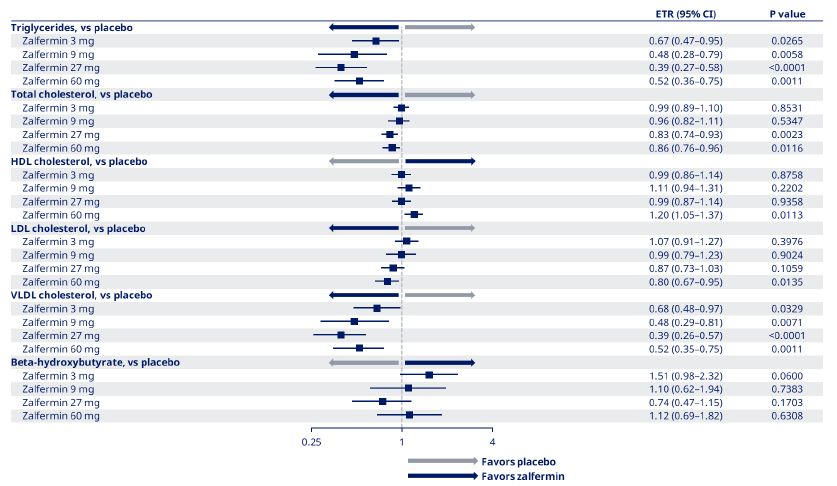
Figure 4: Estimated treatment ratios for change from baseline to end of treatment in lipids for zalfermin versus placebo.
Data are not shown for the 120 mg treatment group as treatment at this dose was discontinued early due to adverse events.
CI, confidence interval; ETR, estimated treatment ratio; HDL, high-density lipoprotein; LDL, low-density lipoprotein; VLDL, very low-density lipoprotein.

Hormones

Decreases in plasma leptin levels were observed at EOT in all zalfermin treatment groups with no clear dose dependency (Table S9). Plasma soluble leptin receptor levels increased across all the zalfermin treatment groups at EOT; changes were not dose dependent (Table S9). The ETRs for plasma leptin and plasma soluble leptin receptor levels across all zalfermin treatment groups are presented in Figure S3. Changes in plasma leptin levels favored zalfermin except for the 3 mg dose (Figure S3). Changes in plasma soluble leptin receptor levels favored zalfermin across all treatment groups (Figure S3).

Glucose Metabolism

Variations in mean glucose metabolism parameters were observed across the zalfermin treatment groups, with no clear dose dependency. No clinically meaningful changes in FSG, FSI, or FPG were observed across the zalfermin treatment groups (Table S10). A reduction in HbA1c was observed in all zalfermin treatment groups, with greatest reduction observed in the 27 and 60 mg treatment groups (Table S10).

The ETRs for the glucose AUCs were consistently but not statistically significantly slightly above 1 for the 3 mg to 60 mg treatment groups, indicating a minimally higher glucose excursion with the OGTT. This was accompanied by a slight non-significant lowering below 1 in the ETRs for insulin AUCs in the two highest treatment groups (27 and 60 mg) at EOT, compared with baseline. This tendency was not confirmed for the incremental AUCs for insulin and glucose for the highest dose of zalfermin (Table S11).

Discussion

In the current study, AEs were mainly GI related across all MADs of zalfermin and were mild to moderate in severity. Zalfermin was generally well tolerated, except for the 120 mg treatment group that was terminated early due to GI-related AEs (vomiting and nausea). No deaths, serious AEs, or AEs related to technical complaints were reported across any of the zalfermin treatment groups. Overall, zalfermin had a safety profile that was consistent with the FGF21 analog class [13,23-26]. No clinically relevant effect on the menstrual cycle, female reproductive organs, or sex hormones were observed, and no clinically relevant changes at follow-up were observed in other safety parameters. Although slight increases in SBP and DBP were observed in the higher-dose zalfermin treatment groups, these were not regarded as events directly caused by treatment but likely incidental findings. Of note, one other FGF21 analog (PF-05231023) has reported slight increases in blood pressure [27]. Low-titer anti- zalfermin antibodies were detected in 14 participants with no clinical impact. Given that the 120 mg dose in this current study was terminated prematurely, the 60 mg dose appears to be the maximum tolerated dose for weekly administration.

Dose proportionality was observed for AUC0-168,SS and Cmax,SS. The geometric mean t½,SS of zalfermin ranged from 120 to 127 hours, and tmax,SS ranged from 29 to 38 hours across the zalfermin 3 mg to 60 mg treatment groups. The approximate plasma half-life of zalfermin of 120 hours (5 days) was determined in the SAD study [16] and corroborated in this study. Therefore, zalfermin may be capable of sustained PD activity with a once-weekly dosing regimen. By comparison, other FGF21 analogs such as efruxifermin and pegozafermin have reported half-lives in humans of 3–3.5 days, which were suitable for once-weekly dosing [14,28]. Other PK parameters, for example Cmax and tmax, were also similar between this study and the SAD study [16].

Participants in the lower-dose zalfermin treatment groups experienced some weight gain, likely mediated by an increase in appetite and patient-reported changes in food preferences, which has also been described in preclinical species [29,30]. In addition, some other FGF21 analogs have shown an increase in appetite with no clinically meaningful change in body weight [13,31]. In this current study, no clinically meaningful change in body weight was observed in the 60 mg treatment group, where increase in appetite was observed, indicating a potential treatment effect on energy expenditure. By comparison, no clinically meaningful weight loss was observed in the SAD study [16]. In a previous study, efruxifermin did not demonstrate meaningful weight loss at lower doses of 7 and 21 mg compared with the higher doses of 70 and 140 mg [13]. Furthermore, in another study, efruxifermin 50 mg did show a trend toward body weight reduction [32]. Thus, it is likely that studies involving higher doses of zalfermin and of longer duration may be needed for clinically significant weight loss to be observed; however, the effect on body weight reduction would need to be carefully balanced with the observed GI-related AEs. At the time of writing, the phase II study (NCT05016882) of zalfermin 30 mg and semaglutide combination therapy is in progress to determine their effect on MASH resolution and fibrosis improvement in patients with MASH and fibrosis stages 2–4 [33]. Semaglutide has previously demonstrated glucagon-like peptide-1 receptor agonist- mediated weight reduction [34], and it is hypothesized that this would confer additional benefit alongside zalfermin treatment.

Changes in leptin favored zalfermin versus placebo across all doses (except the 3 mg dose) despite no clinically significant weight loss across zalfermin treatment groups. This may be related to the mechanism of action of zalfermin with modulation of adipokines in adipose tissue, resulting in alterations in secretion and systemic leptin sensitivity [35]. A decrease in leptin may also be related to the decrease in female fertility that was observed preclinically [15,17-20], suggesting that this may not translate to patients with overweight/ obesity.

Positive effects on the lipid profile in humans have previously been demonstrated with other FGF21 analogs [13,24-26]. The percentage changes from baseline in TG, HDL-C, LDL-C, and VLDL-C levels for the 60 mg treatment group in this analysis were –48%, 20%, –20%, and –48%, respectively. Specifically for TG and VLDL-C, significant treatment effects were observed across all zalfermin treatment groups versus placebo (3 mg to 60 mg). These results are consistent with the lipid profile improvement reported in the SAD study [16]. Although this study was conducted in healthy volunteers with overweight/ obesity, these results indicate that zalfermin may be promising not only as pharmacotherapy for the treatment of MASH but for other cardiometabolic-related disorders such as dyslipidemia and severe hypertriglyceridemia [36].

No clinically meaningful changes in FSG, FSI, and FPG were observed across the zalfermin treatment groups. This is consistent with the results from the SAD study, where no clinically relevant changes were observed in glucose metabolism parameters [16]. This could be explained by the fact that in both the current study and the SAD study, analyses were conducted in populations without diabetes, and therefore, clinically meaningful changes in glucose metabolism parameters were not expected. However, in this current analysis, reduction of HbA1c was observed and was greatest in the zalfermin 27 and 60 mg treatment groups. This is likely attributable to the MAD design of this study, with participants having a higher exposure to zalfermin compared with the SAD study [16], and where an effect on HbA1c was harder to observe with once-weekly single dosing. In addition, participants in this current study had obesity and therefore may also have been insulin resistant. Furthermore, the results of the OGTT, with a slight increase in glucose excursion rate across all doses of zalfermin and a lowering of insulin, could suggest a reduction of glucose tolerance. This finding is not supported by the HbA1c results where a reduction was observed at the higher zalfermin dose levels. One explanation could be that the relationship observed between zalfermin and glucose tolerance may be influenced by body weight; however, further investigation is needed to assess this.

Some FGF21 analogs have shown sustained effects on insulin sensitivity and trends in the lowering of FPG [13,24]. However, in two previous studies, the results observed were in populations with type 2 diabetes, and therefore, the effects on glycemic parameters may be more pronounced than in the current study [13-24]. Nevertheless, further studies are warranted to determine potential effects of zalfermin on glucose metabolism parameters in participants with types 2 diabetes.

This study had several limitations. Although the purpose of the trial was to primarily assess safety and tolerability to establish a well- tolerated dose range for zalfermin to be investigated in larger trials, the relatively small sample size of 57 participants, and short duration and follow-up time, may affect the generalizability of the safety and efficacy assessments. Furthermore, most of the population was White and no Asian participants were included, thus there was limited diversity in this trial. In addition, fewer females were included in the 27 and 60 mg treatment groups, thus, there are limited data on the effects of zalfermin on the menstrual cycle and reproductive organs at higher doses. Longer, larger clinical studies may provide further insights into the efficacy and safety of zalfermin in more diverse populations.

Based on the safety and PK profile established during this MAD study of subcutaneous zalfermin, the maximum tolerated dose was 60 mg, and this was compatible with a once-weekly dosing regimen. The PD profile of zalfermin, particularly the improvement in the plasma lipid profile, is promising for the treatment of a range of cardiometabolic diseases such as MASH and dyslipidemia. The results obtained from this trial support further clinical development of zalfermin.

Acknowledgments

The authors thank the trial participants, the investigators, and trial site staff who conducted the trial. Medical writing support was provided by Casey McKeown, RVN, FdSc, and Liam Gillies, PhD, of Titan, OPEN Health Communications, and funded by Novo Nordisk, in accordance with Good Publication Practice (GPP) guidelines (www.ismpp.org/gpp-2022).

Data availability Access request proposals can be found at novonordisk-trials.com

Funding

This study was funded by Novo Nordisk A/S.

Conflict of interest disclosure

K.D., J.S.H., M.S.P., S.L.L., O.B., S.T., and B.A. are all employees of and shareholders in Novo Nordisk. C.K. is an employee of and shareholder in ICON.

Ethics approval

The trial was conducted in accordance with the Declaration of Helsinki and Good Clinical Practice guidelines. The protocol for this trial was approved by an independent ethics committee/institutional review board.

Participant consent

All participants provided written informed consent.

Clinical trial registration

This study is registered with ClinicalTrials.gov (NCT03479892).

Author contributions

K.D., J.S.H., M.S.P., S.L.L., O.B., S.T., and B.A. wrote the manuscript; K.D., J.S.H., M.S.P., S.T., and B.A. designed the research for the SAD and MAD studies; K.D., J.S.H., S.T., and B.A. performed the research for the SAD and MAD studies; K.D., J.S.H., M.S.P., S.T., and B.A. analyzed the data; S.L.L. and O.B. contributed new reagents and analytical tools; C.K. was the principal investigator and responsible for assessment of adverse events as well as the medical care of the participants during the study.

References

  1. Rinella ME, Lazarus JV, Ratziu V, et (2023) A multisociety Delphi consensus statement on new fatty liver disease nomenclature. J Hepatol. [crossref]
  2. Takahashi Y, Fukusato T (2014) Histopathology of nonalcoholic fatty liver disease/ nonalcoholic World J Gastroenterol. [crossref]
  3. Chalasani N, Younossi Z, Lavine JE, et al. (2018) The diagnosis and management of nonalcoholic fatty liver disease: Practice guidance from the American Association for the Study of Liver Hepatology. [crossref]
  4. Murag S, Ahmed A, Kim D (2021) Recent epidemiology of nonalcoholic fatty liver Gut Liver. [crossref]
  5. Younossi ZM, Koenig AB, Abdelatif D, et al. (2016) Global epidemiology of nonalcoholic fatty liver disease:Meta-analytic assessment of prevalence, incidence, and Hepatology. [crossref]
  6. Le MH, Yeo YH, Li X, et (2022) 2019 global NAFLD prevalence: a systematic review and meta-analysis. Clin Gastroenterol Hepatol. [crossref]
  7. Harrison SA, Bedossa P, Guy CD, et (2024) A phase 3, randomized, controlled trial of resmetirom in NASH with liver fibrosis. N Engl J Med. [crossref]
  8. Kharitonenkov A, Shiyanova TL, Koester A, et (2005) FGF-21 as a novel metabolic regulator. J Clin Invest. [crossref]
  9. Xu J, Lloyd DJ, Hale C, et (2009) Fibroblast growth factor 21 reverses hepatic steatosis, increases energy expenditure, and improves insulin sensitivity in diet- induced obese mice. Diabetes. [crossref]
  10. Xie T, Leung PS (2017) Fibroblast growth factor 21: a regulator of metabolic disease and health span. Am J Physiol Endocrinol Metab. [crossref]
  11. Keinicke H, Sun G, Mentzel CMJ, et al. (2020) FGF21 regulates hepatic metabolic pathways to improve steatosis and Endocr Connect. [crossref]
  12. Kliewer SA, Mangelsdorf DJ (2019) A dozen years of discovery: insights into the physiology and pharmacology of FGF21. Cell Metab. [crossref]
  13. Kaufman A, Abuqayyas L, Denney WS, et al. (2020) AKR-001, an Fc-FGF21 analog, showed sustained pharmacodynamic effects on insulin sensitivity and lipid metabolism in type 2 diabetes Cell Rep Med. [crossref]
  14. Rosenstock M, Tseng L, Pierce A, et al. (2023) The novel glycoPEGylated FGF21 analog pegozafermin activates human FGF receptors and improves metabolic and liver outcomes in diabetic monkeys and healthy human volunteers. J Pharmacol Exp Ther. [crossref]
  15. Sass-Ørum K, Tagmose TM, Olsen J, et al. (2024) Development of zalfermin, a long- acting proteolytically stabilized FGF21 analog. J Med Chem. [crossref]
  16. Dahl K, Hansen JS, Clausen J, et al. (2022) SAT116 – Sustained reduction of triglyceride and LDL cholesterol from single administration of the novel long-acting FGF21 analogue 0499. J Hepatol.
  17. Ahart ER, Phillips E, Wolfe MS, Marsh C (2021) The role of kisspeptin in the ovarian cycle, pregnancy, and IntechOpen.
  18. Zhang Y, Cao X, Chen L, et al. (2020) Exposure of female mice to perfluorooctanoic acid suppresses hypothalamic kisspeptin-reproductive endocrine system through enhanced hepatic fibroblast growth factor 21 synthesis, leading to ovulation failure and prolonged J Neuroendocrinol. [crossref]
  19. Singhal G, Douris N, Fish AJ, et (2016) Fibroblast growth factor 21 has no direct role in regulating fertility in female mice. Mol Metab. [crossref]
  20. Owen BM, Bookout AL, Ding X, et al. (2013) FGF21 contributes to neuroendocrine control of female Nat Med. [crossref]
  21. S. Food and Drug Administration (2018) Guidance for industry: Bioanalytical method validation.
  22. European Medicines Agency, Committee for Medicinal Products for Human Use (CHMP) (2011) Guideline on bioanalytical method validation.
  23. Dong JQ, Rossulek M, Somayaji VR, et al. (2015) Pharmacokinetics and pharmacodynamics of PF-05231023, a novel long-acting FGF21 mimetic, in a first- in-human Br J Clin Pharmacol. [crossref]
  24. Gaich G, Chien JY, Fu H, et al. (2013) The effects of LY2405319, an FGF21 analog, in obese human subjects with type 2 diabetes. Cell Metab. [crossref]
  25. Loomba R, Lawitz EJ, Frias JP, et al. (2023) Safety, pharmacokinetics, and pharmacodynamics of pegozafermin in patients with non-alcoholic steatohepatitis: a randomised, double-blind, placebo-controlled, phase 1b/2a multiple-ascending-dose Lancet Gastroenterol Hepatol. [crossref]
  26. Alkhouri N (2022) Pharmacokinetic (PK) and pharmacodynamics (PD) of BIO89- 100, a novel glycoPEGylated FGF21, in non-alcoholic steatohepatitis (NASH) patients with compensated J Hepatol.
  27. Kim AM, Somayaji VR, Dong JQ, et al. (2017) Once-weekly administration of a long-acting fibroblast growth factor 21 analogue modulates lipids, bone turnover markers, blood pressure and body weight differently in obese people with hypertriglyceridaemia and in non-human primates. Diabetes Obes Metab. [crossref]
  28. Charles ED, Neuschwander-Tetri BA, Frias JP, et (2019) Pegbelfermin (BMS- 986036), PEGylated FGF21, in patients with obesity and type 2 diabetes: results from a randomized phase 2 study. Obesity (Silver Spring) [crossref]
  29. Talukdar S, Owen BM, Song P, et (2016) FGF21 regulates sweet and alcohol preference. Cell Metab. [crossref]
  30. von Holstein-Rathlou S, BonDurant LD, Peltekian L, et al. (2016) FGF21 mediates endocrine control of simple sugar intake and sweet taste preference by the Cell Metab. [crossref]
  31. Loomba R, Sanyal AJ, Kowdley KV, et al. (2023) Randomized, controlled trial of the FGF21 analogue pegozafermin in NASH. N Engl J Med. [crossref]
  32. Harrison SA, Frias JP, Neff G, et (2023) Safety and efficacy of once-weekly efruxifermin versus placebo in non-alcoholic steatohepatitis (HARMONY): a multicentre, randomised, double-blind, placebo-controlled, phase 2b trial. Lancet Gastroenterol Hepatol. [crossref]
  33. gov (2005) Research study on whether a combination of 2 medicines (NNC0194 0499 and semaglutide) works in people with non-alcoholic steatohepatitis (NASH)
  34. Lau DCW, Batterham RL, le Roux CW (2022) Pharmacological profile of once- weekly injectable semaglutide for chronic weight Expert Rev Clin Pharmacol. [crossref]
  35. Antonellis PJ, Kharitonenkov A, Adams AC (2014) Physiology and Endocrinology Symposium: FGF21: insights into mechanism of action from preclinical studies. J Anim Sci. [crossref]
  36. Bhatt DL, Bays HE, Miller M, et al. (2023) Pegozafermin for the treatment of severe hypertriglyceridemia: a randomized, double-blind, placebo-controlled phase 2 study (ENTRIGUE STUDY) Metab Clin Exp.
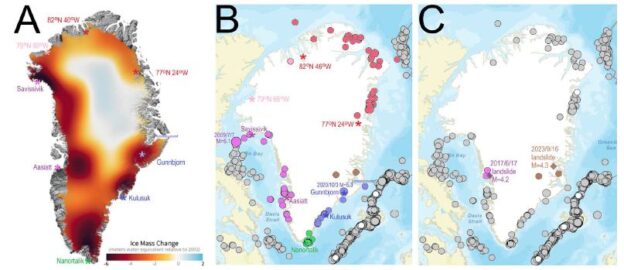
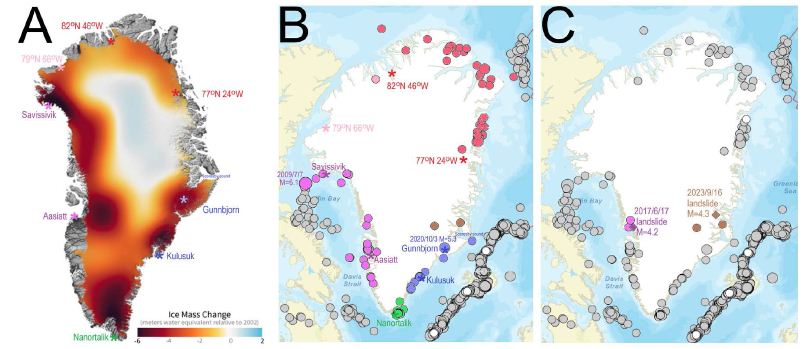
Staying Under the Radar: Poison and the Female Serial Killer

DOI: 10.31038/AWHC.2025833

Brief Commentary

This brief commentary will explore the archetype of the female serial killer and her use of poison as a means to achieve her ends in the landscape of patriarchal, Western culture. A serial killer is a person who has killed two or more people (some definitions indicate that the person has killed three or more [1]) with cooling off periods between each murder and the murders generally taking place in different locations [2-4]. With origins in the Victorian era, poisoning has been predominantly perceived as a feminine means of murder, as women were believed to be instinctively passive creatures and belonged in the domestic sphere [5]. Thus, poison (e.g., arsenic) was a useful tool to rid the home of unwanted vermin, children, or husbands either for the sake of the woman’s reputation or financial gain [1,4,6]. In the past, poisoning would have been a convenient means of murder, as the untimely deaths of loved ones could be attributed to heart failure or consumption. However, as [7] identified, as cultural expectations of gender change, so too does the gendered nature of murder.

Typically, serial killers are cast as masculine actors who are active agents in the world motivated by fear, anger, jealously, or desire [8]. These cultural conceptions are reinforced through large- scale data on serial murders, which tend to be overwhelmingly committed by men, with only 5-8.6% of instances perpetrated by women [3]. In these cases, the women are often concealed within the archetypes of traditional womanhood, tethered to their relationship to men or children (e.g., mother, nurse, wife, daughter, prostitute). However, as these archetypes break down and women are liberated from patriarchal forms of control, so too will their reasons for and methods of murder change. Thus, there is a need to explore the role of poison as it pertains to feminine archetypes in the 21st century.

References

  1. Tracy SK (2025) Serial killing: A psychological Cognella (in press).
  2. Cullen E (2020) American evil: The psychology of serial killers. Waterside Press.
  3. S. Department of Justice, Morton, R. J., Tillman, J. M., & Gaines, S. J (2019) Serial murder: Pathways for investigation. AbeBooks.
  4. Ramsland K (2006) Inside the minds of serial killers: Why they Praeger.
  5. Sterling E (2019) Desperate motives for murder: Mercenary female baby killers in Victorian England. The Lincoln Humanities Journal, 7(1), 136-153. Available from: https://www.lincoln.edu/_files/academics/Lincoln-Humanities-Journal-Vol-7-2019. pdf#page=137
  6. Schechter H (2003) The serial killer files: The who, what, where, how, and why of the world’s most terrifying murders. Ballantine Books.
  7. Benkart E (2019) The patterns of women serial killers in a climate of changing gender norms. OSF Preprints. Center for Open Science. Available from: https://doi. org/10.31219/osf.io/pcqk6
  8. Wilkins MP (2004) A comfortable evil: Female serial murders in American culture [Doctoral dissertation, Pennsylvania State University]. Electronic Theses and Dissertations for Graduate School.Available from: https://etda.libraries.psu.edu/ catalog/6451

Attachment and Trauma in Therapy: A Neuroaffective Developmental Perspective

DOI: 10.31038/PSYJ.2025731

Introduction

In psychotherapy, attachment and trauma are not abstract concepts—they are felt realities that enter the room through the body, the relational field, and the therapist-client interaction. From the perspective of neuroaffective developmental psychology [1], both attachment and trauma are seen as embodied processes that unfold across three interconnected levels of functioning: the autonomic – arousalregulating and sensing level, the limbic – emotional level, and the prefrontal – selfcontrol and emotional intelligence systems. This article offers an adjunct to the article Dances of connection: Neuroaffective development in clinical work with attachment (2015). It is a brief sketch of how psychological trauma and attachment patterns interact, and how these dynamics show up in therapy. The neuroaffective approach helps clinicians work not only with what clients say, but with how they regulate, feel and relate moment to moment.

Three Levels of Neuroaffective Functioning

This felt reality of attachment and trauma is particularly noticable when the client suffers from severe trauma, neglect or abuse in childhood. On a CT scan, the brain of the client with severe history is smaller than the brain of a normally attached person. This is not primarily because there is a lack of neurons; we are born with most of our neurons already developed. It is instead because the wiring between those neurons has not developed [2]. The neuroaffective model describes human development as unfolding, a growth of neuronal connections, through interaction between child and caregiver at three brain–body levels:

  1. The Autonomic Level – This is the body’s basic regulation system: arousal, movement, safety/danger detection. Trauma states generally show up as chronic hyperarousal, exaggerated startle responses or collapse, or disconnection from the body. When this level is intensely activated, either through trauma or through severe neglect or abuse, the limbic and prefrontal levels are shut off. In severe cases of childhood dysfunction, the basic neuronal growth is inhibited [3].
  2. Limbic Level – This level governs affect regulation, social bonding, and emotional resonance. Relational trauma, common in early insecure attachment, will intensely activate this In these circumstances, there is a deep disruption in emotional resonance. This may cause relational insecurity, intense agitation or a strong desire to control the beloved other.
  3. Prefrontal Level – This level is responsible for self-control, executive function, language, reflection, values, and The autonomic trauma response can make it difficult to manage daily chores. It can also fragment identity, so the person feels like floating pieces instead of a person, activating intense fear of going insane. Trauma and severe attachment dysfunction also impairs the ability to mentalize, i.e have insight into, one’s own or others’ inner states.

When trauma or insecure caregiving occurs—especially in early attachment relationships—it interrupts the integration between these levels. Throughout life, the person then develops strategies that keep them functioning but block relational depth.

Attachment Patterns and Trauma Responses

Attachment systems are our embodied adaptations to our early relational environments. Traumatic experiences shape how these systems become wired into our neural network (Table 1).

Disorganized attachment is often a marker of severe complex or developmental trauma, where the caregiver is also the source of fear [4]. This creates internal conflict with no solution—a condition that easily repeats itself in therapy.

Table 1: Attachment patterns and trauma responses.

Attachment Pattern

Somatic Tone Emotional Signature

Relational System

Secure Regulated Trusting, flexible Open, responsive
Avoidant Controlled Flat, disconnected Self-sufficient, distant
Anxious ambivalent Hyperaroused Overactivated, upset Preoccupied, ruminating
Anxious dependent Hyperaroused Overactivated, fearful Clingy, fearful
Disorganized Freeze/collapse Fear-without-solution Fragmented, chaotic

How These Patterns Show Up in Therapy

Clients do not “talk about” trauma and attachment—they live them. In the session, therapists may encounter:

  • Sudden shifts in presence or affect (dissociation, collapse or severe startle-response)
  • Fear of closeness
  • Intense attachment bids
  • Sudden conflict and complete loss of trust
  • Idealization followed by devaluation
  • Somatic cues like tension, dissociation, fidgeting or holding breath

These responses are not ‘resistance’—they are self protection responses as the client literally is living in the map from the past instead of in real time. Therapists, too, may be drawn into these reenactments—emotionally pulled into being caretaker, overwhelmed, rescuer, rejector, or withdrawing. Being aware of these dynamics in the client and in onself is central to effective therapy.

Healing Approach

The key to healing attachment trauma is not primarily insight or technique. It is a relational experience that will allow the nervous system to integrate (Table 2).

The therapist must become a regulating presence, offering consistent, attuned responses – especially when the client mistrusts the relationship. Repair after rupture or conflict is often the most powerful healing moment [5].

Table 2: Healing approach.

Level

Clinical Focus

Tools and Interventions

Autonomic Safety, arousal regulation Breath, grounding, containment, music, somatic tracking, synchronisation
Limbic Co-regulating emotions and emotional activities Voice tone, eye contact, emotional mirroring, shared activities and games
Prefrontal Impulse control, reflection and mentalization Playing with self-control, mentalizing questions, value clarification

Final Reflections

Neuroaffective developmental psychology reminds us that trauma is not only remembered. It is where the client lives. The therapist’s job is to become a “regulating other”, offering what was missing: safety, resonance, repair and mentalization. It is not about what we do, it is about who we are while we are doing it. Through this embodied, attuned presence, clients can begin to reorganize their inner experience—and gradually, resolve trauma responses and earn secure attachment from the inside out [6-10].

References

  1. Hart S, Bentzen M (2012) Through Windows of Karnac.
  2. Teicher MH, Samson JA, Anderson CM,Ohashi K (2016) The effects of childhood maltreatment on brain structure, function and connectivity. Nature Reviews Neuroscience, 17: 652–666. [crossref]
  3. Perry BD (2009) Examining child maltreatment through a neurodevelopmental lens: Clinical applications of the Neurosequential Model of Journal of Loss and Trauma, 14: 240-255.
  4. Perry BD, Szalavitz M (2006) The Boy Who Was Raised as a Dog: And Other Stories from a Child Psychiatrist’s Notebook – What Traumatized Children Can Teach Us About Loss, Love, and Basic Books
  5. Tronick E,Gianino A (1986) Interactive mismatch and repair: Challenges to the coping Social Perception in Infants.
  6. Bentzen M (2021) The Neuroaffective Picture North Atlantic Books.
  7. Kearney BE, Lanius RA (2022) The brain-body disconnect: A somatic sensory basis for trauma-related disorders. Frontiers in Neuroscience. [crossref]
  8. Porges S (2011) The Polyvagal Norton Books.
  9. Schore AN (2003) Affect Dysregulation and Disorders of the Norton Books.
  10. Siegel D (2012) The Developing Mind (2nd ) Guilford Books.