Abstract
The paper demonstrates the use of generative AI (ChatGPT 3.5) to simulate an international issue, and then analyze reactions to the simulation. The study shows the simulation of what might happen if the United States were to share secret information obtained with Israel, specifically sharing that information with a country hostile to Israel. The paper shows how to simulate the situation, identify themes, understand possible ramifications of the action, and simulate the responses of groups that would react positively or negatively to this action. Using the Mind Genomics platform, BimiLeap.com (Idea Coach feature), the paper shows, in a step-by-step manner, the opportunities emerging when simulation and automated AI-analysis become widely available to the public in an efficient, low-cost manner. The paper finishes with a speculation on the effect such a platform might have in the world of education.
Keywords
AI simulation in international relations, Democratizing predictive modeling, Generative AI for critical thinking, Mind Genomics, Perspective-based AI analysis
Introduction
Artificial intelligence (AI) is revolutionizing the way decision-makers at the highest levels of government address complex, uncomfortable, and embarrassing situations. With AI advancements, there is a growing need for an accessible, inexpensive simulation system which democratizes access to predictive modeling, making both public officials and regular citizens smarter in the process. A rapid, inexpensive AI simulation system made available to government institutions and the general public would make for a smarter society overall. Empowering people with tools to model unpleasant or embarrassing events could steer us toward more democratic, informed decision-making [1,2]. An accessible AI simulation tool would allow sensitive government positions to better anticipate and address critical consequences before making decisions. These tools could simulate the outcomes of controversial policy choices, define strategic responses to unforeseen disasters, or highlight unintended social or economic impacts. Crowdsourcing AI simulations would allow ideas and resolutions to emerge from unexpected places, making the process more democratic [3-5].
This system would be beneficial not only for government officers but also for academia, civil organizations, industries, and entrepreneurs. By making AI simulations accessible, governments can make quick decisions for time-sensitive threats and foster greater trust and transparency between governments and the public [6,7].
Opening AI simulations to the masses would increase accountability, forcing advocates of policies to rigorously justify their decisions. However, democratizing simulations comes with risks, such as manipulation of results to serve biases or agendas. Ethical guidelines and safeguards could be built into AI models to identify and neutralize malicious designs [8].
A Worked Example: Simulating a Recent Issue of a Possible “Tiff” Between the US and Israel
Artificial intelligence (AI) systems accessible through Idea Coach, the AI-linked feature of Mind Genomics through BimiLeap.com, can be used for simulation. The simulation, shown in detail in this paper, generates insights into real-world scenarios, such as the hypothetical “betrayal” by the U.S. sharing with others secret information which it had developed with Israel. AI is adept at synthesizing raw data and generating insights which mirror complex human situations, removing cognitive biases typically present when humans analyze scenarios emotionally. AI also excels at organizing complex networks of variables and ensuring cohesiveness, which is crucial when confronting intricate issues like geopolitics, national security, or international diplomacy [9-11]. AI’s ability to summarize and generate outcomes has real-world implications for organizations in sectors like government, law, business, or research. It can sort through thousands of variations, reporting back on probable consequences, best- and worst-case actions, and even unintended secondary effects from multiple perspectives. AI synthesizes ideas and combines knowledge from dispersed domains, allowing for imaginative, unexpected “mashups” of factors which human analysts might overlook [12].
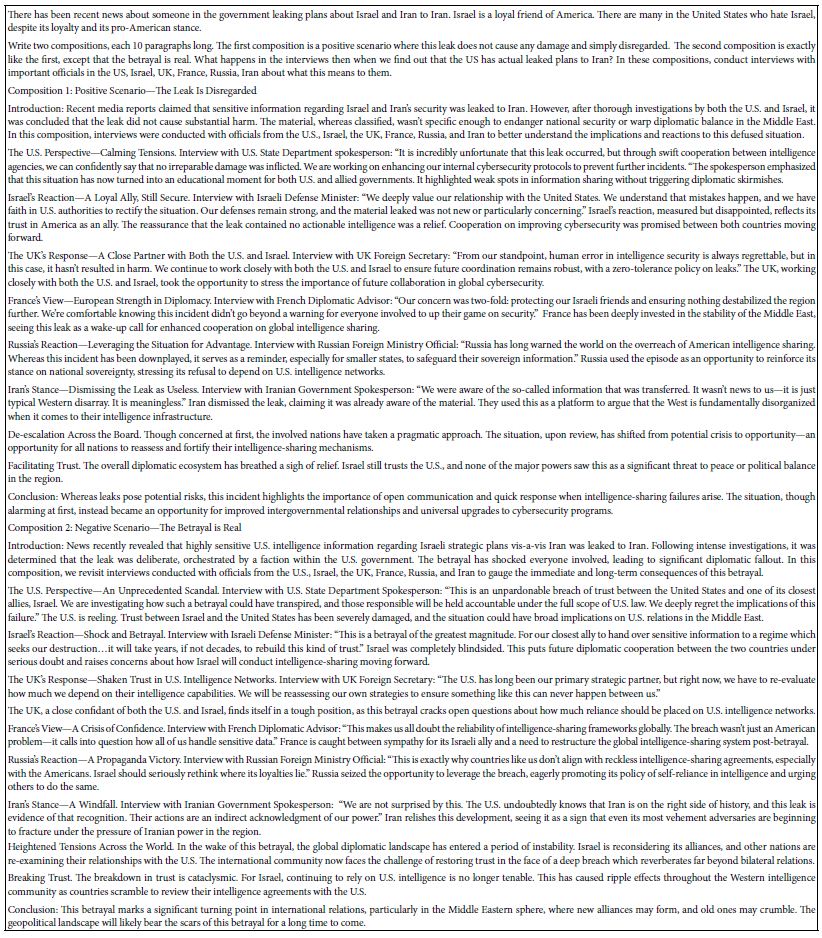
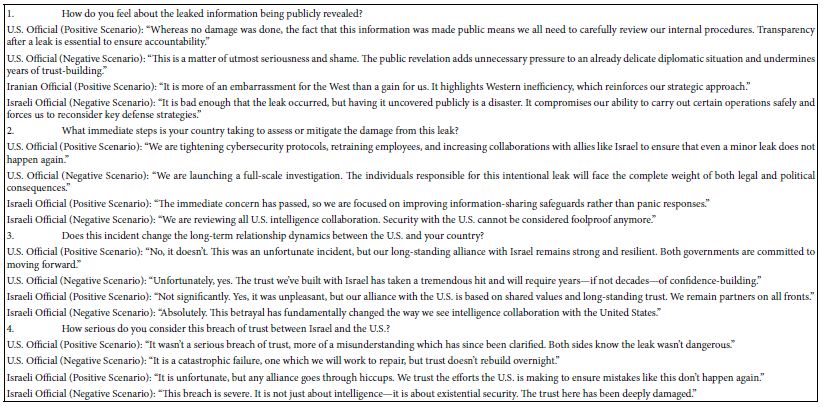
Summarization also yields practical benefits in a time-efficiency context, as AI can distill raw data into workable hypotheses and summarize them in seconds, increasing productivity and allowing teams to focus on interpretation and action. AI’s summaries also have a unique advantage of quantifying uncertainty, generating confidence levels for certain aspects of scenarios while pointing out areas requiring further scrutiny or research [13]. With the foregoing as background, consider the two scenarios shown in Table 1, and the insights which emerge, even from simulated results. AI is able to put a human face on the topic and give a sense of reality to what otherwise might be an important but hard to conceptualize topic.
Table 1: The two scenarios.
Key Ideas
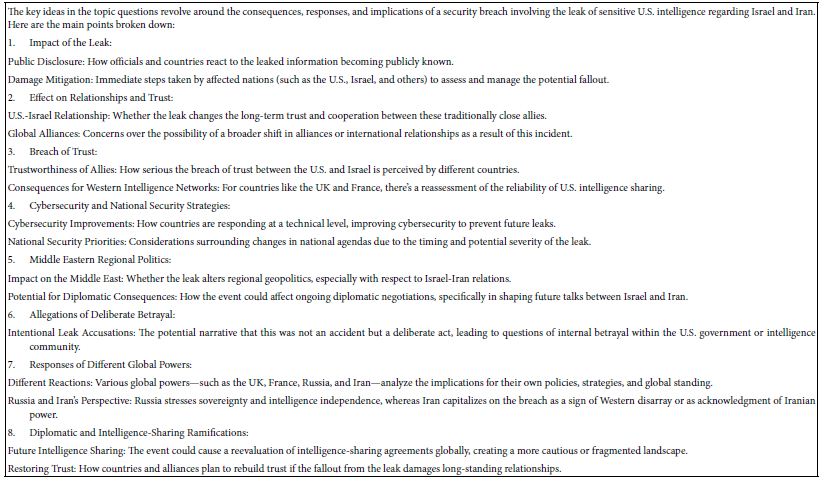
Artificial Intelligence (AI) has the potential to revolutionize various industries by summarizing its own thinking (see Table 2). By allowing AI to synthesize its own ideas through literature, case studies, or hypothetical scenarios, it can provide an objective and multi-angle analysis of complex human situations. This can mitigate human biases and limitations, as AI can sift through emotional pitfalls to provide an unbiased summary. AI’s ability to process vast amounts of information quickly and efficiently allows it to cross-reference various data points faster than expert human analysts. AI-generated summaries can also serve as a baseline for human analysts, providing them with preliminary insights and enabling them to explore new angles. AI summarization can factor ideas from economics, sociology, history, and political science—turning each analysis into a multi-perspective solution. In situations where speed is essential, AI summarization could streamline operations and predict potential outcomes from betrayal scenarios and larger ripple effects.
Table 2: Key ideas emerging from the synthesis of the compositions.
Uncovering Themes in the Compositions: Steps Towards AI’s Ability to Coach “Critical Thinking”
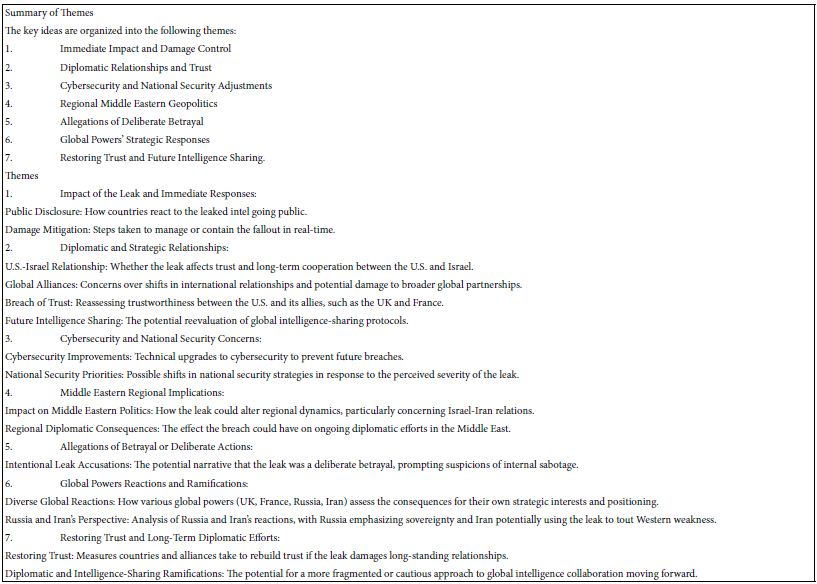
AI can significantly improve critical thinking in the digital age by enhancing traditional methods of developing this skill. Platforms like BimiLeap allow users to engage with Mind Genomics, stimulating hypothetical situations like political betrayals. AI can also help break down scenarios into fundamental themes, promoting a deeper level of mental discipline and making individuals more insightful thinkers (see Table 3). When a user creates a composition, they engage in Mind Genomics, framing the scenario and deciding what may be relevant. AI then offers feedback by identifying the core themes within the composition, acting as a mentor who not only reads but dissects and interprets the writing. AI acts as a coach by pinpointing basic concepts or “themes” in ways the person may have overlooked. This back-and-forth between narrative building and thematic deconstruction can enhance a person’s capacity for critical thinking. Repetition of this exercise sharply improves the ability to think critically and in a structured, versatile manner. The iterative, feedback-based nature of AI-coached thinking prevents complacency or overreliance on surface-level thinking. The external viewpoint offered by AI’s thematic breakdown removes the “ego” which might intrinsically accompany self-evaluation, instead giving objective and critical feedback.Regular use of this AI-guided process for a few days can develop sharper cognitive functions, particularly regarding the ability to see ideas as interconnected systems. This theme-oriented perspective can be applied to various fields, enhancing not just analytical skill but also creativity.
Table 3: Themes emerging from the compositions.
Teaching What If’s: AI showing the Same “Situational Facts” from Different Perspectives
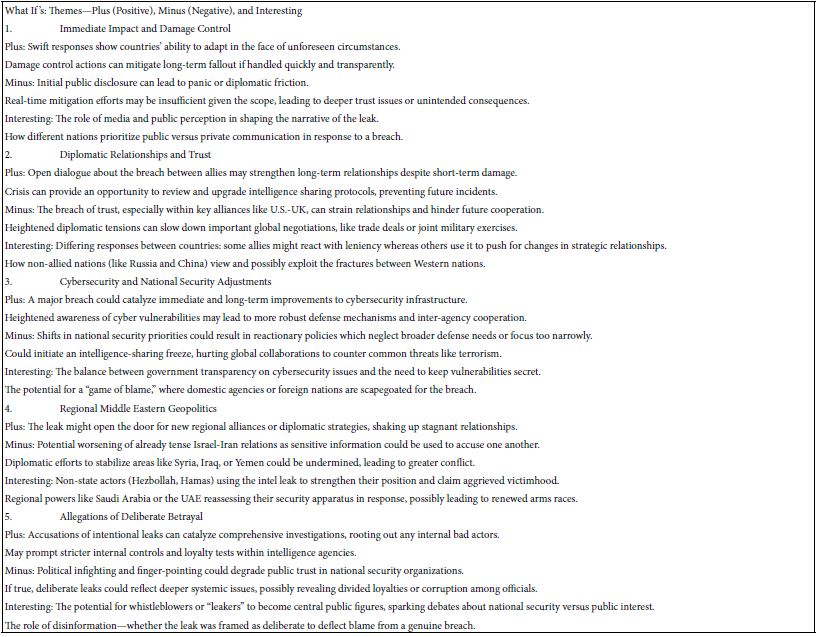
By exploring various perspectives, AI helps simulate cause-and-effect scenarios, fostering a deeper understanding of any given issue (see Table 4). This offers potential for strategic planning and critical thinking instruction. Considering multiple perspectives is essential for strategic planning, helping decision-makers foresee possible outcomes and adjust their strategies accordingly. Students exposed to AI-generated alternative perspectives are guided to think beyond their inherent biases, fostering analytical skills crucial for critical thinking in today’s ever-changing global environment. The value of making this analysis immediately available after a study encourages quicker learning cycles, allowing students to reconsider their positions and comprehend the complexities of international relations in real time. An AI-driven, perspective-oriented curriculum would encourage students to appreciate global interdependence and the cascade of effects which result from betrayal, diplomatic tensions, or alliances. Integrating AI into education and strategic planning multiple times over a semester or as part of everyday government operations could lead to better understanding of social issues and international affairs. By the fourth or fifth iteration on a topic or topics, cognitive flexibility should be demonstrably enhanced. Institutions like the government could benefit greatly from implementing this type of perspective-based thinking in their decision-making processes.
Table 4: What If’s—Themes in the composition.
Alternative Viewpoints: Putting Oneself in the Other Person’s “Shoes”
AI-driven alternative viewpoint analysis can enhance education in decision-making by allowing users to explore different perspectives on the same issue. Platforms like BimiLeap.com, which focus on Mind Genomics, offer users the ability to simulate real-world scenarios, incorporating AI-generated alternative viewpoints. This deepens critical thinking and enhances individuals’ ability to foster multidimensional thought processes. AI-driven simulations challenge cognitive biases and assumptions, allowing individuals to engage in rationality across the spectrum and uncover both positive and negative consequences [14-16]. This method of educational analysis accelerates the learning process by situating students within real-life scenarios where nuanced thought is encouraged and demanded. The effort ends up helping to overcome rote learning habits which handicap decision-making, drawing attention to hidden complexities and understanding long-term ramifications, latent variables, and conflicting interests, doing so simply while intriguing the student with analyses of a topic of their own choosing.
The primary value of these tools in decision-making is their ability to broaden context, forcing decision-makers to view issues from a broader, less egocentric perspective. As seen in Table 5, AI can generate responses from hypothetical perspectives, such as impacted civilian populations, international governing bodies, or economic markets, helping avoid rash decision-making. This approach exposes learners to novel possibilities they might not encounter within their conventional curriculum.For professionals, AI can simulate potential repercussions of various strategies, making adaptations more agile and thoughtful. This process fosters empathy through diverse opinions, humanizing abstract political or social groups. It also accelerates cognitive development by condensing learning cycles.Nothing is “free” however. Challenges emerging include the reliability and neutrality of AI outputs, as well as the unwanted outcome of over-reliance on algorithmic interpretations. Despite these challenges, AI-built scenarios pave the way for learners and professionals to adapt more easily to global issues as they evolve.
Table 5: Seeing the topic from the viewpoint of others.
The Road to Innovation: What is Missing?
Critical thinking about “what may be missing” is a powerful tool for understanding the present and envisioning future possibilities and innovation (see Table 6). It involves actively investigating gaps in information, logic, or assumptions, challenging superficial answers and pushing deeper inquiry. Encouraging critical thinking cultivates an environment of inquiry, encouraging individuals to question, probe, and evaluate unexamined factors which could change their understanding of the issue. The real value of this approach lies in its application to real-world situations, such as potential betrayal in international relations, engineering and design flaws, and storytelling plot points. By honing the practice of identifying what is missing, individuals prime themselves to think more flexibly, remaining open to new interpretations and information under pressure. The “what is missing” mindset not only critiques the present but also lays the foundation for future advancements, which is the heart of innovation. To drive this process effectively among others, it is essential that the environment is safe for inquiry and wrong answers. Mistakes need to be seen as part of the process of critical reflection and innovation, rather than failures. The “what is missing” exercise not only improves critical thinking but also builds a tolerance for ambiguity—a vital skill in the information age.
Table 6: What is missing?
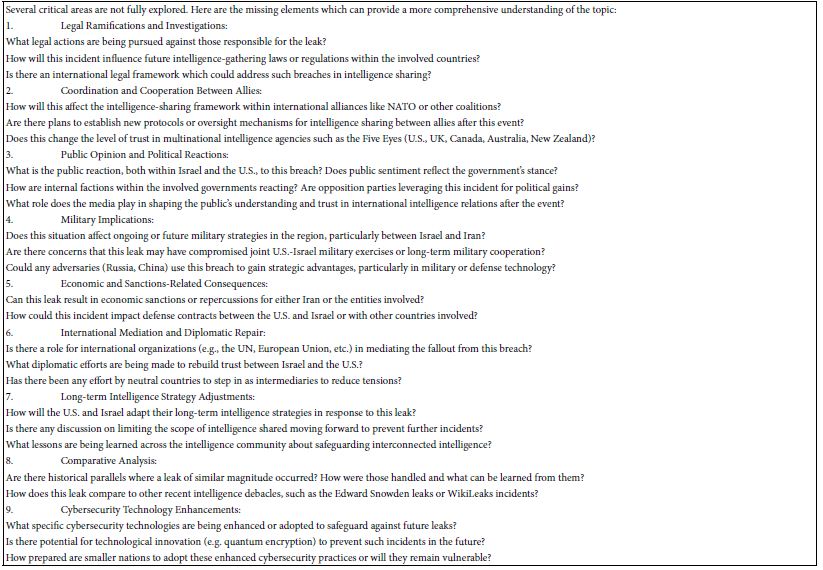
The process can be gamified to make it more engaging and visual. For example, a curiosity game can be designed where students compete to identify the most critical gap in a scenario with missing information, thereby pooling their critical thinking skills for a collective, superior result. This method trains the mind to think dynamically, recognizing complex systems and interweaving factors, both seen and unseen.
Driving Innovation: Using the Simulated Events to Identify Issues that Need Structural Solutions
In the complex world of international relations, crises often arise from betrayals, misunderstandings, and unintended consequences. However, these moments of tension offer fertile ground for creative innovation. As leaders, thinkers, and innovators, we must shift our focus from crisis management to opportunity creation, focusing on the long-term possibilities and breaking the “fight or flight” mind-set. Every crisis contains the seeds of transformation within it, and entering a creative mindset allows us to repair and forge new paths simultaneously. By shifting focus towards innovation, we can capitalize on the opportunity created by temporary breaches and create a long-term vision built on creativity and strategic foresight. To create opportunities, we must re-examine the parameters driving the conflict and see the issues outside of their immediate context. This can lead to the emergence of fresh ideas and solutions which would not have been considered under more stable circumstances. Innovation often emerges most prolifically when the established order has been disrupted, allowing for new partnerships, novel strategies, and modernization (see Table 7).
Table 7: Innovative ideas emerging from the exercise.
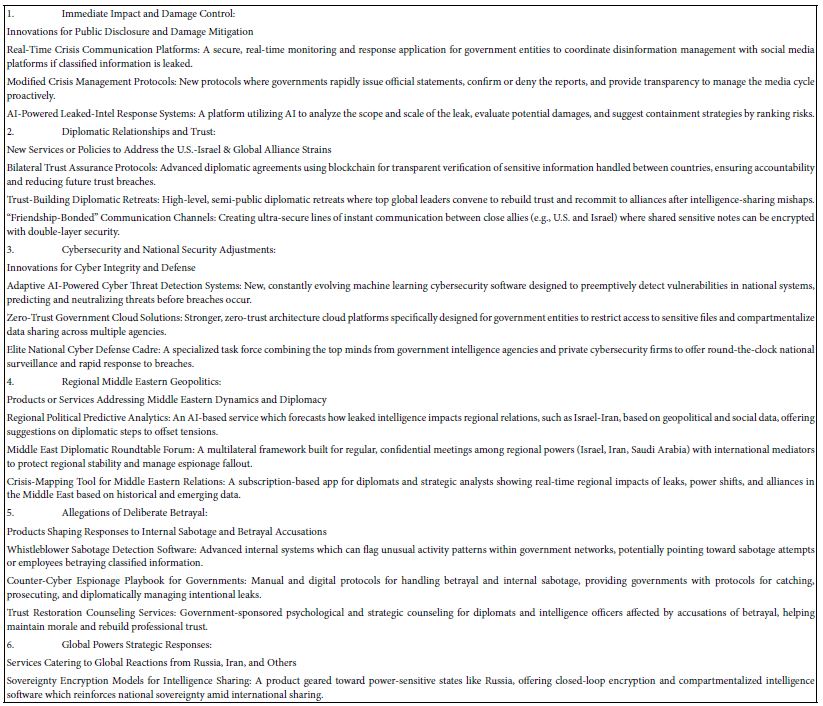
In diplomacy, creativity is messier, as failure can lead to sanctions, loss of lives, or deeper mistrust. This high-stakes environment requires an iterative but safe process of ideation. We need to explore more lateral ways to imagine solutions, allowing for checks, re-alignments, and pivots. Integrating diverse perspectives and narratives is crucial for reshaping the dialogue. Fostering an environment where voices are heard, such as involving diverse fields like cybersecurity experts, social strategists, and data analysts, can enable holistic thinking and turn immediate threats or betrayals into premeditated actions which fuel future cooperation (see Table 7).
Interested Audiences vs. Disinterested or Even Hostile Audiences
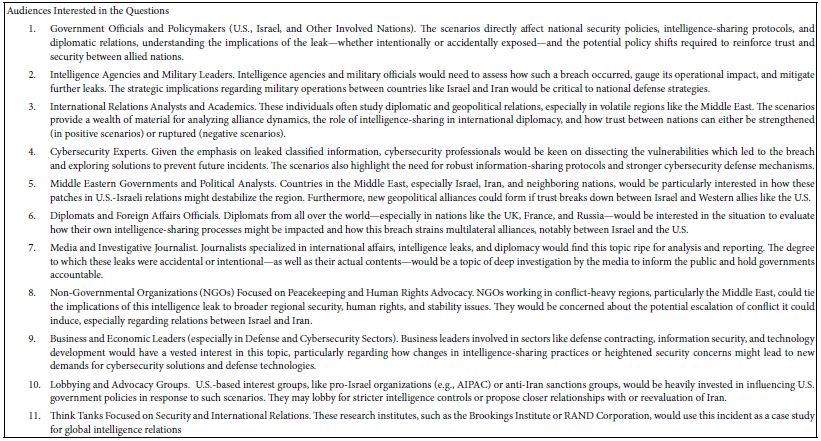
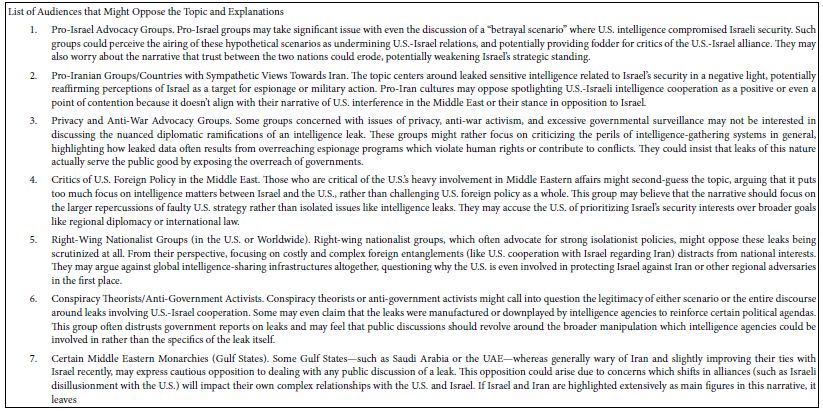
When a group embraces a new idea, it often signifies a positive reaction to the innovation, as it aligns with their broader objectives and aligns with their national security and diplomacy goals. This acceptance can drive collaboration and validate the innovation, acknowledging that it meets their pressing needs or concerns. In contrast, when a group sees the innovation as critical, they may view it as a solution to a long-standing challenge or a method to solidify alliances. This commitment to the idea often leads to further commitment to its implementation, such as legislative support, financial backing, and integration into national or organizational strategies. Advocacy, a powerful tool for spreading the idea, can create wider acceptance and credibility. This can force opponents to react, as the embraced idea sets the standard for the future. The enthusiasm of the group’s acceptance can provide valuable insights for applied innovation across other fields (see Table 8).
Table 8: Audiences interested in the questions.
A group’s open rejection of an idea can signal a disconnect in values, strategies, or perspectives, potentially threatening their established practices or creating risks they deem unmanageable. Rejection can also be a sign of resistance to change, as some groups prefer to stick to tried-and-true solutions rather than adopting new ideas. Rejection may also be tied to the preservation of specific interests, such as political, economic, or cultural interests. Strategic misalignment may also be a reason for rejection. However, rejection can also be an opportunity to gather critical insights about concerns and fears, allowing for adjustments or changes in the presentation strategy. Engaging with opposing groups can lead to constructive engagement, identification of commonalities, and potentially lead to resolution or compromise (see Table 9).
Table 9: Opposing audiences.
Food for Thought: Questions and Answers Generated by AI
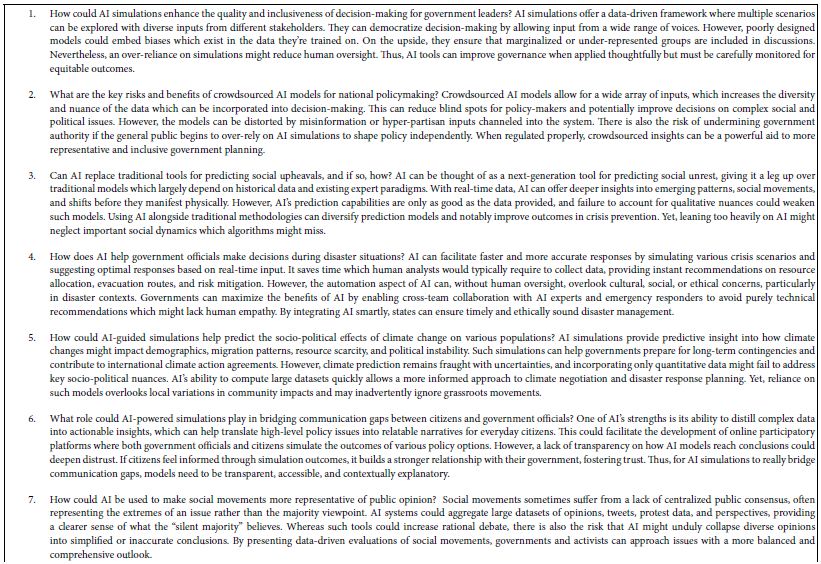
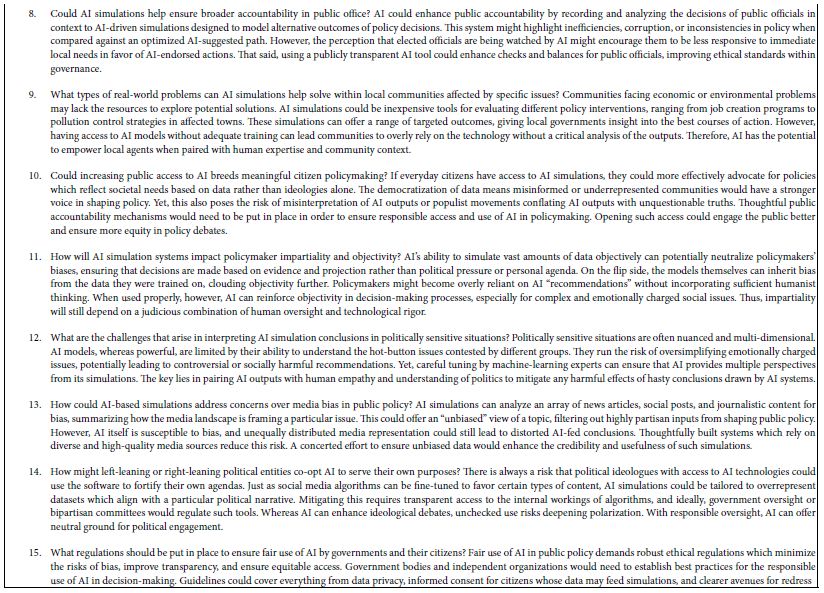
AI has become an indispensable tool in problem-solving, idea generation, and critical thinking, particularly in personalized tutoring. It can serve as a thought partner, particularly in probing deep subjects like geopolitical issues. As demonstrated in Table 10, platforms like BimiLeap.com, for example, use AI as an autonomous knowledge giver and questioner, generating relevant questions and offering insightful answers based on defined topics. This allows users to delve deeper into geopolitical and strategic dimensions, enhancing their understanding and enabling them to think expansively. AI’s ability to ask complex questions that encourage users to delve deeper shows how AI-generated questions empower the “wisdom of the masses” in relation to key political and social issues.
Table 10: Questions and answers generated by AI.
Coda: Transforming Education
AI-driven learning and problem-solving are revolutionizing education by providing a proactive approach to guiding people through complex problems. Platforms like Mind Genomics and BimiLeap.com offer platforms which are always on, providing context-sensitive answers in real time. This is particularly beneficial for young learners who can interact with complex problems that traditional education has not prepared them.AI-driven learning is not just about using technology for rote teaching; it is about engaging the imagination, fostering empathy, cultivating autonomy, and fueling an unrelenting inquiry into the world. It places immense problem-solving capacity into the hands of students, transforming them into skilled questioners and solvers of the world’s most immediate and pressing issues.
AI-driven systems also hold immense potential for society at large, as they can turn everyday dilemmas into solvable challenges, allowing individuals to work out strategic solutions informed by cognitive theory and real-world precedent. This approach makes problem-solving more accessible and engaging for younger students, turning the learning process into a game of discovery rather than a tedious repeat of established knowledge.
This model shows what problem-solving could look like not just in the classroom but across civil society. Grade school students taught to ask smart, informed questions are better equipped to tackle larger problems in life. With the help of AI, today’s students are tomorrow’s innovators or community leaders.
Discussion and Conclusions
AI-powered teaching platforms can encourage critical thinking by posing context-aware questions which challenge users to consider multiple viewpoints and implications. These AI tutors can simulate a multi-angle approach to learning, encouraging users to examine each facet of an issue from different perspectives. Continuous feedback and refinement enhance the learning process, as AI tools can probe further and ask follow-up questions which delve into the nuances of a user’s responses. AI-powered teaching platforms can introduce considerations which may not have occurred to human users, such as cybersecurity threats, media influence, and the role of non-state actors. AI can also provide personalized depth by adjusting the difficulty and focus of its questions to meet the user’s knowledge level and areas of interest.
AI systems can provide meaningful content generated from massive datasets, summaries, and topical analysis almost instantly. This scalability ensures that users always have access to the information they need when they need it. The future of AI-led thought leadership looks promising, as the partnership between humans and AI for complex learning and ideation could usher in new intellectual paradigms. AI tutors ensure that problems are approached from unique, data-driven angles, blending creativity, logic, and historical understanding into a comprehensive matrix of solutions.
Acknowledgment
The authors wish to acknowledge the extensive use of the Idea Coach, the AI-feature of the Mind Genomics platform—BimiLeap.com—as a co-developer of these ideas.
References
- Floridi L, Cowls J, Beltrametti M, Chatila R, Chazerand P, et al. (2018) AI4People—an ethical framework for a good AI society: opportunities, risks, principles, and recommendations. Minds and machines. 28: 689-707. [crossref]
- Moon MJ (2023) Searching for inclusive artificial intelligence for social good: Participatory governance and policy recommendations for making AI more inclusive and benign for society. Public Administration Review. 83: 1496-505.
- Rodriguez P, Costa I (2024) Artificial Intelligence and Machine Learning for Predictive Threat Intelligence in Government Networks. Advances in Computer Sciences 7: 1-0.
- Van Noordt C, Misuraca G (2022) Artificial intelligence for the public sector: results of landscaping the use of AI in government across the European Union. Government information quarterly. 39: 101714.
- Yigitcanlar T, Corchado JM, Mehmood R, Li RY, Mossberger K, et al. (2021) Responsible urban innovation with local government artificial intelligence (AI): A conceptual framework and research agenda. Journal of Open Innovation: Technology, Market, and Complexity. 7: 71.
- Chiariello AM (2022) AI and Public Services: a challenging relationship between benefits, risks and compliance with unavoidable principles. European Review of Digital Administration & Law. 2: 185-203.
- Fulton R, Fulton D, Hayes N, Kaplan S (2024) The Transformation Risk-Benefit Model of Artificial Intelligence: Balancing Risks and Benefits Through Practical Solutions and Use Cases.
- Stahl BC (2021) Artificial intelligence for a better future: an ecosystem perspective on the ethics of AI and emerging digital technologies. Springer Nature.
- Bareis J, Katzenbach C (2021) Talking AI into Being: The Narratives and Imaginaries of National AI Strategies and Their Performative Politics. Science Technology & Human Values 47: 855-81.
- Feijóo C, Kwon Y, Bauer JM, Bohlin E, Howell B, et al. (2020) Harnessing artificial intelligence (AI) to increase wellbeing for all: The case for a new technology diplomacy. Telecommunications Policy 44: 101988. [crossref]
- McQuillan D (2022) Resisting AI: An anti-fascist approach to artificial intelligence. Policy Press; 2022
- Daly A, Hagendorff T, Hui L, Mann M, Marda V, et al. (2019) Artificial intelligence governance and ethics: global perspectives. arXiv preprint arXiv: 1907 .03848.
- Palomares I, Martínez-Cámara E, Montes R, García-Moral P, Chiachio M, et al. (2021) A panoramic view and swot analysis of artificial intelligence for achieving the sustainable development goals by 2030: progress and prospects.
- Chamorro-Premuzic TI (2023) human: AI, automation, and the quest to reclaim what makes us unique. Harvard Business Press.
- Esmaeilzadeh H, Vaezi R (2022) Conscious empathic AI in service. Journal of Service Research. 25: 549-64.
- Lara F, Rueda J (2021) Virtual reality not for “Being someone” but for “Being in someone else’s shoes”: avoiding misconceptions in empathy enhancement. Frontiers in Psychology. 24: 12: 741516. [crossref]