Abstract
The Ehrenfriedersdorf Variscan tin deposit contains pegmatite-related melt inclusions enriched in volatile and incompatible elements, including boron and cesium. This study examines the relationship among H2O, B2O3, and Cs to evaluate whether their enrichment records the influence of supercritical fluids and/or melts. We homogenized previously characterized melt inclusions and analyzed them for water, boron, cesium, and associated elements, then evaluated the results using polynomial, Lorendian, and three-dimensional compositional representations. Boron increases nonlinearly with water according to a polynomial relationship, whereas cesium displays a pronounced Lorendian distribution in the H O-Cs projection (R2=0.968), centered at approximately 26.0% H2O, with a width of 4.45% H2O, an offset of 0.48% Cs, and a height of 2.65% Cs. The projected Cs-B2O3 relationship is sigmoidal, indicating accelerated cesium enrichment at approximately 4% B2O3 and 0.5% Cs. These relationships suggest that boron and cesium became strongly concentrated during the development of volatile-rich, highly evolved residual melts and fluids associated with tin mineralization. Because binary projections may obscure the geometry of the compositional field, correction using the solvus curve is required when interpreting the complete H2O-B2O3-Cs system. The results support a model in which supercritical fluids and/or melts contributed to the transport and concentration of incompatible elements during late-stage magmatic differentiation. Boron and cesium may therefore serve as indicators of advanced pegmatitic evolution and transitions among silicate melt, aqueous fluid, and supercritical regimes, although further three-dimensional, experimental, and comparative studies are required.
Keywords
Supercritical fluids and melts, Boron enrichment, Cesium enrichment, Ehrenfriedersdorf tin deposit, Pegmatitic evolution, Melt inclusions, H2O-B2O3-Cs system, Lorentzian distribution, Volatile-rich residual melts, Solvus and critical point
Introduction
The author and coauthors [1-3] demonstrated that, in the Variscan tin deposit Ehrenfriedersdorf and similar deposits, enrichment of several elements besides Sn is directly related to supercritical fluids (SCF) and/or melts (SCM). Earlier analytical projections into the H2O-element plane were a first approximation; Thomas (2026b) [4] showed that a three-dimensional representation is more accurate. Here, the H2O-B2O3-Cs system illustrates the general behavior of such an element triple. In granitic rocks, the Clarke values of Cs and B are 5 and 15 ppm, respectively [5]. Cesium is a lithophile alkali metal found in minerals, residual solutions, and pegmatites; it also forms minerals such as pollucite and ramanite-Cs [6]. Boron occurs in the Earth’s crust as boric acid [H3BO3] and borates and is important in ore-forming processes. At relatively high concentrations, boron reduces the viscosity of silicate melts.
Sample Material and Methods
The sample material and methods for homogenization, water, boron, and element determination are given in Thomas (2000) [7], (2002) [8] and Thomas et al. (2003) [9] and 2006 [10]); the homogenization methods are presented in the predecessor publications [2,3] and the citations therein. Figure 1 shows a schematic of melt-inclusion behavior of water-rich silicate-melt systems during heating. The first observation about it dates to a presentation at the ECROFI XV meeting in 1999 [11]. A more detailed description and discussion is in Thomas et al. 2000) [12].
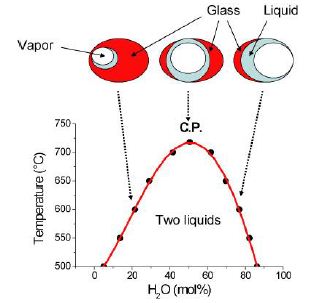
Figure 1: Schematic behavior of melt inclusions with different water content after homogenization at different temperatures. CP is the critical point of the resulting solvus curve (red).
Note that the inclusions shown in Figure 1 are immediately after quenching in a fully homogenized state, proved by the hydrothermal rapid-quench method or, in the same cases, the quenching in liquid nitrogen. Due to the high water content in the inclusions, they heterogenized after some hours like the schematic types shown in Figure 1.
Results
Figures 2 to 4 show the key results, which are combined into Figure 5 as a room plot, demonstrating that the triple H2O-B2O3-Cs are strongly related.
Figure 2 presents the simplified water-boron plot for the silicate melts. The following equation represents the boron curve (X=H2O; Y=B2O3):
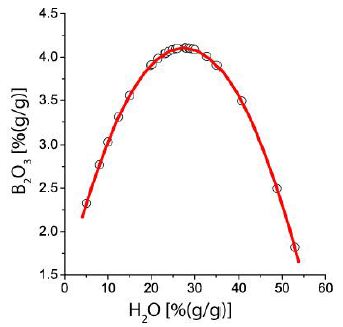
Figure 2: Water versus boron concentration in melt inclusions on the Ehrenfriedersdorf pegmatite-related quartz. This plot represents the system’s X-Y plane.
Y=1.45255 + 0.19272 ∗ X – 0.00348 ∗ X2 – 6.38965 ∗ 10-7 ∗ X3 (1)
Figure 3 shows the concentration of Cs versus H2O and shows, in a good approximation, a Lorentzian distribution. The H2O-Cs plane projected Lorentzian data are in Table 1.
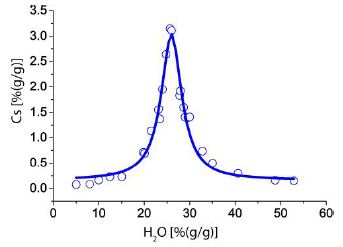
Figure 3: Lorentzian distribution of Cs versus the water content of silicate melt inclusions.
Figure 4 shows the projection of the Cs content of silicate melt inclusions in the B2O3-Cs-plane.
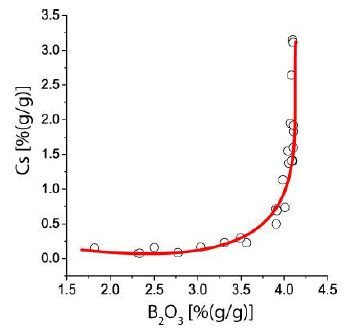
Figure 4: Sigmoidal Cs-B2O3 correlation in the B2O3-Cs plane.
Figure 4 shows clearly that the Lorentzian distribution of Cs begins at about 0.5% Cs, corresponding to the offset (see Table 1) and a boron concentration of about 4% B2O3. Figure 5 shows the room diagram of all three phases: H2O-B2O3-Cs, showing that all three components are well correlated, and the maximum of the Cs concentration is related to the critical point of the water-boron solvus.
Table 1: Results of the Lorentzian distribution (projection to the H2O-Cs plane (R2=0.968).
|
Area |
Center | Width | Offset |
Height |
| 18.53 | 26.0% H2O | 4.45% H2O | 0.48% Cs | 2.65% Cs |
In the CP region, by contrast, the greatest differences occur. That could indicate that the composition there is particularly sensitive to changes in the thermodynamic conditions or phase composition.
Because the Lorentzian plot of Cs vs. H2O (Figure 3) is a projection on the H2O-Cs plane, some of the data in Table 1 must be corrected using the arc segment of the solvus curve. However, according to Figure 4, the Lorentzian curve starts, in a first approximation, at a B2O3 concentration of about 4%; we can use the uncorrected data in Table 1.
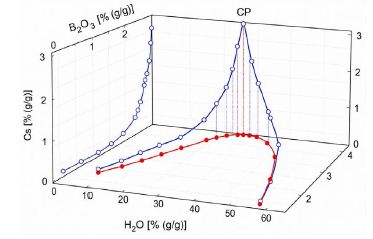
Figure 5: Room diagram H2O-B2O3-Cs. CP is the critical point.
Discussion
The results demonstrate that boron and cesium enrichment in the Ehrenfriedersdorf pegmatite-related melt inclusions is closely associated with increasing water content and, consequently, with the evolution of a volatile-rich silicate melt. The boron-water relationship follows a polynomial curve rather than a simple linear trend, indicating that boron incorporation changes as the melt becomes progressively enriched in H2O. This behavior is consistent with boron’s role as a fluxing component that can modify melt structure, reduce viscosity, and increase the capacity of residual melts to transport metals and other incompatible elements. The cesium data provide an additional indication of strong enrichment during late-stage magmatic evolution. The Lorentzian distribution of Cs versus H2O, with a coefficient of determination of R2=0.968, describes a pronounced concentration maximum near 26.0% H2O. The fitted width of 4.45% H2O, offset of 0.48% Cs, and height of 2.65% Cs indicate that cesium enrichment was not gradual throughout the entire compositional range. Instead, it became especially significant after the system reached a threshold represented by the offset. In geological terms, this threshold may mark the development of a highly evolved, water-rich fluid or melt domain in which Cs was preferentially concentrated. The projected Cs-B2O3 relationship further supports this interpretation. The sigmoidal correlation suggests that cesium enrichment accelerated once the boron concentration reached approximately 4% B2O3, corresponding to the beginning of the Lorentzian increase at about 0.5% Cs. Boron and cesium therefore appear to be linked through the progressive development of a volatile-rich residual melt rather than behaving as independent components. Their association is significant because both elements can indicate advanced fractionation and conditions favorable for concentrating and transporting tin in granite-pegmatitic systems.
The three-dimensional H2O-B2O3-Cs representation is important because two-dimensional projections can conceal the geometry of the underlying compositional field. In particular, the Lorentzian parameters obtained from the H2O-Cs projection cannot necessarily be applied directly to the complete three-component system. Correction using the arc segment of the solvus curve is therefore required. This observation emphasizes that apparent correlations in projected plots may partly reflect the projection of a curved three-dimensional surface, and it provides a methodological reason for treating binary diagrams as approximations rather than complete descriptions of melt evolution. These findings broaden the interpretation of the Ehrenfriedersdorf deposit by showing that Cs and B enrichment is not merely a chemical peculiarity of individual inclusions. Instead, it records interactions among volatile enrichment, melt structure, and phase relations during the late stages of magmatic differentiation. The results are compatible with a model in which supercritical fluids and/or melts contribute to the redistribution and concentration of incompatible elements, including components relevant to tin mineralization. They also suggest that B and Cs concentrations may be useful geochemical indicators for recognizing highly evolved pegmatitic environments and for tracing transitions between silicate melt, aqueous fluid, and supercritical regimes. Several limitations should nevertheless be considered. The boron relationship is based on a simplified projection, and interpreting the cesium distribution depends on the quality and representativeness of the melt-inclusion data. A high R2 value shows that the Lorentzian function fits the available projected data well, but it does not, by itself, establish a unique genetic mechanism. The effects of pressure, temperature, inclusion re-equilibration, post-entrapment modification, analytical uncertainty, and possible loss or redistribution of volatile components must also be evaluated. In addition, the cited Clarke values provide a useful crustal reference but do not represent the composition of the specific parental magma or the full range of processes affecting the deposit. We already know that the Lorentzian element distribution curves can vary from place to place in the Sauberg deposit. At some places, the Cs concentration in the critical region can reach 8.88% (indicated by the appearance of Ramanite-(Cs) in melt inclusions trapped near the critical point of the evolved H2O-silicate system; see Thomas and Rericha, 2023 [13].
For this case, we present the data in Table 2. Further work using calibrated three-dimensional phase relations, independent fluid-inclusion constraints, and broader sampling would help test whether the observed thresholds and correlations are characteristic of Ehrenfriedersdorf alone or apply to comparable Variscan tin-pegmatite systems. First results on the Variscan Zinnwald tin deposits point to this possibility. However, boron is in the E-Erzgebirge only weak enriched. Here, fluorine has greater meaning. Boron increases westward and reaches its maximum around Ehrenfriedersdorf.
Table 2: Results of the Lorentzian distribution (projection to the H2O-Cs plane (R2=0.994) for extreme Cs- and H2O-rich silicate melts.
|
Area |
Center | Width | Offset |
Height |
| 13.309 | 30.0% H2O | 0.9% H2O | 5.36% Cs | 8.88% Cs |
Figure 6 shows a boron-rich silicate melt drop in granite quartz from Ehrenfriedersdorf. Thomas and Rericha (2023) [13] provide more information on boron in melt inclusions in granite quartz.
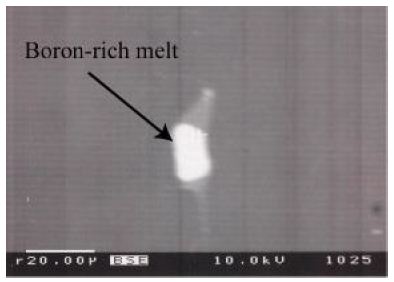
Figure 6: BSE image of a B-rich melt inclusion in granite quartz from Ehrenfriedersdorf. The silicate melt contains 10.6% B2O3.
Conclusions
In this contribution, together with the precede work [1-4,14], we see clearly that a row of elements like Li, Be, B, P, Cl, Zn, As, Sn, Sb, Cs, Ta, W are highly enriched and show a general Lorentzian distribution which cannot be explained with a conventional enrichment process. The Lorentzian distribution clearly indicates a strong or moderate input of water and some critical elements via supercritical fluids (SCF) and/or supercritical melts (SCM) from mantle regions. Indicators are the sporadic appearance of diamond, lonsdaleite, moissanite, coesite, cristobalite X-I, α- and γ-AlB12, as well as the orthorhombic cassiterites of the CaCl2– and cotunnite-types (e.g., Thomas, 2024) [15]. According to Schröcke’s Figures C-D (1954) [16,17], the Sauberg mine (e.g., Prinzler-West) contains many pegmatites and pegmatite-like bodies that cannot be explained by water from the surrounding granites. These figures also show that the mineral-forming media are not homogeneous; the source is non-uniform and varies strongly in composition and consistency. Swarms of SCF and SCM of different thickness and power come from different depths. At the transition between the supercritical, critical, and subcritical stages, processes occur which cannot be reduced to well-known pieces.
Acknowledgment
The contribution is dedicated to Dr. Adolf Rericha from Falkensee/ Germany, who, despite his health problems, was always open to discussions.
References
- Thomas R (2026a) Attempt to interpret the exceptional element enrichment and distribution in pegmatite related to the Variscan tin deposit at the example of Ehrenfriedersdorf, Geol Earth Mar Sci 8: 1-8.
- Thomas R, Davidson P, Appel K (2019) The enhanced element enrichment in the supercritical states of granite-pegmatite systems. Acta Geochim 38: 335-349.
- Thomas R, Davidson P, Rericha A, Voznyak DK (2022) Water-rich melt inclusions as “frozen” samples of the supercritical state in granites and pegmatites reveal extreme element enrichment resulting under non-equilibrium Mineral J (Ukraine) 44: 3-15.
- Thomas R (2026b) Lorentzian distribution of Sn in the Ehrenfriedersdorf Geol Earth Mar Sci 8: 1-4.
- Rösler HJ, Lange H (1975) Geochemische VEB Deutscher Verlag für Grundstoffindustrie Leipzig. Pg: 675.
- Thomas R, Davidson P, Hahn A (2008) Ramanite-(Cs) and ramanite-(Pb): new cesium and rubidium pentaborate tetrahydrate minerals identified with Raman American Mineralogist 93: 1034-1042.
- Thomas R, Webster JD, Heinrich W (2000) Melt inclusions in pegmatite quartz: complete miscibility between silicate melts and hydrous fluids at low Contrib Mineral Petrol 139: 394-401.
- Thomas R (2002) Determination of the H3BO3 concentration in fluid and melt inclusions in granite pegmatites by laser Raman microprobe American Mineralogist 87: 56-68.
- Thomas R, Förster H-J, Heinrich W (2003) The behavior of boron in a peralumonous granote-pegmatite system and associated hydrothermal solutions: a melt and fluid-inclusion study. Contrib Mineral Petrol 144: 457-472.
- Thomas R, Kamenetsky VS, Davidson P (2006) Laser Raman spectroscopic measurements of water in unexposed glass inclusions. Am Mineralogist 91: 467-470.
- Thomas R, Webster JD, Heinrich W (1999) Melt inclusions in pegmatite quartz: Complete miscibility between silicate melts and hydrous Terra Nostra 99: 305-307.
- Thomas R (2000) Determination of water contents of granite melt inclusions by confocal laser Raman microprobe American Mineralogist 85: 868-872.
- Thomas R, Rericha A (2023) Extreme enrichment of Cs during the crystallization of the Ehrenfriedersdorf pegmatite melt related ti the Variscan tin mineralization. Geol Earth Mar Sci 5: 1-4.
- Thomas R (2025) Interpretation of the Lorentzian distribution of tin in the Variscan Ehrenfriedersdorf deposit, Geol Earth Mar Sci 7: 1-5.
- Thomas R (2024) The CaCl2-to rutile phase transition in SnO2 from high to low pressure in Geol Earth Mar Sci 6: 1-4.
- Schröcke H (1954) Zur Paragenese erzgebirgischer Zinnlagerstätten. Neues Mineral. Abh 87: 33-109.
- Thomas R (2023a) Unusual cassiterite mineralization related to the Variscan tin mineralization of the Ehrenfriedersdorf deposit, Aspects Min Miner Sci 11: 1233-1236.