Abstract
A real time semantic neuropsychological approach is proposed for the study and classification of verbs, during fluency testing. The Audio-recording of 100 young university students (equal male-female ratio) has been analyzed. A Second-by-second performance has been registered and analyzed for each participant. The database consisted of more than 2000 verbs. Results: the verb output of this sample was organized in four semantic dimensions motor actions verbs (MAV), psychological, emotional, and abstract. The real time sequential analysis indicated an initial/high production of MAV (particularly whole-body actions). Overall, MAV were the most produced, followed by psychological verbs. Specific analysis for time range (each 10 seconds) indicates several semantic-neuropsychological organization characteristics along the 60 seconds’ range. This approach provides not only more parameters, but most important, more precise parameters for neuropsychological analysis; in addition, it has the advantage of being easy to replicate in clinical conditions.
Introduction
Verb fluency tests (VFT) have been increasingly used during the past years, not only because verbs are harder to retrieve than names [1]; but mainly because verbs provide more complex psycholinguistic and neuropsychological properties [2,3]. Although positive and significant correlation may be found on the performance at different fluency tests (i.e., phonological, semantic, verbs), low to moderate association indicates that the performance depends on different cognitive abilities [4].
Linguistic and psycholinguistic analysis has produced different approaches to verbs analysis and classification criteria, however the highly complex features of verbs and the syntaxes template in which verbs are contextualized, have produced a significant debate [5,6]. Based on a neuropsychological point of view, a semantic approach has been proposed by several authors [7-10]. In particular, the embodied cognition framework makes emphasis on motor and tool-use verbs [11]. According to our review of the literature, four semantic dimensions may be properly identified: motor-action, psychological, abstract, and emotional.
Motor-Action Verbs
Initial studies with functional magnetic resonance imaging (fMRI) and healthy participants, found that different brain networks were activated in the motor and premotor areas when specific motor-verbs are processed: “leg/foot” areas for verbs like Kick, “arm/hand” areas for verbs like Pick and “mouth” areas for Lick [12]. More recent studies have found a higher specificity within motor/premotor regions activation, for example: grasping vs reaching [13-15]. Semantic similarity judgements also elicit specific activations: running verbs preferentially activates the dorsal precentral gyrus (bilaterally); speaking verbs preferentially activates Brodmann area 45; hitting verbs activates bilaterally the dorsal precentral gyrus Péran et al. [16] found that action-verbs and motor representation of the same actions activate a common fronto-parietal network, and in general an increment in activation for concrete (motor) verbs versus concrete nouns, at the central and precentral motor cortex is present [17]. A difference between low specific (whole-body) versus highly specific verbs (actions performed by a specific part of the body), has been proposed and used by Herrera et al. and Roberts et al. [18] in Parkinson disease studies.
A particular subtype of MAV is the instrumental subtype; these verbs describe the utilization of a tool/object as an instrument. In recent years, the study of tools utilization phenomena has been identified as action semantics [19,20]. Manipulable man-made-objects elicit significant activation in the parietal cortex, particularly the supramarginal gyrus [21]. Tool use verbs activate a distributed network along parietal, temporal and frontal regions. Yang et al., [22] found that, in contrast to hand actions per se, tool-hand actions elicit stronger activity in left superior parietal lobule, left middle frontal gyrus and left posterior middle temporal gyrus and greater connectivity among the same brain areas. At present time, the instrumental dimension of actions represents one of the most important fields in cognitive neuroscience [23].
Psych Verbs
Refers to mental states [24], providing an important link between theory of mind and language processing [25]. Psychological process and mental states are the core of human psychology: thinking, planning, learning, etc. are every day cognitive actions. Despite that psych verbs present a wide variety in argument structure patterns, many of them allow the alternation between the position of the inanimate and agent-like animate stimuli: upset, fascinate, surprise. These verbs may express the experiencer argument either as a subject or as an object [26]. Brennan and Pylkkänen studied in healthy participants the coercion effect (a cognitive mechanism that enriches or specifies the meaning), and the lexical semantic complexity for psych verbs: distrusted, annoyed. The authors reported a significant ventral-medial prefrontal cortex and anterior temporal lobe activation.
Emotional Verbs
Several limbic (anterior cingulate gyrus, insula and basal ganglia) anterior temporal lobe and orbito-frontal areas are involved in emotion word processing in healthy population [27,28]. Emotion vs motion verbs elicit more activity in the anterior middle temporal lobe [29]. Interestingly frontal-motor areas present greater activation when processing action-words with emotional content; consequently, a close relation between limbic and motor-expression of emotions has been proposed conceptualizing them as “emotional-actions” -kiss, cuddle- [30].
By EEG studies it’s been found that access to emotional content is faster than lexical (neutral content) access [31], one of the main lexical signatures is the early posterior negativity (EPN). This effect is earlier for nouns and adjectives than for verbs; also, verbs produce longer latencies of EPN [32]. Palazova et al. [33] found an EPN onset at 250 milliseconds post-stimulus for concrete emotional verbs; for abstract emotional verbs the onset was 50 milliseconds later. The emotional valance is processed previously to the semantic features.
Abstract versus Concrete Dimension
Initial studies in this arena have explored the abstract vs concrete property of verbs. Main findings indicate that highly concrete verbs preferentially activate sensorimotor networks (left lateral precentral gyrus, and inferior parietal cortex), while purely-abstracts verbs do not. In general, literature reports a tendency to more sensorimotor activation for more concrete verbs, and less sensorimotor activation for more abstract verbs [34,35]. More recent findings indicate that the anterior temporal lobe (mainly left hemisphere) is highly active when processing abstract verbs [36]
Real Time Analysis
For most fluency tests the main scoring criteria is the number of items (verbs) produced in one minute; in addition, in most procedures the registry is made by pencil (the examiner writes –in hurry- the subject’s production). Some testing procedures divide the registry every 15 seconds [37]. This procedure allows a higher sensibility to neuropsychological dysfunction in several pathologies such as Alzheimer [38]. However theoretical justification for the 15 seconds division has not been provided and usually the main score is the total number of verbs produced in the 15 second range (accumulative criteria), nor the type of verbs produced, nor the item-sequence (type of item) of the production. In addition, the great majority of VFT studies do not use audio-recording; the main limitation for writing to dictation is that, during the first 10-15 seconds subjects produces many items in a very fast manner. Consequently, the examiner has no time enough to write the production appropriately, thus, most examiners even prompt the subjects to “slow down” so he/she can write properly the production; some participant slow-down the pace of production to wait for the examiner to write.
Two general phases have been identified: 1) Selection (In the firsts 15-20 seconds) when items are highly available, automatically activated and abundantly produced; 2) Retrieval (seconds 20 to 60) when items are scarcely available, a more active/effortful search is required to produce each item [39,40]. At the present time, no real time registry (e.g. audio recording) validated to identify each phase, as the main testing procedure
Semantic Competition
When the phenomenon of co-activation is present: when subjects prepare to talk, and more specifically to perform VFT, semantic representations (names, verbs, etc.) are abundantly pre-activated and ready to be selected and produced, making the neurocognitive process efficient [41]; this phenomenon creates a competition between the multiple automatically activated representations [42]. In healthy participants retrieval always occurs after the initial abundant item production. What types of verbs are initially available? Is there any type of sequential (real time) semantic production during verbs fluency? These questions guided this research.
Here we propose that, additional to the semantic neuropsychological approach, by using audio-recording of VFT at least three four new neuropsychological criteria may be obtained:
- Semantic organization of the overall verb production
- Semantic analysis for the selectivity phase (abundant production of verbs)
- Semantic analysis for the retrieval phase (paced production of items)
- Sequential real time (second by second) semantic analysis of the output
Method
Participants. A hundred young healthy university students (equal male-female ratio), from three different universities/cities, with no neurological or psychiatric history, and with normal-average academic performance, participated in this study. Mean age was 21.97 (E.D. 1.74) years old, and the mean of school years: 16.10 (E.D. 2.34). Participation in the study was voluntary, and all the participants consciously agreed to be audio-recorded. Bilingual people (high proficiency) were excluded. Evaluation was done in individual form and in adequate private conditions. After audio-record setting was prepared, these instructions were given to each participant: “you must say as much verbs as you can, in one minute”. To compare the curvilineal performance (selection/retrieval), a semantic (animal) fluency task was also included; in this case, the instructions were: “you must say as much animals/verbs as you can, in one minute”. All the participants first carried out the verb fluency test and secondly the animal fluency one. A smart phone with the program audio recorder (version 5.00) was used to record the verbal production of each participant.
Verbs were analyzed considering the core meaning -the main nuclear action expressed- and classified according to the semantic dimensions described in the introduction:
a) Body actions: require the whole body -or most of it-: (run, jump, walk) b) Specific actions: require only parts of the body (eat, drink, chew) c) Instrumental actions: use-manipulation of an object-instrument (drive, clean, sweep) d) Psych verbs: cognitive/psychological actions (think, learn, listen) e) Emotional actions: emotional states or emotional components (love, hate)
Abstract Dimension
Additionally, we also explored the possibility that verbs-core meaning was abstract (evolve, grant). GAP (general all-purpose) verbs were considered in this category). Verbs that do not fitted within any of these previous categories (e.g. kill, steal), were considered as not classifiable.
Data Analysis
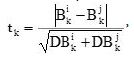
Inter-rate agreement was established at 95%, two different analyses were already performed from our group at two different sample-analysis [43]. Complimentary to descriptive and basic statistics, a non-linear regression analysis of the performance in both verb and semantic tests was conducted. A detailed description of this procedure is presented in appendix A.
Results
To explore the executive competence (item production), we modeled the real time performance at each second. Using a dichotomist approach (0= no item produced, 1= one item produced), the curves modeled in Figure 1 show the frequency of subjects that produced one item at each second. In general, a significant fall in production competence (curvilinear decay) is present in both verb and semantic tests. Selectivity-retrieval (abundant-scarce transition) is modeled in this sample. As expected, the verb-paradigm decline is more pronounced than the semantic-paradigm, producing a different curvilinear decay. The regression analysis revealed that both curves are fitted well with the model, because the values of R squared (coefficient of determination) are sufficiently high. The initial performance value (B3) and the asymptotic value of performance (B4) do not differ between the two groups. However, the performance rate (B2) is significantly higher (p = .01) in the verb performance group (see Table 1).
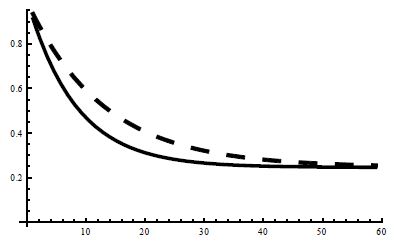
Figure 1: Curvilineal modeling for the verb (solid line), and the semantic (dashed line) performance.
Table 1: Results of the regression analysis.
|
Group |
B2 | B3 | B4 |
R squared |
| The verb performance |
0.122±0.015 |
0.912±0.044 | 0.246±,015 |
0.847 |
| Significant level, p |
0.01 |
>0.2 |
>0.2 |
|
| The semantic performance |
0.077±0.007 |
0.934±0.027 | 0.247±0.014 |
0.932 |
Note: Each coefficient value is given with its standard error.
General results are presented in Table 2. The average of production was 25.44 words for animals and 22.65 words for verbs; this result coincides with the literature (at different languages), indicating that verbs are harder to retrieve than names. Average performance is presented at each 10 second. The first-time range (1-10 seconds) represents the higher abundant item production phase, with seven verbs on average, on the second range productivity falls to 4 verbs, and progressively continues to fall at each time-range; in the 1-20 second range, half of the all the verbs are already produced. Regarding the speed of production, in the 1-10 second range one verb is produced each 1.35 seconds (on average), this speed continuously decrements, thus, in the last time range a verb is produced each 4.65 seconds (in average).
Table 2: Average production of verbs by time range.
|
Time range |
Number of verbs | Average ítem-second | Relative percentage |
Cumulative percentage |
|
1-10 |
7.37 (1.45) | 1.35 | 32.34 |
32.34 |
|
11-20 |
4.09 (1.34) | 2.44 | 17.95 | 50.29 |
| 21-30 | 3.40 (1.20) | 2.99 | 14.92 |
65.21 |
|
31-40 |
3.05 (1.45) | 3.27 | 13.38 | 78.59 |
| 41-50 | 2.73 (1.34) | 3.66 | 11.97 |
90.56 |
|
51-60 |
2.15 (1-02) | 4.56 | 9.44 |
100.0 |
Semantic Neuropsychological Approach
A critical question for the semantic dimension criteria was if most verbs produced felt within these above-mentioned dimensions, and most importantly: what was the percentage of verbs that are not classified by these criteria? The main finding was that more than 80% of all verbs produced were classifiable in these semantic dimensions. By analyzing the not-classifiable verbs, abstract criteria (abstract non-psych verbs) represented 10.06 %; finally non-classifiable verbs represented only 8.14 % of all verbs produced. These results are presented in Table 3.
Table 3: Semantic production by times ranges.
|
|
1-10 | 11-20 | 21-30 | 31-40 | 41-50 | 51-60 | Total |
% ** |
|
| Psych | Freq |
210 |
92 | 71 | 73 | 64 | 47 | 548 |
26.07 |
| %* |
28.49 |
24.33 | 23.58 | 25.00 | 26.77 |
23.85 |
|||
| Specific | Freq |
100 |
75 | 65 | 70 | 58 | 58 | 405 |
19.26 |
| %* |
13.56 |
19.84 | 21.59 | 23.97 | 24.26 |
29.44 |
|||
| Whole-Body | Freq |
214 |
47 | 35 | 24 | 33 | 15 | 367 |
17.45 |
| %* |
29.03 |
12.43 | 11.62 | 8.21 | 13.80 |
7.61 |
|||
| Instrum | Freq |
61 |
56 | 44 | 52 | 16 | 25 | 254 |
12.08 |
| %* |
8.27 |
14.81 | 14.61 | 17.80 | 6.69 |
12.69 |
|||
| Emotional | Freq |
58 |
26 | 14 | 19 | 15 | 14 | 146 |
6.94 |
| %* |
7.86 |
6.87 | 4.65 | 6.50 | 6.27 |
7.10 |
|||
| Abstract | Freq |
38 |
48 | 30 | 41 | 38 | 26 | 211 |
10.06 |
| %* |
5.15 |
12.69 | 9.96 | 14.04 | 15.89 |
13.91 |
|||
| Not-class | Freq |
56 |
34 | 42 | 13 | 15 | 12 | 171 |
8.14 |
| %* |
7.59 |
8.99 | 13.95 | 4.45 | 6.27 |
6.09 |
*Percentage to all verbs produced within the time range; ** Percentage to all verbs produced.
The verb production of this sample of young-university students can be properly classified in four semantic dimensions: MAV, psych verbs, abstract and emotional. Overall, the most frequently produced type of verbs was MAV (considering all three subtypes), followed by psych verbs (think, study, read); the less frequent verbs were abstract (to grant, transform, consume), and emotional (laugh, cry, love).
Results for the Selectivity (Abundant) Phase
By dividing whole-body versus specific motor-action, allowing us to identify two different types of production (see Figure 2). In the 1-10 second range, whole-body actions verbs are the dominant dimension, mainly in the first 3 seconds, then a dramatic fall is presented. Specific actions verbs were produced in more discrete form, and like psych verbs follows a wave form of availability: slowly arising until reaching the highest value. The whole-body dimension presents a particularity: immediate and maximum availability, but also an immediate dramatic fall in production.
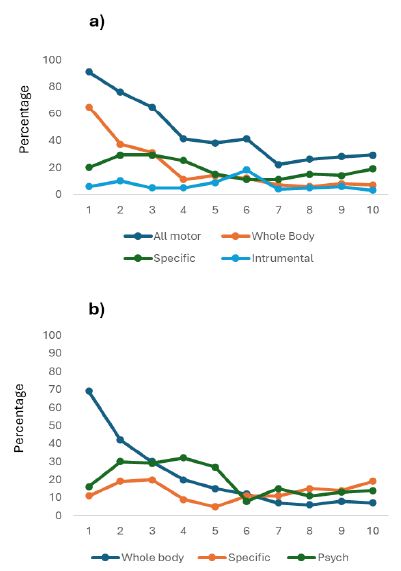
Figure 2: Real time production for the most frequent dimensions (range: 1-10 seconds).
By analyzing the frequency of production within the first 20 seconds (see Figure 3), results indicate that during the abundant phase of the production, the semantic dimensions present different types of production. Whole-body and psych verbs are the only types of verbs that present a fast and high initial production (during the 10 seconds range), and both dimensions fall dramatically in their production. A more discreet pattern of production was presented by the instrumental verbs (clean, sweep, drive). Emotional and abstract verbs are situated at the bottom of the production.
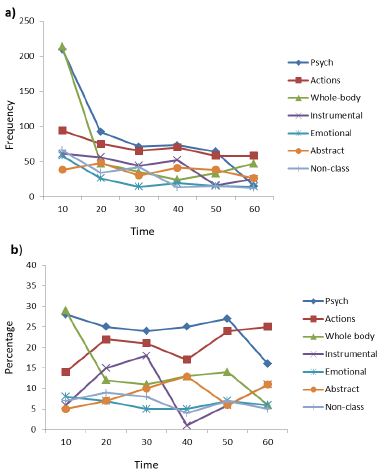
Figure 3: All types of verbs produced by times range, a) frequency, b) relative percentage.
The dynamic semantic production for the whole 60 seconds is presented in Figure 3; results are divided in six intervals -10 seconds range-. Whole-body actions verbs continuously fall until the fourth interval (40´s seconds interval), where a plateau is reached. Psych verbs are the second (of only two) semantic abundant categories in the initial interval (mainly first five seconds); presenting a dramatic fall for the second interval, then showing a relative stable frequency of production from the third to the fifth interval. Specific actions verbs present a discrete decrement from the first to the third interval. These three principal semantic dimensions present a different productivity pattern along the six intervals.
Relative Percentage
The relative percentage within categories is presented in Table 3 and Figure 3b. This form of analysis illustrates that psych and specific actions verbs are the most frequently produced verbs along the different time ranges. The dynamic relative percentage of the production for each type of verb indicates that psych and specific-body verbs, remains on the top of the production. This value for the whole-body action verbs shows a less dramatic fall (see Figure 3a), indicating a more stable presence all through the 60 seconds. Instrumental verbs present an increment until the third interval, with a dramatic fall. Emotional verbs production presents discrete changes; the abstract dimension presents a similar behavior than the instrumental dimension, although with less dramatic changes observed.
Except for abstract verbs, all five semantic dimensions present the highest value at the first interval, two of them present a dramatic fall in the production (whole-body and psych), the other three only a discrete fall.
Item Fluency versus Semantic Fluency
Considering the relative percentage of the fluency performance -all items produced- (Figure 4); interesting results can be noticed: although overall item fluency is diminishing during the abundant-scarce transition, the relative semantic fluency is maintained on top of the relative item fluency. This is evident for Psych and specific actions verbs, and more discretely for instrumental verbs (-a- figure). If both whole and specific motor actions are considered together (-b- figure), this effect is more evident.
As a final note it is important to state that participants also produced verbs of several different semantic dimensions; however, the relative percentage of these items was lower than 2%.
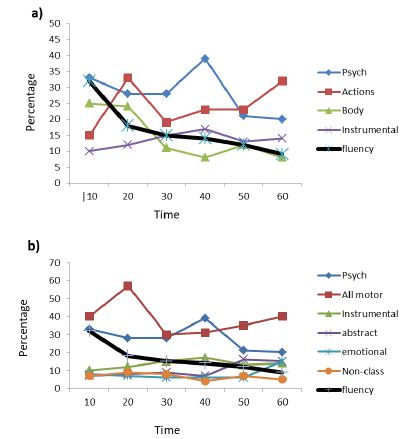
Figure 4: Comparison of overall fluency versus semantic dimensions (relative percentages).
Discussion
To our knowledge, this is the first real-time semantic-neuropsychological analysis of verbs fluency. This novel approach may represent promising cognitive and neuropsychological evaluation procedures.
Curvilinear modelling confirms significant differences in performance when comparing with the lexical-semantic paradigm. The semantics networks-correlates identified in the literature by functional neuroimaging and neuropsychological evidence, allows us to classify the great majority of verbs produced; and by identifying the abstract category, only 8% of the verbs were not-classified. However, considering that neuropsychological correlations for the abstract dimension are less clear, our proposal permits us to classify up to 82% of the verbs produced, in four semantic dimensions (or semantic templates).
In the very first seconds, whole-body-movements verbs are fast and abundantly produced, in contrast, the production of specific body-part-actions verbs arises slowly; this cognitive data differentiation parallels the functional neuroimaging evidence, indicating different brain networks [44]. However, in contrast to the functional-neuroimaging evidence, our results reflect that both types of verbs became lexically available in different forms. Our data reflects (for the first time in literature) different real-time production characteristics (frequency and sequence) between whole-body and specific body action verbs.
Why Whole-body verbs are so abundantly available at the first seconds? The great majority of these verbs are intransitive: they do not require a second agent-object to be performed; this grammatical simplicity may represent an additional factor . Another (complimentary) explanation is that every day whole-body actions are highly frequent for very-young active students, and the cognitive limitation of the testing condition: “only verbs in a limited time”, may provoke that the motor-action system activates highly available representations.
In several cognitive studies participants recall verb phrases better if they perform the physical actions described; the effect is also achieved if participants are asked to order phrases by the higher frequency of performance [45]. The imageability of the action described is also a priming factor in verb processing [46]; fictive motion comprehension (figurative motion processing: “my mind runs”) activates primary visual areas and motion sensitive visual areas [47]. Future studies may indicate if the verbs run, swim, walk, etc. present also higher imageability.
Why then are these verbs not the most overall produced? There are not many whole-body actions (or verbs), then as easy as they may be to produce, the semantic bank of this type of verb has little exemplars.
If all-motor verbs are considered together, this is the dominant semantic template; Bayram and Akbostanci [48] found that a normative group with a mean of 56 years old, produced more motor actions verbs than non-action verbs. This type of data suggests that in normative samples, motor verbs are the most type of verbs produced. We are currently finishing a report with a sample close to 200 participants from two different countries (same language) that show the relevance of the MAV production in normative samples as a preclinical neuropsychological marker, due that clinical research suggests that the presence of motor verbs may reflect healthy sensorimotor (frontal-striatal) networks (Chávez-Oliveros et al., 2023; Herrera et al. 2012; Roberts, 2015).
Specific Action Verbs
Production is more discreet at the beginning, but with constant relative production throughout the 60-second period. Differential and specific network-activation has been widely documented between specific body-part actions in healthy populations and, in brain damage patients [49]. Our data provides concrete cognitive evidence for the study of normative samples that support a methodology already used to differentiate specific versus non-specific motor/actions verbs in Parkinson disease patients.
Instrumental Verbs
This type of verb requires the most distributed neuropsychological networks along the frontal, temporal and parietal cortex [50]. Due to the complexity of the semantic-instrumental cognitive networks a higher semantic competence-processing may be required [51]. We recently reported that among the MAV the instrumental subcategory was the most affected in a sample of Parkinson disease patients.
Psych Verbs
Representing the second predominant semantic template production. Object-experiencer verbs are more cognitively demanding to produce than subject-experiencer verbs; actions that refers to concrete events requires specific semantic processing, due to their shared perceptual features for example jump versus hop, (therefore higher semantic-competence), subjective actions don’t [52]. Then, cognitive retrieval of this type of verbs may be easier than other verbs that describe concrete actions; brain correlates of psych verbs are scarce, but indicative of theory of mind networks. As with the motor division, separating abstract and emotional verbs, from subject-agency verbs, shows different initial availability and overall production. Further, a more precise analysis of subtypes of psych verbs may indicate intra-dimensional characteristics, for example the different cognitive properties (factive, negative representational, fictive representational, etc.). The factive dimension indicates the degree of certainty: “know” (I know= highly certain) versus “think”; non factive verbs denote only an intention: “promise”. Up to date a clear proposal for an intra-dimension analysis of psych verbs is not available.
Emotional Verbs
Representing the lowest frequency of verbs produced, networks for these verbs are highly constrained to limbic and paralimbic regions; therefore, the production of emotional verbs is more cognitive demanding than psych verbs. Traditionally considered as “psych” verbs, the data presented here indicates different frequency and sequence in the production characteristics than psych (non-emotional) verbs. Furthermore, as with motor-action verbs a differentiation within semantic categories (emotional vs non-emotional), suggest within brain-networks differentiation during fluency testing.
Some proposals have been developed to rate the type of emotion expressed -for example: basic versus secondary emotions-, and the frequency, valence, arousal, etc. When participants are directed to produce actions words that relate to basic emotions Cry and Laugh are among the top three most frequently generated action words for each emotion [53]. In our results, Cry and Laugh were also among the most frequent emotional verbs produced. These results suggest that if induced or not, these verbs will be produced, suggesting a specific form of action-emotion semantic organization.
Abstract Verbs
It has been described that abstract-semantic associations are scarce and vague and may be difficult to perform by a semantic template. Literature is scarce in abstract-semantic verbs, the main results indicate lesser sensorial and motor areas activation , with a significant anterior-temporal participation.
Semantic Dimensions/Templates
Our data suggests that in verb-fluency performance, four neuropsychological semantic-dimensions supported in literature (brain/neuropsychological correlates) are present. These results support the “Two level theory of verb meaning,” verbs meaning have two levels: a general framework or class, representing the thematic core -for example change of state verbs-, and a more specific level representing a specific semantic meaning -melt vs shake- [54]. When facing a verb fluency test, the output is organized in semantic templates (motor, psych, emotional, abstract), these templates are mainly neuropsychological, and not cognitive or linguistic: our results suggest that in the verb-fluency paradigm, cognitive performance is driven by specific brain networks (premotor, limbic, frontal-parietal, frontal-medial), rather than by language-lexical representations.
Some categories of verbs are harder to map and select than others [55]. Our results indicate that psych verbs and specific motor action verbs are the easiest to produce, whole body-actions present a medium degree of difficulty; finally, the hardest types of verbs to produce are emotional and abstract.
Why are verbs so hard to retrieve? verbs are not taxonomically structured as names -i.e. animals- [56]. According to Earles & Kernsten , verbs exhibit context effects more like superordinate nouns; also, verbs generally have more dictionary entries and interpretations than nouns: “catch the ball versus catching a cold”. A possible explanation for the lower semantic production (instrumental, emotional and abstract) is that verbs that implicate specific dimensions are more constrained to specific actions, been lesser in number in most languages; thus, harder to find-map and indeed to be semantically produced. If the later I correct, then motor/lighter verbs will be less produced because they present conflicting semantics (“catch”); less conflicting semantic verbs (running, swim) will be easier to produce.
The relative semantic percentage across the time range indicates that the semantic production occurs in templates that are resistant to the curvilinear decay of the item production (number of items produced).
“Surfing” the semantic system? The executive participation is -only- to navigate on top of these semantic templates? The same way a surfer cannot produce a wave, and only chooses which wave to ride (selection)? Once on top of these waves, there is not much to do, but to stay in balance (inhibitory control)? Figures 3 and 4 suggest this effect, but more research on real time cognitive/neuropsychological performance (neuroimaging) is needed to confirm-expand these initial findings.
Conclusions
The results presented here indicate that a real time/semantic-neuropsychological approach is highly plausible for the neuropsychological analysis of verb fluency testing. Several new parameters represent promising future cognitive and neuropsychological criteria (that of course requires proper validation): the semantic templates/dimensions, the initial faster and higher availability of whole-body motor verbs, and the time-range relative-percentage.
A real time analysis of the VF performance is necessary to discover different neuropsychological features of executive-semantic performance. We believe that the high content of motor-action verbs may represent neuropsychological markers of a healthy brain. Disruption of these semantic-neuropsychological templates may occur in brain-impairment pathologies e.g. Parkinson, Traumatic brain injury, affecting cognitive efficiency; but of course, clinical validation is required.
The motor-action dimension for neuropsychology is fundamental, literal and figurative language is full of actions (“grasp the idea”). Literature progressively indicates the close relation of motor-language verbs/actions and the optimal functioning of fronto-striatal functioning [57-59]. Also, the high presence of psych verbs is relevant for another fundamental field on human cognition: mentalization/theory of mind, and may represent an additional neuropsychological dimension for autism disorder spectrum.
Limitations and Future Directions
A wider evaluation and replication with several hundred participants of different age-school years (from different countries-language-cultures) are required; also, different interrater agreements from different research groups are required to achieve proper validation (e.g. kappa analysis).
References
- Allendorfer JB, Kissela BM, Holland SK, Szaflarski JP (2012) Different patterns of language activation in post-stroke aphasia are detected by overt and covert versions of the verb generation fMRI task. Medical Science Monitor 18(3): 135-137. [crossref]
- Chávez-Oliveros M, Flores-Lázaro, JC, Meza, HD, Ramírez-Burgos W (2023) Sequential production of motor-action verb subtypes in Parkinson’s disease patients. Dementia & Neuropsychologia 17:e20220027. [crossref]
- Herrera, E. Cuetos F, Ribacoba R (2012) Verbal Fluency in Parkinson’s Disease Patients on/off Dopamine Medication. Neuropsychologia 50(14): 3636-3640. [crossref]
- Stokholm, J. JØrgensen K, Vogel A (2013) Performances on five verbal fluency tests in a healthy, elderly Danish sample. Aging Neuropsychology and Cognition. 20(1): 22-33. [crossref].
- Vigliocco G, Vinson DP. Druks, J. Barber, H, Cappa SF (2011) Nouns and verbs in the brain: a review of behavioural, electrophysiological, neuropsychological and imaging studies. Neuroscience and Biobehavioral Review 35(3): 407-26. [crossref]
- White AS, Hacquard V, Lidz J (2018) Semantic Information and the Syntax of Propositional Attitude Verbs. Cognitive Science 42(2): 416-456. [crossref]
- Engelberg S (2014) The argument structure of psych-verbs: A quantitative corpus study on cognitive entrenchment. In: Boas H, Ziem A (eds.): Constructional approaches to argument structure in German. Boston, Berlin: De Gruyter Mouton. Part 1, 47-84.
- Herrera E, Rodríguez-Ferreiro J, Cuetos F (2012) The effect of motion content in action naming by Parkinson’s disease patients. Cortex 48(7): 900-904. [crossref]
- Kemmerer, D. González-Castillo J, Talavage, T. Paterson S, Wiley C (2008) Neuroanatomical Distribution of Five Semantic Components of Verbs: Evidence From fMRI. Brain and Language 107(1): 16-43. [crossref]
- Moseley RL, Pulvermüller F (2014) Nouns, verbs, objects, actions, and abstractions: local fMRI activity indexes semantics, not lexical categories.Brain and Language 132(100): 28-42. [crossref]
- Kemmerer D (2015) Are the motor features of verb meanings represented in the precentral motor cortices? Yes, but within the context of a flexible, multilevel architecture for conceptual knowledge. Psychonomic Bulletin & Review 22(4): 1068-75. [crossref]
- Pulvermüller F (2005) Brain mechanisms linking language and action. Nature Review Neuroscience 6(7): 576-82. [crossref]
- Cavina-Pratesi C, Connolly JD, Monaco S, Figley TD, Milner AD, et al. (2018) Human neuroimaging reveals the subcomponents of grasping, reaching and pointing actions. Cortex 98: 128-148. [crossref]
- Filimon F (2018) Human Cortical Control of Hand Movements: Parietofrontal Networks for Reaching, Grasping, and Pointing. The Neuroscientist 16(4): 388-407. [crossref]
- Vesia, M. Barnett-Cowan M, Elahi B, Jegatheeswaran G, Isayama R, et al. (2017) Human dorsomedial parieto-motor circuit specifies grasp during the planning of goal-directed hand actions. Cortex 92: 175-186. [crossref]
- Péran P, Démonet JF, Cherubini A, Carbebat D, Caltagirone C, Sabatini U (2010) Mental representations of action: the neural correlates of the verbal and motor components. Brain Res; 1328: 89-103. [crossref]
- Pavlova AA. Butorina AV, Nikolaeva AY, Prokofyev AO, Ulanov MA, et al. (2019) Effortful verb retrieval from semantic memory drives beta suppression in mesial frontal regions involved in action initiation. Human Brain Mapping 40(12): 3669-3681. [crossref]
- Roberts, A. Nguyen P, Orange JB, Jog, M. Nisbet KA. et al. (2017) Differential impairments of upper and lower limb movements influence action verb processing in Parkinson disease. Cortex 97: 49-59. [crossref]
- Andres M, Finocchiaro C, Buiatti M, Piazza M (2015) Contribution of motor representations to action verb processing. Cognition Neuropsy 134: 174-84. [crossref]
- Dalla Volta R, Avanzini P, De Marco D, Gentilucci M, Fabbri-Destro M (2018) From meaning to categorization: The hierarchical recruitment of brain circuits selective for action Cortex 100: 95-110. [crossref]
- Pelgrims, B. Olivier, E, Andrés M (2011) Dissociation between manipulation and conceptual knowledge of object use in the supramarginalis gyrus. Human Brain Mapping 32(11): 1802-10. [crossref]
- Yang J, Shu H, Bi Y, Liu Y, Wang X (2011) Dissociation and association of the embodied representation of tool-use verbs and hand verbs: An fMRI study. Brain and Language 119 3: 167-174. [crossref]
- Osiurak F, Federico G, Claidière N (2023) Technical reasoning: neither cognitive instinct nor cognitive gadget. Trends in cognitive sciences. 27(4): 339-340. [crossref]
- Brennan J, Pylkkänen L (2008) Processing events: behavioral and neuromagnetic correlates of Aspectual Coercion. Brain and Language 106(2): 132-43. [crossref]
- Nazlidou Moraitou D, Natsopoulos D, Papaliagkas V, Masoura, E. Papantoniou G (2018) Inefficient understanding of non-factive mental verbs with social aspect in adults: comparison to cognitive factive verb processing. Neuropsychiatry Disease and Treatment 10(14): 2617-2631. [crossref]
- Alexiadou A, Gianina Iordachioaia G (2014) The psych causative alternation. Lingua 148: 53—79.
- Girn M, Setton, R, Turner, GR, Spreng, R. N (2024) The “limbic network,” comprising orbitofrontal and anterior temporal cortex, is part of an extended default network: Evidence from multi-echo fMRI. Network neuroscience 8(3): 860-882. [crossref]
- Vigliocco G, Kousta ST, Della Rosa PA, Vinson DP, Tettamanti M, et al. (2014) The neural representation of abstract words: the role of emotion. Cerebral Cortex 24(7): 1767-1777. [crossref]
- Rodríguez-Ferreiro, J. Gennari SP. Davies, R, Cuetos F (2011) Neural Correlates of Abstract Verb Processing. Journal of Cognitive Neuroscience 23(1): 106-18. [crossref]
- Moseley, R, Carota, F, Hauk, O, Mohr, B, Pulvermüller F (2012) A role for the motor system in binding abstract emotional meaning. Cortex 22(7): 1634-1647. [crossref]
- Kissler J, Herbert C (2013) Emotion, Etmnooi, or Emitoon?–Faster lexical access to emotional than to neutral words during reading. Biological Psychology 92(3): 464-79. [crossref]
- Palazova, M, Mantwill, K, Sommer, W, Schacht A (2011) Are effects of emotion in single words non-lexical?Evidence from event-related brain potentials. Neuropsychologia 49(9): 2766-75. [crossref]
- Palazova, M, Sommer, W, Schacht A (2013) Interplay of emotional valence and concreteness in word processing: an event-related potential study with verbs. Brain and Language 125(3): 264-71. [crossref]
- Dalla Volta, R, Fabbri-Destro, M, Gentilucci, M. Avanzini P (2014) Spatiotemporal dynamics during processing of abstract verbs: an ERP study. Neuropsychologia 61: 163-174. [crossref]
- Sakreida, K, Scorolli, C, Menz MM, Heim, S, Borghi AM. et al. (2013) Are abstract action words embodied? An fMRI investigation at the interface between language and motor cognition. Frontiers in Human Neuroscience 9: 7: 125. [crossref]
- Muraki, EJ, Pexman, PM, Binney, R. J. (2025) Mapping Contributions of the Anterior Temporal Semantic Hub to the Processing of Abstract and Concrete Verbs. Human brain mapping 46(6): e70210. [crossref]
- Stuss DT, Alexander MP, Hamer, L, Palumbo, C, Dempster, R, et al. (1998) The effects of focal anterior and posterior brain lesions on verbal fluency. Journal of the International Neuropsychological Society 4(3): 265-78. [crossref]
- Amieva, H, Jacqmin-Gadda, H, Orgogozo, JM, Le Carret N, Helmer C, et al. (2005) The 9 year cognitive decline before dementia of the Alzheimer type: a prospective population-based study. Brain 128: 1093-101. [crossref]
- Hirshorn EAThompson-Schill SL (2006) Role of the left inferior frontal gyrus in covert word retrieval: neural correlates of switching during verbal fluency. Neuropsychologia. 44(12): 2547-57. [crossref]
- Snyder HR, Munakata Y (2013) So many options, so little control: abstract representations can reduce selection demands to increase children’s self-directed flexibility. Journal of Experimental Child Psychology 116(3): 659-73. [crossref]
- Vonberg, I, Ehlen, F, Fromm, O, Klostermann F (2014) The absoluteness of semantic processing: lessons from the analysis of temporal clusters in phonemic verbal fluency. Proceedings of the Library of Science One9(12): e115846. [crossref]
- Lev-Ari S, Keyzar B (2014) Executive control influences linguistic representations. Memory and Cognition 42(2): 247-63. [crossref]
- Diaz-García, L. Chávez-Oliveros MA, Flores-Lázaro JC (2025) Efecto del envejecimiento sobre el contenido motor en la fluidez de verbos. Revista Española de Geriatría y Gerontología.
- Mollo, G. Pulvermüller, F, Hauk O (2016) Movement priming of EEG/MEG brain responses for action-words characterizes the link between language and action. Cortex 74: 262-276. [crossref]
- Earles JL, Kernsten AW (2017) Why Are Verbs So Hard to Remember? Effects of Semantic Context on Memory for Verbs and Nouns. Cognitive Science 41(4): 780-807. [crossref]
- Xu, X, Kang, C, Guo T (2016) Imageability and semantic association in the representation and processing of event Cognitive Processing 17(2): 175-184. [crossref]
- Romero Lauro LJ, Mattavelli, G, Papagno, C, M (2013) She runs, the road runs, my mind runs, bad blood runs between us: literal and figurative motion verbs: an fMRI study. Neuroimag 83: 361-71. [crossref]
- Bayram, E, Akbostanci MC (2018) Verb naming fluency in hypokinetic and hyperkinetic movement disorders. Cortex 100: 21-31. [crossref]
- Taylor LJ, Evans, C, Greer, J, Senior, C, Coventry KR, et al. (2017) Dissociation between Semantic Representations for Motion and Action Verbs: Evidence from Patients with Left Hemisphere Lesions. Frontiers in Human Neuroscience 11: 35. [crossref]
- Ishibashi, R, Pobric, G, Saito, S, Lambon R (2016) The neural network for tool-related cognition: An activation likelihood estimation meta-analysis of 70 neuroimaging contrasts. Cognitive Neuropsychology. 33(3-4): 241-256. [crossref]
- Watson, CE, Buxbaum, L. J (2014) Uncovering the architecture of action semantics. Journal of experimental psychology. Human perception and performance 40(5): 1832-1848. [crossref]
- Brennan, J, Pylkkänen L (2010) Processing psych verbs: Behavioural and MEG measures of two different types of semantic complexity. Language and Cognitive Processes 25(6): 777-807.
- Portch, E. Havelka, J. Brown, C, Giner-Sorolla R (2015) Using affective knowledge to generate and validate a set of emotion-related, action words. PeerJ 3: e1100.[crossref]
- Kemmerer, D, Gonzalez Castillo J (2010) The Two-Level Theory of Verb Meaning: An Approach to Integrating the Semantics of Action With the Mirror Neuron System. Brain and Language 112(1): 54-76. [crossref]
- Hartshorne JK. O’Donnell TJ. Sudo, Y. Uruwashi, M. Lee, et al. (2016) Psych verbs, the linking problem, and the acquisition of language. Cognition 157: 268-288.
- Bauer, M, Saldert C (2019) Complex oral semantic verbal fluency in non-brain-damaged adults and individuals with multiple sclerosis and subjective anomia. Aphasiology 34(12): 1471-1486.
- Nisticó, R. Cerasa, A. Olivadese, G. Dalla Volta, R, Crasá, Vasta R. et al. (2019) The embodiment of language in tremor-dominant Parkinson’s disease patients. Brain and Cognition 135: 103586. [crossref]
- Carota F, Moseley R, Pulvermüller F (2012) Body-part-specific representations of semantic noun categories. Journal of Cognitive Neuroscience 24(6): 1492-509. [crossref]
- Pulvermüller. F. Moseley RL, Egorova N, Shebani Z, Boulenger. V (2014) Motor cognition-motor semantics: action perception theory of cognition and communication. Neuropsychologia 55: 71-84. [crossref]