Abstract
The impact of the built environment on health outcomes has been long recognised [1,2], however the gender dimensions of this remain underexplored. This article uncovers the hidden history of a group of women who came together in Birmingham (England) in the 1990s to campaign for a city that would suit the needs of women. This summary of the women’s work highlights the need, then and now, for women’s views to be taken into account in the planning process. This experience shows that including women’s voices in the planning system is not only vital to ensure women’s equal access to public space, city resources and opportunities, but also has potential health benefits. We highlight two aspects of their work relevant to health: the importance of safety in urban planning, and the importance of women’s collective involvement in decision-making for positively reinforcing their self- confidence, well-being and mental health.
Keywords
Community-led planning, Women’s histories, Urban planning, Feminist planning, Health, Wellbeing; Participation
The impact of the built environment on health outcomes has long been recognised. As long ago as 1898, with the founding of the Garden City movement, Ebenezer Howard was advocating for an antidote to the ‘dark satanic mills’. Fast forward to this century and the Marmot review reinforced the role of the built environment in promoting or restricting healthy lifestyles [2]. However, the gender dimensions of the impact of planning and the environment on health and wellbeing remained underexplored (Brennan undated;[3]). This is despite research which highlights the differential experience of the built environment between men and women [4-6] and despite decades of action by women to improve urban spaces [7,8]. This piece reveals the hidden history of one such group and the relationship between two aspects of their work and public health impacts.
In the 1990s a group of women came together in Birmingham (England) to campaign for a city that would suit the needs of women. Central to their work was an emphasis on safety, in the context of the city that had been redeveloped in the 1970s on the model of the male commuting businessman, rather than to meet the everyday needs of the women who lived and worked there. This was manifested most prominently in the dangerous and disorienting subways that pedestrians had to access up and down steps in order to reach the city centre, going under the urban motorway Ring Road that encircled it. Recent reports have highlighted the impact of unsafe spaces on women’s physical and mental health [9,10], but women have been aware of this for decades. From 2022-2024 we conducted historical and archival participatory research unearthing the work in the 1990s of Birmingham for People (BfP) Women’s Group, as part of the Spaces of Hope project that explored the hidden histories of community-led planning across the four nations of the UK [11,12]. The built environment is an upstream determinant of health and this summary of the women’s work highlights the need, then and now, for women’s views to be taken into account in the planning process. It also highlights the importance, further downstream, of women being given a voice in the context of collective activism for their health and wellbeing.
BfP Women’s Group emerged from a broader community campaign called Birmingham for People who were campaigning for a more people-friendly redevelopment in Birmingham City centre. Whilst this brought together a committed group of planners, architects, market traders and community organisers, the women in the group realised at the very first meeting in 1989 that their voices and needs were not being heard. In response they set up a sister group which for the next five years worked relentlessly to push for women’s needs to be recognised and met by the city planners. Women across the UK had already begun to fight for women’s voices and needs to be included in a planning system that was typically gender blind, with a negative impact on women’s access to and experience of public space [4-6,13]. This led to the emergence of a Women in Planning movement in the mid 1980s, was manifested in the establishment of bodies such as the Women’s Design Service (WDS) in London in 1987, and the inclusion of Women’s Committees and Women’s Units in the more progressive Local Authority planning departments, including in Birmingham.
Right from the beginning women’s health and wellbeing were central to BfP Women’s Group’s work, which was evident in their key focus on safety campaigns, as well as pushing for the spaces that women needed. So, on the one hand they focused on making the city’s public spaces and transport safer for women, such as calling for the subways, multi-storey car parks and bus stops to be better lit; and on the other hand they attended to the embodied needs of women, pushing for more breast feeding areas and more public toilets (see Figures 1 and 2).
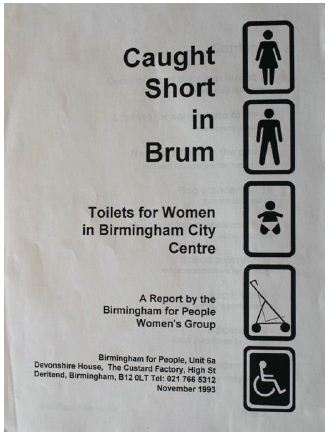
Figure 1: Cover of BfP Women’s Group’s report on women’s public toilets in Birmingham. Courtesy of BfP Women’s Group.
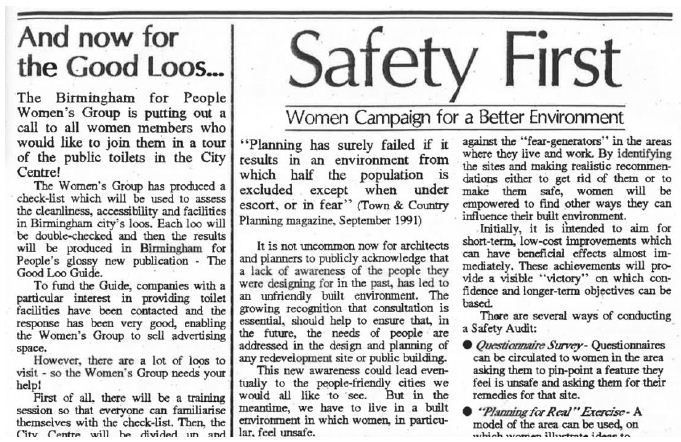
Figure 2: Birmingham for People News promotes the women’s group’s work. Courtesy of Birmingham for People Group.
One BfP Women’s Group member, Tonia Clark, explains how the focus on safety incorporated both the physical and emotional, and was connected to women’s typical role as carers,
“We did a lot of work on community safety – both feelings of safety and the changes needed to the built environment to make them actually safer. This was central to health in terms of a lower risk of attack or rape. We looked at physical space in terms of safety and I think feelings of wellbeing were part of this. When women have a voice in planning and in urban design they will design spaces that improve wellbeing – partly I think because of their need to create positive spaces for their children and dependent elders.”
From the start it was apparent that as well as making demands for a more women -friendly built environment, the processes of involvement and advocacy brought other benefits, both with potential health impacts. Karen Garry was the first paid worker for the group, and the central remit of her job was to build relationships with the City Council and influence council policies,
“it was a fabulous first job out of university for me… here was a chance to be right in the middle of my city. You know, I was really, really very passionate about it.”
At the time the City Council was pedestrianising the main streets in Birmingham, and BfP Women’s Group looked at women’s physical access around Birmingham city centre, particularly thinking about women with children and push chairs, which also worked to improve access for people using wheelchairs.
Karen worked with the council’s Community Safety Unit and the planning and architecture department, supported by the council’s newly-established Women’s Unit. Through this she made contact with Jeanette Arregger, who was seconded from the council as a community architect, and together they worked on the Bloomsbury estate in Nechells, a housing estate undergoing regeneration. Karen describes it as,
“a typical 1960s estate. Lots of dead end alleys, lots of overhanging bushes. Lots of lighting that’s not working. Lots of steps, lots of underpasses”
The estate already had a resident-led management board, but again dominated by men, so Karen and Jeanette pulled together a group of women residents on the estate, which became the Safe Estates for Women (SEW) group,
“We walked around the estate, and the women mapped it, and they said these are areas that we go to, these are areas that we don’t go to. This is where we’ll let our children play. And they did it from their point of view. They also identified their desire paths” (Karen).
To ensure the women’s views translated into action, Karen and Jeanette built strong relationships between SEW and the City planning department, as well as with local service providers such as the police, the council’s Community Safety Unit, Highways, Lighting and Maintenance teams and with Councillors, who they showed round the estate, “going around with clipboards, finding all the nasty areas on the estate that were just unsafe basically” (Jeanette). The relationships were built over several years and the women had a hotline to the relevant bodies to report issues, “they used to report lights going out and uneven paving slabs and all that tasking kind of thing. And they did get changes on the estate as a result of their work” (Karen) (see Figures 3 and 4).
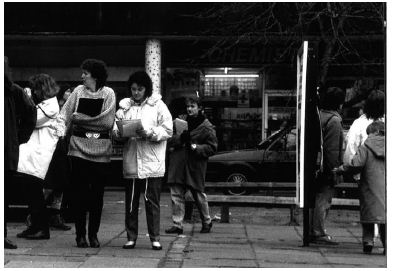
Figure 3: Women residents auditing the Bloomsbury estate. Photo courtesy of Jeanette Arregger.
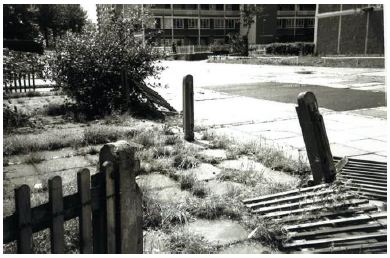
Figure 4: The Bloomsbury estate women residents and BfP Women’s Group photographed unsafe areas of the estate. Photo courtesy of Jeanette Arregger.
The methods used on the estate were developed into a Safety Audit tool that was then used by women across the city to gather evidence about their environment and lobby for change. The work of SEW on the estate also led to the setting up a more strategic city-wide body called the Women’s Safety Initiative (WSI). Karen convened its Women and Safety in the Built Environment Task Group, which brought women representing various bodies across the city together, including the City Planning Department, the voluntary sector, the Police Community Safety Unit, BfP Women’s Group, SEW and the West Midlands Passenger Transport Executive. This cross-sectoral group was able to effectively push for women’s perspectives to be taken on board in policy decision-making. Thus they had influence on city-wide issues such as anti-social behaviour, police safety initiatives and planning issues such as improved design and pedestrianisation, ultimately contributing to the break up of the Inner City Ring Road with surface-level crossings. BfP Women’s Group also benefited from a grant from the Home Office Safer Cities project, set up in 1988 by the Conservative government and launched in Birmingham with a £250,000 budget for three years to fund crime prevention schemes, a multi-agency approach and to work with existing locally-run schemes (see Figure 5).
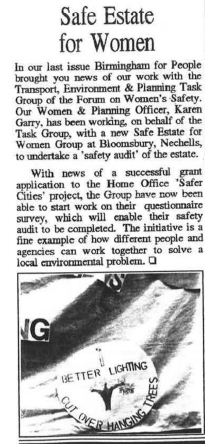
Figure 5: Birmingham for People News, publicising the women’s work for the Forum on Women’s Safety and SEW, supported by the Home Office Safer Cities project. Courtesy of Birmingham for People Group.
The building of relationships, between BfP Women’s Group and the residents, between residents and the relevant authorities, and between the city partners, took time, which was in part about building trust and confidence. Karen says of the women residents in Nechells, “It took time for that to build up really, for the women to have confidence”. BfP Women’s Group even fundraised for one of the residents, Jo Townsend, to present their estate work as a case study at a conference in San Francisco. Jo describes how important this was for her self-confidence,
“I’ve never flown before…For me personally, it was quite amazing. It was another building of confidence moment because of getting up and speaking in front of people… it was a really big step for me… quite nerve wracking. But it definitely helped build my confidence”
The BfP Women’s Group members also spoke of how important their work was for positively reinforcing their self-confidence and well-being, and indeed how important community activism is for women’s health in general. Polly Feather, a volunteer, says
“My over-riding belief is that most forms of community and grass-roots engagement and activism, where people who perceive themselves as being ‘without a voice’ do actually acquire a voice and make themselves heard, are health-giving to those involved. By ‘health’ in this context I mean mostly mental health. Any improvement in self- esteem and self-confidence is by definition a strengthening process, even leaving aside the possible beneficial outcomes that the activism has been aiming for. These ideas apply particularly to women’s activism. Hence I believe that for myself, getting involved in campaigning for change in the attitudes and practice of the world of Planning and the Built Environment was a much healthier behaviour than not engaging and feeling frustrated, ignored & dismissed. I think others in the BfP Women’s Group would subscribe to this view too.”
Through her experiences as a community architect on the Bloomsbury estate, Jeanette Arregger joined BfP Women’s Group as a volunteer, and she reflects on the importance of being part of a women-only group for her health. Throughout her career she had undiagnosed ADHD and says she struggled to make her voice heard, especially in groups and committees, and in the context of a male- dominated patriarchal society,
“I was terrified of saying the ‘wrong thing’ and found those situations extremely stressful. Birmingham for People Women’s group offered a supportive group where my ideas were listened to and taken seriously. Knowing that the group supported my ideas gave me the confidence to set up the Women’s Safety Group in Nechells with their help, and to promote the Women’s Safety Group at the Bloomsbury Estate Management Board and the Heartlands Development Corporation. With both organisations, I had to attend all male or male dominated meetings and raise issues that were not necessarily prioritised. So having a supportive group behind me encouraged me to promote other women too. My mental health must have benefitted from their support as my role as Community Architect was quite an isolated one. As the BFP Women’s Group grew in stature we were able to attract interest from the planning department and West Midlands transport and were included in consultation. We interviewed Les Sparks, head of Planning at Birmingham City Council, for a video and were able to influence the renewal of the City Centre that all added to the strength and status of the group and individuals in it. The support of the group extended to long term friendships and Karen Garry was a really great and supportive friend to me. I think that having a “cause” to fight for brought us closer as a group.”
This highlights the affective dimension of being part of a supportive group, particularly important to consider in the context where a person’s identity (in this case as a woman) is not the model upon which decisions are made. It also has crucial impacts where your positionality (such as being a woman, living in poverty or suffering a health condition) can erode your mental health and confidence to speak out. This was evident as Jeanette describes how the Bloomsbury women residents who joined SEW also benefitted from the support of a local group where they felt safe to express their feelings and personal situations, as well as their opinions about the public good,
“where they could discuss their fears and problems with negotiating the immediate environment and their frustrations with getting their voices heard by the local authority. One woman who was disabled could not use a bath and the local authority didn’t want to remove the bath as a future tenant may need it. We were able to negotiate with them to get her a shower. Some of the women who joined the group struggled with poverty and ill health and the isolation of living on a large housing estate, but gained confidence and optimism from being listened to and seeing small improvements being made to their environment. One woman volunteered to take the minutes of the meetings and as a result grew in confidence enough to apply for and get a job at the Development Corporation.”
Several of the women went on to take what they had learned with BfP Women’s Group into other workplaces, some specifically in health, such as Karen,
“it was a fantastic opportunity, it opened my eyes to all sorts of possibilities around people having a voice and being able to influence things and that’s never gone away for me. After Birmingham for People, I worked on a regeneration project in inner city Birmingham, City Challenge, on the health side of one of those massive area regenerations that happened in the early ‘90s. And currently I am working in an NHS environment on still the same topics, really”
The work that Birmingham for People Women’s Group did clearly centres safety in urban planning as a crucial upstream determinant of women’s health, and the importance of understanding health inequities in relation to gender, as well as to disability and class. Further downstream, the importance of women having a voice, being involved in activism and decision-making, and being part of a women’s group in order to further such participation, is also crucial for positively reinforcing self-confidence, mental health and wellbeing. Creating the conditions to enable participation as a way to address health inequities is increasingly being recognised by both researchers and public health agencies [2,14]. And, as the women’s work here indicates, integral to creating those conditions is understanding the ways in which gendered and other marginalised identities can be better enabled to participate. We need to learn the lessons from these types of projects and carry them forward, as well as continuing to engage in more research focusing on the relationship between women’s health and the built environment, and women’s health and their participation in community activism and public-health decision-making.
Acknowledgements
The Spaces of Hope research was funded by an AHRC grant number AH/T00729X/1
Thanks to all the women who participated in the Spaces of Hope research, including Jeanette Arregger, Tonia Clark, Polly Feather, Mary Fielding and Jo Townsend. And special thanks to Karen Garry who made a crucial and exceptional contribution to the BfP Women’s Group. Karen sadly died last year.
No conflict of interest.
References
- Howard E (1898) Tomorrow; A Peaceful Path to Real Reform.
- Marmot M, Allen,J, Boyce T,Goldblatt P, Morrison J (2020) Health Equity in England; The Marmot Review 10 years BMJ, 368: m693. [crossref]
- Kettel B (2020) Women, health and the environment. Women, Medicine, Ethics and the Law, pp: 23-35.
- Greed CH (1994) Women and Planning: creating Gendered Routledge: London, New York.
- Little J (2002) Women, planning and local central relations in the In Gender, planning and human rights (pp: 25-38) Routledge.
- Horwood K (2022) Women and planning: developing the Town Planning Review 93(6): 571-573.
- Wall C (2017) Sisterhood and squatting in the 1970s: feminism, housing and urban change in History Workshop Journal 83(1): 79-97. Oxford University Press.
- McGiveron K (2023) ‘Notes on a Community Struggle’ Big Flame, the Kirkby rent strike and the ‘mass struggle of housewives’, Women’s History Review 32(4): 517-539,
- Arup, University of Liverpool &UNDP (2022) Cities Alive; Designing citiest hat works for women https://www.undp.org/publications/cities-alive-designing-cities- work-women
- Barker A Holmes G Alam R et al et al.(2022) What Makes a Park Feel Unsafe, West Yorkshire Combined authority, available at https://eprints.whiterose.ac.uk/id/ eprint/194214/1/Parks Report FINAL 7.12.2022.pdf accessed on 3 Feb 2026
- Humphry D, Brownill S (2025) Women in the centre: dialogue on past and present community-led planning in Birmingham (UK) City 29(5–6): 1118–1132.
- Inch AS, Brownill Humphry, Broomfield D (2025) “Uncovering Hidden Histories of Community-Led Planning.” Chapter 12 In New Planning Histories, edited by L. Andres Y. Beebeejaun, and Y. Rydin, 199–214. Palgrave MacMillan.
- Greed CH (2003) Women and planning: creating gendered Routledge.
- Baxter S, Barnes A, Lee C, Mead R, Clowes M (2023) Increasing public participation and influence in local decision-making to address social determinants of health: a systematic review examining initiatives and theories. Local Government Studies 49(5): 861-887.