Abstract
Generally, theories of wellbeing exert that people desire what they value and are happy when they achieve it. In Parents, Individual, Teachers and Others (PITO), it may be difficult for one to have a desire not connected to the person’s early and present attachment and what happens throughout the various stages of development. Thus, most people desires are linked to their yearning to satisfy others based on the attachment shared by them and their intended satisfaction which may yield a positive or a negative outcome to them and others at the long run. Positive outcomes promotes healthy/happy (PITO positive) whereas, negative outcomes aid unhealthy/unhappy (PITO negative) individual.
Keywords
Overall wellbeing, Human Development, Attachment and PITO.
Introuction
The theory focused on every facet of human development in relation to early attachment through parents/primary caregivers and children and their interaction with others and teachers to energize well-being or emotional/mental disorder (ill-being). Before the author proceed, it is pertinent to acknowledge that many theorists have done noble in the field of human development, attachment and overall wellbeing as demonstrated below: Piaget [1] demonstrated that people move from one stage of development to another just like many other human development theorists. In addition, this new theory exerts that people move from one facet of development to another in upward (stages) movement as indicated by Piaget and others, although there are presence of PITO at every stage of development. For instance, at birth there are presence of parents/caregivers, the individual in question, teachers and others who contribute to one’s development irrespective of the stage. Some theories of attachment were reviewed hence, most of them suggest three main types of attachment: anxious, avoidant and secure. Erikson [2] opined that during the first year to a year and a half of life the most important goal is the development of a basic sense of trust in one’s caregivers. In addition, Bowlby [3] an evolutionary theorist of attachment suggests that children come into the world biologically pre-programmed to form attachments with others because this will help them to survive. One thing that is common among the attachment theorists is that the early interaction with caregivers forms a continuum for emotional regulation to be secure, anxious or avoidant. Thus, being secure may amount to wellbeing while being anxious and avoidant may suggest ill-being.
Further, the concept of overall wellbeing is a composite mix of a person’s economic, mental, emotional, physical, spiritual and social health factors. Wellbeing is how one feels about his/herself and life. Wellbeing is seen from the stance of hedonism, desire satisfaction views and objective list views. Parfit [4] holds that we intend to desire what we regard objectively as worthwhile and intend to be happier when we achieve it. Maslow [5] described “wellbeing” with his characteristics of a self-actualized person. The author looked at some modern theories of overall well-being such as: Ryff [6] who opined that psychological wellbeing consists of self-acceptance, positive relationships with others, autonomy, environmental mastery, a feeling of purpose and meaning in life, and personal growth and development. Positive Emotions, Engagement, Relationships, Meaning and Accomplishment (PERMA) Theory of Well-Being [7]: A prominent model in positive psychology that identifies five essential, measurable elements for human flourishing:
- Positive Emotions: Experiencing feelings like joy, hope, and inspiration.
- Engagement: Being completely absorbed in activities that draw on one’s interests and skills (the “flow” state).
- Relationships: Having strong, positive social connections and support systems.
- Meaning: Serving a purpose or cause perceived to be greater than oneself.
- Accomplishment: Pursuing success, mastery, and achievement for its own sake.
Also “Having, Loving, Doing, Being” Theory [8]: A needs-based theory that integrates psychological, sociological, and philosophical traditions by proposing four fundamental dimensions to human existence and well-being:
- Having: Meeting physical and material needs (e.g., health, income, safety).
- Loving: Fulfilling social needs, relatedness, and inclusion.
- Doing: Exercising agency, autonomy, and competence through goal-oriented action.
- Being: The subjective experience of life, including positive affect and overall life satisfaction.
Homeostasis Theory of Well-Being [9]: This biological and psychological theory posits that subjective well-being is a homeostatic process, where internal psychological mechanisms work to maintain well-being within a normal, stable range despite external life events. Despite the fact that existing theories of overall well-being as enumerated above have done a lot in the above discourse, the present theory has identified another shift in understanding overall well-being. Hence, below is PITO fully demonstrated:
Oeuvre-The Body of Work
This theory: Parents, Individual, Teachers and Others (PITO), proposed four main dimensions of human development, attachment and overall well-being namely:
- The parents or the primary caregivers (P).
- The individual in question from conception through birth to adulthood/death (I).
- The teachers at different stages and levels of the individual’s development (T).
- The other players which involve the society, religious affiliations, schools, peers, family, social media, etc, (O).
The figures below illustrate rectangular inter-related structure of human development, attachment and overall well- being (Figures 1-3):
With the above diagrams the following combinations are possible which further buttress overall well-being/ill-being however, the theory focuses on 1st combination PITO (PITO/PIOT = 1/2, IPTO/IPOT =3/4, TOPI/TOIP = 5/6 and OTPI/OTIP = 7/8).
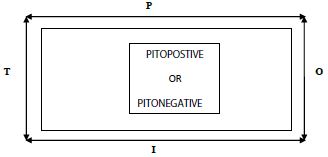
Figure 1: A diagram demonstrating how PITO forms a rectangular shape Which either brings PITO positive or PITO negative.

Figure 2: A diagram showing the parallel nature of parents and individuals and also how attached they seem to be without the influence of T and O.
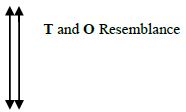
Figure 3: A diagram illustrating the parallel nature of teachers and others and how close they seem to be without P and I.
Parents
The first line in the above diagram in Figure 1 symbolically represents the parents (P) of a child because even before any individual is conscious of his or her existence, the parent(s) has identified a growing being which is expected to be nurtured right from the moment of conception till death. This is a unique and core role in developmental process. The P is the first lengthy line which equally represents the enormous roles being shouldered by parents/primary care givers toward their children or wards. Most of these roles are meant to be positive in order to nurture a well developed, bonded and well nurtured individual. This can be achieved through P’s inter-relationship with the other dimensions (I, T, and O) of the rectangular shape. From the time of conception onward, the parents have a parallel association with their offspring. But because of the relative absence of line T (Teachers) and line O (Family, School, social media, etc) in the rectangular shape at very early stages of development, line P(Parents) and I (Individual) are very close which prove the existence of bonding (attachment between parents and children). However, owing to the choices of the parents/caregivers, the bond experiences pressures from lines T and line O which widens the attachment. The parents/primary caregivers’ choices of the kind of environment to bring up the child, invariably houses the kind of schools, teachers, peers, social media links, etc the child will interact with. These choices have a lot to do with the child development, attachment and overall well-being. When these choices are right they improve the development, attachment and overall well-being despite their weight on the early attachment between parent(s) and children. Conversely, when these choices are wrong, they will hamper the development, attachment and overall well-being of the individuals owing to the gap orchestrated by Teachers and Others which may weaken the attachment established very early in life between parent(s) and children. The parents (P) symbolically represented by the first lengthy line of a rectangle have enormous roles in the development, attachment and overall well-being of their children even before these children realize it. The choices the parents make toward their children in terms of Teachers and Others may make or mar the children development, parent to child attachment and overall well-being.
Individual
Line I in the diagram in Figure 1 symbolically represents the individual. Human development starts from conception but along the line, the individual through innate tendencies and learning gain consciousness and insight into his/her existence. First, the child feels warmth being provided for by the parents/primary caregivers. The individual represent the second lengthy line of the rectangle, which suggests that the child has enormous roles in what he or she becomes in life. Again, these two lengthy lines of a rectangle (P and I) in the absence of the two short lines (T and O) are adjacent to each other and without any gap felt in between yet they are parallel which means they cannot meet. The closeness suggests that bonding is taking place between parents and children, starting from conception till the moment the choices of the parents in terms of T and O begin to exert their influences on the existing attachment which then widen the gap between parents and the individual. Being exposed to these influences from P, T and O, the child is then what he or she makes of the interactions with his/her environment.
Teachers
The first short line T in Figure 1 of the rectangle symbolically represents Teachers. In human development, attachment and overall well-being, P and I seem to have bigger influence because they direct T and O. However, in this discourse, teachers were singled out because people have very close attachment with their teachers after the parents due to the number of days/hours and years they spend with a single teacher and every other teacher very far into their development. Teacher in this write up include both those met in the formal learning and informal learning (e.g. class room teachers and skill acquisition teachers). What the teacher hands over to the child has a long way in influencing the child’s development, the kind of teacher/student attachment in place influences the child’s overall well-being. In as much as teachers exert huge influences on the students, such may be controlled by the choices of the kind of teachers the parents and the individual make for themselves. Interestingly, not minding the kind of teacher in question, the parents and the child who ordinarily will not meet because they are parallel will then meet at one side through the help of the teachers. In other words, there could be a closure of the inter-relation at one side of the rectangle based on the quality or dearth of quality teachers.
Others
The second short line O in Figure 1 of the rectangle symbolically represents others (society, family, relatives, peers, schools, social media, religious beliefs, etc).In human development, attachment and overall well-being, line O (others) is adjacent to line T, which suggests that they are parallel in nature also and they are equally very close without line P (parent) and line I (Individual). This suggests that they are both separately and jointly powerful in shaping human life since they exist even before the birth of an individual. As a child develops, the various choices of the parents concerning the kind of society to train the child, shapes the individual’s life through development. Others such as the kind of religious affiliation children are exposed to exert its influence too. Types of schools and types of friends the child interacts with while growing up are vital in shaping the individual’s life. Social media also exert their influences on the individual during development. Therefore, any other factor capable of exerting influence on the child development, attachment and overall well-being is certainly under the umbrella of others. The choices of others in this inter-relationship depend on the parents and the individual. Just like line T which widens the relationship between parent and individual, line O does same too. As others (O) exert its pressures from the other side, it widens the gap between parent and individual, then through O; P and I which were parallel will meet. If the influences of O in P and I are positive it makes the association stronger otherwise, if it is negative it weakens the P and I attachment. Table 1 below further portrays the above assertions.
Table 1: PITO four dimensions and its many characteristics.
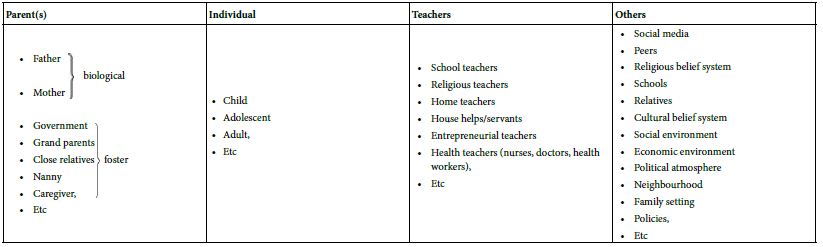
Observation of the above table holds that there are about seven characteristics of (P) which represents parents’ dimension of PITO which is further divided into biological with two characteristics and foster with five characteristics. Under individual dimension of PITO, three characteristics have been identified, while six characteristics have been identified under teacher dimension of PITO and finally, ten characteristics were identified under others dimension of PITO. However, in another context PITO and its nature of influence is demonstrated in Figure 4 below:
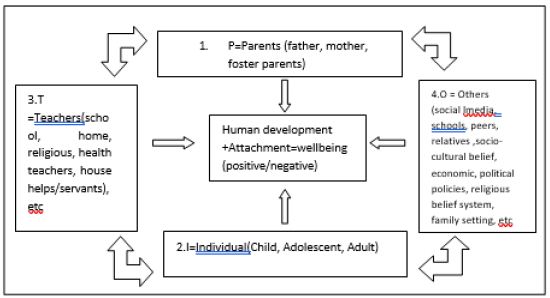
Figure 4: PITO dimensions and its nature of expected influence and or relationship with human development, attachment and wellbeing/ill-being.
Owing to the above narratives, the following key assumptions of PITO theory of overall well-being or ill-being ensue:
- Overall well-being is essential in human existence as it often reflects individual’s upbringing and attachment.
- Human developmental stages aid overall well-being or ill-being.
- Attachment via parent(s), teachers and others account for either overall well-being or ill-being in an individual.
- Overall well-being or ill-being depends on parent(s), individual, teachers and others (PITO).
- Rectangular shape depicts perfect PITO positive (overall well-being) or PITO negative (overall ill-being).
At this juncture, it is pertinent to note that PITO theory of overall well-being or ill-being is a relatively new concept, whereas, PITO is entirely a new ideology in explaining overall well-being theory. Thus, the new theory is of psychology as a scientific discipline which implies that others in other disciplines who choose to use PITO should apply it in their discipline. Again, empirical investigations are needed to verify the assumptions arising from PITO development bearing in mind that PITO will have implications for culture, gender, age, etc. Certainly the author will collaborate with other researchers in response to the future of PITO overall well-being or ill-being.
Conclusion
The author proposes in this write up that ideal human development, attachment and overall well-being are the ones achieved when a perfect rectangular shape is formed. The author opined that achieving a perfect rectangle shape characterizes either healthy human development, quality attachment between parent(s) and the individual and overall well-being. On the other hand, the shape may depict underdevelopment, lack of adequate parent(s) and individual attachment and overall ill-being. Overall well-being is essential in human existence as it often reflects individual’s upbringing and attachment.
References
- Piaget J (1936) Origins of intelligence in the child. London: Routledge & Kegan Paul.
- Erikson E (1982) The life cycle completed. New York: W. W. Norton & Company.
- Bowlby J (1958) The Nature of the Child’s Tie to His Mother. International Journal of Psychoanalysis. 39: 350-373.
- Parfit D (1984) Reasons and Persons. Oxford University Press.
- Maslow AH (1962) Toward a Psychology of Being. New York, NY: Harper & Row Publishers.
- Ryff CD (1989) Happiness Is Everything or Is It Explorations on the Meaning of Psychological Wellbeing. Journal of Personality and Social Psychology. 57: 1069-1081.
- Seligman M (2012) Flourish: A Visionary New Understanding of Happiness and Well-being. Atria books.
- Martela F, Ryan RM (2024) Being as Having, Loving, and Doing: A Theory of Human Well-Being. Personality and Social Psychology Review. 28: 372-397.
- Marks DF (2024) The Homeostasis Theory of Well-Being: A Modular System for Creating Human Well-Being. SAGE Open. 14. [crossref]