DOI: 10.31038/ALE.2025211
Abstract
The paper deals with the issues involved in domestic violence, specifically the problem of how to help police officers understand the mind of the abuser. Through AI, the police office can develop a simulation system that allows the office to explore the “mind” of the abuser to learn what different abusers may be thinking and what might be effective strategies to deal with the abuser. In turn, Mind Genomics provides the user with a sense of the different types of thinking going on among abusers and what may be reasonable points of discussion. The paper shows how to simulate these mind-sets and how to simulate the advice that a psychotherapist might give the police officer when considering the domestic violence situation. The paper finishes with a vision of AI coupled with Mind Genomics as a new educational tool for police officers that in effect becomes a never-exhausted, “always on” guide which can be used to deal with problems in “real time.”
Keywords
Abuser mind-set, Domestic violence intervention, Mind genomics, Police training
Introduction
Domestic violence is a persistent issue affecting victims, families, and communities. Police officers play a crucial role in addressing this issue, but understanding the broader psychological, social, and economic dynamics is essential. Officers face intense and volatile situations, where victims may not disclose their mistreatment due to fear, shame, or a desire to protect the abuser. They must balance immediate protective duties with awareness of long-term psychological dynamics [1-3]. Victims may react differently, wanting immediate intervention or refusing assistance due to financial or emotional challenges. Societal stigma attached to domestic incidents can further complicate the situation, leading to victims retracting claims or minimizing the severity of the abuse [4-6]. Understanding the root causes of domestic violence, including familial upbringing, past trauma, substance abuse, and socioeconomic stressors, is crucial for effective intervention. Officers must be sensitive to these nuances and develop strategies that tailor responses to the nuanced mind-set of the individuals involved. Non-judgmental communication is key, and officers should engage both the victim and the abuser with respect and tact [7-10]. Providing victims with realistic options and resources, such as social services, local shelters, or legal aid, is also vital. Officers must walk a fine line between restraint and proactivity, ensuring their intervention not only addresses immediate violence but also opens pathways for long-term solutions [11-13].
The Issues Emerging When We Recognize the Different Mind-Sets of Domestic Abusers
Domestic violence perpetrators display a wide range of mind-sets that determine the severity of abuse, interaction with victims, and response to law enforcement. Standard, one-size-fits-all approaches often fail to account for the differing motivations, rationalizations, and emotional ecosystems driving abusive behavior. Common mind-sets include “control-oriented” abusers who rely on coercion, intimidation, and isolation tactics, “rage-driven” abusers who act explosively in moments of anger or frustration, and “calculating manipulator” abusers who abuse their partners covertly without physical violence. Some abusers may have underlying mental health issues, such as narcissistic or antisocial personality disorders, which require training in recognizing these conditions. Understanding the diversity of abusive mind-sets challenges the stereotype that domestic violence is always a one-time, heightened emotional situation. Officers trained in identifying abusive mind-sets can better approach victims and discern the full scope of violence. Recognizing key mind-sets can help provide victims with a path toward long-term safety and justice [14-16].
How AI can Provide Us with Rapid Learning
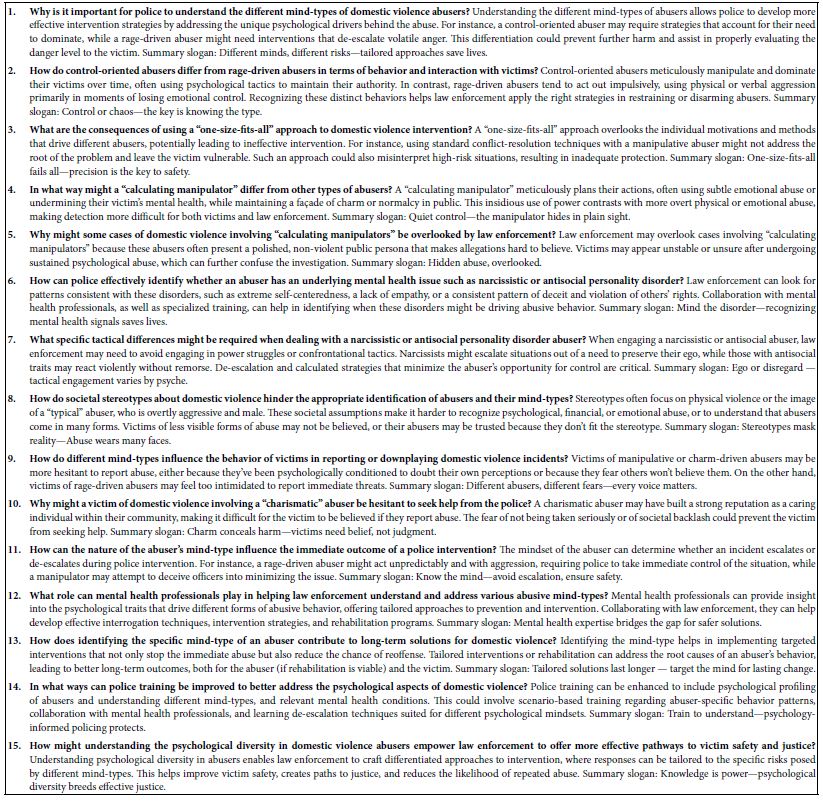
Artificial Intelligence (AI) has the potential to revolutionize law enforcement training, particularly, in teaching police officers about domestic violence. By incorporating AI technology into training programs, officers can enhance their understanding of domestic violence, preparing them to respond more effectively. AI can create highly customized and interactive simulations, replicating real-life domestic violence situations, and providing immediate feedback and alternative responses. AI can handle large amounts of data, allowing for more comprehensive training modules. It also offers anonymity and privacy, fostering a deeper understanding of the subject matter. However, AI lacks the emotional intelligence of human instructors, which is crucial when dealing with sensitive societal issues. Over-reliance on AI may lead to a lack of human interaction, which is essential when dealing with sensitive societal issues. AI-driven training may also foster a “one-size-fits-all” mentality, limiting an officer’s ability to improvise during unpredictable situations. Ethical concerns arise due to AI models that are based only on certain types of case data, potentially filtering out other experiences and reinforcing stereotypes [17-19]. The 15 questions presented in Table 1 give a sense of the range of information available through AI, using the Mind Genomics platform, BimiLeap.com (Idea Coach option). The strategy to obtain this information was simply to instruct AI to provide questions and then answers to those questions, regarding issues in the interaction of police officers with situations involving domestic violence. The Mind Genomics platform was used (BimiLeap.com), with the request put into the Idea Coach feature.
Table 1: AI-generated questions and answers regarding the use of AI in cases of domestic violence.
Mind-Sets Revealed by Mind Genomics and Potential Advances in Understanding Domestic Violence
Mind Genomics is an emerging science that posits that individuals display unique, patterned ways of thinking through their responses to various stimuli in everyday life. This field, originally applied in consumer behavior to understand how different personalities react to specific messages, extends to broader areas, contributing to revelations about societal and interpersonal behavior. At its core, Mind Genomics proposes that the human mind is organized into various “mind-sets” or cognitive segments, which refer to stable, shared patterns of reasoning coordinated by specific stimuli. These mind-sets represent different cognitive predispositions toward processing experiences, emotions, and behavior. When applied to the studies of abusers in cases of domestic violence, Mind Genomics offers a structured way to categorize individuals based on how they think and interpret their actions, intent, and consequences [20-23]. In this context, mind-sets can be understood as specific patterns or clusters of thought processes that lead to specific behaviors or attitudes. Conceptually, mind-sets are a form of subgrouping within a larger population, crucially helping identify common responses shared by individuals within the same cognitive pattern. In terms of domestic violence, mind-sets could unveil how abusers cognitively justify, rationalize, or express their actions. One abuser might function within a mind-set of domination and control, motivated by power dynamics, while another’s behavior may be propelled by a defensive mind-set characterized by paranoia or insecurity. These divided categories can be used to reflect underlying mental frameworks that influence behavior and to understand abusers as individuals shaped by distinct cognitive lenses. Defining and categorizing abusers based on mind-sets could lead to more effective intervention strategies, helping law enforcement, social workers, and counselors understand the underlying motives behind such behavior. Recognizing whether an abuser perceives their actions through a lens of entitlement, frustration, or trauma can guide distinct approaches to rehabilitation or policing. For instance, abusers operating from a mind-set of control may require different therapeutic interventions from those who commit abuse sporadically in response to perceived emotional threats. By understanding mind-sets, patterns of abuse can be identified from early situational cues and interventions can be tailored based on cognitive predispositions. The value of positing hypothetical mind-sets lies in the ability to frame domestic violence in a non-homogeneous way. One criticism of prior generalized approaches to understanding abusers is that they often overlook the diversity of thought processes and personal histories underlying domestic violence. Instead of assuming that all abusers have the same motivations, positing different mind-sets helps domestic violence responders acknowledge the complexity of this behavior. Applying mind-sets allows for empathy-driven, psychologically informed intervention programs, making protective services more precisely suited to individual needs. This nuanced approach serves both the victim’s safety and the abuser’s potential rehabilitation. The law enforcement community can significantly benefit from applying Mind Genomics thinking to categorize abusers. When officers respond to domestic disputes, the traditional focus might be on immediate cessation of conflict or criminal arrest. However, with training in mind-sets as informed by Mind Genomics, law enforcement might also gain insight into the cognitive frameworks guiding the abuser’s actions. By identifying early markers of cognitive predispositions through statements, behavior, or situational history, officers could better predict the likelihood of reoffending, immediate safety risks, and guide victims toward the most appropriate services depending on the abuser’s mind-set. Additionally, police officers could more effectively diffuse situations by understanding the specific psychological motivations driving the behavior rather than using blanket approaches to all cases of abuse. The origins of Mind Genomics stem from decades of research into behavioral psychology and consumer science, aimed at decoding how people intellectually process stimuli. The concept was introduced in marketing programs to categorize consumers based on their emotional and intellectual responses to products, services, or advertisements. Behind this idea was the understanding that people process information in diverse, context-dependent ways, which could be traced and cataloged. This practice was later expanded to areas outside commercial issues. The rationale is that segmented, data-driven understandings of mind-sets bring value to domains like criminal justice, providing tools for better psychological prediction and tailored interventions. By incorporating Mind Genomics thinking into law enforcement approaches, the community stands to gain a new, deeper framework for profiling criminal behavior beyond rudimentary labels such as “violent” or “non-violent.” This could mean that police forces, probation offices, social workers, and courts can develop more intelligent, predictive forms of justice. Instead of intervention tools that rely on generic assessments of aggression or conflict, understanding mind-sets allows for interventions that recognize cognitive diversity among offenders. As this approach gains traction, we can expect collaboration between data scientists, psychologists, and public safety professionals to create systematic tools that identify structured pathways toward behavioral reform—ideal for criminals who might otherwise remain in cycles of abuse.
Combining Mind Geonomics Thinking with AI to Simulate Three Hypothetical Mind-Sets of Domestic Abusers
When analyzing domestic violence, it is important to understand that abusers might fall into different behavioral and psychological types. These mind-sets’ impact may affect how each abuser approaches their victims, how they view their actions, and how they might react to authority or intervention by law enforcement. For law enforcement officers, understanding these mind-sets can be crucial in handling the situation safely and effectively. This section explores how AI can be used to hypothesize the existence of three mind-sets of abusers in domestic violence cases, and then immediately simulate the “deeper nature” of each mind-set. The three mind-sets were generated by AI through the prompt to only identify three mind-sets. AI was not told the nature of these mind-sets.
The three mind-sets emerging from AI’s simulation are:
-
Entitled & Control-Oriented Mindset: This person sees violence as a way to assert dominance and control, motivated by entitlement.
-
Emotionally Volatile Mindset: This abuser is driven by strong emotions, often unable to manage intense anger or jealousy.
-
Avoidant & Manipulative Mindset: This abuser is more calculated and strategic, using manipulation and more subtle forms of abuse to maintain control, but might be quick to downplay or deny their actions to outsiders, like law enforcement.
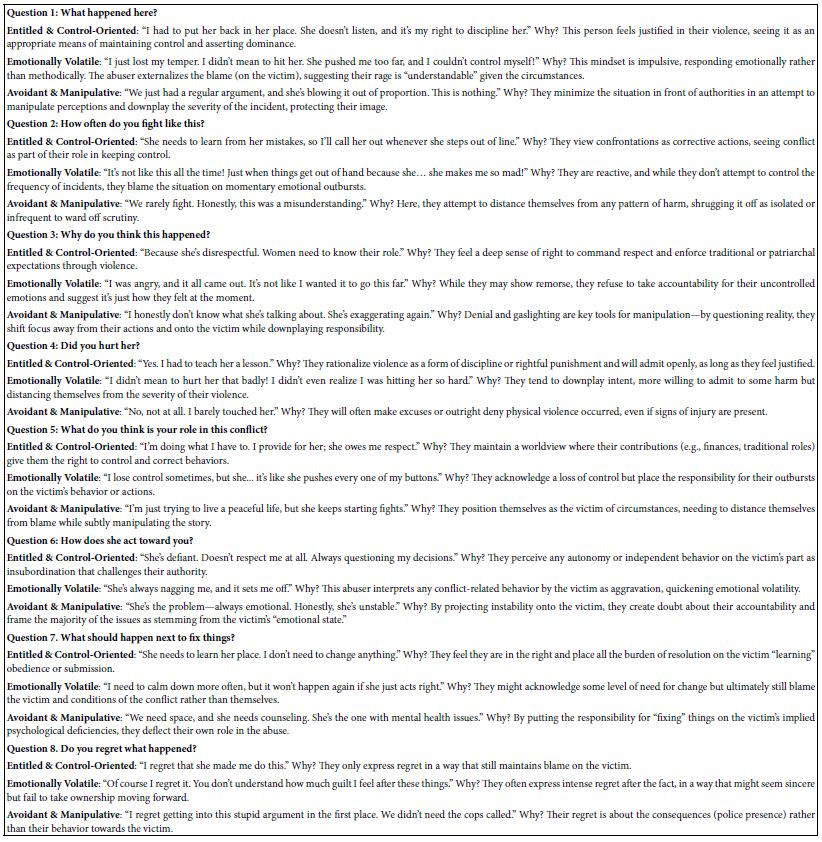
By framing responses from these different mind-sets, officers can start to identify patterns in abuser psychology—whether the abuser leans more towards outright control, emotional volatility, or calculated manipulation—thus better equipping themselves to see through manipulation and respond appropriately to each unique situation. Table 2 shows eight questions that a police officer might ask—or observe—when arriving at a domestic violence scene, along with three potential responses from abusers, each aligned with one of the above mindsets.
Table 2: Eight questions that a police officer might ask, and simulated answers from mind-sets.
Combining Mind Genomics Thinking with AI to Simulate a Therapy Session
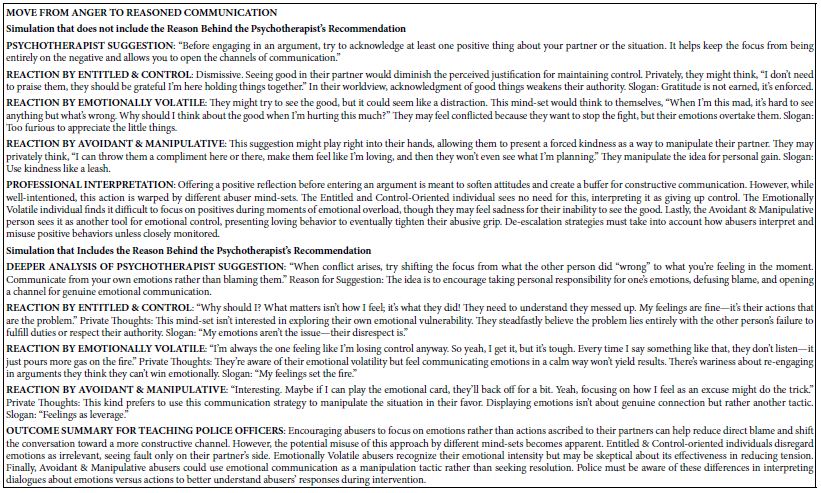
Police officers can enhance their understanding of domestic violence incidents by simulating different mind-sets of potential abusers. By observing how different abusive mind-sets engage in therapeutic dialogue, officers gain insight into the psychological motives, behavioral triggers, and rationalizations that drive abusive behavior. This knowledge can help officers approach domestic violence situations with more nuanced strategies, potentially de-escalating situations or identifying early warning signs before violence occurs. By incorporating multiple mind-sets, officers can witness and analyze abuser reactions when challenged within a therapeutic framework, improving communication skills and informs appropriate intervention strategies. Additionally, simulating different mindsets can help officers distinguish abusive actions from mental health crises or substance-related violence, allowing officers to refer individuals to social or mental health services if necessary. Finally, simulating various personalities and therapeutic responses helps officers develop increased empathy for both abusers and victims, enhancing their ability to connect victims with resources and reduce the risk of retaliation or further violence in the home. AI can be instructed to provide varying levels of depth in its simulation. By slightly altering the instructions to AI, the user can incorporate the thinking of the psychotherapist as well, beyond simply the psychotherapist moderating the session. Table 3 shows the instructions given to AI, and the additional, optional instructions, to provide a deeper insight into the mind of the psychotherapist. Table 4 compares simulations from a session talking about a “code word” to signal when the emotions are overly strong. Table 5 compares simulations from a session talking about “taking a break” when the emotions are overly strong. Table 6 compares simulations from a session talking about moving the argument away from accusation.
Table 3: Instructions to AI to simulate a group therapy session with the psychotherapist making a suggestion and the three mind-sets responding, as well the private thoughts of the three mind-sets.
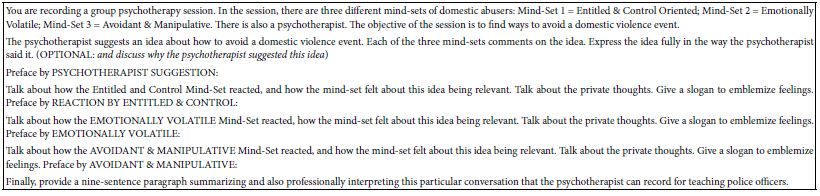
Table 4: Psychotherapist suggestion about a code word to signal and then reduce tensions—a comparison of two levels of analysis.
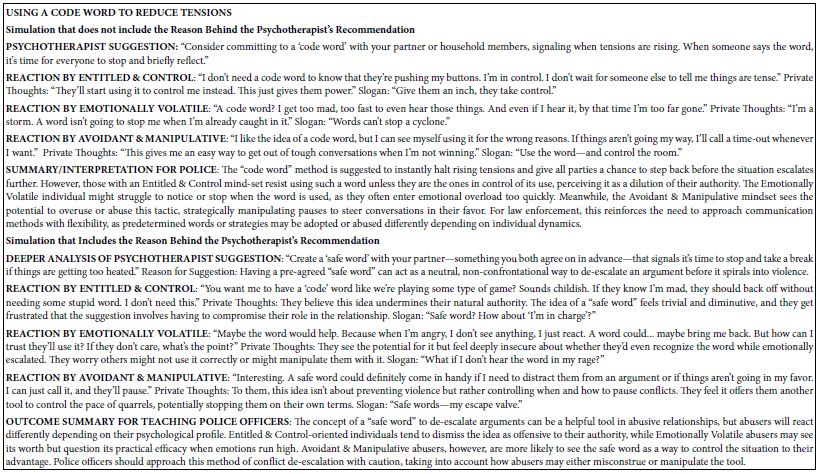
Table 5: Psychotherapist’s suggestion about removing oneself from the situation–A comparison of two levels of analysis.
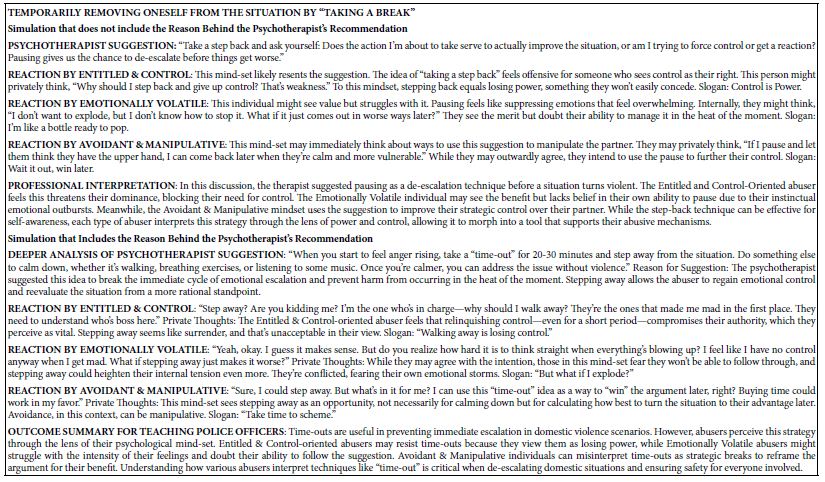
Table 6: Psychotherapist suggestion about a reframing and moving away from anger towards communication—A comparison of two levels of analysis.
Discussion and Conclusions
< class=”rowfont”p>Police personnel often struggle with domestic violence calls in the complex, emotionally charged environment of law enforcement. AI and Mind Genomics are rapidly changing training methods, offering officers realistic simulations with unmatched depth and accuracy. AI offers broad to detailed situational training for real-time decision-making, enabling officers to join simulated crises, engage with everyone, forecast results, and refine the plan. AI simulations are intriguing for their agility and realism, as they allow officers to learn comprehensively in dynamic, reactive situations. AI can mimic emotions, relationships, and personality, while Mind Genomics combined with AI simulates the minds of victims and offenders, allowing the exploration of domestic violence occurring with people of different mind-sets and ways of thinking about the same issue. AI’s tolerance for human variations is strong, as everyone in a domestic violence situation discusses their emotions and experiences. AI allows police officers to explore the range of reactions to the same situation, including victims being terrified yet compliant, hesitant, doubtful, or protective of the abuser, and perpetrators being violent, manipulative, or repentant.
AI exercises can be tailored to train police regarding tactical de-escalation, such as calming the scene, separating victims and abusers, and calling social workers or mental health professionals. Gamification boosts situational preparation and learning, and AI can become a patient, persistent, data-driven mentor most police officers never had.
AI and Mind Genomics-trained cohorts may collaborate on domestic violence strategies that include social work, psychology, and legislation. By challenging the AI to generate novel social situations, new intervention and conflict resolution approaches may develop. Despite imperfections, the approach helps individuals acquire more knowledge than from textbooks or lectures. AI that correctly simulates reality, calculates emotional intelligence, biases, human behaviors, cognitive load during decision-making, and more, is decades ahead. This level of readiness changes police work in stressful, unpredictable circumstances, opening up a new era of opportunities in our ever-changing world.
Acknowledgments
The authors are delighted to acknowledge the ongoing help of Vanessa A. and Angela A. in the preparation of this and companion manuscripts.
References
- Campbell AM, Thompson SL, Harris TL, Wiehe SE (2021) Intimate Partner Violence and Pet Abuse: Responding Law Enforcement Officers’ Observations and Victim Reports From the Scene. Journal of Interpersonal Violence. [crossref]
- Piquero AR, Jennings WG, Jemison E, Kaukinen C, Knaul FM (2021) Domestic violence during the COVID-19 pandemic – Evidence from a systematic review and meta-analysis. Journal of Criminal Justice. [crossref]
- Saxton MD, Olszowy L, MacGregor JCD, MacQuarrie BJ, Wathen CN (2021) Experiences of Intimate Partner Violence Victims With Police and the Justice System in Canada. Journal of Interpersonal Violence. [crossref]
- Hine B, Noku L, Bates EA, Jayes K (2022) But, Who Is the Victim Here? Exploring Judgments Toward Hypothetical Bidirectional Domestic Violence Scenarios. Journal of Interpersonal Violence. [crossref]
- Muñoz-Rivas M, Bellot A, Montorio I, Ronzón-Tirado R, Redondo N (2021) Profiles of Emotion Regulation and Post-Traumatic Stress Severity among Female Victims of Intimate Partner Violence. International Journal of Environmental Research and Public Health. [crossref]
- Ullman SE (2021) Correlates of social reactions to victims’ disclosures of sexual assault and intimate partner violence: a Systematic review. Trauma, Violence, & Abuse. [crossref]
- Black A, Lumsden K (2023) Precautionary policing and dispositives of risk in a police force control room in domestic abuse incidents: an ethnography of call handlers, dispatchers and response officers. In: Ethnography and the Evocative World of Policing. Routledge.
- Franklin CA, Garza AD, Goodson A, Bouffard LA (2020) Police perceptions of crime victim behaviors: A trend analysis exploring mandatory training and knowledge of sexual and domestic violence survivors’ trauma responses. Crime & Delinquency.
- Nancarrow H, Thomas K, Ringland V, Modini T (2020) Accurately identifying the “person most in need of protection” in domestic and family violence law. Australia’s National Research Organisation for Women’s Safety.
- Notko M, Husso M, Piippo S, Fagerlund M, Houtsonen J (2021) Intervening in domestic violence: interprofessional collaboration among social and health care professionals and the police. Journal of Interprofessional Care. [crossref]
- Fagerlund M (2021) Gender and police response to domestic violence. Police Practice and Research.
- Notko M, Husso M, Piippo S, Fagerlund M, Houtsonen J (2021) Intervening in domestic violence: interprofessional collaboration among social and health care professionals and the police. Journal of Interprofessional Care. [crossref]
- Saxton MD, Jaffe PG, Dawson M, Straatman AL, Olszowy L (2022) Complexities of the Police Response to Intimate Partner Violence: Police Officers’ Perspectives on the Challenges of Keeping Families Safe. Journal of Interpersonal Violence. [crossref]
- Kadiani A, Chaudhury S, Saldanha D, Pande N, Menon P (2020) Psychosocial profile of male perpetrators of domestic violence: A population-based study. Industrial Psychiatry Journal. [crossref]
- Peraica T, Kovačić Petrović Z, Barić Ž, Galić R, Kozarić-Kovačić D (2021) Gender differences among domestic violence help-seekers: socio-demographic characteristics, types and duration of violence, perpetrators, and interventions. Journal of Family Violence.
- Wexler DB (2020) The Stop Domestic Violence Program: Group Leader’s Manual. WW Norton & Company.
- Amusa LB, Bengesai AV, Khan HTA (2022) Predicting the Vulnerability of Women to Intimate Partner Violence in South Africa: Evidence from Tree-based Machine Learning Techniques. Journal of Interpersonal Violence. [crossref]
- Khurana B, Seltzer SE, Kohane IS, Boland GW (2019) Making the ‘invisible’ visible: transforming the detection of intimate partner violence. BMJ Quality & Safety.
- McDaniel JL, Pease K, eds. (2021) Predictive Policing and Artificial Intelligence. Routledge.
- Jahja E, Papajorgji P, Moskowitz H, et al. (2024) Measuring the perceived wellbeing of hemodialysis patients: A Mind Genomics cartography. PLoS ONE. [crossref]
- Moskowitz HR, Kover A, Papajorgji P (2022) Applying Mind Genomics to Social Sciences. Information Science Reference.
- Moskowitz HR, Wren J, Papajorgji P (2020) Mind Genomics and the Law. Lambert Academic Publishing.
- Papajorgji P, Moskowitz H (2022) The ‘Average Person’ thinking about radicalization: a mind genomics cartography. Journal of Police and Criminal Psychology. [crossref]